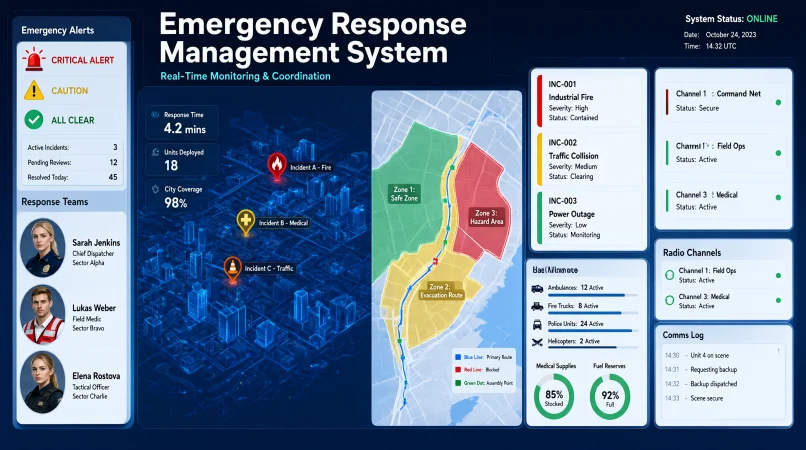
An emergency response management system helps organizations prepare for emergencies, coordinate teams, communicate critical information, and manage incidents efficiently. It brings procedures, people, communication, and resources together to support faster, more organized responses during fires, natural disasters, medical emergencies, and other unexpected events.
Top alternatives: emergency incident management system, emergency response coordination system, emergency management software, incident response management platform, emergency preparedness and response system
A reliable system helps teams understand their responsibilities, share updates, track resources, and make informed decisions when every second matters.
Emergencies never wait for the perfect moment. A fire alarm can interrupt a normal workday, severe weather can disrupt an entire community, and a medical emergency can turn an ordinary situation into a race against time. When confusion takes over, even experienced teams can struggle to coordinate their next steps.
That is where an emergency response management system makes a real difference. It helps organizations organize emergency plans, communicate with responders, assign responsibilities, and track important information during a crisis. From hospitals and schools to factories, offices, and public safety agencies, the right system can make emergency operations more coordinated and manageable.
Think of it as a shared playbook for situations nobody wants to experience but everyone should prepare for. It cannot prevent every emergency, but it can help people respond with greater clarity, consistency, and confidence. The goal is simple: reduce confusion, support timely decisions, and protect people and property.
What Is an Emergency Response Management System?
Core Information and Planning
1. A Central Place for Emergency Information
Example: A company keeps emergency contacts, evacuation procedures, and response plans in one accessible platform.
Meaning: It makes essential information easier to find when time is limited.
2. A Digital Emergency Playbook
Example: A school uses documented procedures to guide staff during a fire alarm.
Meaning: It gives responders a clear reference for their assigned actions.
3. A Tool for Coordinating Response Teams
Example: A facility manager assigns specific duties to security staff and floor wardens.
Meaning: It helps people understand who is responsible for each task.
Communication and Coordination
4. A System for Incident Reporting
Example: Employees report a chemical spill through an established incident reporting process.
Meaning: It creates a structured way to record and communicate emergencies.
5. A Communication Hub
Example: An organization distributes approved emergency instructions to affected employees.
Meaning: It supports consistent communication during a developing incident.
6. A Resource Tracking Solution
Example: An emergency coordinator checks the availability of first-aid supplies and protective equipment.
Meaning: It helps teams understand which resources are available.
Monitoring and Preparedness
7. A Situation Monitoring Platform
Example: A response team records updates as an incident changes.
Meaning: It supports a shared understanding of current conditions.
8. A Preparedness Management Tool
Example: A business stores training records and schedules emergency drills.
Meaning: It helps organizations maintain readiness before an incident occurs.
9. A Decision Support Resource
Example: A manager reviews verified incident details before activating a response plan.
Meaning: It helps leaders make more informed decisions.
Review and Organized Action
10. A Post-Incident Review System
Example: A safety team records lessons learned after an evacuation exercise.
Meaning: It supports continuous improvement in emergency planning.
11. A Multi-Department Coordination Tool
Example: Security, facilities, and management teams follow the same approved incident updates.
Meaning: It reduces conflicting information between departments.
12. A Framework for Organized Action
Example: A hospital follows established procedures during a major service disruption.
Meaning: It helps transform emergency plans into coordinated activities.
Funny Emergency Response Management System Examples
Reducing Panic and Confusion
1. The Panic-to-Plan Converter
Example: A team uses a clear checklist instead of everyone shouting different instructions.
Meaning: It replaces unnecessary confusion with organized action.
2. The Where-Is-Everyone Tracker
Example: A coordinator checks team assignments during a scheduled evacuation drill.
Meaning: It highlights the value of knowing who is responsible for each role.
3. The Emergency Group Chat, but Organized
Example: Staff receive approved updates through a designated emergency communication channel.
Meaning: It replaces scattered messages with a more structured information flow.
Making Plans Practical
4. The Checklist That Saves the Day
Example: A warehouse team follows a documented shutdown checklist during an incident.
Meaning: It helps people remember essential steps under pressure.
5. The No-More-Guessing System
Example: Employees consult written procedures instead of relying on workplace rumors.
Meaning: It encourages decisions based on verified information.
6. The Drill-Day Reality Check
Example: A company tests its evacuation procedure before an actual emergency happens.
Meaning: It reveals weaknesses while there is still time to improve.
Keeping People and Resources Accounted For
7. The Missing-Contact Detective
Example: An administrator reviews emergency contact records during a preparedness audit.
Meaning: It helps identify outdated or incomplete information.
8. The Resource Inventory Hero
Example: A safety officer checks emergency equipment before a scheduled inspection.
Meaning: It helps prevent avoidable resource shortages.
9. The Who-Does-What Decoder
Example: Staff review assigned responsibilities before a severe-weather drill.
Meaning: It reduces uncertainty about individual duties.
Building Confidence and Backup Plans
10. The Less-Chaos Dashboard
Example: A coordinator reviews current incident updates in one designated system.
Meaning: It supports a clearer overview of the response.
11. The Plan-B Organizer
Example: A business documents backup communication methods in case its main channel fails.
Meaning: It helps teams prepare for disruptions to normal operations.
12. The We-Practiced-This Moment
Example: Employees recognize the evacuation signal because they practiced the procedure earlier.
Meaning: It shows how preparation can make emergency actions more familiar.
Key Features of an Emergency Response Management System
Reporting and Notifications
1. Incident Reporting
Example: A staff member records the location and type of an emergency through an approved reporting process.
Meaning: It helps responders receive structured incident information.
2. Emergency Notifications
Example: Authorized personnel send an alert about a facility evacuation.
Meaning: It supports timely delivery of important safety information.
3. Emergency Contact Management
Example: An administrator maintains current contact details for designated responders.
Meaning: It makes it easier to identify whom to contact.
Plans, Roles, and Resources
4. Response Plan Storage
Example: A factory keeps approved procedures for fires, equipment failures, and hazardous-material incidents.
Meaning: It makes response guidance available to authorized users.
5. Task Assignment
Example: An incident commander assigns evacuation monitoring to designated personnel.
Meaning: It clarifies responsibility during emergency operations.
6. Resource Tracking
Example: A coordinator records available vehicles, medical supplies, and protective equipment.
Meaning: It helps teams manage resources more effectively.
Monitoring and Documentation
7. Real-Time Status Updates
Example: Responders update the status of assigned tasks as conditions change.
Meaning: It gives authorized teams a more current picture of response activities.
8. Mapping and Location Information
Example: A response team reviews facility maps showing exits and designated assembly areas.
Meaning: It supports location-aware planning and coordination.
9. Incident Logs
Example: A supervisor records important decisions and actions during an emergency.
Meaning: It creates a timeline that can support later review.
Security and System Integration
10. Reporting and Analytics
Example: A safety manager reviews drill results and response times across several facilities.
Meaning: It helps identify trends and opportunities for improvement.
11. Access Controls
Example: An organization limits sensitive incident information to authorized staff.
Meaning: It helps protect confidential operational and personal data.
12. Integration Capabilities
Example: An organization connects its emergency platform with approved notification or facility systems.
Meaning: It can reduce duplicate work and improve information sharing.
Benefits of an Emergency Response Management System
Coordination and Communication
1. Better Coordination
Example: Facilities and security teams work from the same approved incident plan.
Meaning: It helps departments coordinate their responsibilities.
2. Faster Information Sharing
Example: An authorized coordinator distributes a verified emergency update to relevant personnel.
Meaning: It can reduce delays caused by fragmented communication.
3. Clearer Responsibilities
Example: Every floor warden receives defined duties before an evacuation drill.
Meaning: It reduces uncertainty about who should act.
Preparedness and Consistency
4. Improved Preparedness
Example: A business reviews emergency plans and contact lists each quarter.
Meaning: It keeps preparation activities active rather than forgotten.
5. More Consistent Procedures
Example: Multiple locations follow the organization’s approved emergency response framework.
Meaning: It supports a consistent approach across sites.
6. Better Resource Visibility
Example: A coordinator checks which response supplies are available before assigning resources.
Meaning: It helps teams make practical allocation decisions.
Documentation and Learning
7. Stronger Documentation
Example: A response manager records actions and decisions throughout an incident.
Meaning: It preserves information for review and accountability.
8. More Effective Training
Example: A school uses lessons from an evacuation exercise to improve its next drill.
Meaning: It turns practice into measurable learning.
9. Improved Situational Awareness
Example: Authorized staff review verified updates before deciding on their next steps.
Meaning: It helps decision-makers understand current conditions.
Continuity and Performance
10. Better Continuity Planning
Example: A business prepares alternate communication procedures for a system outage.
Meaning: It helps maintain essential operations during disruptions.
11. Easier Performance Evaluation
Example: A safety team compares drill outcomes against established objectives.
Meaning: It makes strengths and weaknesses easier to identify.
12. Greater Confidence in Preparedness
Example: Employees practice their emergency roles and know where to find approved instructions.
Meaning: It can help people feel more prepared to respond.
Emergency Response Management System for Businesses
Evacuation and Workplace Safety
1. Office Evacuation Planning
Example: An office manager maintains evacuation routes and assembly-point instructions.
Meaning: It supports an organized response to building emergencies.
2. Workplace Injury Reporting
Example: A supervisor records a workplace injury and follows the organization’s reporting procedure.
Meaning: It creates a structured record and helps initiate the appropriate response.
3. Fire Safety Coordination
Example: A facility team assigns evacuation responsibilities and documents fire-drill results.
Meaning: It supports consistent preparation for fire-related emergencies.
Hazards and Continuity
4. Severe Weather Alerts
Example: An authorized manager communicates approved shelter instructions during a severe-weather warning.
Meaning: It helps employees receive relevant safety guidance.
5. Hazardous Material Procedures
Example: A trained response team follows site-specific procedures for a chemical spill.
Meaning: It supports controlled action according to established safety requirements.
6. Business Continuity Planning
Example: A company documents backup arrangements for essential services during an emergency.
Meaning: It helps the organization plan for operational disruptions.
People and Multi-Site Coordination
7. Visitor Safety Procedures
Example: Reception staff follow a documented process for accounting for visitors during an evacuation.
Meaning: It extends emergency planning beyond permanent employees.
8. Multi-Site Incident Coordination
Example: A company coordinates incident reporting across its regional offices.
Meaning: It helps central teams maintain visibility across multiple locations.
9. Security Incident Management
Example: An authorized security team documents a facility access incident and follows approved escalation procedures.
Meaning: It supports structured handling of security-related events.
Equipment, Training, and Review
10. Emergency Equipment Checks
Example: A safety officer records inspections of alarms, extinguishers, and first-aid supplies.
Meaning: It helps organizations monitor the readiness of critical equipment.
11. Employee Training Records
Example: Human resources tracks completion of mandatory emergency training.
Meaning: It helps managers identify outstanding training requirements.
12. Post-Incident Business Review
Example: A leadership team reviews service interruptions and recovery actions after an incident.
Meaning: It helps improve future resilience.
Emergency Response Management System for Hospitals and Healthcare
Surge Planning and Emergency Operations
1. Mass-Casualty Preparedness
Example: Hospital leaders rehearse their approved procedures for receiving large numbers of injured people.
Meaning: It helps healthcare teams prepare for sudden surges in demand.
2. Emergency Department Coordination
Example: Authorized staff share operational updates about emergency department capacity.
Meaning: It supports coordination around changing service conditions.
3. Internal Emergency Alerts
Example: Hospital personnel receive an approved notification about a restricted area.
Meaning: It helps relevant teams respond to urgent facility information.
Patient Movement and Essential Supplies
4. Patient Evacuation Planning
Example: Hospital teams prepare role-specific procedures for moving patients safely when required.
Meaning: It supports careful planning for patients with different care needs.
5. Medical Supply Tracking
Example: A designated coordinator checks emergency stock levels before a planned drill.
Meaning: It helps identify shortages in essential supplies.
6. Staff Recall Procedures
Example: Hospital administrators follow an approved process to contact additional staff during a major incident.
Meaning: It supports workforce coordination during unusual demand.
Staffing and Critical Services
7. Utility Failure Response
Example: Hospital teams follow established procedures during a power or water interruption.
Meaning: It helps protect critical services when infrastructure fails.
8. Infection Control Incident Coordination
Example: Healthcare leaders coordinate an approved response to a suspected infectious-disease exposure.
Meaning: It helps teams follow established infection-control procedures.
9. Hospital Incident Command
Example: Designated leaders coordinate roles and operational updates during a hospital emergency.
Meaning: It establishes a structured approach to incident leadership.
Command, Privacy, and Recovery
10. Patient Information Protection
Example: Staff share only necessary patient information through authorized channels during an incident.
Meaning: It supports privacy while enabling appropriate coordination.
11. Emergency Drill Evaluation
Example: Hospital administrators review the results of a simulated evacuation.
Meaning: It helps reveal gaps in procedures and team readiness.
12. Recovery and Service Restoration
Example: Hospital leaders coordinate the safe restoration of services after a facility disruption.
Meaning: It supports a planned transition from emergency operations to normal care.
Emergency Response Management System for Schools and Universities
Evacuation and Family Communication
1. School Evacuation Plans
Example: Teachers review assigned exit routes and student assembly procedures before a drill.
Meaning: It helps school communities prepare for orderly evacuations.
2. Parent and Guardian Notifications
Example: Authorized administrators issue a verified message about an emergency-related school closure.
Meaning: It helps families receive consistent information.
3. Student Accountability Procedures
Example: Teachers follow the school’s approved process for accounting for students at an assembly point.
Meaning: It helps staff identify whether additional follow-up is needed.
Accountability and Protective Actions
4. Severe Weather Sheltering
Example: School leaders activate established shelter procedures when weather conditions require them.
Meaning: It supports organized protective action.
5. Campus Security Coordination
Example: Campus staff use approved reporting procedures for a security incident.
Meaning: It helps relevant personnel coordinate their response.
6. Medical Emergency Procedures
Example: Staff follow school policy and contact emergency services when a student needs urgent medical assistance.
Meaning: It supports appropriate action without replacing professional medical care.
Campus Safety and Staff Roles
7. Visitor Management During Emergencies
Example: Administrators follow a documented process for accounting for visitors during an evacuation.
Meaning: It includes non-students in emergency planning.
8. Staff Role Assignments
Example: Designated employees know who manages communications and who checks assigned areas during a drill.
Meaning: It clarifies responsibilities before a real incident.
9. Campus Emergency Maps
Example: A university maintains current maps showing exits and designated emergency locations.
Meaning: It helps staff and responders understand the campus layout.
Training, Feedback, and Reunification
10. Emergency Training Records
Example: A school administrator tracks staff completion of safety training.
Meaning: It supports training compliance and preparedness.
11. Post-Drill Feedback
Example: Teachers report confusing instructions after a scheduled evacuation exercise.
Meaning: It helps improve the next drill.
12. Family Reunification Planning
Example: School leaders document approved procedures for reuniting students with authorized guardians after an incident.
Meaning: It supports orderly communication and reunification.
Emergency Response Management System for Industrial Facilities
Fire, Chemical, and Equipment Hazards
1. Industrial Fire Response
Example: A facility follows its approved fire response plan and evacuation procedures.
Meaning: It helps employees respond consistently to fire hazards.
2. Chemical Spill Coordination
Example: Trained personnel follow site-specific spill procedures and notify the appropriate response teams.
Meaning: It supports controlled action based on the substance and level of risk.
3. Equipment Failure Response
Example: Operators follow a documented shutdown procedure after detecting a dangerous equipment fault.
Meaning: It helps reduce the risk of further harm.
Planning, Reporting, and Shutdown
4. Confined-Space Emergency Planning
Example: A facility establishes a compliant rescue plan before authorized confined-space work begins.
Meaning: It emphasizes advance planning for a particularly hazardous work environment.
5. Hazard Reporting
Example: An employee reports an unusual leak through the organization’s safety process.
Meaning: It helps safety personnel receive information about potential threats.
6. Emergency Shutdown Procedures
Example: Trained operators use approved shutdown instructions when a critical process becomes unsafe.
Meaning: It supports controlled interruption of hazardous operations.
Personnel and Equipment Readiness
7. Worker Accountability
Example: A site coordinator follows established procedures to account for personnel after an evacuation.
Meaning: It helps identify unresolved safety concerns.
8. Protective Equipment Availability
Example: A safety manager checks that designated response equipment is maintained and accessible.
Meaning: It helps support readiness for the hazards present at the site.
9. Contractor Emergency Instructions
Example: Contractors receive site-specific emergency guidance before starting work.
Meaning: It helps temporary workers understand local procedures.
Environmental Safety and Improvement
10. Environmental Incident Reporting
Example: A facility documents a spill that could affect surrounding land or water.
Meaning: It supports timely assessment, reporting, and appropriate mitigation.
11. Emergency Drill Scheduling
Example: A plant schedules drills for the scenarios identified in its risk assessment.
Meaning: It helps test the readiness of people and procedures.
12. Incident Investigation Records
Example: A safety team documents the causes and lessons of an equipment-related emergency.
Meaning: It supports prevention and continuous improvement.
Emergency Response Management System for Natural Disasters
Weather and Natural Hazard Preparedness
1. Flood Preparedness
Example: A community organization maintains approved flood-warning and evacuation procedures.
Meaning: It helps residents and response teams prepare for flood risks.
2. Earthquake Response Planning
Example: A facility documents immediate protective actions and post-earthquake inspection procedures.
Meaning: It supports a structured response before normal operations resume.
3. Hurricane Coordination
Example: Local agencies coordinate approved shelter and evacuation information ahead of a hurricane.
Meaning: It helps communicate protective actions before conditions deteriorate.
Warnings and Shelter Coordination
4. Wildfire Evacuation Support
Example: Emergency officials distribute verified evacuation instructions to affected areas.
Meaning: It supports timely communication when wildfire conditions change.
5. Extreme Heat Response
Example: A community service provider activates an approved plan for checking on vulnerable residents during extreme heat.
Meaning: It helps organize support during dangerous temperatures.
6. Winter Storm Preparedness
Example: A municipality tracks emergency supply needs and communicates road-safety updates during a winter storm.
Meaning: It supports coordination during weather-related disruption.
People and Supply Coordination
7. Landslide Risk Communication
Example: Authorities share verified safety information with communities in areas affected by landslide risk.
Meaning: It helps people understand potential hazards and official guidance.
8. Disaster Shelter Coordination
Example: Authorized personnel record shelter capacity and available supplies.
Meaning: It helps coordinate shelter resources as needs change.
9. Volunteer Coordination
Example: A relief organization assigns trained volunteers to approved support activities.
Meaning: It helps organize assistance while avoiding conflicting assignments.
Community Updates and Recovery
10. Emergency Supply Distribution
Example: Response coordinators track the distribution of water, food, and essential supplies.
Meaning: It supports more accountable resource allocation.
11. Community Status Reporting
Example: Local coordinators submit verified updates about affected facilities and service disruptions.
Meaning: It helps decision-makers build a clearer operational picture.
12. Disaster Recovery Tracking
Example: A recovery team records the status of infrastructure repairs after a major storm.
Meaning: It helps monitor progress from immediate response toward recovery.
Emergency Response Management System Communication Examples
Immediate Protective Instructions
1. Immediate Safety Alert
Example: An authorized sender issues a clear warning about an active facility hazard.
Meaning: It prioritizes urgent information people need to protect themselves.
2. Evacuation Instruction
Example: A building manager communicates the designated evacuation route during a confirmed emergency.
Meaning: It gives people a specific protective action to follow.
3. Shelter-in-Place Notice
Example: Authorized personnel instruct occupants to shelter in a designated safe area when official procedures require it.
Meaning: It communicates an alternative to evacuation when appropriate.
Status and Operational Updates
4. Incident Status Update
Example: A coordinator shares a verified update about the affected area and response progress.
Meaning: It keeps relevant people informed as circumstances develop.
5. Emergency Closure Announcement
Example: A school issues an approved notice explaining that campus operations are suspended.
Meaning: It helps families and staff understand an operational change.
6. Resource Request Message
Example: A response leader requests additional approved equipment through the designated coordination channel.
Meaning: It identifies a specific resource need.
Mobilizing Teams and Resources
7. Team Mobilization Notice
Example: An authorized manager contacts designated responders according to the emergency plan.
Meaning: It helps activate the appropriate personnel.
8. Service Disruption Update
Example: A company informs affected employees about an emergency-related interruption to building access.
Meaning: It communicates the practical impact of an incident.
9. All-Clear Notification
Example: Authorized officials communicate that an area may be reoccupied after the required safety checks.
Meaning: It confirms a change in status only after appropriate authorization.
Authorization, Escalation, and Recovery
10. Family Information Update
Example: A school shares verified information with families through its approved notification process.
Meaning: It helps reduce uncertainty without spreading unconfirmed details.
11. Escalation Message
Example: A supervisor reports that an incident exceeds the team’s authority or available resources.
Meaning: It helps involve the appropriate level of response.
12. Recovery Communication
Example: A facility manager explains the approved steps for reopening after an incident.
Meaning: It helps people understand what happens after the immediate danger has passed.
How to Choose an Emergency Response Management System
Risk and Objective Assessment
1. Identify Your Main Risks
Example: A factory assesses fire, chemical, equipment, and weather-related hazards before evaluating software.
Meaning: It helps ensure the system fits real operational risks.
2. Define Your Response Objectives
Example: A company decides whether its main priority is alerting, incident tracking, resource coordination, or all three.
Meaning: It turns a broad software search into a focused evaluation.
3. Check Ease of Use
Example: Employees test whether they can quickly locate emergency instructions during a drill.
Meaning: It helps ensure the system is practical under pressure.
Usability and Communication Features
4. Evaluate Alerting Capabilities
Example: An organization tests whether the platform supports its required communication channels and acknowledgment procedures.
Meaning: It checks whether notifications fit the response plan.
5. Review Mobile Access
Example: Field personnel assess whether they can access essential information on approved mobile devices.
Meaning: It helps determine whether the platform suits teams away from desks.
6. Confirm Integration Needs
Example: An IT team checks compatibility with existing identity, communication, and facility systems.
Meaning: It helps reduce avoidable technical friction.
Security, Reporting, and Scalability
7. Assess Data Security
Example: A security team reviews access controls, encryption, retention, and audit capabilities.
Meaning: It helps protect sensitive emergency information.
8. Examine Reporting Features
Example: A safety manager tests whether the platform can produce useful incident and drill reports.
Meaning: It helps determine whether the system supports evaluation and improvement.
9. Check Scalability
Example: A growing business evaluates whether the platform can support additional sites and users.
Meaning: It helps avoid outgrowing the system too quickly.
Support, Cost, and Testing
10. Review Vendor Support
Example: An organization checks support availability, training resources, and service commitments before purchasing.
Meaning: It helps establish whether assistance will be available when needed.
11. Calculate Total Cost
Example: A procurement team compares subscription fees, setup costs, training, and maintenance.
Meaning: It gives a more complete picture of the investment.
12. Test With Realistic Scenarios
Example: Response teams use a pilot exercise to test the system’s workflows before full deployment.
Meaning: It reveals practical problems before the system becomes critical.
Emergency Response Management System Implementation Steps
Assessment and Stakeholder Planning
1. Assess Current Preparedness
Example: An organization reviews existing emergency plans, communication methods, and incident records.
Meaning: It establishes a baseline for improvement.
2. Involve Key Stakeholders
Example: Safety, IT, facilities, operations, and leadership teams help define system requirements.
Meaning: It ensures the design reflects different operational needs.
3. Document Emergency Scenarios
Example: A business identifies likely incidents such as fire, severe weather, medical emergencies, and utility failures.
Meaning: It helps shape relevant procedures and workflows.
Roles and Communication Setup
4. Assign Roles and Authority
Example: Leadership documents who can activate alerts and approve major response decisions.
Meaning: It reduces uncertainty about decision-making authority.
5. Configure Communication Channels
Example: Administrators establish approved notification methods and backup communication procedures.
Meaning: It helps ensure important information has a defined route.
6. Enter Accurate Contact Information
Example: The system administrator verifies designated responders’ contact details before launch.
Meaning: It reduces the risk of failed communication due to outdated records.
System Content and Permissions
7. Upload Approved Plans
Example: A safety team adds current evacuation procedures and emergency contact instructions.
Meaning: It gives authorized users access to relevant guidance.
8. Set Access Permissions
Example: Administrators grant users access according to their roles and responsibilities.
Meaning: It protects sensitive information and supports proper governance.
9. Train Users
Example: Staff practice reporting an incident and finding their assigned emergency instructions.
Meaning: It builds familiarity before the system is needed.
Training, Testing, and Review
10. Run a Pilot Exercise
Example: A facility tests the system during a controlled emergency drill.
Meaning: It helps identify technical and procedural gaps.
11. Evaluate and Refine
Example: The implementation team corrects unclear alerts and confusing task assignments discovered during testing.
Meaning: It improves usability and response readiness.
12. Establish Regular Reviews
Example: A designated team reviews plans, permissions, contacts, and system performance on a schedule.
Meaning: It helps keep the system reliable as the organization changes.
Emergency Response Management System Best Practices
Plan Quality and Clear Communication
1. Keep Emergency Plans Current
Example: A safety manager reviews plans after facility changes or a major operational update.
Meaning: It prevents procedures from becoming outdated.
2. Use Clear, Action-Oriented Instructions
Example: An emergency alert states the affected location and the required protective action.
Meaning: It makes urgent information easier to understand.
3. Verify Information Before Sharing
Example: An authorized coordinator checks an incident update before distributing it broadly.
Meaning: It helps prevent rumors and conflicting instructions.
Drills and Information Protection
4. Maintain Backup Communication Methods
Example: A business documents alternate communication procedures if its primary system becomes unavailable.
Meaning: It reduces dependence on a single channel.
5. Practice With Realistic Drills
Example: Staff rehearse an evacuation using the same roles and procedures expected during an actual incident.
Meaning: It helps test whether plans work in practice.
6. Protect Sensitive Information
Example: Administrators limit access to personal information and security-sensitive incident records.
Meaning: It reduces unnecessary exposure of confidential data.
Escalation and Resource Readiness
7. Define Escalation Rules
Example: A response plan states when an incident must be escalated to senior leadership or emergency services.
Meaning: It helps teams recognize the limits of their authority.
8. Track Equipment Readiness
Example: A designated employee checks critical emergency equipment according to the maintenance schedule.
Meaning: It supports the availability of essential resources.
9. Record Decisions and Actions
Example: An incident coordinator logs key decisions and their timestamps during a response.
Meaning: It supports accountability and later review.
Accessibility, Measurement, and Learning
10. Make Procedures Accessible
Example: Staff can locate approved emergency instructions without navigating unnecessary menus.
Meaning: It reduces friction when people need guidance.
11. Review Performance Indicators
Example: A response team evaluates alert delivery, task completion, and drill performance after an exercise.
Meaning: It turns operational experience into useful evidence.
12. Learn From Every Exercise
Example: Managers assign owners and deadlines to improvements identified during a drill.
Meaning: It helps ensure lessons lead to concrete changes.
Emergency Response Management System Challenges and Solutions
Contact and Alert Problems
1. Outdated Contact Details
Example: A notification fails because a responder’s phone number has changed.
Meaning: Regular contact verification helps reduce missed communications.
2. Confusing Alert Messages
Example: Employees receive a warning without knowing which area is affected or what action is required.
Meaning: Clear templates can make alerts more actionable.
3. Too Many Notifications
Example: Staff receive repeated low-priority updates during a developing incident.
Meaning: Well-defined alert categories can reduce notification fatigue.
Adoption and Responsibility Gaps
4. Poor User Adoption
Example: Employees avoid the platform because they have never practiced using it.
Meaning: Hands-on training and simple workflows can improve familiarity.
5. Unclear Responsibilities
Example: Two departments assume the other is handling the same emergency task.
Meaning: Documented role assignments help prevent gaps and duplication.
6. Inaccurate Incident Data
Example: A coordinator receives an unverified report about an affected building.
Meaning: Verification procedures help improve the quality of decisions.
Data and Connectivity Challenges
7. Weak Internet or Network Access
Example: A facility loses its normal network connection during a severe storm.
Meaning: Tested fallback procedures help teams continue essential communication.
8. Integration Problems
Example: An alert platform fails to exchange information with an organization’s existing systems.
Meaning: Compatibility testing and planned maintenance can reduce disruptions.
9. Inadequate Training
Example: A staff member cannot find the correct emergency procedure during a drill.
Meaning: Repeated practice can improve recall and confidence.
Training, Resources, and Governance
10. Limited Resource Visibility
Example: Response teams cannot confirm whether critical equipment is available.
Meaning: Regular inventory updates can improve resource coordination.
11. Privacy and Security Risks
Example: Sensitive incident details are accessible to users who do not need them.
Meaning: Strong access controls and data governance help limit exposure.
12. Failure to Update Procedures
Example: A revised building layout is not reflected in the evacuation plan.
Meaning: Scheduled and event-triggered reviews help keep plans accurate.
Emergency Response Management System Examples for Training and Evaluation
Core Emergency Drills
1. Fire Evacuation Drill
Example: A workplace tests its alerting process, evacuation routes, and assembly-point procedures.
Meaning: It evaluates how well people follow the fire response plan.
2. Medical Emergency Exercise
Example: A team practices contacting emergency services and following its approved medical emergency procedure.
Meaning: It checks whether the response pathway is clear.
3. Severe Weather Simulation
Example: A school rehearses shelter instructions and its method of notifying staff.
Meaning: It tests preparedness for weather-related threats.
Specialized Incident Scenarios
4. Communication Failure Drill
Example: An organization tests its backup communication method when the primary channel is unavailable.
Meaning: It checks resilience against communication disruption.
5. Missing-Person Procedure Exercise
Example: An authorized facility team rehearses its approved procedure for reporting and escalating a missing-person concern.
Meaning: It tests coordination and information handling.
6. Hazardous Spill Scenario
Example: Trained personnel rehearse reporting and isolating a simulated spill according to site procedures.
Meaning: It evaluates whether roles and escalation steps are understood.
Resource and Team Coordination
7. Resource Shortage Simulation
Example: A response coordinator plans for an exercise in which some expected supplies are unavailable.
Meaning: It tests resource prioritization and contingency planning.
8. Multi-Department Exercise
Example: Security, facilities, and leadership teams coordinate a simulated building emergency.
Meaning: It evaluates communication across departments.
9. Emergency Notification Test
Example: An authorized administrator tests whether designated recipients receive a scheduled drill notification.
Meaning: It checks notification delivery and contact accuracy.
Testing, Leadership, and Improvement
10. Incident Command Exercise
Example: Designated leaders practice assigning responsibilities and reviewing status updates during a simulated incident.
Meaning: It evaluates the incident leadership structure.
11. Recovery Planning Exercise
Example: A business practices restoring essential operations after a simulated power outage.
Meaning: It tests the transition from immediate response to recovery.
12. After-Action Review
Example: A team documents successes, gaps, and assigned corrective actions after a drill.
Meaning: It turns training results into practical improvements.
FAQs
What does an emergency response management system mean?
It is a system for organizing emergency plans, communications, tasks, resources, and incident information.
What is the main purpose of an emergency response management system?
Its main purpose is to help organizations coordinate emergency actions and make informed decisions.
Is an emergency response management system the same as emergency management software?
They often overlap, but features and scope vary by product and organizational needs.
Who uses an emergency response management system?
Businesses, hospitals, schools, public safety agencies, industrial facilities, and other organizations may use one.
Can an emergency response management system send alerts?
Many systems support emergency notifications, but available channels and delivery features vary by provider.
Is an emergency response management system useful for small businesses?
Yes. A properly scaled system can help small businesses organize contacts, plans, alerts, and response responsibilities.
How does an emergency response management system improve preparedness?
It can centralize plans, support training, track resources, and help teams practice their responsibilities.
Can it replace emergency responders?
No. It supports coordination and planning but does not replace trained responders or emergency services.
What features should an emergency response management system include?
Useful features may include incident reporting, alerts, response plans, task assignments, resource tracking, and reporting.
Is an emergency response management system suitable for schools?
Yes. It can support school emergency plans, staff coordination, notifications, drills, and reunification procedures.
How often should an emergency response management system be tested?
Test it regularly according to organizational risks, applicable requirements, and the system’s role in emergency operations.
What should organizations consider before choosing a system?
Consider usability, communication needs, security, integrations, scalability, support, cost, and realistic testing.
Conclusion
An emergency response management system is more than a digital place to store emergency contacts. It can help organizations coordinate people, share verified information, manage resources, document decisions, and improve preparedness before a crisis occurs. Whether you manage a business, school, hospital, or industrial facility, the best approach starts with understanding your risks and choosing a system that fits your real needs.
Remember, software alone cannot guarantee a successful emergency response. Clear procedures, trained people, reliable communication, and regular practice matter just as much. Start by reviewing your current emergency plans, identifying gaps, and testing how your team responds. Save this guide, share it with your safety team, and use the examples to build a more organized, confident, and prepared response plan.