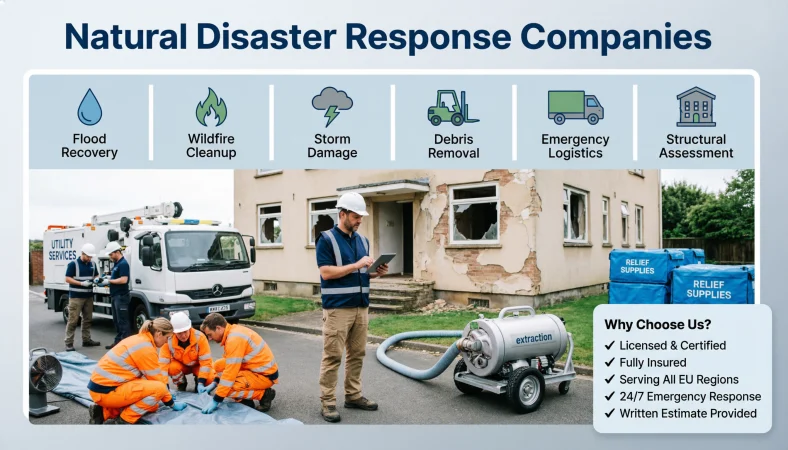
Natural disaster response companies help communities and businesses prepare for, respond to, and recover from disasters such as floods, hurricanes, wildfires, earthquakes, and severe storms. Their services may include emergency cleanup, debris removal, water extraction, temporary facilities, logistics, and property restoration.
Top alternatives: disaster recovery companies, emergency response contractors, disaster restoration services, emergency management companies, disaster cleanup and recovery services.
When a flood fills a building, a wildfire forces families to evacuate, or a powerful storm damages an entire neighborhood, recovery takes more than a few phone calls and a cleanup crew. That’s where natural disaster response companies can make a real difference.
These organizations provide specialized services that help communities, businesses, and public agencies manage emergencies and begin rebuilding safely.
Choosing the right company matters because not every provider handles every type of disaster. Some specialize in water damage and mold remediation, while others focus on debris removal, temporary power, logistics, engineering, or large-scale emergency management.
Whether you’re a homeowner comparing restoration services, a business planning for disruptions, or an organization preparing a response contract, knowing what each company offers can save valuable time. This guide explains the main provider categories, services, selection criteria, and questions to ask before an emergency happens.
Natural Disaster Response Companies for Emergency Cleanup
1. “Choose a company that handles large-scale disaster cleanup.”
Example: Use this when comparing providers after a major storm or flood.
Meaning: Find a team equipped for extensive cleanup work.
2. “Ask whether the company offers 24/7 emergency assistance.”
Example: Use this when an incident happens outside normal business hours.
Meaning: Confirm how quickly help may be available.
3. “Check whether the provider serves your area.”
Example: Use this before contacting a national restoration company.
Meaning: Make sure the company can reach your location.
4. “Look for experience with your specific disaster type.”
Example: Use this when choosing between flood cleanup and wildfire recovery specialists.
Meaning: Match the provider’s expertise to your needs.
5. “Confirm that cleanup staff have relevant training.”
Example: Use this when hiring a team to enter a damaged commercial property.
Meaning: Help ensure work is handled safely.
6. “Request a written scope of work.”
Example: Use this before approving a large cleanup project.
Meaning: Clarify which tasks the company will perform.
7. “Ask how hazardous debris will be handled.”
Example: Use this when a storm leaves damaged materials across a property.
Meaning: Confirm that potential hazards receive appropriate treatment.
8. “Check whether equipment and crews are available.”
Example: Use this during a regional disaster when demand may be high.
Meaning: Understand the provider’s current capacity.
9. “Request an estimated timeline for the first response.”
Example: Use this when damaged facilities need urgent attention.
Meaning: Set realistic expectations about mobilization.
10. “Ask how cleanup progress will be documented.”
Example: Use this when coordinating repairs with an insurer.
Meaning: Create a record of completed work.
11. “Compare estimates before approving nonurgent work.”
Example: Use this when several qualified providers are available.
Meaning: Evaluate cost and service scope together.
12. “Confirm who will supervise the cleanup.”
Example: Use this when the project involves several crews or subcontractors.
Meaning: Establish clear responsibility for the work.
Natural Disaster Response Companies for Flood and Water Damage
1. “Look for a provider experienced in floodwater extraction.”
Example: Use this when a flooded basement or business needs water removal.
Meaning: Find a company with appropriate extraction equipment.
2. “Ask how the team will assess hidden moisture.”
Example: Use this when walls, floors, or insulation have become wet.
Meaning: Help identify moisture that may not be visible.
3. “Confirm the drying and dehumidification plan.”
Example: Use this after water has been removed from a building.
Meaning: Support thorough drying and reduce secondary damage.
4. “Check whether the company handles sewage-contaminated water.”
Example: Use this when floodwater may contain sewage or other contaminants.
Meaning: Ensure the provider has suitable capabilities for contaminated water.
5. “Ask how damaged materials will be evaluated.”
Example: Use this when carpets, drywall, or insulation have been soaked.
Meaning: Determine what can be safely restored and what needs removal.
6. “Request moisture readings and progress updates.”
Example: Use this when restoration work continues over several days.
Meaning: Track drying progress with documented information.
7. “Confirm the plan for preventing mold growth.”
Example: Use this when water has affected a property for an extended period.
Meaning: Address moisture conditions that can contribute to mold.
8. “Ask whether the company provides structural drying.”
Example: Use this when water has reached wall cavities or subfloors.
Meaning: Check whether the provider can address deeper moisture.
9. “Verify that workers use appropriate protective equipment.”
Example: Use this when cleanup involves contaminated floodwater.
Meaning: Help protect workers and occupants from exposure.
10. “Check whether contents can be cleaned and restored.”
Example: Use this when furniture, documents, or equipment have water damage.
Meaning: Explore restoration options before discarding belongings.
11. “Ask for a clear estimate of water restoration costs.”
Example: Use this when comparing proposals from restoration contractors.
Meaning: Understand the expected charges and included services.
12. “Do not enter a flooded building until it is safe.”
Example: Use this when floodwater may have affected electricity or structural stability.
Meaning: Avoid hazards while waiting for qualified assessment.
Natural Disaster Response Companies for Wildfire Recovery
1. “Choose a provider with fire and smoke restoration experience.”
Example: Use this when a building has smoke damage after a nearby wildfire.
Meaning: Find specialists familiar with soot, smoke, and fire-related damage.
2. “Ask whether the company assesses soot contamination.”
Example: Use this when surfaces appear stained after a fire.
Meaning: Determine how affected materials will be evaluated.
3. “Confirm the proposed smoke odor removal method.”
Example: Use this when smoke smells remain inside a home or office.
Meaning: Understand how the team plans to address lingering odors.
4. “Ask how ash and debris will be removed safely.”
Example: Use this when wildfire residue covers outdoor areas.
Meaning: Help prevent unsafe handling and unnecessary spread of debris.
5. “Check whether contents cleaning is available.”
Example: Use this when clothing, furniture, or equipment may be salvageable.
Meaning: Find out whether belongings can be restored.
6. “Request an assessment of heat and fire damage.”
Example: Use this when doors, windows, or structural materials were exposed to flames.
Meaning: Identify damage that may affect safety or repair needs.
7. “Ask about cleaning methods for smoke-affected HVAC systems.”
Example: Use this when smoke may have entered building ventilation.
Meaning: Address potential contamination in the air distribution system.
8. “Confirm that the property is safe to enter before restoration.”
Example: Use this after a wildfire has passed through an area.
Meaning: Avoid entering a site with unresolved structural or environmental hazards.
9. “Ask whether the provider works with insurance adjusters.”
Example: Use this when documenting fire and smoke damage.
Meaning: Understand how restoration records may support the claim process.
10. “Check whether outdoor cleanup is included.”
Example: Use this when a property has damaged fencing, landscaping, or scattered debris.
Meaning: Clarify whether the proposal covers exterior work.
11. “Request a written inventory of damaged contents.”
Example: Use this when household or business belongings have been affected.
Meaning: Keep a record to support recovery planning and insurance documentation.
12. “Ask for a phased recovery plan.”
Example: Use this when the property needs urgent stabilization before repairs.
Meaning: Organize work into manageable stages.
Natural Disaster Response Companies for Hurricane and Storm Damage
1. “Find a contractor experienced in storm-damaged buildings.”
Example: Use this after high winds damage a roof or exterior wall.
Meaning: Match the provider to the type of damage.
2. “Ask whether emergency roof protection is available.”
Example: Use this when rain could enter through a damaged roof.
Meaning: Reduce further exposure while permanent repairs are arranged.
3. “Confirm whether temporary board-up services are offered.”
Example: Use this when windows or doors have been broken by a storm.
Meaning: Secure openings against weather and unauthorized access.
4. “Check whether the company handles fallen tree debris.”
Example: Use this when branches block access to a building.
Meaning: Determine whether tree removal is within the provider’s services.
5. “Ask how the team prioritizes urgent structural hazards.”
Example: Use this when a storm damages several parts of a property.
Meaning: Help address immediate safety concerns first.
6. “Request documentation of visible storm damage.”
Example: Use this before repairs begin.
Meaning: Preserve useful records for planning and insurance discussions.
7. “Confirm that electrical hazards will be assessed by qualified professionals.”
Example: Use this when downed lines or damaged electrical equipment are nearby.
Meaning: Avoid unsafe handling of electrical systems.
8. “Ask about temporary power and backup equipment.”
Example: Use this when a business needs essential operations restored.
Meaning: Determine whether temporary power solutions are available.
9. “Check whether water intrusion is part of the assessment.”
Example: Use this when wind-driven rain has entered a building.
Meaning: Address both exterior damage and resulting moisture.
10. “Ask how the company will protect undamaged areas.”
Example: Use this when repairs will take place around equipment or inventory.
Meaning: Reduce the risk of additional damage during restoration.
11. “Confirm the expected timeline for permanent repairs.”
Example: Use this when temporary protection is already in place.
Meaning: Understand what remains before full restoration.
12. “Avoid contractors who pressure you into immediate, unclear agreements.”
Example: Use this when several companies arrive after a major storm.
Meaning: Give yourself time to verify credentials and understand contract terms.
Natural Disaster Response Companies for Earthquake Recovery
1. “Look for qualified structural assessment services.”
Example: Use this after an earthquake causes visible cracks or shifting.
Meaning: Help determine whether a building can be safely occupied.
2. “Ask whether the company coordinates with structural engineers.”
Example: Use this when damage may affect load-bearing components.
Meaning: Ensure technical assessment is handled by qualified professionals.
3. “Confirm that re-entry follows official safety guidance.”
Example: Use this when a building appears intact but may have hidden damage.
Meaning: Avoid assuming that a property is safe based on appearance alone.
4. “Ask whether temporary stabilization is available.”
Example: Use this when a damaged structure needs immediate protective measures.
Meaning: Find out whether urgent stabilization is within the provider’s scope.
5. “Request an inspection of damaged utilities.”
Example: Use this when gas, water, or electrical systems may have been affected.
Meaning: Identify utility hazards that need qualified attention.
6. “Check whether debris removal includes damaged building materials.”
Example: Use this when broken masonry or plaster blocks access.
Meaning: Clarify what materials the cleanup team can handle.
7. “Ask how aftershocks affect the work plan.”
Example: Use this when restoration begins in an area with continued seismic activity.
Meaning: Account for changing conditions and potential safety risks.
8. “Confirm whether emergency shoring requires specialist approval.”
Example: Use this when temporary supports may be needed.
Meaning: Make sure structural interventions are appropriately assessed.
9. “Ask for a written record of the initial damage assessment.”
Example: Use this when planning repairs or discussing a claim.
Meaning: Create a documented starting point for recovery.
10. “Check whether the company coordinates with local authorities.”
Example: Use this when permits or occupancy restrictions may apply.
Meaning: Help keep recovery work aligned with official requirements.
11. “Ask whether repair work requires permits or inspections.”
Example: Use this before approving major structural repairs.
Meaning: Understand the compliance requirements for rebuilding.
12. “Prioritize life safety before property recovery.”
Example: Use this when deciding whether to enter or salvage items from a damaged building.
Meaning: Keep people safe while authorities assess the site.
Natural Disaster Response Companies for Debris Removal
1. “Ask whether the company removes storm debris.”
Example: Use this when fallen branches and damaged materials cover a property.
Meaning: Confirm that the provider offers the required cleanup service.
2. “Check whether large-scale debris hauling is available.”
Example: Use this when a commercial site has substantial disaster waste.
Meaning: Find out whether the company has suitable vehicles and capacity.
3. “Confirm where collected debris will be taken.”
Example: Use this when planning cleanup after a flood or hurricane.
Meaning: Understand the proposed disposal or processing arrangements.
4. “Ask whether debris sorting is included.”
Example: Use this when materials need to be separated for disposal or recycling.
Meaning: Clarify how different waste streams will be handled.
5. “Check whether hazardous materials require a specialist.”
Example: Use this when damaged buildings may contain chemicals or asbestos.
Meaning: Avoid assigning hazardous work to an unqualified general cleanup crew.
6. “Request an estimate based on the debris volume.”
Example: Use this when comparing bids for a large cleanup project.
Meaning: Understand how quantities affect pricing.
7. “Confirm access requirements for heavy equipment.”
Example: Use this when roads or driveways have been damaged.
Meaning: Determine whether machinery can safely reach the work area.
8. “Ask whether tree removal is performed by qualified crews.”
Example: Use this when fallen trees are leaning against structures.
Meaning: Ensure complex tree hazards receive appropriate expertise.
9. “Check how cleanup routes will be kept clear.”
Example: Use this when emergency vehicles still need access to the area.
Meaning: Reduce interference with essential response operations.
10. “Ask how completed work will be recorded.”
Example: Use this when debris removal is part of a larger recovery contract.
Meaning: Keep a record of quantities, locations, and completed tasks.
11. “Confirm whether permits or local approvals are needed.”
Example: Use this when debris is being removed from public or protected land.
Meaning: Help avoid unauthorized disposal or removal.
12. “Coordinate debris removal with the wider recovery plan.”
Example: Use this when several contractors are working at the same site.
Meaning: Prevent scheduling conflicts and duplicated work.
Natural Disaster Response Companies for Mold Remediation
1. “Choose a provider experienced in post-flood mold remediation.”
Example: Use this when mold appears after water damage.
Meaning: Find a team familiar with moisture-related contamination.
2. “Ask whether the source of moisture will be addressed.”
Example: Use this when mold keeps returning after surface cleaning.
Meaning: Prevent ongoing moisture from undermining the remediation work.
3. “Check whether containment is needed.”
Example: Use this when mold affects a larger area or sensitive workspace.
Meaning: Reduce the spread of dust and contaminated material during work.
4. “Ask how affected materials will be evaluated.”
Example: Use this when drywall, insulation, or flooring shows mold growth.
Meaning: Determine what can be cleaned and what may require removal.
5. “Confirm that workers use appropriate protective equipment.”
Example: Use this when the job involves significant mold contamination.
Meaning: Help protect workers during remediation.
6. “Request a written remediation scope.”
Example: Use this when comparing specialist proposals.
Meaning: Clarify the areas and tasks covered by the contract.
7. “Ask whether independent assessment is appropriate.”
Example: Use this when contamination is extensive or the situation is disputed.
Meaning: Consider whether an independent professional should verify the scope.
8. “Check whether HVAC systems need specialist inspection.”
Example: Use this when mold or moisture may have reached ventilation equipment.
Meaning: Address possible contamination beyond visible surfaces.
9. “Ask how the company will verify completion.”
Example: Use this after the remediation work is finished.
Meaning: Understand what checks or documentation will be provided.
10. “Do not cover visible mold before assessing the moisture problem.”
Example: Use this when planning repairs after a flood.
Meaning: Avoid hiding a problem that may continue beneath the surface.
11. “Check the provider’s insurance and relevant qualifications.”
Example: Use this when hiring a mold remediation contractor.
Meaning: Evaluate whether the company is suitably prepared for the work.
12. “Address leaks and dampness before rebuilding.”
Example: Use this when restoring walls and flooring after water damage.
Meaning: Reduce the chance of recurring moisture problems.
Natural Disaster Response Companies for Emergency Logistics
1. “Ask whether the provider can transport emergency supplies.”
Example: Use this when relief materials need to reach an affected community.
Meaning: Confirm that the company supports emergency freight or delivery.
2. “Check whether temporary warehousing is available.”
Example: Use this when supplies arrive before local distribution is ready.
Meaning: Create a practical place to store resources.
3. “Confirm how inventory will be tracked.”
Example: Use this when managing food, water, equipment, or relief kits.
Meaning: Improve visibility over available supplies.
4. “Ask whether the company can coordinate multiple delivery points.”
Example: Use this when relief goods must reach several shelters.
Meaning: Support organized distribution.
5. “Check whether vehicles can reach the affected area.”
Example: Use this when roads may be flooded or damaged.
Meaning: Assess access limitations before scheduling deliveries.
6. “Ask about backup routes and transport options.”
Example: Use this when primary roads may close during a disaster.
Meaning: Improve flexibility if access changes.
7. “Confirm handling requirements for sensitive supplies.”
Example: Use this when transporting temperature-sensitive medical items.
Meaning: Protect supplies that require special conditions.
8. “Request clear delivery records.”
Example: Use this when several organizations share responsibility for relief goods.
Meaning: Document where supplies were sent and received.
9. “Ask who is responsible for unloading and distribution.”
Example: Use this when arranging deliveries to a relief center.
Meaning: Avoid confusion over the final handoff.
10. “Confirm the process for urgent transport requests.”
Example: Use this when essential equipment is needed quickly.
Meaning: Understand how priority shipments are handled.
11. “Check whether communications remain available during outages.”
Example: Use this when coordinating logistics during a network disruption.
Meaning: Make sure updates can still be exchanged.
12. “Coordinate logistics with local emergency management.”
Example: Use this when supplying a community after a major event.
Meaning: Align deliveries with local needs and priorities.
Natural Disaster Response Companies for Temporary Power and Facilities
1. “Ask whether temporary generators are available.”
Example: Use this when a disaster interrupts electricity at an essential site.
Meaning: Check whether backup power can be provided.
2. “Confirm the power capacity required for critical equipment.”
Example: Use this when a clinic or business needs essential systems running.
Meaning: Help match equipment to actual power demand.
3. “Ask whether qualified technicians handle installation.”
Example: Use this when temporary electrical systems are needed.
Meaning: Ensure setup is performed by appropriately qualified personnel.
4. “Check the plan for safe fuel storage and supply.”
Example: Use this when generators will operate for an extended period.
Meaning: Address fuel availability and related hazards.
5. “Ask whether temporary lighting can be supplied.”
Example: Use this when buildings or outdoor work areas lack lighting.
Meaning: Improve visibility for essential operations.
6. “Confirm whether temporary shelters or modular facilities are available.”
Example: Use this when a building cannot be occupied after a disaster.
Meaning: Identify options for short-term accommodation or operations.
7. “Check whether toilets and handwashing facilities can be provided.”
Example: Use this when a relief site needs basic sanitation.
Meaning: Support hygiene and health at temporary facilities.
8. “Ask about setup time and delivery requirements.”
Example: Use this when planning temporary facilities at a damaged site.
Meaning: Understand how quickly the site can become operational.
9. “Confirm inspection and maintenance responsibilities.”
Example: Use this when rented equipment will remain in use for several days.
Meaning: Clarify who keeps the equipment safe and functional.
10. “Ask whether equipment can operate in local weather conditions.”
Example: Use this when power equipment must run outdoors during storms.
Meaning: Match equipment to environmental requirements.
11. “Check whether backup equipment is available.”
Example: Use this when a power failure would interrupt critical services.
Meaning: Understand the options if primary equipment stops working.
12. “Plan safe shutdown and equipment removal.”
Example: Use this when temporary services are no longer needed.
Meaning: Ensure equipment is disconnected and removed appropriately.
Natural Disaster Response Companies for Emergency Management Consulting
1. “Choose a consultant with experience in disaster planning.”
Example: Use this when a business wants to prepare for local hazards.
Meaning: Find expertise relevant to emergency readiness.
2. “Ask for a risk assessment tailored to your location.”
Example: Use this when planning for floods, storms, or wildfires.
Meaning: Identify risks that are relevant to your site.
3. “Request an emergency operations plan.”
Example: Use this when developing procedures for staff and facility managers.
Meaning: Establish roles, responsibilities, and response actions.
4. “Ask whether the consultant supports tabletop exercises.”
Example: Use this when a team needs to practice decisions without a full-scale drill.
Meaning: Test planning and communication through realistic scenarios.
5. “Check whether staff training is included.”
Example: Use this when employees need to understand emergency roles.
Meaning: Build practical readiness across the organization.
6. “Ask how plan effectiveness will be measured.”
Example: Use this after an exercise or review.
Meaning: Identify gaps that need improvement.
7. “Confirm that the plan includes accessible evacuation arrangements.”
Example: Use this when preparing for people with different mobility or communication needs.
Meaning: Make emergency planning more inclusive.
8. “Ask whether continuity planning is part of the service.”
Example: Use this when a business needs to keep essential operations running.
Meaning: Prepare for disruptions beyond the immediate response.
9. “Check whether the consultant coordinates with local agencies.”
Example: Use this when your organization needs to align with local response procedures.
Meaning: Improve coordination with external partners.
10. “Request clear deliverables and review dates.”
Example: Use this when signing a consulting agreement.
Meaning: Establish what will be delivered and when it will be reviewed.
11. “Ask how changing risks will be incorporated.”
Example: Use this when your site or operations change over time.
Meaning: Keep the plan relevant as circumstances evolve.
12. “Schedule regular reviews and exercises.”
Example: Use this when an emergency plan has not been tested recently.
Meaning: Keep staff familiar with the plan and its updates.
Natural Disaster Response Companies for Infrastructure and Engineering
1. “Find qualified engineers for damaged infrastructure.”
Example: Use this when bridges, roads, or major structures are affected.
Meaning: Ensure technical assessments are carried out by appropriate specialists.
2. “Ask whether structural inspections are included.”
Example: Use this when damage may affect a building’s stability.
Meaning: Clarify whether the service includes a formal structural assessment.
3. “Check whether temporary access routes can be planned.”
Example: Use this when a disaster blocks normal access to a site.
Meaning: Explore safe ways to restore access.
4. “Request a documented assessment of critical damage.”
Example: Use this when prioritizing repairs after a storm or earthquake.
Meaning: Create a technical basis for recovery decisions.
5. “Ask how utility damage will be coordinated.”
Example: Use this when water, power, or communications infrastructure is affected.
Meaning: Help organize repairs among responsible service providers.
6. “Confirm whether permits and inspections are required.”
Example: Use this before starting substantial rebuilding work.
Meaning: Understand the applicable approval process.
7. “Ask whether the design accounts for future hazards.”
Example: Use this when rebuilding infrastructure in a flood-prone area.
Meaning: Consider resilience alongside immediate repairs.
8. “Check whether geotechnical expertise is needed.”
Example: Use this when landslides or ground movement have occurred.
Meaning: Address risks associated with soil and slope stability.
9. “Ask how repairs will affect nearby operations.”
Example: Use this when infrastructure work occurs near active businesses.
Meaning: Plan around access and service disruptions.
10. “Confirm the qualifications of subcontractors.”
Example: Use this when a contractor brings in specialist teams.
Meaning: Check that technical work is assigned appropriately.
11. “Request milestones for the recovery project.”
Example: Use this when repairs will continue over several months.
Meaning: Track progress and major decision points.
12. “Include maintenance needs in the recovery plan.”
Example: Use this when a repaired system will return to long-term service.
Meaning: Support durability after the initial restoration.
Natural Disaster Response Companies for Public Health and Environmental Cleanup
1. “Ask whether the company handles contaminated sites.”
Example: Use this when a disaster releases chemicals or pollutants.
Meaning: Confirm that the provider has relevant environmental capabilities.
2. “Check whether hazardous materials require a licensed specialist.”
Example: Use this when damaged containers may have leaked unknown substances.
Meaning: Avoid assigning hazardous work to a general cleanup contractor.
3. “Request an environmental assessment when contamination is suspected.”
Example: Use this after a spill caused by flooding or structural damage.
Meaning: Identify potential risks before cleanup proceeds.
4. “Ask how contaminated waste will be transported.”
Example: Use this when cleanup produces regulated waste.
Meaning: Confirm that handling and disposal follow applicable requirements.
5. “Check whether air or water sampling is appropriate.”
Example: Use this when environmental contamination may affect occupants.
Meaning: Determine whether testing is needed to assess conditions.
6. “Confirm how affected areas will be isolated.”
Example: Use this when cleanup must occur near occupied spaces.
Meaning: Reduce unnecessary exposure while work is underway.
7. “Ask whether specialist protective equipment is required.”
Example: Use this when workers may encounter hazardous dust or chemicals.
Meaning: Help protect personnel from exposure.
8. “Request documentation of waste removal.”
Example: Use this when a site owner needs records of cleanup activities.
Meaning: Maintain traceability for materials that were removed.
9. “Check whether the provider follows relevant regulations.”
Example: Use this when hiring an environmental remediation contractor.
Meaning: Confirm that the work is planned around applicable requirements.
10. “Ask whether public health authorities should be involved.”
Example: Use this when contamination may affect a wider community.
Meaning: Help ensure risks are assessed by the appropriate authorities.
11. “Confirm how completion will be verified.”
Example: Use this when a cleanup project is nearing completion.
Meaning: Understand what evidence supports the final assessment.
12. “Do not enter a suspected contaminated area without authorization.”
Example: Use this when unknown substances or hazardous debris are present.
Meaning: Avoid unnecessary exposure before experts assess the site.
Natural Disaster Response Companies for Business Continuity and IT Recovery
1. “Ask whether the provider supports disaster recovery planning.”
Example: Use this when a business needs to prepare for outages and physical disruptions.
Meaning: Find out whether continuity planning is part of its services.
2. “Confirm how critical data will be backed up.”
Example: Use this when floods or storms could damage on-site equipment.
Meaning: Protect important information from physical loss.
3. “Check whether recovery systems are tested.”
Example: Use this when reviewing a provider’s business continuity proposal.
Meaning: Confirm that backup arrangements can actually be used.
4. “Ask how quickly essential systems can be restored.”
Example: Use this when estimating downtime after a disaster.
Meaning: Establish realistic recovery expectations.
5. “Identify which business operations must return first.”
Example: Use this when creating a continuity plan.
Meaning: Prioritize services that are essential to operations.
6. “Confirm whether remote work arrangements are included.”
Example: Use this when employees may be unable to access the main office.
Meaning: Explore ways to continue work during facility closures.
7. “Ask how the provider protects sensitive data.”
Example: Use this when arranging off-site backups or recovery hosting.
Meaning: Understand the safeguards used for confidential information.
8. “Check whether alternative work locations are available.”
Example: Use this when a facility is unsafe or inaccessible.
Meaning: Plan for temporary operations elsewhere.
9. “Request a clear recovery timeline and responsibilities.”
Example: Use this when coordinating IT teams and business leaders.
Meaning: Make the recovery process easier to manage.
10. “Ask whether backup communications are part of the plan.”
Example: Use this when phone or internet service could be disrupted.
Meaning: Keep teams connected during an outage.
11. “Test the continuity plan before an emergency occurs.”
Example: Use this during an annual business resilience exercise.
Meaning: Identify weaknesses before a real disruption.
12. “Review the plan after any major operational change.”
Example: Use this when a business opens a new location or changes systems.
Meaning: Keep recovery arrangements aligned with current operations.
Natural Disaster Response Companies for International Relief and Recovery
1. “Check whether the organization works in the affected country.”
Example: Use this when seeking help after an overseas disaster.
Meaning: Confirm that the provider has relevant local reach.
2. “Ask about coordination with local authorities.”
Example: Use this when a relief project involves public agencies.
Meaning: Align support with local priorities and requirements.
3. “Confirm language and communication capabilities.”
Example: Use this when coordinating across countries and communities.
Meaning: Reduce misunderstandings during urgent operations.
4. “Ask how relief supplies are sourced and distributed.”
Example: Use this when a community needs food, water, or basic supplies.
Meaning: Understand how assistance reaches intended recipients.
5. “Check whether local partners are involved.”
Example: Use this when planning a recovery project far from the provider’s base.
Meaning: Understand how local knowledge and capacity support delivery.
6. “Request transparent reporting on project activities.”
Example: Use this when an organization funds emergency recovery work.
Meaning: Track how resources are used and what has been completed.
7. “Ask how vulnerable groups will be supported.”
Example: Use this when relief must reach older people, children, or people with disabilities.
Meaning: Consider different needs during emergency assistance.
8. “Check how the organization handles safeguarding concerns.”
Example: Use this when services involve displaced people or vulnerable communities.
Meaning: Help protect people from exploitation and harm.
9. “Confirm whether logistics can reach remote communities.”
Example: Use this when roads or transport networks are disrupted.
Meaning: Assess whether assistance can reach people outside major centers.
10. “Ask whether the provider supports long-term recovery.”
Example: Use this when emergency relief needs to transition into rebuilding.
Meaning: Understand whether services continue beyond the immediate response.
11. “Check how local feedback is collected.”
Example: Use this when evaluating a community recovery program.
Meaning: Ensure affected people can communicate their needs and concerns.
12. “Verify the organization’s identity and credentials before donating.”
Example: Use this when an unfamiliar organization requests disaster donations.
Meaning: Reduce the risk of sending funds to an unverified group.
Natural Disaster Response Companies: How to Choose the Right Provider
1. “Verify the company’s legal identity and business credentials.”
Example: Use this before signing a disaster recovery contract.
Meaning: Confirm who you are hiring.
2. “Check insurance coverage and relevant licenses.”
Example: Use this when a contractor will perform restoration or specialist work.
Meaning: Evaluate whether the provider meets applicable requirements.
3. “Ask for references from similar projects.”
Example: Use this when comparing companies with different levels of experience.
Meaning: Learn whether the provider has handled comparable work.
4. “Compare the full scope, not just the headline price.”
Example: Use this when one estimate is much lower than another.
Meaning: Check whether the proposals include the same services.
5. “Ask whether subcontractors will be used.”
Example: Use this when a project involves several specialist trades.
Meaning: Understand who will perform the work and who supervises it.
6. “Confirm emergency availability in writing.”
Example: Use this when arranging a preparedness contract before storm season.
Meaning: Clarify response commitments and limitations.
7. “Ask how change orders and extra charges are approved.”
Example: Use this when the extent of damage is not yet fully known.
Meaning: Reduce unexpected costs and disagreements.
8. “Review payment terms before work begins.”
Example: Use this when a provider requests a deposit or staged payments.
Meaning: Understand your financial commitments.
9. “Ask how disputes and complaints are handled.”
Example: Use this when evaluating a long-term recovery contractor.
Meaning: Know the process for resolving concerns.
10. “Check whether the company can scale up when needed.”
Example: Use this when a disaster may affect multiple facilities.
Meaning: Assess whether the provider has enough resources for the project.
11. “Keep copies of contracts, estimates, and progress records.”
Example: Use this throughout a restoration project.
Meaning: Maintain a useful record of agreements and work completed.
12. “Choose proven capability over pressure tactics.”
Example: Use this when a contractor demands an immediate decision without clear documentation.
Meaning: Make a careful choice based on evidence and fit.
Natural Disaster Response Companies: Common Questions and Practical Answers
1. “Start with the type of disaster and damage involved.”
Example: Use this when creating a shortlist of possible providers.
Meaning: Narrow your search to relevant specialties.
2. “Ask whether the company handles residential or commercial properties.”
Example: Use this when comparing firms that serve different customer groups.
Meaning: Find a provider suited to the property involved.
3. “Confirm the service area before requesting a site visit.”
Example: Use this when contacting a national restoration brand.
Meaning: Avoid delays caused by unavailable local coverage.
4. “Ask whether the provider works with insurance companies.”
Example: Use this when restoration costs may be part of an insurance claim.
Meaning: Understand how documentation and coordination are handled.
5. “Find out whether emergency stabilization is offered.”
Example: Use this when damage must be secured before permanent repairs.
Meaning: Identify options for reducing further harm.
6. “Request a written estimate and service timeline.”
Example: Use this when comparing qualified contractors.
Meaning: Make costs and expectations easier to review.
7. “Check whether the provider can work with public agencies.”
Example: Use this when a local authority needs a disaster recovery contractor.
Meaning: Confirm experience with public-sector coordination and requirements.
8. “Ask about preparedness contracts before disaster season.”
Example: Use this when a business wants to avoid searching for providers during an emergency.
Meaning: Plan access to services in advance.
9. “Check whether the company provides post-disaster assessments.”
Example: Use this when the full extent of damage is uncertain.
Meaning: Understand the assessment services available.
10. “Ask what information is needed for a rapid estimate.”
Example: Use this when contacting a provider after an incident.
Meaning: Prepare photos, location details, and a description of the damage when safe to do so.
11. “Keep personal safety ahead of cleanup schedules.”
Example: Use this when a damaged property may contain structural or electrical hazards.
Meaning: Do not rush into an unsafe area to begin recovery.
12. “Use official emergency guidance during an active disaster.”
Example: Use this when evacuation orders or hazard alerts are in effect.
Meaning: Follow instructions from the responsible emergency authorities before arranging property work.
FAQs
What Are Natural Disaster Response Companies?
They are private providers that help with emergency cleanup, restoration, logistics, engineering, and disaster recovery.
What Services Do Disaster Response Companies Offer?
Services may include water removal, debris cleanup, temporary facilities, damage assessment, and property restoration.
How Do I Choose a Disaster Response Company?
Check its relevant experience, service area, credentials, insurance, written scope, and response availability.
Do Disaster Response Companies Work With Insurance?
Many provide estimates and damage records, but coverage and coordination depend on the company and insurer.
Can Businesses Hire Disaster Response Companies Before a Disaster?
Yes. Businesses can arrange preparedness contracts and identify recovery providers in advance.
Are All Disaster Response Companies Available 24/7?
No. Ask each provider about emergency hours, service areas, and actual availability.
Do These Companies Help After Floods and Wildfires?
Some specialize in flood restoration, while others handle fire, smoke, ash, and related cleanup.
What Should I Ask Before Signing a Contract?
Ask about scope, cost, timing, insurance, subcontractors, safety practices, and change-order terms.
Are Private Disaster Response Companies the Same as Emergency Services?
No. Private contractors generally support recovery and restoration, while public emergency services handle official response duties.
What Should I Do During an Active Disaster?
Follow official alerts, evacuate if instructed, and contact emergency services when immediate help is needed.
Conclusion
Natural disaster response companies can help communities, homeowners, and businesses move from immediate disruption toward safe recovery. The right provider depends on the situation, whether you need flood cleanup, wildfire restoration, debris removal, temporary power, engineering support, or long-term recovery planning. Before hiring a company, verify its qualifications, service area, insurance, experience, and written scope of work.
Whenever possible, identify trusted providers before disaster season rather than scrambling to compare options after damage occurs. Keep safety first, follow official emergency instructions, and document important decisions. Save this guide for future planning, share it with your team, and take one practical step toward better preparedness today.