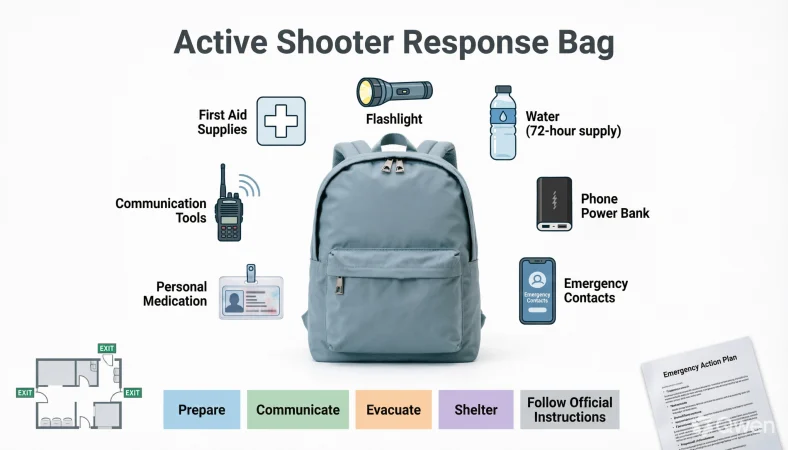
An active shooter response bag is best understood as an emergency preparedness bag designed to support evacuation, communication, basic first aid, and personal needs during a dangerous workplace or public emergency.
It should complement, not replace, an emergency action plan and professional emergency services. OSHA recommends planning for evacuation, sheltering, communication, accountability, and appropriate emergency supplies.
Top alternatives: emergency response bag, workplace emergency bag, evacuation preparedness kit, emergency first aid bag, crisis preparedness kit
When people hear active shooter response bag, the conversation can get serious very quickly. Unlike an everyday backpack, an emergency bag should be part of a broader safety plan, not a substitute for training or emergency services.
In a workplace, school, office, or public setting, the priorities are staying alert, following the site’s emergency plan, evacuating when a safe route is available, sheltering when appropriate, communicating clearly, and getting professional help.
OSHA recommends that workplaces develop emergency action plans covering reporting, evacuation routes, accountability, rescue or medical duties, and employee training. A well-organized bag can support those preparations with practical items such as basic first aid supplies, identification, communication backups, water, medications, and simple emergency necessities. The goal is preparedness, not confrontation.
Practical Active Shooter Response Bag Essentials
“Keep it focused on emergency support.”
Use this when deciding what belongs in a preparedness bag.
Meaning: The bag should support safety, communication, evacuation, and basic care.
“Pack supplies you already know how to use.”
Use this when assembling first aid or emergency equipment.
Meaning: Familiar items are more useful than complicated equipment you have never practiced with.
“Think evacuation first.”
Use this when creating a workplace emergency kit.
Meaning: The bag should complement a plan centered on reaching safety.
“Keep essential personal items accessible.”
Use this when preparing for an unexpected evacuation.
Meaning: Important medications, identification, and necessary personal items should be easy to find.
“Add a compact first aid kit.”
Use this when building a general emergency bag.
Meaning: Basic first aid supplies can support minor injuries while professional help is being contacted.
“Include a reliable flashlight.”
Use this when preparing for emergencies involving power loss or poor visibility.
Meaning: A small flashlight can improve visibility during evacuation.
“Carry backup communication power.”
Use this when preparing a bag for work or travel.
Meaning: A charged power bank can help maintain phone access when outlets are unavailable.
“Keep water available.”
Use this when building a general preparedness kit.
Meaning: Basic hydration can be useful when an emergency disrupts normal routines.
“Choose a bag that is easy to carry.”
Use this when selecting the container for emergency supplies.
Meaning: A manageable bag is more practical during movement or evacuation.
“Label important medical information.”
Use this when organizing personal emergency supplies.
Meaning: Clearly available information can help communicate important needs.
“Review the bag regularly.”
Use this when maintaining an emergency kit.
Meaning: Supplies can expire, batteries can lose charge, and personal needs can change.
“Let your emergency plan lead the packing list.”
Use this when preparing a bag for a specific workplace.
Meaning: Site-specific planning should determine what supplies are actually useful.
Workplace Emergency Bag Responses
“Know where your emergency bag is stored.”
Use this when discussing workplace preparedness with colleagues.
Meaning: A bag is useful only if people can access it when appropriate.
“Pair the bag with the workplace emergency plan.”
Use this when preparing an office safety program.
Meaning: Supplies should support established procedures rather than replace them.
“Keep emergency supplies clearly organized.”
Use this when managing shared workplace equipment.
Meaning: Organization helps people locate essentials without unnecessary searching.
“Post the emergency plan where employees can find it.”
Use this when improving workplace preparedness.
Meaning: Employees need accessible information before an emergency occurs.
“Know your exits before you need them.”
Use this when discussing evacuation readiness.
Meaning: Familiarity with escape routes can reduce confusion during emergencies.
“Know more than one way out.”
Use this when reviewing a workplace evacuation plan.
Meaning: Multiple exit options can be important when one route becomes unavailable.
“Keep pathways clear.”
Use this when checking an office or facility for emergency readiness.
Meaning: Unobstructed routes support safer evacuation.
“Practice the plan, not just the paperwork.”
Use this when discussing emergency drills.
Meaning: Training helps employees understand what to do before an actual emergency.
“Make accountability part of the plan.”
Use this when preparing an evacuation procedure.
Meaning: Organizations need a way to account for workers after evacuation.
“Include accessibility needs.”
Use this when creating an inclusive emergency plan.
Meaning: People with disabilities or functional needs may require specific evacuation support.
“Keep emergency contacts updated.”
Use this when reviewing workplace preparedness documents.
Meaning: Outdated contact information can create confusion during a crisis.
“Review the plan when responsibilities change.”
Use this when onboarding or changing workplace roles.
Meaning: Emergency responsibilities should remain current and understood.
OSHA identifies reporting procedures, escape routes, accountability, rescue or medical duties, designated contacts, training, and plan review as important elements of emergency action planning.
Basic First Aid Bag Ideas
“Start with adhesive bandages.”
Use this when building a basic first aid section.
Meaning: Simple wound supplies are useful for everyday minor injuries.
“Add sterile gauze.”
Use this when preparing a general emergency first aid kit.
Meaning: Gauze can support basic wound care while awaiting professional assistance.
“Include medical tape.”
Use this when organizing first aid supplies.
Meaning: Tape can help secure appropriate dressings.
“Pack disposable gloves.”
Use this when preparing first aid equipment.
Meaning: Gloves can provide a basic protective barrier during first aid.
“Include antiseptic wipes.”
Use this when creating a compact first aid kit.
Meaning: They can support basic cleaning of minor wounds according to their directions.
“Add a small pair of scissors.”
Use this when organizing ordinary first aid supplies.
Meaning: Compact scissors can be useful for general first aid tasks.
“Pack emergency contact information.”
Use this when creating a personal emergency kit.
Meaning: Important contact details can remain available if normal access is difficult.
“Keep personal medications in mind.”
Use this when customizing an emergency bag.
Meaning: Individual medical needs should be considered during preparedness planning.
“Check expiration dates.”
Use this when maintaining a first aid kit.
Meaning: Expired supplies may not be appropriate for use.
“Replace used supplies quickly.”
Use this after an emergency drill or first aid situation.
Meaning: A partially depleted kit may not be ready for the next emergency.
“Follow first aid training.”
Use this when discussing how supplies should be used.
Meaning: Equipment works best when paired with appropriate knowledge.
“Call professional emergency services when needed.”
Use this when discussing serious injuries.
Meaning: A personal kit should never be treated as a replacement for trained medical care.
OSHA notes that emergency planning can include rescue and medical duties and that appropriate first aid training and supplies should be informed by workplace risks.
Communication And Power Supplies
“Pack a charged power bank.”
Use this when preparing for a workplace emergency.
Meaning: Backup power can help keep essential communication available.
“Carry a charging cable that fits your phone.”
Use this when assembling an everyday emergency bag.
Meaning: A power bank is less useful without the correct cable.
“Keep emergency numbers accessible.”
Use this when organizing communication information.
Meaning: Important numbers should not depend entirely on memory.
“Add a small battery-powered radio when appropriate.”
Use this when preparing for broader emergencies.
Meaning: A radio can provide another way to receive official information.
“Keep your phone charged before work.”
Use this as a daily preparedness habit.
Meaning: Emergency communication starts with basic device readiness.
“Do not rely on one communication method.”
Use this when planning emergency communications.
Meaning: Backup options can be useful when one system fails.
“Follow official instructions.”
Use this when receiving emergency notifications.
Meaning: Professional responders and official alerts should guide actions.
“Keep important contacts updated.”
Use this when reviewing personal emergency information.
Meaning: Current contact details make communication easier.
“Use simple emergency messages.”
Use this when discussing crisis communication.
Meaning: Clear, brief information is easier to understand under stress.
“Tell trusted contacts your workplace emergency plan.”
Use this when preparing family communication arrangements.
Meaning: Loved ones may better understand what to expect during an emergency.
“Avoid spreading unverified information.”
Use this when discussing social media during a crisis.
Meaning: Rumors can create confusion and interfere with reliable communication.
“Let responders lead emergency communication.”
Use this when discussing a developing incident.
Meaning: Professional instructions should take priority over speculation.
Emergency Evacuation Bag Ideas
“Keep the bag lightweight.”
Use this when choosing an emergency bag.
Meaning: A manageable bag is easier to carry during evacuation.
“Pack only genuinely useful items.”
Use this when reducing unnecessary gear.
Meaning: A smaller practical kit can be easier to manage.
“Know your primary exit.”
Use this when reviewing workplace evacuation plans.
Meaning: Familiarity with exits can improve readiness.
“Know your alternate exit.”
Use this when preparing for blocked or unavailable routes.
Meaning: A second option can increase flexibility.
“Leave belongings behind if evacuation instructions require it.”
Use this when discussing emergency movement.
Meaning: Personal possessions should never take priority over reaching safety.
“Keep your hands visible when directed by responders.”
Use this when reviewing official evacuation guidance.
Meaning: Visible hands can help responders identify people who are evacuating.
“Follow police instructions.”
Use this during an emergency involving law enforcement.
Meaning: Responding officers have the authority and training to direct people to safety.
“Move toward an identified safe area.”
Use this when discussing evacuation planning.
Meaning: Emergency plans should establish where people should go after leaving.
“Do not return for your bag.”
Use this when discussing evacuation readiness.
Meaning: Personal equipment should never become a reason to re-enter danger.
“Keep emergency routes unobstructed.”
Use this when inspecting a workplace.
Meaning: Clear routes support orderly evacuation.
“Practice leaving without collecting extra items.”
Use this during emergency preparedness training.
Meaning: Drills can reinforce the priority of prompt evacuation.
“Let the emergency plan guide your movement.”
Use this when preparing employees.
Meaning: Familiar procedures can reduce confusion during a crisis.
OSHA’s active shooter guidance emphasizes evacuation when an accessible escape path exists, leaving belongings behind, following police instructions, keeping hands visible, and calling emergency services once safe.
Shelter-In-Place Preparedness Responses
“Know which rooms can provide appropriate shelter.”
Use this when reviewing a workplace emergency plan.
Meaning: Plans should identify suitable areas before an emergency occurs.
“Understand how doors are secured.”
Use this when reviewing shelter procedures.
Meaning: Employees should understand the site’s established procedures without improvising.
“Keep away from exposed areas when instructed.”
Use this during a dangerous intruder emergency.
Meaning: Following official shelter guidance can reduce exposure to danger.
“Silence unnecessary phone sounds.”
Use this when discussing shelter-in-place procedures.
Meaning: Reducing noise can support a quiet environment when instructed.
“Follow official alerts.”
Use this when receiving emergency instructions.
Meaning: Authorities and designated safety personnel should guide decisions.
“Do not leave simply because the situation feels quiet.”
Use this when discussing shelter procedures.
Meaning: People should wait for appropriate instructions before leaving a shelter area.
“Keep emergency supplies nearby.”
Use this when organizing a designated shelter space.
Meaning: Basic supplies can reduce the need to move unnecessarily.
“Know the difference between evacuation and shelter instructions.”
Use this when training employees.
Meaning: Different emergencies can require different protective actions.
“Include shelter procedures in drills.”
Use this when creating an emergency preparedness program.
Meaning: Practice helps people understand what the plan requires.
“Keep access routes usable.”
Use this when inspecting a designated shelter area.
Meaning: Emergency spaces should remain accessible and organized.
“Follow the site’s established plan.”
Use this when discussing workplace preparedness.
Meaning: Individual improvisation should not replace trained procedures.
“Wait for verified instructions before moving.”
Use this when discussing the end of a shelter period.
Meaning: People should avoid unnecessary movement during an unresolved emergency.
OSHA recommends considering shelter-in-place procedures and identifying appropriate interior areas as part of emergency preparedness for dangerous intruder situations.
Professional Active Shooter Response Bag Guidelines
“Preparedness should be part of the emergency action plan.”
Use this when presenting workplace safety recommendations.
Meaning: A bag is only one small part of a larger safety system.
“Train employees before expecting them to respond.”
Use this when creating workplace emergency procedures.
Meaning: Equipment and plans are less useful without training.
“Assign clear emergency responsibilities.”
Use this when developing an organizational emergency plan.
Meaning: Employees need to understand who coordinates emergency actions.
“Review the plan regularly.”
Use this when maintaining workplace preparedness.
Meaning: Emergency plans should remain current.
“Coordinate with emergency responders.”
Use this when developing a formal workplace plan.
Meaning: Professional responders can help organizations prepare appropriately.
“Document evacuation routes.”
Use this when creating workplace safety materials.
Meaning: Clear route information supports emergency planning.
“Include accountability procedures.”
Use this when developing evacuation procedures.
Meaning: Organizations need a way to determine who has reached safety.
“Consider employees with accessibility needs.”
Use this when reviewing emergency procedures.
Meaning: Preparedness should account for different mobility and communication needs.
“Keep emergency contacts current.”
Use this when reviewing safety documentation.
Meaning: Current information helps coordination during emergencies.
“Train designated personnel for their assigned roles.”
Use this when implementing an emergency action plan.
Meaning: Specific responsibilities require appropriate preparation.
“Coordinate drills with the written plan.”
Use this when reviewing workplace training.
Meaning: Practice should reflect actual procedures.
“Update supplies after every drill.”
Use this when maintaining an emergency kit.
Meaning: Used or expired supplies should be replaced.
OSHA says emergency plans should identify responsibilities, evacuation procedures, reporting methods, accountability, and trained personnel, and should be reviewed when plans or responsibilities change.
School And Campus Emergency Bag Ideas
“Follow the campus emergency plan.”
Use this when discussing preparedness with students or staff.
Meaning: Institutional procedures should guide emergency actions.
“Know your building exits.”
Use this when preparing for emergencies on campus.
Meaning: Exit familiarity can reduce confusion.
“Keep essential medications accessible according to school policy.”
Use this when planning personal emergency needs.
Meaning: Individual medical requirements should be incorporated into approved plans.
“Carry identification when appropriate.”
Use this when assembling personal emergency supplies.
Meaning: Identification can help with basic administrative or reunification needs.
“Keep a small flashlight available.”
Use this when preparing for power or visibility problems.
Meaning: A flashlight can support basic visibility.
“Save emergency contacts.”
Use this when preparing a student’s phone.
Meaning: Important contacts should be easy to access.
“Know the designated reunification process.”
Use this when reviewing school emergency procedures.
Meaning: Families need to understand where and how official reunification occurs.
“Listen to campus alerts.”
Use this when discussing emergency communication.
Meaning: Official alerts should guide decisions.
“Do not spread rumors.”
Use this when discussing social media during a campus emergency.
Meaning: Unverified information can increase fear and confusion.
“Keep your emergency supplies compact.”
Use this when preparing a student backpack.
Meaning: A compact kit is easier to manage during normal daily activities.
“Practice the school’s emergency procedures.”
Use this when discussing drills.
Meaning: Familiarity can make procedures easier to follow.
“Ask staff about accessibility procedures.”
Use this when preparing students with additional needs.
Meaning: Individual evacuation support should be understood before an emergency.
Family Emergency Bag Responses
“Create one bag for shared essentials.”
Use this when preparing a household emergency kit.
Meaning: A central kit can keep common supplies organized.
“Add personal medications separately.”
Use this when preparing a family emergency kit.
Meaning: Individual medical needs should remain clearly identified.
“Keep emergency contacts printed.”
Use this when building a family preparedness folder.
Meaning: Paper information provides a backup if devices are unavailable.
“Include water and basic food.”
Use this when creating a broader household emergency kit.
Meaning: Basic supplies can help during disruptions.
“Pack a flashlight and spare batteries.”
Use this when preparing for power interruptions.
Meaning: Backup lighting is a practical emergency necessity.
“Keep copies of important information secure.”
Use this when preparing household emergency documents.
Meaning: Essential information can be easier to access when stored responsibly.
“Plan a family meeting location.”
Use this when developing an emergency communication plan.
Meaning: A predetermined meeting point can reduce confusion.
“Choose an out-of-area contact when appropriate.”
Use this when creating a family communication plan.
Meaning: A designated contact can help coordinate information.
“Review the plan together.”
Use this when preparing children and adults for emergencies.
Meaning: Everyone should understand basic responsibilities.
“Practice without turning it into a fear session.”
Use this when teaching children about preparedness.
Meaning: Calm preparation can build confidence without unnecessary alarm.
“Update the bag when family needs change.”
Use this when maintaining household supplies.
Meaning: Emergency kits should reflect current circumstances.
“Keep the bag somewhere known and accessible.”
Use this when storing household emergency supplies.
Meaning: Everyone should know where essential supplies are located.
Calm And Clear Emergency Preparedness Responses
“Stay calm and follow the plan.”
Use this as a simple preparedness reminder.
Meaning: Calm behavior can help people focus on established procedures.
“Listen for official instructions.”
Use this when discussing emergency communication.
Meaning: Reliable information should guide decisions.
“Do not let rumors make decisions for you.”
Use this when discussing social media during emergencies.
Meaning: Unverified claims can create unnecessary confusion.
“Focus on your immediate safety.”
Use this when explaining emergency priorities.
Meaning: Personal safety should come before belongings or online updates.
“Keep communication brief and useful.”
Use this when preparing emergency messaging.
Meaning: Clear information is easier to process under stress.
“Know where you are before an emergency happens.”
Use this when discussing situational awareness.
Meaning: Familiarity with the environment supports better preparedness.
“Know who coordinates the response.”
Use this when reviewing workplace emergency plans.
Meaning: Clear leadership helps prevent conflicting instructions.
“Practice the basics until they feel familiar.”
Use this when discussing emergency drills.
Meaning: Repetition can make established procedures easier to remember.
“Keep important supplies ready.”
Use this when maintaining an emergency bag.
Meaning: Prepared supplies reduce last-minute searching.
“Do not improvise when an official plan applies.”
Use this when discussing organized emergency response.
Meaning: Established procedures should guide actions.
“Give responders room to work.”
Use this when discussing evacuation areas.
Meaning: Clear access helps professional responders do their jobs.
“Think safety first, equipment second.”
Use this when discussing emergency gear.
Meaning: A bag is a support tool, not the main emergency strategy.
Smart Emergency Bag Organization Ideas
“Use labeled compartments.”
Use this when organizing a shared emergency bag.
Meaning: Labels can make supplies easier to find.
“Keep first aid supplies together.”
Use this when organizing the medical section.
Meaning: Grouping similar items improves accessibility.
“Separate personal medications.”
Use this when organizing individual health supplies.
Meaning: Personal medical items should be clearly identified.
“Keep communication supplies together.”
Use this when arranging a preparedness kit.
Meaning: Phones, power accessories, and contact information can be easier to locate.
“Check batteries monthly.”
Use this when maintaining emergency electronics.
Meaning: Regular checks help prevent dead batteries.
“Rotate consumable supplies.”
Use this when maintaining long-term emergency kits.
Meaning: Older supplies can be replaced before they become unusable.
“Keep the bag easy to carry.”
Use this when reviewing its overall weight.
Meaning: Overpacking can make the bag impractical.
“Make a simple inventory list.”
Use this when managing a workplace emergency kit.
Meaning: An inventory makes restocking easier.
“Review the inventory after every drill.”
Use this when conducting emergency exercises.
Meaning: Practice may reveal missing or depleted supplies.
“Store the bag according to workplace policy.”
Use this when managing organizational emergency equipment.
Meaning: Storage should fit the site’s established safety procedures.
“Avoid packing items you cannot safely use.”
Use this when deciding what equipment belongs in the kit.
Meaning: Familiar, appropriate supplies are preferable to complicated equipment.
“Keep the setup simple enough for quick access.”
Use this when designing the bag’s layout.
Meaning: Simplicity helps people find essentials efficiently.
First Aid Training Response Ideas
“Training matters more than having a fancy bag.”
Use this when discussing emergency preparedness.
Meaning: Knowledge and practice are more valuable than impressive-looking equipment.
“Learn basic first aid from a qualified provider.”
Use this when encouraging workplace preparedness.
Meaning: Formal instruction can build practical emergency skills.
“Know your limits.”
Use this when discussing emergency medical assistance.
Meaning: Untrained people should avoid taking on tasks beyond their abilities.
“Call emergency services for serious injuries.”
Use this when discussing first aid procedures.
Meaning: Professional medical assistance remains essential.
“Practice using ordinary first aid supplies.”
Use this when preparing employees for emergencies.
Meaning: Familiarity can make basic supplies easier to use correctly.
“Include bleeding-control education where appropriate.”
Use this when planning workplace safety training.
Meaning: Training can help employees understand how to respond to serious bleeding while professional help is sought.
“Keep training current.”
Use this when managing workplace preparedness.
Meaning: Skills can fade without periodic review.
“Pair training with the emergency action plan.”
Use this when developing a workplace safety program.
Meaning: Medical response should fit the organization’s overall procedures.
“Practice communication as well as first aid.”
Use this during emergency preparedness training.
Meaning: Reporting and coordination are important parts of emergency response.
“Know where first aid supplies are located.”
Use this when training employees.
Meaning: People cannot use supplies they cannot find.
“Do not let confidence replace training.”
Use this when discussing emergency medical skills.
Meaning: Good intentions do not substitute for proper preparation.
“Refresh skills regularly.”
Use this when maintaining emergency readiness.
Meaning: Periodic training supports continued confidence and competence.
OSHA recommends training designated employees for emergency roles and notes that workplace first aid provisions should be informed by appropriate medical consultation, training, and supplies where significant risks exist.
Confident Active Shooter Preparedness Responses
“Prepared beats surprised.”
Use this as a short workplace preparedness slogan.
Meaning: Planning ahead can reduce confusion during emergencies.
“Know the plan before the pressure hits.”
Use this when encouraging emergency training.
Meaning: Familiar procedures are easier to remember under stress.
“Your emergency bag supports the plan.”
Use this when explaining the role of preparedness supplies.
Meaning: Equipment should complement established procedures.
“Know your exits.”
Use this as a simple evacuation reminder.
Meaning: Exit awareness is a core preparedness habit.
“Keep essentials ready.”
Use this when maintaining an emergency kit.
Meaning: Important supplies should be available before an emergency occurs.
“Train, review, update.”
Use this when summarizing emergency preparedness.
Meaning: Preparedness requires ongoing attention.
“Clear plans create clearer actions.”
Use this when explaining emergency planning.
Meaning: Well-defined procedures can reduce uncertainty.
“Do not wait for a crisis to learn the basics.”
Use this when encouraging safety training.
Meaning: Emergency knowledge should be developed beforehand.
“Know who to contact.”
Use this when reviewing emergency communication.
Meaning: Clear contact procedures help information move efficiently.
“Keep emergency information current.”
Use this when reviewing workplace plans.
Meaning: Outdated information can create avoidable problems.
“Practice until the plan feels familiar.”
Use this when discussing drills.
Meaning: Repetition can improve preparedness.
“Preparedness is a habit, not a one-time purchase.”
Use this when discussing emergency bags.
Meaning: Effective readiness requires planning, training, and regular maintenance.
Creative Emergency Bag Checklist Ideas
“Build the bag around real needs, not internet hype.”
Use this when comparing emergency kit recommendations.
Meaning: Practical preparedness should match the actual environment.
“Think light, useful, organized.”
Use this when creating a compact kit.
Meaning: Three simple principles can prevent unnecessary overpacking.
“Make the bag boring on purpose.”
Use this when explaining a practical emergency kit.
Meaning: The best preparedness equipment does not need to be complicated or flashy.
“Pack for support, not confrontation.”
Use this when defining the purpose of the bag.
Meaning: Emergency supplies should focus on safety, care, communication, and evacuation.
“Create a one-minute inventory.”
Use this when designing a quick inspection routine.
Meaning: A short checklist makes regular maintenance easier.
“Use waterproof labels when appropriate.”
Use this when organizing emergency supplies.
Meaning: Durable labels can remain readable in difficult conditions.
“Keep personal needs visible.”
Use this when organizing medications or accessibility items.
Meaning: Important individual supplies should not disappear inside the kit.
“Give every item a home.”
Use this when arranging the bag.
Meaning: Consistent organization makes supplies easier to locate.
“Replace what you use.”
Use this after drills or real emergencies.
Meaning: A depleted kit should be restored promptly.
“Review the bag with the plan.”
Use this when conducting annual preparedness checks.
Meaning: The contents should continue to support current procedures.
“Make the checklist easy to understand.”
Use this when creating shared workplace supplies.
Meaning: Clear instructions reduce confusion.
“Keep preparedness practical.”
Use this as the final principle for building an emergency bag.
Meaning: Useful, appropriate supplies matter more than unnecessary equipment.
Emergency Planning Responses For Managers
“Start with a workplace hazard assessment.”
Use this when managers begin developing an emergency plan.
Meaning: Planning should reflect the specific risks and layout of the workplace.
“Involve employees in planning.”
Use this when building a workplace emergency program.
Meaning: Workers can identify practical concerns managers may overlook.
“Assign emergency responsibilities clearly.”
Use this when writing a workplace plan.
Meaning: Employees need to know their roles.
“Coordinate with local emergency services.”
Use this when developing a comprehensive safety program.
Meaning: Professional responders can provide valuable planning input.
“Review evacuation routes regularly.”
Use this when inspecting workplace safety.
Meaning: Routes should remain accessible and appropriate.
“Plan for visitors too.”
Use this when creating an emergency action plan.
Meaning: Emergency procedures should account for people who may not know the building.
“Include employees with support needs.”
Use this when reviewing evacuation procedures.
Meaning: Plans should address accessibility and individual support needs.
“Practice the plan.”
Use this when discussing emergency drills.
Meaning: A plan needs testing to identify weaknesses.
“Update the plan after changes.”
Use this when a workplace moves, remodels, or changes staffing.
Meaning: Emergency procedures must reflect current conditions.
“Make emergency information accessible.”
Use this when communicating workplace procedures.
Meaning: Employees should be able to find essential instructions before an emergency.
“Document lessons from drills.”
Use this after conducting preparedness exercises.
Meaning: Feedback can improve future emergency planning.
“Treat preparedness as ongoing work.”
Use this when establishing a workplace safety culture.
Meaning: Emergency readiness requires continuous review and training.
OSHA recommends involving employees in emergency planning, identifying hazards, assigning responsibilities, reviewing plans, and providing sufficient training before implementation.
FAQs
What is an active shooter response bag?
The term generally refers to a preparedness bag intended to support basic emergency needs during a dangerous workplace or public incident. A responsible kit focuses on first aid, communication, personal necessities, and evacuation support rather than confrontation.
What should an active shooter response bag contain?
A general preparedness bag can include basic first aid supplies, personal medications, identification, emergency contact information, a flashlight, backup phone power, water, and other items appropriate to the environment. The exact contents should reflect the organization’s emergency plan and individual needs.
Is an active shooter response bag enough for an emergency?
No. A bag is only a small part of preparedness. OSHA emphasizes emergency action plans, evacuation procedures, accountability, training, communication, and clearly assigned responsibilities.
Should a response bag contain weapons?
A general workplace emergency bag should focus on safety, evacuation, communication, and appropriate first aid rather than weapons or equipment intended for confrontation. Emergency response should follow the site’s plan and professional responder instructions.
Is an active shooter response bag useful at work?
It can be useful as part of a broader workplace preparedness program. Its value depends on whether the contents support the organization’s emergency procedures and whether employees understand those procedures.
Should schools have active shooter response bags?
Schools should follow their own emergency policies and applicable local requirements. Preparedness should prioritize established evacuation, shelter, communication, reunification, and professional emergency response procedures.
What is more important, the bag or emergency training?
Training and a clear emergency plan are more important. OSHA emphasizes that emergency plans should be implemented with appropriate employee training and review.
Should the bag include first aid supplies?
Basic first aid supplies can be appropriate for a general emergency preparedness kit. However, people should use supplies within the limits of their training and seek professional medical assistance for serious injuries.
Should an emergency bag include food and water?
For a broader workplace or disaster preparedness kit, basic water and nonperishable food may be useful. OSHA’s general preparedness guidance includes disaster supplies such as bottled water and nonperishable food.
Should humor be used when discussing active shooter preparedness?
Light humor may work in general preparedness content, but the subject is sensitive. Avoid jokes that minimize violence, victims, injuries, or people’s fear.
What should you say if you do not want an active shooter response bag?
You can simply say, “I prefer to follow the organization’s emergency plan and keep a basic preparedness kit.” The important point is to remain prepared without treating emergency equipment as a substitute for professional response.
What should employees do during an active shooter emergency?
The appropriate action depends on the circumstances and the site’s emergency plan. OSHA’s guidance includes evacuating when a safe escape path is available, leaving belongings behind, following police instructions, and contacting emergency services when safe.
Should employees return for an emergency bag?
No. Personal belongings should not take priority over reaching safety during an evacuation. OSHA specifically advises leaving belongings behind during an active shooter evacuation.
How often should an emergency bag be checked?
A practical schedule is to inspect it regularly and whenever workplace procedures, staffing, or individual needs change. Replace expired, damaged, or used supplies promptly.
Who should decide what goes into a workplace emergency bag?
The organization should base the contents on its emergency action plan, workplace hazards, employee needs, applicable requirements, and guidance from qualified safety or emergency professionals.
Conclusion
An active shooter response bag should never be treated as the hero of an emergency story. The real foundation is preparation: a clear emergency action plan, known evacuation or shelter procedures, appropriate training, reliable communication, and professional emergency response. A thoughtfully organized bag can simply support those priorities with practical supplies such as basic first aid items, personal necessities, lighting, water, and backup communication power.
Keep it manageable, review it regularly, and make sure people understand the plan behind it. Safety preparation does not need to feel complicated or intimidating. Start with the basics, practice what matters, and keep improving your plan. Save this guide, share it with your workplace safety team, and turn preparedness into a habit.