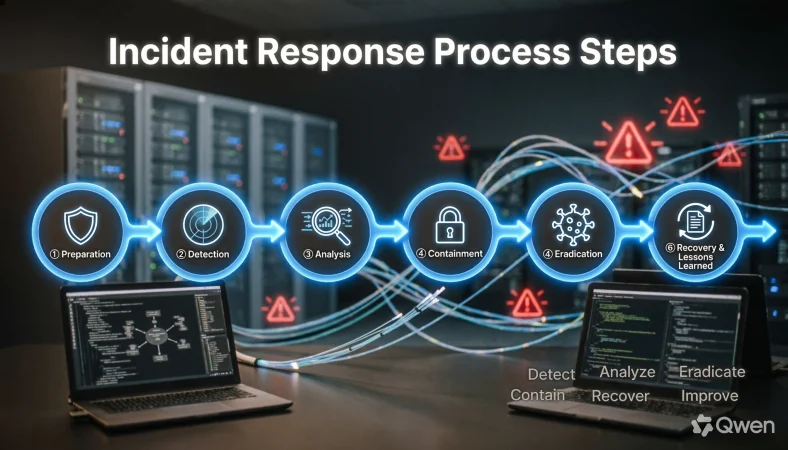
Incident response process steps are the organized actions a team follows to detect, assess, contain, eliminate, recover from, and learn from a security incident. The goal is to respond quickly without turning a small problem into a full-blown security headache.
Top alternatives: Incident response steps, Security incident response process, Incident handling steps, Cybersecurity response process, Incident management workflow
The moment a security alert pops up, nobody wants to be the person staring at the screen thinking, “Okay… now what?” Whether you are handling a suspicious login at work, a malware alert, a leaked password, or a full-blown cyber incident, having clear incident response process steps makes the situation much easier to manage. Instead of reacting randomly, teams can follow a structured path from detection to recovery.
The right process also helps people communicate clearly, protect evidence, reduce damage, and get systems back online safely. Think of it as having a GPS for cybersecurity chaos. You may still hit traffic, but at least you know where you are going. In this guide, you will find practical, easy-to-understand response steps organized by different situations, styles, and priorities, making the process easier to remember and use when every minute matters.
Funny Incident Response Process Steps:
Start with the alert, not the panic.
Example: A team uses the first few minutes to inspect the alert instead of immediately declaring the entire network doomed.
Meaning: It encourages calm investigation before taking action.
Confirm that the incident is actually real.
Example: An analyst validates whether a strange login is malicious or simply an employee traveling abroad.
Meaning: It prevents unnecessary chaos caused by false alarms.
Check what happened before changing everything.
Example: A responder reviews logs before deleting suspicious files or shutting down systems.
Meaning: It prioritizes understanding the incident before making decisions.
Contain the problem before it goes sightseeing.
Example: A compromised device gets isolated from the network before the attacker can reach additional systems.
Meaning: It focuses on stopping the incident from spreading.
Preserve evidence before playing cleanup crew.
Example: An analyst captures relevant logs before removing malicious software.
Meaning: It protects information that may explain what happened.
Find the root cause, not just the annoying symptom.
Example: A team investigates how an attacker entered instead of simply deleting the visible malware.
Meaning: It prevents the same problem from returning.
Communicate before the rumor department starts working.
Example: Security gives stakeholders a verified update before employees begin speculating in group chats.
Meaning: It keeps incident communication accurate and controlled.
Document everything worth remembering.
Example: A responder records timestamps, actions, findings, and decisions throughout the investigation.
Meaning: It creates a reliable incident timeline.
Recover carefully instead of rushing the comeback.
Example: Systems are restored gradually after security checks confirm they are safe.
Meaning: It reduces the chance of restoring a compromised environment.
Monitor after recovery because the story may not be over.
Example: Security watches restored systems for unusual activity during the following days.
Meaning: It helps identify lingering attacker activity.
Turn the incident into a lesson.
Example: The team reviews what worked and what failed after resolving the incident.
Meaning: It transforms a security problem into an improvement opportunity.
Update the playbook before the next plot twist.
Example: Lessons from the incident are added to response procedures and training materials.
Meaning: It makes future responses faster and more effective.
Direct Incident Response Process Steps
Detect the suspicious activity.
Example: Monitoring tools identify unusual network traffic or authentication behavior.
Meaning: Detection begins the response process.
Validate the security alert.
Example: An analyst checks supporting logs to determine whether the alert represents a genuine incident.
Meaning: Validation separates real threats from false positives.
Classify the incident.
Example: A ransomware event is categorized separately from a low-risk phishing attempt.
Meaning: Classification helps determine the appropriate response.
Assign an incident severity level.
Example: A compromise affecting critical production systems receives a high severity rating.
Meaning: Severity determines urgency and resources.
Identify affected assets.
Example: Responders determine which computers, accounts, applications, or servers may be involved.
Meaning: It establishes the scope of the incident.
Create an incident record.
Example: The security team opens a case containing timestamps, findings, actions, and responsible personnel.
Meaning: Documentation creates accountability and traceability.
Establish an incident timeline.
Example: Analysts organize login events, alerts, file changes, and network activity chronologically.
Meaning: A timeline helps reconstruct the attack.
Determine the initial entry point.
Example: Investigators discover that an attacker entered through a compromised employee account.
Meaning: Identifying entry helps explain how the incident began.
Contain affected systems.
Example: A compromised endpoint is isolated from internal network resources.
Meaning: Containment limits further damage.
Remove the threat.
Example: Analysts eliminate malicious persistence mechanisms and unauthorized access.
Meaning: Eradication removes the cause of the active compromise.
Restore normal operations.
Example: Clean systems are returned to service after validation and security checks.
Meaning: Recovery brings business functions back safely.
Review the entire response.
Example: The team conducts a post-incident review after operations stabilize.
Meaning: Review identifies improvements for future incidents.
Professional Incident Response Process Steps
Establish clear incident ownership.
Example: A designated incident manager coordinates technical and business response activities.
Meaning: Ownership prevents confusion about responsibilities.
Follow the approved incident response plan.
Example: Responders use documented procedures instead of improvising during a serious breach.
Meaning: A plan provides consistency under pressure.
Use defined escalation criteria.
Example: A security event is escalated when critical systems or sensitive information are affected.
Meaning: Escalation ensures serious incidents receive appropriate attention.
Maintain accurate records.
Example: Every significant response action is recorded with its time and responsible person.
Meaning: Accurate records support accountability and later analysis.
Coordinate with relevant stakeholders.
Example: Security works with IT, legal, communications, and business leaders when required.
Meaning: Effective response often requires multiple teams.
Protect investigative evidence.
Example: Analysts preserve relevant logs and forensic information before making major system changes.
Meaning: Evidence preservation supports reliable investigation.
Use authorized response actions.
Example: A responder follows approved procedures before disabling an account or isolating a server.
Meaning: Controlled actions reduce operational and legal risks.
Provide verified status updates.
Example: Incident leaders share confirmed findings at agreed intervals.
Meaning: Regular updates keep stakeholders informed without spreading speculation.
Separate facts from assumptions.
Example: Investigators label an unconfirmed attack path as a hypothesis rather than a confirmed finding.
Meaning: It improves accuracy during an evolving investigation.
Track business impact.
Example: The response team records affected services, downtime, and operational consequences.
Meaning: Business impact helps leadership understand the incident.
Document recovery validation.
Example: Teams record the security checks completed before returning systems to production.
Meaning: It demonstrates that recovery was performed carefully.
Close the incident formally.
Example: The incident record is closed only after technical recovery and required reviews are complete.
Meaning: Formal closure ensures important tasks are not forgotten.
Step-by-Step Incident Response Process Steps
Step one: Prepare.
Example: A company maintains response plans, contact lists, monitoring tools, and trained personnel before an incident occurs.
Meaning: Preparation creates readiness before trouble arrives.
Step two: Detect.
Example: Security monitoring identifies suspicious authentication activity.
Meaning: Detection brings a potential incident to attention.
Step three: Analyze.
Example: Analysts examine alerts, logs, and endpoint information to understand the event.
Meaning: Analysis determines what is actually happening.
Step four: Confirm.
Example: Multiple indicators are reviewed before the event is formally declared an incident.
Meaning: Confirmation improves response accuracy.
Step five: Prioritize.
Example: A compromise involving critical infrastructure receives immediate attention.
Meaning: Prioritization directs resources toward the greatest risk.
Step six: Contain.
Example: A compromised endpoint is isolated from the network.
Meaning: Containment limits attacker movement.
Step seven: Investigate.
Example: Analysts trace suspicious activity across authentication and network logs.
Meaning: Investigation reveals the incident’s scope and cause.
Step eight: Eradicate.
Example: Malicious files, unauthorized accounts, and persistence mechanisms are removed.
Meaning: Eradication eliminates the threat from affected systems.
Step nine: Recover.
Example: Verified clean systems are restored to normal service.
Meaning: Recovery returns operations to a trusted state.
Step ten: Validate.
Example: Security teams monitor restored systems and perform additional checks.
Meaning: Validation confirms that recovery was successful.
Step eleven: Document.
Example: The team records findings, actions, decisions, and outcomes.
Meaning: Documentation preserves organizational knowledge.
Step twelve: Improve.
Example: Security updates controls and procedures based on lessons from the incident.
Meaning: Improvement strengthens future incident response.
Creative Incident Response Process Steps:
Build an incident timeline like a detective board.
Example: Analysts arrange important events chronologically to reveal how the compromise unfolded.
Meaning: A visual timeline can make complex incidents easier to understand.
Map the attack path.
Example: Investigators connect compromised credentials, endpoints, and network activity.
Meaning: Mapping helps reveal attacker movement.
Create a decision tree for responders.
Example: A playbook shows which action to take based on the type and severity of an alert.
Meaning: Decision trees reduce hesitation during stressful incidents.
Use severity as the response traffic light.
Example: Low-risk events receive routine handling while critical incidents trigger immediate escalation.
Meaning: Severity helps responders quickly understand urgency.
Keep a running evidence checklist.
Example: Analysts mark which logs, devices, and account records have been reviewed.
Meaning: Checklists reduce the chance of overlooking important evidence.
Build reusable response playbooks.
Example: The organization maintains separate playbooks for phishing, malware, ransomware, and account compromise.
Meaning: Specialized playbooks speed up recurring response scenarios.
Create a communication map.
Example: The response plan identifies who receives technical, executive, legal, and customer updates.
Meaning: A communication map keeps information moving to the right people.
Use a recovery readiness checklist.
Example: Teams verify backups, system integrity, credentials, and monitoring before restoring services.
Meaning: Checklists make recovery more consistent.
Turn lessons into security experiments.
Example: The team tests whether a new detection rule catches the behavior seen during the incident.
Meaning: Experiments convert lessons into measurable improvements.
Practice with tabletop exercises.
Example: Employees simulate a ransomware scenario without touching production systems.
Meaning: Exercises reveal weaknesses before a real emergency.
Create an incident scorecard.
Example: Managers track detection time, containment time, recovery time, and communication performance.
Meaning: Metrics show where response can improve.
Make the playbook easy to scan.
Example: Responders use short action lists and clear escalation points during a stressful event.
Meaning: Simple formatting improves usability under pressure.
Sarcastic Incident Response Process Steps:
First, pretend the alert does not exist. Just kidding. Investigate it.
Example: An analyst immediately reviews an unusual security alert instead of ignoring it.
Meaning: It humorously emphasizes the importance of prompt investigation.
Because rebooting everything is not an incident response strategy.
Example: The team investigates the cause before randomly restarting affected machines.
Meaning: It promotes evidence-based response instead of guesswork.
Delete the evidence and solve absolutely nothing. Also kidding.
Example: Analysts preserve important logs before removing malicious files.
Meaning: It highlights the value of evidence preservation.
Assume every strange login is your coworker on vacation. Then verify it anyway.
Example: A suspicious foreign login is investigated before being dismissed as travel activity.
Meaning: It encourages verification instead of assumptions.
Contain first, celebrate later.
Example: Responders isolate affected systems before declaring the incident solved.
Meaning: It emphasizes stopping active risk before celebrating.
Do not let the group chat become the security operations center.
Example: Employees receive official incident updates instead of relying on workplace rumors.
Meaning: It promotes controlled communication.
Find the attacker, not just the suspicious file.
Example: Analysts investigate accounts, processes, and network activity surrounding a malicious file.
Meaning: It encourages broader investigation.
Backups are wonderful until nobody checks whether they work.
Example: The organization tests recovery data before relying on it during an incident.
Meaning: It stresses the importance of backup validation.
If the same incident keeps returning, something was missed.
Example: Security investigates recurring compromise indicators after an apparent cleanup.
Meaning: Recurrence signals incomplete eradication or an unresolved root cause.
Document it before your memory turns into fan fiction.
Example: Responders record actions and findings while the incident is still active.
Meaning: Timely documentation improves accuracy.
Monitoring is not optional just because the system looks innocent again.
Example: Restored endpoints remain under heightened observation after recovery.
Meaning: Post-recovery monitoring can catch lingering problems.
The incident is not finished because everyone wants to go home.
Example: The team completes recovery checks and documentation before formally closing the case.
Meaning: Closure should depend on evidence, not impatience.
Smart Incident Response Process Steps
Start by defining what normal looks like.
Example: Security teams compare unusual activity against established user and system behavior.
Meaning: Baselines make anomalies easier to recognize.
Correlate multiple indicators.
Example: Analysts compare authentication, endpoint, and network events before deciding what occurred.
Meaning: Correlation provides stronger context than a single alert.
Prioritize business-critical assets.
Example: A production database receives faster attention than a noncritical test machine.
Meaning: Risk-based prioritization protects important operations.
Investigate the earliest reliable indicator.
Example: Analysts trace activity backward to identify when suspicious behavior first appeared.
Meaning: Earlier evidence can reveal the true beginning of an incident.
Look for lateral movement.
Example: Responders review authentication and network activity for signs of movement between systems.
Meaning: It helps determine whether the compromise spread.
Check for persistence.
Example: Analysts examine scheduled tasks, accounts, services, and other mechanisms that could maintain unauthorized access.
Meaning: Persistence checks help identify threats that survive basic cleanup.
Validate containment.
Example: Security confirms that isolated devices no longer communicate with restricted resources.
Meaning: It verifies that containment actually worked.
Review privileged accounts carefully.
Example: Investigators examine administrative account activity associated with the incident.
Meaning: Privileged access can significantly increase potential impact.
Confirm recovery integrity.
Example: Systems are checked for suspicious modifications before returning to normal service.
Meaning: Recovery should restore trustworthy systems, not merely functioning ones.
Measure response performance.
Example: Teams calculate how long detection, containment, eradication, and recovery took.
Meaning: Metrics reveal operational weaknesses.
Update controls based on evidence.
Example: A detection rule is improved after analysts identify a missed indicator.
Meaning: Evidence-driven improvements strengthen defenses.
Retest the changes.
Example: Security conducts a controlled exercise to verify that updated controls work.
Meaning: Testing confirms that lessons became practical improvements.
Calm And Practical Incident Response Process Steps
Pause and assess before reacting.
Example: The responder reviews the alert and available context before taking disruptive action.
Meaning: Calm assessment reduces unnecessary mistakes.
Establish the facts.
Example: The team identifies what happened, when it happened, and which systems are involved.
Meaning: Facts provide a stable foundation for decisions.
Protect the most important systems first.
Example: Critical production services receive priority during containment planning.
Meaning: Risk-based action protects essential operations.
Keep communication simple.
Example: Incident leaders provide short updates containing confirmed facts and current actions.
Meaning: Clear communication reduces confusion.
Take controlled actions.
Example: Responders isolate a compromised endpoint using approved procedures.
Meaning: Controlled actions reduce accidental disruption.
Preserve what matters.
Example: Relevant logs and forensic data are secured before major changes are made.
Meaning: Preservation protects investigative value.
Work through the checklist.
Example: A responder follows the incident playbook during a phishing investigation.
Meaning: Checklists reduce cognitive load during stressful situations.
Escalate when the risk changes.
Example: A medium-severity event is escalated after evidence shows critical systems are affected.
Meaning: Escalation should follow changing risk.
Do not confuse containment with resolution.
Example: An isolated device remains under investigation until the underlying threat is removed.
Meaning: Containment stops spread but does not necessarily eliminate the threat.
Verify before restoring.
Example: Security checks a recovered server before reconnecting it to production.
Meaning: Verification reduces the risk of reintroducing the compromise.
Monitor after the fix.
Example: Analysts watch restored systems for suspicious behavior after recovery.
Meaning: Monitoring helps confirm stability.
Write down what you learned.
Example: The team records gaps discovered during the incident review.
Meaning: Lessons create opportunities for improvement.
Confident Incident Response Process Steps
Take control of the incident timeline.
Example: An incident manager establishes a clear sequence of events from detection onward.
Meaning: A structured timeline creates control during uncertainty.
Assign responsibilities immediately.
Example: One person coordinates communications while others handle investigation and containment.
Meaning: Clear roles prevent duplicated effort.
Use severity to drive urgency.
Example: A critical compromise triggers immediate escalation and coordinated response.
Meaning: Severity provides an objective basis for action.
Contain decisively when evidence supports it.
Example: A confirmed compromised endpoint is isolated from sensitive network resources.
Meaning: Timely containment limits exposure.
Protect critical evidence.
Example: Investigators preserve relevant logs before making major system changes.
Meaning: Evidence supports confident investigation.
Ask precise questions.
Example: Responders determine which account, device, application, and timestamp are associated with suspicious activity.
Meaning: Specific questions produce useful information faster.
Verify every major assumption.
Example: An alleged compromised account is checked against authentication records before escalation.
Meaning: Verification prevents decisions based on guesswork.
Keep leadership informed.
Example: Executives receive concise updates about business impact and response status.
Meaning: Leaders can make informed business decisions.
Know when to bring in specialists.
Example: A complex forensic investigation is escalated to experienced incident responders.
Meaning: Specialist support can improve handling of difficult incidents.
Recover with evidence, not optimism.
Example: Systems are restored only after security checks show they are ready.
Meaning: Confidence should come from validation.
Measure what happened.
Example: The team records detection and recovery times after the incident.
Meaning: Metrics turn experience into measurable performance.
Improve without blaming.
Example: A review focuses on control gaps and process improvements instead of personal fault.
Meaning: A constructive review encourages better security practices.
Emergency Incident Response Process Steps
Declare the incident when evidence supports it.
Example: A confirmed ransomware event is formally escalated to the emergency response team.
Meaning: Formal declaration activates the appropriate response structure.
Activate the incident response team.
Example: Security, IT, management, and other relevant specialists join the coordinated response.
Meaning: Emergencies require organized collaboration.
Protect critical services.
Example: Responders prioritize systems that support essential business operations.
Meaning: Critical services receive immediate protection.
Isolate affected systems.
Example: Confirmed compromised endpoints are disconnected from relevant network resources.
Meaning: Isolation limits further spread.
Secure privileged access.
Example: Potentially compromised administrative credentials are reviewed and controlled.
Meaning: Protecting privileged access reduces additional risk.
Preserve critical evidence.
Example: Key logs and forensic information are secured before disruptive remediation.
Meaning: Evidence supports investigation and accountability.
Establish an emergency communication channel.
Example: Response leaders use a designated channel for verified incident updates.
Meaning: A controlled channel improves coordination.
Determine the scope quickly.
Example: Analysts identify potentially affected accounts, devices, applications, and services.
Meaning: Scope determines how broad the response must be.
Prioritize containment actions.
Example: The team first blocks confirmed malicious access paths affecting critical systems.
Meaning: Priority actions address the greatest immediate risk.
Begin eradication when containment is stable.
Example: Analysts remove malicious components after limiting attacker access.
Meaning: Eradication addresses the underlying threat.
Restore services in controlled stages.
Example: Critical systems are brought back online after validation.
Meaning: Staged recovery reduces additional risk.
Conduct an emergency review afterward.
Example: Leadership and security review the response once operations stabilize.
Meaning: The review identifies urgent improvements while details remain fresh.
Cybersecurity Incident Response Process Steps
Monitor security signals.
Example: Security systems watch authentication, endpoint, application, and network activity.
Meaning: Monitoring supports early detection.
Investigate suspicious indicators.
Example: Analysts examine unusual processes, connections, or account behavior.
Meaning: Investigation determines whether activity is malicious.
Identify compromised assets.
Example: Responders determine which devices and accounts may have been affected.
Meaning: Asset identification establishes scope.
Analyze attacker behavior.
Example: Analysts examine commands, access patterns, and network activity associated with the incident.
Meaning: Behavioral analysis helps explain the attack.
Contain the compromise.
Example: Affected systems are isolated while investigators continue examining the incident.
Meaning: Containment limits additional damage.
Remove malicious access.
Example: Unauthorized accounts and persistence mechanisms are disabled or removed.
Meaning: It helps eliminate attacker control.
Reset compromised credentials.
Example: Potentially exposed passwords or tokens are invalidated according to response procedures.
Meaning: Credential control reduces continued unauthorized access.
Patch exploited weaknesses.
Example: A vulnerable application is updated after the affected environment is stabilized.
Meaning: Patching addresses a technical weakness used by the attacker.
Restore clean systems.
Example: Verified clean backups or rebuilt systems are returned to service.
Meaning: Recovery restores trusted operations.
Increase monitoring after recovery.
Example: Security applies enhanced monitoring to affected systems for a defined period.
Meaning: Additional monitoring helps detect recurrence.
Record indicators of compromise.
Example: Analysts document malicious domains, hashes, accounts, or behaviors discovered during the investigation.
Meaning: Recorded indicators can support future detection.
Improve defensive controls.
Example: The organization updates detection rules and access controls after the incident.
Meaning: Response findings strengthen future defenses.
Technical Incident Response Process Steps
Collect relevant logs.
Example: Analysts gather authentication, endpoint, network, and application records connected to the incident.
Meaning: Logs provide evidence for technical investigation.
Establish reliable timestamps.
Example: Investigators normalize event times when comparing records from different systems.
Meaning: Consistent timing makes event reconstruction more accurate.
Identify affected hosts.
Example: Analysts determine which endpoints and servers generated suspicious activity.
Meaning: Host identification narrows the investigation.
Examine processes and connections.
Example: Responders review unusual processes and network connections on affected systems.
Meaning: Technical artifacts can reveal malicious behavior.
Trace authentication activity.
Example: Security reviews login attempts associated with a potentially compromised account.
Meaning: Authentication analysis can reveal unauthorized access.
Investigate persistence mechanisms.
Example: Analysts inspect suspicious services, scheduled tasks, or unauthorized accounts.
Meaning: Persistence analysis identifies ways attackers may maintain access.
Analyze network movement.
Example: Responders examine connections between affected systems.
Meaning: Network analysis can reveal lateral movement.
Compare affected systems with known-good systems.
Example: Analysts compare configuration or behavior against a clean reference environment.
Meaning: Differences can highlight suspicious changes.
Preserve forensic artifacts.
Example: Relevant system information is collected before remediation changes the environment.
Meaning: Preservation maintains investigative evidence.
Identify indicators of compromise.
Example: Analysts document suspicious domains, files, hashes, or account activity.
Meaning: Indicators can support detection and hunting.
Validate eradication.
Example: Security checks affected systems after remediation for remaining malicious activity.
Meaning: Validation helps confirm that the threat was removed.
Perform technical lessons learned.
Example: Analysts review which telemetry, controls, or detections helped or failed.
Meaning: Technical lessons improve future investigations.
Incident Response Process Steps For Beginners
Know your incident response plan.
Example: A new security team member reviews the organization’s response procedures before handling alerts.
Meaning: Familiarity improves confidence during incidents.
Learn what counts as an incident.
Example: An employee learns the difference between a harmless warning and confirmed unauthorized access.
Meaning: Clear definitions improve reporting.
Report suspicious activity quickly.
Example: An employee reports a suspicious email instead of deleting it and moving on.
Meaning: Early reporting gives security teams more time to respond.
Do not investigate beyond your role.
Example: An employee forwards a suspicious message to security instead of opening unknown attachments repeatedly.
Meaning: Appropriate escalation reduces additional risk.
Record important details.
Example: The employee notes when the suspicious event occurred and which device was involved.
Meaning: Basic details help responders investigate.
Let trained responders handle containment.
Example: Security personnel isolate an affected endpoint using approved procedures.
Meaning: Specialized responders can contain threats safely.
Understand the basic response lifecycle.
Example: A trainee learns preparation, detection, analysis, containment, eradication, recovery, and improvement.
Meaning: The lifecycle provides a simple mental model.
Ask who needs to know.
Example: A responder follows established escalation and communication rules.
Meaning: Information should reach the right people.
Do not delete evidence unnecessarily.
Example: A suspicious file is preserved for security analysis instead of immediately being removed.
Meaning: Evidence can help explain the incident.
Wait for confirmation before declaring success.
Example: Systems remain monitored after remediation until security validation is complete.
Meaning: Recovery requires verification.
Write down what happened.
Example: A beginner records key events and actions during the incident.
Meaning: Documentation supports learning and accountability.
Practice before the real thing.
Example: A new employee participates in a tabletop security exercise.
Meaning: Practice makes emergency procedures easier to follow.
Incident Response Process Steps For IT Teams
Connect security and IT early.
Example: Security alerts IT when a compromised endpoint requires isolation or rebuilding.
Meaning: Collaboration speeds technical response.
Identify affected infrastructure.
Example: IT determines which servers, endpoints, applications, or network components are involved.
Meaning: Infrastructure scope supports containment planning.
Coordinate system isolation.
Example: IT and security work together to isolate a compromised server without unnecessarily disrupting unrelated services.
Meaning: Coordination balances security and availability.
Protect backups.
Example: IT verifies that backup environments are separated appropriately from affected systems.
Meaning: Protected backups support reliable recovery.
Preserve system information.
Example: Relevant logs and technical records are retained before remediation.
Meaning: System information supports investigation.
Support credential controls.
Example: IT helps disable or reset accounts identified as potentially compromised.
Meaning: Credential actions can limit unauthorized access.
Rebuild when appropriate.
Example: A heavily compromised workstation is rebuilt from a trusted baseline.
Meaning: Rebuilding can provide a cleaner recovery path.
Patch exploited systems.
Example: IT applies required security updates after stabilizing affected systems.
Meaning: Patching reduces exposure to known weaknesses.
Validate restored services.
Example: IT tests application availability and security controls before returning a service to users.
Meaning: Validation supports safe recovery.
Increase monitoring.
Example: IT keeps additional logging enabled on recovered infrastructure.
Meaning: Enhanced visibility can reveal recurring problems.
Document technical actions.
Example: IT records systems isolated, rebuilt, patched, and restored.
Meaning: Documentation creates a technical recovery trail.
Feed lessons back into operations.
Example: IT updates configuration standards after discovering a weakness during the incident.
Meaning: Operational improvements reduce repeat incidents.
Incident Response Process Steps For Business Continuity
Identify critical business services.
Example: Leadership identifies which applications must remain available during a cyber incident.
Meaning: Criticality helps prioritize recovery.
Assess operational impact.
Example: The team determines how an incident affects customers, employees, revenue, and essential workflows.
Meaning: Impact assessment connects technical events to business consequences.
Prioritize recovery.
Example: A critical customer-facing service is restored before a low-priority internal application.
Meaning: Recovery follows business priorities.
Coordinate with business leaders.
Example: Security provides technical findings while leadership evaluates operational decisions.
Meaning: Business continuity requires cross-functional coordination.
Protect essential data.
Example: Critical information is recovered from trusted sources after validating its integrity.
Meaning: Data protection supports continued operations.
Use alternate processes when necessary.
Example: Employees temporarily use approved manual workflows while a critical system is unavailable.
Meaning: Alternatives keep important work moving.
Communicate service impacts.
Example: Relevant stakeholders receive updates about unavailable systems and expected recovery milestones.
Meaning: Clear communication supports continuity.
Recover dependencies in the right order.
Example: A database service is restored before applications that depend on it.
Meaning: Dependency-aware recovery reduces failures.
Validate business functionality.
Example: Business users confirm that restored applications perform required tasks.
Meaning: Technical recovery is not enough without operational validation.
Monitor customer-facing systems.
Example: Teams closely watch restored services for errors or suspicious activity.
Meaning: Monitoring supports stable recovery.
Review continuity performance.
Example: Leaders evaluate whether critical functions remained available during the incident.
Meaning: Review identifies continuity gaps.
Update continuity plans.
Example: Recovery procedures are revised based on lessons from the incident.
Meaning: Updated plans improve resilience.
Clever Incident Response Process Steps
Think in timelines, not isolated alerts.
Example: Analysts connect multiple alerts to understand the broader sequence of events.
Meaning: Context can reveal relationships between seemingly separate events.
Follow the evidence trail.
Example: Investigators move from suspicious login activity to affected accounts and systems.
Meaning: Evidence-based investigation avoids unnecessary assumptions.
Treat scope as a moving target.
Example: The affected asset list expands after new indicators are discovered.
Meaning: Incident scope can change as investigation progresses.
Contain based on risk.
Example: Responders isolate high-risk systems while avoiding unnecessary disruption elsewhere.
Meaning: Risk-based containment balances protection and availability.
Separate cleanup from investigation.
Example: Analysts preserve relevant evidence before performing remediation.
Meaning: Separating activities protects investigative integrity.
Use multiple sources of truth.
Example: Analysts compare endpoint, identity, and network telemetry.
Meaning: Multiple sources create stronger conclusions.
Question convenient explanations.
Example: A suspicious login is investigated even when an employee claims it may have been travel-related.
Meaning: Verification prevents premature conclusions.
Look for what should not be there.
Example: Analysts investigate unfamiliar accounts, processes, connections, and configuration changes.
Meaning: Unexpected activity can reveal compromise.
Look for what should be there but is missing.
Example: Security checks whether expected logs stopped appearing during the suspected attack window.
Meaning: Missing telemetry can itself be informative.
Make recovery measurable.
Example: The team defines specific checks that must pass before systems return to production.
Meaning: Measurable criteria make recovery more reliable.
Turn every lesson into an action.
Example: A discovered detection gap results in a new monitoring rule and validation test.
Meaning: Actionable lessons create real improvement.
Retest the entire response chain.
Example: A tabletop exercise tests detection, escalation, containment, communication, and recovery procedures.
Meaning: End-to-end testing reveals gaps between individual controls.
FAQs
What Does Incident Response Process Steps Mean?
It refers to the organized actions used to manage a security incident from preparation and detection through analysis, containment, eradication, recovery, and post-incident improvement.
What Are the Main Incident Response Process Steps?
The core stages commonly include preparation, detection and analysis, containment, eradication, recovery, and lessons learned or improvement.
Can Incident Response Process Steps Have an Emotional Or Flirty Meaning?
Not usually. This is a cybersecurity and business term, so emotional or flirty interpretations generally do not apply unless someone is joking about handling personal drama like a security incident.
How Are Incident Response Process Steps Used Professionally?
They are used by cybersecurity, IT, risk, compliance, and business teams to respond to security incidents in a structured and accountable way.
What If I Do Not Actually Mean “Incident Response Process Steps”?
If you are explaining the concept casually, you can simply say “security incident steps,” “incident handling process,” or “steps for responding to a cyber incident.”
Is Humor Appropriate When Discussing Incident Response?
Light humor can make training and educational content more memorable, but serious active incidents should be handled with clear, professional communication.
Conclusion
Knowing the right incident response process steps can turn a stressful security event into a structured, manageable situation. Instead of guessing what to do next, teams can detect the issue, understand its scope, contain the threat, remove the cause, recover safely, and learn from what happened. The smartest response is not always the fastest reaction.
It is the right action taken at the right moment with reliable information behind it. Whether you are building a response plan, training a team, or simply trying to understand cybersecurity better, these steps give you a practical starting point. Save this guide, share it with your team, and keep refining your playbook because the best time to prepare for an incident is before one happens.