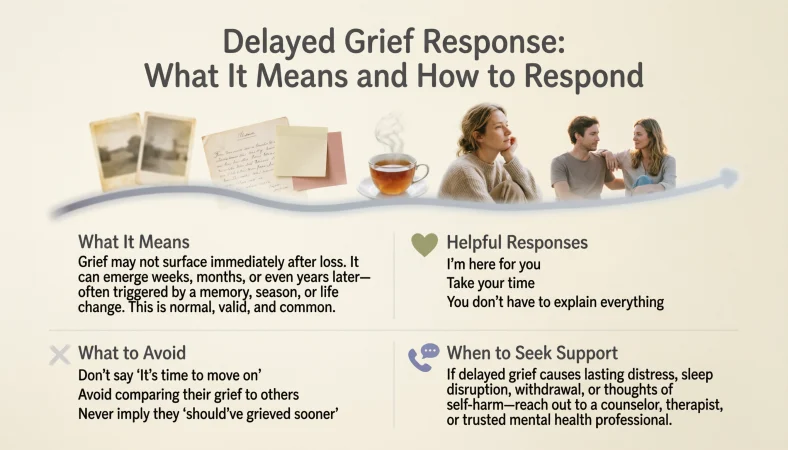
A delayed grief response is when strong feelings connected to a loss appear later rather than immediately. Grief can unfold differently for different people, and delayed emotions do not automatically mean someone is grieving incorrectly.
Top alternatives: delayed grief reaction, delayed grief symptoms, grief that comes later, postponed grief response, unexpected grief reaction
Sometimes grief arrives late, quietly, and completely out of nowhere. A person may seem okay for weeks or months and then suddenly feel overwhelmed by memories, sadness, anger, numbness, or longing. A delayed grief response can happen while texting a friend, answering DMs, returning to work, spending time with family, or even during an ordinary moment that unexpectedly brings someone back to a painful memory.
Grief is not a perfectly timed calendar event, and there is no universal schedule for how someone should feel. For most people, grief symptoms gradually ease, although difficult feelings can sometimes intensify at different points. Knowing how to respond matters because a careless message can feel dismissive, while a simple, warm response can make someone feel less alone. Sometimes the best reply is not a solution at all. It is simply presence, patience, and kindness.
Gentle Delayed Grief Response Messages
“You don’t have to explain everything right now.”
Example: Use this when someone is struggling to put delayed emotions into words.
Meaning: It removes pressure and gives them room to feel.
“I’m here, even if you don’t know what to say.”
Example: Use this when someone becomes emotional unexpectedly.
Meaning: It communicates steady support without demanding an explanation.
“Take all the time you need.”
Example: Use this when someone says their grief suddenly feels stronger.
Meaning: It reassures them that there is no need to rush.
“What you’re feeling matters.”
Example: Use this when someone questions whether their reaction is valid.
Meaning: It acknowledges their emotions without judging them.
“You can talk to me whenever you’re ready.”
Example: Use this when someone wants space but may need support later.
Meaning: It leaves the door open without applying pressure.
“I’m listening.”
Example: Use this when someone begins sharing memories of a person they lost.
Meaning: It offers attention without trying to fix the situation.
“You don’t have to be strong around me.”
Example: Use this when someone has been holding everything together for others.
Meaning: It gives permission to show vulnerability.
“It’s okay if today feels heavier.”
Example: Use this when grief suddenly becomes more noticeable on an ordinary day.
Meaning: It normalizes emotional fluctuations.
“I’m not going anywhere.”
Example: Use this when someone fears becoming a burden by talking about grief.
Meaning: It communicates dependable emotional support.
“You can take this one moment at a time.”
Example: Use this when someone feels overwhelmed by everything at once.
Meaning: It encourages a manageable, present-focused approach.
“I’m glad you told me.”
Example: Use this when someone finally opens up after keeping feelings private.
Meaning: It reinforces that sharing was welcome.
“You deserve kindness while you’re going through this.”
Example: Use this when someone is criticizing themselves for grieving.
Meaning: It encourages self-compassion.
Compassionate Delayed Grief Response Messages
“That sounds really difficult.”
Example: Use this when someone describes an unexpected wave of grief.
Meaning: It validates the difficulty without minimizing it.
“I can understand why that moment brought everything back.”
Example: Use this when a familiar place or memory triggers emotion.
Meaning: It recognizes how reminders can affect someone.
“You’re allowed to feel however you feel today.”
Example: Use this when emotions seem different from previous days.
Meaning: It supports emotional flexibility.
“There’s no need to apologize for being emotional.”
Example: Use this when someone apologizes for crying or becoming quiet.
Meaning: It removes shame from their emotional response.
“I’m sorry this feels so heavy right now.”
Example: Use this when someone says grief has suddenly become intense.
Meaning: It expresses empathy without making assumptions.
“You don’t have to make sense of everything tonight.”
Example: Use this when someone is trying to understand complicated feelings.
Meaning: It gives permission to pause instead of analyzing everything.
“Your feelings can come in waves.”
Example: Use this when someone is surprised by changing emotions.
Meaning: It acknowledges that grief can fluctuate.
“You can miss someone and still have a good day.”
Example: Use this when someone feels guilty for enjoying themselves after a loss.
Meaning: It separates happiness from forgetting.
“You can be okay and still grieve.”
Example: Use this when someone feels confused by mixed emotions.
Meaning: It recognizes that functioning and grieving can coexist.
“You’re not doing this wrong.”
Example: Use this when someone worries their grief looks different from others’.
Meaning: It reassures them without prescribing a timeline.
“I’m giving you plenty of room and plenty of support.”
Example: Use this when someone needs both independence and connection.
Meaning: It balances space with availability.
“Whatever today looks like, you don’t have to face it alone.”
Example: Use this when someone feels isolated by grief.
Meaning: It offers companionship without pressure.
Short Delayed Grief Response Texts
“I’m here for you.”
Example: Use this as a simple text when you do not know what else to say.
Meaning: It communicates dependable support.
“No pressure. I’m here.”
Example: Use this when someone needs time before talking.
Meaning: It combines patience with availability.
“Take your time.”
Example: Use this when someone needs space to process emotions.
Meaning: It removes urgency.
“I hear you.”
Example: Use this after someone shares something painful.
Meaning: It shows that their words were received.
“That’s okay.”
Example: Use this when someone apologizes for their emotions.
Meaning: It reassures them that vulnerability is acceptable.
“Sending you love.”
Example: Use this when a warm but brief message feels appropriate.
Meaning: It offers affection and emotional support.
“Thinking of you.”
Example: Use this when you want to check in without demanding a response.
Meaning: It reminds them they are cared about.
“I’ve got you.”
Example: Use this when someone needs practical or emotional support.
Meaning: It communicates reliability.
“One day at a time.”
Example: Use this when someone feels overwhelmed by the bigger picture.
Meaning: It encourages manageable steps.
“You’re not alone.”
Example: Use this when someone feels isolated.
Meaning: It emphasizes connection.
“I’m listening.”
Example: Use this when someone wants to share more.
Meaning: It creates a safe opening for conversation.
“Be gentle with yourself.”
Example: Use this when someone is being hard on themselves.
Meaning: It encourages self-kindness.
Supportive Responses for a Friend Experiencing Delayed Grief
“Want company, or would you rather have some quiet?”
Example: Use this when a friend seems overwhelmed and you want to respect their preference.
Meaning: It offers practical support while giving them control.
“I can come sit with you.”
Example: Use this when someone does not want to talk but might appreciate company.
Meaning: It offers presence without requiring conversation.
“We can talk about them if you want.”
Example: Use this when a friend begins remembering someone who died.
Meaning: It shows that mentioning the person is welcome.
“Tell me your favorite memory.”
Example: Use this when reminiscing feels comforting to your friend.
Meaning: It gently invites meaningful remembrance.
“You can call me whenever you need.”
Example: Use this when someone is having difficult evenings or unexpected emotional moments.
Meaning: It makes support feel accessible.
“I can help with the practical stuff.”
Example: Use this when grief is making everyday tasks difficult.
Meaning: It offers concrete assistance instead of only emotional words.
“You don’t have to entertain me.”
Example: Use this when visiting someone who is grieving.
Meaning: It removes the expectation of being cheerful or social.
“We can just sit here.”
Example: Use this when words feel unnecessary.
Meaning: It recognizes that quiet companionship can be meaningful.
“I remember how much they meant to you.”
Example: Use this when acknowledging the importance of the relationship.
Meaning: It validates the depth of the loss.
“I’m checking in because I care.”
Example: Use this when sending a simple follow-up message.
Meaning: It makes the purpose of the check-in clear.
“You never have to pretend with me.”
Example: Use this when a friend has been hiding their emotions.
Meaning: It creates permission to be honest.
“Let me know what would actually help today.”
Example: Use this when you want to provide useful support.
Meaning: It lets the grieving person identify their own needs.
Responses When Delayed Grief Feels Unexpected
“Sometimes the timing of grief can surprise us.”
Example: Use this when someone wonders why emotions appeared much later.
Meaning: It acknowledges that grief does not always follow an obvious schedule.
“It makes sense that the memory caught you off guard.”
Example: Use this after an unexpected emotional trigger.
Meaning: It recognizes the suddenness of the experience.
“You didn’t have to feel everything immediately.”
Example: Use this when someone worries that delayed emotions mean something is wrong.
Meaning: It reduces pressure to follow an imagined timeline.
“Maybe your mind is finally making room for those feelings.”
Example: Use this carefully when someone describes emotions appearing later.
Meaning: It offers a gentle possibility without claiming to explain their exact experience.
“You can let the feeling be there without solving it.”
Example: Use this when someone is trying to force an immediate explanation.
Meaning: It encourages acceptance rather than pressure.
“A memory can open a door you thought was closed.”
Example: Use this when grief returns after a long quiet period.
Meaning: It describes how reminders can unexpectedly reconnect someone with loss.
“You’re allowed to be surprised by your own emotions.”
Example: Use this when someone says they do not recognize their reaction.
Meaning: It reduces self-judgment.
“Today might simply be a tender day.”
Example: Use this when someone feels unusually emotional.
Meaning: It offers a gentle description without labeling them.
“You don’t need a perfect reason for feeling sad.”
Example: Use this when someone cannot identify a specific trigger.
Meaning: It validates emotion even when its cause is unclear.
“Sometimes feelings arrive when we finally have space for them.”
Example: Use this when someone notices grief after a busy period.
Meaning: It offers a nonjudgmental way to understand delayed emotion.
“It’s okay that this surprised you.”
Example: Use this when someone feels unsettled by a sudden emotional reaction.
Meaning: It reassures them that surprise itself is not a failure.
“Be curious about the feeling, not critical of yourself.”
Example: Use this when someone is judging their reaction.
Meaning: It encourages gentle reflection rather than self-blame.
Warm Delayed Grief Response Messages
“I’m holding space for whatever comes up.”
Example: Use this when someone needs a safe person around them.
Meaning: It offers calm emotional availability.
“Your memories are welcome here.”
Example: Use this when someone wants to talk about the person they lost.
Meaning: It communicates that remembrance is not an inconvenience.
“You can talk about them as much as you need.”
Example: Use this when someone worries others are tired of hearing memories.
Meaning: It keeps the conversation open.
“I’m sending you a big hug from here.”
Example: Use this when physical comfort is not possible.
Meaning: It offers warmth through a simple message.
“I wish I could make this lighter for you.”
Example: Use this when you feel helpless about someone’s grief.
Meaning: It communicates care without pretending you can remove the pain.
“I’m with you in this moment.”
Example: Use this when someone is experiencing a difficult wave of emotion.
Meaning: It emphasizes present support.
“You can lean on me.”
Example: Use this when someone has been trying to manage everything alone.
Meaning: It encourages them to accept support.
“Your story matters to me.”
Example: Use this when someone shares memories or complicated feelings.
Meaning: It shows genuine interest and care.
“You are allowed to remember and smile.”
Example: Use this when a happy memory brings mixed emotions.
Meaning: It reassures them that joy does not erase grief.
“I’m grateful you trusted me with this.”
Example: Use this when someone shares something deeply personal.
Meaning: It recognizes the trust involved.
“You don’t have to carry this quietly.”
Example: Use this when someone has been keeping grief private.
Meaning: It encourages connection.
“I’m here for the messy days too.”
Example: Use this when someone fears showing difficult emotions.
Meaning: It communicates acceptance beyond the easy moments.
Professional Responses to Delayed Grief
“Please take the time you need.”
Example: Use this when responding to a colleague who says grief is affecting them.
Meaning: It communicates respect and flexibility.
“Thank you for letting me know.”
Example: Use this when an employee or coworker shares a personal difficulty.
Meaning: It acknowledges their communication professionally.
“We can discuss adjustments if that would help.”
Example: Use this when workplace responsibilities feel difficult for someone.
Meaning: It offers practical support without making assumptions.
“There is no need to apologize.”
Example: Use this when a colleague apologizes for reduced availability.
Meaning: It removes unnecessary guilt.
“Please prioritize your wellbeing.”
Example: Use this when someone says they need some time away from work.
Meaning: It communicates concern in a professional tone.
“We can revisit this when you’re ready.”
Example: Use this when a work discussion needs to be postponed.
Meaning: It gives the person time without creating pressure.
“I appreciate you keeping me informed.”
Example: Use this when someone communicates that grief is affecting their schedule.
Meaning: It maintains professionalism while showing understanding.
“Let’s find a manageable way forward.”
Example: Use this when work demands need to be adjusted.
Meaning: It focuses on practical cooperation.
“I’m sorry you’re dealing with this.”
Example: Use this when offering a professional expression of sympathy.
Meaning: It communicates compassion without becoming overly personal.
“We can handle the immediate priorities first.”
Example: Use this when someone feels overwhelmed by work.
Meaning: It reduces pressure by focusing on essential tasks.
“Please let me know if you need to discuss arrangements.”
Example: Use this when workplace flexibility may be needed.
Meaning: It keeps communication open.
“We’ll approach this with understanding.”
Example: Use this when responding as a manager or team leader.
Meaning: It signals a supportive workplace approach.
Text Message Responses to Delayed Grief
“Hey, no need to reply. Just wanted you to know I’m thinking of you.”
Example: Use this when you want to check in without creating another task.
Meaning: It offers support without demanding engagement.
“Sending love today. That’s all.”
Example: Use this when someone may not have energy for a long conversation.
Meaning: It keeps the message warm and simple.
“I’m here whenever you want to talk.”
Example: Use this after hearing that grief has resurfaced.
Meaning: It leaves the choice with them.
“Hope today is gentle with you.”
Example: Use this as a thoughtful morning text.
Meaning: It expresses care without expecting a particular emotional response.
“Just checking in, friend.”
Example: Use this when you want a casual but caring message.
Meaning: It reminds them that someone is thinking about them.
“No fixing, no pressure, just support.”
Example: Use this when someone dislikes being given unsolicited advice.
Meaning: It promises presence rather than solutions.
“Take today slowly.”
Example: Use this when someone says emotions are especially strong.
Meaning: It encourages patience with themselves.
“You can send me a random memory anytime.”
Example: Use this when someone wants to talk about the person they lost.
Meaning: It makes remembrance feel welcome.
“I’m one text away.”
Example: Use this when offering simple ongoing availability.
Meaning: It makes support feel accessible.
“Thinking of you and sending warmth.”
Example: Use this as a gentle check-in message.
Meaning: It communicates care without overexplaining.
“You’re allowed to have a difficult day.”
Example: Use this when someone feels guilty about struggling.
Meaning: It validates emotional difficulty.
“No need to make today make sense.”
Example: Use this when someone feels confused by their emotions.
Meaning: It removes pressure to immediately understand everything.
Emotional Delayed Grief Response Messages
“I know you loved them deeply.”
Example: Use this when acknowledging the importance of a lost relationship.
Meaning: It recognizes the emotional bond behind the grief.
“Some memories carry a lot of weight.”
Example: Use this when a particular memory causes a strong reaction.
Meaning: It acknowledges the emotional power of remembrance.
“It’s okay to miss them.”
Example: Use this when someone feels embarrassed by ongoing sadness.
Meaning: It validates longing and remembrance.
“You can feel grateful and heartbroken at the same time.”
Example: Use this when someone has complicated emotions about the loss.
Meaning: It recognizes that different feelings can coexist.
“Love does not disappear because life moves forward.”
Example: Use this when someone feels guilty about continuing with life.
Meaning: It separates moving forward from forgetting.
“Your connection with them mattered.”
Example: Use this when someone questions whether their grief is justified.
Meaning: It validates the significance of the relationship.
“I can see why that memory touched you.”
Example: Use this when someone shares a meaningful memory.
Meaning: It acknowledges the emotional importance of the moment.
“You don’t have to hide the tears.”
Example: Use this when someone apologizes for crying.
Meaning: It reduces embarrassment around emotional expression.
“It’s okay to remember the complicated parts too.”
Example: Use this when the relationship involved mixed feelings.
Meaning: It allows grief to include both positive and difficult memories.
“There is room for every part of this.”
Example: Use this when someone experiences several emotions at once.
Meaning: It encourages acceptance of emotional complexity.
“I’m sorry your heart is hurting today.”
Example: Use this when someone describes a difficult grief wave.
Meaning: It offers tenderness and empathy.
“You mattered to them, and their memory matters to you.”
Example: Use this when affirming the significance of a relationship.
Meaning: It honors both connection and remembrance.
Calm Delayed Grief Response Messages
“Let’s slow everything down for a moment.”
Example: Use this when someone feels overwhelmed by sudden emotions.
Meaning: It encourages a calmer pace.
“You don’t have to figure it all out tonight.”
Example: Use this when someone is mentally exhausted from processing grief.
Meaning: It removes pressure for immediate answers.
“Take a breath and give yourself some room.”
Example: Use this when someone needs a brief pause.
Meaning: It encourages a moment of emotional space.
“One feeling at a time.”
Example: Use this when everything seems to arrive simultaneously.
Meaning: It makes the experience feel more manageable.
“Let’s focus on what you need right now.”
Example: Use this when someone is overwhelmed by future concerns.
Meaning: It redirects attention toward immediate needs.
“You can pause before responding to anyone.”
Example: Use this when grief affects social communication.
Meaning: It gives permission to step away from pressure.
“Quiet is allowed.”
Example: Use this when someone does not want to talk.
Meaning: It validates silence as a legitimate response.
“Rest is allowed too.”
Example: Use this when someone feels guilty for slowing down.
Meaning: It supports taking a break.
“There is no emotional deadline here.”
Example: Use this when someone feels pressured to move on.
Meaning: It challenges the idea that grief must follow a strict schedule.
“Let today be today.”
Example: Use this when someone is worrying about how they should feel tomorrow.
Meaning: It encourages staying with the present moment.
“You can take the next small step when you’re ready.”
Example: Use this when someone feels overwhelmed by daily responsibilities.
Meaning: It emphasizes manageable progress.
“You don’t have to perform okayness for anyone.”
Example: Use this when someone feels pressure to appear fine.
Meaning: It gives permission to be authentic about their emotional state.
Encouraging Responses to Delayed Grief
“You’re doing your best with something incredibly difficult.”
Example: Use this when someone is criticizing how they are handling grief.
Meaning: It replaces self-judgment with compassion.
“You’re allowed to ask for support.”
Example: Use this when someone has been handling everything alone.
Meaning: It encourages healthy connection.
“You don’t have to carry this perfectly.”
Example: Use this when someone expects themselves to cope flawlessly.
Meaning: It normalizes imperfect emotional processing.
“Small steps still count.”
Example: Use this when everyday tasks feel difficult.
Meaning: It recognizes gradual progress.
“You’re allowed to have good moments too.”
Example: Use this when someone feels guilty for laughing or enjoying something.
Meaning: It reassures them that happiness does not invalidate grief.
“Getting through today is enough.”
Example: Use this when someone feels overwhelmed.
Meaning: It reduces pressure to solve everything.
“You can reach out whenever you need connection.”
Example: Use this when someone tends to isolate themselves.
Meaning: It encourages them to seek support.
“You are not defined by one difficult day.”
Example: Use this when someone feels discouraged by a grief wave.
Meaning: It separates a temporary experience from their identity.
“You can keep moving while still remembering.”
Example: Use this when someone worries that moving forward means forgetting.
Meaning: It shows that remembrance and daily life can coexist.
“Your pace is your pace.”
Example: Use this when someone compares their grief to another person’s.
Meaning: It discourages unnecessary comparison.
“You deserve patience from yourself too.”
Example: Use this when someone is compassionate toward everyone except themselves.
Meaning: It encourages self-kindness.
“You don’t have to rush healing.”
Example: Use this when someone feels pressured to return to normal quickly.
Meaning: It supports patience without promising a fixed timeline.
Responses for Someone Unsure About Their Grief
“It’s okay not to know what you’re feeling yet.”
Example: Use this when someone describes emotional confusion.
Meaning: It gives them permission to remain uncertain.
“Numbness can feel confusing too.”
Example: Use this when someone expected sadness but feels emotionally blank.
Meaning: It acknowledges that grief can include reduced emotional experience.
“You don’t have to label the feeling immediately.”
Example: Use this when someone is trying to categorize every emotion.
Meaning: It encourages patience with emotional uncertainty.
“Maybe just notice what feels different today.”
Example: Use this when someone wants to understand a sudden emotional change.
Meaning: It encourages gentle self-observation.
“You can talk through it without having the perfect words.”
Example: Use this when someone struggles to describe grief.
Meaning: It makes conversation less demanding.
“Mixed feelings can happen after a loss.”
Example: Use this when someone experiences sadness, relief, anger, or affection together.
Meaning: It recognizes emotional complexity without judging it.
“You don’t need to compare your grief with anyone else’s.”
Example: Use this when someone thinks their reaction is unusual.
Meaning: It discourages unhelpful comparisons.
“Your experience does not have to look like someone else’s.”
Example: Use this when someone feels different from family or friends.
Meaning: It respects individual differences in grieving.
“It’s okay if today feels different from yesterday.”
Example: Use this when emotions fluctuate.
Meaning: It normalizes variation.
“You can take your time understanding it.”
Example: Use this when someone wants immediate certainty.
Meaning: It allows emotional processing to unfold gradually.
“You can tell me what you notice, even if it sounds messy.”
Example: Use this when encouraging honest communication.
Meaning: It creates space for imperfect descriptions.
“You don’t need to solve your grief like a homework problem.”
Example: Use this when someone is overanalyzing every emotion.
Meaning: It gently reminds them that grief is not a puzzle with one answer.
Responses When Delayed Grief Is Affecting Daily Life
“Would it help if I handled one thing for you?”
Example: Use this when someone is struggling with ordinary responsibilities.
Meaning: It offers specific practical help.
“Let’s make today’s list smaller.”
Example: Use this when someone feels overwhelmed by tasks.
Meaning: It reduces immediate pressure.
“You can tell work you need some space.”
Example: Use this when grief is affecting professional responsibilities.
Meaning: It encourages appropriate communication and boundaries.
“Would you like me to check in tomorrow?”
Example: Use this when someone needs continuing support.
Meaning: It creates a simple follow-up point.
“You don’t have to answer every message today.”
Example: Use this when social communication feels exhausting.
Meaning: It gives permission to reduce demands.
“Let’s focus on the essentials.”
Example: Use this when someone is struggling to manage responsibilities.
Meaning: It encourages prioritization.
“I can help you make a plan for today.”
Example: Use this when practical structure would feel useful.
Meaning: It offers assistance without taking control.
“You can take a break before deciding anything.”
Example: Use this when emotions are interfering with decision-making.
Meaning: It encourages a pause before major choices.
“You deserve support if this keeps interfering with daily life.”
Example: Use this when grief is persistently disrupting normal functioning.
Meaning: It gently encourages additional support when needed. The APA notes that persistent, intense grief that significantly interferes with daily functioning can be associated with prolonged grief disorder.
“Talking with a professional could give you another place to put some of this.”
Example: Use this when someone wants more support than friends can provide.
Meaning: It presents professional help as an additional resource rather than a judgment.
“You don’t have to wait until things become unbearable to ask for help.”
Example: Use this when someone is hesitant about seeking support.
Meaning: It encourages early connection with appropriate resources.
“Let’s make sure you’re not carrying this completely alone.”
Example: Use this when someone has become isolated.
Meaning: It encourages a broader support network.
Thoughtful Responses to Delayed Grief
“Grief can show up in ways we don’t expect.”
Example: Use this when someone feels surprised by an emotional reaction.
Meaning: It acknowledges the varied nature of grief.
“Sometimes an ordinary moment carries an extraordinary memory.”
Example: Use this when a familiar object, song, place, or date triggers emotion.
Meaning: It recognizes how reminders can connect to loss.
“You can miss someone without thinking about them every day.”
Example: Use this when someone feels guilty about periods without sadness.
Meaning: It separates remembrance from constant emotional pain.
“A quiet period does not mean the relationship stopped mattering.”
Example: Use this when someone feels guilty about not grieving visibly.
Meaning: It reassures them that grief intensity is not a measure of love.
“Your emotions do not have to follow a neat timeline.”
Example: Use this when someone compares their experience with expectations.
Meaning: It challenges rigid assumptions about how grief should unfold.
“The calendar cannot measure the importance of a person.”
Example: Use this when someone worries about grieving after a long period.
Meaning: It emphasizes that meaningful relationships are not defined by a schedule.
“Sometimes remembering is painful because the connection was meaningful.”
Example: Use this when someone feels overwhelmed by memories.
Meaning: It connects emotional pain with the significance of the relationship.
“There can be love, sadness, anger, relief, and gratitude together.”
Example: Use this when someone has conflicting emotions.
Meaning: It recognizes that grief can be emotionally complex.
“You can honor the memory without staying stuck in the past.”
Example: Use this when someone worries that moving forward means betrayal.
Meaning: It separates remembrance from being unable to continue living.
“Your next chapter does not erase the previous one.”
Example: Use this when someone feels guilty about rebuilding life.
Meaning: It allows continuing life while preserving meaningful memories.
“Healing does not have to mean forgetting.”
Example: Use this when someone fears that feeling better means losing connection.
Meaning: It distinguishes adaptation from erasure.
“You can carry the memory differently over time.”
Example: Use this when someone notices their relationship with grief changing.
Meaning: It allows for evolving forms of remembrance.
When to Encourage Extra Support for Delayed Grief
“You deserve more support if this is becoming too much to carry alone.”
Example: Use this when someone says grief is overwhelming their daily life.
Meaning: It encourages connection without diagnosing them.
“Would talking with a counselor feel possible?”
Example: Use this when someone appears open to professional support.
Meaning: It gently introduces another source of help.
“You can ask for help without waiting for a crisis.”
Example: Use this when someone is hesitant to seek support.
Meaning: It normalizes reaching out earlier.
“A grief support group might help you feel less alone.”
Example: Use this when someone says nobody around them understands.
Meaning: It suggests peer connection as one possible resource.
“You deserve a place where you can talk openly.”
Example: Use this when someone has no comfortable outlet for grief.
Meaning: It supports finding a safe environment for expression.
“If daily life is becoming difficult, please consider reaching out.”
Example: Use this when grief is repeatedly affecting work, relationships, or ordinary activities.
Meaning: It encourages appropriate support when functioning is affected.
“You do not have to diagnose yourself.”
Example: Use this when someone searches for labels online.
Meaning: It encourages professional assessment rather than self-diagnosis.
“A professional can help you understand what you’re experiencing.”
Example: Use this when someone feels confused about persistent symptoms.
Meaning: It points toward informed support.
“Persistent intense grief deserves attention, not shame.”
Example: Use this when someone feels embarrassed about ongoing distress.
Meaning: It frames support as a reasonable response to significant suffering.
“There are evidence-based treatments for prolonged grief disorder.”
Example: Use this when someone has been diagnosed or is experiencing persistent, impairing grief and wants to know whether help exists.
Meaning: It offers hope while avoiding promises about a specific outcome. The APA notes that evidence-based treatments, including approaches using cognitive-behavioral therapy elements, are available for prolonged grief disorder.
“You can bring these feelings to a qualified mental health professional.”
Example: Use this when someone wants help making sense of persistent grief.
Meaning: It encourages appropriate professional guidance.
“Asking for help is still taking care of yourself.”
Example: Use this when someone views support as weakness.
Meaning: It reframes help-seeking as self-care.
FAQs
What does delayed grief response mean?
A delayed grief response describes strong grief-related emotions that appear or become noticeable later after a loss rather than immediately. Grief can fluctuate, and difficult feelings may intensify at different points.
Is delayed grief normal?
Grief varies considerably from person to person. Experiencing emotions later does not automatically mean something is wrong. However, persistent and intense grief that causes significant distress or interferes with everyday functioning may warrant professional attention.
What can trigger a delayed grief response?
Memories, anniversaries, places, songs, photographs, conversations, family events, major life changes, or simply having more emotional space can bring grief to the surface. A specific trigger is not always obvious.
Can delayed grief happen months or years after a loss?
Yes, people can experience renewed grief long after a loss. Timing alone does not establish a diagnosis. For adults, the APA’s criteria for prolonged grief disorder involve specific symptoms, duration, distress or impairment, and cultural or social context.
Is delayed grief the same as prolonged grief disorder?
No. Delayed grief is a descriptive phrase for grief that becomes noticeable later. Prolonged grief disorder is a specific clinical diagnosis with defined criteria in DSM-5-TR.
What should I say to someone experiencing delayed grief?
Keep it simple and supportive. Try phrases such as “I’m here for you,” “You don’t have to explain everything,” or “Take all the time you need.”
Can I use humor when responding to delayed grief?
Usually, gentle humor should be used carefully. If the grieving person uses humor themselves and clearly welcomes it, lightness may feel natural. Avoid jokes that minimize the loss or pressure someone to cheer up.
What if I do not know what to say?
You do not need a perfect sentence. “I’m sorry,” “I’m here,” or “I’m listening” can be more supportive than a long explanation.
What if the person does not want to talk?
Respect their space while keeping the door open. A message such as “No pressure, I’m here whenever you need me” can communicate support without demanding conversation.
How should I respond professionally?
Keep your language respectful, brief, and practical. Offer reasonable flexibility, acknowledge the situation, and avoid asking for unnecessary personal details.
When should someone consider professional support?
Consider encouraging professional support when grief is persistent, intensely distressing, or significantly interfering with everyday functioning. The APA identifies these kinds of difficulties as important features when distinguishing prolonged grief disorder from typical grief.
What if someone mentions wanting to hurt themselves?
Take that seriously and encourage immediate help from emergency services, a crisis service, or a trusted person who can stay with them. If there is immediate danger, contact local emergency services rather than leaving the person alone.
Conclusion
A delayed grief response can feel confusing because emotions do not always arrive when we expect them. Someone may laugh, work, socialize, answer texts, and seem okay before a memory suddenly hits hard. That does not make their experience less meaningful. The most helpful replies usually combine patience, warmth, and zero pressure. You do not need a perfect speech or a magical sentence. Sometimes “I’m here,” “Take your time,” or simply listening is enough.
Choose your words based on the person, the moment, and the relationship you share. Save this guide for a difficult conversation, share it with someone who may need it, and keep a little kindness ready for the unexpected days.










2 thoughts on “180+ Delayed Grief Response Messages, Supportive Words, And Gentle Ways To Respond In 2026”