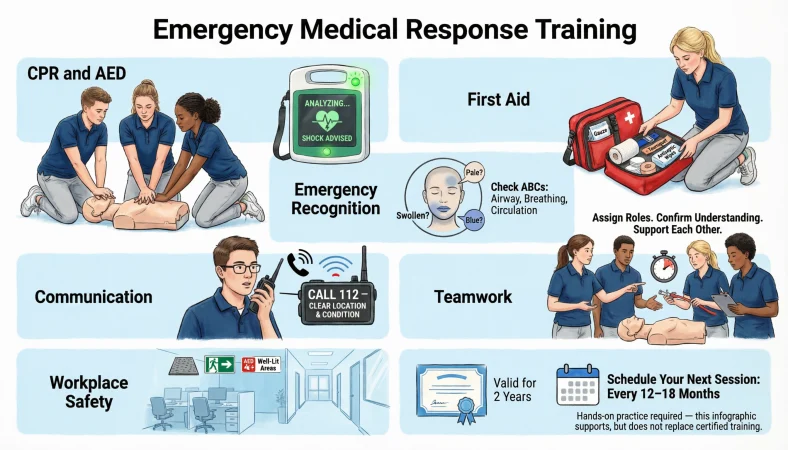
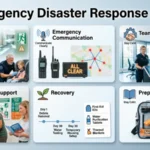
Emergency medical response training prepares people to recognize medical emergencies, communicate clearly, provide appropriate first aid, and support patients until professional medical help arrives. Top training areas include: CPR and AED skills, first aid, emergency assessment, patient communication, and teamwork.
Emergencies rarely arrive with a calendar invitation. Someone collapses at work, a child gets injured during a school activity, or a coworker suddenly struggles to breathe, and everyone looks around hoping someone knows what to do.
That is where emergency medical response training can make a meaningful difference. Whether you work in healthcare, teach students, manage a workplace, coach a sports team, or simply want to be better prepared, learning how to recognize emergencies and respond appropriately can build confidence when every moment feels important. Good training covers more than medical techniques.
It also develops communication, teamwork, situational awareness, and the ability to follow established procedures under pressure. From CPR and first aid to emergency simulations and patient handovers, the right preparation helps people understand their responsibilities without pretending to be professionals beyond their training.
Emergency Medical Response Training Basics
“Recognize the emergency and respond appropriately.”
Example: Use this as a core learning objective for new trainees.
Meaning: Participants learn to identify possible emergencies and follow an appropriate response process.
“Know your role before the pressure starts.”
Example: Use this when introducing responsibilities during workplace training.
Meaning: Clear roles help prevent confusion during an incident.
“Safety comes before rushing in.”
Example: Use this when teaching participants to assess their surroundings.
Meaning: Responders should avoid creating additional risks for themselves or others.
“Call for professional help when needed.”
Example: Use this during a lesson about emergency escalation.
Meaning: Serious situations require timely access to qualified medical assistance.
“Learn the limits of your training.”
Example: Use this when explaining the responsibilities of a first aider.
Meaning: Participants should provide care appropriate to their qualifications.
“Practice the process, not just the theory.”
Example: Use this when planning practical training sessions.
Meaning: Rehearsal helps participants apply knowledge more confidently.
“Keep emergency instructions simple.”
Example: Use this when designing a quick-reference training guide.
Meaning: Clear instructions are easier to understand under pressure.
“Know how to activate the emergency response system.”
Example: Use this during workplace or school emergency orientation.
Meaning: Participants learn how to summon the appropriate assistance.
“Prepare before an incident happens.”
Example: Use this when introducing emergency readiness plans.
Meaning: Advance preparation reduces avoidable confusion.
“Use approved training procedures.”
Example: Use this when explaining why informal advice is not enough.
Meaning: Responses should follow recognized guidance and organizational requirements.
“Refresh your knowledge regularly.”
Example: Use this when planning ongoing staff development.
Meaning: Regular review helps keep skills current.
“Confidence grows through preparation.”
Example: Use this when encouraging nervous beginners.
Meaning: Structured learning can help participants feel more ready to act.
Emergency Medical Response Training For CPR And AED
“Learn CPR through qualified instruction.”
Example: Use this when selecting a course for workplace responders.
Meaning: CPR training teaches skills for responding to certain cardiac emergencies.
“Understand when an AED may be needed.”
Example: Use this during a cardiac emergency training session.
Meaning: Participants learn the purpose of an automated external defibrillator.
“Practice with training equipment.”
Example: Use this when planning a supervised skills session.
Meaning: Manikins and training devices provide opportunities to practice safely.
“Follow the AED’s spoken instructions.”
Example: Use this when discussing AED familiarization.
Meaning: Users should follow the device instructions and their training.
“Learn adult CPR skills.”
Example: Use this when arranging a course for adult emergency response.
Meaning: Participants develop skills for responding to adult cardiac emergencies.
“Understand pediatric CPR training.”
Example: Use this when preparing childcare or school staff.
Meaning: Pediatric training addresses the specific needs of children and infants.
“Know how to request emergency assistance.”
Example: Use this during CPR and AED scenario practice.
Meaning: Participants learn to activate the emergency response system promptly.
“Practice team coordination during CPR scenarios.”
Example: Use this when several trainees share response responsibilities.
Meaning: Team practice helps participants communicate and coordinate their actions.
“Learn how to recognize possible cardiac arrest.”
Example: Use this in an instructor-led emergency recognition module.
Meaning: Participants learn to recognize signs requiring an urgent response.
“Understand the role of an AED.”
Example: Use this when introducing emergency equipment.
Meaning: An AED analyzes heart rhythm and may advise a shock when appropriate.
“Complete the required skills assessment.”
Example: Use this when a job requires documented CPR competence.
Meaning: Assessment helps verify practical ability rather than relying on attendance alone.
“Keep CPR certification current.”
Example: Use this when planning annual workplace training calendars.
Meaning: Current certification helps maintain alignment with course and employer requirements.
Emergency Medical Response Training For First Aid
“Learn how first aid supports emergency care.”
Example: Use this when introducing a general first aid course.
Meaning: First aid provides appropriate initial assistance before further care is available.
“Recognize injuries that need urgent assessment.”
Example: Use this during an injury recognition lesson.
Meaning: Participants learn when an injury may require professional evaluation.
“Understand basic bleeding response.”
Example: Use this when discussing bleeding emergencies with a qualified instructor.
Meaning: Trainees learn appropriate responses within the scope of their training.
“Know when a burn needs medical attention.”
Example: Use this in a first aid scenario involving a burn injury.
Meaning: Participants learn to recognize situations requiring further care.
“Learn how to respond to suspected fractures.”
Example: Use this during an injury management module.
Meaning: Training explains how to avoid unnecessary movement and seek appropriate assistance.
“Recognize possible allergic reactions.”
Example: Use this during a lesson about sudden medical symptoms.
Meaning: Participants learn to identify signs that may require urgent medical care.
“Understand choking emergency training.”
Example: Use this when arranging age-appropriate first aid instruction.
Meaning: Participants learn recognized responses to airway obstruction.
“Learn to recognize heat-related illness.”
Example: Use this during outdoor activity safety training.
Meaning: Trainees learn to identify possible heat emergencies and seek appropriate care.
“Understand cold-related emergencies.”
Example: Use this when preparing outdoor workers or activity leaders.
Meaning: Participants learn to recognize potentially dangerous effects of cold exposure.
“Know when a head injury needs urgent attention.”
Example: Use this during sports safety training.
Meaning: Participants learn to recognize warning signs that require medical assessment.
“Learn first aid kit essentials.”
Example: Use this when preparing workplace emergency supplies.
Meaning: Participants become familiar with appropriate equipment and its intended use.
“Practice first aid scenarios under supervision.”
Example: Use this during a practical class with an instructor.
Meaning: Supervised practice helps participants apply their learning appropriately.
Emergency Medical Response Training For Workplace Safety
“Know your workplace emergency plan.”
Example: Use this during employee induction.
Meaning: Staff learn the procedures relevant to their work environment.
“Identify the designated first aiders.”
Example: Use this when introducing emergency contacts to new employees.
Meaning: Workers know whom to notify when someone needs assistance.
“Know where emergency equipment is located.”
Example: Use this during a workplace safety walkthrough.
Meaning: Familiarity with equipment locations can reduce avoidable delays.
“Keep emergency exits accessible.”
Example: Use this during routine safety inspections.
Meaning: Clear exits support safer movement during emergencies.
“Understand how to report an incident.”
Example: Use this when teaching staff the reporting process.
Meaning: Employees learn how to communicate an emergency through approved channels.
“Practice workplace evacuation procedures.”
Example: Use this during a scheduled emergency drill.
Meaning: Rehearsal helps staff understand how to leave an unsafe area.
“Make emergency instructions easy to find.”
Example: Use this when reviewing workplace safety notices.
Meaning: Accessible instructions help employees locate important information quickly.
“Train staff to recognize common hazards.”
Example: Use this during an occupational safety session.
Meaning: Hazard awareness can help prevent incidents and injuries.
“Assign emergency communication responsibilities.”
Example: Use this when planning a workplace response exercise.
Meaning: Designated responsibilities reduce uncertainty about who communicates.
“Keep emergency contact information updated.”
Example: Use this when reviewing workplace safety documentation.
Meaning: Current information helps staff reach the appropriate services.
“Review incident procedures after workplace changes.”
Example: Use this when a department relocates or equipment changes.
Meaning: Emergency plans should reflect the actual work environment.
“Document completed training.”
Example: Use this when maintaining employee safety records.
Meaning: Documentation helps demonstrate participation and track training requirements.
Emergency Medical Response Training For Schools And Childcare
“Know the school emergency procedures.”
Example: Use this during staff preparation before the academic year begins.
Meaning: Staff learn how to respond within the school’s established system.
“Practice age-appropriate first aid scenarios.”
Example: Use this when preparing childcare workers for common incidents.
Meaning: Training considers children’s different needs and circumstances.
“Recognize when a child needs urgent medical help.”
Example: Use this during pediatric emergency recognition training.
Meaning: Participants learn to identify concerning symptoms and seek appropriate assistance.
“Keep emergency contacts accessible.”
Example: Use this when reviewing classroom safety procedures.
Meaning: Staff can locate the information needed for escalation.
“Understand student medical information procedures.”
Example: Use this when explaining how authorized staff access relevant records.
Meaning: Appropriate information helps staff follow approved care plans.
“Train staff in pediatric CPR where appropriate.”
Example: Use this when arranging childcare emergency courses.
Meaning: Pediatric CPR training prepares participants for age-specific emergencies.
“Know the procedure for playground injuries.”
Example: Use this during school playground safety training.
Meaning: Staff learn how to report injuries and obtain appropriate help.
“Practice calm communication with children.”
Example: Use this when rehearsing a response to an unexpected injury.
Meaning: Reassuring communication can help reduce fear and confusion.
“Know who contacts parents or guardians.”
Example: Use this when assigning responsibilities during school incidents.
Meaning: Clear roles support consistent communication with families.
“Keep first aid supplies organized.”
Example: Use this during classroom and childcare safety checks.
Meaning: Organized supplies are easier to locate when required.
“Understand safeguarding and privacy rules.”
Example: Use this when discussing incident records involving children.
Meaning: Sensitive information should be handled according to applicable rules.
“Review emergency drills with the whole team.”
Example: Use this after a school safety exercise.
Meaning: Team reviews can identify gaps in readiness.
Emergency Medical Response Training For Healthcare Teams
“Understand the chain of clinical escalation.”
Example: Use this during hospital orientation.
Meaning: Staff learn how to request additional clinical support.
“Practice structured patient handovers.”
Example: Use this during a simulated transfer between care teams.
Meaning: Organized handovers help communicate relevant patient information.
“Use clear clinical communication.”
Example: Use this when rehearsing a response to a deteriorating patient.
Meaning: Precise communication helps reduce misunderstandings.
“Know your assigned responsibilities.”
Example: Use this during a multidisciplinary simulation.
Meaning: Each team member understands their role within the response.
“Practice recognizing patient deterioration.”
Example: Use this in a supervised clinical training scenario.
Meaning: Staff learn to identify concerning changes that need escalation.
“Follow established infection prevention procedures.”
Example: Use this during training involving patient contact.
Meaning: Appropriate precautions help reduce infection risks.
“Understand emergency equipment checks.”
Example: Use this when preparing a clinical response area.
Meaning: Equipment readiness should be verified according to local procedures.
“Practice documentation during emergencies.”
Example: Use this in a simulated clinical incident.
Meaning: Accurate records support continuity and review.
“Understand consent and professional boundaries.”
Example: Use this during a healthcare ethics session.
Meaning: Care should respect applicable legal and professional requirements.
“Coordinate with other clinical professionals.”
Example: Use this during an interprofessional training exercise.
Meaning: Collaboration helps align the team’s response.
“Review clinical protocols regularly.”
Example: Use this during continuing professional development.
Meaning: Updated protocols help keep practice aligned with current guidance.
“Participate in simulation debriefs.”
Example: Use this after a supervised emergency exercise.
Meaning: Debriefing helps teams identify strengths and improvement opportunities.
Emergency Medical Response Training For Communication
“Tell emergency services what happened.”
Example: Use this when practicing an emergency call scenario.
Meaning: Clear information helps dispatchers understand the situation.
“Give the location as precisely as possible.”
Example: Use this during emergency call training.
Meaning: Accurate location details help responders find the scene.
“Describe the patient’s condition clearly.”
Example: Use this when practicing a handover to emergency personnel.
Meaning: Specific observations help others understand the situation.
“Avoid guessing when information is unknown.”
Example: Use this during a simulated patient report.
Meaning: Honest uncertainty is safer than presenting assumptions as facts.
“Use plain language whenever possible.”
Example: Use this when communicating with someone outside healthcare.
Meaning: Familiar wording helps others understand instructions.
“Repeat important information when needed.”
Example: Use this when confirming instructions over a noisy phone line.
Meaning: Confirmation can reduce communication errors.
“Listen carefully to the dispatcher.”
Example: Use this during emergency call role-play.
Meaning: Following instructions helps maintain coordinated action.
“Keep your voice steady and direct.”
Example: Use this when practicing communication under pressure.
Meaning: Clear delivery makes important information easier to understand.
“Ask one question at a time.”
Example: Use this when gathering information from a distressed witness.
Meaning: Simple questions can make communication more manageable.
“Protect patient privacy.”
Example: Use this when discussing an incident in a shared workplace.
Meaning: Personal medical information should only be shared appropriately.
“Provide a structured handover.”
Example: Use this when a trained responder transfers responsibility to medical professionals.
Meaning: A consistent structure helps communicate key information.
“Confirm that the message was understood.”
Example: Use this when assigning tasks during a response exercise.
Meaning: Confirmation helps prevent avoidable misunderstandings.
Emergency Medical Response Training For Teamwork
“Assign clear roles before the exercise.”
Example: Use this when organizing a group emergency simulation.
Meaning: Defined responsibilities reduce duplicated effort.
“Choose a response team leader.”
Example: Use this when a training scenario requires coordination.
Meaning: Leadership provides a clear point of organization.
“Communicate changes promptly.”
Example: Use this during a scenario where conditions change.
Meaning: Timely updates help the team adapt.
“Ask for assistance when needed.”
Example: Use this when a trainee reaches the limits of their skills.
Meaning: Recognizing limitations supports safer care.
“Share relevant observations with the team.”
Example: Use this during a supervised patient assessment exercise.
Meaning: Useful observations help the team build a clearer picture.
“Avoid talking over critical instructions.”
Example: Use this during a busy simulation.
Meaning: Controlled communication helps essential messages get through.
“Support colleagues without taking over unnecessarily.”
Example: Use this when trainees practice working in pairs.
Meaning: Cooperation respects roles and promotes coordination.
“Check that assigned tasks are completed.”
Example: Use this during a team-based emergency drill.
Meaning: Task confirmation helps prevent missed responsibilities.
“Escalate problems that exceed your role.”
Example: Use this when a scenario requires a higher level of expertise.
Meaning: Teams should involve qualified support when necessary.
“Respect the expertise of each team member.”
Example: Use this during a multidisciplinary exercise.
Meaning: Recognizing different skills improves collaboration.
“Debrief without blaming people.”
Example: Use this after a difficult training scenario.
Meaning: Constructive feedback supports learning rather than defensiveness.
“Practice teamwork until communication feels natural.”
Example: Use this when planning recurring simulations.
Meaning: Repeated practice helps teams coordinate more effectively.
Emergency Medical Response Training For Assessment And Recognition
“Learn to recognize a possible emergency.”
Example: Use this when introducing an emergency recognition module.
Meaning: Trainees learn to notice signs that may require urgent help.
“Observe before making assumptions.”
Example: Use this during a simulated initial assessment.
Meaning: Careful observation helps participants avoid unsupported conclusions.
“Understand the purpose of an initial assessment.”
Example: Use this in a supervised first aid course.
Meaning: The assessment helps identify urgent concerns and appropriate next steps.
“Recognize signs of breathing difficulty.”
Example: Use this during a medical emergency awareness session.
Meaning: Participants learn to identify symptoms that may require urgent assistance.
“Recognize possible stroke symptoms.”
Example: Use this during a community emergency education session.
Meaning: Awareness can help people seek urgent medical evaluation.
“Understand signs of a possible cardiac emergency.”
Example: Use this during a first aid awareness lesson.
Meaning: Participants learn when symptoms may require immediate emergency care.
“Recognize severe allergic reactions.”
Example: Use this when preparing staff who work around known allergens.
Meaning: Participants learn to identify potentially life-threatening reactions.
“Know when a seizure requires emergency help.”
Example: Use this during a first aid training session.
Meaning: Trainees learn to recognize situations that need urgent escalation.
“Notice changes in responsiveness.”
Example: Use this during a supervised assessment simulation.
Meaning: Changes in responsiveness can indicate a serious medical problem.
“Report observations rather than diagnoses.”
Example: Use this when a non-clinician communicates with emergency services.
Meaning: Describing what is observed avoids making unsupported medical conclusions.
“Follow the instructor’s assessment framework.”
Example: Use this during a practical training assessment.
Meaning: A structured framework supports consistent learning.
“Seek professional assessment when warning signs appear.”
Example: Use this during emergency recognition training.
Meaning: Concerning symptoms should not be dismissed or self-diagnosed.
Emergency Medical Response Training For Emergency Scenarios
“Practice a sudden collapse scenario.”
Example: Use this in a supervised CPR and emergency activation exercise.
Meaning: Participants rehearse recognition, communication, and appropriate escalation.
“Rehearse a workplace injury response.”
Example: Use this during occupational safety training.
Meaning: Staff practice following reporting and first aid procedures.
“Simulate an emergency call.”
Example: Use this when training staff to communicate with dispatchers.
Meaning: Role-play helps participants share clear and useful information.
“Practice responding to a choking emergency.”
Example: Use this during an instructor-led first aid course.
Meaning: Participants learn age-appropriate recognized responses under supervision.
“Run a pediatric emergency simulation.”
Example: Use this when preparing childcare or school personnel.
Meaning: Scenario practice helps staff understand their responsibilities during a child-related emergency.
“Practice a possible allergic reaction scenario.”
Example: Use this during workplace or school safety training.
Meaning: Participants rehearse recognition and escalation.
“Rehearse an emergency equipment check.”
Example: Use this when preparing a response room or workplace first aid station.
Meaning: Staff learn to check readiness before equipment is needed.
“Simulate a patient handover.”
Example: Use this during a healthcare training exercise.
Meaning: Participants practice communicating relevant information to the next care provider.
“Practice responding when a plan changes.”
Example: Use this during a scenario with new information or an unavailable resource.
Meaning: Participants learn to adapt while following established procedures.
“Rehearse a multi-person emergency.”
Example: Use this during an advanced team simulation.
Meaning: Teams practice prioritization and coordination.
“Include communication challenges in drills.”
Example: Use this when training for noisy or crowded environments.
Meaning: Realistic conditions help participants practice clear communication.
“Review every scenario after completion.”
Example: Use this when a training exercise ends.
Meaning: Debriefing turns practice into practical lessons.
Emergency Medical Response Training For Equipment And Preparedness
“Know where the first aid kit is stored.”
Example: Use this during an office safety walkthrough.
Meaning: Participants should be able to locate essential supplies.
“Check emergency equipment according to policy.”
Example: Use this during routine workplace readiness checks.
Meaning: Equipment should be maintained and inspected as required.
“Learn how an AED indicates readiness.”
Example: Use this when introducing an AED to staff.
Meaning: Familiarity helps participants recognize the device’s status indicators.
“Know how to summon emergency assistance.”
Example: Use this during an equipment orientation.
Meaning: Equipment knowledge should be paired with emergency activation procedures.
“Keep access to emergency equipment clear.”
Example: Use this when reviewing a building’s safety layout.
Meaning: Obstructions can delay access during an incident.
“Check supplies before scheduled training.”
Example: Use this when preparing a practical first aid class.
Meaning: Prepared materials help the session run smoothly.
“Use training equipment for practice.”
Example: Use this during instructor-led skills development.
Meaning: Dedicated training equipment supports safer rehearsal.
“Understand the limits of each device.”
Example: Use this when introducing emergency equipment.
Meaning: Equipment should only be used for its intended purpose and according to training.
“Know who is responsible for equipment maintenance.”
Example: Use this when assigning workplace safety responsibilities.
Meaning: Clear ownership supports ongoing readiness.
“Report missing or damaged supplies.”
Example: Use this during a routine equipment check.
Meaning: Problems can be corrected before equipment is needed.
“Keep emergency information visible.”
Example: Use this when reviewing workplace safety boards.
Meaning: Accessible information helps people find instructions quickly.
“Include equipment checks in emergency drills.”
Example: Use this when assessing overall response readiness.
Meaning: Drills should test both human coordination and equipment preparedness.
Emergency Medical Response Training For Certification
“Choose training that matches your responsibilities.”
Example: Use this when comparing first aid, CPR, and professional responder courses.
Meaning: Course selection should reflect the skills and qualifications required.
“Check whether a practical assessment is required.”
Example: Use this when selecting a workplace certification course.
Meaning: Some qualifications require demonstrated skills rather than online study alone.
“Confirm that the course meets employer requirements.”
Example: Use this when training is needed for a particular job.
Meaning: A course certificate may not satisfy every workplace requirement.
“Understand the difference between attendance and certification.”
Example: Use this when reviewing course completion records.
Meaning: Attending a class does not always mean every certification requirement has been met.
“Ask about the course syllabus.”
Example: Use this when comparing emergency response programs.
Meaning: The syllabus helps you understand which skills and scenarios are included.
“Check instructor qualifications.”
Example: Use this before enrolling in a practical course.
Meaning: Qualified instruction supports safe and appropriate skills development.
“Confirm the certificate’s validity period.”
Example: Use this when planning future renewals.
Meaning: Some certifications have specific expiration or renewal requirements.
“Keep a copy of your training record.”
Example: Use this when documenting workplace compliance.
Meaning: Records help demonstrate completed training.
“Schedule renewal before certification expires.”
Example: Use this when maintaining required workplace credentials.
Meaning: Advance planning helps avoid gaps in qualification.
“Ask whether blended learning is available.”
Example: Use this when balancing work and training schedules.
Meaning: Blended formats may combine online learning with practical sessions.
“Check local regulatory requirements.”
Example: Use this when selecting a course in a particular jurisdiction.
Meaning: Training and certification expectations can vary by location and occupation.
“Refresh practical skills between courses.”
Example: Use this when maintaining readiness after certification.
Meaning: Regular practice helps reinforce previously learned skills.
Emergency Medical Response Training For Refresher Practice
“Review essential emergency procedures regularly.”
Example: Use this during a short workplace refresher session.
Meaning: Regular review helps keep key steps familiar.
“Repeat practical skills with qualified supervision.”
Example: Use this when organizing periodic CPR practice.
Meaning: Supervision helps reinforce correct technique.
“Use short scenario-based refreshers.”
Example: Use this during a team meeting focused on safety.
Meaning: Brief scenarios let participants revisit important decisions.
“Review common mistakes from previous exercises.”
Example: Use this when planning a follow-up training session.
Meaning: Identifying mistakes creates opportunities for improvement.
“Update training materials when guidance changes.”
Example: Use this when revising an emergency response course.
Meaning: Materials should reflect current recognized guidance.
“Practice using emergency communication equipment.”
Example: Use this during a refresher for designated responders.
Meaning: Familiarity can reduce confusion when communication matters.
“Revisit role assignments after staff changes.”
Example: Use this when employees join or leave a response team.
Meaning: Current role information helps preserve coordination.
“Check the condition of training equipment.”
Example: Use this before a practical refresher.
Meaning: Equipment should be suitable and ready for practice.
“Repeat scenarios that exposed skill gaps.”
Example: Use this after a training review identifies weaknesses.
Meaning: Targeted repetition addresses specific learning needs.
“Keep a record of refresher activities.”
Example: Use this when maintaining a workplace training log.
Meaning: Documentation shows when practice occurred.
“Ask participants what remains unclear.”
Example: Use this during the closing discussion of a refresher session.
Meaning: Questions reveal topics that need additional explanation.
“Make ongoing learning part of the safety culture.”
Example: Use this when planning long-term staff development.
Meaning: Regular learning supports sustained emergency readiness.
Emergency Medical Response Training For Leadership And Debriefing
“Set clear learning objectives.”
Example: Use this when planning an emergency response course.
Meaning: Defined goals help instructors evaluate whether training was effective.
“Explain the reason behind each procedure.”
Example: Use this when introducing a new emergency protocol.
Meaning: Understanding the purpose can improve appropriate application.
“Encourage questions without embarrassment.”
Example: Use this when teaching participants who are new to emergency response.
Meaning: A supportive learning environment helps people identify knowledge gaps.
“Give feedback that participants can act on.”
Example: Use this after a practical assessment.
Meaning: Specific feedback makes improvement easier.
“Evaluate skills as well as knowledge.”
Example: Use this when reviewing course outcomes.
Meaning: Written understanding alone may not demonstrate practical competence.
“Keep scenarios realistic and supervised.”
Example: Use this when developing an emergency simulation.
Meaning: Realistic practice should remain controlled and appropriate for the learners.
“Review response times and communication quality.”
Example: Use this after a workplace emergency drill.
Meaning: These measures can reveal opportunities to improve coordination.
“Invite participants to reflect on decisions.”
Example: Use this during a post-simulation debrief.
Meaning: Reflection helps trainees understand their reasoning and identify alternatives.
“Focus feedback on learning, not blame.”
Example: Use this after a scenario does not go as planned.
Meaning: Constructive discussion supports improvement.
“Track progress against learning objectives.”
Example: Use this when assessing a training program over time.
Meaning: Progress records help identify strengths and remaining gaps.
“Revise exercises based on assessment results.”
Example: Use this when repeated training reveals the same problem.
Meaning: Training should adapt to the needs of participants.
“Celebrate progress while maintaining standards.”
Example: Use this when a group completes a challenging skills assessment.
Meaning: Encouragement can build confidence without lowering expectations.
Emergency Medical Response Training Best Practices
“Select a course suited to your role.”
Example: Use this when deciding between basic first aid and professional responder training.
Meaning: Training should match the responsibilities a learner is expected to perform.
“Learn from qualified instructors.”
Example: Use this when choosing a practical emergency response program.
Meaning: Qualified instruction helps participants develop skills using recognized guidance.
“Combine theory with practical exercises.”
Example: Use this when designing a training schedule.
Meaning: A mix of learning methods helps connect knowledge with action.
“Follow current recognized guidance.”
Example: Use this when reviewing emergency response course materials.
Meaning: Training should reflect up-to-date standards and recommendations.
“Practice within your scope of competence.”
Example: Use this when teaching non-clinical staff about emergency responsibilities.
Meaning: Responders should not perform tasks beyond their training and authorization.
“Make emergency plans accessible.”
Example: Use this when preparing an organization’s response documentation.
Meaning: Staff need to find procedures when required.
“Include diverse emergency scenarios.”
Example: Use this when planning an annual training program.
Meaning: Varied practice prepares learners for different kinds of incidents.
“Check understanding before ending the session.”
Example: Use this when closing a training class.
Meaning: A final review can reveal misunderstandings that still need attention.
“Evaluate training outcomes.”
Example: Use this when reviewing a completed course.
Meaning: Evaluation helps determine whether the training achieved its objectives.
“Maintain appropriate training records.”
Example: Use this when preparing for a compliance review.
Meaning: Accurate records help track course completion and renewal requirements.
“Refresh skills before they become unfamiliar.”
Example: Use this when scheduling recurring practice sessions.
Meaning: Ongoing practice helps participants retain important knowledge.
“Turn lessons learned into better preparation.”
Example: Use this after reviewing an exercise or real incident.
Meaning: Continuous improvement helps strengthen future responses.
FAQs
What Is Emergency Medical Response Training?
It teaches people to recognize emergencies, communicate clearly, provide appropriate initial care, and seek professional help.
Who Needs Emergency Medical Response Training?
Healthcare workers, workplace responders, teachers, childcare staff, coaches, and community members may benefit.
Is Emergency Medical Response Training The Same As First Aid?
Not always. Emergency medical response programs may cover broader skills than basic first aid.
Can You Complete Emergency Medical Response Training Online?
Some theory is available online, but practical certification may require an instructor-led skills assessment.
Does Emergency Medical Response Training Include CPR?
Many courses include CPR or offer it as a separate module. Check the course syllabus first.
How Often Should You Refresh Emergency Response Skills?
Follow your course, employer, and local requirements. Regular practice can also help maintain confidence.
Is Emergency Medical Response Training A Professional Qualification?
Some programs provide professional qualifications, while others are designed for basic workplace or community preparedness.
Does Completing An Online Course Guarantee Certification?
No. Some courses require practical assessment or additional requirements before certification.
Why Is Practical Training Important?
Practical exercises let learners demonstrate skills and receive feedback from qualified instructors.
Is Humor Appropriate During Emergency Response Training?
Light humor can make learning more comfortable, but it should never minimize real emergencies or patient distress.
Conclusion
Emergency medical response training is about more than memorizing procedures. It helps people recognize when something is wrong, communicate clearly, work with others, and understand when professional assistance is needed. Whether you are preparing for a workplace responsibility, improving your first aid knowledge, or pursuing a healthcare qualification, choosing appropriate training is a valuable step toward readiness.
Remember that confidence comes from learning, practice, and knowing the limits of your role. Review your skills, ask questions, and keep your training current. Save this guide for your next safety session, share it with your team, and keep building the knowledge that helps people respond more effectively when it matters.


1 thought on “180+ Emergency Medical Response Training Skills, Examples And Best Practices For 2026”