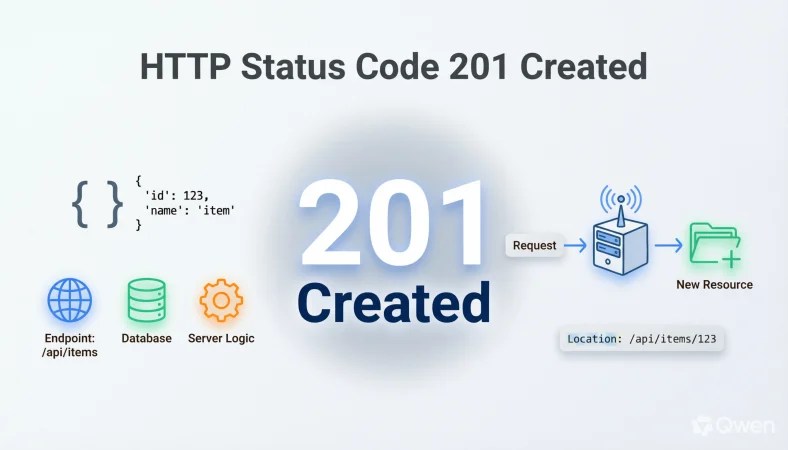
Response code 201 means Created. It usually tells you that a server successfully processed a request and created a new resource, often after a POST request.
Top alternatives: HTTP 201 Created, Created status code, 201 HTTP response, successful resource creation, API 201 status
When you are working with APIs, web apps, backend systems, or even explaining technical stuff to your team, seeing response code 201 is usually a good sign. It means the server did more than simply understand your request. It successfully created something new.
Think of it as the internet quietly saying, “Yep, that thing exists now.” In developer chats, Slack messages, project notes, documentation, or troubleshooting sessions, knowing how to describe a 201 response clearly can save time and prevent unnecessary debugging drama.
Whether you are a beginner learning HTTP status codes or an experienced developer checking an API response, the right explanation depends on the situation. This guide breaks down response code 201 with practical, funny, professional, clever, and easy-to-use explanations that make the concept much easier to remember.
Funny Response Code 201 Responses
“201? The server just made a thing.”
Use this when explaining a successful resource creation to someone new to APIs.
Meaning: The server successfully created something.
“Created. The internet did its job.”
Use this when celebrating a successful POST request.
Meaning: The requested resource was successfully created.
“201 means we have a new arrival.”
Use this when joking about a newly created database record.
Meaning: A new resource now exists.
“The server said: welcome to existence.”
Use this during a casual developer chat about API responses.
Meaning: The requested resource has been created.
“201 is basically ‘it’s alive!’”
Use this after successfully creating an object through an API.
Meaning: The creation request worked.
“New resource unlocked.”
Use this when a POST request successfully creates something.
Meaning: A new server-side resource is available.
“HTTP just delivered the good news.”
Use this after seeing a successful 201 response.
Meaning: The server confirms successful creation.
“The API understood the assignment.”
Use this when a creation request returns 201.
Meaning: The server successfully completed the intended action.
“201: born on the server.”
Use this when joking about a newly created record.
Meaning: The server created the requested resource.
“Another resource has entered the chat.”
Use this when a new API object appears successfully.
Meaning: A new resource has been created.
“No error drama today. Just 201.”
Use this after a successful development test.
Meaning: The request completed successfully by creating a resource.
“201 is the API saying, ‘Done, and it exists.’”
Use this when giving a beginner-friendly explanation.
Meaning: The server created the requested resource successfully.
Professional Response Code 201 Explanations
“A 201 response indicates successful resource creation.”
Use this in technical documentation or a project discussion.
Meaning: The server successfully created a new resource.
“HTTP 201 corresponds to the Created status.”
Use this when explaining standard HTTP response codes.
Meaning: The status identifies successful creation.
“The server returns 201 when the requested resource has been created successfully.”
Use this in API documentation.
Meaning: The request resulted in a new resource.
“A 201 response confirms that the creation operation succeeded.”
Use this in a technical report.
Meaning: The requested creation process completed successfully.
“The response may include details about the newly created resource.”
Use this when documenting an API endpoint.
Meaning: The server can provide information about what it created.
“A Location header may identify the newly created resource.”
Use this when discussing REST API responses.
Meaning: The response can point the client toward the new resource.
“201 is commonly associated with successful POST operations.”
Use this when explaining API conventions.
Meaning: POST requests frequently create new resources.
“The status communicates successful creation rather than simple retrieval.”
Use this when comparing 201 with 200.
Meaning: The response specifically indicates that something new was created.
“A 201 response should be interpreted within the endpoint’s documented behavior.”
Use this when reviewing an unfamiliar API.
Meaning: The endpoint documentation provides important context.
“The response status provides a clear signal to the client.”
Use this when discussing API design.
Meaning: The status helps clients understand what happened.
“Returning 201 can make resource creation semantics explicit.”
Use this in an API architecture discussion.
Meaning: The status clearly communicates that creation occurred.
“A well-designed API uses status codes consistently.”
Use this during API review meetings.
Meaning: Consistent HTTP behavior improves clarity for clients.
Beginner-Friendly Response Code 201 Ideas
“201 means something new was created.”
Use this when teaching HTTP basics.
Meaning: The server successfully created a resource.
“Think of 201 as ‘Created.’”
Use this when introducing HTTP status codes.
Meaning: The word Created is the easiest way to remember 201.
“POST request plus successful creation often equals 201.”
Use this during an API lesson.
Meaning: POST commonly results in 201 when it creates a resource.
“It is usually a good response.”
Use this when reassuring a beginner who sees 201.
Meaning: 201 generally indicates successful creation.
“The server did not just receive your request; it created something.”
Use this when explaining the difference between request receipt and creation.
Meaning: The operation produced a new resource.
“Imagine ordering a new account and getting ‘Created.’”
Use this as an everyday analogy.
Meaning: The server successfully made the requested item.
“201 is not an error code.”
Use this when someone worries about the number.
Meaning: 201 belongs to the successful 2xx response class.
“A new record can trigger a 201 response.”
Use this when explaining database-backed APIs.
Meaning: Creating a record can result in HTTP 201.
“Your API request created something successfully.”
Use this when explaining a test result.
Meaning: The server completed the creation operation.
“201 is basically a success notification for creation.”
Use this during beginner training.
Meaning: It communicates successful creation.
“Remember: 200 means OK, while 201 means Created.”
Use this when teaching common HTTP status differences.
Meaning: The two statuses communicate different successful outcomes.
“If you see 201 after creating a resource, that is usually exactly what you wanted.”
Use this when reviewing a beginner’s API test.
Meaning: The server successfully created the requested resource.
Creative Response Code 201 Explanations
“201 is the digital birth certificate of a resource.”
Use this when explaining resource creation creatively.
Meaning: The status signals that something new now exists.
“The request knocked; the server opened the door and created something.”
Use this as a memorable HTTP analogy.
Meaning: The request successfully produced a resource.
“201 turns a request into an actual resource.”
Use this in educational content.
Meaning: The server transforms the requested creation operation into something that exists.
“Think of 201 as a tiny server-side celebration.”
Use this when introducing status codes casually.
Meaning: The operation completed successfully.
“The API just stamped ‘Created’ on your request.”
Use this during a technical presentation.
Meaning: The server confirms successful creation.
“201 is where intention becomes infrastructure.”
Use this in a creative developer presentation.
Meaning: The requested action resulted in an actual resource.
“A request went in, a new resource came out.”
Use this when simplifying API behavior.
Meaning: The creation operation succeeded.
“201 is the server giving your new resource a green light.”
Use this in a beginner-friendly explanation.
Meaning: The server confirms successful creation.
“Your payload had a purpose, and the server delivered.”
Use this when reviewing a successful API test.
Meaning: The submitted data resulted in resource creation.
“The endpoint did not just listen; it built.”
Use this during a technical workshop.
Meaning: The endpoint successfully created something.
“201 is a small number with a very productive personality.”
Use this in social developer content.
Meaning: The status indicates successful creation.
“New resource, new status, no confusion.”
Use this as a quick educational caption.
Meaning: 201 clearly communicates successful creation.
Sarcastic Response Code 201 Lines
“Yes, 201. Something was actually created.”
Use this when joking after a successful deployment test.
Meaning: The creation operation succeeded.
“The server managed to make something. Impressive.”
Use this with a technical teammate after a successful request.
Meaning: The request successfully created a resource.
“201 means the API finally contributed to society.”
Use this in a playful developer chat.
Meaning: The API successfully completed its creation task.
“Congratulations, your resource has officially entered existence.”
Use this after a successful API call.
Meaning: The server created the resource.
“Not 404, not 500. We are thriving.”
Use this when celebrating a successful creation request.
Meaning: The response indicates a successful operation.
“201 walked in and fixed the mood.”
Use this after resolving an API creation issue.
Meaning: A successful creation response is reassuring.
“The request actually did something useful.”
Use this during a casual technical review.
Meaning: The server successfully created the requested resource.
“Apparently the server can create things after all.”
Use this when a creation endpoint finally works.
Meaning: The API successfully completed the requested action.
“Look at that, a response code with ambition.”
Use this in a lighthearted status-code discussion.
Meaning: 201 represents successful creation.
“201: because ‘nothing happened’ was not the goal.”
Use this when comparing successful and unsuccessful requests.
Meaning: The operation produced a new resource.
“The API chose productivity today.”
Use this after receiving a 201 response.
Meaning: The server successfully created something.
“Created. Against all odds.”
Use this after finally getting a successful API test.
Meaning: The resource creation worked after difficulty.
Polite Response Code 201 Explanations
“A 201 response means the requested resource was successfully created.”
Use this when explaining the status to a colleague.
Meaning: The server completed the creation request successfully.
“In this case, 201 indicates a successful creation operation.”
Use this in a professional conversation.
Meaning: The status describes the result clearly.
“The API has confirmed that the resource now exists.”
Use this when reporting a successful request.
Meaning: The server created the resource.
“This status is appropriate when a request creates a new resource.”
Use this during API design discussions.
Meaning: 201 is suitable for successful resource creation.
“The response looks consistent with a successful creation request.”
Use this when reviewing API behavior.
Meaning: The status suggests the operation completed as expected.
“We can treat the 201 response as confirmation of creation.”
Use this during project communication.
Meaning: The server confirms that creation succeeded.
“The endpoint appears to have processed the request successfully.”
Use this when discussing an API test result.
Meaning: The request produced the intended resource.
“A 201 response is generally a positive result.”
Use this when reassuring a less technical colleague.
Meaning: It belongs to the successful 2xx class.
“The status indicates that the requested resource was created.”
Use this in a client-facing explanation.
Meaning: The operation successfully produced a resource.
“The API response provides confirmation that creation completed.”
Use this in project documentation.
Meaning: The status communicates successful completion.
“This is the expected status when the endpoint creates a new resource.”
Use this during a technical review.
Meaning: 201 fits the operation being performed.
“The response can now be used to continue the workflow.”
Use this after successful resource creation.
Meaning: The client can proceed based on the successful result.
Clever Response Code 201 Comparisons
“200 says OK; 201 says Created.”
Use this when explaining the difference between common success codes.
Meaning: 201 specifically identifies successful creation.
“201 is more specific than a generic success message.”
Use this during API design discussions.
Meaning: The status communicates what kind of success occurred.
“Think 2xx for success, then 201 for creation.”
Use this when teaching HTTP status families.
Meaning: 201 is part of the successful 2xx category.
“201 answers the question: did something new get created?”
Use this when explaining status-code semantics.
Meaning: The code communicates successful creation.
“200 can mean successful processing; 201 points to creation.”
Use this when comparing responses.
Meaning: The statuses describe different successful outcomes.
“201 is not ‘request received’; it is ‘resource created.’”
Use this when clarifying API behavior.
Meaning: Creation has actually occurred.
“POST does not automatically mean 201, but successful creation commonly does.”
Use this when correcting an API misconception.
Meaning: The status depends on what the operation actually does.
“201 describes the outcome, not the programming language.”
Use this when explaining HTTP fundamentals.
Meaning: The status is independent of whether the API uses JavaScript, Python, Java, or another language.
“The number matters because the client can act on it.”
Use this when discussing API response handling.
Meaning: Status codes help clients determine what happened.
“201 is a success code with a very specific job.”
Use this during developer training.
Meaning: Its purpose is to indicate creation.
“Created is the keyword to remember.”
Use this when helping someone memorize HTTP statuses.
Meaning: The official phrase makes 201 easy to identify.
“If the server created it, 201 makes perfect sense.”
Use this as a simple technical summary.
Meaning: Successful resource creation is the key condition.
Confident Response Code 201 Statements
“A 201 response confirms successful resource creation.”
Use this when confidently reporting API results.
Meaning: The server successfully created the resource.
“The endpoint returned the correct creation status.”
Use this after validating API behavior.
Meaning: The response matches the intended creation operation.
“201 is the appropriate success signal for this creation request.”
Use this during API testing.
Meaning: The status accurately communicates the result.
“The resource was created successfully.”
Use this in a deployment or testing update.
Meaning: The requested resource now exists.
“The API completed the creation workflow successfully.”
Use this in a project status report.
Meaning: The server finished the requested process.
“The response clearly communicates a successful creation.”
Use this during API documentation review.
Meaning: The status is explicit and understandable.
“The server has confirmed the new resource.”
Use this when reporting test results.
Meaning: Resource creation succeeded.
“The creation request returned a successful 2xx status.”
Use this in technical reporting.
Meaning: The operation completed within the HTTP success range.
“The 201 response is exactly the signal we were looking for.”
Use this after a successful integration test.
Meaning: The API returned the expected creation status.
“The endpoint handled the request as intended.”
Use this when reviewing successful API behavior.
Meaning: The server performed the expected creation operation.
“The new resource is now available.”
Use this after a successful creation call.
Meaning: The server has created the requested resource.
“The API has successfully moved from request to resource.”
Use this in a project presentation.
Meaning: The request resulted in a new server-side resource.
Emotional Response Code 201 Ideas
“201 is the little green flag developers love to see.”
Use this when celebrating a successful API integration.
Meaning: The response represents positive technical progress.
“Nothing beats seeing ‘Created’ after hours of debugging.”
Use this after fixing a broken endpoint.
Meaning: A 201 response can feel rewarding after troubleshooting.
“That 201 just made the deployment day better.”
Use this after a successful test.
Meaning: The successful creation response brings relief.
“Finally, the resource exists.”
Use this after solving an API creation problem.
Meaning: The intended resource has been created.
“201 feels like a tiny victory.”
Use this when celebrating a successful developer test.
Meaning: The status confirms progress.
“The server said yes, and honestly, we needed that.”
Use this after resolving an API issue.
Meaning: The successful response provides reassurance.
“A clean 201 can fix a developer’s mood instantly.”
Use this in a humorous technical post.
Meaning: Successful API behavior feels satisfying.
“The request worked, and suddenly everything makes sense.”
Use this after debugging a creation endpoint.
Meaning: The successful response confirms the issue has been resolved.
“201 is the kind of notification we actually want.”
Use this when celebrating API success.
Meaning: The response confirms successful creation.
“That resource finally made it.”
Use this after a long integration test.
Meaning: The requested resource was successfully created.
“Today’s debugging session ends with 201.”
Use this as a project update.
Meaning: The work ended with successful resource creation.
“Small status code, big relief.”
Use this after fixing an API request.
Meaning: The 201 response confirms the creation worked.
Short Response Code 201 Phrases
“201 means Created.”
Use this as a quick status-code explanation.
Meaning: The server successfully created a resource.
“Resource created successfully.”
Use this in a test report.
Meaning: Creation completed successfully.
“HTTP 201: Created.”
Use this in technical notes.
Meaning: The standard HTTP status identifies successful creation.
“Creation confirmed.”
Use this after receiving a 201 response.
Meaning: The server confirms the resource exists.
“New resource created.”
Use this in an API monitoring message.
Meaning: A new resource was successfully created.
“Successful creation response.”
Use this in documentation.
Meaning: The response confirms successful resource creation.
“201 received.”
Use this in a concise testing update.
Meaning: The API returned the expected creation status.
“Created and confirmed.”
Use this after a successful request.
Meaning: The resource creation was completed and acknowledged.
“API creation succeeded.”
Use this during integration testing.
Meaning: The creation operation worked.
“New resource is live.”
Use this in a casual project update.
Meaning: The created resource is now available.
“Creation completed.”
Use this in technical reporting.
Meaning: The requested creation process finished successfully.
“201 is a success.”
Use this when giving a simple explanation.
Meaning: 201 is a successful HTTP response status.
Practical Response Code 201 API Examples
“POST /users returns 201 after creating a user.”
Use this when explaining a typical REST API scenario.
Meaning: A successful user creation can produce a 201 response.
“POST /orders returns 201 when a new order is created.”
Use this in an API training example.
Meaning: The server created a new order resource.
“POST /posts returns 201 after creating a new post.”
Use this when teaching REST conventions.
Meaning: The new post resource was successfully created.
“POST /products can return 201 after adding a product.”
Use this in an e-commerce API example.
Meaning: A new product resource was created.
“POST /comments can return 201 when a comment is created.”
Use this during API education.
Meaning: The comment became a new resource.
“POST /accounts may return 201 after account creation.”
Use this in an application architecture discussion.
Meaning: A newly created account can be represented by 201.
“POST /tickets can return 201 after creating a support ticket.”
Use this in a customer-service API example.
Meaning: The ticket creation succeeded.
“POST /projects may return 201 after creating a project.”
Use this during backend development training.
Meaning: The project resource was successfully created.
“POST /tasks can return 201 when a new task is added.”
Use this in a project-management API example.
Meaning: The server created the task resource.
“POST /messages can return 201 after creating a message resource.”
Use this when discussing RESTful endpoints.
Meaning: The message was successfully created.
“POST /profiles may return 201 after creating a profile.”
Use this when teaching API design.
Meaning: The profile resource now exists.
“POST /subscriptions can return 201 after creating a subscription resource.”
Use this in a service API example.
Meaning: The subscription creation completed successfully.
Response Code 201 Troubleshooting Responses
“Check whether the endpoint actually creates a resource.”
Use this when deciding whether 201 is appropriate.
Meaning: The operation’s purpose determines the correct status.
“Verify the response headers and body.”
Use this when inspecting a successful creation response.
Meaning: Additional response information can help confirm what was created.
“Check the Location header when available.”
Use this during API troubleshooting.
Meaning: It may identify the newly created resource.
“Confirm that the server persisted the new resource.”
Use this when validating a creation request.
Meaning: The resource should actually exist after a successful response.
“Compare the API documentation with the returned status.”
Use this when the response differs from expectations.
Meaning: Documentation can clarify intended endpoint behavior.
“Do not treat every POST response as 201.”
Use this when correcting a common assumption.
Meaning: POST can produce different status codes depending on the result.
“Check the request payload if creation fails.”
Use this during debugging.
Meaning: Invalid or incomplete input can prevent resource creation.
“Review authentication and authorization when necessary.”
Use this when a creation endpoint does not behave as expected.
Meaning: Access requirements can affect whether creation succeeds.
“Inspect server logs for unexpected creation behavior.”
Use this when troubleshooting a backend integration.
Meaning: Logs may reveal why the operation behaved differently.
“Confirm the client handles 201 correctly.”
Use this during frontend or integration testing.
Meaning: Clients need to interpret successful creation responses properly.
“Test the endpoint with a known valid payload.”
Use this when isolating a request problem.
Meaning: A controlled test can help distinguish client and server issues.
“Validate the created resource after receiving 201.”
Use this in integration testing.
Meaning: Verification confirms that the success response reflects the actual server state.
Response Code 201 Best Practices
“Use 201 when a new resource has been successfully created.”
Use this when designing a REST API.
Meaning: The status should accurately represent the operation.
“Keep status-code behavior consistent across endpoints.”
Use this during API architecture planning.
Meaning: Consistency makes APIs easier to understand.
“Document what the 201 response contains.”
Use this when writing API documentation.
Meaning: Clients should know what information accompanies the status.
“Consider returning the created resource representation when appropriate.”
Use this during response-design discussions.
Meaning: Clients may benefit from receiving details about the newly created resource.
“Use a Location header when it helps identify the new resource.”
Use this during REST API design.
Meaning: The header can provide the resource’s location.
“Make client handling of 201 explicit.”
Use this during frontend integration.
Meaning: Applications should know how to process successful creation.
“Avoid using 201 when nothing was actually created.”
Use this during API review.
Meaning: Status codes should accurately reflect server behavior.
“Test both the status and response content.”
Use this during automated API testing.
Meaning: A complete test checks more than the numeric status.
“Document creation semantics clearly.”
Use this when publishing endpoint documentation.
Meaning: Developers should understand when and why 201 is returned.
“Keep success responses predictable.”
Use this when maintaining a public API.
Meaning: Predictability improves developer experience.
“Use meaningful resource identifiers.”
Use this when designing created-resource responses.
Meaning: Clients need useful ways to reference new resources.
“Treat HTTP status codes as communication.”
Use this during API design training.
Meaning: Status codes tell clients what happened and what to expect next.
Modern Response Code 201 Phrases
“201 is the API saying, ‘Created and ready.’”
Use this as a modern developer-friendly explanation.
Meaning: The requested resource was successfully created.
“New resource just dropped.”
Use this as a playful technical caption.
Meaning: A new resource has been created.
“HTTP 201 energy only.”
Use this in a developer social post.
Meaning: The speaker is celebrating successful creation.
“From request to resource in one response.”
Use this when describing successful creation.
Meaning: The request resulted in a new resource.
“201 is giving successful launch.”
Use this after a new API resource is created.
Meaning: The operation completed successfully.
“Created means created. No plot twist.”
Use this when explaining 201 simply.
Meaning: The status clearly indicates successful creation.
“The endpoint understood the mission.”
Use this after a successful API test.
Meaning: The server completed the intended creation task.
“New resource, clean response.”
Use this in a development update.
Meaning: The API successfully created the resource.
“201 is the green light for creation.”
Use this when teaching status-code basics.
Meaning: The status indicates successful creation.
“Server said yes.”
Use this as a concise social caption.
Meaning: The server accepted the creation request successfully.
“Created. Logged. Moving on.”
Use this after a successful integration test.
Meaning: The resource was created and the workflow can continue.
“One request, one new resource.”
Use this when simplifying API behavior.
Meaning: The request resulted in successful resource creation.
Response Code 201 For Developers And Teams
“The endpoint returned 201 as expected.”
Use this in a team status update.
Meaning: The API behaved according to the expected creation semantics.
“The integration test confirms successful creation.”
Use this after automated testing.
Meaning: The system successfully created the resource.
“The API contract specifies 201 for successful creation.”
Use this during technical discussions.
Meaning: The documented API behavior expects this status.
“The client should handle the 201 response accordingly.”
Use this when coordinating frontend and backend work.
Meaning: Client logic should recognize successful creation.
“The response confirms that the server created the resource.”
Use this during debugging or testing.
Meaning: The server-side creation succeeded.
“The created resource can now be referenced by its identifier.”
Use this when explaining the next workflow step.
Meaning: The new resource can be accessed after creation.
“The endpoint contract should document its 201 behavior.”
Use this during API documentation review.
Meaning: Developers need to know when 201 occurs.
“The response should remain consistent across environments.”
Use this during deployment testing.
Meaning: Development and production APIs should behave predictably.
“The test should verify the resource after receiving 201.”
Use this when improving automated tests.
Meaning: Tests should confirm actual creation rather than only checking the status.
“A 201 response is useful evidence during integration testing.”
Use this in a QA discussion.
Meaning: It provides a clear signal that creation succeeded.
“The API response should match the documented contract.”
Use this during code review.
Meaning: Actual behavior should align with published expectations.
“201 gives the client a clear creation signal.”
Use this during system design discussions.
Meaning: The client can identify successful resource creation from the status.
FAQs
What Does Response Code 201 Mean?
Response code 201 means Created. It indicates that a request was successfully processed and resulted in the creation of a new resource.
Is Response Code 201 An Error?
No. HTTP 201 belongs to the 2xx success category. It specifically communicates successful creation.
Is Response Code 201 Flirty Or Emotional?
Not really. Unlike conversational phrases, response code 201 is a technical HTTP status. Any emotional or flirty interpretation would simply be playful internet humour, such as calling it a “green flag.”
Is Response Code 201 Professional?
Yes. It is a standard technical status code used in HTTP and API communication. You can use it naturally in documentation, development meetings, testing reports, and technical discussions.
What Should You Say If You Do Not Actually Mean That 201 Was Successful?
Keep the wording accurate. Instead of saying “created successfully,” say something like, “The endpoint returned 201, but we still need to verify the created resource.”
Is Humor Appropriate When Explaining Response Code 201?
Absolutely, especially in social posts, developer communities, team chats, and beginner tutorials. For formal documentation, keep the explanation direct and technically precise.
What Is The Difference Between 200 And 201?
Both indicate success, but they communicate different outcomes. 200 OK is a general successful response, while 201 Created specifically indicates successful creation of a new resource.
Is 201 Only Used With POST?
No. POST commonly returns 201 when it creates a resource, but HTTP semantics do not limit 201 exclusively to POST. The important point is that a new resource has been successfully created.
Conclusion
Understanding response code 201 does not have to feel like decoding ancient developer hieroglyphics. The key idea is simple: 201 means Created. When an HTTP request successfully creates a new resource, this status gives the client a clear signal that the operation worked. Whether you are writing API documentation, debugging an integration, explaining HTTP to a beginner, or creating a quick developer-friendly post, choosing the right wording makes technical communication much easier.
Try different explanations depending on your audience, from professional and precise to playful and memorable. Save this guide for your next API project, share it with your developer friends, and reuse the examples whenever 201 pops up in your logs. Keep learning, keep building, and let those successful responses roll!