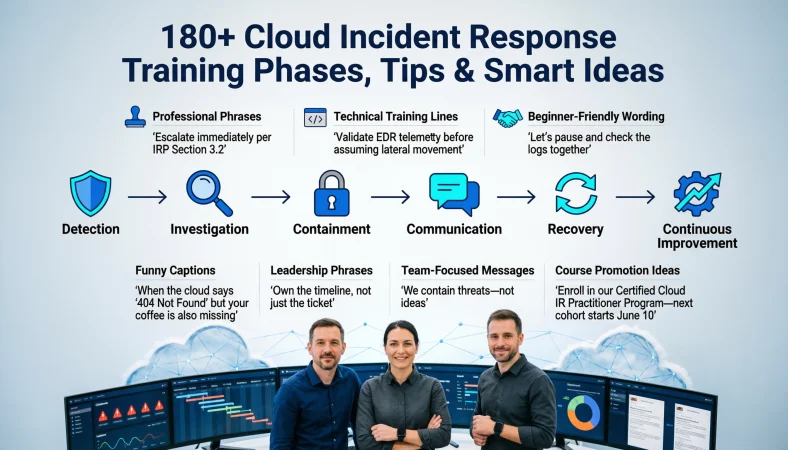
Cloud incident response training teaches teams how to detect, investigate, contain, recover from, and learn from security or operational incidents in cloud environments. It helps organizations turn stressful outages and security events into structured, practiced responses.
Top alternatives: cloud security incident training, cloud incident management training, cloud response training, cloud disaster response training, cloud security response course
When a cloud incident hits, nobody wants the team chat to become a guessing game. That is where cloud incident response training comes in. Whether you are discussing cybersecurity at work, explaining a training program to a colleague, writing a course description, or creating a social post about cloud security, the wording matters.
A good explanation should make the topic sound practical rather than like another corporate phrase destined to live forever in a PowerPoint deck. Cloud incident response training helps teams practice what to do when suspicious activity, service disruptions, data exposure, configuration mistakes, or other incidents occur.
The right phrases can make the subject easier to understand, promote, or discuss. From professional descriptions and course taglines to friendly explanations and memorable social captions, these ready-to-use lines help you talk about cloud incident response with clarity and confidence.
1. Simple Cloud Incident Response Training Phrases
Learn what to do when a cloud incident happens.
Example: Use this as a beginner-friendly course description.
Meaning: It explains the practical purpose of incident response training.
Prepare your team before the incident arrives.
Example: Use this in introductory security content.
Meaning: It emphasizes preparation instead of last-minute reaction.
Train for incidents before they become emergencies.
Example: Use this on a training webpage.
Meaning: It highlights proactive preparation.
Know the steps before you need them.
Example: Use this as a short training tagline.
Meaning: It encourages teams to learn response procedures in advance.
Practice the response, not just the theory.
Example: Use this when promoting hands-on training.
Meaning: It emphasizes practical learning.
Be ready when the cloud gets complicated.
Example: Use this in casual cybersecurity content.
Meaning: It acknowledges that cloud incidents can become complex quickly.
Turn incident plans into real skills.
Example: Use this as a course headline.
Meaning: It focuses on practical capability.
Learn to detect, respond, and recover.
Example: Use this in a training overview.
Meaning: It summarizes key stages of incident response.
Train today for tomorrow’s cloud incident.
Example: Use this as a promotional line.
Meaning: It encourages proactive preparation.
Make your response faster and smarter.
Example: Use this in a course advertisement.
Meaning: It highlights improved response performance.
Know who does what when things go wrong.
Example: Use this when explaining team roles.
Meaning: It stresses clarity during incidents.
Cloud security starts with a prepared response.
Example: Use this as an educational headline.
Meaning: It connects preparedness with cloud security.
2. Professional Cloud Incident Response Training Phrases
Build practical cloud incident response capabilities across your security team.
Example: Use this in a corporate training brochure.
Meaning: It presents the program as a structured professional development opportunity.
Prepare teams to identify, contain, investigate, and recover from cloud incidents.
Example: Use this in a formal course description.
Meaning: It outlines the major response activities.
Develop a structured approach to cloud security incidents.
Example: Use this on a training landing page.
Meaning: It emphasizes organized incident handling.
Strengthen your organization’s cloud incident readiness.
Example: Use this in enterprise security materials.
Meaning: It focuses on organizational preparedness.
Train responders to make informed decisions under pressure.
Example: Use this in professional training content.
Meaning: It highlights decision-making during stressful incidents.
Improve incident response coordination across cloud teams.
Example: Use this in an enterprise course description.
Meaning: It emphasizes collaboration.
Develop repeatable processes for cloud incident management.
Example: Use this in a security training proposal.
Meaning: It focuses on consistent response procedures.
Transform incident response plans into operational readiness.
Example: Use this as a professional course headline.
Meaning: It connects documentation with practical capability.
Build confidence in cloud-based incident investigation.
Example: Use this in a training program overview.
Meaning: It highlights investigation skills.
Strengthen response workflows for modern cloud environments.
Example: Use this in enterprise marketing copy.
Meaning: It positions training around current cloud operations.
Prepare security professionals for real-world cloud incidents.
Example: Use this on a certification or training page.
Meaning: It emphasizes practical experience.
Create a more resilient cloud security response capability.
Example: Use this in executive-facing content.
Meaning: It connects training with organizational resilience.
3. Funny Cloud Incident Response Training Phrases
Because “we’ll figure it out” is not an incident response plan.
Example: Use this as a humorous cybersecurity social caption.
Meaning: It jokes about the dangers of being unprepared.
Train now, panic less later.
Example: Use this for a lighthearted training promotion.
Meaning: It encourages preparation while keeping the tone playful.
Your cloud deserves more than crossed fingers.
Example: Use this as a security awareness caption.
Meaning: It humorously promotes proactive planning.
When the alert screams, know what to do.
Example: Use this in a cybersecurity meme.
Meaning: It highlights the importance of practiced response.
Incident response without the group-chat chaos.
Example: Use this as a playful course tagline.
Meaning: It suggests training can create structure during stressful events.
Because screenshots are not a response strategy.
Example: Use this as a humorous security post.
Meaning: It pokes fun at unstructured incident handling.
Less guessing, more responding.
Example: Use this as a short training slogan.
Meaning: It promotes confident action.
When the cloud goes sideways, stay useful.
Example: Use this in casual training content.
Meaning: It encourages calm, productive incident handling.
Your future incident ticket says thanks.
Example: Use this as a playful training caption.
Meaning: It suggests preparation makes future incidents easier.
No emergency improvisation required.
Example: Use this in a training promotion.
Meaning: It emphasizes having established procedures.
Train before the alert becomes your personality.
Example: Use this as a cybersecurity social post.
Meaning: It humorously describes the stress of repeated incidents.
Keep calm and follow the playbook.
Example: Use this on an incident response graphic.
Meaning: It encourages calm execution of established procedures.
4. Practical Cloud Incident Response Training Phrases
Practice detection before investigation begins.
Example: Use this in a hands-on course outline.
Meaning: It highlights the importance of identifying incidents early.
Know how to contain an incident safely and efficiently.
Example: Use this in practical training material.
Meaning: It focuses on limiting incident impact.
Learn how to preserve useful evidence during response.
Example: Use this in technical training content.
Meaning: It emphasizes careful investigation practices.
Practice escalation before the pressure is real.
Example: Use this when describing exercises.
Meaning: It encourages teams to rehearse escalation procedures.
Turn response procedures into repeatable habits.
Example: Use this as a practical training tagline.
Meaning: It promotes consistency through practice.
Learn where to look when something feels wrong.
Example: Use this in beginner training content.
Meaning: It introduces investigative thinking.
Practice the incident lifecycle from start to finish.
Example: Use this in a course overview.
Meaning: It emphasizes complete response exercises.
Build muscle memory for critical response steps.
Example: Use this as a training headline.
Meaning: It highlights the value of repeated practice.
Learn to separate signal from security noise.
Example: Use this in cloud security training.
Meaning: It focuses on identifying meaningful alerts.
Practice decisions before decisions become urgent.
Example: Use this as a course slogan.
Meaning: It highlights preparedness for high-pressure moments.
Know when to investigate, escalate, contain, and recover.
Example: Use this in practical course content.
Meaning: It summarizes key response decisions.
Make incident response something your team can actually execute.
Example: Use this in professional training copy.
Meaning: It emphasizes usable skills over theoretical knowledge.
5. Short Cloud Incident Response Training Taglines
Train. Detect. Respond. Recover.
Example: Use this on a course banner.
Meaning: It summarizes the incident response lifecycle.
Prepare for cloud incidents.
Example: Use this as a simple training headline.
Meaning: It communicates the core training objective.
Response starts with readiness.
Example: Use this on a security awareness graphic.
Meaning: It connects effective response with preparation.
Practice before pressure.
Example: Use this as a memorable course tagline.
Meaning: It promotes rehearsal before real incidents.
Ready when incidents happen.
Example: Use this on a training landing page.
Meaning: It emphasizes operational readiness.
Cloud response, practiced.
Example: Use this as a compact course slogan.
Meaning: It highlights hands-on preparation.
Turn alerts into action.
Example: Use this in a security campaign.
Meaning: It focuses on responding effectively to alerts.
Build response confidence.
Example: Use this as a training headline.
Meaning: It emphasizes responder confidence.
Prepare. Respond. Improve.
Example: Use this on an incident response infographic.
Meaning: It captures preparation, action, and learning.
Train for the unexpected.
Example: Use this as a promotional tagline.
Meaning: It encourages readiness for unpredictable incidents.
Response skills that matter.
Example: Use this on a course page.
Meaning: It highlights practical value.
Cloud security starts with readiness.
Example: Use this as an awareness campaign headline.
Meaning: It connects security with preparation.
6. Social Media-Friendly Cloud Incident Response Phrases
Your cloud can be resilient. Your response should be too.
Example: Use this as a LinkedIn security post.
Meaning: It connects cloud resilience with incident preparedness.
An incident is stressful enough. Don’t let the response be improvised.
Example: Use this as a cybersecurity awareness caption.
Meaning: It promotes preparation for stressful situations.
Cloud security isn’t just prevention. It’s knowing what to do next.
Example: Use this in educational social content.
Meaning: It explains why response matters alongside prevention.
The best time to practice incident response is before the incident.
Example: Use this as a professional social post.
Meaning: It encourages proactive training.
Alerts happen. Prepared teams respond.
Example: Use this as a short LinkedIn graphic caption.
Meaning: It contrasts incidents with team readiness.
Your response plan should be more than a document nobody opens.
Example: Use this as a training promotion.
Meaning: It encourages practical exercises.
Cloud incidents test more than technology. They test teamwork.
Example: Use this as a security awareness post.
Meaning: It highlights coordination during incidents.
Train the people behind the cloud.
Example: Use this as a short social caption.
Meaning: It emphasizes the human side of cloud security.
A strong response starts before the first alert.
Example: Use this on an incident readiness graphic.
Meaning: It stresses preparation.
Practice today. Respond better tomorrow.
Example: Use this as a training campaign tagline.
Meaning: It links practice with future performance.
When seconds matter, preparation matters more.
Example: Use this as a cybersecurity awareness caption.
Meaning: It emphasizes readiness during urgent events.
Don’t wait for an incident to discover your process.
Example: Use this in a professional social post.
Meaning: It encourages teams to test procedures in advance.
7. Team-Focused Cloud Incident Response Training Phrases
Train the whole team, not just the security expert.
Example: Use this when promoting cross-functional training.
Meaning: It emphasizes shared responsibility.
Everyone should know their role when an incident happens.
Example: Use this in team training materials.
Meaning: It promotes role clarity.
Better response starts with better coordination.
Example: Use this as a team training tagline.
Meaning: It highlights collaboration.
Practice communication as carefully as technical response.
Example: Use this in an incident exercise.
Meaning: It recognizes communication as part of effective response.
Build one response mindset across the team.
Example: Use this in organizational training content.
Meaning: It promotes shared understanding.
Train security, operations, and leadership together.
Example: Use this in an enterprise course description.
Meaning: It encourages cross-functional participation.
Clear roles make stressful incidents easier to manage.
Example: Use this in team-focused training.
Meaning: It connects role clarity with better incident handling.
Make escalation everyone’s responsibility to understand.
Example: Use this as a training principle.
Meaning: It encourages awareness of escalation procedures.
Practice handoffs before real incidents test them.
Example: Use this in an incident simulation description.
Meaning: It emphasizes coordination between teams.
Turn individual skills into team readiness.
Example: Use this as a training headline.
Meaning: It shows how training strengthens collective capability.
One team, one response plan.
Example: Use this on a security awareness graphic.
Meaning: It promotes unified incident handling.
Prepared teams communicate better under pressure.
Example: Use this in organizational training content.
Meaning: It links practice with effective communication.
8. Technical Cloud Incident Response Training Phrases
Learn practical techniques for investigating cloud security incidents.
Example: Use this in a technical course description.
Meaning: It emphasizes hands-on investigation skills.
Understand cloud logs, alerts, and incident indicators.
Example: Use this in a technical training outline.
Meaning: It focuses on core sources of investigative information.
Practice analyzing suspicious cloud activity.
Example: Use this in a lab-based course description.
Meaning: It highlights investigation practice.
Build stronger cloud detection and response skills.
Example: Use this on a technical training page.
Meaning: It connects detection with response capability.
Learn how evidence supports incident investigation.
Example: Use this in security training materials.
Meaning: It emphasizes evidence-based investigation.
Practice structured cloud incident triage.
Example: Use this in a technical workshop description.
Meaning: It focuses on prioritizing and assessing incidents.
Understand the technical stages of cloud incident response.
Example: Use this in a course overview.
Meaning: It introduces the response lifecycle.
Develop practical skills for analyzing cloud security events.
Example: Use this in professional technical content.
Meaning: It highlights analysis capability.
Train to recognize suspicious patterns across cloud environments.
Example: Use this in an advanced training description.
Meaning: It focuses on identifying potential threats.
Connect detection signals to response decisions.
Example: Use this in a technical presentation.
Meaning: It explains how findings influence response actions.
Strengthen your cloud investigation workflow.
Example: Use this as a course headline.
Meaning: It emphasizes improving investigative processes.
Turn cloud security data into informed response decisions.
Example: Use this in advanced training content.
Meaning: It connects technical information with practical action.
9. Beginner-Friendly Cloud Incident Response Training Phrases
You don’t need to know everything before you start learning.
Example: Use this to welcome beginners into a course.
Meaning: It makes technical training feel more approachable.
Start with the basics of cloud incident response.
Example: Use this on an introductory course page.
Meaning: It clearly signals beginner-level learning.
Learn what happens before, during, and after an incident.
Example: Use this in a beginner course overview.
Meaning: It introduces the complete response process.
Turn cloud security confusion into clear next steps.
Example: Use this as an introductory training tagline.
Meaning: It promises clarity for newcomers.
Learn the language of incident response without the jargon overload.
Example: Use this in beginner-focused marketing copy.
Meaning: It makes the subject feel easier to approach.
Understand the basics before tackling complex incidents.
Example: Use this in a training roadmap.
Meaning: It promotes learning progressively.
Start small, practice often, build confidence.
Example: Use this as a beginner training slogan.
Meaning: It encourages gradual skill development.
Cloud security becomes easier when the process is clear.
Example: Use this in educational content.
Meaning: It highlights the value of structured learning.
Learn the response steps one at a time.
Example: Use this in a beginner course description.
Meaning: It makes the learning process feel manageable.
No mystery, just practical response skills.
Example: Use this as a friendly course tagline.
Meaning: It promises approachable instruction.
Build a strong foundation for cloud incident response.
Example: Use this on an introductory training page.
Meaning: It emphasizes foundational knowledge.
Start learning before the first real alert.
Example: Use this as a beginner-friendly call to action.
Meaning: It encourages proactive education.
10. Confidence-Building Cloud Incident Response Training Phrases
Confidence comes from practice.
Example: Use this as a course headline.
Meaning: It connects repeated training with responder confidence.
Know the process, trust your preparation.
Example: Use this on a training graphic.
Meaning: It encourages calm execution.
Practice makes incident response feel less intimidating.
Example: Use this in beginner and intermediate training content.
Meaning: It explains how exercises reduce uncertainty.
Build the confidence to respond under pressure.
Example: Use this in professional training copy.
Meaning: It emphasizes readiness during stressful events.
Prepared responders make clearer decisions.
Example: Use this as a security training tagline.
Meaning: It connects preparation with decision quality.
Confidence is easier when everyone knows the playbook.
Example: Use this in team training materials.
Meaning: It emphasizes shared procedures.
Train until the process feels familiar.
Example: Use this in a practical course description.
Meaning: It promotes repetition.
Turn uncertainty into structured action.
Example: Use this as a course headline.
Meaning: It describes the confidence gained from preparation.
Be ready to respond, not ready to guess.
Example: Use this as a memorable training slogan.
Meaning: It encourages informed action.
Strong preparation creates calmer response.
Example: Use this on an awareness graphic.
Meaning: It highlights the relationship between readiness and composure.
Your team can handle pressure better with practice.
Example: Use this in organizational training content.
Meaning: It presents practice as a way to improve performance.
Train with purpose, respond with confidence.
Example: Use this as a promotional tagline.
Meaning: It links focused learning with confident response.
11. Creative Cloud Incident Response Training Phrases
Turn incident response into a skill, not a scramble.
Example: Use this as a creative training headline.
Meaning: It contrasts prepared response with chaotic reaction.
Practice the cloud’s worst day before it arrives.
Example: Use this as an attention-grabbing training caption.
Meaning: It encourages realistic preparation.
Give your incident plan some real-world mileage.
Example: Use this in a course promotion.
Meaning: It encourages teams to practice documented procedures.
Train for the plot twist.
Example: Use this as a playful security training tagline.
Meaning: It acknowledges that incidents rarely follow a perfect script.
Your cloud has alerts. Your team needs answers.
Example: Use this as a social media hook.
Meaning: It connects technical alerts with human response.
Make readiness part of the culture.
Example: Use this in organizational security content.
Meaning: It promotes ongoing preparedness.
Turn ‘what now?’ into ‘here’s the plan.’
Example: Use this as a memorable training headline.
Meaning: It shows how preparation replaces uncertainty.
Practice the response story before the real chapter begins.
Example: Use this in creative course marketing.
Meaning: It encourages rehearsing incident procedures.
Build a response playbook your team actually remembers.
Example: Use this in training promotion.
Meaning: It emphasizes practical retention.
Train for the unexpected without making it overwhelming.
Example: Use this as a course description.
Meaning: It balances preparedness with accessibility.
From alert to action, make every step count.
Example: Use this on a training graphic.
Meaning: It highlights the complete response process.
Because cloud incidents deserve a better plot.
Example: Use this as a playful social caption.
Meaning: It humorously promotes better preparedness.
12. Leadership-Focused Cloud Incident Response Training Phrases
Give leaders a clear role in cloud incident response.
Example: Use this in executive training materials.
Meaning: It emphasizes leadership participation.
Incident readiness is a business responsibility, not just a technical one.
Example: Use this in executive security content.
Meaning: It broadens responsibility beyond IT teams.
Prepare leaders to make informed decisions during incidents.
Example: Use this in leadership training descriptions.
Meaning: It focuses on executive decision-making.
Build leadership confidence before a major incident occurs.
Example: Use this in an enterprise training proposal.
Meaning: It promotes advance preparation.
Strong incident response needs strong leadership alignment.
Example: Use this in organizational security content.
Meaning: It highlights executive coordination.
Train leaders to understand response priorities.
Example: Use this in an executive course description.
Meaning: It focuses on strategic decision-making.
Make incident readiness part of organizational resilience.
Example: Use this in leadership presentations.
Meaning: It connects response preparation with business continuity.
Know when to escalate, communicate, and support the response team.
Example: Use this in leadership training content.
Meaning: It identifies important leadership responsibilities.
Prepared leadership reduces confusion during high-pressure events.
Example: Use this in executive awareness materials.
Meaning: It emphasizes the value of leadership preparation.
Turn incident response into an organizational capability.
Example: Use this in a business resilience presentation.
Meaning: It frames response as a company-wide strength.
Build security readiness from the top down.
Example: Use this as a leadership training tagline.
Meaning: It emphasizes executive support for security culture.
Resilient organizations practice before they need to perform.
Example: Use this as a leadership-focused headline.
Meaning: It connects resilience with preparation.
13. Calm And Reassuring Cloud Incident Response Training Phrases
Prepared teams can respond calmly when incidents happen.
Example: Use this in security awareness content.
Meaning: It reassures teams that preparation improves composure.
A clear process makes difficult moments easier to manage.
Example: Use this in training promotion.
Meaning: It emphasizes structure during stressful events.
You cannot control every incident, but you can prepare your response.
Example: Use this as a training headline.
Meaning: It focuses on controllable aspects of incident readiness.
Good preparation gives teams room to think.
Example: Use this in professional security content.
Meaning: It explains how training can reduce confusion.
Practice creates familiarity before pressure arrives.
Example: Use this as a calm training tagline.
Meaning: It highlights the psychological benefit of rehearsal.
A response plan brings clarity when things feel uncertain.
Example: Use this in organizational training content.
Meaning: It connects planning with clarity.
Stay focused, follow the process, learn from the outcome.
Example: Use this on an incident response graphic.
Meaning: It encourages a calm and structured approach.
Preparedness turns uncertainty into manageable steps.
Example: Use this in educational content.
Meaning: It explains the value of structured response.
Your team does not need perfect conditions to practice.
Example: Use this as a training encouragement.
Meaning: It promotes regular preparation.
Every exercise is a chance to improve.
Example: Use this in training materials.
Meaning: It frames practice as continuous improvement.
Better preparation creates better response habits.
Example: Use this as a course tagline.
Meaning: It emphasizes long-term skill development.
When the alert arrives, clarity matters.
Example: Use this in security awareness content.
Meaning: It highlights the importance of having an understandable process.
14. Smart And Witty Cloud Incident Response Training Phrases
The incident may be unexpected. Your response shouldn’t be.
Example: Use this as a professional social media hook.
Meaning: It captures the value of preparedness in one line.
A response plan is only useful if people know how to use it.
Example: Use this in a training article.
Meaning: It explains why practice matters.
Don’t just document readiness. Practice it.
Example: Use this as a training tagline.
Meaning: It encourages turning plans into skills.
The cloud moves fast. Your response needs to keep up.
Example: Use this in a course promotion.
Meaning: It highlights the speed of modern cloud environments.
Good response starts with good questions.
Example: Use this in investigative training content.
Meaning: It emphasizes thoughtful incident analysis.
Prepared teams spend less time asking what happens next.
Example: Use this as an organizational training statement.
Meaning: It highlights the benefit of established procedures.
Incident response is easier when everyone has the same map.
Example: Use this as a team training tagline.
Meaning: It emphasizes shared processes.
The best incident response surprise is being prepared.
Example: Use this as a playful security caption.
Meaning: It humorously celebrates readiness.
Train the process before testing the pressure.
Example: Use this in an incident simulation promotion.
Meaning: It encourages practice before stressful situations.
Every alert is a reason to know your next move.
Example: Use this as a security awareness message.
Meaning: It emphasizes readiness for action.
Cloud complexity makes preparation more valuable, not less.
Example: Use this in a professional article.
Meaning: It explains why cloud environments benefit from structured training.
A practiced response beats a brilliant guess.
Example: Use this as a memorable training slogan.
Meaning: It prioritizes preparation over improvisation.
15. Course Promotion And Tagline-Style Responses
Master the essentials of cloud incident response.
Example: Use this as a training course headline.
Meaning: It presents the program as a practical learning opportunity.
Prepare your team for real-world cloud incidents.
Example: Use this on a course landing page.
Meaning: It emphasizes practical readiness.
Build cloud response skills that work under pressure.
Example: Use this in training promotional copy.
Meaning: It highlights performance during stressful situations.
Learn the response process from detection to recovery.
Example: Use this in a course overview.
Meaning: It describes the complete incident lifecycle.
Strengthen your cloud security readiness today.
Example: Use this as a course call to action.
Meaning: It encourages immediate preparation.
Turn incident response knowledge into practical capability.
Example: Use this on a professional training page.
Meaning: It emphasizes applied learning.
Practice smarter. Respond faster. Recover stronger.
Example: Use this as a promotional course tagline.
Meaning: It connects training with improved response performance.
Give your security team a response advantage.
Example: Use this in enterprise marketing copy.
Meaning: It positions training as a competitive security benefit.
Build confidence before the next cloud incident.
Example: Use this as a course headline.
Meaning: It encourages proactive training.
Train today for stronger incident readiness tomorrow.
Example: Use this on a course advertisement.
Meaning: It connects present learning with future preparedness.
Make your cloud response plan actionable.
Example: Use this in professional training copy.
Meaning: It focuses on turning plans into usable procedures.
Ready your people for the moments that matter.
Example: Use this as a memorable course tagline.
Meaning: It emphasizes preparing teams for critical incidents.
FAQs.
What does cloud incident response training mean?
Cloud incident response training teaches people how to prepare for, detect, investigate, contain, respond to, recover from, and learn from incidents involving cloud environments.
Why is cloud incident response training important?
Cloud incidents can affect applications, data, accounts, infrastructure, and business operations. Training gives teams a structured way to respond instead of relying on improvisation.
Is cloud incident response training only for cybersecurity teams?
No. Security teams are important participants, but cloud engineers, developers, IT operations, compliance professionals, managers, and leadership may also benefit from understanding their roles.
Does cloud incident response training have a professional use?
Yes. It can support security awareness, operational readiness, incident management skills, organizational resilience, and professional development.
Can cloud incident response training be hands-on?
Yes. Many training programs use scenarios, simulations, exercises, case studies, investigation activities, and response drills to help learners practice realistic situations.
Is cloud incident response training emotional or stressful?
The subject can involve stressful scenarios, but good training should create a controlled environment where participants can practice decision-making without the pressure of a real incident.
What should I say if I do not understand cloud incident response?
You can simply say, “Is that training for handling security or operational incidents in a cloud environment?” It is clear, professional, and easy to understand.
Can humor be used when talking about cloud incident response training?
Yes. Light humor can make cybersecurity content more memorable, especially on social media. Serious training materials should still keep the message professional and accurate.
What skills can cloud incident response training develop?
Training can develop skills related to incident identification, triage, investigation, communication, escalation, containment, recovery, documentation, and lessons learned.
Is cloud incident response the same as disaster recovery?
Not exactly. Disaster recovery focuses heavily on restoring systems and services after disruptive events, while incident response covers the broader process of identifying, managing, investigating, containing, and learning from incidents.
Conclusion
Cloud incidents are stressful enough without wondering what everyone should do next. Cloud incident response training helps turn uncertainty into a structured, practiced response. Whether you are writing a course description, promoting security training, explaining the concept to a colleague, or creating a LinkedIn post, the right words can make technical topics feel much more approachable.
From short taglines to professional descriptions and lighthearted captions, these phrases give you plenty of ways to communicate the value of preparation. Try different tones depending on your audience, save your favorites, and reuse them across training pages, presentations, social posts, and internal communications. Keep learning, keep practicing, and make your next incident response stronger than the last.