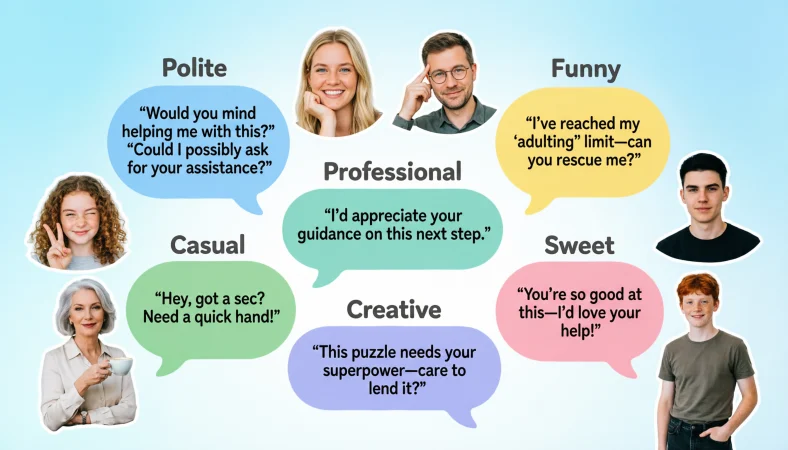
There are plenty of other ways to say I need your help, from casual lines like hey i need your help and alright so i need ur help to warmer options like i want your help or i need your help with something. If you’re choosing between hi i need your help, hey i need ur help, hey need your help, or hello i need your help, the best option depends on how casual, friendly, or professional you want to sound.
Top alternatives: Could you give me a hand?, I could use your help, Would you mind helping me?, Can I ask you for a favor?, I need some assistance
Sometimes “I need your help” sounds a little too serious, especially when you’re just trying to get someone’s attention. Whether you’re texting a friend, asking a colleague, or making a casual request, a small change in wording can make the message sound warmer and more natural.
Saying “I need your help” does not have to sound demanding or overly formal. The way you phrase it can completely change the mood of the message. Hey i need your help feels casual and direct, while hi i need your help sounds a little softer.
If you are texting someone you already know well, alright so i need ur help or hey i need ur help can feel relaxed and natural. Meanwhile, hello i need your help works when you want to sound polite without making the request unnecessarily complicated.
Sometimes you also want to create a little curiosity before explaining what you need. I need your help with something and hey i need your help with something both give the other person a reason to pay attention, while i want your help can sound more personal and intentional.
Even the short message hey need your help can work perfectly well in a quick text when the person already knows your communication style. The goal is simple: make your request sound like you, not like a customer-service script.
Hey I Need Your Help
hey i need your help is a casual way to get someone’s attention before explaining what you need. It works especially well in texts with friends, siblings, or people you regularly chat with.
Alright So I Need Ur Help
alright so i need ur help sounds relaxed and conversational, almost like you are about to tell someone a small story. It is a good choice when you want your request to feel informal rather than serious.
I Want Your Help
i want your help can sound more direct and personal than “I need your help.” It works well when you specifically want that person’s opinion, skills, or support.
I Need Your Help With Something
i need your help with something is useful when you want to ask for assistance without immediately explaining the whole situation. It creates a natural opening for the other person to respond with “Sure, what happened?”
I Need Your Help
i need your help is straightforward and works in almost any casual situation. If you want it to sound warmer, add a simple “please” or briefly explain why you are asking them.
Hi I Need Your Help
hi i need your help combines a friendly greeting with a direct request. It is simple enough for everyday texting while still sounding polite.
Hey I Need Your Help With Something
hey i need your help with something sounds friendly and slightly intriguing. It is particularly useful when you want someone to give you their attention before you explain the problem.
Hey I Need Ur Help
hey i need ur help is an informal texting version that feels quick and friendly. It is best suited to casual conversations where abbreviations are already normal.
Hey Need Your Help
hey need your help is a very short message that gets straight to the point. It works when you need a quick response and do not want to add unnecessary words.
Hello I Need Your Help
hello i need your help sounds polite and clear without being overly formal. It can work for acquaintances, older contacts, or situations where “hey” feels too casual.
Polite Ways to Ask for Help:
1. “Could you give me a hand?”
Use this when asking a friend, neighbor, or coworker for simple assistance.
Meaning: It is a friendly and respectful way to request help.
2. “Would you mind helping me?”
Use this when you want your request to sound considerate.
Meaning: It politely asks whether the person is willing to assist.
3. “Could I ask for your help?”
Use this before making a slightly important request.
Meaning: It introduces your request respectfully.
4. “Could you help me with this?”
Use this for a straightforward everyday task.
Meaning: It clearly asks someone to assist with something specific.
5. “Would you be able to help me?”
Use this when you want to acknowledge that the person may be busy.
Meaning: It gives the other person room to accept or decline.
6. “Could I get your assistance?”
Use this when you want a more formal-sounding request.
Meaning: It communicates that you need support in a respectful way.
7. “Can you lend me a hand?”
Use this when asking someone you know for practical help.
Meaning: It is warm, casual, and friendly.
8. “Would you be willing to help?”
Use this when the request requires some effort.
Meaning: It respectfully asks whether someone is willing to contribute.
9. “Could you spare a moment to help me?”
Use this when the task should not take long.
Meaning: It politely asks for a small amount of someone’s time.
10. “May I ask you for some help?”
Use this when you want an especially courteous tone.
Meaning: It makes the request sound thoughtful and respectful.
11. “Could you possibly help me?”
Use this when making a gentle request.
Meaning: It softens the request and avoids sounding demanding.
12. “I would really appreciate your help.”
Use this when someone’s assistance would genuinely matter.
Meaning: It shows gratitude while making your need clear.
Casual Ways to Say You Need Help
1. “I could use a hand.”
Use this with friends or people you are comfortable with.
Meaning: It casually communicates that you need assistance.
2. “Can you help me out?”
Use this for an everyday favor.
Meaning: It is relaxed, direct, and friendly.
3. “Got a minute to help me?”
Use this when you think the task will be quick.
Meaning: It casually asks for someone’s time.
4. “I need a little backup.”
Use this when you want someone to support you.
Meaning: It makes the request sound relaxed and confident.
5. “Can I get your help with something?”
Use this before explaining what you need.
Meaning: It opens the door to a casual request.
6. “I could really use you right now.”
Use this when you trust the person and need support.
Meaning: It communicates that their presence or assistance matters.
7. “Can you come to my rescue?”
Use this for a lighthearted request.
Meaning: It playfully suggests that you are stuck and need assistance.
8. “I’m stuck. Help?”
Use this in a quick text message.
Meaning: It is short, informal, and immediately communicates the problem.
9. “Can you bail me out here?”
Use this when you are dealing with a frustrating situation.
Meaning: It humorously asks someone to help solve the problem.
10. “I need an extra pair of hands.”
Use this when a task is easier with two people.
Meaning: It asks for practical assistance without sounding demanding.
11. “Can you jump in for a second?”
Use this when someone can quickly contribute.
Meaning: It requests quick support in a casual way.
12. “Mind giving me a hand?”
Use this when speaking naturally with someone you know.
Meaning: It is an easygoing way to ask for assistance.
Professional Ways to Ask for Help
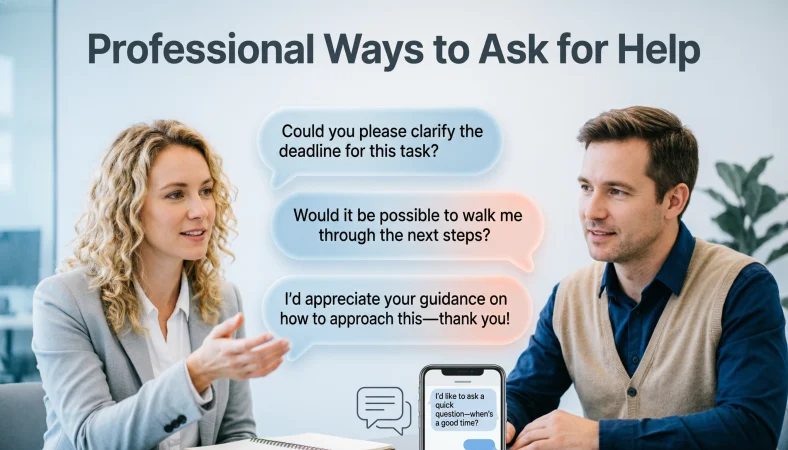
1. “Could you assist me with this?”
Use this in a workplace message or email.
Meaning: It is professional, direct, and courteous.
2. “I would appreciate your assistance.”
Use this for a formal workplace request.
Meaning: It communicates respect and gratitude.
3. “Could you please provide some guidance?”
Use this when you need advice rather than hands-on help.
Meaning: It professionally asks someone to point you in the right direction.
4. “Would you be available to assist me?”
Use this when scheduling help around someone’s availability.
Meaning: It respectfully asks whether they have time.
5. “Could you support me with this task?”
Use this when working collaboratively.
Meaning: It requests practical or professional support.
6. “I could use your expertise on this.”
Use this when asking someone knowledgeable for advice.
Meaning: It shows that you value their skills.
7. “Could you offer some insight?”
Use this when you need someone’s perspective.
Meaning: It politely asks for useful advice or information.
8. “I’d value your input.”
Use this when requesting feedback.
Meaning: It shows that the person’s opinion matters.
9. “Could you point me in the right direction?”
Use this when you are unsure how to proceed.
Meaning: It asks for guidance without expecting someone to do everything.
10. “Would you be able to advise me?”
Use this when seeking professional guidance.
Meaning: It makes your request sound thoughtful and formal.
11. “I’m hoping you can assist me.”
Use this in a polite workplace message.
Meaning: It clearly expresses that you are seeking support.
12. “Could I get your perspective on this?”
Use this when discussing a decision or problem.
Meaning: It respectfully invites someone’s professional opinion.
Friendly Ways to Ask Someone for Help
1. “I know you’re good at this. Can you help me?”
Use this when asking someone who has relevant skills.
Meaning: It combines a compliment with a clear request.
2. “Can I borrow your brain for a minute?”
Use this with a clever friend or coworker.
Meaning: It playfully asks for someone’s ideas or knowledge.
3. “I could really use your advice.”
Use this when facing a decision.
Meaning: It tells the person that you value their judgment.
4. “Can you help me figure this out?”
Use this when you are confused about something.
Meaning: It invites someone to solve the problem with you.
5. “I trust your judgment. Can you help?”
Use this when you respect someone’s opinion.
Meaning: It shows confidence in their ability to guide you.
6. “Can I pick your brain?”
Use this when you want ideas or expertise.
Meaning: It casually asks someone to share their knowledge.
7. “I could use your opinion here.”
Use this when you want honest feedback.
Meaning: It makes your request personal but low-pressure.
8. “Can you help me make sense of this?”
Use this when something is confusing.
Meaning: It asks someone to help clarify the situation.
9. “Would you take a look at this for me?”
Use this when you need a second opinion.
Meaning: It politely asks someone to review something.
10. “Can I count on you for this?”
Use this when you trust someone to help.
Meaning: It expresses confidence in their support.
11. “I’d love your thoughts on this.”
Use this when you want feedback.
Meaning: It makes the request warm and inviting.
12. “Could you help me get unstuck?”
Use this when you are struggling to move forward.
Meaning: It asks for guidance without sounding helpless.
Funny Ways to Say You Need Help
1. “Emergency meeting of the brain trust, please.”
Use this when your problem feels bigger than your current brainpower.
Meaning: It turns a simple request into a playful announcement.
2. “My brain has officially clocked out. Help?”
Use this when you are mentally exhausted.
Meaning: It humorously admits that you need assistance.
3. “I have made a tiny disaster. Assistance?”
Use this after making a manageable mistake.
Meaning: It makes the request funny instead of dramatic.
4. “Houston, we have a problem.”
Use this when something has gone noticeably wrong.
Meaning: It playfully signals that you need someone to step in.
5. “I require adult supervision.”
Use this when you are joking about needing guidance.
Meaning: It humorously exaggerates your situation.
6. “Please send help before I make this worse.”
Use this when you are stuck on a task.
Meaning: It combines urgency with self-deprecating humor.
7. “My last brain cell needs backup.”
Use this when you are confused or tired.
Meaning: It jokes about running out of mental energy.
8. “SOS, but make it productive.”
Use this when you genuinely need assistance.
Meaning: It adds humor while keeping the request clear.
9. “I have reached the ‘someone else handle this’ stage.”
Use this after struggling with a problem.
Meaning: It humorously admits that you need support.
10. “Calling in the professionals, aka you.”
Use this when asking a skilled friend for help.
Meaning: It compliments their abilities while making the request playful.
11. “My problem has defeated me. Your turn.”
Use this with someone who enjoys banter.
Meaning: It jokingly challenges them to solve the issue.
12. “Quick, deploy your superior knowledge.”
Use this when asking someone knowledgeable for advice.
Meaning: It playfully flatters their expertise.
Sweet Ways to Ask for Help
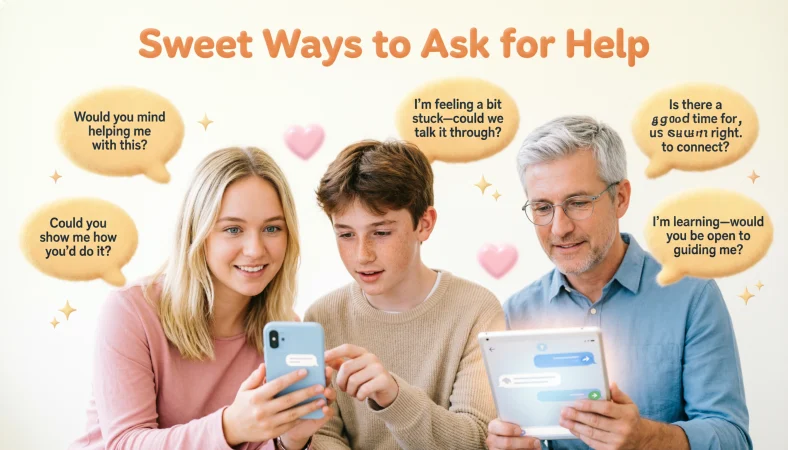
1. “I’d really appreciate having you help me with this.”
Use this when someone’s support genuinely means something to you.
Meaning: It expresses gratitude and affection.
2. “It would mean a lot if you could help.”
Use this for someone you care about.
Meaning: It shows that their support has emotional value.
3. “I feel better knowing I can ask you for help.”
Use this with someone you deeply trust.
Meaning: It communicates appreciation and emotional comfort.
4. “Could you be there for me with this?”
Use this when you need more than practical assistance.
Meaning: It asks for both support and reassurance.
5. “I’d love to have your support.”
Use this when facing an important moment.
Meaning: It warmly communicates that their presence matters.
6. “Your help would mean so much to me.”
Use this when the favor is particularly meaningful.
Meaning: It emphasizes sincere appreciation.
7. “I know I can count on you.”
Use this when you trust someone deeply.
Meaning: It expresses confidence in their support.
8. “Would you stand by me on this?”
Use this when you need encouragement.
Meaning: It asks someone to support you emotionally.
9. “I’d be grateful if you could help me.”
Use this when you want a warm but respectful request.
Meaning: It combines humility with appreciation.
10. “Having you help would make this easier.”
Use this when someone’s presence would reduce your stress.
Meaning: It shows that you value their involvement.
11. “Could I lean on you for a little help?”
Use this when speaking to someone you trust.
Meaning: It communicates vulnerability in a gentle way.
12. “I could really use someone like you right now.”
Use this when you need personal support.
Meaning: It tells someone that you specifically value their help.
Direct Ways to Say You Need Help
1. “I need your help with this.”
Use this when clarity matters more than style.
Meaning: It makes the request immediately clear.
2. “I need some assistance.”
Use this when you want a simple alternative.
Meaning: It directly communicates your need.
3. “I need someone to help me.”
Use this when you are looking for immediate support.
Meaning: It clearly states the situation.
4. “I need help figuring this out.”
Use this when you are unsure what to do next.
Meaning: It directly asks for problem-solving support.
5. “I need a second opinion.”
Use this when you want another person’s perspective.
Meaning: It asks for advice rather than complete intervention.
6. “I need some guidance.”
Use this when you need direction.
Meaning: It communicates that you want help deciding what to do.
7. “I need someone in my corner.”
Use this when you need emotional encouragement.
Meaning: It asks for support and reassurance.
8. “I need an extra hand here.”
Use this for practical assistance.
Meaning: It directly asks someone to contribute.
9. “I need your input.”
Use this when someone’s opinion can improve the situation.
Meaning: It asks for their thoughts or expertise.
10. “I need a little support.”
Use this when the situation is emotionally or practically difficult.
Meaning: It clearly communicates a need without overexplaining.
11. “I need help getting this done.”
Use this when working toward a specific task.
Meaning: It requests practical assistance.
12. “I need you to help me with this.”
Use this when you need someone directly involved.
Meaning: It is firm, clear, and specific.
Creative Ways to Ask for Help
1. “Can you be my problem-solving partner?”
Use this when you want someone to work through an issue with you.
Meaning: It frames help as teamwork.
2. “Can I recruit you for a mission?”
Use this for a fun favor involving a friend.
Meaning: It makes the request sound adventurous.
3. “Want to help me crack this mystery?”
Use this when a problem feels confusing.
Meaning: It turns troubleshooting into something playful.
4. “Can I borrow some of your genius?”
Use this when asking a clever person for ideas.
Meaning: It compliments their intelligence while requesting help.
5. “I need a co-pilot for this one.”
Use this when you want someone beside you.
Meaning: It presents the person as a trusted partner.
6. “Can you help me unlock the answer?”
Use this when facing a difficult question.
Meaning: It creatively asks for insight.
7. “Fancy joining my rescue team?”
Use this when you want to make the request playful.
Meaning: It humorously invites someone to help.
8. “I need your secret formula.”
Use this when someone knows how to do something well.
Meaning: It playfully asks them to share their method.
9. “Can we put our heads together?”
Use this when collaboration could solve the issue.
Meaning: It suggests working together.
10. “Can you help me turn this mess into a masterpiece?”
Use this when something needs improvement.
Meaning: It adds optimism and humor to the request.
11. “I’m assembling the dream team, and you’re on it.”
Use this when inviting someone to help with a project.
Meaning: It makes the person feel valued.
12. “Can you help me crack this case?”
Use this when solving a mystery or confusing problem.
Meaning: It makes asking for assistance feel entertaining.
Sarcastic Ways to Ask for Help
1. “Clearly, I have no idea what I’m doing. Help?”
Use this when joking about your confusion.
Meaning: It uses self-aware sarcasm to ask for assistance.
2. “Because apparently I’m not qualified for this.”
Use this after struggling with a task.
Meaning: It humorously admits defeat.
3. “Would you like to save me from my own decisions?”
Use this after making a questionable choice.
Meaning: It playfully asks someone to intervene.
4. “Your superior skills are needed here.”
Use this when someone is better at the task.
Meaning: It combines praise with playful sarcasm.
5. “I suppose I could use your expertise.”
Use this with a friend who enjoys teasing.
Meaning: It jokingly acknowledges their ability.
6. “Do your thing before I make this worse.”
Use this when you have already struggled.
Meaning: It humorously asks someone to take over.
7. “Apparently, Google has failed me. Your turn.”
Use this after unsuccessfully searching for an answer.
Meaning: It jokingly elevates the other person to expert status.
8. “Time to outsource my problem to you.”
Use this when handing over a difficult task.
Meaning: It humorously admits you want someone else involved.
9. “I’ve reached my limit. Your brilliance is required.”
Use this when you need ideas.
Meaning: It exaggerates admiration for comedic effect.
10. “I’m pretending this is a team effort now.”
Use this when you need backup.
Meaning: It humorously reframes your request as collaboration.
11. “Congratulations, you’ve been promoted to problem solver.”
Use this when assigning a friend a task.
Meaning: It makes the request playful rather than demanding.
12. “I could solve this myself, but where’s the fun in that?”
Use this with someone close to you.
Meaning: It playfully invites them to help.
Cute Ways to Ask for Help
1. “Can you help me, pretty please?”
Use this when making a playful request to someone close.
Meaning: It makes the request warm and cute.
2. “I could use your magic touch.”
Use this when someone is especially good at something.
Meaning: It compliments their abilities.
3. “Can you save me from this little problem?”
Use this for a minor issue.
Meaning: It makes asking for help feel lighthearted.
4. “I need my favorite helper.”
Use this with a close friend or partner.
Meaning: It affectionately highlights their helpful nature.
5. “Can I borrow your clever brain?”
Use this when asking for advice.
Meaning: It combines affection with a compliment.
6. “Will you help me with this tiny disaster?”
Use this when the situation is manageable but annoying.
Meaning: It adds cute humor to the request.
7. “I could really use you right now.”
Use this when someone’s support matters.
Meaning: It expresses closeness and trust.
8. “Come be my hero for five minutes.”
Use this when you need quick assistance.
Meaning: It playfully makes the person feel appreciated.
9. “Can I count on my favorite problem solver?”
Use this when asking someone skilled.
Meaning: It combines trust, affection, and encouragement.
10. “Help me make this less confusing, please.”
Use this when you want gentle assistance.
Meaning: It makes the request approachable.
11. “I need a little bit of your genius.”
Use this when you want creative input.
Meaning: It affectionately compliments their intelligence.
12. “Would you be my helping hand today?”
Use this for a sweet, low-pressure request.
Meaning: It asks for support in a warm way.
Flirty Ways to Ask for Help:

1. “I could use your help, handsome.”
Use this when flirting with someone you are comfortable with.
Meaning: It adds romantic interest to a simple request.
2. “Think you can come rescue me?”
Use this when you want a playful, flirty tone.
Meaning: It invites attention while asking for assistance.
3. “I need an expert, and you came to mind.”
Use this when flirting while asking for advice.
Meaning: It subtly compliments the person’s abilities.
4. “Can I borrow your attention for a minute?”
Use this when you want their focus.
Meaning: It makes a simple request feel more intimate.
5. “I might need your help, but mostly I wanted an excuse to text you.”
Use this when you want to be openly playful.
Meaning: It combines a request with romantic interest.
6. “Come save me, troublemaker.”
Use this with someone who enjoys playful flirting.
Meaning: It makes the request teasing and affectionate.
7. “I could use your brilliant mind over here.”
Use this when asking someone you find attractive for advice.
Meaning: It compliments their intelligence while opening the conversation.
8. “Are you available to be my hero?”
Use this when you want a charming tone.
Meaning: It playfully invites the person’s attention.
9. “I need your help, and maybe your company too.”
Use this when you want to suggest spending time together.
Meaning: It blends practical help with subtle affection.
10. “Can I count on you to save the day?”
Use this when you want a playful opening.
Meaning: It creates a light romantic vibe.
11. “I think your help would come with excellent company.”
Use this when suggesting they join you.
Meaning: It adds a flirty invitation to the request.
12. “I need you for a minute, and yes, I know how that sounds.”
Use this when playful teasing fits the relationship.
Meaning: It deliberately adds a cheeky undertone.
Emotional Ways to Say You Need Help:
1. “I’m having a hard time and could really use your support.”
Use this when you are genuinely struggling.
Meaning: It honestly communicates emotional vulnerability.
2. “I don’t know what to do right now. Can you help me?”
Use this when you feel overwhelmed.
Meaning: It directly asks someone you trust for guidance.
3. “I could really use someone to talk to.”
Use this when you need emotional support.
Meaning: It asks for companionship rather than a solution.
4. “I’m feeling overwhelmed and need some support.”
Use this when emotions are becoming difficult to manage.
Meaning: It clearly communicates your emotional state.
5. “Can I lean on you for a little while?”
Use this with someone you trust deeply.
Meaning: It asks for comfort and reassurance.
6. “I don’t need answers, I just need someone beside me.”
Use this when you want presence rather than advice.
Meaning: It clarifies that emotional support matters most.
7. “I’m struggling with this and could use your perspective.”
Use this when you want thoughtful advice.
Meaning: It communicates difficulty while inviting guidance.
8. “I feel like I could use some support right now.”
Use this when you need encouragement.
Meaning: It gently expresses vulnerability.
9. “Would you be there for me through this?”
Use this during a difficult personal situation.
Meaning: It asks for dependable emotional support.
10. “I’m not doing great and could use a friend.”
Use this when you need someone you trust.
Meaning: It honestly communicates a need for companionship.
11. “I’m finding this difficult to handle alone.”
Use this when you want someone to understand your situation.
Meaning: It acknowledges that outside support would help.
12. “I really need someone I trust right now.”
Use this when you want support from a specific person.
Meaning: It emphasizes trust and emotional connection.
Confident Ways to Ask for Help
1. “I could use your expertise.”
Use this when someone has knowledge you need.
Meaning: It confidently recognizes their skills.
2. “Can you help me get this across the finish line?”
Use this for a project or deadline.
Meaning: It presents help as teamwork toward a goal.
3. “I’d like your input before I move forward.”
Use this when making an important decision.
Meaning: It shows that you value informed collaboration.
4. “I think your perspective would strengthen this.”
Use this when seeking constructive feedback.
Meaning: It frames their help as a valuable contribution.
5. “Let’s tackle this together.”
Use this when you want collaborative support.
Meaning: It creates a confident team-oriented tone.
6. “I’m bringing you in because you know your stuff.”
Use this when asking an expert for help.
Meaning: It directly acknowledges their competence.
7. “Can you help me sharpen this?”
Use this when improving an idea or piece of work.
Meaning: It asks for constructive input.
8. “I want your perspective on this.”
Use this when another viewpoint would help.
Meaning: It confidently invites their opinion.
9. “I could use a second set of eyes.”
Use this when asking someone to review something.
Meaning: It requests a useful double-check.
10. “Let’s figure this out together.”
Use this when you want collaborative problem-solving.
Meaning: It shows confidence without pretending to know everything.
11. “I’d value your expertise here.”
Use this in a professional or knowledgeable setting.
Meaning: It recognizes the person’s experience.
12. “Can you help me take this to the next level?”
Use this when improving an idea or project.
Meaning: It asks for support with an ambitious goal.
Formal Alternatives to “I Need Your Help”
1. “I would be grateful for your assistance.”
Use this in a formal email or written request.
Meaning: It communicates appreciation respectfully.
2. “I am seeking your assistance with this matter.”
Use this for formal correspondence.
Meaning: It clearly states that you require support.
3. “I would appreciate your guidance.”
Use this when seeking direction from someone experienced.
Meaning: It politely asks for advice.
4. “Your assistance would be greatly appreciated.”
Use this when making a professional request.
Meaning: It emphasizes gratitude.
5. “May I request your assistance?”
Use this when you want a highly courteous tone.
Meaning: It formally asks someone to help.
6. “I am reaching out to request your support.”
Use this in professional communication.
Meaning: It clearly explains the purpose of your message.
7. “Could you kindly assist me with this matter?”
Use this for a formal request.
Meaning: It combines courtesy with clarity.
8. “I would value your guidance on this issue.”
Use this when asking for professional advice.
Meaning: It shows respect for someone’s expertise.
9. “I am hoping you can provide some assistance.”
Use this when you need help but want a gentle tone.
Meaning: It makes a formal request without sounding forceful.
10. “Could I seek your advice regarding this?”
Use this when asking for someone’s professional opinion.
Meaning: It formally invites guidance.
11. “I would welcome your assistance.”
Use this when support would be useful.
Meaning: It expresses openness to help in a polished way.
12. “Would it be possible for you to assist me?”
Use this when you want maximum politeness.
Meaning: It makes the request respectful and non-demanding.
Short Texts Asking for Help
1. “Need your help real quick.”
Use this for a quick text to someone you know.
Meaning: It signals that you need brief assistance.
2. “Can you help?”
Use this when you want maximum simplicity.
Meaning: It directly asks for support.
3. “Got a sec?”
Use this before asking a small favor.
Meaning: It casually checks whether they have time.
4. “Help me out?”
Use this for a friendly request.
Meaning: It keeps the message short and relaxed.
5. “I’m stuck. Any chance you can help?”
Use this when you need quick guidance.
Meaning: It clearly explains that you need assistance.
6. “Can I ask you something?”
Use this before making a request.
Meaning: It creates a natural opening.
7. “Need your opinion.”
Use this when you want advice.
Meaning: It quickly communicates that their perspective matters.
8. “Can you jump in?”
Use this when you want someone involved.
Meaning: It asks for immediate participation.
9. “I could use your brain for this.”
Use this with a clever friend.
Meaning: It playfully asks for their ideas.
10. “Got time to help me with something?”
Use this when the request may take a little longer.
Meaning: It respectfully checks their availability.
11. “Can you take a look?”
Use this when you want someone to review something.
Meaning: It makes a simple request for feedback.
12. “I need a favor.”
Use this when preparing someone for a request.
Meaning: It clearly signals that you are about to ask for help.
Gentle Ways to Ask for Assistance:

1. “If you have a moment, could you help me?”
Use this when you want to avoid pressuring someone.
Meaning: It respects their time while making your need clear.
2. “Whenever you have time, I’d appreciate your help.”
Use this when the request is not urgent.
Meaning: It gives the person flexibility.
3. “Would you mind taking a look when you can?”
Use this for a low-pressure request.
Meaning: It politely asks for assistance without demanding immediate action.
4. “If it’s not too much trouble, could you help?”
Use this when you are concerned about imposing.
Meaning: It makes your request especially considerate.
5. “When you get a chance, could you give me a hand?”
Use this for an everyday task.
Meaning: It communicates that the help can happen when convenient.
6. “I’d appreciate any guidance you can offer.”
Use this when you are unsure how much help someone can provide.
Meaning: It welcomes whatever support is available.
7. “Would you be open to helping me with this?”
Use this when you want to give the person a clear choice.
Meaning: It is respectful and non-demanding.
8. “Could you help me when you have a free moment?”
Use this for a non-urgent request.
Meaning: It acknowledges that their time matters.
9. “If you’re available, I could use some help.”
Use this when you do not know their schedule.
Meaning: It asks gently while respecting their availability.
10. “Would you have time to help me out?”
Use this when you want to check before explaining the task.
Meaning: It politely asks about their capacity.
11. “I’d be thankful for any help you can give.”
Use this when even small assistance would be useful.
Meaning: It communicates sincere appreciation.
12. “Could I trouble you for a little assistance?”
Use this for a particularly courteous request.
Meaning: It acknowledges that you are asking someone to spend time helping.
Ways to Ask for Help Without Sounding Needy:
1. “Could you give me your perspective?”
Use this when you want advice without making the situation sound overwhelming.
Meaning: It frames the request as collaboration.
2. “I’d like a second opinion.”
Use this when you have already considered the issue yourself.
Meaning: It shows that you are seeking confirmation or another viewpoint.
3. “Can you help me think this through?”
Use this when you want someone to brainstorm with you.
Meaning: It asks for input rather than asking them to solve everything.
4. “I’m weighing a few options. What do you think?”
Use this when making a decision.
Meaning: It invites another perspective while showing independent thought.
5. “Could you review this and let me know what you think?”
Use this when you want constructive feedback.
Meaning: It makes a specific and confident request.
6. “I’d value your take on this.”
Use this when you respect someone’s judgment.
Meaning: It presents their input as valuable.
7. “Can you help me refine this?”
Use this when improving something you have already created.
Meaning: It asks for collaboration rather than rescue.
8. “Would you mind giving this a quick look?”
Use this when you need a simple review.
Meaning: It keeps the request casual and reasonable.
9. “I’m almost there, but I could use your input.”
Use this when you have already made progress.
Meaning: It shows initiative while asking for support.
10. “Can you help me check my thinking?”
Use this when you want confirmation.
Meaning: It asks someone to challenge or validate your reasoning.
11. “I’d like to hear how you’d approach this.”
Use this when seeking practical advice.
Meaning: It asks for their method rather than demanding a solution.
12. “Could you help me make this stronger?”
Use this when improving work or an idea.
Meaning: It frames help as constructive teamwork.
Workplace-Friendly Alternatives
1. “Could you take a look at this?”
Use this when requesting a quick workplace review.
Meaning: It is professional and concise.
2. “Can I get your feedback on this?”
Use this when you want constructive criticism.
Meaning: It directly requests someone’s opinion.
3. “Could you help me troubleshoot this?”
Use this when dealing with a technical or process issue.
Meaning: It asks for collaborative problem-solving.
4. “Would you mind walking me through this?”
Use this when learning a process.
Meaning: It asks someone to explain something clearly.
5. “Could you clarify this for me?”
Use this when something is unclear.
Meaning: It requests an explanation.
6. “Could you point me toward the right resource?”
Use this when you need information.
Meaning: It asks for direction without requiring someone to do the work.
7. “Would you be able to review this?”
Use this when requesting a professional check.
Meaning: It politely asks someone to examine your work.
8. “Can we work through this together?”
Use this when collaboration is needed.
Meaning: It creates a cooperative tone.
9. “Could I get some guidance on the next step?”
Use this when unsure how to proceed.
Meaning: It asks for focused professional advice.
10. “Do you have any suggestions for handling this?”
Use this when seeking solutions.
Meaning: It invites practical recommendations.
11. “Could you help me prioritize this?”
Use this when several tasks compete for attention.
Meaning: It asks for help deciding what matters most.
12. “I’d appreciate your thoughts before I proceed.”
Use this before taking an important action.
Meaning: It respectfully invites feedback.
Creative and Playful Help Requests
1. “I’m calling in a favor from the genius department.”
Use this when asking a smart friend for advice.
Meaning: It playfully compliments their intelligence.
2. “Your brain has been summoned.”
Use this for a humorous message to a clever person.
Meaning: It playfully asks them to think through a problem.
3. “I have a puzzle, and you’re my missing piece.”
Use this when someone has skills you need.
Meaning: It creatively describes their help as essential.
4. “Time for a little teamwork magic.”
Use this when solving something together.
Meaning: It makes collaboration feel upbeat.
5. “Can you bring your A-game to this problem?”
Use this when you want enthusiastic support.
Meaning: It encourages someone to contribute their best effort.
6. “I need a fresh pair of eyes.”
Use this when reviewing work.
Meaning: It asks for another perspective.
7. “Can we turn this headache into a solution?”
Use this when facing a frustrating task.
Meaning: It makes problem-solving sound optimistic.
8. “I’m opening applications for one excellent helper.”
Use this when jokingly recruiting a friend.
Meaning: It makes the request playful and flattering.
9. “Ready for a tiny side quest?”
Use this when asking someone to join a small task.
Meaning: It turns a favor into a fun adventure.
10. “I need your finest troubleshooting skills.”
Use this when someone is good at solving problems.
Meaning: It respectfully highlights their abilities.
11. “Can you help me untangle this?”
Use this when dealing with a confusing situation.
Meaning: It creatively asks someone to bring clarity.
12. “Let’s put our collective genius to work.”
Use this when collaborating with someone.
Meaning: It presents the request as shared problem-solving.
Clever Alternatives to “I Need Your Help”
1. “I could benefit from your perspective.”
Use this when another viewpoint would improve your decision.
Meaning: It sounds thoughtful and confident.
2. “Your insight would be useful here.”
Use this when someone has relevant knowledge.
Meaning: It explains why you are asking them specifically.
3. “I’d like to get your take on this.”
Use this when you want an honest opinion.
Meaning: It casually requests their perspective.
4. “Could you help me navigate this?”
Use this when the situation has several possible directions.
Meaning: It asks for guidance through complexity.
5. “I could use another perspective.”
Use this when you want to avoid making a decision alone.
Meaning: It presents help as thoughtful collaboration.
6. “Would you mind helping me work through this?”
Use this when you need to discuss a problem.
Meaning: It asks for shared reasoning.
7. “I’d like your expertise on this.”
Use this when the person knows the subject well.
Meaning: It clearly recognizes their knowledge.
8. “Can you help me find the best approach?”
Use this when you have several options.
Meaning: It asks for strategic guidance.
9. “I’m looking for some outside perspective.”
Use this when you want an unbiased opinion.
Meaning: It explains why another viewpoint would help.
10. “Could you help me make sense of this?”
Use this when information is confusing.
Meaning: It asks for clarity.
11. “I’d appreciate a fresh set of eyes.”
Use this when reviewing work or solving a problem.
Meaning: It asks someone to spot things you may have missed.
12. “Can we brainstorm this together?”
Use this when you need ideas.
Meaning: It turns the request into collaborative creativity.
Urgent Ways to Ask for Help
1. “I need help as soon as possible.”
Use this when the situation cannot wait.
Meaning: It clearly communicates urgency.
2. “Can you help me right now?”
Use this when immediate assistance is necessary.
Meaning: It directly asks for quick support.
3. “I could really use your help urgently.”
Use this when timing matters.
Meaning: It communicates that the request is time-sensitive.
4. “Are you available? I need help with something important.”
Use this when you need to quickly confirm availability.
Meaning: It signals that the issue deserves attention.
5. “Can you step in for a moment?”
Use this when someone needs to get involved quickly.
Meaning: It requests immediate participation.
6. “I’m in a bit of a bind. Can you help?”
Use this when you are dealing with a difficult situation.
Meaning: It signals trouble while keeping the tone approachable.
7. “I need an extra hand right away.”
Use this when practical help is urgent.
Meaning: It makes the timing clear.
8. “Could you please help me with this as soon as you can?”
Use this for an urgent but respectful request.
Meaning: It communicates priority without sounding aggressive.
9. “I’m stuck and need some quick guidance.”
Use this when you need immediate advice.
Meaning: It clearly identifies the type of assistance needed.
10. “Can I count on you right now?”
Use this when you trust someone to respond quickly.
Meaning: It expresses urgency and confidence in them.
11. “I could really use some backup.”
Use this when a situation requires support.
Meaning: It communicates a need for immediate assistance.
12. “Please let me know if you can help quickly.”
Use this when time is limited.
Meaning: It asks for a prompt response while respecting their choice.
Ways to Ask for Help From a Friend

1. “Hey, can you help me with something?”
Use this when casually starting a request.
Meaning: It sounds natural and friendly.
2. “I could really use your advice.”
Use this when you trust your friend’s judgment.
Meaning: It shows that their opinion matters.
3. “Can I call you for a quick favor?”
Use this when the request is easier by phone.
Meaning: It asks for a small amount of their time.
4. “I’m stuck on something. Got any ideas?”
Use this when you need brainstorming help.
Meaning: It invites your friend to contribute.
5. “Can you be my second opinion?”
Use this when making a decision.
Meaning: It asks your friend to help you evaluate your options.
6. “I need my favorite problem solver.”
Use this with a close friend.
Meaning: It affectionately asks for their assistance.
7. “Can you help me figure this mess out?”
Use this when something has become confusing.
Meaning: It keeps the request honest and casual.
8. “Do me a favor?”
Use this before asking for a simple favor.
Meaning: It is short, familiar, and informal.
9. “Can I lean on you for this?”
Use this when you genuinely trust the friend.
Meaning: It communicates emotional or practical reliance.
10. “I know you’ll have a good idea.”
Use this when seeking creative advice.
Meaning: It compliments your friend’s judgment.
11. “Can you help me out of this little situation?”
Use this when dealing with a manageable problem.
Meaning: It asks for assistance without making the issue sound huge.
12. “I need a teammate for this one.”
Use this when you want your friend involved.
Meaning: It frames the favor as teamwork.
Ways to Ask for Help From Family
1. “Can you give me a hand with this?”
Use this for a practical family favor.
Meaning: It is simple and familiar.
2. “Could you help me figure this out?”
Use this when you need advice from a family member.
Meaning: It asks for shared problem-solving.
3. “I could really use your help today.”
Use this when you need meaningful support.
Meaning: It clearly communicates your need.
4. “Can I count on you for a little help?”
Use this when you trust the family member.
Meaning: It asks warmly for assistance.
5. “Would you mind helping me with this?”
Use this when you want to be considerate.
Meaning: It makes a polite request.
6. “I need an extra pair of hands.”
Use this when the task is physical or practical.
Meaning: It asks for direct assistance.
7. “Can you help me out for a bit?”
Use this when you need temporary support.
Meaning: It keeps the request casual.
8. “I’d really appreciate your help.”
Use this when the favor matters.
Meaning: It shows sincere gratitude.
9. “Can I ask you for a favor?”
Use this before explaining your request.
Meaning: It creates a respectful opening.
10. “I could use your advice on something.”
Use this when you need family wisdom.
Meaning: It values their experience.
11. “Would you be able to help me with this?”
Use this when you want to respect their schedule.
Meaning: It asks without assuming they are available.
12. “Could you be there for me with this?”
Use this when you need emotional support.
Meaning: It asks for reassurance and presence.
Ways to Ask for Help When You Feel Overwhelmed:
1. “I have a lot on my plate and could use some help.”
Use this when several responsibilities are piling up.
Meaning: It honestly explains why you need support.
2. “I’m feeling overwhelmed. Can you help me prioritize?”
Use this when you do not know where to start.
Meaning: It asks for practical guidance.
3. “I’m struggling to keep up and could use some support.”
Use this when responsibilities are becoming difficult.
Meaning: It communicates your situation clearly.
4. “Can you help me break this down?”
Use this when a task feels too large.
Meaning: It asks someone to make the problem more manageable.
5. “I’m not sure where to begin. Could you guide me?”
Use this when you feel stuck at the starting point.
Meaning: It asks for direction.
6. “Could you help me take this one step at a time?”
Use this when everything feels overwhelming.
Meaning: It asks for calm, practical support.
7. “I think I need a little backup here.”
Use this when your workload feels too heavy.
Meaning: It acknowledges that additional support would help.
8. “Can you help me sort through this?”
Use this when you have too many thoughts or tasks.
Meaning: It asks for help organizing the situation.
9. “I could really use a hand getting organized.”
Use this when disorder is making things harder.
Meaning: It requests practical assistance.
10. “I’m having trouble managing everything alone.”
Use this when you need someone to understand the situation.
Meaning: It honestly communicates that support is needed.
11. “Can we figure out a plan together?”
Use this when you want structured help.
Meaning: It turns overwhelm into collaborative planning.
12. “I need a little support getting through this.”
Use this when the situation feels emotionally or practically heavy.
Meaning: It asks for reassurance and assistance.
Ways to Ask for Advice Instead of Help
1. “What would you do in my position?”
Use this when you want someone else’s judgment.
Meaning: It asks for practical advice.
2. “Can I get your opinion?”
Use this when you need another viewpoint.
Meaning: It invites honest feedback.
3. “What do you think I should do?”
Use this when you are uncertain about your next move.
Meaning: It directly asks for guidance.
4. “How would you approach this?”
Use this when someone has useful experience.
Meaning: It asks them to explain their strategy.
5. “Do you have any advice for me?”
Use this when you want general guidance.
Meaning: It clearly invites suggestions.
6. “Can you help me think this through?”
Use this when you need to talk through your options.
Meaning: It asks for collaborative reasoning.
7. “What’s your take on this?”
Use this when you want an informal opinion.
Meaning: It asks how they see the situation.
8. “Would you handle this differently?”
Use this when you want constructive criticism.
Meaning: It encourages honest perspective.
9. “What do you think my best option is?”
Use this when choosing between possibilities.
Meaning: It asks for focused advice.
10. “Could you give me some direction?”
Use this when you do not know which path to take.
Meaning: It requests guidance.
11. “What would be the smartest way to handle this?”
Use this when seeking strategic advice.
Meaning: It asks for a thoughtful solution.
12. “Can you help me see this differently?”
Use this when you feel stuck in one perspective.
Meaning: It invites a fresh viewpoint.
FAQs:
What Does “I Need Your Help” Mean?
It means you are asking someone to provide assistance, guidance, support, advice, or practical involvement with a situation.
What Is a More Polite Way to Say “I Need Your Help”?
Try “Could you please give me a hand?”, “Would you be able to assist me?”, or “I’d really appreciate your help.”
What Is a Professional Alternative?
Good professional options include “Could you assist me with this?”, “I’d appreciate your guidance,” and “Could I get your input on this?”
What Is a Casual Alternative?
Try “Can you help me out?”, “I could use a hand,” or “Got a minute to help me?”
How Do I Ask for Help Without Sounding Needy?
Be specific and confident. Phrases such as “Could you give me your perspective?” or “I’d value your input” make the request sound collaborative.
Can I Ask a Friend for Help in a Funny Way?
Absolutely. Try “My last brain cell needs backup” or “Calling in the professionals, aka you.” Humor works especially well with friends who understand your personality.
How Do I Ask Someone for Emotional Help?
Be honest and gentle. Try “I could really use someone to talk to” or “I’m struggling and could use your support.”
Is “I Need Your Help” Too Direct?
Not necessarily. It is clear and normal. The best wording depends on the situation, your relationship with the person, and how urgent the request is.
What Should I Say When I Need Help Urgently?
Be direct about the timing. “Can you help me right now?” or “I need some assistance as soon as possible” makes the urgency clear.
Can “I Need Your Help” Sound Romantic?
It can, depending on the context. Adding warmth or affection can make it more personal, such as “I could really use you right now.”
What If I Do Not Actually Need Help Yet?
Ask for advice instead. “Could I get your opinion?” or “What would you do?” works when you mainly want another perspective.
Is It Better to Ask for Help Directly?
Usually, yes. A clear request makes it easier for the other person to understand what you need and decide how they can help.
Conclusion
Knowing other ways to say I need your help makes everyday communication easier, warmer, and more natural. You do not have to use the same sentence every time you need support. A casual “Can you help me out?” works perfectly with friends, while “I’d appreciate your assistance” fits a professional setting. When emotions are involved, a simple “I could really use your support” can say much more than a generic request.
The key is choosing words that match the moment and your relationship with the person. Be clear, respectful, and confident when asking. Save this list for those moments when the words just will not come. Share it with someone who is always asking for better ways to say things, and keep these handy for your next request!










2 thoughts on “180+ Other Ways To Say “I Need Your Help” That Sound Polite, Professional, Funny & Creative In 2026”