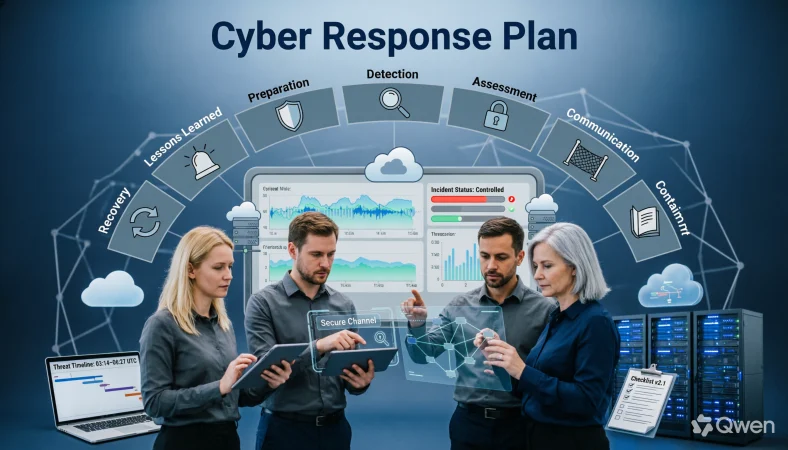
A cyber response plan is a structured guide that explains how an organization prepares for, identifies, contains, handles, and recovers from cybersecurity incidents. It helps teams know who does what when something goes wrong.
Top alternatives: cyber incident response plan, cybersecurity response plan, incident response strategy, cyber incident action plan, security incident response framework
A cyber incident can turn an ordinary workday into a full-on digital fire drill in seconds. One suspicious login, strange email, ransomware alert, or unexpected system change can leave everyone asking the same question: “Okay, what do we do now?” That is exactly why a cyber response plan matters.
It gives employees, security teams, managers, and technical staff a clear roadmap instead of leaving everyone to improvise under pressure. Whether you are discussing cybersecurity in a team chat, preparing workplace documentation, reviewing an incident, or explaining security planning to a friend, the right words make the subject much easier to understand.
A good plan defines responsibilities, communication steps, containment priorities, recovery actions, and lessons learned. In this guide, you will find 180+ practical, professional, clever, funny, and easy-to-use cyber response plan phrases organized by situation and tone.
Funny Cyber Response Plan Phrases
“Keep calm and follow the cyber plan.”
Use this when trying to lighten the mood during a security exercise.
Meaning: Stay composed and follow the established response process.
“The firewall is having a main-character moment.”
Use this when a security alert suddenly gets everyone’s attention.
Meaning: A cybersecurity event needs immediate focus.
“Today’s surprise guest is an incident report.”
Use this during a tabletop exercise.
Meaning: The team should practice responding to an unexpected incident.
“No panic, just procedures.”
Use this when reminding colleagues to follow the response plan.
Meaning: A structured process is better than reacting emotionally.
“Cybersecurity brought receipts.”
Use this when discussing logs and incident evidence.
Meaning: Security records can help establish what happened.
“The suspicious email has entered the chat.”
Use this during security awareness training.
Meaning: A potentially malicious message requires careful handling.
“Plot twist: the password was not the problem.”
Use this during a troubleshooting exercise.
Meaning: Teams should investigate evidence rather than assume the cause.
“Incident response, but make it organized.”
Use this when introducing a response workflow.
Meaning: Cyber incidents should be handled systematically.
“The alert said hello, so we answered professionally.”
Use this after a successful security exercise.
Meaning: The team responded appropriately to an alert.
“Nobody panic. The checklist has entered the building.”
Use this during a tabletop exercise.
Meaning: The response plan provides structure during stressful events.
“Cyber drama needs a documented ending.”
Use this when discussing recovery and post-incident reviews.
Meaning: Every incident should have clear follow-up actions.
“When the network gets weird, the plan gets serious.”
Use this as a memorable security training phrase.
Meaning: Unusual activity should trigger the appropriate response process.
Professional Cyber Response Plan Responses
“Define roles before an incident occurs.”
Use this when developing an organizational response plan.
Meaning: Everyone should understand their responsibilities in advance.
“Establish clear escalation procedures.”
Use this during incident response planning.
Meaning: Teams need defined paths for raising serious incidents.
“Document response responsibilities.”
Use this when creating cybersecurity procedures.
Meaning: Written responsibilities reduce confusion during an incident.
“Prioritize incident identification and assessment.”
Use this in a formal cybersecurity discussion.
Meaning: Teams should first understand what kind of event they are dealing with.
“Maintain clear communication channels.”
Use this when reviewing an incident response framework.
Meaning: Reliable communication supports coordinated action.
“Define containment priorities.”
Use this during security planning.
Meaning: The organization should determine how to limit incident impact.
“Establish recovery procedures before they are needed.”
Use this when discussing business continuity.
Meaning: Recovery should be planned before an incident happens.
“Review the response plan regularly.”
Use this during governance meetings.
Meaning: Plans should remain current as systems and risks change.
“Document lessons learned after every significant incident.”
Use this during post-incident planning.
Meaning: Past incidents can improve future preparedness.
“Coordinate technical and business response activities.”
Use this when planning organizational incident handling.
Meaning: Cybersecurity response affects more than the IT department.
“Maintain accurate incident documentation.”
Use this during response planning.
Meaning: Reliable records support investigation and improvement.
“Test the plan through realistic exercises.”
Use this when evaluating response readiness.
Meaning: Practice reveals weaknesses before a real incident does.
Beginner-Friendly Cyber Response Plan Ideas
“Start by deciding who responds.”
Use this when introducing incident response planning to beginners.
Meaning: Clear ownership is a basic part of preparedness.
“Write down what happens when an alert appears.”
Use this when creating a simple response guide.
Meaning: A written process helps employees know what to do.
“Keep emergency contacts easy to find.”
Use this during basic security planning.
Meaning: Important contacts should be available quickly.
“Know which systems matter most.”
Use this when prioritizing response activities.
Meaning: Critical systems may require faster attention.
“Teach employees how to report suspicious activity.”
Use this during security awareness planning.
Meaning: Employees need a clear reporting path.
“Practice before the real incident.”
Use this when explaining tabletop exercises.
Meaning: Training improves familiarity with response procedures.
“Keep the response checklist simple.”
Use this when designing beginner-friendly procedures.
Meaning: Simple instructions are easier to follow under pressure.
“Know when to escalate.”
Use this when teaching incident response basics.
Meaning: Employees should recognize when an issue needs specialist attention.
“Document what happened.”
Use this during basic incident training.
Meaning: Accurate records help teams understand and improve their response.
“Plan how systems will be restored.”
Use this when explaining recovery planning.
Meaning: Organizations need a path back to normal operations.
“Review what worked and what did not.”
Use this after a cybersecurity exercise.
Meaning: Evaluation helps strengthen the plan.
“Turn lessons into better procedures.”
Use this when explaining continuous improvement.
Meaning: Experience should make future response more effective.
Creative Cyber Response Plan Strategies
“Build the plan around real-world scenarios.”
Use this when designing engaging security exercises.
Meaning: Practical scenarios make response planning easier to understand.
“Create a clear incident response story.”
Use this during tabletop exercise development.
Meaning: A sequence of events helps teams practice decision-making.
“Give every role a defined moment.”
Use this when planning team exercises.
Meaning: Each participant should understand their responsibilities.
“Turn the checklist into a decision map.”
Use this when simplifying complicated response procedures.
Meaning: Visual workflows can make decisions easier to follow.
“Practice the first fifteen minutes.”
Use this during response training.
Meaning: Early decisions often require especially clear coordination.
“Make communication part of the exercise.”
Use this when planning incident simulations.
Meaning: Teams should practice sharing information as well as handling technical tasks.
“Use realistic alerts in training.”
Use this during security awareness exercises.
Meaning: Familiar-looking scenarios can improve preparedness.
“Build a plan people can actually use.”
Use this when reviewing lengthy cybersecurity documentation.
Meaning: A response plan should be practical rather than merely impressive.
“Design for pressure, not perfect conditions.”
Use this during tabletop planning.
Meaning: Procedures should work when information is incomplete or stressful.
“Practice decisions, not just definitions.”
Use this when creating cybersecurity training.
Meaning: Teams need experience applying procedures.
“Make every exercise end with lessons learned.”
Use this after simulations.
Meaning: Training should produce improvements.
“Keep the plan alive through regular practice.”
Use this when discussing long-term preparedness.
Meaning: A plan becomes more useful when teams regularly rehearse it.
Calm Cyber Incident Response Phrases
“Let’s assess the situation before making assumptions.”
Use this when an alert creates uncertainty.
Meaning: The team should gather information before deciding what happened.
“We have a process for this.”
Use this when reassuring colleagues during an incident.
Meaning: The response plan provides an established path forward.
“Let’s focus on confirmed information.”
Use this during an unfolding security event.
Meaning: Decisions should be based on reliable facts.
“We can handle this one step at a time.”
Use this during a stressful response meeting.
Meaning: Breaking the incident into manageable actions can reduce confusion.
“Let’s document the timeline as we go.”
Use this during incident handling.
Meaning: A developing record can support later analysis.
“Keep communication clear and concise.”
Use this when coordinating multiple teams.
Meaning: Focused communication reduces misunderstandings.
“Let’s confirm the scope first.”
Use this when investigating unusual activity.
Meaning: Understanding the affected area helps guide the response.
“Escalate according to the plan.”
Use this when an incident reaches a defined threshold.
Meaning: Established escalation rules should guide the next step.
“Containment comes after understanding the situation.”
Use this when discussing response priorities.
Meaning: Actions should be informed by the available evidence and procedures.
“Recovery can begin once the situation is understood.”
Use this during response planning.
Meaning: Restoration should follow appropriate assessment and response steps.
“Stay focused on the next decision.”
Use this when a team feels overwhelmed.
Meaning: Concentrating on immediate priorities can improve coordination.
“We will review the lessons after the incident.”
Use this when reassuring a team during response work.
Meaning: The organization will use the experience to improve future readiness.
Cyber Response Plan For Workplaces
“Give employees one clear reporting channel.”
Use this when developing workplace cybersecurity procedures.
Meaning: Staff should know where to report suspicious activity.
“Include cybersecurity incidents in emergency planning.”
Use this during business continuity discussions.
Meaning: Digital incidents can affect wider business operations.
“Train employees on suspicious messages.”
Use this when developing security awareness programs.
Meaning: Staff should recognize and report potentially harmful communications.
“Keep response contacts updated.”
Use this during annual plan reviews.
Meaning: Outdated contact information can slow response efforts.
“Define who communicates with leadership.”
Use this when assigning workplace response roles.
Meaning: Communication responsibilities should be clear.
“Protect critical business operations.”
Use this during response planning.
Meaning: The organization should prioritize essential services.
“Include remote workers in the response plan.”
Use this when updating workplace procedures.
Meaning: Response planning should reflect modern working environments.
“Coordinate IT, security, legal, and management teams.”
Use this during organizational response planning.
Meaning: Significant incidents can require cross-functional coordination.
“Document business impacts alongside technical findings.”
Use this during incident reviews.
Meaning: Organizations need to understand operational consequences as well as technical details.
“Practice workplace response scenarios.”
Use this when planning staff exercises.
Meaning: Simulations help employees understand their roles.
“Keep employee instructions short and practical.”
Use this when creating awareness materials.
Meaning: Clear instructions are easier to remember.
“Review the workplace plan after major changes.”
Use this during governance planning.
Meaning: New systems, teams, or processes can change response requirements.
Cyber Response Plan For Managers
“Know who owns the incident.”
Use this when managers review response responsibilities.
Meaning: Clear ownership prevents delays.
“Know when leadership must be notified.”
Use this when creating escalation rules.
Meaning: Managers need clear thresholds for executive involvement.
“Ask for facts before conclusions.”
Use this during an incident briefing.
Meaning: Leadership decisions should rely on verified information.
“Keep business priorities visible.”
Use this when coordinating incident response.
Meaning: Cybersecurity decisions should consider essential business operations.
“Make communication responsibilities explicit.”
Use this during management planning.
Meaning: Everyone should know who communicates what and when.
“Approve regular response exercises.”
Use this when strengthening organizational preparedness.
Meaning: Practice helps reveal gaps.
“Track unresolved response actions.”
Use this after an incident review.
Meaning: Follow-up tasks should have clear ownership.
“Review risks after significant incidents.”
Use this during leadership meetings.
Meaning: Incidents can reveal weaknesses that deserve attention.
“Support cross-team coordination.”
Use this when managing major incidents.
Meaning: Cyber events often require multiple departments to work together.
“Keep recovery priorities documented.”
Use this during business continuity planning.
Meaning: Teams need to know which services should be restored first.
“Make cybersecurity part of business planning.”
Use this when discussing organizational resilience.
Meaning: Cyber risk can affect broader business goals.
“Treat exercises as learning opportunities.”
Use this after tabletop testing.
Meaning: Management should use exercise findings to improve readiness.
Cyber Response Plan Communication Ideas
“Use one verified communication channel for incident coordination.”
Use this during response planning.
Meaning: A trusted channel can reduce confusion.
“Share confirmed information first.”
Use this when preparing incident updates.
Meaning: Communication should prioritize reliable facts.
“Avoid unnecessary speculation.”
Use this during an active incident.
Meaning: Unverified claims can create additional confusion.
“Define internal notification procedures.”
Use this when writing a response plan.
Meaning: Teams need clear rules for internal communication.
“Keep incident updates concise.”
Use this during response coordination.
Meaning: Short updates can help teams focus on important information.
“Record key decisions.”
Use this during an incident response meeting.
Meaning: Decision records support accountability and later review.
“Identify approved external communication roles.”
Use this during organizational planning.
Meaning: External messaging should have clear ownership.
“Protect sensitive incident information.”
Use this when discussing response communications.
Meaning: Incident details should be shared appropriately.
“Use plain language when briefing nontechnical teams.”
Use this during executive updates.
Meaning: Clear wording helps everyone understand the situation.
“Separate known facts from working assumptions.”
Use this when preparing incident updates.
Meaning: Teams should distinguish evidence from uncertainty.
“Keep stakeholders updated at agreed intervals.”
Use this during response planning.
Meaning: Predictable communication helps manage expectations.
“Close the loop after recovery.”
Use this when completing an incident response.
Meaning: Stakeholders should understand the outcome and next steps.
Cyber Response Plan Tabletop Exercise Ideas
“Simulate a suspicious login scenario.”
Use this when creating a beginner-friendly tabletop exercise.
Meaning: Teams can practice investigating unusual account activity.
“Practice a phishing-reporting scenario.”
Use this during employee awareness training.
Meaning: Staff can rehearse how suspicious messages should be reported.
“Test communication during a service disruption.”
Use this during an organizational exercise.
Meaning: Teams can practice coordinating while systems are unavailable.
“Run a data exposure discussion.”
Use this when testing incident escalation procedures.
Meaning: Participants can practice deciding when and how to escalate.
“Practice executive notification.”
Use this during management exercises.
Meaning: Leaders can rehearse receiving and communicating incident information.
“Test the incident contact list.”
Use this during response exercises.
Meaning: The organization can identify outdated contact information.
“Practice documenting an incident timeline.”
Use this during tabletop training.
Meaning: Participants learn how to maintain useful incident records.
“Simulate incomplete information.”
Use this when designing a realistic exercise.
Meaning: Teams practice decision-making without perfect visibility.
“Test handoffs between departments.”
Use this during cross-functional exercises.
Meaning: Participants can identify communication gaps.
“Practice recovery coordination.”
Use this after testing initial response activities.
Meaning: Teams can rehearse the transition from response to restoration.
“End with a structured lessons-learned session.”
Use this after a tabletop exercise.
Meaning: The exercise should produce actionable improvements.
“Turn exercise findings into assigned actions.”
Use this when closing a simulation.
Meaning: Identified weaknesses should lead to specific follow-up work.
Cyber Response Plan For Incident Recovery
“Confirm recovery priorities.”
Use this when planning post-incident restoration.
Meaning: Critical services should have defined recovery priorities.
“Validate systems before returning them to normal operations.”
Use this during recovery planning.
Meaning: Restored systems should be checked appropriately before normal use.
“Document recovery decisions.”
Use this during an incident recovery process.
Meaning: Key decisions should remain traceable.
“Coordinate recovery with business owners.”
Use this when restoring important services.
Meaning: Technical recovery should align with operational needs.
“Review backup and restoration procedures.”
Use this during resilience planning.
Meaning: Recovery depends on reliable restoration processes.
“Confirm monitoring after recovery.”
Use this when planning post-incident activities.
Meaning: Continued observation can help identify recurring issues.
“Review affected systems before closure.”
Use this after recovery activities.
Meaning: The organization should confirm that response objectives were met.
“Document remaining risks.”
Use this when closing an incident.
Meaning: Unresolved concerns should remain visible.
“Separate recovery from lessons learned.”
Use this during incident management.
Meaning: Restoring operations and improving the process are related but distinct activities.
“Update procedures based on what happened.”
Use this during post-incident review.
Meaning: Recovery experience should improve future planning.
“Confirm ownership of follow-up actions.”
Use this after an incident.
Meaning: Improvement tasks need accountable owners.
“Close the incident only after required reviews are complete.”
Use this when formalizing incident closure.
Meaning: Closure should include appropriate documentation and follow-up.
Confident Cyber Response Plan Statements
“We have defined roles and escalation paths.”
Use this when presenting an established response program.
Meaning: The organization has assigned responsibilities and escalation procedures.
“Our response process is documented.”
Use this during a security readiness review.
Meaning: Response activities are supported by written procedures.
“We regularly test our incident response capabilities.”
Use this in a professional cybersecurity presentation.
Meaning: The organization practices its response process.
“Our team knows where to report suspicious activity.”
Use this during security awareness discussions.
Meaning: Employees have a clear reporting route.
“We review and improve the plan regularly.”
Use this during governance meetings.
Meaning: The response plan evolves over time.
“Critical systems have defined response priorities.”
Use this during resilience planning.
Meaning: Important services receive appropriate attention during incidents.
“Communication responsibilities are clearly assigned.”
Use this during organizational planning.
Meaning: The organization knows who handles incident communication.
“We document incidents and follow-up actions.”
Use this during an audit discussion.
Meaning: The organization maintains records and tracks improvements.
“Our exercises identify practical improvements.”
Use this after a tabletop test.
Meaning: Simulations produce actionable findings.
“Response decisions are based on established procedures.”
Use this when explaining incident management.
Meaning: Teams avoid improvising unnecessarily.
“Recovery planning is part of our broader resilience strategy.”
Use this during executive discussions.
Meaning: Cyber recovery supports business continuity.
“Preparedness is an ongoing process.”
Use this as a cybersecurity program statement.
Meaning: Response readiness requires continual improvement.
Clever Cyber Response Plan Lines
“The best incident response starts before the incident.”
Use this in cybersecurity awareness content.
Meaning: Preparation improves response readiness.
“A plan beats panic every time.”
Use this during security training.
Meaning: Structured procedures are valuable during stressful situations.
“Know the roles before the alerts arrive.”
Use this during response planning.
Meaning: Responsibilities should be established in advance.
“Your response plan should answer ‘who, what, when, and how.’”
Use this when reviewing an incident framework.
Meaning: A useful plan needs clear operational details.
“A checklist is only useful if people can find it.”
Use this when reviewing response documentation.
Meaning: Procedures must be accessible when needed.
“Practice turns policy into muscle memory.”
Use this during tabletop training.
Meaning: Rehearsal makes response procedures more familiar.
“Cyber resilience is built one rehearsal at a time.”
Use this during security awareness content.
Meaning: Regular practice strengthens preparedness.
“Every incident should leave the organization smarter.”
Use this during post-incident reviews.
Meaning: Lessons learned should improve future security.
“Good response plans remove guesswork.”
Use this when explaining incident response.
Meaning: Clear procedures reduce uncertainty.
“Communication is part of containment.”
Use this during response planning.
Meaning: Coordinated communication supports effective incident management.
“Recovery without lessons learned is a missed opportunity.”
Use this after an incident.
Meaning: Restoration should be followed by meaningful improvement.
“The strongest plan is the one people actually practice.”
Use this when evaluating preparedness.
Meaning: Practical rehearsal matters more than simply having documentation.
Cyber Response Plan For Security Teams
“Classify the incident consistently.”
Use this when defining security-team procedures.
Meaning: Consistent classification supports appropriate response decisions.
“Maintain an incident timeline.”
Use this during security investigations.
Meaning: A timeline helps organize important events.
“Record significant response actions.”
Use this when documenting incident handling.
Meaning: Important actions should remain traceable.
“Coordinate technical findings with incident leadership.”
Use this during major security events.
Meaning: Technical information should reach the people making broader decisions.
“Use established escalation thresholds.”
Use this when designing security operations procedures.
Meaning: Defined thresholds help determine when incidents need additional attention.
“Preserve relevant evidence according to organizational procedures.”
Use this during incident response planning.
Meaning: Important information should be handled appropriately for investigation and review.
“Keep response documentation current.”
Use this during security program maintenance.
Meaning: Outdated procedures can create confusion.
“Review recurring incident patterns.”
Use this during security operations analysis.
Meaning: Repeated events may reveal opportunities for improvement.
“Coordinate with system owners.”
Use this when responding to incidents affecting business systems.
Meaning: System owners can provide important operational context.
“Validate remediation before closing the incident.”
Use this during incident closure.
Meaning: Teams should confirm that required corrective actions were completed.
“Track response metrics that support improvement.”
Use this during security program reviews.
Meaning: Useful metrics can reveal strengths and weaknesses.
“Feed lessons back into security controls and procedures.”
Use this after significant incidents.
Meaning: Response experience should improve broader security practices.
Smart Cyber Response Plan Best Practices
“Keep the plan accessible.”
Use this when reviewing response documentation.
Meaning: Responders need practical access to procedures during an incident.
“Update contact information regularly.”
Use this during plan maintenance.
Meaning: Response contacts must remain accurate.
“Define incident severity levels.”
Use this when designing an incident management framework.
Meaning: Severity categories can support consistent escalation.
“Assign responsibilities by role.”
Use this during response planning.
Meaning: Role-based ownership reduces confusion.
“Include technical and business considerations.”
Use this when creating an organizational plan.
Meaning: Cyber incidents can affect operations beyond technology.
“Test the plan under realistic conditions.”
Use this during preparedness exercises.
Meaning: Realistic practice can reveal practical weaknesses.
“Keep response instructions easy to scan.”
Use this when formatting emergency documentation.
Meaning: Responders should find important information quickly.
“Review dependencies between critical services.”
Use this during recovery planning.
Meaning: Restoring one service may depend on others.
“Define communication responsibilities.”
Use this when updating organizational procedures.
Meaning: Communication should have clear ownership.
“Track corrective actions after exercises.”
Use this after tabletop testing.
Meaning: Findings should lead to measurable improvements.
“Review the plan after major technology changes.”
Use this during governance activities.
Meaning: New systems can change response requirements.
“Make continuous improvement part of the program.”
Use this when building long-term resilience.
Meaning: Cyber preparedness should evolve rather than remain static.
Modern Cyber Response Plan Ideas
“Build for real life, not just the policy binder.”
Use this when reviewing practical usability.
Meaning: A plan should work during actual incidents.
“Make cybersecurity response everyone’s job.”
Use this during workplace awareness campaigns.
Meaning: Employees across the organization can contribute to early reporting and response.
“Turn alerts into informed decisions.”
Use this during security operations discussions.
Meaning: Alerts should lead to structured assessment.
“Practice the plan before the pressure hits.”
Use this in security awareness content.
Meaning: Rehearsal improves readiness.
“Keep the response path simple.”
Use this when simplifying complicated procedures.
Meaning: Fewer confusing steps can make response easier.
“Build a culture that reports early.”
Use this during employee training.
Meaning: Early reporting can help organizations investigate issues sooner.
“Make every exercise count.”
Use this after a tabletop simulation.
Meaning: Training should produce useful lessons.
“Connect security response with business resilience.”
Use this in executive cybersecurity discussions.
Meaning: Cyber response supports broader organizational continuity.
“Measure readiness, not just paperwork.”
Use this when reviewing response programs.
Meaning: Having a document is not the same as being prepared.
“Keep humans at the center of response.”
Use this during organizational security planning.
Meaning: Clear roles and communication are essential.
“Turn lessons learned into visible improvements.”
Use this after an incident review.
Meaning: Findings should result in practical changes.
“Prepared today, steadier tomorrow.”
Use this as a short cybersecurity campaign line.
Meaning: Preparation can improve confidence and resilience.
FAQs
What Does Cyber Response Plan Mean?
A cyber response plan is a documented set of procedures for handling cybersecurity incidents. It generally covers preparation, identification, assessment, response, containment, recovery, communication, and lessons learned.
Is A Cyber Response Plan The Same As An Incident Response Plan?
They are often used interchangeably. A cyber response plan generally focuses specifically on cybersecurity incidents, while an incident response plan can sometimes cover a broader range of organizational incidents.
Can A Cyber Response Plan Be Emotional Or Flirty?
Not in its normal professional meaning. It is a cybersecurity term, although playful language can make security awareness posts, training, or team exercises more memorable.
How Do You Use Cyber Response Plan In Professional Writing?
Use it when discussing cybersecurity preparedness, incident management, escalation, communication, recovery, response roles, tabletop exercises, or organizational resilience.
What If You Do Not Actually Mean Your Cyber Response Plan Is Complete?
Be transparent. You can say, “The current plan covers the primary response process, but several areas still require review and testing.” This communicates progress without overstating readiness.
Is Humor Appropriate In A Cyber Response Plan?
Humor can work well in training materials, internal awareness campaigns, and informal team discussions. Actual response procedures should remain clear, direct, and easy to follow.
Why Is A Cyber Response Plan Important?
It gives people defined responsibilities and procedures for responding to cybersecurity incidents. Without preparation, teams may lose valuable time deciding who should act, communicate, investigate, or coordinate recovery.
Should A Cyber Response Plan Be Tested?
Yes. Exercises such as tabletop scenarios can help organizations identify unclear responsibilities, communication gaps, outdated contacts, and other weaknesses before a real incident occurs.
Conclusion
A cyber response plan is more than another document sitting quietly in a shared folder waiting for its big moment. It is a practical roadmap that helps people respond with clarity when cybersecurity problems appear. The strongest plans define responsibilities, communication, escalation, response priorities, recovery steps, and follow-up actions.
They also get tested, reviewed, and improved instead of being treated like a one-and-done assignment. Whether you are building a workplace plan, preparing a tabletop exercise, explaining cybersecurity to beginners, or writing professional security content, the right words can make complicated ideas easier to understand. Save these phrases, share them with your team, and adapt them to your situation. Keep practicing, keep improving, and make your next cyber response smarter than the last!