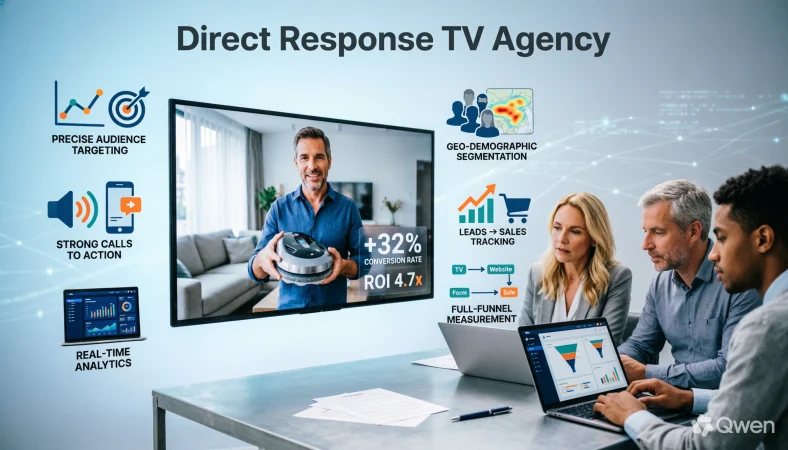
A direct response television agency helps brands create, place, track, and optimize TV advertising designed to generate measurable actions such as calls, website visits, leads, or purchases. Whether you are comparing agencies or planning a campaign, the right words can make your message clearer and more persuasive.
Top alternatives: performance TV agency, direct response TV agency, measurable television advertising agency, TV performance marketing agency, response-driven TV advertising agency
A TV commercial can look amazing, but if nobody knows what to do next, it is basically expensive entertainment. That is where a direct response television agency comes in. These agencies focus on turning television attention into measurable action, from phone calls and website visits to leads, sign-ups, and sales.
Whether you are discussing campaign ideas with your team, reviewing an agency proposal, or explaining TV marketing to a client, having the right language makes everything easier. A strong response can sound professional without putting everyone to sleep in the meeting room. It can also help clarify goals, creative direction, audience targeting, tracking, and performance.
This guide gives you 180+ direct response television agency ideas, phrases, and practical lines organized by tone and situation, so you can communicate clearly while keeping your marketing conversations sharp, modern, and useful.
Funny Direct Response Television Agency Phrases
“Make the commercial earn its screen time.”
Use this when joking about keeping a TV campaign focused on measurable results.
Meaning: The advertisement should create action rather than simply fill airtime.
“Pretty ads are nice; profitable ads are nicer.”
Use this when a creative meeting gets overly focused on aesthetics.
Meaning: Strong visuals matter, but business results matter too.
“Let’s give the remote a reason to pause.”
Use this when brainstorming attention-grabbing creative.
Meaning: The opening should make viewers want to keep watching.
“No mystery, just measurable marketing.”
Use this when explaining a performance-focused TV strategy.
Meaning: The campaign should make its results easier to understand.
“TV, but with receipts.”
Use this when describing trackable television advertising.
Meaning: The campaign connects TV exposure with measurable outcomes.
“Less guessing, more tracking.”
Use this when discussing campaign measurement.
Meaning: Decisions should come from useful performance data.
“Let’s turn eyeballs into actions.”
Use this when setting a campaign objective.
Meaning: Viewer attention should lead toward a meaningful response.
“The remote is not the boss today.”
Use this when discussing stronger retention and creative hooks.
Meaning: The campaign should work hard to hold viewer attention.
“Give viewers something to do besides snack.”
Use this when adding a clear call to action.
Meaning: The commercial should encourage a specific next step.
“Big screen, bigger response.”
Use this for an upbeat campaign planning session.
Meaning: Television should be treated as a channel for measurable engagement.
“Let’s make the ad do some actual work.”
Use this when reviewing an attractive but weak commercial concept.
Meaning: Creative should support a clear marketing objective.
“If it airs, we should learn from it.”
Use this when emphasizing campaign reporting.
Meaning: Every campaign should provide useful performance insights.
Professional Direct Response Television Agency Responses
“We should define the response objective first.”
Use this during campaign planning before discussing creative execution.
Meaning: The desired customer action should guide the campaign.
“Let’s align the creative with measurable outcomes.”
Use this when reviewing television concepts with a marketing team.
Meaning: Creative decisions should support trackable business goals.
“Audience strategy should inform media placement.”
Use this when discussing where and when commercials should run.
Meaning: Placement should reflect the intended audience.
“The call to action needs to be unmistakable.”
Use this during commercial script reviews.
Meaning: Viewers should understand the desired next step quickly.
“We need a clear measurement framework.”
Use this when establishing campaign reporting requirements.
Meaning: The team needs defined metrics for evaluating performance.
“Creative and media should work as one strategy.”
Use this when coordinating campaign departments.
Meaning: Advertising content and media buying should support each other.
“Let’s evaluate performance beyond impressions.”
Use this when reviewing campaign results.
Meaning: Reach alone may not reveal whether the campaign generated action.
“Tracking should be built into the campaign from launch.”
Use this when preparing a new TV campaign.
Meaning: Measurement should not be treated as an afterthought.
“We should establish benchmarks before the first airing.”
Use this when setting performance expectations.
Meaning: Baseline metrics help make later results easier to evaluate.
“The campaign needs a scalable testing plan.”
Use this when preparing multiple creative or media variations.
Meaning: Testing can help identify stronger-performing approaches.
“Let’s connect television exposure with downstream activity.”
Use this in an analytics discussion.
Meaning: The team should examine what happens after viewers see the advertisement.
“Performance reporting should lead to actionable decisions.”
Use this during agency reporting discussions.
Meaning: Data should help determine what to change next.
Beginner-Friendly Direct Response Television Agency Ideas
“Start with one clear customer action.”
Use this when introducing direct response advertising to beginners.
Meaning: A simple objective makes campaign planning easier.
“Know who you want watching.”
Use this when explaining audience strategy.
Meaning: Understanding the target audience improves campaign relevance.
“Give viewers one obvious next step.”
Use this when explaining calls to action.
Meaning: Clear instructions reduce confusion.
“Track what happens after the commercial.”
Use this when introducing performance measurement.
Meaning: Campaign success depends on more than television exposure.
“Test before making big assumptions.”
Use this when explaining campaign optimization.
Meaning: Evidence is more useful than relying on guesses.
“Keep the message simple.”
Use this when helping beginners write TV advertising copy.
Meaning: Viewers should grasp the main offer quickly.
“Make the offer easy to understand.”
Use this during early creative planning.
Meaning: Clear value can make the response easier to generate.
“Put the brand in the viewer’s memory.”
Use this when discussing creative development.
Meaning: Strong brand recognition supports response and recall.
“Measure actions, not just attention.”
Use this when explaining direct response marketing.
Meaning: Engagement should connect with meaningful outcomes.
“Build tracking into every campaign.”
Use this when introducing campaign analytics.
Meaning: Measurement helps reveal what worked.
“Learn from every test.”
Use this when reviewing early campaign results.
Meaning: Even weaker results can provide useful information.
“Treat TV like a performance channel.”
Use this when explaining the direct response approach.
Meaning: Television can be planned around measurable business objectives.
Creative Direct Response Television Agency Phrases
“Turn the first five seconds into a hook.”
Use this during creative brainstorming.
Meaning: Early attention can determine whether viewers keep watching.
“Build the story around the customer problem.”
Use this when developing commercial concepts.
Meaning: A recognizable problem can make the message more relatable.
“Make the offer feel instantly relevant.”
Use this when refining a commercial script.
Meaning: Viewers should quickly understand why the product matters.
“Give the brand a memorable moment.”
Use this when developing creative concepts.
Meaning: A distinctive moment can improve recall.
“Make every scene move the message forward.”
Use this during production planning.
Meaning: Visuals should contribute to the campaign objective.
“Create curiosity before revealing the solution.”
Use this when brainstorming storytelling approaches.
Meaning: Curiosity can encourage viewers to continue watching.
“Make the call to action part of the story.”
Use this when avoiding an awkward final sales pitch.
Meaning: The response mechanism should feel natural within the commercial.
“Build creative people remember tomorrow.”
Use this during concept selection.
Meaning: Long-term recall can strengthen campaign effectiveness.
“Give the offer a reason to matter now.”
Use this when developing promotional messaging.
Meaning: Relevance and urgency can encourage action.
“Turn product benefits into viewer moments.”
Use this during script development.
Meaning: Benefits become stronger when audiences can picture themselves using them.
“Let the creative sell without shouting.”
Use this when refining an overly aggressive script.
Meaning: Persuasion can remain confident without feeling forced.
“Make performance part of the creative brief.”
Use this when starting production.
Meaning: Measurable objectives should influence creative decisions from the beginning.
Sarcastic Direct Response Television Agency Responses
“Because apparently hoping for sales is not a strategy.”
Use this when a team suggests running an untracked TV campaign.
Meaning: Marketing decisions should have measurable objectives.
“Sure, let’s ignore the data. What could possibly happen?”
Use this when discussing an evidence-free campaign decision.
Meaning: The speaker is encouraging a more data-driven approach.
“Great commercial. Now where’s the response?”
Use this when creative looks strong but lacks a clear action.
Meaning: Visual quality alone does not guarantee performance.
“Impressions are lovely, but customers are lovelier.”
Use this during a performance review.
Meaning: Business outcomes should remain central.
“Let’s add tracking before we add confetti.”
Use this when a team celebrates too early.
Meaning: Measurement should come before declaring success.
“The audience cannot read our minds, sadly.”
Use this when a commercial has an unclear call to action.
Meaning: Advertisements need explicit instructions.
“Maybe the viewers need an actual reason to respond.”
Use this during offer development.
Meaning: A compelling reason to act can improve response.
“Because ‘trust us’ is not exactly a measurement plan.”
Use this when discussing campaign accountability.
Meaning: Marketing claims should be supported by measurable evidence.
“Let’s not let the spreadsheet cry today.”
Use this when discussing weak campaign performance.
Meaning: The team should focus on improving results rather than ignoring them.
“Good vibes are not campaign attribution.”
Use this when reviewing vague performance claims.
Meaning: Marketing results require credible measurement.
“The commercial aired. Mission accomplished? Not quite.”
Use this when discussing post-launch measurement.
Meaning: Airing the advertisement is only one part of the campaign.
“Let’s make the numbers tell a better story.”
Use this when planning optimization.
Meaning: The goal is to improve measurable campaign performance.
Polite Direct Response Television Agency Responses
“I think we could make the response objective clearer.”
Use this when offering constructive feedback on a campaign.
Meaning: The speaker suggests improvement without sounding harsh.
“Perhaps we could strengthen the call to action.”
Use this during a collaborative creative review.
Meaning: The campaign may benefit from clearer viewer instructions.
“It may be useful to review the audience strategy again.”
Use this when questioning targeting choices diplomatically.
Meaning: Audience selection may need further consideration.
“Could we explore a few additional creative options?”
Use this when requesting more concepts from an agency.
Meaning: The team wants more creative possibilities.
“I would recommend adding clearer performance benchmarks.”
Use this during a campaign planning meeting.
Meaning: Defined targets can improve evaluation.
“We might benefit from additional testing.”
Use this when campaign results are uncertain.
Meaning: More evidence could support the next decision.
“Could we connect these results with response data?”
Use this during reporting discussions.
Meaning: The team wants a stronger connection between exposure and action.
“I appreciate the creative direction; let’s also consider conversion.”
Use this when balancing creative and performance priorities.
Meaning: Strong creative should also support measurable results.
“Perhaps we can simplify the message slightly.”
Use this when a commercial feels overloaded.
Meaning: A more focused message may improve understanding.
“Let’s make sure the offer is immediately clear.”
Use this during script feedback.
Meaning: Viewers should understand the value without confusion.
“I think a stronger measurement plan would help.”
Use this when reviewing an agency proposal.
Meaning: Better measurement can make campaign decisions more confident.
“Let’s keep the next step as simple as possible.”
Use this when reviewing the customer journey.
Meaning: Simplicity can make responding easier.
Strategic Direct Response Television Agency Ideas
“Start with the customer journey.”
Use this when building a campaign strategy.
Meaning: The advertisement should fit into the broader path from awareness to action.
“Define success before buying airtime.”
Use this during media planning.
Meaning: Objectives should come before execution.
“Match creative intensity to audience intent.”
Use this when planning different campaign messages.
Meaning: Messaging should reflect how ready the audience is to act.
“Build a testing roadmap, not a one-off campaign.”
Use this during long-term planning.
Meaning: Continuous testing can support sustainable improvement.
“Use performance data to guide media decisions.”
Use this when reviewing placements.
Meaning: Data can inform future allocation.
“Keep the offer and audience tightly connected.”
Use this when evaluating campaign relevance.
Meaning: The right offer should reach people likely to care about it.
“Plan measurement before launch.”
Use this when creating campaign workflows.
Meaning: Tracking requirements should be ready before advertising begins.
“Optimize around business outcomes.”
Use this during strategy meetings.
Meaning: Marketing metrics should connect to meaningful commercial results.
“Treat every airing as a learning opportunity.”
Use this during campaign optimization.
Meaning: Each placement can contribute useful performance information.
“Balance reach with response quality.”
Use this when discussing media effectiveness.
Meaning: Broad exposure is valuable when it contributes to useful outcomes.
“Build flexibility into the media plan.”
Use this when planning campaigns across changing performance levels.
Meaning: A flexible strategy can respond to new data.
“Let evidence shape the next move.”
Use this during performance reviews.
Meaning: Future decisions should reflect what the campaign has taught the team.
Direct Response Television Agency Phrases For Managers
“What action are we asking viewers to take?”
Use this when opening a campaign review.
Meaning: Managers should establish the primary response objective.
“How will we measure success?”
Use this before approving a campaign.
Meaning: The team needs clear evaluation criteria.
“Which audience are we prioritizing?”
Use this during media strategy discussions.
Meaning: Audience focus should guide campaign decisions.
“What are we learning from the latest results?”
Use this during performance meetings.
Meaning: Reporting should produce actionable insights.
“Where can we simplify the customer journey?”
Use this when reviewing response processes.
Meaning: Removing friction may help customers act more easily.
“Which creative elements are performing best?”
Use this during creative optimization.
Meaning: The team should identify strengths worth repeating.
“Are our benchmarks still realistic?”
Use this during campaign reassessment.
Meaning: Targets may need adjustment based on evidence.
“What should we test next?”
Use this after reviewing campaign results.
Meaning: Managers should turn insights into future experiments.
“How quickly can we act on the data?”
Use this during optimization planning.
Meaning: Timely decisions can improve campaign responsiveness.
“Where are we seeing the strongest response?”
Use this when reviewing performance across placements.
Meaning: Strong areas can reveal useful optimization opportunities.
“What is the biggest opportunity right now?”
Use this during strategic reviews.
Meaning: The team should prioritize the most valuable improvement.
“What should we stop doing?”
Use this when evaluating inefficient campaign activities.
Meaning: Strong management includes removing approaches that do not perform.
Clear And Concise Direct Response Television Agency Lines
“Clear offer. Clear action. Clear measurement.”
Use this when summarizing a campaign philosophy.
Meaning: Effective direct response advertising depends on clarity.
“Reach the right people with the right message.”
Use this during audience planning.
Meaning: Relevance is central to response marketing.
“Track the journey from screen to action.”
Use this when explaining campaign measurement.
Meaning: The strategy should examine what viewers do after exposure.
“Creative earns attention; strategy earns results.”
Use this during campaign planning.
Meaning: Creative and strategy play different but connected roles.
“Every campaign needs a measurable goal.”
Use this when establishing marketing requirements.
Meaning: Objectives provide direction for evaluation.
“Make responding easy.”
Use this when reviewing customer experience.
Meaning: Simpler response paths can reduce friction.
“Test, learn, improve, repeat.”
Use this when describing an optimization cycle.
Meaning: Performance marketing benefits from continuous learning.
“Attention is the beginning, not the finish.”
Use this when discussing TV exposure.
Meaning: Awareness should ideally lead toward meaningful action.
“Data turns airtime into insight.”
Use this when explaining measurement.
Meaning: Campaign information becomes more valuable when it informs decisions.
“Strong TV campaigns invite action.”
Use this when discussing response-focused creative.
Meaning: The commercial should encourage a clear next step.
“Measure what matters.”
Use this during reporting discussions.
Meaning: Teams should focus on metrics connected to objectives.
“Keep the customer journey simple.”
Use this when reviewing campaign response mechanisms.
Meaning: Clarity and convenience can support action.
Emotional Direct Response Television Agency Responses
“A great campaign should make people feel something and do something.”
Use this when balancing emotional storytelling with performance goals.
Meaning: Emotion and measurable action can work together.
“The best response often starts with recognition.”
Use this when developing customer-focused creative.
Meaning: People respond when a message feels personally relevant.
“Make the audience feel understood.”
Use this when creating problem-focused advertising.
Meaning: Empathy can strengthen the connection between brand and viewer.
“Give the customer a reason to believe.”
Use this when developing persuasive messaging.
Meaning: Credibility can support trust and action.
“Show the problem before promising the solution.”
Use this when structuring a commercial story.
Meaning: Understanding the problem can make the solution more meaningful.
“Make the brand feel human.”
Use this during creative development.
Meaning: Human-centered storytelling can make advertising more relatable.
“Turn attention into a moment of connection.”
Use this when discussing emotional creative.
Meaning: The commercial should feel relevant rather than purely promotional.
“Give viewers a reason to care.”
Use this during concept development.
Meaning: Relevance is essential for meaningful engagement.
“Let the customer see themselves in the story.”
Use this when writing relatable commercial scenarios.
Meaning: Familiar situations can strengthen emotional identification.
“Make the message memorable, not merely loud.”
Use this when refining an aggressive concept.
Meaning: Emotional resonance can be more valuable than volume.
“Build trust before asking for action.”
Use this when creating response-focused campaigns.
Meaning: Credibility can make the next step feel more natural.
“Create a reason to remember the brand.”
Use this when discussing long-term campaign impact.
Meaning: Brand memory can support future customer decisions.
Clever Direct Response Television Agency Ideas
“Think beyond the thirty-second spot.”
Use this when planning an integrated television campaign.
Meaning: The advertisement should connect with the broader marketing journey.
“The real KPI is what happens next.”
Use this during performance discussions.
Meaning: Post-exposure actions matter.
“Turn airtime into actionable intelligence.”
Use this when discussing campaign analytics.
Meaning: Television can provide insights when properly measured.
“Build the commercial backward from the desired action.”
Use this during creative strategy.
Meaning: The end goal should influence the entire advertisement.
“Make every second carry a purpose.”
Use this during script editing.
Meaning: Limited commercial time should be used intentionally.
“Let the offer answer the audience’s next question.”
Use this when refining messaging.
Meaning: Good creative anticipates viewer concerns.
“Design for attention, clarity, and action.”
Use this when summarizing creative priorities.
Meaning: Strong response advertising combines these three elements.
“Use data to sharpen creativity.”
Use this when explaining the relationship between analytics and creative work.
Meaning: Performance information can improve future creative decisions.
“The response path should feel shorter than the commercial.”
Use this when simplifying a customer journey.
Meaning: Taking action should not feel complicated.
“Build a campaign that learns while it runs.”
Use this during optimization planning.
Meaning: Live performance can inform ongoing decisions.
“Make measurement part of the idea.”
Use this when creating a campaign concept.
Meaning: Tracking should be considered during creative development.
“Turn television exposure into a measurable conversation.”
Use this when explaining direct response strategy.
Meaning: The campaign should encourage meaningful customer activity.
Confident Direct Response Television Agency Phrases
“We know what action we want from the audience.”
Use this when presenting a clear campaign strategy.
Meaning: The campaign has a defined response objective.
“Our creative has a measurable job to do.”
Use this during a campaign presentation.
Meaning: Creative should contribute directly to business goals.
“We are building for results, not just reach.”
Use this when explaining performance priorities.
Meaning: The strategy values measurable outcomes alongside exposure.
“The data will guide our next decision.”
Use this during performance reporting.
Meaning: Future actions will reflect campaign evidence.
“We can test before scaling.”
Use this when presenting a cautious growth strategy.
Meaning: Initial testing can reduce uncertainty.
“The customer journey is part of the campaign.”
Use this when discussing response mechanisms.
Meaning: The experience after viewing the commercial matters.
“Every placement has a purpose.”
Use this during media planning.
Meaning: Airtime should support strategic objectives.
“We will optimize what the results reveal.”
Use this during campaign reviews.
Meaning: Performance data will guide improvements.
“The message is built for action.”
Use this when describing response-focused creative.
Meaning: The commercial encourages a specific customer response.
“We are measuring outcomes, not assumptions.”
Use this during an agency presentation.
Meaning: Decisions are grounded in evidence.
“Strong creative and strong measurement belong together.”
Use this when explaining campaign methodology.
Meaning: Creativity and analytics should support one another.
“The strategy is designed to learn and scale.”
Use this when presenting a growth-focused campaign.
Meaning: The campaign can improve through testing and expansion.
Chill And Casual Direct Response Television Agency Responses
“Let’s keep the message simple and let it breathe.”
Use this when a commercial feels overloaded.
Meaning: A relaxed presentation can make the main idea easier to understand.
“We just need one really good reason to respond.”
Use this during casual campaign brainstorming.
Meaning: A compelling offer can simplify the strategy.
“Let’s see what the numbers say.”
Use this when a team disagrees about performance.
Meaning: Data can help settle campaign debates.
“Keep the CTA obvious and we’re good.”
Use this during a quick creative review.
Meaning: Viewers should know what to do next.
“No need to overcomplicate the journey.”
Use this when simplifying a response process.
Meaning: Customers should have an easy path to action.
“Let’s test it and learn.”
Use this when deciding between campaign ideas.
Meaning: Testing can provide useful evidence.
“Good creative, better results.”
Use this when discussing campaign improvement.
Meaning: Creative quality should support measurable performance.
“Let’s make the next step super obvious.”
Use this when reviewing a commercial ending.
Meaning: Clear instructions can reduce hesitation.
“We can always tweak it after the first results.”
Use this when launching a test campaign.
Meaning: Early performance can inform later changes.
“Keep the customer journey nice and easy.”
Use this when discussing response mechanisms.
Meaning: Convenience can support customer action.
“Let’s focus on what actually moves the needle.”
Use this during campaign optimization.
Meaning: Attention should go toward meaningful performance drivers.
“TV can work hard without making things complicated.”
Use this when explaining the direct response approach.
Meaning: Effective television marketing can remain straightforward.
Results-Focused Direct Response Television Agency Ideas
“Set measurable targets before launch.”
Use this when preparing campaign goals.
Meaning: Clear targets create a basis for evaluating results.
“Track response by campaign variable.”
Use this during analytics planning.
Meaning: Comparing variables can reveal what drives performance.
“Monitor performance consistently.”
Use this during campaign management.
Meaning: Regular observation supports timely optimization.
“Identify the strongest-performing creative.”
Use this after initial campaign data becomes available.
Meaning: Winning creative can inform future decisions.
“Compare audience response across placements.”
Use this when reviewing media performance.
Meaning: Placement-level analysis can reveal useful patterns.
“Optimize around verified results.”
Use this when making budget decisions.
Meaning: Confirmed performance should influence future allocation.
“Separate reach from response.”
Use this when interpreting campaign reports.
Meaning: Exposure and customer action represent different outcomes.
“Watch the full conversion path.”
Use this during campaign measurement.
Meaning: Performance should be evaluated beyond the initial response.
“Use testing to reduce uncertainty.”
Use this when planning new campaign elements.
Meaning: Experiments can provide evidence before wider rollout.
“Turn reporting into action.”
Use this during agency meetings.
Meaning: Reports should help the team decide what to do next.
“Scale what consistently performs.”
Use this when discussing campaign growth.
Meaning: Reliable winners can become priorities for expansion.
“Document the lessons from every campaign.”
Use this after completing a TV advertising cycle.
Meaning: Institutional learning can improve future campaigns.
Polished Direct Response Television Agency Lines
“Our approach combines compelling creative with measurable performance.”
Use this in an agency presentation or company profile.
Meaning: The agency values both creativity and accountability.
“We develop television campaigns around defined response objectives.”
Use this when describing agency services professionally.
Meaning: Campaigns are built with specific outcomes in mind.
“Our strategy connects audience insight, creative, media, and measurement.”
Use this when explaining an integrated service model.
Meaning: Multiple campaign components work together.
“We prioritize clarity at every stage of the customer journey.”
Use this in a marketing proposal.
Meaning: The customer experience should remain straightforward.
“Our campaigns are designed to generate measurable engagement.”
Use this in professional agency copy.
Meaning: Advertising should encourage trackable customer activity.
“We use performance insights to guide ongoing optimization.”
Use this during a client presentation.
Meaning: Data informs campaign improvements.
“Every campaign begins with a clearly defined objective.”
Use this when explaining a planning process.
Meaning: Goals provide strategic direction.
“We connect television advertising with actionable performance data.”
Use this in a service description.
Meaning: TV activity should produce useful insights.
“Our creative strategy is built around audience relevance.”
Use this when discussing campaign development.
Meaning: Messaging should matter to the intended audience.
“We balance brand storytelling with response-driven execution.”
Use this in a professional marketing profile.
Meaning: Branding and measurable action can coexist.
“We focus on sustainable performance rather than short-term attention alone.”
Use this in an agency proposal.
Meaning: The strategy considers lasting campaign value.
“Our goal is to make television advertising more accountable.”
Use this when explaining direct response marketing.
Meaning: Campaign performance should be measurable and understandable.
Smart Direct Response Television Agency Best Practices
“Define the objective before writing the script.”
Use this when creating a campaign workflow.
Meaning: The desired outcome should influence creative development.
“Know the audience before choosing the message.”
Use this during campaign research.
Meaning: Audience insight helps shape relevant communication.
“Keep the offer easy to understand.”
Use this during creative review.
Meaning: Clear value can make responding easier.
“Use a direct and memorable call to action.”
Use this when finalizing a commercial.
Meaning: Viewers need a clear next step.
“Plan measurement before media goes live.”
Use this during campaign setup.
Meaning: Tracking should be ready from the start.
“Review results regularly.”
Use this during campaign management.
Meaning: Consistent analysis can reveal opportunities quickly.
“Test meaningful variables.”
Use this when planning experiments.
Meaning: Testing should answer useful strategic questions.
“Avoid measuring everything without purpose.”
Use this during analytics planning.
Meaning: Metrics should connect to campaign objectives.
“Keep the customer experience consistent.”
Use this when coordinating TV and digital campaigns.
Meaning: Consistency can strengthen the overall response journey.
“Turn campaign insights into creative improvements.”
Use this after performance analysis.
Meaning: Data can influence future messaging.
“Document what works.”
Use this after successful campaign tests.
Meaning: Strong lessons can inform future campaigns.
“Keep improving after launch.”
Use this when explaining optimization.
Meaning: A campaign can continue developing after it airs.
Modern Direct Response Television Agency Phrases
“TV is not just awareness anymore.”
Use this when discussing measurable television advertising.
Meaning: Television can support performance-focused marketing goals.
“Make the big screen measurable.”
Use this in modern marketing discussions.
Meaning: TV campaigns can be connected with performance measurement.
“Creative meets data.”
Use this when describing an integrated campaign strategy.
Meaning: Creative decisions and analytics work together.
“From viewing to doing.”
Use this as a concise campaign strategy phrase.
Meaning: The goal is to move audiences from attention toward action.
“Turn screen time into response time.”
Use this for modern direct response marketing copy.
Meaning: Advertising should encourage timely customer action.
“Performance belongs on every screen.”
Use this when discussing cross-channel marketing.
Meaning: Measurable outcomes can matter across different media.
“Attention is valuable when it leads somewhere.”
Use this during performance strategy discussions.
Meaning: Engagement becomes more useful when it supports action.
“Data makes the next move smarter.”
Use this when explaining campaign optimization.
Meaning: Insights improve future marketing decisions.
“Make every impression work harder.”
Use this during campaign planning.
Meaning: Exposure should contribute toward a meaningful objective.
“Build for the viewer, optimize for the result.”
Use this when summarizing campaign strategy.
Meaning: Customer relevance and performance should work together.
“The commercial is only the beginning.”
Use this when discussing the broader customer journey.
Meaning: Post-viewing actions also matter.
“Better measurement, better decisions.”
Use this during analytics discussions.
Meaning: Reliable data can improve campaign management.
Future-Focused Direct Response Television Agency Ideas
“Build campaigns that learn over time.”
Use this when planning long-running TV campaigns.
Meaning: Future decisions should benefit from accumulated performance insights.
“Prepare creative for continuous testing.”
Use this when developing a flexible production strategy.
Meaning: Multiple variations can support ongoing optimization.
“Connect television with the wider customer journey.”
Use this when planning integrated marketing.
Meaning: TV should work alongside other customer touchpoints.
“Use data to make media planning smarter.”
Use this during future campaign strategy sessions.
Meaning: Performance insights can influence media decisions.
“Create a measurement system that scales.”
Use this when preparing campaigns for growth.
Meaning: Tracking should remain useful as campaign activity expands.
“Make optimization part of the culture.”
Use this when discussing long-term marketing operations.
Meaning: Improvement should become an ongoing habit.
“Build creative around evolving audience needs.”
Use this when planning future campaigns.
Meaning: Messaging should adapt as audience behaviour changes.
“Keep response paths flexible.”
Use this when designing customer journeys.
Meaning: Campaigns should accommodate different ways audiences may respond.
“Invest in insights, not just impressions.”
Use this during strategic planning.
Meaning: Learning from campaigns can be as valuable as reaching audiences.
“Let performance shape future storytelling.”
Use this during creative planning.
Meaning: Results can reveal which messages deserve further development.
“Think long-term while testing short-term.”
Use this when balancing experimentation and strategy.
Meaning: Small tests can contribute to bigger campaign goals.
“Build a system that gets smarter with every campaign.”
Use this as a closing strategy statement.
Meaning: Each campaign should contribute knowledge for future improvement.
FAQs
What Does Direct Response Television Agency Mean?
A direct response television agency specializes in TV advertising designed to encourage and measure specific customer actions, such as calls, visits, leads, sign-ups, or purchases.
Is A Direct Response Television Agency Different From A Regular TV Advertising Agency?
Yes. A direct response television agency typically places stronger emphasis on measurable customer actions, performance tracking, testing, and optimization rather than awareness alone.
Can Direct Response TV Advertising Be Flirty Or Emotional?
The marketing strategy can use emotional storytelling, humour, urgency, curiosity, or relatable situations when those approaches fit the audience and campaign objective. The important part is connecting the creative idea to a clear response goal.
How Do You Talk About A Direct Response Television Agency Professionally?
Use clear business language such as “performance-focused television agency,” “response-driven TV advertising,” “measurable television campaigns,” or “television performance marketing.”
What Should You Say If You Do Not Actually Mean A Campaign Will Perform Well?
Stay honest and use language such as “This approach has potential, but we should validate it through testing.” That sounds confident without promising results you cannot guarantee.
Is Humor Appropriate When Discussing Direct Response TV?
Yes, especially in creative meetings or social content. For client proposals, reports, budgets, and formal presentations, keep humour light and let clarity lead.
Conclusion
The right words can make a direct response television agency discussion feel clearer, sharper, and much more confident. Whether you are reviewing creative, planning media, presenting campaign ideas, discussing performance, or simply trying to explain response-driven TV advertising, a strong phrase can make your point land faster.
The biggest takeaway is simple: great television marketing should not stop at getting attention. It should give viewers a reason to act and give marketers a way to learn from the outcome. Try different tones depending on your audience, from polished and professional to clever and casual. Save this list, share it with your marketing team, and reuse your favourite lines whenever the next campaign conversation starts.