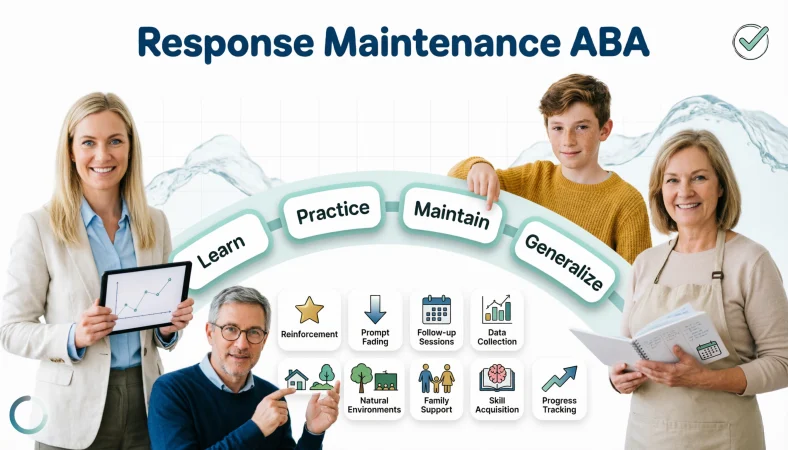
Response maintenance ABA means a learned behavior continues over time after teaching is reduced, changed, or stopped. It focuses on whether useful skills stay strong beyond the original teaching conditions.
Top alternatives: Behavioral maintenance, skill maintenance, response persistence, treatment maintenance, maintained behavior
Teaching a skill is one thing. Getting that skill to stick around when the therapist, teacher, prompts, or extra reinforcement fade out is the real plot twist. That is why response maintenance ABA matters so much in applied behavior analysis.
A learner may master a communication skill during sessions, but the bigger question is whether that response continues at home, school, work, or other everyday settings. Maintenance looks at whether learned behavior persists over time, including after some or all teaching has been reduced or discontinued.
Whether you are studying ABA concepts, writing a behavior plan, supporting skill acquisition, or trying to understand why a learned response suddenly disappears, maintenance gives you an important lens. It connects initial learning with long-term usefulness. After all, a skill that only works when the training setup is perfect is not exactly ready for the real world.
Response Maintenance ABA Basics
1. Teach It, Then Check It Later
Example: A practitioner checks a mastered skill during later sessions.
Meaning: Maintenance asks whether the learned response continues over time.
2. Look Beyond Mastery
Example: A learner reaches the target criterion and later receives maintenance probes.
Meaning: Mastery alone does not show whether a skill will persist.
3. Track Continued Responding
Example: Data are collected after direct teaching becomes less frequent.
Meaning: Continued performance provides evidence of maintenance.
4. Watch What Happens After Teaching Fades
Example: A learner performs a skill after prompts and instruction are reduced.
Meaning: Maintenance examines behavior beyond intensive teaching.
5. Keep the Skill Useful
Example: A communication response is practiced during naturally occurring activities.
Meaning: Useful skills have more opportunities to remain relevant.
6. Measure Instead of Guessing
Example: A practitioner records performance during follow-up probes.
Meaning: Data provide stronger evidence than simply assuming a skill stuck.
7. Check Real-Life Performance
Example: A learned skill is observed outside the original teaching environment.
Meaning: Everyday performance can reveal whether the behavior is durable.
8. Plan for Maintenance Early
Example: Maintenance opportunities are considered while the skill is being taught.
Meaning: Long-term performance should not be an afterthought.
9. Reduce Support Carefully
Example: Prompts are systematically faded after the learner demonstrates independence.
Meaning: Gradual changes can help reveal independent responding.
10. Keep the Target Meaningful
Example: A learner practices a communication skill that solves an everyday problem.
Meaning: Meaningful behavior has practical value beyond training sessions.
11. Compare Performance Over Time
Example: Current maintenance data are compared with earlier mastery data.
Meaning: Comparison helps identify whether performance remains stable.
12. Review Maintenance Regularly
Example: A team schedules periodic probes after acquisition.
Meaning: Regular review can identify fading performance early.
Response Maintenance ABA After Skill Acquisition
1. Confirm Mastery First
Example: A learner consistently meets the predetermined acquisition criterion.
Meaning: Maintenance checks generally follow established skill acquisition.
2. Schedule Follow-Up Probes
Example: Staff conduct brief checks after direct instruction decreases.
Meaning: Follow-up probes show whether responding continues.
3. Space Out Practice Opportunities
Example: Practice becomes less frequent as performance stabilizes.
Meaning: Spaced opportunities can help evaluate lasting performance.
4. Monitor Accuracy
Example: A practitioner records correct responses during later sessions.
Meaning: Accuracy shows whether the skill remains functional.
5. Watch for Prompt Dependence
Example: Staff check whether the learner responds without previous prompts.
Meaning: Independent responding provides stronger evidence of maintenance.
6. Compare Different Time Periods
Example: Data from acquisition are compared with later follow-up data.
Meaning: Trends can reveal changes in performance.
7. Keep Follow-Up Practical
Example: Staff use brief checks during naturally occurring routines.
Meaning: Practical probes reduce unnecessary disruption.
8. Maintain Important Skills First
Example: A team prioritizes communication and safety-related behaviors.
Meaning: High-value skills deserve continued attention.
9. Identify Performance Drops
Example: Data show a gradual decline after teaching is reduced.
Meaning: Early detection allows the team to consider additional support.
10. Review the Teaching History
Example: Staff examine how the skill was originally taught.
Meaning: Teaching conditions can help explain later maintenance.
11. Use Objective Data
Example: Staff record observable responses rather than relying on impressions.
Meaning: Objective measures make maintenance decisions clearer.
12. Document the Maintenance Plan
Example: A team records when and how future probes will occur.
Meaning: Written plans improve consistency across implementers.
Response Maintenance ABA Strategies for Long-Term Skills
1. Use Reinforcement Thoughtfully
Example: A practitioner evaluates reinforcement arrangements as support is reduced.
Meaning: Reinforcement conditions can influence continued responding.
2. Fade Prompts Gradually
Example: Staff reduce assistance as independent responding increases.
Meaning: Gradual fading encourages greater independence.
3. Vary Practice Opportunities
Example: A learner practices the same skill during different activities.
Meaning: Varied practice can support flexible use of a response.
4. Teach Functional Responses
Example: A learner practices requesting help during everyday routines.
Meaning: Functional skills have clear value outside therapy.
5. Involve Natural Supporters
Example: Parents and teachers learn how to support the target skill.
Meaning: Consistent implementation can support long-term performance.
6. Practice in Everyday Contexts
Example: A communication skill is practiced during meals and community activities.
Meaning: Everyday practice can connect learning with natural routines.
7. Reduce Artificial Supports
Example: Extra prompts or highly structured materials are gradually reduced.
Meaning: Less artificial support can encourage independent performance.
8. Build Fluency When Appropriate
Example: A learner practices a mastered response until it becomes efficient.
Meaning: Stronger response fluency may support persistence.
9. Keep Practice Relevant
Example: Staff embed skill practice into activities the learner already enjoys.
Meaning: Relevant practice can make continued responding more practical.
10. Schedule Maintenance Checks
Example: A team adds follow-up probes to the learner’s ongoing plan.
Meaning: Scheduled checks prevent maintenance from being forgotten.
11. Respond to Data Trends
Example: Staff increase support after noticing declining performance.
Meaning: Data can guide timely adjustments.
12. Revisit Skills When Needed
Example: A learner receives brief refresher instruction after a noticeable decline.
Meaning: Targeted review can help restore performance.
Response Maintenance ABA and Reinforcement
1. Monitor Reinforcement Changes
Example: A practitioner records performance as reinforcement conditions change.
Meaning: Changes in reinforcement may affect response persistence.
2. Avoid Abrupt Assumptions
Example: Staff evaluate performance before concluding that reinforcement is no longer needed.
Meaning: Decisions should be based on observed behavior.
3. Use Appropriate Reinforcement Schedules
Example: A practitioner gradually adjusts reinforcement according to the treatment plan.
Meaning: Schedule changes can help assess durable responding.
4. Consider Natural Reinforcers
Example: A communication skill naturally produces access to needed assistance.
Meaning: Natural consequences can make responses useful in daily life.
5. Watch for Response Changes
Example: Data are reviewed after a reinforcement adjustment.
Meaning: Performance changes may reveal whether additional support is needed.
6. Keep Reinforcement Meaningful
Example: Reinforcement is connected to the learner’s preferences and goals.
Meaning: Meaningful reinforcement can support engagement.
7. Avoid Reinforcement Guesswork
Example: Staff use data rather than assumptions when adjusting reinforcement.
Meaning: Objective information supports better decisions.
8. Check General Use
Example: A skill continues to produce relevant outcomes outside therapy.
Meaning: Functional consequences can support continued responding.
9. Review Treatment Integrity
Example: Supervisors check whether reinforcement procedures are implemented as planned.
Meaning: Consistent implementation helps clarify treatment effects.
10. Consider Response Persistence
Example: A team examines whether appropriate behavior continues during a planned challenge.
Meaning: Persistence is one way maintenance can be evaluated.
11. Monitor Problem Behavior Carefully
Example: Staff review whether previously reduced behavior returns as conditions change.
Meaning: Maintenance involves both desired and unwanted behavior patterns.
12. Document Reinforcement Decisions
Example: The treatment team records changes and the resulting data.
Meaning: Documentation supports informed follow-up.
Response Maintenance ABA and Prompt Fading
1. Fade Prompts Systematically
Example: A practitioner reduces prompt intensity according to the learner’s progress.
Meaning: Systematic fading supports independent responding.
2. Track Independent Responses
Example: Staff record correct responses without assistance.
Meaning: Independence is an important maintenance indicator.
3. Avoid Accidental Prompting
Example: A caregiver checks whether gestures are unintentionally guiding the learner.
Meaning: Hidden prompts can make a skill appear more independent than it is.
4. Use the Least Intrusive Support Needed
Example: A practitioner adjusts assistance according to observed performance.
Meaning: Appropriate support can encourage autonomy.
5. Practice Without Familiar Cues
Example: A skill is checked when the original teaching materials are unavailable.
Meaning: This can reveal whether the learner relies heavily on training cues.
6. Vary Prompt Timing
Example: Staff observe whether the learner responds before assistance is offered.
Meaning: Delaying prompts can provide opportunities for independent responding.
7. Check Delayed Performance
Example: A learner is assessed after a short period without practice.
Meaning: Delayed checks can provide information about persistence.
8. Record Prompt Levels
Example: Data show whether the learner needed verbal, visual, or physical support.
Meaning: Prompt data reveal changes in independence.
9. Fade Toward Natural Cues
Example: Staff gradually replace instructional signals with everyday environmental cues.
Meaning: Natural cues can support practical responding.
10. Avoid Fading Too Quickly
Example: A team slows the fading process when performance drops sharply.
Meaning: Adjusting support can help protect skill stability.
11. Recheck After Fading
Example: Staff collect data after each major prompt change.
Meaning: Follow-up data show whether the learner is maintaining performance.
12. Celebrate Genuine Independence
Example: A practitioner acknowledges successful responding without unnecessary assistance.
Meaning: Independent performance shows meaningful progress.
Response Maintenance ABA in Natural Environments
1. Practice at Home
Example: A learner uses a communication skill during family routines.
Meaning: Home practice connects learning with everyday life.
2. Practice at School
Example: Teachers support the same skill during classroom activities.
Meaning: School opportunities can strengthen practical use.
3. Practice in the Community
Example: A learner uses a requesting skill during a community outing.
Meaning: Community practice tests performance outside controlled sessions.
4. Use Natural Materials
Example: Staff practice with objects already present in the learner’s environment.
Meaning: Familiar materials can make skills easier to use naturally.
5. Follow Everyday Routines
Example: A learner practices dressing skills during the normal morning routine.
Meaning: Routine-based practice creates naturally occurring opportunities.
6. Include Different People
Example: A skill is practiced with parents, teachers, and other appropriate supporters.
Meaning: Multiple people provide varied opportunities for responding.
7. Vary Locations
Example: A learner uses the same skill in different rooms and community settings.
Meaning: Location changes can show whether responding remains useful.
8. Use Natural Opportunities
Example: Staff wait for appropriate moments to practice communication.
Meaning: Natural opportunities can make practice less artificial.
9. Keep Support Consistent
Example: Caregivers follow the agreed response procedure during daily activities.
Meaning: Consistency can reduce confusing differences across settings.
10. Monitor Everyday Performance
Example: A teacher records how often a learned skill occurs during regular activities.
Meaning: Natural data can show practical maintenance.
11. Make Skills Portable
Example: A learner uses the same response across different routines.
Meaning: Portable skills have broader everyday value.
12. Observe Without Overhelping
Example: Staff give the learner space to respond independently during a familiar task.
Meaning: Reduced interference can reveal genuine maintenance.
Response Maintenance ABA and Generalization
1. Separate Maintenance From Generalization
Example: A practitioner checks persistence over time and performance across settings.
Meaning: The two concepts overlap but answer different questions.
2. Test Different People
Example: A learner performs the skill with more than one communication partner.
Meaning: Different people can reveal how flexible the behavior is.
3. Test Different Settings
Example: A learner uses a skill at home and school.
Meaning: Multiple settings provide evidence about broader use.
4. Vary Relevant Materials
Example: A learner practices the same concept with different objects.
Meaning: Material changes can reduce dependence on one training item.
5. Vary Instructions Carefully
Example: Staff use naturally different wording for the same request.
Meaning: Variation can support flexible responding.
6. Check Across Activities
Example: A skill is observed during play, learning, and daily routines.
Meaning: Multiple activities provide broader opportunities.
7. Use Common Stimuli
Example: Training includes cues that naturally occur in the learner’s daily environment.
Meaning: Familiar cues can support transfer to everyday situations.
8. Involve Natural Supporters
Example: Family members participate in practice when appropriate.
Meaning: Natural supporters can create more opportunities for generalization.
9. Monitor Both Dimensions
Example: A team tracks performance across time and contexts.
Meaning: Looking at both helps create a fuller picture of behavior change.
10. Identify Context-Specific Problems
Example: A learner performs well at school but struggles in community settings.
Meaning: Context differences may reveal where additional support is needed.
11. Practice Flexibility
Example: A learner uses the same communication response with varied materials and people.
Meaning: Flexible responding can make skills more useful.
12. Document Generalized Maintenance
Example: Staff record continued performance across people, places, and time.
Meaning: Combined data provide stronger evidence of durable everyday use.
Response Maintenance ABA Data Collection
1. Define the Target Response Clearly
Example: Staff write an observable definition before collecting maintenance data.
Meaning: Clear definitions improve measurement consistency.
2. Choose a Useful Measurement Method
Example: A team selects frequency, duration, accuracy, or another suitable measure.
Meaning: Measurement should match the behavior being evaluated.
3. Collect Baseline Information
Example: Staff establish initial performance before major changes are introduced.
Meaning: Baseline provides a comparison point.
4. Record Maintenance Probes
Example: A practitioner collects data during scheduled follow-up sessions.
Meaning: Probes show whether responding persists.
5. Track Prompt Levels
Example: Staff record whether responses were independent or prompted.
Meaning: Prompt information adds context to performance data.
6. Track Reinforcement Conditions
Example: A team documents relevant changes in reinforcement during follow-up.
Meaning: Context helps explain performance changes.
7. Look for Stable Patterns
Example: A practitioner reviews several follow-up observations rather than one isolated result.
Meaning: Multiple observations provide a more useful picture.
8. Compare Performance Over Time
Example: Maintenance data are compared across weeks or months.
Meaning: Longitudinal comparisons reveal trends.
9. Graph Data When Appropriate
Example: A practitioner displays maintenance performance across observation periods.
Meaning: Visual analysis can make patterns easier to notice.
10. Record Contextual Variables
Example: Staff note important changes in setting or support.
Meaning: Context can influence observed responding.
11. Avoid Overinterpreting One Probe
Example: A team considers several observations before changing the plan.
Meaning: One unusual session may not represent the overall pattern.
12. Use Data for Decisions
Example: Staff adjust support after a consistent decline is observed.
Meaning: Data-informed decisions make maintenance planning more responsive.
Response Maintenance ABA and Follow-Up Sessions
1. Schedule Follow-Up Checks
Example: A team plans maintenance observations after acquisition ends.
Meaning: Follow-up provides evidence about lasting performance.
2. Space Checks Thoughtfully
Example: Follow-up sessions are distributed across later time periods.
Meaning: Timing can affect how maintenance is observed and interpreted.
3. Keep Checks Consistent
Example: Staff use the same measurement definition across follow-up sessions.
Meaning: Consistency makes comparisons easier.
4. Include Natural Opportunities
Example: A follow-up probe occurs during an ordinary classroom activity.
Meaning: Natural observations can show practical performance.
5. Watch for Gradual Declines
Example: Data are reviewed for small changes across multiple follow-up sessions.
Meaning: Slow declines can be easy to miss without repeated checks.
6. Compare Early and Later Results
Example: Staff compare the first maintenance probe with later observations.
Meaning: Long-term comparisons reveal persistence patterns.
7. Track Practice Opportunities
Example: A team records how often the learner naturally used the skill.
Meaning: Practice frequency may help explain maintenance differences.
8. Adjust Follow-Up When Needed
Example: Staff increase monitoring after a meaningful performance drop.
Meaning: Flexible follow-up can respond to changing needs.
9. Avoid Checking Only Once
Example: A practitioner collects several maintenance observations.
Meaning: Multiple observations provide stronger evidence than a single check.
10. Keep Follow-Up Manageable
Example: Staff use brief probes that fit existing routines.
Meaning: Practical follow-up is easier to sustain.
11. Document the Schedule
Example: A team records when each maintenance check will occur.
Meaning: Written schedules support consistent monitoring.
12. Review the Follow-Up Pattern
Example: Supervisors examine whether the timing of checks gives useful information.
Meaning: Thoughtful scheduling improves interpretation of maintenance.
Response Maintenance ABA in Home and Family Settings
1. Teach Families the Target Response
Example: Caregivers learn how to support the same skill used during sessions.
Meaning: Shared understanding can improve consistency.
2. Use Everyday Routines
Example: A learner practices communication during meals or dressing.
Meaning: Routine activities create natural practice opportunities.
3. Keep Instructions Simple
Example: A caregiver uses the agreed procedure during a familiar activity.
Meaning: Simple implementation is easier to maintain.
4. Track Meaningful Skills
Example: Families monitor communication, self-care, or safety behaviors.
Meaning: Practical skills can have direct everyday value.
5. Encourage Independent Responding
Example: A caregiver waits briefly before offering a prompt.
Meaning: Opportunities for independence can reveal maintenance.
6. Avoid Unplanned Prompting
Example: Family members check whether they are giving unnecessary cues.
Meaning: Excessive prompting can hide the learner’s independent performance.
7. Share Relevant Data
Example: Caregivers communicate performance changes to the treatment team.
Meaning: Shared information supports coordinated decisions.
8. Practice Across Family Members
Example: A learner uses the skill with different appropriate caregivers.
Meaning: Multiple communication partners can broaden opportunities.
9. Keep Practice Positive
Example: A family embeds skill practice into enjoyable daily activities.
Meaning: Positive routines can make practice easier to continue.
10. Watch for Skill Fading
Example: Caregivers notice that an independent response is becoming less frequent.
Meaning: Early awareness can prompt timely review.
11. Follow the Agreed Plan
Example: Family members use the current support procedure consistently.
Meaning: Consistency helps reduce conflicting responses.
12. Celebrate Everyday Success
Example: A caregiver recognizes a learner’s independent use of a mastered skill.
Meaning: Noticing progress can support continued engagement.
Response Maintenance ABA Challenges and Solutions
1. Skill Disappears After Teaching Ends
Example: A learner stops using a response after direct instruction is reduced.
Meaning: The team may need to investigate maintenance conditions.
2. Prompt Dependence Appears
Example: Performance drops when familiar prompts are removed.
Meaning: The learner may not yet respond independently.
3. Reinforcement Changes Too Quickly
Example: Performance declines after a major reinforcement change.
Meaning: The change may require careful review and adjustment.
4. The Skill Is Too Context-Specific
Example: A learner responds only in the original teaching room.
Meaning: Limited context exposure may restrict practical use.
5. Practice Opportunities Become Rare
Example: A mastered skill is almost never used after treatment ends.
Meaning: Limited opportunities may affect continued performance.
6. Caregiver Implementation Varies
Example: Different adults respond differently to the same behavior.
Meaning: Inconsistent implementation can complicate maintenance.
7. Data Are Too Limited
Example: A team makes decisions from one brief observation.
Meaning: More observations may be needed to identify a reliable pattern.
8. Maintenance Checks Are Too Infrequent
Example: A skill is not observed again for many months.
Meaning: A decline may go unnoticed for too long.
9. The Skill Is Not Functionally Relevant
Example: A learner rarely needs a response outside training.
Meaning: Low practical value may reduce opportunities for continued use.
10. Natural Cues Are Missing
Example: The learner responds only when a therapist gives a specific instruction.
Meaning: The behavior may depend heavily on training cues.
11. Performance Declines Gradually
Example: Accuracy falls slightly across several follow-up sessions.
Meaning: Small changes may signal a need for additional support.
12. The Plan Needs Updating
Example: A team revises maintenance procedures after reviewing new data.
Meaning: Maintenance planning should respond to actual performance.
Response Maintenance ABA Best Practices
1. Start Planning for Maintenance Early
Example: A practitioner considers long-term use while designing the acquisition program.
Meaning: Maintenance works better when it is planned from the beginning.
2. Use Meaningful Target Skills
Example: The team prioritizes communication and daily living behaviors.
Meaning: Functional skills have practical value beyond instruction.
3. Measure Actual Performance
Example: Staff collect objective data during follow-up observations.
Meaning: Measurement provides evidence of maintenance.
4. Include Natural Environments
Example: Skills are checked during home, school, or community routines.
Meaning: Natural settings show whether behavior remains useful outside training.
5. Train Relevant Supporters
Example: Parents and teachers receive guidance on implementing the current plan.
Meaning: Consistent support can strengthen maintenance opportunities.
6. Fade Prompts Thoughtfully
Example: Assistance decreases as independent responding becomes reliable.
Meaning: Planned fading supports independence.
7. Review Reinforcement Conditions
Example: The team examines performance after reinforcement changes.
Meaning: Reinforcement conditions can affect persistence.
8. Use Repeated Follow-Up
Example: Maintenance is assessed across several later observations.
Meaning: Repeated checks provide stronger evidence than one observation.
9. Consider Generalization Too
Example: A skill is checked across different people and settings.
Meaning: Practical behavior often needs flexibility as well as persistence.
10. Watch for Relapse
Example: Staff monitor whether previously reduced behavior returns during treatment changes.
Meaning: Maintenance assessment can include persistence of both desired and problem behavior.
11. Keep Treatment Integrity High
Example: Supervisors review whether caregivers follow the agreed procedures.
Meaning: Consistent implementation helps make treatment effects more interpretable.
12. Turn Data Into Action
Example: The team changes support after identifying a consistent maintenance problem.
Meaning: Maintenance data should guide practical decisions.
FAQs
What Does Response Maintenance Mean in ABA?
It means a learned behavior continues over time after some teaching or intervention is reduced.
Is Response Maintenance the Same as Mastery?
No. Mastery shows acquisition, while maintenance examines continued performance later.
Why Is Response Maintenance Important in ABA?
It helps show whether useful behavior remains after intensive teaching decreases.
What Is an Example of Response Maintenance?
A learner continues using a communication skill weeks after direct teaching is reduced.
Is Response Maintenance the Same as Generalization?
No. Maintenance focuses on time, while generalization focuses on contexts, people, or settings.
Can Response Maintenance Be Measured?
Yes. Practitioners can use follow-up probes and objective behavioral measures.
Does Response Maintenance Involve Reinforcement?
It can. Reinforcement conditions may influence whether learned responses continue over time.
What Happens If a Skill Is Not Maintained?
The team can review data and consider whether additional teaching or support is appropriate.
Why Are Follow-Up Sessions Important?
They provide opportunities to check whether a learned skill continues after acquisition.
Can Families Support Response Maintenance?
Yes. Families can provide natural opportunities to use skills when guided by the treatment plan.
Is Prompt Fading Related to Maintenance?
Yes. Reducing prompts can help determine whether a learner responds independently.
How Often Should Maintenance Be Checked?
The schedule should fit the learner, skill, treatment plan, and data rather than one universal rule.
Conclusion
Response maintenance ABA is where skill acquisition meets real life. Teaching a behavior successfully is important, but seeing that behavior continue after intensive instruction is reduced can provide a much stronger picture of lasting change. Maintenance can involve follow-up probes, natural routines, prompt fading, reinforcement planning, family involvement, and careful data collection.
It also works best when teams remember that every learner and skill can respond differently. Use the data, keep the plan practical, and look beyond the perfect therapy-session moment. Save this guide for your next ABA study session, share it with your team, or revisit it when planning long-term skill support. Keep learning, keep measuring, and keep those useful skills going.