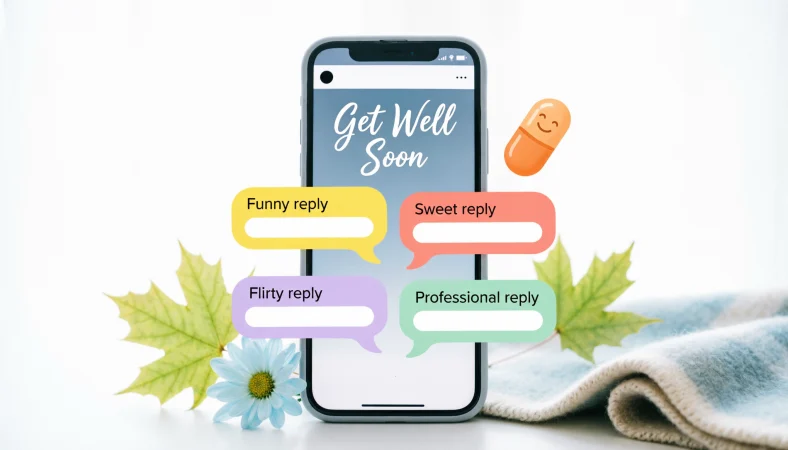
A good get well soon reply can be as simple as “Thank you, I really appreciate it” or “Thanks for checking in on me.” If you are wondering how to reply to get well soon, what to reply for get well soon message, or looking for the best reply for get well soon, the right response can be warm, casual, funny, or professional depending on who sent it.
Top alternatives: Thank you, I really appreciate it, That’s so sweet of you, Thanks for checking on me, I hope so too
A simple “get well soon” can mean a lot when you are not feeling your best. Whether the message comes from a friend, colleague, family member, or someone special, a warm reply can show that you genuinely appreciate their kindness.
When someone sends you a get-well message, you do not need a complicated response. A genuine “Thank you, that means a lot” is often enough, but you can make your reply more personal when the message comes from someone close to you. Knowing the right reply to get well soon can help you sound appreciative without making the response feel overly formal or repetitive.
Whether you need a get well soon reply message for a friend or a more polite response for a colleague, there are plenty of easy options. From a simple reply of get well soon to responding to “take rest and get well soon,” you can choose words that match your relationship and the tone of their message.
Get well soon reply
“Thank you, I really appreciate your kind words.” It is warm, polite, and works well for almost any situation.
Reply to get well soon
You can say, “Thank you! I’m hoping to feel better very soon.” It acknowledges their message while keeping your response positive.
Reply of get well soon
Try, “Thank you, that’s really thoughtful of you.” This works especially well when someone takes the time to send you a caring message.
Take rest and get well soon reply
You could reply, “Thank you, I definitely will. I really appreciate you caring.” It sounds genuine and fits a thoughtful message.
Get well soon reply message
“Thanks for the lovely message. I’m taking it easy and hoping to be back to normal soon.” It is friendly and gives the sender a small update.
Best reply for get well soon
“Thank you, that means a lot to me.” It is short, sincere, and suitable whether the sender is a friend, relative, colleague, or acquaintance.
Funny Get Well Soon Replies
“Thanks, I’ll try to survive this dramatic chapter.”
Use this when a friend checks on you while you are dealing with a minor illness.
Meaning: You appreciate their concern while joking about your situation.
“Thank you, my bed and I are currently in a serious relationship.”
Use this when you are spending most of the day resting.
Meaning: You are making light of your recovery routine.
“Thanks! I have officially become one with the blanket.”
Use this when someone asks how you are doing while you are stuck in bed.
Meaning: You are joking about how much rest you need.
“I appreciate it. My immune system needed the encouragement.”
Use this when you want a clever but lighthearted response.
Meaning: You are thanking them with a playful health-related joke.
“Thanks! I’m accepting soup, snacks, and compliments.”
Use this when a close friend offers sympathy.
Meaning: You are turning your recovery into a humorous request for care packages.
“Thank you! Recovery mode has officially been activated.”
Use this when you want to sound upbeat despite feeling unwell.
Meaning: You are showing optimism about getting better.
“Thanks, I’ll put that on my recovery checklist.”
Use this when someone gives you a simple get well message.
Meaning: You are playfully pretending their message is part of your treatment plan.
“Thank you! I’ll be back to causing problems soon.”
Use this with friends who know your playful personality.
Meaning: You are joking that your usual energy will return soon.
“Thanks! Please send positive vibes and snacks.”
Use this when a friend asks what they can do for you.
Meaning: You are combining gratitude with a funny request.
“I’m working on it. My body is just being difficult.”
Use this when someone asks whether you are recovering.
Meaning: You are making your illness sound like a funny disagreement with your body.
“Thanks! I’ve scheduled my comeback for very soon.”
Use this when you want to sound confident and playful.
Meaning: You are joking that your return to normal life is already planned.
“Appreciate it! Apparently my body wanted a vacation.”
Use this when you are forced to rest unexpectedly.
Meaning: You are humorously reframing being sick as an unwanted break.
Sweet Get Well Soon Replies
“Thank you so much. That really means a lot to me.”
Use this when someone sends a genuinely caring message.
Meaning: You sincerely appreciate their kindness.
“That’s so sweet of you. Thank you.”
Use this when you want a warm and simple reply.
Meaning: You are acknowledging their thoughtfulness.
“Thank you for checking on me. I really appreciate it.”
Use this when someone has taken time to ask how you are feeling.
Meaning: You value their effort and concern.
“Thanks for the kind words. I’m hoping to feel better soon.”
Use this when you want to respond warmly without being overly emotional.
Meaning: You appreciate their support and remain hopeful.
“Your message made me smile. Thank you.”
Use this when their message genuinely brightened your day.
Meaning: You are telling them their kindness had an emotional impact.
“Thank you for thinking of me.”
Use this when someone remembers you while you are unwell.
Meaning: You appreciate being remembered and cared about.
“That means more than you know. Thank you.”
Use this when their support feels especially meaningful.
Meaning: You are expressing sincere gratitude.
“Thanks for sending some good energy my way.”
Use this when you want a modern and warm response.
Meaning: You appreciate their positive wishes.
“Thank you. I’m taking it easy and hoping for a quick recovery.”
Use this when someone wants an update about your health.
Meaning: You are politely acknowledging their concern.
“You’re very kind. Thank you for caring.”
Use this when someone shows genuine concern.
Meaning: You are recognizing their compassion.
“Thank you! I’m feeling a little better already.”
Use this when you are beginning to recover.
Meaning: You are sharing a positive update while appreciating their message.
“I really appreciate the love and support.”
Use this when several people have been checking on you.
Meaning: You are warmly acknowledging their collective care.
Flirty Get Well Soon Replies
“I might recover faster if you keep checking on me.”
Use this when a crush sends you a caring message.
Meaning: You are turning their concern into a playful invitation for more attention.
“Thank you. Your message is already making me feel better.”
Use this when you want a subtle romantic hint.
Meaning: You are letting them know their attention affects you positively.
“Maybe your company is the medicine I need.”
Use this when the conversation already has a playful romantic vibe.
Meaning: You are suggesting that spending time together would make you feel better.
“Thanks. Are you volunteering as my personal nurse?”
Use this with someone you comfortably flirt with.
Meaning: You are teasing them while creating a flirty opening.
“I’ll get better if you promise to visit.”
Use this when you want to encourage a crush to see you.
Meaning: You are playfully expressing that you would enjoy their company.
“That’s sweet. I think I need another message from you tomorrow.”
Use this when you want to keep the conversation going.
Meaning: You are subtly asking for continued attention.
“Thank you. Somehow hearing from you works better than medicine.”
Use this when you want a more romantic response.
Meaning: You are telling them their presence makes you feel good.
“I’m getting better already, but you can keep the cute messages coming.”
Use this when the other person has been especially affectionate.
Meaning: You are encouraging more flirting.
“Thanks! I may need a very cute recovery assistant.”
Use this when playful flirting feels natural.
Meaning: You are hinting that you would like their attention.
“Your timing is perfect. I needed an excuse to talk to you.”
Use this when you secretly wanted to hear from them.
Meaning: You are using the situation to express interest.
“Thank you. Should I consider that your official invitation to check on me?”
Use this when you want to tease someone you like.
Meaning: You are playfully testing their interest.
“I feel better already. You might be my favorite cure.”
Use this when you want a confident romantic response.
Meaning: You are openly complimenting their effect on you.
Polite Get Well Soon Replies
“Thank you very much. I really appreciate your kind wishes.”
Use this in a respectful exchange with someone you are not very close to.
Meaning: You are expressing sincere and courteous gratitude.
“Thank you for your thoughtful message.”
Use this when someone sends a considerate note.
Meaning: You appreciate the effort they made to reach out.
“I truly appreciate your kind words.”
Use this when you want a polished response.
Meaning: You are warmly acknowledging their concern.
“Thank you. I’m hoping to recover soon.”
Use this when you want a straightforward reply.
Meaning: You appreciate their message and share a positive outlook.
“That’s very kind of you. Thank you.”
Use this when responding to someone respectfully.
Meaning: You are recognizing their kindness.
“Thank you for checking in. I appreciate it.”
Use this when someone personally asks about your recovery.
Meaning: You value their concern.
“Many thanks for your thoughtful wishes.”
Use this for a slightly more formal message.
Meaning: You are expressing gratitude in a polished way.
“Thank you for your support and good wishes.”
Use this when someone has been supportive during your recovery.
Meaning: You appreciate both their message and emotional support.
“I’m grateful for your kind thoughts.”
Use this when you want a warm and respectful tone.
Meaning: You value their thoughtfulness.
“Thank you kindly. I hope to be back to normal soon.”
Use this when you want to remain positive.
Meaning: You are thankful and optimistic about recovery.
“I appreciate you taking the time to reach out.”
Use this when someone makes a special effort to contact you.
Meaning: You are recognizing the effort behind their message.
“Thank you. Your kind wishes are much appreciated.”
Use this when you want a traditional, courteous response.
Meaning: You are politely acknowledging their concern.
Professional Get Well Soon Replies
“Thank you for your kind wishes. I really appreciate them.”
Use this when responding to a coworker or manager.
Meaning: You are keeping the exchange warm and professional.
“Thank you for checking in. I’m hoping to recover quickly.”
Use this when a colleague asks about your health.
Meaning: You appreciate their concern while keeping things work appropriate.
“I appreciate your thoughtful message. Thank you.”
Use this in a professional email or workplace chat.
Meaning: You are responding courteously without becoming overly personal.
“Thank you for your support and understanding.”
Use this when illness has affected your work schedule.
Meaning: You appreciate both their concern and flexibility.
“Many thanks for your kind wishes. I’m looking forward to feeling better soon.”
Use this when replying to a professional contact.
Meaning: You are expressing gratitude while staying positive.
“Thank you. I’m taking some time to rest and recover.”
Use this when explaining why you are away from work.
Meaning: You are providing a calm and professional update.
“I sincerely appreciate your thoughtful wishes.”
Use this when you need a polished professional response.
Meaning: You are expressing genuine gratitude formally.
“Thank you for reaching out. I’m doing my best to get back on my feet.”
Use this when a colleague checks on your recovery.
Meaning: You are acknowledging their concern while giving a brief update.
“Thank you for your understanding. I appreciate it.”
Use this when illness has required schedule changes.
Meaning: You value their patience and support.
“Your kind message is much appreciated. Thank you.”
Use this when replying to a professional acquaintance.
Meaning: You are responding warmly while maintaining appropriate boundaries.
“Thank you for thinking of me. I hope to be back soon.”
Use this when you are temporarily away from work.
Meaning: You appreciate their message and remain optimistic.
“Thank you very much. I’m focusing on getting some proper rest.”
Use this when you want to share a brief recovery update.
Meaning: You are politely acknowledging their concern.
Cute Get Well Soon Replies
“Aww, thank you! That’s really sweet.”
Use this when a friend or crush sends a caring message.
Meaning: You are responding with genuine warmth.
“You’re too kind. Sending you a little thank-you hug.”
Use this when you want an affectionate reply.
Meaning: You are returning their kindness with playful affection.
“Thank you! I’m putting your good wishes to work.”
Use this when you want a cheerful response.
Meaning: You are playfully treating their message as part of your recovery.
“That just made my sick day a little nicer.”
Use this when their message brightens your mood.
Meaning: You are letting them know their kindness helped.
“Thank you, sunshine!”
Use this with someone who enjoys affectionate nicknames.
Meaning: You are responding with cheerful warmth.
“You remembered to check on me. That’s adorable.”
Use this when someone makes an extra effort.
Meaning: You appreciate their thoughtfulness.
“Thanks! I’m sending good vibes right back.”
Use this when you want a positive, friendly reply.
Meaning: You are returning their positive energy.
“You’re officially on my list of favorite people today.”
Use this when someone makes you smile.
Meaning: You are playfully rewarding their kindness.
“Thank you! That was exactly the little boost I needed.”
Use this when you are having a rough day.
Meaning: Their message gave you emotional encouragement.
“Aww, you’re making recovery feel much sweeter.”
Use this when someone is being especially caring.
Meaning: You appreciate the emotional comfort they provide.
“Thank you! Sending you a tiny virtual hug.”
Use this when you want a gentle affectionate response.
Meaning: You are returning their warmth.
“You’re sweet for checking on me.”
Use this when someone follows up on your recovery.
Meaning: You value their caring behavior.
Sarcastic Get Well Soon Replies
“Thanks. I’ll inform my immune system immediately.”
Use this with a friend who enjoys dry humor.
Meaning: You are jokingly treating their message as medical advice.
“Appreciated. My body has received your official announcement.”
Use this when you want a playful sarcastic reply.
Meaning: You are humorously exaggerating the importance of their message.
“Thanks. I’ll try not to make this recovery too dramatic.”
Use this when you are joking about being sick.
Meaning: You are playfully poking fun at yourself.
“Noted. Recovery has been added to today’s agenda.”
Use this when a friend tells you to get better.
Meaning: You are pretending their wish is a formal task.
“Thank you. I’ll notify the hospital of your support.”
Use this only with someone who understands your humor.
Meaning: You are exaggerating a minor illness for comedic effect.
“Thanks. I was waiting for official approval to recover.”
Use this when someone tells you to feel better.
Meaning: You are playfully pretending you needed permission.
“Your concern has been successfully documented.”
Use this when you want a dry, internet-style response.
Meaning: You are jokingly treating their message like an official report.
“Thank you. My recovery team will review your message.”
Use this with a close friend who likes absurd humor.
Meaning: You are making your situation sound hilariously serious.
“Thanks. I’ll add that to my very important medical notes.”
Use this when the illness is minor.
Meaning: You are playfully exaggerating the situation.
“I appreciate the support. My blanket does too.”
Use this when you have been resting all day.
Meaning: You are adding a humorous twist to your gratitude.
“Thanks. I’ll alert the entire recovery department.”
Use this when you want a silly response.
Meaning: You are joking about having an imaginary medical department.
“Message received. Healing process commencing.”
Use this when you want a short, deadpan response.
Meaning: You are humorously treating recovery like a technical operation.
Creative Get Well Soon Replies
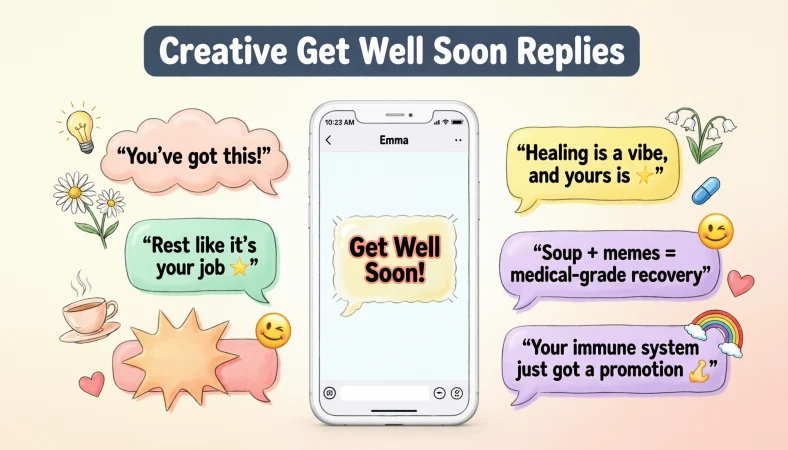
“Your kind words are a tiny dose of sunshine today.”
Use this when you want a poetic but natural response.
Meaning: You are saying their message lifted your mood.
“Thank you. I’m collecting good wishes like little recovery charms.”
Use this when several people are checking on you.
Meaning: You are creatively describing their support as comforting.
“Your message just added a little sparkle to my recovery.”
Use this when someone sends an especially thoughtful text.
Meaning: You are showing that their words made you feel better emotionally.
“Thank you. I’m slowly turning the page toward better days.”
Use this when you are recovering from a difficult week.
Meaning: You are expressing hope for improvement.
“Consider your good wishes officially delivered.”
Use this when you want something playful and original.
Meaning: You are humorously confirming that their kindness reached you.
“I’m keeping your kind words close while I recharge.”
Use this when someone offers emotional support.
Meaning: You value their encouragement during your recovery.
“Thank you. One kind message at a time, I’ll be back.”
Use this when you want an optimistic response.
Meaning: You are connecting their support with your recovery journey.
“Your message was a welcome little plot twist in my sick day.”
Use this when their message unexpectedly makes you smile.
Meaning: You are describing their kindness in a playful creative way.
“Adding your good wishes to my recovery playlist.”
Use this when you want a modern metaphor.
Meaning: You are saying their message is part of your positive energy.
“Thank you. I’m currently powered by rest, tea, and kind people.”
Use this when you want to mention your recovery routine.
Meaning: You are crediting supportive people as part of your comfort.
“Your kindness has officially brightened the recovery forecast.”
Use this when you want a clever original reply.
Meaning: You are saying their message made the situation feel more positive.
“Thank you. I’m saving your good wishes for the comeback.”
Use this when you want an upbeat response.
Meaning: You are expressing confidence that you will recover.
Chill And Casual Get Well Soon Replies
“Thanks, I appreciate it!”
Use this for a simple response to a friend or acquaintance.
Meaning: You are showing straightforward gratitude.
“Thank you! Hopefully I’ll be back soon.”
Use this when you want to keep things relaxed.
Meaning: You appreciate the message and expect to recover.
“Thanks! Just taking it easy for now.”
Use this when someone asks how you are doing.
Meaning: You are giving a casual recovery update.
“Appreciate you!”
Use this when texting someone you know well.
Meaning: You are thanking them in a relaxed way.
“Thanks! I’m getting there.”
Use this when you are gradually feeling better.
Meaning: You are giving a short and positive update.
“Thanks, I needed that.”
Use this when their message arrives at a difficult moment.
Meaning: Their encouragement genuinely helped.
“Cheers! Hopefully better days ahead.”
Use this when you want a laid-back optimistic response.
Meaning: You are expressing hope for a quick recovery.
“Thanks for checking in.”
Use this when someone follows up on you.
Meaning: You appreciate their attention.
“I appreciate it. Resting up now.”
Use this when you are recovering at home.
Meaning: You are thanking them and briefly explaining what you are doing.
“Thanks! Feeling a little better today.”
Use this when your condition has improved.
Meaning: You are sharing a positive update.
“Thanks a bunch!”
Use this when you want something friendly and uncomplicated.
Meaning: You are expressing cheerful gratitude.
“Thank you! I’ll be back in action soon.”
Use this when you want to sound upbeat.
Meaning: You are confident about returning to normal.
Confident Get Well Soon Replies
“Thank you! I’ll be back on my feet soon.”
Use this when you want to sound optimistic.
Meaning: You are confident about your recovery.
“Appreciate it. I’ve got this.”
Use this when someone is concerned about you.
Meaning: You appreciate their support while reassuring them.
“Thanks! A little rest and I’ll be good to go.”
Use this when you expect a quick recovery.
Meaning: You are staying positive and confident.
“Thank you. I’m taking care of myself and getting stronger.”
Use this when someone asks how you are recovering.
Meaning: You are showing confidence and self-care.
“Thanks! I’ll bounce back.”
Use this when you want a short, energetic reply.
Meaning: You are confident that the setback is temporary.
“I appreciate it. This won’t keep me down for long.”
Use this when you want a determined tone.
Meaning: You are showing resilience.
“Thank you! I’m already on the road to recovery.”
Use this when you are beginning to feel better.
Meaning: You are highlighting progress.
“Thanks. I’m resting today so I can return stronger.”
Use this when illness has forced you to slow down.
Meaning: You are treating rest as part of a positive recovery plan.
“Thank you. I’m giving my body the time it needs.”
Use this when you want a mature confident response.
Meaning: You are showing patience and self-awareness.
“Thanks! Consider me temporarily offline.”
Use this when you are taking a break from social activity.
Meaning: You are confidently setting a temporary boundary.
“I appreciate it. I’ll be back soon enough.”
Use this when you want a calm and assured response.
Meaning: You are reassuring them without overexplaining.
“Thank you! Recovery is happening one day at a time.”
Use this when you want a balanced response.
Meaning: You are staying positive while acknowledging the process.
Emotional Get Well Soon Replies
“Thank you for being there when I’m not feeling my best.”
Use this when someone has consistently supported you.
Meaning: You deeply appreciate their presence.
“Your message honestly means so much right now.”
Use this when you are having an emotionally difficult day.
Meaning: Their words are genuinely comforting.
“Thank you for caring about me.”
Use this when someone shows sincere concern.
Meaning: You value their emotional support.
“I didn’t realize how much I needed to hear that. Thank you.”
Use this when their message arrives at the perfect moment.
Meaning: Their kindness provided emotional reassurance.
“Thank you for checking in. It means more than I can say.”
Use this when someone makes you feel supported.
Meaning: You are expressing deep gratitude.
“Your kindness makes this difficult day a little easier.”
Use this when you are struggling with recovery.
Meaning: Their support is helping emotionally.
“Thank you for remembering me.”
Use this when someone reaches out unexpectedly.
Meaning: You appreciate being thought of during a vulnerable moment.
“I’m really grateful to have people who care.”
Use this when multiple loved ones are supporting you.
Meaning: You are expressing appreciation for your support system.
“Thank you. I’m holding onto the good wishes.”
Use this when you need encouragement.
Meaning: You are drawing comfort from their positive message.
“Your message brought me some comfort today.”
Use this when their words genuinely help.
Meaning: You are acknowledging their emotional impact.
“I’m grateful you took the time to reach out.”
Use this when their message feels particularly meaningful.
Meaning: You value the effort they made.
“Thank you for making me feel less alone today.”
Use this when someone provides meaningful companionship during recovery.
Meaning: You are expressing heartfelt appreciation for their presence.
Clever Get Well Soon Replies
“Thanks! Apparently my body needed a software update.”
Use this when joking about feeling under the weather.
Meaning: You are making a modern comparison about recovery.
“Thank you. I’m currently running on low battery.”
Use this when you are exhausted and resting.
Meaning: You are humorously describing your low energy.
“Thanks! Recovery has entered the loading phase.”
Use this when you want a short internet-style joke.
Meaning: You are comparing healing to a loading screen.
“Appreciate it. I’m rebooting with extra sleep.”
Use this when you are taking a long rest.
Meaning: You are humorously describing recovery as a reset.
“Thank you! My comeback is buffering.”
Use this when you are not quite back to normal.
Meaning: You are joking that recovery is taking some time.
“Thanks. I’m temporarily operating at 40 percent.”
Use this when you are feeling tired.
Meaning: You are cleverly describing reduced energy.
“Your message has been added to my wellness statistics.”
Use this when someone enjoys dry humor.
Meaning: You are playfully pretending to track their support.
“Thanks! My recovery department is optimistic.”
Use this when you want an amusing but clever response.
Meaning: You are humorously presenting yourself as a whole organization.
“I appreciate it. The healing algorithm appears to be working.”
Use this when you want a quirky modern reply.
Meaning: You are joking about the process of getting better.
“Thanks! I’m upgrading from miserable to manageable.”
Use this when you are starting to improve.
Meaning: You are acknowledging progress with humor.
“Thank you. Current status: resting, recovering, and avoiding responsibilities.”
Use this when you are taking a proper break.
Meaning: You are mixing gratitude with a playful confession.
“Thanks! My energy should return shortly.”
Use this when you want a clever short response.
Meaning: You are confidently saying you expect to feel better soon.
Dramatic Get Well Soon Replies
“Thank you. I have entered my recovery era.”
Use this when you want to make a minor illness sound theatrical.
Meaning: You are playfully exaggerating your recovery.
“Thanks. The battle continues, but I remain hopeful.”
Use this with a friend who enjoys dramatic humor.
Meaning: You are jokingly presenting illness as an epic challenge.
“Your support will be remembered during these difficult times.”
Use this when exaggerating a simple sick day.
Meaning: You are humorously treating their message as heroic support.
“Thank you. Tell my snacks I love them.”
Use this when you are joking about being dramatically unwell.
Meaning: You are turning a simple illness into playful theatrics.
“I appreciate your support during this historic event.”
Use this when your friend knows you are exaggerating.
Meaning: You are making the situation sound much more important than it is.
“Thanks. I shall return when the recovery prophecy is fulfilled.”
Use this when you want an over-the-top response.
Meaning: You are playfully dramatizing your return to normal life.
“Your message has given me the strength to continue.”
Use this when joking about needing encouragement.
Meaning: You are exaggerating the impact of their message for humor.
“Thank you. My comeback story is currently being written.”
Use this when you want an inspirational dramatic tone.
Meaning: You are framing recovery as part of a bigger story.
“I shall survive and return stronger.”
Use this when you want a theatrical response.
Meaning: You are humorously expressing determination.
“Thanks. The recovery saga continues.”
Use this when your illness has lasted several days.
Meaning: You are turning the situation into a playful ongoing story.
“Your good wishes have reached the front lines.”
Use this when you want dramatic humor.
Meaning: You are exaggerating the seriousness of your recovery.
“Thank you. I will rise again after one more nap.”
Use this when you are spending the day resting.
Meaning: You are combining dramatic language with a relatable recovery joke.
Playful Get Well Soon Replies
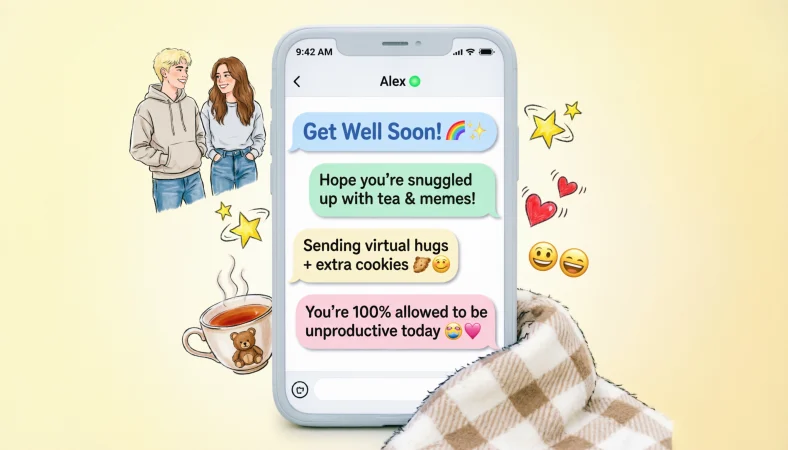
“Thanks! I’ll recover if the snacks cooperate.”
Use this when talking to a close friend.
Meaning: You are keeping the mood cheerful.
“Thank you! I’m accepting healing vibes immediately.”
Use this when someone sends positive wishes.
Meaning: You appreciate their encouragement.
“Thanks! I’m trying my best to become functional again.”
Use this when you are feeling tired.
Meaning: You are joking about returning to normal.
“Appreciate it! I’m currently sponsored by naps.”
Use this when you are resting a lot.
Meaning: You are playfully describing your recovery routine.
“Thank you! I’ll be back before you miss me too much.”
Use this with a close friend or someone you like.
Meaning: You are showing affection with a playful tease.
“Thanks! I’m taking my recovery very seriously, especially the snack part.”
Use this when you want a lighthearted reply.
Meaning: You are joking about your priorities while sick.
“Your message has been accepted with gratitude.”
Use this when you enjoy playful formal humor.
Meaning: You are thanking them in an intentionally exaggerated way.
“Thanks! Healing vibes successfully received.”
Use this when you want something short and fun.
Meaning: You are acknowledging their positive wishes.
“I appreciate it! I’m on a strict schedule of rest and absolutely nothing else.”
Use this when you are taking a proper break.
Meaning: You are playfully embracing your downtime.
“Thank you! I’ll try to make my comeback impressive.”
Use this when you want an energetic response.
Meaning: You are joking about returning to normal life.
“Thanks! I’m one good nap away from greatness.”
Use this when you are tired but optimistic.
Meaning: You are making recovery sound like a simple mission.
“Appreciate you! Your timing deserves bonus points.”
Use this when their message arrives at a perfect moment.
Meaning: You are playfully showing extra appreciation.
Heartfelt Get Well Soon Replies
“Thank you from the bottom of my heart.”
Use this when someone sends a deeply caring message.
Meaning: You are expressing sincere and heartfelt gratitude.
“Your kindness means so much to me right now.”
Use this when you are going through a difficult recovery.
Meaning: Their compassion is emotionally meaningful.
“Thank you for keeping me in your thoughts.”
Use this when someone remembers you while you are unwell.
Meaning: You appreciate their continued concern.
“I’m truly grateful for your thoughtful wishes.”
Use this when you want a sincere and mature response.
Meaning: You genuinely value their kindness.
“Thank you for reminding me that I’m cared for.”
Use this when their message provides emotional comfort.
Meaning: You appreciate the reassurance they gave you.
“Your message brought me comfort when I needed it most.”
Use this when you are having a particularly difficult day.
Meaning: Their words had a meaningful emotional impact.
“I’m so thankful you took the time to check on me.”
Use this when someone makes a special effort to reach out.
Meaning: You deeply appreciate their effort.
“Thank you for surrounding me with such kind thoughts.”
Use this when several people have been supportive.
Meaning: You are expressing gratitude for their collective encouragement.
“Your support has made this recovery easier.”
Use this when someone has consistently been there for you.
Meaning: Their presence has genuinely helped.
“I’ll remember your kindness long after I’m feeling better.”
Use this when someone gives you meaningful support.
Meaning: You want them to know their kindness will stay with you.
“Thank you for caring enough to reach out.”
Use this when their message feels especially thoughtful.
Meaning: You appreciate both their concern and effort.
“I’m genuinely grateful for your warm wishes.”
Use this when you want a heartfelt but concise response.
Meaning: You are sincerely thanking them for their support.
Short And Simple Get Well Soon Replies
“Thank you!”
Use this when you want the quickest natural response.
Meaning: You are simply expressing gratitude.
“Thanks so much!”
Use this when you want to sound a little warmer.
Meaning: You appreciate their message.
“I appreciate it!”
Use this when you want a friendly everyday response.
Meaning: You value their kind wishes.
“Thank you, that’s kind of you.”
Use this when responding politely.
Meaning: You are acknowledging their thoughtfulness.
“Thanks for checking in!”
Use this when someone asks about your recovery.
Meaning: You appreciate their personal concern.
“Thank you for the good wishes.”
Use this when you want a simple and respectful response.
Meaning: You are acknowledging their support.
“Thanks, I hope so too!”
Use this when you expect to recover soon.
Meaning: You share their hope for your recovery.
“Thank you, I’m getting better.”
Use this when you want to provide a brief update.
Meaning: You are showing that recovery is progressing.
“Thanks for caring!”
Use this with someone you know well.
Meaning: You appreciate their concern.
“Thank you, I really appreciate that.”
Use this when you want a slightly warmer reply.
Meaning: Their message genuinely matters to you.
“Thanks! I’m resting up.”
Use this when you want to explain what you are doing.
Meaning: You are recovering by taking time to rest.
“Thank you! Hopefully soon.”
Use this when you want a short optimistic response.
Meaning: You hope to feel better quickly.
Funny And Flirty Get Well Soon Replies
“Thanks! Maybe your texts are my new prescription.”
Use this when a crush sends a caring message.
Meaning: You are combining gratitude with playful flirting.
“I’ll recover faster if you keep being this sweet.”
Use this when someone you like sends supportive messages.
Meaning: You are encouraging their affection.
“Thank you! I think I need a cute visitor.”
Use this when you want to hint that you would like them to visit.
Meaning: You are playfully inviting their attention.
“Thanks. My doctor says I need more messages from you.”
Use this when you want a cheeky romantic reply.
Meaning: You are joking that their attention is good for you.
“I’m feeling better already. Coincidence? I think not.”
Use this after receiving a sweet text from someone you like.
Meaning: You are teasing them about having a positive effect on you.
“Thanks! I’ll accept healing hugs too.”
Use this when the relationship is comfortably flirty.
Meaning: You are playfully suggesting physical affection.
“Your message worked. When should I expect the next dose?”
Use this when you want to keep the flirtation going.
Meaning: You are asking for another message in a playful way.
“I appreciate it. You might actually be good medicine.”
Use this when you want a confident romantic hint.
Meaning: You are complimenting their emotional effect on you.
“Thanks! I suddenly have a reason to get better quickly.”
Use this when their attention motivates you.
Meaning: You are subtly suggesting that you want to see them.
“If you keep checking on me, I might never stop smiling.”
Use this when their messages make you happy.
Meaning: You are openly appreciating their attention.
“Thank you. I think your kindness deserves a coffee date.”
Use this when you want to turn gratitude into an invitation.
Meaning: You are playfully suggesting spending time together.
“Get well soon? I’m trying, but your message distracted me.”
Use this when you want a cheeky response.
Meaning: You are teasing them while showing romantic interest.
Respectful Replies For Teachers, Elders, And Family
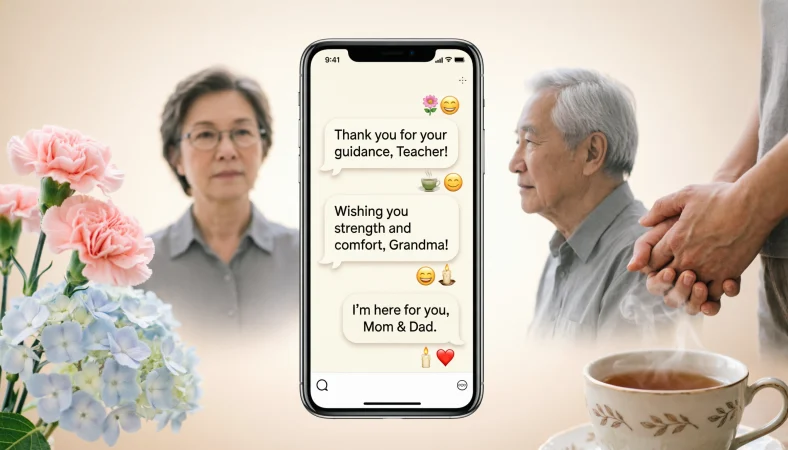
“Thank you so much for your kind wishes.”
Use this when responding to a teacher, elder, or respected relative.
Meaning: You are expressing sincere and respectful gratitude.
“Thank you for your thoughtful message. I really appreciate it.”
Use this when someone older or respected checks on you.
Meaning: You are responding warmly while maintaining respect.
“That is very kind of you. Thank you.”
Use this when you want a courteous and traditional response.
Meaning: You are recognizing their kindness respectfully.
“Thank you for keeping me in your thoughts.”
Use this when a family member or elder sends good wishes.
Meaning: You appreciate their concern and support.
“I truly appreciate your prayers and good wishes.”
Use this when someone expresses sincere support for your recovery.
Meaning: You are respectfully acknowledging their care.
“Thank you. I’m taking some rest and hoping to feel better soon.”
Use this when an elder asks about your condition.
Meaning: You are giving a reassuring and respectful update.
“Your kind words are greatly appreciated. Thank you.”
Use this when you want a polished response.
Meaning: You are showing sincere gratitude.
“Thank you for checking on me. It means a lot.”
Use this when someone personally follows up on your health.
Meaning: You appreciate their effort and concern.
“I’m very grateful for your thoughtful wishes.”
Use this when you want a respectful heartfelt reply.
Meaning: You genuinely value their kindness.
“Thank you. I hope to be feeling well again very soon.”
Use this when responding to a respected person.
Meaning: You are positive and courteous.
“Thank you for your kindness and encouragement.”
Use this when someone provides emotional support.
Meaning: You appreciate both their concern and encouragement.
“I sincerely appreciate you thinking of me.”
Use this when you want a mature and respectful response.
Meaning: You are expressing genuine appreciation.
FAQs
What Does “Get Well Soon” Mean?
“Get well soon” is a kind expression used to wish someone a quick and comfortable recovery from illness, injury, or feeling unwell.
What Is The Best Reply To “Get Well Soon”?
A simple “Thank you, I really appreciate it” works in almost any situation. You can also choose a funny, cute, flirty, or heartfelt reply depending on who sent it.
Can A Get Well Soon Reply Be Flirty?
Yes. If the message comes from a crush or romantic interest, playful responses such as “Your message is already making me feel better” can add a subtle flirtatious touch.
What Should I Say If I Do Not Feel Better Yet?
Keep it honest and simple. Try “Thank you, I’m still recovering, but I really appreciate you checking on me.”
Can I Use Humor In A Get Well Soon Reply?
Absolutely, especially with close friends and people who understand your sense of humor. Avoid jokes if the illness or situation is serious.
Is “Get Well Soon” Appropriate At Work?
Yes. It is a common and friendly workplace expression. A professional reply such as “Thank you for your kind wishes” is a safe choice.
What Is A Sweet Reply To “Get Well Soon”?
Try “Thank you for thinking of me. Your message really made my day a little brighter.” It sounds warm without being overly dramatic.
What Is A Funny Reply To “Get Well Soon”?
You could say, “Thanks! I’m accepting snacks and positive vibes.” It keeps the mood light while still showing appreciation.
How Do I Reply To “Get Well Soon” From My Crush?
A playful response works well, such as “I think hearing from you is already helping.” It shows interest without making things too intense.
Should I Always Say “Thank You”?
Not necessarily, but acknowledging someone’s kindness is usually the most natural response. You can make it funny, casual, sweet, or flirty depending on the situation.
How to reply to get well soon
A natural response is, “Thanks so much for checking in on me.” It feels personal without being overly formal.
What to reply for get well soon message
“Thank you so much! Your message genuinely made me smile.” This adds a little warmth instead of giving a standard one-word response.
How to reply to quick recovery
You can say, “Thank you, I appreciate that. I’m taking things slowly and focusing on getting better.” It sounds thoughtful and reassuring.
What should we reply to get well soon
A simple “Thank you for your kind wishes” is always appropriate. If you want something warmer, add, “I really appreciate you thinking of me.”
Conclusion
A good reply to “get well soon” does more than say thanks. It can show appreciation, keep a conversation going, make someone laugh, or even create a sweet moment with someone you like. Whether you prefer a short response, playful joke, professional message, heartfelt note, or flirty comeback, the key is choosing something that actually sounds like you.
Do not overthink every text. Sometimes a simple “Thank you, that means a lot” is perfect, while other moments call for a little humor or charm. Save this list for your next sick day, share it with a friend, and reuse your favorite lines whenever someone sends good wishes. Pick your mood, send your reply, and keep the conversation warm!




2 thoughts on “150+ Get Well Soon Replies That Are Funny, Sweet, Flirty & Perfect For Every Situation In 2026”