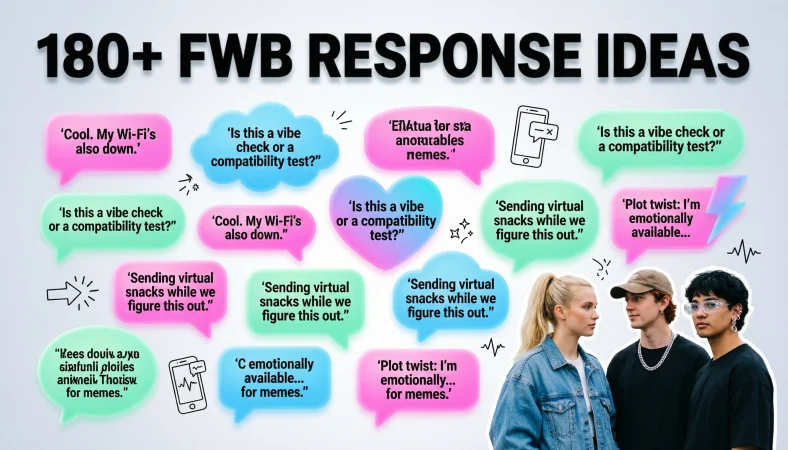
If someone sends you a friends-with-benefits request, your reply should match what you actually want, whether that is a yes, no, maybe, or simply more information. Keep it honest, confident, and respectful.
Top alternatives: “What exactly are you looking for?”, “I’m not interested in that,” “I might be open to it,” “Let’s talk about it first,” “I’d rather stay friends.”
Getting a friends-with-benefits request can turn a completely normal conversation into a tiny social plot twist. Suddenly, you are staring at your phone wondering whether to flirt, laugh, decline, or ask, “Wait, are you serious?” Whether the request comes through a late-night text, dating app, DM, or from someone you already know, your response matters.
The right answer can keep things comfortable, set clear boundaries, or open the door to an honest conversation. Knowing how to respond to FWB requests is less about having the perfect comeback and more about being clear about what you want. You can be funny without being confusing, flirty without promising anything, or direct without being rude. Here are plenty of text-ready responses for practically every mood and situation.
Funny Responses to FWB Requests
“Well, that escalated quickly.”
Use it when the request catches you completely off guard.
Meaning: You are surprised and using humor to lighten the moment.
“Was that on your 2026 bingo card?”
Use it when you want a playful reaction to an unexpected proposition.
Meaning: You find the timing hilariously unexpected.
“I was not prepared for this plot twist.”
Use it when the conversation suddenly takes a romantic turn.
Meaning: You are surprised but keeping things playful.
“And here I thought we were just talking about pizza.”
Use it when the request arrives during an ordinary conversation.
Meaning: You are amused by how quickly the topic changed.
“That was definitely not on my schedule today.”
Use it when you want to respond without immediately saying yes or no.
Meaning: You are caught pleasantly or awkwardly off guard.
“My inbox has entered its chaotic era.”
Use it for a funny DM response.
Meaning: You are treating the request as entertaining chaos.
“Okay, that took a turn.”
Use it when the request is unexpectedly direct.
Meaning: You noticed the sudden change in energy.
“Bold of you to assume I have a user manual.”
Use it when you want playful confidence.
Meaning: You are teasing them about making such a direct request.
“I need popcorn for this conversation.”
Use it when the exchange becomes unexpectedly interesting.
Meaning: You are enjoying the drama and surprise.
“Well, this is one way to make Tuesday interesting.”
Use it when the timing is hilariously random.
Meaning: You are amused by the unexpected message.
“That sentence definitely woke me up.”
Use it when the request arrives unexpectedly.
Meaning: You are surprised by the boldness.
“Should I consult the committee?”
Use it when you want to stall playfully.
Meaning: You are joking while deciding how you feel.
“You really skipped the tutorial, huh?”
Use it when someone jumps straight to the point.
Meaning: You are teasing their direct approach.
“Respectfully, that was a plot twist.”
Use it when you want humor without sounding too flirty.
Meaning: You acknowledge the unexpected request.
“Well, my notifications just got interesting.”
Use it when you want a lighthearted response.
Meaning: You are amused by what they sent.
Brutal Responses to FWB Requests
“Nope, that’s not my thing.”
Use it when you want to shut the idea down immediately.
Meaning: You are clearly declining.
“Hard pass.”
Use it when you prefer a short, confident refusal.
Meaning: You are completely uninterested.
“You picked the wrong person for that.”
Use it when you want a firm boundary.
Meaning: You do not see yourself accepting the arrangement.
“Absolutely not.”
Use it when you want zero ambiguity.
Meaning: Your answer is a definite no.
“That arrangement does not work for me.”
Use it when you want direct but mature wording.
Meaning: You are declining without insulting them.
“I’ll pass on that particular adventure.”
Use it when you want a softer but still firm no.
Meaning: You are politely rejecting the proposal.
“You miss 100% of the boundaries you ignore.”
Use it when someone is being overly pushy.
Meaning: You are calling out their approach.
“Cute proposal, wrong audience.”
Use it when you want a witty rejection.
Meaning: You recognize the confidence but are not interested.
“That’s going straight into the ‘no’ folder.”
Use it when you want humorous finality.
Meaning: You are firmly declining.
“I respect the confidence, but no.”
Use it when you want to reject the idea without attacking them.
Meaning: You appreciate the honesty but do not reciprocate.
“Not happening, but thanks for asking.”
Use it when you want closure.
Meaning: You are making your boundary clear.
“I think we want completely different things.”
Use it when the request reveals incompatible intentions.
Meaning: You are acknowledging the mismatch.
“That sounds like a terrible idea for me.”
Use it when you want a blunt but personal answer.
Meaning: You know the arrangement would not suit you.
“No chemistry is worth ignoring my boundaries.”
Use it when someone keeps pushing.
Meaning: You are prioritizing your comfort.
“I’m going to save us both some confusion and say no.”
Use it when you want a clean ending.
Meaning: You are preventing mixed signals.
Flirty Responses to FWB Requests
“Interesting proposal. What makes you think I’d say yes?”
Use it when you are intrigued but want them to explain themselves.
Meaning: You are playfully testing their confidence.
“That depends on how convincing you are.”
Use it when you genuinely want to flirt while keeping things open.
Meaning: You are teasing them about their chances.
“You certainly know how to make things interesting.”
Use it when their message surprises you in a good way.
Meaning: You are acknowledging the flirtatious energy.
“You’ve got some confidence, I’ll give you that.”
Use it when their boldness catches your attention.
Meaning: You find their approach amusing and attractive.
“That’s a bold request from someone I’m already curious about.”
Use it when there is mutual chemistry.
Meaning: You are signaling interest without committing.
“Maybe we should discuss the terms and conditions.”
Use it when you want playful banter.
Meaning: You are teasing while suggesting a serious conversation.
“You really decided to skip the small talk.”
Use it when they get straight to the point.
Meaning: You are amused by their directness.
“I’m listening. Continue.”
Use it when you want them to explain what they mean.
Meaning: You are intrigued and inviting more conversation.
“That proposal deserves at least a meeting.”
Use it when you want to keep things flirtatious.
Meaning: You are open to discussing the idea further.
“You make a surprisingly persuasive argument.”
Use it when their confidence is working on you.
Meaning: You are playfully acknowledging attraction.
“You definitely know how to get my attention.”
Use it when their message caught your interest.
Meaning: You are signaling that the flirtation landed.
“I’m not saying yes, but I’m definitely not ignoring that message.”
Use it when you want playful ambiguity.
Meaning: You are interested enough to keep talking.
“Now that’s an interesting invitation.”
Use it when you want to stay mysterious.
Meaning: You are intrigued without giving a final answer.
“You might want to make your case.”
Use it when you enjoy playful negotiation.
Meaning: You are challenging them to explain why you should consider it.
“Okay, you officially have my attention.”
Use it when the message genuinely sparks curiosity.
Meaning: You are inviting the flirtation to continue.
Polite Responses to FWB Requests
“I appreciate you being honest with me, but I’m not interested.”
Use it when you want a respectful rejection.
Meaning: You value their honesty while setting a boundary.
“Thanks for asking directly. I don’t think that’s for me.”
Use it when you want to keep the interaction mature.
Meaning: You are politely declining.
“I understand what you’re looking for, but I want something different.”
Use it when your relationship goals do not match.
Meaning: You are explaining the mismatch respectfully.
“I’d rather keep things platonic.”
Use it when you want to preserve a friendship.
Meaning: You are clearly choosing friendship.
“I’m flattered, but I’ll have to pass.”
Use it when you want a gentle refusal.
Meaning: You appreciate the interest but are declining.
“I respect your honesty, and I hope you respect my answer too.”
Use it when you need to reinforce a boundary.
Meaning: You expect mutual respect.
“I don’t think we’re looking for the same kind of connection.”
Use it when you want a thoughtful response.
Meaning: You see different expectations between you.
“That’s not something I’m comfortable with.”
Use it when the arrangement crosses your personal limits.
Meaning: You are prioritizing your comfort.
“I’d rather not mix friendship and romance.”
Use it when you want to keep a friendship uncomplicated.
Meaning: You prefer a clear separation.
“Thank you for trusting me enough to ask.”
Use it when you want to respond kindly despite declining.
Meaning: You appreciate their openness.
“I hope this doesn’t make things awkward between us.”
Use it when you want to maintain the friendship.
Meaning: You want things to remain comfortable.
“I’m going to be honest and say that isn’t what I want.”
Use it when clarity matters most.
Meaning: You are giving a straightforward answer.
“I appreciate the offer, but I’m going to decline.”
Use it in a mature, respectful exchange.
Meaning: You are saying no without unnecessary drama.
“I think it’s better if we stay friends.”
Use it when friendship matters more to you.
Meaning: You are choosing a platonic relationship.
“Thanks for being upfront. I just don’t feel the same way.”
Use it when you want to close the topic kindly.
Meaning: You are acknowledging their courage while declining.
Creative Responses to FWB Requests
“Let’s not turn a good story into a complicated sequel.”
Use it when you want to decline playfully.
Meaning: You think the arrangement could complicate things.
“I prefer my friendships without unexpected plotlines.”
Use it when you want a clever no.
Meaning: You want to keep the friendship simple.
“That proposal needs more chapters before I decide.”
Use it when you want more time to think.
Meaning: You are not ready to give an answer.
“Interesting concept, questionable execution.”
Use it when you want humorous skepticism.
Meaning: You find the idea intriguing but risky.
“My relationship department is currently closed.”
Use it when you want a funny refusal.
Meaning: You are not available for that kind of connection.
“That sounds like a subscription I didn’t sign up for.”
Use it when you want a playful rejection.
Meaning: You are not interested in the arrangement.
“I’m currently accepting applications for friendship only.”
Use it when you want to keep things platonic.
Meaning: You are clearly limiting the relationship.
“Let’s put that idea in the brainstorming folder.”
Use it when you need time to think.
Meaning: You are not making an immediate decision.
“That’s certainly a creative business proposal.”
Use it when you want to tease their request.
Meaning: You are treating the idea humorously.
“I think our friendship deserves better writing.”
Use it when you want a clever no.
Meaning: You do not want to complicate the friendship.
“My heart has rejected the terms and conditions.”
Use it when you want a playful decline.
Meaning: You are emotionally not interested.
“That storyline has too many possible plot holes.”
Use it when you are worried about complications.
Meaning: You see potential problems with the arrangement.
“I’m going to leave that idea in the drafts.”
Use it when you want a stylish rejection.
Meaning: You do not plan to pursue it.
“The friendship committee votes no.”
Use it when humor suits your relationship.
Meaning: You are giving a lighthearted refusal.
“Creative offer, but I’m choosing a different storyline.”
Use it when you want a confident response.
Meaning: You are choosing another direction.
Sarcastic Responses to FWB Requests
“Wow, romance really got a software update.”
Use it when you want to tease the modern dating situation.
Meaning: You find the request amusingly unexpected.
“Ah yes, the classic ‘let’s complicate everything’ package.”
Use it when you want sarcastic humor.
Meaning: You think FWB could create unnecessary complications.
“Bold strategy, let’s see how that works out.”
Use it when someone is being extremely confident.
Meaning: You are playfully skeptical.
“Very subtle. Truly groundbreaking.”
Use it when the request is especially direct.
Meaning: You are teasing them for their obviousness.
“Nothing says ‘simple’ like adding benefits to friendship.”
Use it when you want dry humor.
Meaning: You are joking about how complicated things can become.
“Ah, the friendship upgrade nobody asked for.”
Use it when you want a witty response.
Meaning: You are teasing the sudden change in relationship terms.
“Did the dating manual run out of pages?”
Use it when you want sarcastic banter.
Meaning: You are poking fun at their approach.
“Sure, because friendships are famously complication-free.”
Use it when you want obvious sarcasm.
Meaning: You doubt that mixing intimacy and friendship stays simple.
“What a wonderfully chaotic suggestion.”
Use it when you are amused but uncertain.
Meaning: You see the request as potentially messy.
“Ah yes, nothing could possibly go wrong.”
Use it when you want exaggerated sarcasm.
Meaning: You suspect the arrangement could create problems.
“That sounds suspiciously like a plot from a sitcom.”
Use it when you want playful sarcasm.
Meaning: You find the situation entertainingly complicated.
“Congratulations, you found a way to make friendship complicated.”
Use it when you want a teasing response.
Meaning: You are joking about the potential consequences.
“That’s one way to skip several relationship levels.”
Use it when someone gets very direct.
Meaning: You are amused by how quickly they moved.
“Nothing like a little emotional chaos to spice up the week.”
Use it when the timing is funny.
Meaning: You are joking about possible complications.
“Excellent proposal, terrible timing.”
Use it when you like the confidence but not the circumstances.
Meaning: You are declining because the timing is wrong.
Cute Responses to FWB Requests
“Aww, you really thought about this, huh?”
Use it when you want a soft, playful reaction.
Meaning: You find their honesty slightly adorable.
“You’re cute for being so honest.”
Use it when you want warmth without giving an answer.
Meaning: You appreciate their openness.
“That’s a surprisingly brave thing to ask.”
Use it when their honesty impresses you.
Meaning: You respect their courage.
“You really do know how to surprise me.”
Use it when you want a sweet response.
Meaning: You are amused by their unexpected request.
“Okay, that was kind of adorable.”
Use it when you want playful affection.
Meaning: You find their directness charming.
“You’ve got some serious confidence, little troublemaker.”
Use it when playful teasing fits your dynamic.
Meaning: You are affectionately teasing them.
“I’ll give you points for honesty.”
Use it when you appreciate their directness.
Meaning: You respect that they said what they wanted.
“That definitely made me smile.”
Use it when the message caught you pleasantly off guard.
Meaning: You enjoyed receiving the attention.
“You really came prepared with that question.”
Use it when you want light teasing.
Meaning: You are playfully acknowledging their boldness.
“That’s a cute way to create chaos.”
Use it when you find the situation amusing.
Meaning: You see the request as charming but potentially complicated.
“You’re making this decision unnecessarily interesting.”
Use it when you are genuinely considering your response.
Meaning: You are intrigued by the situation.
“Okay, I see where your mind is today.”
Use it when you want playful teasing.
Meaning: You understand what they are hinting at.
“You really caught me off guard with that one.”
Use it when you are pleasantly surprised.
Meaning: Their request was unexpected.
“That was brave, I’ll admit.”
Use it when you want to compliment their confidence.
Meaning: You respect their willingness to ask.
“You’re lucky that was a cute question.”
Use it when you want playful affection.
Meaning: You are teasing them while keeping the mood warm.
Dramatic Responses to FWB Requests
“My entire character arc just changed.”
Use it when the request completely surprises you.
Meaning: You are dramatically exaggerating your reaction.
“I need a moment to process this plot twist.”
Use it when you are genuinely caught off guard.
Meaning: You need time before answering.
“This is not how I expected today to end.”
Use it when the request arrives unexpectedly.
Meaning: You are surprised by the sudden turn.
“The universe has chosen chaos.”
Use it when the timing feels ridiculous.
Meaning: You are humorously accepting the unexpected situation.
“I was not emotionally prepared for this episode.”
Use it when you want dramatic humor.
Meaning: The request caught you completely off guard.
“Someone call the writers because this storyline is wild.”
Use it when the conversation suddenly gets complicated.
Meaning: You find the situation dramatically entertaining.
“My peaceful era lasted approximately five minutes.”
Use it when the request interrupts a calm day.
Meaning: You are joking about unexpected drama.
“I have questions, concerns, and possibly popcorn.”
Use it when you want to hear more.
Meaning: You are intrigued by the situation.
“Well, my day just became a season finale.”
Use it when the request is particularly unexpected.
Meaning: You are exaggerating how dramatic it feels.
“I need to stare dramatically out a window now.”
Use it when you want an exaggerated reaction.
Meaning: You are treating the request like a major romantic plot point.
“This is above my current emotional pay grade.”
Use it when you are unsure how to respond.
Meaning: You need time to process the situation.
“I fear we have entered the complicated chapter.”
Use it when you think things could get messy.
Meaning: You are warning about possible emotional complications.
“And suddenly, everything has lore.”
Use it when the request adds new meaning to the relationship.
Meaning: You think the situation has become much more interesting.
“I was having a normal day. Then you sent that.”
Use it when you want dramatic humor.
Meaning: Their message completely changed your mood.
“Well, this conversation deserves its own documentary.”
Use it when you want maximum playful drama.
Meaning: You find the situation unusually memorable.
Chill And Casual Responses to FWB Requests
“Hmm, I’m not sure. Let me think about it.”
Use it when you genuinely need time.
Meaning: You are keeping the answer open while deciding.
“I didn’t expect that, honestly.”
Use it when you are surprised but calm.
Meaning: The request caught you off guard.
“Okay, tell me what you mean by that.”
Use it when you want more clarity.
Meaning: You want to understand their expectations.
“I’m open to talking about it.”
Use it when you are willing to discuss the idea.
Meaning: You are interested in hearing more.
“Not really my vibe, to be honest.”
Use it when you want a casual no.
Meaning: You are not interested.
“I think I’d rather keep things as they are.”
Use it when you want to preserve the current relationship.
Meaning: You prefer the existing dynamic.
“I’m going to pass, but no hard feelings.”
Use it when you want an easygoing rejection.
Meaning: You are declining without creating tension.
“That’s something I’d need to think about.”
Use it when you do not want to answer immediately.
Meaning: You need time to decide.
“Let’s talk about what we both actually want.”
Use it when you want an honest discussion.
Meaning: You want clarity before making a decision.
“I’m not against talking about it.”
Use it when you are curious but undecided.
Meaning: You are open to discussion.
“Honestly, I’d rather not complicate things.”
Use it when you want to keep life simple.
Meaning: You prefer avoiding a potentially messy situation.
“I get where you’re coming from.”
Use it when you want to acknowledge their perspective.
Meaning: You understand the request without necessarily agreeing.
“That’s fair, but I need to know what you’re expecting.”
Use it when you want clarity.
Meaning: You want both people to understand the situation.
“I’m not sure that would work for me.”
Use it when you want a gentle decline.
Meaning: You do not think the arrangement fits you.
“Let’s not rush into anything.”
Use it when you want to slow things down.
Meaning: You want thoughtful communication before deciding.
Confident Responses to FWB Requests
“I know what I want, and that isn’t it.”
Use it when you want a strong boundary.
Meaning: You are confident about your decision.
“I’m comfortable saying no to things that don’t suit me.”
Use it when someone expects you to agree.
Meaning: You are prioritizing your own preferences.
“I appreciate the offer, but I know my limits.”
Use it when you want mature confidence.
Meaning: You understand and respect your boundaries.
“I’m not looking for that kind of arrangement.”
Use it when you want a straightforward answer.
Meaning: You are clearly declining.
“I don’t do situations that leave me confused.”
Use it when clarity matters to you.
Meaning: You want relationships with clear expectations.
“My standards include knowing exactly what I’m signing up for.”
Use it when you want to emphasize communication.
Meaning: You want clarity before agreeing to anything.
“I’m not afraid to say what works for me.”
Use it when you want assertive wording.
Meaning: You are comfortable expressing your needs.
“If I say yes, it’ll be because I genuinely want to.”
Use it when you want to emphasize personal choice.
Meaning: You will not agree because of pressure.
“I’m not interested in forcing a connection into a category.”
Use it when you want a thoughtful answer.
Meaning: You prefer relationships to develop naturally.
“I choose situations that feel right for me.”
Use it when you want a calm boundary.
Meaning: Your comfort guides your decisions.
“I respect the offer, but I respect myself more.”
Use it when you want a powerful rejection.
Meaning: You are putting your own boundaries first.
“I’m good with my answer, even if it’s not what you hoped for.”
Use it when someone keeps negotiating.
Meaning: Your decision is firm.
“You can ask, and I can say no.”
Use it when you need to reinforce consent and boundaries.
Meaning: You are reminding them that asking does not guarantee agreement.
“I’m interested in honesty, not pressure.”
Use it when you want to establish expectations.
Meaning: You want respectful communication.
“I know myself well enough to know when something isn’t for me.”
Use it when you want a mature response.
Meaning: You trust your own judgment.
Emotional Responses to FWB Requests
“I’m worried it could change our friendship.”
Use it when friendship is important to you.
Meaning: You are concerned about emotional consequences.
“I don’t think I could keep feelings out of it.”
Use it when you know you would become emotionally involved.
Meaning: You are being honest about your emotional boundaries.
“I care about you too much to pretend it would be simple.”
Use it when you have strong feelings for them.
Meaning: You believe the arrangement could become emotionally complicated.
“I need more emotional clarity before considering anything.”
Use it when you are uncertain about their intentions.
Meaning: You want to understand where both of you stand.
“I’m scared we’d lose what we already have.”
Use it when preserving the relationship matters.
Meaning: You fear the arrangement could damage your bond.
“That kind of connection is difficult for me to separate from feelings.”
Use it when you want to explain yourself honestly.
Meaning: You do not see intimacy as emotionally simple.
“I don’t want either of us to get hurt.”
Use it when you are concerned about consequences.
Meaning: You are thinking beyond the immediate attraction.
“I think I’d need something deeper than that.”
Use it when you want a meaningful relationship.
Meaning: You are looking for emotional commitment.
“I value what we have, and I’m afraid this could change it.”
Use it when you want to protect a friendship.
Meaning: You care about the existing relationship.
“I need to be honest about where my heart is.”
Use it when you have feelings involved.
Meaning: You want emotional honesty.
“I’m not sure casual would actually feel casual to me.”
Use it when you know emotions could complicate things.
Meaning: You understand your own emotional limits.
“I don’t want to pretend I wouldn’t catch feelings.”
Use it when you want direct emotional honesty.
Meaning: You know you could become attached.
“There’s more behind my answer than just yes or no.”
Use it when the situation feels emotionally complicated.
Meaning: You want room for a deeper conversation.
“I need to protect the friendship we already have.”
Use it when your bond matters deeply.
Meaning: You are choosing emotional security over experimentation.
“I care about you, so I want to be honest instead of confusing you.”
Use it when you want a compassionate response.
Meaning: You are choosing honesty to protect both people.
Sweet And Respectful Responses to FWB Requests
“Thank you for trusting me enough to be honest.”
Use it when you appreciate their openness.
Meaning: You value honest communication.
“I’m glad you felt comfortable asking me.”
Use it when you want to keep things respectful.
Meaning: You appreciate their vulnerability.
“Whatever happens, I hope we can keep respecting each other.”
Use it when the situation feels delicate.
Meaning: You want mutual respect regardless of the answer.
“I care about our friendship, so I want to think carefully.”
Use it when you need time.
Meaning: You do not want to make a rushed decision.
“I appreciate you telling me what you want.”
Use it when you value directness.
Meaning: You respect their honesty.
“I hope you know my answer isn’t a judgment of you.”
Use it when you are declining.
Meaning: You want them to understand that your boundary is personal.
“I’d rather be honest than give you mixed signals.”
Use it when you need to say no.
Meaning: You want to prevent misunderstandings.
“You deserve an honest answer from me.”
Use it when the conversation is serious.
Meaning: You are committed to clear communication.
“I hope we can talk about this without making it weird.”
Use it when friendship matters.
Meaning: You want to preserve comfort and trust.
“I respect you enough to tell you how I really feel.”
Use it when you want emotional honesty.
Meaning: You believe honesty is the kindest option.
“I’m grateful you asked instead of assuming.”
Use it when someone approached the topic respectfully.
Meaning: You appreciate that they respected your choice.
“Whatever we decide, communication comes first for me.”
Use it when you want to establish healthy expectations.
Meaning: You value transparency.
“I want both of us to feel comfortable with whatever happens.”
Use it when you are considering the idea.
Meaning: You want mutual comfort and agreement.
“I’d rather take our time than make things complicated.”
Use it when you need space.
Meaning: You want to avoid rushing into something.
“I appreciate the honesty, and I’ll give you the same honesty back.”
Use it when you want a mature response.
Meaning: You are promising to communicate openly.
Clever Responses to FWB Requests
“Before benefits, let’s discuss the friendship.”
Use it when you want to redirect the conversation toward expectations.
Meaning: You believe the friendship deserves consideration first.
“I have one question: what happens when feelings enter the chat?”
Use it when you are concerned about emotional complications.
Meaning: You want to address the biggest potential issue.
“Let’s define ‘friends’ before we define anything else.”
Use it when you want clarity.
Meaning: You want both people to understand the relationship.
“I’m more interested in the fine print than the headline.”
Use it when you want details before deciding.
Meaning: You want to understand the boundaries.
“Chemistry is easy. Communication is the real test.”
Use it when you want a mature but clever response.
Meaning: You value clear communication over attraction alone.
“The proposal is simple. The consequences might not be.”
Use it when you are skeptical.
Meaning: You understand that casual arrangements can become complicated.
“Let’s make sure we’re reading the same relationship manual.”
Use it when you want clarity about expectations.
Meaning: You want both people on the same page.
“I’m interested in intentions, not just invitations.”
Use it when you want to know what they genuinely want.
Meaning: You care about motivation and expectations.
“Before I answer, I need the FAQ section.”
Use it when you want playful clarification.
Meaning: You want more information before deciding.
“That depends entirely on the terms.”
Use it when you are open to discussing boundaries.
Meaning: You want to understand what the arrangement would involve.
“Let’s not confuse availability with compatibility.”
Use it when you want a thoughtful response.
Meaning: Being interested is not enough to make the arrangement work.
“A good connection needs more than a catchy label.”
Use it when you want to avoid rushing into an arrangement.
Meaning: You care about the actual relationship.
“I’m not signing anything without reading the emotional fine print.”
Use it when you want clever humor.
Meaning: You want to consider possible feelings and consequences.
“The real question is whether we can keep communication uncomplicated.”
Use it when you want an honest conversation.
Meaning: You want to assess whether both people can handle the arrangement maturely.
“Interesting offer. I’ll need to review the terms, conditions, and friendship clause.”
Use it when you want a witty but thoughtful reply.
Meaning: You are open to discussion but want clear boundaries.
FAQs
What does an FWB request mean?
FWB usually means “friends with benefits,” where two people want a friendship that also includes some form of physical or romantic intimacy without a traditional committed relationship.
What is a good response to an FWB request?
The best response depends on what you want. You can say, “I’m interested, but let’s talk about expectations,” or simply, “That isn’t something I want.”
How do I respond if I am interested?
Be honest and ask questions first. A simple response like, “I might be open to it, but I’d want us to talk about boundaries and expectations,” keeps things clear.
How do I reject an FWB request without being rude?
Keep it short and respectful. Try, “I appreciate you asking, but I’m not interested in that kind of arrangement.”
Can I use humor when responding to an FWB request?
Absolutely, if humor fits your relationship and you are not using it to hide a boundary. If you mean no, make sure your joke does not accidentally sound like a maybe.
What if I am unsure?
You do not have to answer immediately. Try, “I wasn’t expecting that, so let me think about it,” and give yourself time.
Can an FWB arrangement become emotional?
Yes, feelings can develop even when both people initially intend to keep things casual. Honest communication about expectations can help avoid unnecessary confusion.
What should I say if they keep pressuring me?
Be direct: “I’ve given you my answer, and I need you to respect it.” You never owe someone agreement because they asked.
Conclusion
Knowing how to respond to FWB requests does not require a perfect line or some legendary dating-app comeback. The best response is the one that actually reflects what you want. If you are interested, ask questions and make expectations clear.
Also If you are unsure, take your time. If you are not interested, a confident no is more than enough. Humor can make an awkward moment easier, while honesty keeps things from becoming confusing later.
Whether you choose sweet, dierce, flirty, casual, or clever, remember that your words set the tone. Save this list for the next unexpected message, share it with a friend who needs a comeback, and use whichever response feels most like you.





11 thoughts on “180+ Funny & Confident Replies To FWB Requests That Keep Things Comfortable In 2026”