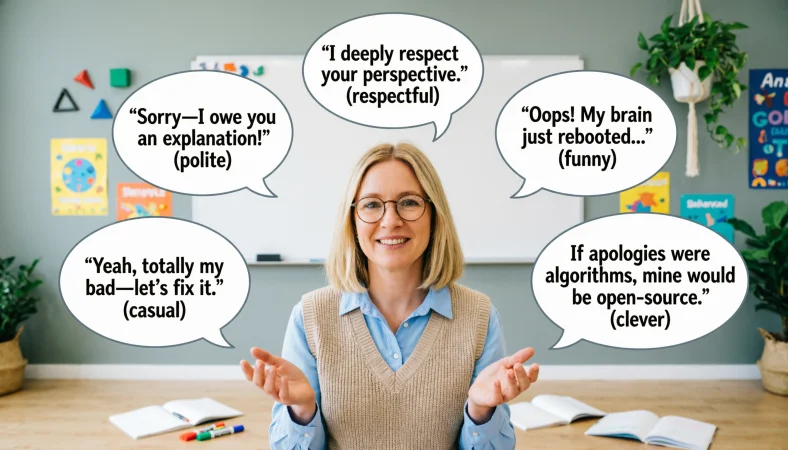
When a teacher says “sorry,” the best reply depends on the situation. You can keep it respectful with “No worries,” make it warm with “It’s completely okay,” or use a little humor when the classroom mood allows it.
Top alternatives: No worries, It’s completely okay, No problem at all, Please don’t worry about it, You’re absolutely fine
When a teacher says “sorry,” suddenly your brain forgets every polite sentence you have ever learned. Should you say “It’s okay”? “No worries”? Or just smile and hope the moment passes? Whether your teacher apologizes for being late, changing a deadline, misunderstanding something, or interrupting your work, having a natural response ready makes the situation much easier.
The right teacher says sorry replies can show respect without making the moment unnecessarily formal. In a classroom, school email, group chat, or even a quick conversation after class, your response can match the situation while keeping things comfortable.
You can choose something polite, warm, funny, casual, or confident depending on your relationship with the teacher and the seriousness of the situation. After all, even teachers have those “oops” moments.
Polite Teacher Says Sorry Replies
- No worries at all.
Use this when your teacher apologizes for a small inconvenience.
Meaning: You are politely saying that everything is fine. - It’s completely okay.
Use this when you want to reassure your teacher.
Meaning: You are accepting the apology warmly. - Please don’t worry about it.
Use this when the issue is minor.
Meaning: You are letting your teacher know there is no need to feel bad. - No problem, teacher.
Use this for a simple classroom response.
Meaning: You are politely accepting the apology. - That’s perfectly fine.
Use this when you want to sound calm and respectful.
Meaning: You are confirming that you are not upset. - It’s alright, no need to apologize.
Use this when the situation is genuinely insignificant.
Meaning: You are reassuring your teacher. - No need to say sorry.
Use this when you want to keep the interaction comfortable.
Meaning: You are telling them that the apology is unnecessary. - It’s absolutely fine.
Use this when you want a polite and friendly response.
Meaning: You are showing that you have no hard feelings. - Not a problem at all.
Use this after a small mistake or delay.
Meaning: You are making it clear that everything is okay. - That’s okay, I understand.
Use this when your teacher explains why they apologized.
Meaning: You are showing patience and understanding. - No worries, it happens.
Use this for an ordinary mistake.
Meaning: You are normalizing the situation without being dismissive. - Everything is fine.
Use this when your teacher seems genuinely concerned.
Meaning: You are reassuring them that there is no issue.
Friendly Teacher Says Sorry Replies
- No worries, you’re good!
Use this with a teacher who has a relaxed classroom style.
Meaning: You are responding warmly and casually. - It’s all good!
Use this after a minor classroom mix-up.
Meaning: You are saying there is no problem. - You’re totally fine.
Use this when your teacher seems worried about inconveniencing you.
Meaning: You are giving friendly reassurance. - Don’t worry about it!
Use this when the apology is clearly unnecessary.
Meaning: You are encouraging them to move on. - All good, no stress.
Use this with a teacher who appreciates casual language.
Meaning: You are keeping the mood relaxed. - No big deal!
Use this after a small mistake.
Meaning: You are showing that you are not bothered. - You’re okay, honestly.
Use this when you want to sound especially reassuring.
Meaning: You are telling them there is nothing to feel guilty about. - It happens to everyone!
Use this when your teacher makes an ordinary mistake.
Meaning: You are reminding them that mistakes are normal. - No problem whatsoever!
Use this for an upbeat response.
Meaning: You are making your acceptance clear. - You’re good, teacher!
Use this with a teacher you have a comfortable relationship with.
Meaning: You are offering friendly reassurance. - Nothing to worry about!
Use this when your teacher seems embarrassed.
Meaning: You are helping them feel comfortable. - We’re all good here!
Use this in a relaxed classroom environment.
Meaning: You are saying there is no tension.
Funny Teacher Says Sorry Replies
- Apology accepted, teacher. Your record is still clean.
Use this when your teacher makes a harmless mistake.
Meaning: You are jokingly treating the apology like an official case. - I’ll allow it this time.
Use this with a teacher who enjoys playful humor.
Meaning: You are jokingly pretending to be the authority. - Fine, but I’m adding this to the class history.
Use this after a funny classroom mistake.
Meaning: You are playfully exaggerating the importance of the moment. - Accepted. Please carry on with the lesson.
Use this when you want to sound mock-formal.
Meaning: You are turning a simple apology into a humorous announcement. - No worries, teacher. The classroom survives another day.
Use this after a small mix-up.
Meaning: You are using playful exaggeration to lighten the mood. - It’s okay, your apology has been approved.
Use this when your teacher appreciates jokes.
Meaning: You are pretending to officially authorize their apology. - Apology accepted. No detention for you.
Use this with a teacher who enjoys classroom banter.
Meaning: You are humorously reversing the usual student-teacher dynamic. - All good. I won’t tell the principal.
Use this only when the situation is clearly playful.
Meaning: You are jokingly pretending the mistake is a secret offense. - You’re forgiven, professor.
Use this with a teacher who enjoys light teasing.
Meaning: You are playfully giving them forgiveness. - Your apology has been successfully submitted.
Use this after a small classroom mix-up.
Meaning: You are turning the moment into a humorous administrative process. - No worries. The lesson remains legendary.
Use this after something amusing happens during class.
Meaning: You are keeping the atmosphere positive and playful. - It’s fine. We’ll pretend that never happened.
Use this after an innocent funny mistake.
Meaning: You are jokingly suggesting everyone move on.
Respectful Teacher Says Sorry Replies
- There is absolutely no need to apologize.
Use this when your teacher is apologizing for something minor.
Meaning: You are responding with respect and reassurance. - I completely understand.
Use this when there is a reasonable explanation behind the apology.
Meaning: You are showing maturity and patience. - Thank you for explaining.
Use this when your teacher gives context for the situation.
Meaning: You are acknowledging their effort to communicate. - I appreciate you letting me know.
Use this when the apology involves a change or delay.
Meaning: You are showing respect for their communication. - That’s understandable.
Use this when the circumstances are reasonable.
Meaning: You are expressing empathy. - Please don’t feel bad about it.
Use this when your teacher seems genuinely concerned.
Meaning: You are offering emotional reassurance. - I understand, and it’s completely fine.
Use this when you want to sound thoughtful.
Meaning: You are combining empathy with acceptance. - Thank you for apologizing.
Use this when the apology concerns something meaningful.
Meaning: You are respectfully acknowledging their accountability. - I appreciate your honesty.
Use this when your teacher openly admits a mistake.
Meaning: You are valuing their transparency. - It’s okay, I understand the situation.
Use this when there are understandable circumstances involved.
Meaning: You are responding maturely. - No problem, and thank you for clarifying.
Use this when your teacher explains what happened.
Meaning: You are showing appreciation for the clarification. - I understand completely, so please don’t worry.
Use this when your teacher appears uncomfortable.
Meaning: You are respectfully helping them feel at ease.
Professional Teacher Says Sorry Replies
- No problem at all. Thank you for letting me know.
Use this in a school email or formal classroom exchange.
Meaning: You are acknowledging the message professionally. - That’s completely understandable.
Use this when your teacher apologizes for a scheduling issue.
Meaning: You are responding professionally and calmly. - No worries, I appreciate the update.
Use this when receiving a change or delay.
Meaning: You are accepting the situation while acknowledging the communication. - Thank you for the clarification.
Use this when an apology comes with an explanation.
Meaning: You are keeping your response respectful and professional. - Please don’t worry, I understand.
Use this when you want to sound courteous.
Meaning: You are offering reassurance without being overly casual. - That is perfectly fine.
Use this in formal communication.
Meaning: You are politely accepting the apology. - I understand completely. Thank you for explaining.
Use this when responding to a detailed apology.
Meaning: You are showing maturity and appreciation. - No issue at all.
Use this when the situation is minor.
Meaning: You are keeping the response brief and professional. - I appreciate you informing me.
Use this when your teacher gives an important update.
Meaning: You are acknowledging their communication respectfully. - Understood, and thank you for letting me know.
Use this when responding to a schedule or assignment change.
Meaning: You are confirming that you understand. - That’s quite alright.
Use this when you want a polished response.
Meaning: You are politely accepting the apology. - No problem, I completely understand.
Use this when you want a professional but warm reply.
Meaning: You are showing patience and understanding.
Short Teacher Says Sorry Replies
- No worries.
Use this when you need a quick response.
Meaning: You are saying everything is fine. - It’s okay.
Use this for a simple classroom interaction.
Meaning: You are accepting the apology. - No problem.
Use this after a minor inconvenience.
Meaning: You are keeping things easygoing. - All good.
Use this in a relaxed setting.
Meaning: You are saying there is no issue. - You’re fine.
Use this when your teacher seems worried.
Meaning: You are reassuring them. - Totally okay.
Use this in casual communication.
Meaning: You are showing acceptance. - It’s alright.
Use this when you want a neutral response.
Meaning: You are calmly accepting the apology. - No issue.
Use this when you want to stay concise.
Meaning: You are saying the matter is settled. - You’re good.
Use this with a relaxed teacher.
Meaning: You are offering friendly reassurance. - All set.
Use this when the problem has already been resolved.
Meaning: You are confirming that everything is fine. - No stress.
Use this with someone who uses casual language.
Meaning: You are keeping the situation relaxed. - Absolutely fine.
Use this when you want a short but polite reply.
Meaning: You are clearly accepting the apology.
Cute Teacher Says Sorry Replies
- Aww, it’s okay!
Use this when your teacher apologizes for something very minor.
Meaning: You are responding warmly and reassuringly. - No worries, teacher! 😊
Use this in a friendly classroom setting.
Meaning: You are keeping the response kind and cheerful. - You’re totally forgiven.
Use this when your teacher makes a harmless mistake.
Meaning: You are playfully showing there are no hard feelings. - It’s okay, we still love the lesson.
Use this after a funny or minor classroom moment.
Meaning: You are keeping the mood positive. - Don’t feel bad about it!
Use this when your teacher seems embarrassed.
Meaning: You are offering gentle reassurance. - No apology needed.
Use this when the issue is insignificant.
Meaning: You are letting them know everything is fine. - You’re okay, promise.
Use this when you want to sound extra reassuring.
Meaning: You are warmly confirming that there is no problem. - Everything is still good!
Use this after a small misunderstanding.
Meaning: You are keeping things positive. - It’s all sunshine from here.
Use this when you want a cheerful response.
Meaning: You are playfully saying the situation is resolved. - No worries, we’re still friends.
Use this with a teacher who appreciates harmless humor.
Meaning: You are jokingly reassuring them. - You are officially forgiven. 😊
Use this for a playful classroom moment.
Meaning: You are making the apology feel lighthearted. - It’s okay, teacher. We’ve got this.
Use this when you want to encourage your teacher.
Meaning: You are showing support and positivity.
Clever Teacher Says Sorry Replies
- No apology needed when there is understanding.
Use this when you want a thoughtful response.
Meaning: You are emphasizing empathy. - It happens, and we move forward.
Use this after a minor mistake.
Meaning: You are showing maturity. - No harm done.
Use this when the mistake had little impact.
Meaning: You are saying the situation caused no real problem. - Consider it settled.
Use this when the issue has been resolved.
Meaning: You are confidently closing the matter. - Mistakes happen. No worries.
Use this when your teacher apologizes for an error.
Meaning: You are normalizing human mistakes. - All understood and all forgiven.
Use this when you want a polished but playful response.
Meaning: You are accepting the apology completely. - No problem, lesson learned.
Use this after an amusing classroom mistake.
Meaning: You are turning the situation into something positive. - Nothing to apologize for.
Use this when the apology is unnecessary.
Meaning: You are reassuring your teacher. - Understood. We can move on.
Use this when you want to close the conversation calmly.
Meaning: You are showing maturity and acceptance. - No harm, no foul.
Use this in a relaxed setting.
Meaning: You are saying the mistake does not matter. - It’s all part of the learning process.
Use this after a harmless classroom mistake.
Meaning: You are putting the situation into a positive perspective. - Apology accepted, situation resolved.
Use this when you want a clever, concise response.
Meaning: You are confirming that there is no remaining issue.
Chill And Casual Teacher Says Sorry Replies
- No worries, teacher.
Use this with a relaxed teacher.
Meaning: You are casually accepting the apology. - You’re good!
Use this after a tiny mistake.
Meaning: You are telling your teacher there is no problem. - It’s all good.
Use this when the classroom atmosphere is informal.
Meaning: You are keeping things relaxed. - No stress!
Use this when your teacher uses casual language.
Meaning: You are reassuring them. - We’re good.
Use this when the issue is already resolved.
Meaning: You are confirming that there is no tension. - Don’t even worry about it.
Use this after a very small inconvenience.
Meaning: You are saying the apology is unnecessary. - It’s fine, honestly.
Use this when your teacher keeps apologizing.
Meaning: You are trying to reassure them. - No biggie.
Use this only in a very relaxed setting.
Meaning: You are saying the issue is minor. - All sorted.
Use this after the situation is fixed.
Meaning: You are confirming that everything is handled. - No drama, teacher.
Use this with a teacher who enjoys casual humor.
Meaning: You are keeping the situation light. - You’re totally okay.
Use this when your teacher seems concerned.
Meaning: You are offering reassurance. - It happens!
Use this when the mistake is ordinary.
Meaning: You are reminding them that mistakes are normal.
Warm Teacher Says Sorry Replies
- Please don’t worry, I understand.
Use this when your teacher sincerely apologizes.
Meaning: You are showing empathy. - Thank you for saying that. It’s okay.
Use this when you appreciate their apology.
Meaning: You are acknowledging their effort while reassuring them. - I appreciate the apology, but honestly, it’s fine.
Use this when the issue is minor.
Meaning: You are being gracious and understanding. - You don’t need to feel bad about it.
Use this when your teacher seems uncomfortable.
Meaning: You are helping them feel at ease. - I completely understand, so please relax.
Use this when you want to calm the situation.
Meaning: You are offering reassurance. - It’s okay, everyone has off moments.
Use this when your teacher makes an innocent mistake.
Meaning: You are showing compassion. - I understand what happened. No worries.
Use this when your teacher explains the situation.
Meaning: You are accepting their explanation. - It’s genuinely okay.
Use this when you want to sound sincere.
Meaning: You are emphasizing that there are no hard feelings. - Thank you for being honest about it.
Use this when your teacher admits a mistake.
Meaning: You are appreciating their honesty. - No worries, we can move forward.
Use this when the issue has been resolved.
Meaning: You are encouraging everyone to move on. - I appreciate you taking responsibility.
Use this when the apology concerns something meaningful.
Meaning: You are recognizing their accountability. - It’s all okay now.
Use this when you want to close the matter warmly.
Meaning: You are confirming that the situation is resolved.
Confident Teacher Says Sorry Replies
- No worries, everything is handled.
Use this when you want to sound composed.
Meaning: You are confidently saying there is no problem. - You’re completely fine.
Use this when your teacher seems concerned.
Meaning: You are offering confident reassurance. - I understand, and there’s no issue.
Use this in a mature classroom interaction.
Meaning: You are calmly accepting the situation. - No problem. We can move forward.
Use this when you want to close the topic.
Meaning: You are confidently focusing on what comes next. - It’s fine. No explanation needed.
Use this when the situation is obvious and minor.
Meaning: You are saying the matter does not require further discussion. - Understood. Everything is okay.
Use this after receiving an explanation.
Meaning: You are confirming your understanding. - No need to worry about it.
Use this when your teacher appears uneasy.
Meaning: You are confidently reassuring them. - I’m completely fine with it.
Use this when you want to make your position clear.
Meaning: You are directly confirming acceptance. - There’s no problem on my end.
Use this when you want to sound calm and mature.
Meaning: You are clarifying that you are not upset. - It’s already sorted.
Use this when the issue has been fixed.
Meaning: You are confirming that no further action is needed. - No concerns from me.
Use this in a more formal classroom setting.
Meaning: You are professionally indicating that everything is fine. - All understood and accepted.
Use this when you want a confident closing response.
Meaning: You are confirming both understanding and acceptance.
Understanding Teacher Says Sorry Replies
- I understand completely.
Use this when there is a reasonable explanation.
Meaning: You are showing empathy and patience. - That makes sense. No worries.
Use this when your teacher explains the situation.
Meaning: You are accepting their explanation. - I understand why that happened.
Use this when circumstances caused the issue.
Meaning: You are showing thoughtful understanding. - It’s okay, these things happen.
Use this after an ordinary mistake.
Meaning: You are normalizing the situation. - I completely get it.
Use this in a casual setting.
Meaning: You are saying you understand without judgment. - No worries, I see what happened.
Use this when your teacher has explained a mistake.
Meaning: You are acknowledging the situation calmly. - I understand, so please don’t worry.
Use this when your teacher seems concerned.
Meaning: You are combining empathy with reassurance. - That’s understandable.
Use this when the reason behind the apology is reasonable.
Meaning: You are showing acceptance. - I appreciate the explanation.
Use this when context was needed.
Meaning: You are acknowledging their communication. - It’s completely understandable.
Use this when the situation was outside their control.
Meaning: You are expressing patience. - I see your point, and it’s okay.
Use this when there has been a misunderstanding.
Meaning: You are showing that you understand their perspective. - I understand, and there are no hard feelings.
Use this when the teacher seems worried about your reaction.
Meaning: You are clearly offering reassurance.
Playful Teacher Says Sorry Replies
- Apology accepted, classroom edition.
Use this when the atmosphere is relaxed.
Meaning: You are making the apology playful. - All forgiven, teacher. Carry on.
Use this when your teacher appreciates harmless humor.
Meaning: You are jokingly giving permission to continue. - The class has voted, and you’re forgiven.
Use this after a funny mistake.
Meaning: You are playfully pretending the class made the decision. - No worries, your apology passed the test.
Use this with a teacher who likes jokes.
Meaning: You are turning the apology into a playful classroom test. - You’re cleared of all classroom charges.
Use this after a harmless mix-up.
Meaning: You are jokingly treating the mistake like an official case. - Case closed, teacher.
Use this when you want a short humorous reply.
Meaning: You are saying the matter is finished. - Your apology has earned full marks.
Use this when your teacher enjoys wordplay.
Meaning: You are playfully connecting the apology to school. - No worries, professor. The lesson continues.
Use this after a funny interruption.
Meaning: You are keeping the atmosphere upbeat. - You are officially forgiven by the classroom committee.
Use this when joking with friends around.
Meaning: You are creating playful mock authority. - Apology accepted with extra credit.
Use this when your teacher appreciates school-related humor.
Meaning: You are playfully turning the apology into a grading joke. - No penalty this time.
Use this after a very small mistake.
Meaning: You are humorously pretending to grade their behavior. - All good. The bell has officially saved you.
Use this when the class is ending after a funny moment.
Meaning: You are adding a playful classroom reference.
Grateful Teacher Says Sorry Replies
- Thank you for apologizing. It’s completely okay.
Use this when you want to acknowledge the apology respectfully.
Meaning: You are appreciating their effort while offering reassurance. - I appreciate you saying that.
Use this when your teacher sincerely apologizes.
Meaning: You are recognizing their honesty. - Thank you for explaining what happened.
Use this when the apology includes context.
Meaning: You are showing appreciation for clear communication. - I appreciate your honesty, and there’s no problem.
Use this after a teacher admits an error.
Meaning: You are valuing their transparency. - Thank you for letting me know. I understand.
Use this when there has been a schedule or assignment change.
Meaning: You are responding maturely and respectfully. - I appreciate the apology. Everything is fine.
Use this when the issue has been resolved.
Meaning: You are acknowledging their apology without holding onto the problem. - Thanks for being straightforward about it.
Use this in a comfortable classroom environment.
Meaning: You are appreciating their directness. - I understand, and I appreciate you telling me.
Use this when your teacher explains an unexpected situation.
Meaning: You are showing empathy and gratitude. - Thank you for being considerate. No worries.
Use this when your teacher is concerned about your inconvenience.
Meaning: You are acknowledging their thoughtfulness. - I appreciate you taking the time to explain.
Use this when the situation requires context.
Meaning: You are showing respect for their communication. - Thank you, but honestly, it’s okay.
Use this when you want to accept the apology warmly.
Meaning: You are saying their apology is appreciated but unnecessary. - Thanks for checking in. Everything is fine.
Use this when your teacher follows up after a mistake.
Meaning: You are reassuring them while appreciating their concern.
FAQs
What should I say when my teacher says sorry?
Simple replies such as “No worries,” “It’s completely okay,” “No problem,” or “I understand” usually work well.
What is the most respectful reply to a teacher saying sorry?
“I completely understand. Thank you for explaining.” is respectful, mature, and appropriate for most classroom situations.
Can I be funny when a teacher says sorry?
Yes, if your teacher has a relaxed personality and the situation is minor. Try something light such as “Apology accepted, teacher” or “I’ll allow it this time.”
What if my teacher apologizes for being late?
You can say “No worries, I understand” or “It’s completely fine.” If the delay affected something important, a more professional response may be better.
What if a teacher apologizes for changing a deadline?
A polite response like “Thank you for letting us know. I understand” works well, especially if the change is communicated through email or a class platform.
Should I say “It’s okay” to my teacher?
Yes. “It’s okay” is polite and natural when the teacher is apologizing for something minor. For formal situations, “I understand, thank you for explaining” sounds more polished.
Can I say “No worries” to a teacher?
Yes, particularly in a casual classroom environment. If your school culture is more formal, “No problem” or “I understand” may be a safer choice.
What if I am actually upset about what happened?
You do not have to pretend everything is fine. You can respectfully say, “I appreciate the apology, but I would like to talk about what happened.”
What if I do not think my teacher needs to apologize?
You can say “There’s no need to apologize” or “It’s completely understandable.” This reassures them without making the situation awkward.
Is “You’re forgiven” appropriate for a teacher?
It can be funny with a teacher who enjoys playful classroom banter, but it may sound too casual in a formal setting. Use your judgment based on your relationship.
Conclusion
Knowing what to say when a teacher apologizes can make an ordinary classroom moment feel much more natural. Whether you choose a respectful “I understand,” a friendly “No worries,” or a playful “Apology accepted,” the best response depends on the situation and your relationship with the teacher. A thoughtful reply shows maturity, confidence, and good communication skills without making a small mistake feel bigger than it needs to be.
Keep a few of these responses ready for classroom conversations, school messages, emails, and unexpected moments. Save this list for later, share it with a classmate, and pick the response that sounds most like you. Keep it respectful, keep it natural, and make every reply count!







3 thoughts on “150+ Teacher Says Sorry Replies That Are Respectful, Funny & Perfect For Every Situation In 2026”