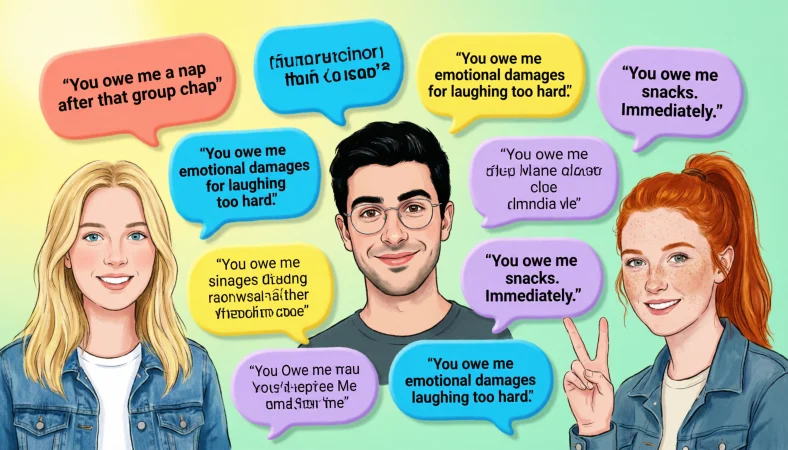
When someone says “you owe me,” the perfect response depends on whether they are joking, flirting, reminding you about a favor, or genuinely asking for something. These funny replies keep things light while giving you plenty of personality.
“Put it on my tab,” “I accept payment plans,” “Do you take exposure?”, “I owe you one… eventually,” “Send me the invoice”
“You owe me” can turn an innocent favor into a full-blown financial negotiation in about three seconds. Maybe your friend covered your coffee, your sibling helped you out, your crush did you a favor, or someone is teasing you over text. Suddenly, you are apparently carrying an emotional debt with interest. Knowing the right response can keep the moment playful instead of awkward.
That is why funny replies to “you owe me” are so useful. A clever comeback can make your friend laugh, add a little flirtiness to a crush’s message, or gently remind someone that favors are not exactly a courtroom contract.
Whether you are texting, chatting in DMs, joking at work, or talking with friends, the right reply makes the exchange more memorable. Pick your level of humor, drop the line, and let the imaginary accounting department handle the rest.
Funny Responses
“Put it on my tab.”
Use this when a friend jokingly reminds you about a small favor.
Meaning: You are playfully admitting the debt without taking it too seriously.
“I accept payment plans.”
Use this when someone expects you to return a favor immediately.
Meaning: You turn their demand into a silly financial arrangement.
“Do you take exposure?”
Use this when someone jokingly asks what you owe them.
Meaning: You are humorously offering the least useful form of payment.
“I owe you one… eventually.”
Use this when you want to acknowledge the favor with a playful delay.
Meaning: You are grateful but joking about your questionable timing.
“Send me the invoice.”
Use this when someone dramatically keeps track of every favor.
Meaning: You exaggerate the situation as if they run a business.
“Adding it to my growing list of problems.”
Use this when you want a relatable, self-deprecating joke.
Meaning: You are pretending the favor is another item on your imaginary stress list.
“Can I pay in compliments?”
Use this when the favor was small and the mood is playful.
Meaning: You jokingly offer praise instead of actual repayment.
“Fine, but I want a receipt.”
Use this when a friend is keeping score.
Meaning: You play along while teasing them about their bookkeeping.
“My accountant will contact you.”
Use this when someone makes their request sound very serious.
Meaning: You turn a casual favor into an exaggerated financial matter.
“I was hoping you’d forget.”
Use this when someone catches you trying to escape repayment.
Meaning: You admit your playful attempt at avoiding the debt.
“Noted in the friendship ledger.”
Use this when friends keep track of favors.
Meaning: You jokingly treat friendship like an accounting system.
“I’ll repay you in good vibes.”
Use this when the favor does not really require serious repayment.
Meaning: You offer cheerful energy instead of a literal payment.
Witty Responses
“Interesting. I thought friendship came with unlimited credit.”
Use this when a close friend demands repayment.
Meaning: You humorously suggest friendship should include free favors.
“That sounds like a future-me problem.”
Use this when someone asks you to repay them right away.
Meaning: You jokingly postpone responsibility.
“I’ll circle back with the finance department.”
Use this at work or in a playful professional setting.
Meaning: You make a tiny favor sound like a corporate transaction.
“Please submit your claim in writing.”
Use this when someone is being dramatically persistent.
Meaning: You tease them by treating their request like official paperwork.
“Your request has been received and ignored.”
Use this with someone who enjoys sarcastic humor.
Meaning: You playfully pretend to reject their claim.
“That debt is currently under review.”
Use this when you want a clever excuse.
Meaning: You jokingly act like repayment requires an investigation.
“I’m waiting for the budget to recover.”
Use this after a friend asks for something in return.
Meaning: You turn a simple favor into a budget crisis.
“Please allow three to five business days.”
Use this when someone wants repayment instantly.
Meaning: You humorously give yourself an absurdly long deadline.
“I’ll pay you in premium friendship points.”
Use this with a friend who likes playful banter.
Meaning: You invent a fictional currency for your relationship.
“That invoice looks suspicious.”
Use this when someone exaggerates what you supposedly owe.
Meaning: You jokingly question their accounting.
“I believe the debt expired.”
Use this when someone brings up an old favor.
Meaning: You pretend their claim has passed its expiration date.
“Can we negotiate the interest rate?”
Use this when someone says your debt has grown.
Meaning: You turn the joke into a fake financial negotiation.
Sarcastic Responses
“Oh no, not the friendship bill.”
Use this when someone starts listing favors.
Meaning: You sarcastically pretend friendship has become a paid service.
“Should I call my lawyer?”
Use this when someone sounds unusually serious.
Meaning: You exaggerate the situation for comic effect.
“I’ll lose sleep over this.”
Use this when the debt is obviously tiny.
Meaning: You mock the dramatic importance of their request.
“This is a shocking development.”
Use this when you already knew you owed them.
Meaning: You sarcastically pretend their reminder is unexpected news.
“Alert the authorities.”
Use this when someone dramatically demands repayment.
Meaning: You make their tiny complaint sound like a major incident.
“I was not prepared for these allegations.”
Use this when a friend catches you avoiding a favor.
Meaning: You jokingly frame their reminder as an accusation.
“How will I ever recover from this?”
Use this when the favor was extremely minor.
Meaning: You exaggerate your emotional reaction for humor.
“My legal team is reviewing your claim.”
Use this when someone insists you owe them something.
Meaning: You use mock seriousness to keep the exchange funny.
“I deny all allegations.”
Use this when you want a playful refusal.
Meaning: You jokingly act completely innocent.
“This case has no evidence.”
Use this when someone cannot prove what you supposedly owe.
Meaning: You pretend their favor is being argued in court.
“I would like to plead friendship.”
Use this with someone close enough to appreciate sarcasm.
Meaning: You jokingly use friendship as your defense.
“Your complaint has been forwarded to nobody.”
Use this when someone keeps teasing you.
Meaning: You humorously pretend their complaint is going nowhere.
Flirty Responses
“Maybe I can make it up to you over coffee.”
Use this when a crush says you owe them a favor.
Meaning: You turn repayment into a subtle invitation.
“What if I pay you with a date?”
Use this when the chemistry between you is already obvious.
Meaning: You make the debt playful and romantic.
“Careful, I might enjoy owing you.”
Use this when you want a confident flirty comeback.
Meaning: You suggest you like having a reason to keep interacting.
“Tell me what I owe you, handsome.”
Use this when you want a direct, playful flirt.
Meaning: You add warmth and attraction to the exchange.
“I can think of a few ways to repay you.”
Use this when the conversation is clearly flirtatious.
Meaning: You leave the repayment intentionally mysterious.
“I’ll pay you back with my attention.”
Use this when texting someone you like.
Meaning: You make your attention sound like a fun reward.
“Maybe you should let me take you out.”
Use this when you want to turn the favor into a date idea.
Meaning: You suggest repayment while showing romantic interest.
“You keep helping me and I’ll keep owing you.”
Use this when you want playful romantic tension.
Meaning: You tease them about creating more reasons to see each other.
“I hope you accept charming company as payment.”
Use this when you want a polished flirt.
Meaning: You offer your company as a playful form of repayment.
“I’ll repay you with dinner and excellent company.”
Use this when you want a confident date suggestion.
Meaning: You turn gratitude into an appealing invitation.
“Maybe I owe you more than I thought.”
Use this when you want a teasing romantic tone.
Meaning: You hint that the interaction could become more interesting.
“Looks like I finally have an excuse to see you again.”
Use this when a crush jokingly reminds you about a favor.
Meaning: You turn the debt into an opportunity to meet.
Polite Responses
“You’re right, I appreciate the reminder.”
Use this when you genuinely forgot about the favor.
Meaning: You acknowledge the situation respectfully.
“Fair enough, I’ll make it up to you.”
Use this when you want to keep things friendly.
Meaning: You show appreciation and willingness to return the favor.
“I appreciate what you did, and I’ll return the favor.”
Use this when someone helped you meaningfully.
Meaning: You express sincere gratitude.
“Absolutely, I haven’t forgotten.”
Use this when you already planned to repay them.
Meaning: You reassure them without creating tension.
“You’re right, I’ll take care of it.”
Use this when the favor involves something you genuinely need to handle.
Meaning: You accept responsibility calmly.
“Thanks again for helping me out.”
Use this when you want to focus on appreciation.
Meaning: You make gratitude the main point.
“I owe you one, and I mean it.”
Use this after receiving meaningful help.
Meaning: You sincerely recognize their kindness.
“Consider it officially on my list.”
Use this when you want to reassure someone about repayment.
Meaning: You are saying you intend to remember.
“I’ll return the favor when you need me.”
Use this with a friend or colleague.
Meaning: You offer future support instead of immediate repayment.
“Thanks for having my back.”
Use this after someone helped you through a situation.
Meaning: You show genuine appreciation.
“I’ll make it up to you soon.”
Use this when you want a simple response.
Meaning: You promise to return the kindness.
“Fair point, and thank you for helping me.”
Use this when you want to acknowledge both the debt and their kindness.
Meaning: You keep the response mature and friendly.
Professional Responses
“Thanks for your help. I’ll return the favor when I can.”
Use this with a colleague who helped you professionally.
Meaning: You express appreciation while keeping the tone appropriate.
“I appreciate your support, and I’ll keep that in mind.”
Use this after receiving workplace assistance.
Meaning: You acknowledge their contribution professionally.
“Thank you for stepping in. I appreciate it.”
Use this when a coworker helps solve a problem.
Meaning: You show sincere workplace gratitude.
“I’ll be happy to return the favor.”
Use this when a colleague asks for professional help later.
Meaning: You offer reciprocal support.
“Thanks again. I owe you one.”
Use this when your workplace relationship is friendly.
Meaning: You combine professionalism with casual appreciation.
“I appreciate it, and I’ll make sure to help when the opportunity comes.”
Use this in a collaborative work environment.
Meaning: You promise mutual support.
“Consider it a favor I’ll gladly return.”
Use this when someone has gone out of their way to help.
Meaning: You express gratitude with polished wording.
“Thanks for helping me out with that.”
Use this for a simple workplace interaction.
Meaning: You acknowledge their assistance naturally.
“I appreciate the help, and I’ll remember it.”
Use this when the assistance was particularly useful.
Meaning: You show that their effort mattered.
“I’ll make sure I return the favor professionally.”
Use this when you want to keep boundaries clear.
Meaning: You promise reciprocal support without overdoing the joke.
“Thank you. I’ll be glad to assist you in return.”
Use this in a more formal workplace setting.
Meaning: You respond with professional courtesy.
“Your help is appreciated, and I’ll be happy to support you when needed.”
Use this in formal professional communication.
Meaning: You communicate gratitude and cooperation.
Creative Responses
“I’ll repay you in rare friendship currency.”
Use this when your friend loves unusual jokes.
Meaning: You invent a fictional payment system for fun.
“Your kindness has been added to the friendship vault.”
Use this after a friend helps you.
Meaning: You make their favor sound like a valuable collectible.
“I owe you one legendary favor.”
Use this when the favor was memorable.
Meaning: You promise repayment while making it sound epic.
“Your debt request has entered the imagination department.”
Use this when someone asks what they will receive.
Meaning: You give a deliberately absurd answer.
“Payment will arrive by carrier pigeon.”
Use this when someone wants immediate repayment.
Meaning: You humorously suggest an ancient delivery method.
“I’ll repay you in snacks and questionable jokes.”
Use this with a close friend.
Meaning: You offer friendship-style payment instead of money.
“One favor has been converted into three friendship points.”
Use this when someone keeps score.
Meaning: You create a playful reward system.
“Your invoice has been sent to the Department of Good Vibes.”
Use this when you want a quirky comeback.
Meaning: You turn repayment into a fictional organization.
“I’m preparing a repayment worthy of the occasion.”
Use this when you want dramatic humor.
Meaning: You make a small favor sound like a grand event.
“I’ll repay you in premium memes.”
Use this with an internet-savvy friend.
Meaning: You offer humor as your fictional currency.
“Your favor is safely stored in my mental spreadsheet.”
Use this when someone reminds you about an old favor.
Meaning: You joke about keeping imaginary records.
“The friendship treasury will release funds shortly.”
Use this when someone wants something back.
Meaning: You turn the situation into a playful financial announcement.
Cute Responses
“Aww, I know. I’ll make it up to you.”
Use this when someone playfully reminds you about a favor.
Meaning: You respond warmly without losing the fun.
“Okay, okay, you win.”
Use this when you want to surrender playfully.
Meaning: You acknowledge their point with affection.
“I owe you a big thank-you too.”
Use this after someone does something thoughtful.
Meaning: You emphasize gratitude rather than repayment.
“I’ll make it up to you with something nice.”
Use this when you genuinely want to return the kindness.
Meaning: You promise a thoughtful gesture.
“You’re keeping score, huh?”
Use this with a close friend.
Meaning: You gently tease them about remembering favors.
“Fine, I’ll repay my favorite helper.”
Use this when you want a sweet response.
Meaning: You add affection to the acknowledgment.
“You’re officially owed one tiny favor.”
Use this when the favor was small.
Meaning: You make repayment sound playful and harmless.
“I haven’t forgotten your kindness.”
Use this when you want a sincere but warm response.
Meaning: You show that their effort matters.
“I’ll return the favor with interest, but only in snacks.”
Use this with a friend who enjoys food jokes.
Meaning: You make repayment cute and humorous.
“Deal, but I get to choose the repayment.”
Use this when you want playful control.
Meaning: You turn the debt into a fun little game.
“You’re too good at keeping receipts.”
Use this when someone remembers every favor.
Meaning: You affectionately tease their excellent memory.
“Okay, your friendship credit is officially increasing.”
Use this when someone helps you repeatedly.
Meaning: You recognize their kindness in a playful way.
Clever Responses
“Debt acknowledged. Negotiations are now open.”
Use this when someone jokingly asks for repayment.
Meaning: You acknowledge the claim while keeping control of the joke.
“I’ll settle this matter with dignity and snacks.”
Use this when the favor was casual.
Meaning: You offer a humorous solution.
“Your claim has merit, unfortunately.”
Use this when you know they are right.
Meaning: You admit the debt with mock seriousness.
“I recognize the debt, but I question the interest.”
Use this when someone exaggerates what you owe.
Meaning: You accept the favor while challenging their added demands.
“I believe we can reach a mutually beneficial agreement.”
Use this in playful negotiations.
Meaning: You make the exchange sound like a business deal.
“The debt is valid. The terms are negotiable.”
Use this when you want a confident comeback.
Meaning: You admit responsibility without giving in completely.
“I’ll settle the account when the opportunity arises.”
Use this when you want a polished joke.
Meaning: You promise repayment without setting a deadline.
“Your contribution has been officially recognized.”
Use this when someone wants acknowledgment.
Meaning: You humorously reward them with formal recognition.
“I owe you, but let’s not get dramatic about it.”
Use this with someone who loves teasing.
Meaning: You admit the favor while gently mocking their intensity.
“Let’s call it a favor exchange program.”
Use this with a friend who helps you often.
Meaning: You frame mutual favors as an ongoing arrangement.
“I accept the charge, pending further investigation.”
Use this when you want a clever sarcastic twist.
Meaning: You humorously delay full acceptance.
“Your account is currently in good standing.”
Use this when joking about friendship favors.
Meaning: You turn the relationship into a fictional financial account.
Dramatic Responses
“This debt will haunt me for generations.”
Use this when someone reminds you about a tiny favor.
Meaning: You exaggerate the situation for comedy.
“I fear I may never recover financially.”
Use this after someone buys you something inexpensive.
Meaning: You jokingly treat a small expense like a financial disaster.
“How could I ever repay such a heroic act?”
Use this after a friend does something simple.
Meaning: You dramatically inflate the importance of their favor.
“The burden of this debt is immense.”
Use this when the debt is clearly insignificant.
Meaning: You use exaggerated drama to make them laugh.
“Tell my family I tried.”
Use this when someone jokingly demands repayment.
Meaning: You turn a tiny favor into an imaginary life-or-death situation.
“I shall repay this debt before the stars align.”
Use this when you want theatrical wording.
Meaning: You make repayment sound like an epic quest.
“My destiny now includes paying you back.”
Use this with a dramatic friend.
Meaning: You jokingly make the favor part of your life mission.
“The prophecy has been fulfilled. I owe you.”
Use this when someone finally proves their point.
Meaning: You add fantasy-style drama to a normal favor.
“This is the beginning of my repayment era.”
Use this when you are finally ready to return the favor.
Meaning: You frame repayment as a major personal chapter.
“History will remember what I owe you.”
Use this when the favor was extremely small.
Meaning: You exaggerate its importance for humor.
“I shall carry this responsibility with great honor.”
Use this when you want playful dramatic language.
Meaning: You make a simple favor sound heroic.
“My journey toward repayment begins today.”
Use this when someone keeps reminding you.
Meaning: You jokingly present repayment as an epic adventure.
Chill And Casual Responses
“Haha, I know.”
Use this when a friend casually reminds you.
Meaning: You acknowledge the favor without making a big deal of it.
“Yep, I got you.”
Use this when you plan to return the favor.
Meaning: You reassure them casually.
“For sure, I’ll make it up to you.”
Use this in everyday texting.
Meaning: You show that you remember the favor.
“I got you next time.”
Use this when a friend paid for something.
Meaning: You promise to return the favor naturally.
“Fair enough 😂.”
Use this when someone is obviously joking.
Meaning: You accept their point with humor.
“Noted!”
Use this when you want a short playful reply.
Meaning: You acknowledge their reminder without overexplaining.
“Haha, put me on the list.”
Use this when someone is keeping track of favors.
Meaning: You play along with their imaginary bookkeeping.
“I’ll sort you out.”
Use this when you genuinely plan to return the favor.
Meaning: You casually promise repayment.
“Consider it remembered.”
Use this when you want something slightly more polished.
Meaning: You assure them that you will not forget.
“Yep, I owe you big time.”
Use this after meaningful help.
Meaning: You show genuine appreciation in a relaxed way.
“No worries, I’ll return the favor.”
Use this with friends or acquaintances.
Meaning: You promise mutual support.
“You got it.”
Use this when the repayment is simple.
Meaning: You agree without making the exchange complicated.
Confident Responses
“I know, and I’ll handle it.”
Use this when someone keeps reminding you.
Meaning: You confidently acknowledge the responsibility.
“Don’t worry, I keep my promises.”
Use this when you want to sound reliable.
Meaning: You assure them that repayment is coming.
“You’ll get your favor.”
Use this when someone is waiting for you to return the kindness.
Meaning: You respond with calm confidence.
“I haven’t forgotten. I’ve got a plan.”
Use this when they think you might forget.
Meaning: You show that you are already prepared to repay them.
“I pay my debts.”
Use this when you want a short, confident joke.
Meaning: You playfully present yourself as highly responsible.
“Relax, your favor is safe with me.”
Use this when someone is teasing you about repayment.
Meaning: You reassure them while keeping the tone light.
“I’ll settle it when the timing is right.”
Use this when immediate repayment is unnecessary.
Meaning: You confidently set your own timing.
“You helped me, and I remember good people.”
Use this after meaningful support.
Meaning: You show appreciation while sounding sincere.
“I’ll return the favor properly.”
Use this when you want to make a genuine promise.
Meaning: You indicate that you value what they did.
“Trust me, I keep track.”
Use this when someone questions whether you remember.
Meaning: You confidently reassure them.
“Your favor is already on my radar.”
Use this in a casual conversation.
Meaning: You confirm that repayment is being considered.
“You helped me once, so I’ll be there when you need me.”
Use this with someone close to you.
Meaning: You emphasize dependable friendship.
Sweet Responses
“I owe you more than a thank-you.”
Use this after someone genuinely helps you.
Meaning: You show heartfelt appreciation.
“You really came through for me.”
Use this when someone supported you at an important moment.
Meaning: You recognize their kindness sincerely.
“I’ll never forget that.”
Use this when the favor meant a lot to you.
Meaning: You express lasting gratitude.
“I’ll return the kindness when you need it.”
Use this with a close friend.
Meaning: You promise to support them in return.
“Thank you for always being there.”
Use this when the person regularly helps you.
Meaning: You make the response more personal and heartfelt.
“You helped me when I needed it most.”
Use this after meaningful support.
Meaning: You explain why their favor mattered.
“I’m lucky to have someone like you.”
Use this with a trusted friend.
Meaning: You turn the repayment conversation into genuine appreciation.
“I appreciate you more than you know.”
Use this when you want a warm response.
Meaning: You emphasize that their kindness has real value.
“I’ll make sure your kindness comes back around.”
Use this when you want a thoughtful reply.
Meaning: You promise to pass the kindness forward.
“You’ve got one favor saved with me.”
Use this when someone may need help later.
Meaning: You offer future support in a sweet way.
“I owe you, but honestly, I’m just grateful.”
Use this when repayment feels less important than appreciation.
Meaning: You focus on the emotional value of their help.
“Thank you for making things easier for me.”
Use this after someone genuinely helps.
Meaning: You clearly communicate gratitude.
Short And Simple Responses
“Fair enough.”
Use this when you agree that you owe them.
Meaning: You acknowledge their point quickly.
“I know 😂.”
Use this when a friend reminds you jokingly.
Meaning: You admit it with a light tone.
“I got you.”
Use this when you plan to repay them.
Meaning: You promise to handle it.
“Deal.”
Use this when repayment has been agreed upon.
Meaning: You accept the arrangement.
“Noted.”
Use this when you want a concise playful response.
Meaning: You acknowledge their reminder.
“You’re right.”
Use this when they genuinely have a point.
Meaning: You accept responsibility directly.
“I owe you one.”
Use this when someone has helped you.
Meaning: You recognize the favor.
“I’ll make it up to you.”
Use this when you want to promise repayment.
Meaning: You show that you intend to return the favor.
“Coming right up.”
Use this when you want a playful quick reply.
Meaning: You jokingly suggest repayment is already underway.
“Soon 😉.”
Use this when the relationship allows playful teasing.
Meaning: You promise repayment with a little mystery.
“Absolutely.”
Use this when you want a confident acknowledgment.
Meaning: You agree without unnecessary explanation.
“Consider it done.”
Use this when you are ready to repay the favor.
Meaning: You communicate confidence and reliability.
Playful Comebacks
“You owe me for reminding you that you owe me.”
Use this when you want to reverse the joke.
Meaning: You create a playful loop of imaginary debt.
“I owe you? I thought we were even.”
Use this when you want friendly teasing.
Meaning: You jokingly challenge their claim.
“You keep saying that like I’m running a credit account.”
Use this with a friend who loves banter.
Meaning: You tease them for repeatedly mentioning the favor.
“I was hoping the debt would disappear mysteriously.”
Use this when you want a humorous excuse.
Meaning: You admit you were playfully hoping to avoid repayment.
“Can we just call it character development?”
Use this when someone reminds you about an old favor.
Meaning: You turn the situation into a joke about personal growth.
“I prefer to think of it as friendship investing.”
Use this when a friend asks for repayment.
Meaning: You humorously frame their help as an investment.
“Congratulations, you have one favor in the bank.”
Use this when someone wants recognition.
Meaning: You invent a playful friendship banking system.
“Your reward is being an excellent human.”
Use this when the favor was small.
Meaning: You jokingly suggest their good deed is its own reward.
“I’ll pay you back in emotional support.”
Use this with a close friend.
Meaning: You offer friendship instead of literal repayment.
“You have officially unlocked repayment mode.”
Use this when you are ready to return the favor.
Meaning: You make repayment sound like a video game feature.
“I’m currently accepting applications for repayment ideas.”
Use this when you want to keep the exchange going.
Meaning: You turn the situation into a playful invitation.
“Your debt department is very active today.”
Use this when someone keeps asking for repayment.
Meaning: You tease them about being persistent.
Sarcastic But Friendly Responses
“Wow, you remembered. Impressive.”
Use this when a friend keeps track of every favor.
Meaning: You jokingly praise their memory.
“Thank you for the official reminder.”
Use this when someone brings up an old debt.
Meaning: You pretend their reminder is a formal service.
“I was enjoying my peaceful life before this.”
Use this when the favor is minor.
Meaning: You exaggerate how disruptive their reminder is.
“This friendship is starting to feel very transactional.”
Use this when friends keep score.
Meaning: You tease them about turning friendship into business.
“I see we have entered the accounting phase.”
Use this when someone starts listing favors.
Meaning: You make their behavior sound like bookkeeping.
“Please stop auditing our friendship.”
Use this with a close friend.
Meaning: You humorously object to their scorekeeping.
“Your memory is suspiciously good.”
Use this when someone remembers an old favor.
Meaning: You playfully question their impressive recall.
“I admire your commitment to collecting debts.”
Use this when someone is persistent.
Meaning: You tease them for taking repayment seriously.
“You really came prepared with the receipts.”
Use this when they remember details.
Meaning: You joke that they have evidence ready.
“I see your friendship subscription includes billing.”
Use this when someone asks for repayment.
Meaning: You humorously compare friendship to a paid service.
“I’ll alert the treasury immediately.”
Use this when someone demands payment.
Meaning: You make a tiny favor sound like government finance.
“Your payment request has been emotionally acknowledged.”
Use this when you want a deliberately ridiculous reply.
Meaning: You acknowledge the request without promising immediate action.
Romantic And Charming Responses
“Maybe I owe you dinner.”
Use this when someone you like has helped you.
Meaning: You turn repayment into a potential date.
“I’ll make it up to you with a little quality time.”
Use this when the conversation is affectionate.
Meaning: You offer your company as a romantic gesture.
“I think I owe you a proper thank-you.”
Use this when you want to sound charming.
Meaning: You create an opening for a more personal interaction.
“How about I repay you with your favorite treat?”
Use this when you know what the person likes.
Meaning: You show thoughtfulness while keeping the mood warm.
“You can collect your payment in person.”
Use this when playful flirting is already established.
Meaning: You create a teasing reason to meet.
“I’ll let you choose how I repay you.”
Use this when you want a playful, open-ended response.
Meaning: You give them room to suggest something fun.
“I think you deserve something better than a simple thank-you.”
Use this after a thoughtful favor.
Meaning: You show that you want to make the gesture special.
“I owe you a coffee and maybe a little flirting.”
Use this with someone you are comfortable flirting with.
Meaning: You combine repayment with romantic energy.
“You keep giving me reasons to owe you.”
Use this when someone you like keeps helping you.
Meaning: You tease them while showing appreciation.
“I’ll repay you with my best company.”
Use this when you want a confident romantic tone.
Meaning: You offer your time as something valuable.
“I think this debt deserves a date.”
Use this when you want to make your interest obvious.
Meaning: You turn a favor into a romantic invitation.
“Fine, you win. Dinner is on me.”
Use this when you want an easy, charming solution.
Meaning: You turn repayment into a fun shared experience.
Extra Funny One-Liners
“I owe you emotionally, financially, and apparently spiritually.”
Use this when someone dramatically lists what you owe.
Meaning: You exaggerate the debt for comedic effect.
“I’ll repay you after my imaginary lottery win.”
Use this when the favor is obviously not urgent.
Meaning: You jokingly make repayment depend on fictional wealth.
“My wallet has requested privacy.”
Use this when someone asks for money or repayment.
Meaning: You use personification to create a funny excuse.
“I’m currently between repayment opportunities.”
Use this when you want a polished joke.
Meaning: You make procrastination sound official.
“The debt is real, but so is my selective memory.”
Use this when you want self-deprecating humor.
Meaning: You admit the favor while joking about forgetting.
“I’ll pay you back when my bank account stops laughing at me.”
Use this when money is involved.
Meaning: You make your financial situation the punchline.
“Your patience will be rewarded eventually.”
Use this when someone is waiting for repayment.
Meaning: You promise a future payoff with playful mystery.
“I’m adding this to my very important imaginary calendar.”
Use this when someone wants a deadline.
Meaning: You joke about being organized while clearly avoiding urgency.
“I owe you one, but my schedule is booked until further notice.”
Use this when a friend is teasing you.
Meaning: You humorously combine debt with procrastination.
“I’ll repay you in thoughts and prayers for now.”
Use this only when the relationship supports that style of humor.
Meaning: You jokingly offer an intentionally inadequate payment.
“The friendship economy is experiencing a minor downturn.”
Use this when someone wants repayment.
Meaning: You turn the situation into a fictional economic crisis.
“I have forwarded your debt concerns to tomorrow.”
Use this when you want a quick procrastination joke.
Meaning: You humorously postpone responsibility.
FAQs
What Does “You Owe Me” Mean?
“You owe me” usually means someone expects a favor, repayment, money, or a kind gesture because they previously helped you or did something for you.
Can “You Owe Me” Be Flirty?
Yes. In a playful relationship, it can be an easy opening for teasing, a date suggestion, or a charming response such as “Maybe I owe you dinner.”
What Is a Funny Reply to “You Owe Me”?
Try something like “Send me the invoice,” “Put it on my tab,” or “I accept payment plans.” These keep the situation light and playful.
What Should I Say If I Actually Owe Them?
Keep it simple and sincere. Try “You’re right, I’ll make it up to you,” or “I appreciate what you did, and I’ll return the favor.”
Can I Use These Replies at Work?
Yes, but choose carefully. With coworkers, safer options include “I’ll return the favor,” “Thanks again,” or “Please allow three to five business days” if your workplace culture is casual.
What If I Don’t Actually Owe Them?
You can politely challenge the claim with humor. Try “I believe we’re even” or “Let’s review the evidence first.”
Is Humor Appropriate When Someone Says “You Owe Me”?
Usually, yes, when the person is clearly joking and your relationship is comfortable. If they are genuinely asking for repayment, respond respectfully first.
What Is a Cute Reply to “You Owe Me”?
Try “I’ll make it up to you,” “You’ve got one favor saved with me,” or “I owe you a big thank-you too.”
What Is a Flirty Reply to “You Owe Me”?
Try “Maybe I owe you dinner,” “I think this debt deserves a date,” or “Looks like I finally have an excuse to see you again.”
What If They Keep Reminding Me?
Use light humor without being rude. “Please stop auditing our friendship” or “Your debt department is very active today” can work with close friends.
Can I Say “I Owe You One”?
Absolutely. “I owe you one” is a common, friendly way to acknowledge a favor and promise to return the kindness later.
Conclusion
When someone says “you owe me,” you do not always need a serious answer. Sometimes the best response is a quick joke, a clever comeback, a sweet thank-you, or a little flirtation. The key is matching your reply to the relationship and the mood. A close friend might appreciate “Send me the invoice,” while a coworker may prefer “I’ll return the favor.”
If it is your crush, you can turn the moment into an invitation with “Maybe I owe you dinner.” Your words can completely change the energy of a conversation, so choose confidently and have fun with it. Save this list, share your favorites, and keep a few ready for your next “you owe me” moment!




1 thought on “180+ Funny Replies To “You Owe Me” That Turn the Tables With Humor In 2026”