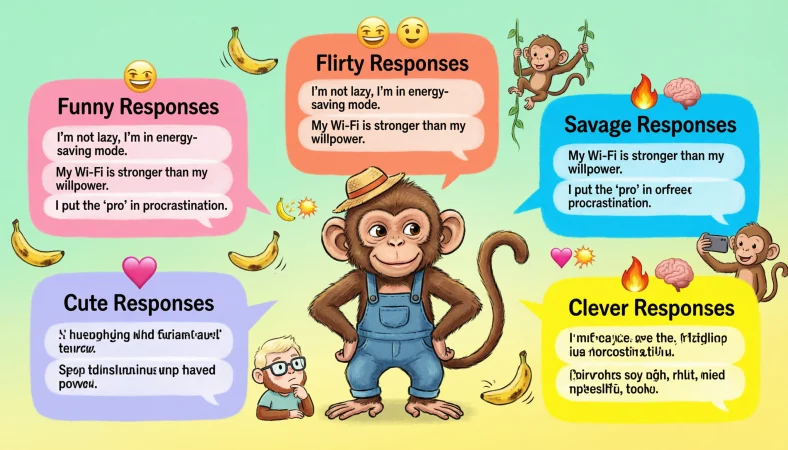
If someone calls you “monkey,” sends a monkey emoji, or jokingly compares you to one, your response can be funny, playful, flirty, sarcastic, or confident depending on the vibe. Try these: “Takes one to know one,” “Ook ook, what’s up?” “Guess I’m your favorite monkey,” “Careful, I bite,” “Are you flirting with me?”
Someone calling you “monkey” can mean a hundred different things depending on the situation. Maybe your friend is teasing you, your crush is being playful, someone sends 🐒 out of nowhere, or a random DM suddenly turns into a full jungle documentary. That is exactly why knowing how to respond to monkey can make the moment way more fun.
The right reply can turn a silly nickname into a hilarious inside joke, a flirty moment, or a perfectly timed comeback. You do not have to overthink it either. A short, confident response usually works best. Whether you want to be cute, amazing, dramatic, or completely unserious, there is a reply for your mood. So grab your imaginary banana and get ready for some seriously entertaining responses.
Funny Responses
“Takes one to know one.”
Use this when a friend jokingly calls you a monkey.
Meaning: You are playfully throwing the teasing right back.
“Ook ook, what’s good?”
Use this when you want to make the exchange completely ridiculous.
Meaning: You are matching their monkey energy with humor.
“Excuse me, I prefer majestic primate.”
Use this when someone teases you about your appearance or behavior.
Meaning: You are turning the insult into an absurd compliment.
“Monkey? I was going for mysterious.”
Use this when someone catches you doing something goofy.
Meaning: You are laughing at yourself instead of taking it seriously.
“Where’s my banana payment?”
Use this when someone repeatedly calls you monkey.
Meaning: You are pretending the nickname comes with employee benefits.
“Finally, someone noticed my true identity.”
Use this when you want an exaggerated reaction.
Meaning: You are jokingly admitting that the accusation is accurate.
“I have been exposed.”
Use this after doing something chaotic or silly.
Meaning: You are humorously accepting the label.
“Sorry, I only communicate in screeches.”
Use this when the conversation gets goofy.
Meaning: You are taking the joke to an intentionally absurd level.
“Monkey business detected.”
Use this when someone is clearly messing around.
Meaning: You are calling out their playful behavior.
“Do I at least get a zoo membership?”
Use this when someone keeps teasing you.
Meaning: You are turning their joke into a funny scenario.
“Plot twist: I’m the main monkey.”
Use this in a group chat when everyone is being chaotic.
Meaning: You are confidently claiming the silly title.
“That sounds suspiciously personal.”
Use this when the nickname comes from someone you know well.
Meaning: You are teasing them for knowing you too well.
“Okay, Jane Goodall.”
Use this when someone starts analyzing your behavior.
Meaning: You are humorously comparing them to the famous primatologist.
“Roasted by someone who probably eats bananas too.”
Use this when you want a playful comeback.
Meaning: You are refusing to let the teasing go unanswered.
“I accept this prestigious title.”
Use this when someone calls you monkey affectionately.
Meaning: You are turning the nickname into an imaginary award.
Brutal Responses
“At least I’m entertaining.”
Use this when someone calls you monkey to insult you.
Meaning: You are confidently flipping the insult.
“Better a monkey than boring.”
Use this when someone tries to embarrass you.
Meaning: You are choosing personality over their criticism.
“That was your best comeback?”
Use this when their teasing feels weak.
Meaning: You are challenging them to do better.
“Cute attempt.”
Use this when someone thinks they delivered a devastating insult.
Meaning: You are making their comment seem harmless.
“You really thought that ate.”
Use this when their joke falls flat.
Meaning: You are sarcastically calling out the lack of impact.
“And somehow you’re still less interesting.”
Use this when the teasing becomes competitive.
Meaning: You are delivering a sharper comeback.
“Imagine being this confident and this unfunny.”
Use this when someone keeps making weak jokes.
Meaning: You are mocking their confidence.
“That insult needs a software update.”
Use this when someone uses an outdated joke.
Meaning: You are saying their comeback is painfully unoriginal.
“You tried. That counts.”
Use this when you want a dry, dismissive comeback.
Meaning: You are pretending their insult deserves participation credit.
“Was that supposed to hurt?”
Use this when you are completely unfazed.
Meaning: You are showing that their comment has no effect.
“I’ll recover eventually.”
Use this when someone gives you a hilariously weak roast.
Meaning: You are exaggerating your fake emotional damage.
“That sounded better in your head, huh?”
Use this when their comment clearly misses the mark.
Meaning: You are pointing out their failed attempt.
“You really woke up and chose that insult.”
Use this when someone randomly starts roasting you.
Meaning: You are humorously questioning their priorities.
“Try again, champ.”
Use this when you want a short, confident comeback.
Meaning: You are challenging them to come up with something better.
“I expected more from you.”
Use this when a friend gives you a weak roast.
Meaning: You are playfully acting disappointed in their effort.
Flirty Responses
“Only if you’re my favorite human.”
Use this when your crush calls you monkey affectionately.
Meaning: You are turning the nickname into a cute romantic moment.
“Are you flirting with me, monkey style?”
Use this when their teasing feels suspiciously affectionate.
Meaning: You are playfully testing their intentions.
“Careful, I might start calling you mine.”
Use this when the conversation already has romantic energy.
Meaning: You are confidently escalating the flirtation.
“If I’m your monkey, where’s my banana?”
Use this when you want a silly flirty response.
Meaning: You are mixing humor with playful teasing.
“You say monkey like you’re secretly obsessed with me.”
Use this when someone repeatedly uses the nickname.
Meaning: You are teasing them about their attention toward you.
“So this is your cute nickname for me?”
Use this when someone calls you monkey affectionately.
Meaning: You are inviting them to admit the nickname is sweet.
“I’ll allow it because it’s you.”
Use this when you want to sound confident and playful.
Meaning: You are showing affection without being overly serious.
“Only you get to call me that.”
Use this when you want to make the nickname feel special.
Meaning: You are subtly creating a sense of exclusivity.
“Monkey today, your favorite person tomorrow.”
Use this when flirting with someone who likes teasing you.
Meaning: You are playfully hinting at becoming more important to them.
“You clearly have a thing for monkeys.”
Use this when you want to tease their attraction.
Meaning: You are joking that their nickname reveals their interest.
“If I’m the monkey, you’re definitely the banana.”
Use this when the conversation is openly silly and flirty.
Meaning: You are giving the joke a playful romantic twist.
“That nickname sounds better coming from you.”
Use this when you want to soften the teasing with affection.
Meaning: You are showing that you enjoy their attention.
“Keep calling me that and I might fall for you.”
Use this when you want a bold but playful flirt.
Meaning: You are hinting at attraction while keeping things light.
“Is this your way of being cute with me?”
Use this when their teasing feels affectionate.
Meaning: You are encouraging more playful attention.
“You’re lucky I think you’re cute.”
Use this when you want confident flirting.
Meaning: You are combining affection with playful attitude.
Polite Responses
“Haha, I’ll take that as a joke.”
Use this when someone calls you monkey playfully.
Meaning: You are keeping the interaction friendly.
“That’s certainly an interesting nickname.”
Use this when you are unsure what they mean.
Meaning: You are responding without immediately matching their energy.
“I guess everyone has their own nickname for me.”
Use this when you want to stay relaxed.
Meaning: You are treating the comment casually.
“Well, that’s a new one.”
Use this when someone unexpectedly calls you monkey.
Meaning: You are acknowledging it without sounding offended.
“Haha, I’ll let that one slide.”
Use this when a friend is teasing you.
Meaning: You are showing that you are not bothered.
“That made me laugh.”
Use this when the nickname genuinely amuses you.
Meaning: You are encouraging friendly humor.
“Interesting choice of words.”
Use this when you want a calm response.
Meaning: You are acknowledging the comment with mild curiosity.
“I suppose I can live with that.”
Use this when the situation is lighthearted.
Meaning: You are playfully accepting the nickname.
“Okay, I’ll give you that one.”
Use this when their joke is actually funny.
Meaning: You are giving them credit without overreacting.
“That’s definitely creative.”
Use this when someone comes up with an unusual nickname.
Meaning: You are responding positively and politely.
“Haha, fair enough.”
Use this when you do not want to make a big deal of it.
Meaning: You are keeping the conversation easygoing.
“I’ll assume you mean that affectionately.”
Use this when the person seems friendly.
Meaning: You are choosing the positive interpretation.
“That’s quite the nickname.”
Use this when you want a neutral response.
Meaning: You are acknowledging their wording without escalating.
“No worries, I know you’re joking.”
Use this when the teasing is clearly harmless.
Meaning: You are reassuring them that you are not offended.
“Haha, noted.”
Use this when you want a short and casual answer.
Meaning: You are acknowledging the nickname without overthinking it.
Creative Responses
“Welcome to the jungle.”
Use this when someone calls you monkey in a playful setting.
Meaning: You are turning the moment into a mini adventure.
“My inner primate has entered the chat.”
Use this when your behavior has become chaotic.
Meaning: You are joking about your wild side.
“Chapter one: The Monkey Awakens.”
Use this when someone dramatically gives you the nickname.
Meaning: You are making the situation sound like a movie.
“The council has spoken.”
Use this when several friends agree with the monkey nickname.
Meaning: You are pretending the decision is official.
“Monkey mode: activated.”
Use this when you are feeling goofy.
Meaning: You are embracing the silly energy.
“My banana empire begins today.”
Use this when you want an absurd response.
Meaning: You are turning the nickname into a ridiculous storyline.
“A new character has been unlocked.”
Use this in a group chat or gaming-style conversation.
Meaning: You are jokingly presenting monkey as your new persona.
“I was born for this level of chaos.”
Use this when someone calls you monkey after something silly.
Meaning: You are embracing your playful personality.
“The jungle has claimed me.”
Use this when you want a dramatic joke.
Meaning: You are pretending you have officially joined the monkey world.
“My transformation is complete.”
Use this when someone makes the nickname stick.
Meaning: You are humorously accepting your new identity.
“Please address me as Sir Monkey from now on.”
Use this when you want to make everyone laugh.
Meaning: You are turning the nickname into an imaginary formal title.
“I have evolved beyond human expectations.”
Use this when someone jokes about your weird behavior.
Meaning: You are framing your silliness as an evolution.
“The banana prophecy has been fulfilled.”
Use this when the conversation is already absurd.
Meaning: You are adding exaggerated storytelling to the joke.
“I choose chaos, apparently.”
Use this when your actions explain the nickname.
Meaning: You are laughing at your own unpredictable behavior.
“And thus begins my villain origin story.”
Use this when the nickname annoys you in a funny way.
Meaning: You are exaggerating the situation for entertainment.
Sarcastic Responses
“Wow, what an original observation.”
Use this when someone repeatedly calls you monkey.
Meaning: You are sarcastically mocking their creativity.
“Thank you for your groundbreaking analysis.”
Use this when someone acts overly serious about the nickname.
Meaning: You are making their comment sound ridiculously important.
“I’ll alert the newspapers.”
Use this when someone makes a dramatic discovery about you.
Meaning: You are exaggerating the importance of their comment.
“Your investigative skills are unmatched.”
Use this when someone points out something obvious.
Meaning: You are sarcastically praising them.
“Brilliant. Absolutely groundbreaking.”
Use this when their insult is predictable.
Meaning: You are pretending their joke is revolutionary.
“I never would have guessed.”
Use this when someone states the obvious.
Meaning: You are using dry sarcasm to tease them.
“Thank you, Captain Obvious.”
Use this when their comment is painfully predictable.
Meaning: You are jokingly calling out the obviousness.
“What a shocking development.”
Use this when someone discovers your goofy side.
Meaning: You are pretending their observation is huge news.
“I’ll try to process this information.”
Use this when you want dramatic sarcasm.
Meaning: You are jokingly acting overwhelmed by their comment.
“Please continue your scientific research.”
Use this when someone keeps analyzing your behavior.
Meaning: You are humorously pretending they are conducting a study.
“Groundbreaking stuff right here.”
Use this when their roast is basic.
Meaning: You are sarcastically dismissing their creativity.
“You deserve an award for that one.”
Use this when someone gives you a weak insult.
Meaning: You are pretending their joke was impressive.
“I’m devastated. Truly.”
Use this when you are obviously not offended.
Meaning: You are using exaggerated sarcasm to show confidence.
“My life will never be the same.”
Use this after an especially silly comment.
Meaning: You are dramatically exaggerating its impact.
“I’ll need several business days to recover.”
Use this when a friend playfully roasts you.
Meaning: You are pretending the insult caused major damage.
Cute Responses
“Aww, is that my new nickname?”
Use this when someone says monkey affectionately.
Meaning: You are showing that you find the nickname adorable.
“You’re kinda cute for saying that.”
Use this when you want to add a little affection.
Meaning: You are turning their teasing into a sweet moment.
“Okay, I’ll be your little monkey.”
Use this when the relationship is affectionate.
Meaning: You are responding with playful sweetness.
“That’s actually kinda adorable.”
Use this when someone gives you the nickname lovingly.
Meaning: You are showing that you enjoy the attention.
“Only because you said it nicely.”
Use this when you want to accept the nickname playfully.
Meaning: You are teasing them while keeping things warm.
“Guess I found my new identity.”
Use this when the nickname makes you laugh.
Meaning: You are embracing the silliness.
“You make monkey sound cute.”
Use this when the nickname comes from someone special.
Meaning: You are subtly showing affection.
“Okay, that made me smile.”
Use this when their message genuinely brightens your mood.
Meaning: You are letting them know their teasing worked.
“I’ll accept my adorable monkey status.”
Use this when you want a playful response.
Meaning: You are confidently owning the nickname.
“Fine, but only if you’re my banana buddy.”
Use this when you want a silly cute comeback.
Meaning: You are creating a playful little inside joke.
“That’s actually sweet coming from you.”
Use this when the nickname feels affectionate.
Meaning: You are acknowledging the warmth behind it.
“You really know how to make me laugh.”
Use this when their teasing is funny rather than insulting.
Meaning: You are appreciating their playful personality.
“Okay, that nickname can stay.”
Use this when you secretly like being called monkey.
Meaning: You are approving the affectionate nickname.
“I guess I’m your favorite little chaos creature.”
Use this when you are known for being playful.
Meaning: You are turning the nickname into something endearing.
“You’re making me like this nickname now.”
Use this when someone keeps calling you monkey.
Meaning: You are admitting their affection is changing your opinion.
Dramatic Responses
“How could you betray me like this?”
Use this when a close friend calls you monkey.
Meaning: You are pretending the harmless joke is a major betrayal.
“My reputation is officially ruined.”
Use this when someone exposes your goofy side.
Meaning: You are exaggerating the situation for comedy.
“I shall never recover.”
Use this after a particularly funny roast.
Meaning: You are pretending the nickname has emotionally destroyed you.
“This is the worst day of my life.”
Use this when you want an obviously exaggerated reaction.
Meaning: You are making the joke dramatically bigger than it is.
“Tell my family I loved them.”
Use this when a friend delivers a silly insult.
Meaning: You are pretending the roast is fatal.
“My entire legacy is over.”
Use this when someone catches you acting goofy.
Meaning: You are dramatically mourning your dignity.
“I need a moment to process this.”
Use this when you want theatrical humor.
Meaning: You are pretending their comment requires deep reflection.
“This was not how I imagined my story ending.”
Use this when someone calls you monkey unexpectedly.
Meaning: You are turning a tiny joke into a dramatic finale.
“The disrespect is astronomical.”
Use this when a friend is teasing you hard.
Meaning: You are dramatically pretending to be offended.
“I have seen enough.”
Use this when you want a short theatrical response.
Meaning: You are playfully ending the imaginary drama.
“I trusted you.”
Use this when someone close to you delivers a roast.
Meaning: You are jokingly framing the teasing as betrayal.
“My heart cannot handle this.”
Use this when the nickname is surprisingly funny.
Meaning: You are exaggerating your reaction for effect.
“Someone call the authorities.”
Use this when the teasing gets ridiculous.
Meaning: You are pretending the situation has become serious.
“I demand an apology and three bananas.”
Use this when you want to extend the joke.
Meaning: You are creating a ridiculous punishment for their teasing.
“And this is how my villain era begins.”
Use this when someone playfully annoys you.
Meaning: You are turning the moment into an exaggerated origin story.
Chill And Casual Responses
“Haha, fair.”
Use this when you want to keep the exchange relaxed.
Meaning: You are casually accepting the joke.
“Lol, okay.”
Use this when you are not taking the nickname seriously.
Meaning: You are keeping things simple and easygoing.
“I’ll take it.”
Use this when the nickname does not bother you.
Meaning: You are casually accepting it.
“Haha, maybe.”
Use this when you want a playful but low-key response.
Meaning: You are leaving room for the joke to continue.
“Could be worse.”
Use this when someone teases you lightly.
Meaning: You are showing that you are completely unfazed.
“Honestly, accurate.”
Use this when the nickname fits your personality.
Meaning: You are confidently agreeing with the joke.
“Not wrong.”
Use this when someone has a point.
Meaning: You are acknowledging the teasing without overreacting.
“Lol, you got me.”
Use this when their joke lands.
Meaning: You are admitting they caught you being silly.
“Okay, I see you.”
Use this when their comeback is clever.
Meaning: You are giving them playful credit.
“I can work with that.”
Use this when someone gives you an unusual nickname.
Meaning: You are casually accepting the idea.
“That’s fair enough.”
Use this when you want to keep things friendly.
Meaning: You are acknowledging their comment without making it serious.
“Haha, I guess so.”
Use this when you want a relaxed answer.
Meaning: You are playing along without committing to the joke.
“You might have a point.”
Use this when the nickname is surprisingly accurate.
Meaning: You are humorously admitting they may be right.
“Lol, whatever you say.”
Use this when you want playful indifference.
Meaning: You are showing that you are not bothered.
“Alright, monkey it is.”
Use this when you want to accept the nickname.
Meaning: You are casually embracing the joke.
Confident Responses
“Yep, and I’m owning it.”
Use this when someone calls you monkey teasingly.
Meaning: You are showing confidence instead of insecurity.
“Monkey with main-character energy.”
Use this when you want a bold playful comeback.
Meaning: You are presenting yourself as confident and entertaining.
“I make monkey look good.”
Use this when someone jokes about your appearance.
Meaning: You are confidently turning the label into a compliment.
“Still fabulous though.”
Use this when someone tries to roast you.
Meaning: You are refusing to let the joke affect your confidence.
“Call me whatever, I know I’m iconic.”
Use this when someone tries to tease you.
Meaning: You are showing that your confidence is not easily shaken.
“Monkey, but make it legendary.”
Use this when you want a bold humorous response.
Meaning: You are turning the nickname into a statement of style.
“I’ll wear that title proudly.”
Use this when you want to embrace the joke.
Meaning: You are confidently accepting the nickname.
“Cute nickname for someone this unforgettable.”
Use this when you want a confident twist.
Meaning: You are making the moment about your personality.
“At least I’m memorable.”
Use this when someone teases you for being goofy.
Meaning: You are turning the comment into praise.
“I bring personality to the jungle.”
Use this when you want a playful confident response.
Meaning: You are celebrating your unique personality.
“I was never trying to be normal anyway.”
Use this when someone calls you monkey because you act differently.
Meaning: You are confidently embracing your individuality.
“Exactly. And somehow I’m still the coolest one here.”
Use this when friends are roasting you.
Meaning: You are keeping the comeback bold and funny.
“Monkey energy, superstar confidence.”
Use this when you want a punchy response.
Meaning: You are combining silliness with self-assurance.
“I know. I’m unforgettable like that.”
Use this when someone teases you affectionately.
Meaning: You are responding with playful confidence.
“Say it again, I’m starting to like it.”
Use this when the nickname secretly amuses you.
Meaning: You are confidently turning the tease into something positive.
Emotional Responses
“I know you mean it playfully.”
Use this when someone close to you uses the nickname.
Meaning: You are recognizing the affection behind their words.
“That actually made me smile.”
Use this when the nickname comes from someone you care about.
Meaning: You are honestly sharing the positive emotional effect.
“You always know how to make me laugh.”
Use this when the person regularly cheers you up.
Meaning: You are expressing appreciation for their humor.
“I kind of love that you have a nickname for me.”
Use this when the nickname feels personal.
Meaning: You are showing that the familiarity means something to you.
“That’s cute coming from you.”
Use this when the teasing feels affectionate.
Meaning: You are responding warmly while acknowledging the connection.
“I’ll take it as a sign of affection.”
Use this when the person clearly means it kindly.
Meaning: You are choosing to focus on the positive intention.
“You make even that sound sweet.”
Use this when someone special calls you monkey.
Meaning: You are expressing affection toward the person.
“I actually appreciate that.”
Use this when the nickname makes you feel included or remembered.
Meaning: You are honestly acknowledging the sentiment.
“That made my day a little better.”
Use this when the message arrives at the right moment.
Meaning: You are letting them know their humor helped.
“I like how comfortable we are with each other.”
Use this when teasing is part of a close friendship.
Meaning: You are appreciating the connection behind the joke.
“That’s one nickname I’ll remember.”
Use this when someone unexpectedly gives you the nickname.
Meaning: You are showing that the moment felt memorable.
“You really bring out my silly side.”
Use this when someone makes you comfortable enough to be goofy.
Meaning: You are expressing trust and affection.
“I’m glad I can be weird around you.”
Use this when the person accepts your playful personality.
Meaning: You are showing appreciation for feeling comfortable.
“That’s why I like talking to you.”
Use this when their teasing makes you genuinely happy.
Meaning: You are connecting the humor to your appreciation of them.
“Okay, that was actually wholesome.”
Use this when the nickname is unexpectedly sweet.
Meaning: You are acknowledging the affectionate side of the joke.
Clever Responses
“Interesting. I was going to call you banana.”
Use this when you want an unexpected comeback.
Meaning: You are cleverly turning their nickname around.
“Monkey today, legend tomorrow.”
Use this when you want a memorable one-liner.
Meaning: You are turning the joke into a playful prediction.
“If I’m the monkey, you’re clearly part of the habitat.”
Use this when someone tries to roast you.
Meaning: You are cleverly making them part of the joke.
“That explains why I’m always causing monkey business.”
Use this when you are known for chaos.
Meaning: You are connecting the nickname to a familiar phrase.
“I prefer limited-edition primate.”
Use this when someone wants to tease you.
Meaning: You are transforming the nickname into something exclusive.
“Not a monkey, just operating on premium chaos.”
Use this when your personality is energetic.
Meaning: You are giving the nickname a confident upgrade.
“Call it evolution with personality.”
Use this when someone questions your behavior.
Meaning: You are cleverly reframing the tease.
“The evidence is circumstantial.”
Use this when someone claims you act like a monkey.
Meaning: You are jokingly treating the accusation like a courtroom case.
“Objection, Your Honor.”
Use this when someone makes a funny accusation.
Meaning: You are turning the interaction into playful courtroom drama.
“I plead guilty to being entertaining.”
Use this when you want a clever comeback.
Meaning: You are accepting the joke while making yourself look good.
“That depends. Is this a compliment?”
Use this when the person’s intention is unclear.
Meaning: You are cleverly asking them to reveal their meaning.
“I see we’re choosing chaos today.”
Use this when someone randomly calls you monkey.
Meaning: You are recognizing the playful energy.
“A bold theory with questionable evidence.”
Use this when someone insists the nickname fits.
Meaning: You are playfully challenging their conclusion.
“I’ll add that to my list of unusual compliments.”
Use this when someone calls you monkey affectionately.
Meaning: You are cleverly treating it as praise.
“I suppose every icon needs a little chaos.”
Use this when you want a confident witty reply.
Meaning: You are turning the nickname into a statement about your personality.
FAQs
What does it mean when someone calls you “monkey”?
It can be playful teasing, an affectionate nickname, or a comment about someone acting goofy or energetic. Context and tone matter most.
Is being called “monkey” flirty?
It can be, especially when a crush uses it repeatedly, adds cute emojis, or combines it with affectionate teasing.
What is a good funny response to “monkey”?
Try “Takes one to know one,” “Where’s my banana?” or “Monkey mode activated.”
What if I do not like being called monkey?
Keep it simple and direct with something like, “Haha, I know you’re joking, but I’d rather you not call me that.”
Can I use these replies with a crush?
Absolutely. Flirty, cute, confident, and playful responses work especially well when there is already mutual chemistry.
Is humor appropriate when someone calls you monkey?
Usually, yes, if the person is clearly joking and you are comfortable with it. If the comment feels insulting, a straightforward response is better.
Can “monkey” be an affectionate nickname?
Yes. Friends, partners, and family members sometimes use animal nicknames playfully to show familiarity or affection.
What if someone calls me monkey online?
Look at the context first. A friendly emoji or playful conversation may suggest harmless teasing, while a hostile exchange may require a firmer response.
Can I respond with a monkey emoji?
Definitely. 🐒🙈🙉🙊 can make a short response feel playful without needing a full sentence.
What is the best response if I want to keep the conversation going?
Use a response that gives them something to react to, such as “Okay, but why monkey specifically?” or “What made you choose that nickname?”
Conclusion
Knowing how to respond to monkey does not have to be complicated. The best reply depends on the vibe, your relationship, and how comfortable you feel with the nickname. A funny comeback can keep friends laughing, a flirty response can turn teasing into chemistry, and a confident answer can show that you are completely unbothered.
Even a simple “Haha, fair” can keep things relaxed. The key is choosing words that sound like you instead of forcing a personality that does not fit. Save your favorites, screenshot the ones that match your mood, and keep a few ready for your next chaotic conversation. Now go forth and embrace the monkey energy.







1 thought on “150+ Funny, Cute & Flirty Replies To “Monkey” That Keep The Vibe Going In 2026”