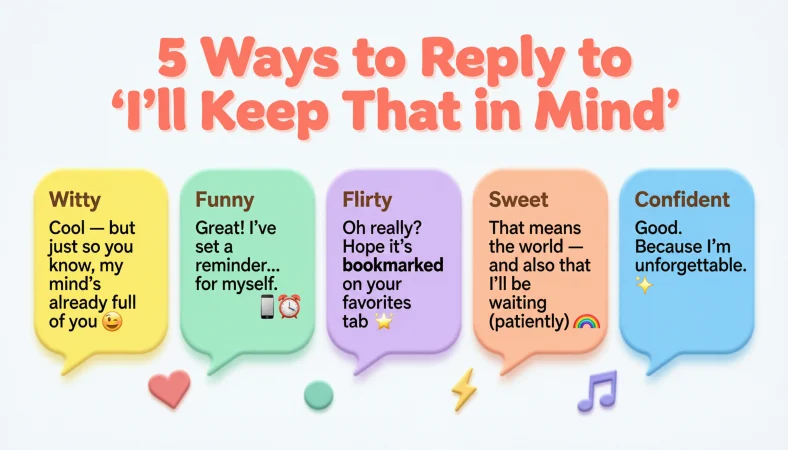
The best responses to “I’ll keep that in mind” can be funny, confident, polite, playful, or slightly sarcastic depending on the situation. The goal is to acknowledge their response while keeping the conversation natural and engaging.
Top alternatives: “Good, I’m glad you’ll remember,” “You better,” “I’ll hold you to that,” “That’s all I ask,” “Perfect, now we’re talking.”
Funny Responses
Good, because I definitely didn’t say it for decoration.
Use this when you want to jokingly emphasize your point.
Meaning: You are playfully saying that you hope they actually remember it.
Please file it under “important information.”
Use this when the conversation has a lighthearted vibe.
Meaning: You are humorously suggesting that your advice deserves attention.
Excellent. My work here is officially done.
Use this after giving someone advice or a suggestion.
Meaning: You are joking that your mission has been accomplished.
Put it somewhere safe.
Use this when you want a playful response without sounding too serious.
Meaning: You are teasing them about remembering what you said.
I expect a full report later.
Use this when joking with a friend about following your advice.
Meaning: You are playfully holding them accountable.
Good. I accept payment in snacks.
Use this when the conversation is casual and silly.
Meaning: You are turning a simple acknowledgment into a joke.
Screenshot it before your brain deletes it.
Use this when teasing someone who is famously forgetful.
Meaning: You are joking that they might forget otherwise.
Your memory just got a software update.
Use this when you want a quirky internet-style comeback.
Meaning: You are joking that your advice has upgraded their knowledge.
I knew you had potential.
Use this after someone agrees to remember your advice.
Meaning: You are playfully praising them.
Look at you taking notes like a responsible adult.
Use this with a friend who rarely takes advice.
Meaning: You are teasing them for finally listening.
That’s the spirit. Gold star for you.
Use this when you want a cute, silly response.
Meaning: You are playfully rewarding their acknowledgment.
Good, because I’m allergic to repeating myself.
Use this when you want mild sass with humor.
Meaning: You are joking that you do not want to explain it again.
Beautiful. We love personal growth.
Use this when someone agrees to consider your advice.
Meaning: You are humorously celebrating their willingness to learn.
And that concludes today’s TED Talk.
Use this after giving a long explanation.
Meaning: You are joking about how much you just talked.
Excellent. I’ll be checking the minutes of the meeting.
Use this when teasing someone about remembering your advice.
Meaning: You are humorously pretending the conversation was an official meeting.
Sarcastic Responses
Wow, what a groundbreaking commitment.
Use this when their response feels overly casual.
Meaning: You are lightly mocking how little commitment “I’ll keep that in mind” suggests.
That sounded suspiciously noncommittal.
Use this when you are unsure whether they really mean it.
Meaning: You are playfully questioning their sincerity.
Ah yes, the classic polite escape route.
Use this when someone seems to be avoiding a direct answer.
Meaning: You suspect they are acknowledging you without agreeing.
Translation: “Maybe, probably not.”
Use this when you want to tease their vague response.
Meaning: You are joking about the uncertainty behind their words.
I’ll pretend that means yes.
Use this when you want to keep things playful.
Meaning: You are humorously treating their vague acknowledgment as agreement.
Very diplomatic of you.
Use this when someone gives a carefully neutral response.
Meaning: You are teasing them for avoiding a firm position.
Noted. I’ll lower my expectations accordingly.
Use this when their response sounds uncertain.
Meaning: You are playfully suggesting that you do not expect much.
And I’ll keep pretending you mean it.
Use this when teasing someone you know well.
Meaning: You are jokingly questioning whether they will follow through.
That’s one way to avoid saying yes.
Use this when someone gives a vague response to a request.
Meaning: You are calling out their indirectness with humor.
I’ll take that as a very cautious maybe.
Use this when their answer does not sound definite.
Meaning: You are acknowledging the uncertainty while keeping it light.
Classic response from someone buying time.
Use this when you think they are delaying a decision.
Meaning: You are teasing them for not giving a clear answer.
Okay, Mr. or Ms. Diplomatic.
Use this when someone carefully avoids taking a side.
Meaning: You are playfully calling them diplomatic.
That answer has commitment issues.
Use this when their response sounds vague.
Meaning: You are joking that their words refuse to commit.
I hear you, but my eyebrows remain raised.
Use this when you are skeptical but playful.
Meaning: You are humorously showing that you are not completely convinced.
I’ll believe it when I see it.
Use this when someone promises to consider your advice.
Meaning: You want actions rather than just words.
Flirty Responses
Good, because I’d hate to be forgettable.
Use this when someone you like says they will remember what you said.
Meaning: You are subtly suggesting that you want to stay on their mind.
Make sure you keep me in mind too.
Use this when you want to turn the phrase into a flirt.
Meaning: You are hinting that you want their attention.
I’d rather be on your mind than just in your notes.
Use this when the conversation already has chemistry.
Meaning: You are playfully asking for a more personal place in their thoughts.
You can keep me in mind anytime.
Use this when you want a confident flirt.
Meaning: You are inviting them to think about you.
Good. I like being remembered.
Use this when you want something subtle and charming.
Meaning: You are showing interest without being too direct.
Careful, I might start enjoying being on your mind.
Use this when playful flirting feels natural.
Meaning: You are teasing them about thinking of you.
Just don’t keep me in mind. Keep me around.
Use this when you want to escalate the flirt slightly.
Meaning: You are hinting that you want more time together.
I hope I’m one of the things you’re keeping in mind.
Use this when you want a softer romantic tease.
Meaning: You are subtly asking whether they are thinking about you.
That sounds cute coming from you.
Use this when their response feels charming.
Meaning: You are showing affection while keeping things playful.
Then maybe I should give you something worth remembering.
Use this when the conversation has strong chemistry.
Meaning: You are confidently flirting and teasing them.
Good, because I plan on staying memorable.
Use this when you want a confident romantic response.
Meaning: You are playfully promising to leave an impression.
I’ll make sure I give you plenty to keep in mind.
Use this when you want a cheekier flirt.
Meaning: You are teasing them about having more reasons to think about you.
Now I’m curious what else you’re keeping in mind.
Use this when you want to encourage them to open up.
Meaning: You are turning their words into a playful invitation.
Hopefully the thought of me made the list.
Use this when flirting over text.
Meaning: You are hinting that you want to occupy their thoughts.
Keep it in mind, but don’t keep me waiting.
Use this when you want a confident, slightly teasing flirt.
Meaning: You are showing interest while encouraging action.
Cute Responses
Aww, that’s all I wanted.
Use this when someone acknowledges your advice sweetly.
Meaning: You are responding warmly and appreciatively.
Good, I’ll consider that a win.
Use this when you want a cheerful response.
Meaning: You are happy that they listened.
That makes me smile.
Use this when their acknowledgment feels sincere.
Meaning: You are showing genuine appreciation.
You’re sweet for saying that.
Use this when you want to add warmth.
Meaning: You are complimenting their thoughtful response.
Okay, I trust you to remember.
Use this with someone you are comfortable with.
Meaning: You are showing gentle confidence in them.
That’s good enough for me.
Use this when you want to keep things simple and kind.
Meaning: You are accepting their response without pressure.
Look at us communicating like grown-ups.
Use this with a friend or partner after a serious topic.
Meaning: You are celebrating healthy communication playfully.
I’ll take that little promise.
Use this when their response feels meaningful.
Meaning: You are treating their acknowledgment as a small commitment.
You remembered, and that’s adorable.
Use this when someone actually follows your advice.
Meaning: You are showing affection and appreciation.
That’s actually really nice to hear.
Use this when you value their response.
Meaning: You are expressing sincere gratitude.
Okay, I’m happy now.
Use this when their acknowledgment reassures you.
Meaning: You are showing that their response mattered.
Deal, tiny handshake included.
Use this when you want a playful agreement.
Meaning: You are making the moment cute and casual.
I appreciate you listening.
Use this after sharing something important.
Meaning: You are thanking them for taking you seriously.
That’s a good start.
Use this when you want to encourage them gently.
Meaning: You are acknowledging their willingness to consider your point.
You just earned a little happy dance.
Use this when you want an upbeat, silly response.
Meaning: You are exaggerating your happiness for fun.
Chill And Casual Responses
Fair enough.
Use this when you want a relaxed acknowledgment.
Meaning: You are accepting their response without making a big deal about it.
Sounds good to me.
Use this when you want to keep things easygoing.
Meaning: You are comfortable with their answer.
Cool, we’re on the same page.
Use this when you both understand the situation.
Meaning: You are confirming mutual understanding.
Perfect.
Use this when you want a simple response.
Meaning: You are satisfied with their acknowledgment.
Works for me.
Use this in casual conversations with friends or coworkers.
Meaning: You are saying their response is acceptable.
Good stuff.
Use this when you want a relaxed, upbeat reply.
Meaning: You are approving their response casually.
Alright, I’ll take it.
Use this when you want to keep the interaction moving.
Meaning: You are accepting what they said without overthinking it.
Cool beans.
Use this when you want an intentionally goofy casual reply.
Meaning: You are keeping the mood light.
Gotcha.
Use this when you want to acknowledge their response quickly.
Meaning: You understand and accept what they said.
All good.
Use this when you want to remove any pressure.
Meaning: You are letting them know there is no issue.
Sounds like a plan.
Use this when their response involves future action.
Meaning: You are treating their acknowledgment as a loose agreement.
No worries.
Use this when you want to stay relaxed.
Meaning: You are showing there is no tension or pressure.
We’ll see how it goes.
Use this when you want to leave things open-ended.
Meaning: You are staying flexible rather than demanding certainty.
Nice. I’m glad we cleared that up.
Use this after discussing something potentially confusing.
Meaning: You are pleased that the situation feels understood.
Okay, noted.
Use this when you want a short and neutral response.
Meaning: You are confirming that you heard them.
Clever Responses
Then let’s hope your memory has good storage.
Use this when you want a witty response.
Meaning: You are jokingly emphasizing the importance of remembering.
Consider it officially logged.
Use this after making an important point.
Meaning: You are playfully treating their acknowledgment as recorded.
I’ll hold you to the mental bookmark.
Use this when someone agrees to remember something.
Meaning: You are cleverly comparing their memory to saving a page.
Excellent, information successfully delivered.
Use this after explaining something clearly.
Meaning: You are humorously declaring the communication complete.
That’s what I like to hear.
Use this when their response reassures you.
Meaning: You approve of their willingness to consider your point.
A wise decision, honestly.
Use this when you want playful confidence.
Meaning: You are joking that remembering your advice is clearly the smart choice.
Let’s call that progress.
Use this when someone finally listens.
Meaning: You are framing their acknowledgment as a positive step.
Memory activated. Mission accomplished.
Use this after making a point successfully.
Meaning: You are turning the moment into a playful victory.
I’ll accept that as evidence of growth.
Use this when teasing someone who usually ignores advice.
Meaning: You are humorously praising their willingness to listen.
Good choice. Future you will appreciate it.
Use this when giving practical advice.
Meaning: You are suggesting that remembering it will help them later.
Filed under: things you should absolutely remember.
Use this when your advice matters.
Meaning: You are playfully labeling your message as important.
That’s a promising start.
Use this when you want to encourage them without pressure.
Meaning: You are positively acknowledging their response.
Now we’re getting somewhere.
Use this when their acknowledgment moves the conversation forward.
Meaning: You are showing satisfaction with their reaction.
Smart move. I approve.
Use this when you want a confident but playful response.
Meaning: You are approving their decision with light humor.
And just like that, we have understanding.
Use this after clearing up a misunderstanding.
Meaning: You are celebrating the successful communication.
Confident Responses
Good, because I meant what I said.
Use this when you want to sound direct and self-assured.
Meaning: You are making it clear that your words were intentional.
I’m glad you’re taking it seriously.
Use this when the topic genuinely matters to you.
Meaning: You appreciate their willingness to consider your perspective.
That’s exactly what I hoped you’d say.
Use this when their acknowledgment satisfies you.
Meaning: You are confidently showing that you expected a thoughtful response.
I’ll consider that a good sign.
Use this when you want to remain optimistic.
Meaning: You are interpreting their response positively.
Good. We understand each other.
Use this after making your position clear.
Meaning: You are confidently confirming mutual understanding.
That’s all I needed to hear.
Use this when you have made your point.
Meaning: You are satisfied and do not need further explanation.
I knew you’d see my point.
Use this when someone finally understands your perspective.
Meaning: You are confidently acknowledging their realization.
Exactly. Keep that thought.
Use this when you want to emphasize your point.
Meaning: You are encouraging them to remember what you said.
Now make sure you act on it.
Use this when words need to become actions.
Meaning: You are confidently asking for follow-through.
I appreciate the acknowledgment.
Use this when you want a mature response.
Meaning: You are recognizing their willingness to listen.
Good. I don’t like repeating myself.
Use this when you want firm confidence with a little sass.
Meaning: You are making it clear that your original message was enough.
That’s the answer I was looking for.
Use this when their acknowledgment satisfies you.
Meaning: You feel reassured by their response.
I’ll trust you to remember.
Use this when you want to give them responsibility.
Meaning: You are confidently placing the next step in their hands.
Perfect. We can move forward now.
Use this after resolving a misunderstanding.
Meaning: You are signaling that the issue is settled.
Good. I like being understood.
Use this when the conversation has been meaningful.
Meaning: You value being heard and taken seriously.
Sweet Responses
Thank you for hearing me out.
Use this after discussing something personal.
Meaning: You are expressing sincere gratitude for their attention.
That really means a lot to me.
Use this when their acknowledgment feels meaningful.
Meaning: You are showing genuine appreciation.
I’m glad we talked about it.
Use this after an honest conversation.
Meaning: You appreciate the openness between you.
I appreciate you keeping it in mind.
Use this when someone agrees to consider your feelings.
Meaning: You are thanking them for being thoughtful.
That’s all I could ask for.
Use this when you do not need an immediate decision.
Meaning: You are comfortable giving them time to think.
I’m happy you understand where I’m coming from.
Use this after explaining your perspective.
Meaning: You feel relieved that they understand your feelings.
Thank you for being open to it.
Use this when someone is willing to consider your suggestion.
Meaning: You appreciate their openness.
I know you’ll do your best.
Use this when you trust their intentions.
Meaning: You are showing encouragement and faith in them.
That’s really thoughtful of you.
Use this when their response feels considerate.
Meaning: You are complimenting their thoughtfulness.
I appreciate that more than you know.
Use this when their acknowledgment genuinely matters.
Meaning: You are emphasizing sincere gratitude.
You’re making this conversation easy.
Use this when someone responds maturely.
Meaning: You appreciate the comfortable communication.
Thanks for taking me seriously.
Use this when you shared something important.
Meaning: You are grateful that they did not dismiss your feelings.
I’m glad you’re willing to think about it.
Use this when you do not expect an immediate answer.
Meaning: You respect their need to consider the situation.
That’s a kind response.
Use this when you want to acknowledge their tone.
Meaning: You appreciate the kindness behind their words.
I’m grateful we can talk like this.
Use this during a sincere conversation.
Meaning: You value the trust and openness between you.
Polite Responses
Thank you, I appreciate that.
Use this in respectful everyday conversations.
Meaning: You are politely acknowledging their willingness to remember.
I’m glad to hear that.
Use this when their response reassures you.
Meaning: You are expressing polite satisfaction.
I appreciate you considering it.
Use this when someone agrees to think about your suggestion.
Meaning: You are respectfully recognizing their effort.
That’s very considerate of you.
Use this when their response feels thoughtful.
Meaning: You are complimenting their consideration.
Thank you for keeping it in mind.
Use this in a polite personal or workplace conversation.
Meaning: You are thanking them for remembering your point.
I’m happy we discussed it.
Use this after a useful conversation.
Meaning: You appreciate the opportunity to communicate.
That sounds reasonable.
Use this when you want a neutral acknowledgment.
Meaning: You consider their response fair.
I appreciate your understanding.
Use this when discussing a sensitive matter.
Meaning: You are respectfully thanking them for listening.
That’s perfectly fine.
Use this when you want to remove pressure.
Meaning: You are accepting their response calmly.
Thank you for being receptive.
Use this in a more polished setting.
Meaning: You appreciate their willingness to listen.
I’m glad we’re clear on that.
Use this after resolving confusion.
Meaning: You are confirming mutual understanding.
That’s good to know.
Use this when their response provides reassurance.
Meaning: You are acknowledging the information positively.
I appreciate you taking the time to consider it.
Use this when someone has thoughtfully heard you out.
Meaning: You are recognizing their effort and attention.
Thank you for acknowledging that.
Use this when discussing an important point.
Meaning: You appreciate that they recognized what you said.
That works for me. Thank you.
Use this when their response settles the matter.
Meaning: You are politely accepting the situation.
Professional Responses
Thank you, I appreciate your consideration.
Use this in a workplace conversation about a suggestion.
Meaning: You are responding professionally and respectfully.
I’m glad we could discuss it.
Use this after a work-related conversation.
Meaning: You appreciate the opportunity to address the matter.
That sounds good. Thank you.
Use this when a colleague acknowledges your point.
Meaning: You are politely accepting their response.
I appreciate you taking that into consideration.
Use this when making a professional request.
Meaning: You are recognizing their willingness to evaluate it.
That’s all I wanted to clarify.
Use this after explaining an issue at work.
Meaning: You are signaling that the matter is clear.
Thank you for keeping that in mind going forward.
Use this when discussing future workplace behavior.
Meaning: You are politely asking them to remember the point.
I appreciate your understanding.
Use this when handling a professional disagreement.
Meaning: You are maintaining a respectful tone.
That’s helpful, thank you.
Use this when their acknowledgment provides reassurance.
Meaning: You are expressing professional appreciation.
I’m glad we’re aligned.
Use this when you reach agreement with a colleague.
Meaning: You are confirming that you share the same understanding.
Thank you for being open to the suggestion.
Use this when proposing a change at work.
Meaning: You appreciate their willingness to consider your idea.
I’ll consider that as well.
Use this when they respond thoughtfully to your point.
Meaning: You are showing that the discussion goes both ways.
Sounds good. Let’s keep it in consideration.
Use this when a decision is not final.
Meaning: You are keeping the possibility open professionally.
Understood, thank you.
Use this when you want a concise workplace reply.
Meaning: You acknowledge their response respectfully.
That makes sense. I appreciate it.
Use this when their response clarifies a work issue.
Meaning: You understand and appreciate their input.
Perfect, thank you for considering it.
Use this when you want a polished closing response.
Meaning: You are ending the exchange positively and professionally.
Creative Responses
I’ll put that in the mental archives.
Use this when you want a playful creative reply.
Meaning: You are joking about storing the information in your memory.
Consider the message officially bookmarked.
Use this when someone acknowledges your advice.
Meaning: You are creatively comparing memory to bookmarking information.
Into the brain vault it goes.
Use this when you want a quirky response.
Meaning: You are joking that the information has been securely stored.
Adding that to the life manual.
Use this when someone agrees to remember a lesson.
Meaning: You are humorously treating the advice as life guidance.
Filed under: things future me will appreciate.
Use this after giving practical advice.
Meaning: You are suggesting the information will be useful later.
The memory department has received your request.
Use this when you want a silly corporate-style joke.
Meaning: You are pretending your brain has an official department.
Consider it tucked safely into the brain drawer.
Use this when the mood is goofy.
Meaning: You are playfully describing how memories are stored.
That thought has officially entered the group chat.
Use this when joking with friends.
Meaning: You are saying the idea is now part of your mental conversation.
I expect it to survive the brain scroll.
Use this when teasing someone about forgetting things.
Meaning: You hope your advice stays in their memory.
Into the vault, we go.
Use this when you want a dramatic but playful response.
Meaning: You are humorously treating the information as valuable.
Memory mission accepted.
Use this when someone agrees to remember your point.
Meaning: You are turning the acknowledgment into a playful mission.
Saving that thought in 4K.
Use this when you want internet-style humor.
Meaning: You are joking that you will remember the moment perfectly.
That deserves a permanent mental sticky note.
Use this when the advice is important.
Meaning: You are emphasizing that the information should not be forgotten.
Noted in the imaginary minutes of this conversation.
Use this when joking about an important discussion.
Meaning: You are pretending the exchange was formally recorded.
And into the lore it goes.
Use this when the conversation is playful and familiar.
Meaning: You are joking that the moment has become part of your shared story.
Chill Flirty Responses
Good, because I like knowing I’m on your mind.
Use this when the conversation already feels romantic.
Meaning: You are subtly enjoying the idea of being remembered.
Keep that thought warm for me.
Use this when you want a soft flirt.
Meaning: You are playfully encouraging them to continue thinking about you.
Now I’m wondering what else you’re thinking about.
Use this when you want to invite a more personal conversation.
Meaning: You are encouraging them to reveal more.
I’ll make it worth remembering.
Use this when you want confident chemistry.
Meaning: You are promising to leave a lasting impression.
That’s cute. I’ll take it.
Use this when you want a low-key flirt.
Meaning: You are warmly accepting their response.
Good. I’m not trying to be forgettable.
Use this when you want playful confidence.
Meaning: You want to make a lasting impression.
Then I guess I made an impression.
Use this after saying something memorable.
Meaning: You are playfully suggesting they will remember you.
Keep me in mind and maybe keep me close.
Use this when the vibe is romantic.
Meaning: You are hinting that you want more closeness.
I like the sound of that.
Use this when their response feels promising.
Meaning: You are showing subtle interest.
I’ll take that as a little promise.
Use this when you want gentle romantic tension.
Meaning: You are turning their acknowledgment into a playful commitment.
Now you’ve got me curious.
Use this when their response leaves room for teasing.
Meaning: You want them to reveal more.
Good, because I have a habit of being memorable.
Use this when you want confident flirting.
Meaning: You are playfully highlighting your charm.
Maybe I should give you more to think about.
Use this when the conversation is already teasing.
Meaning: You are inviting more flirtatious banter.
I hope I’m the fun part of what you’re remembering.
Use this when you want a cute romantic tease.
Meaning: You are hinting that you want positive attention.
Just don’t think about me too much. It might become a habit.
Use this when you want playful confidence.
Meaning: You are teasing them about becoming attached.
Dramatic Responses
Finally, my words have been heard.
Use this after someone agrees to consider your advice.
Meaning: You are humorously exaggerating the moment.
A historic day for communication.
Use this when someone finally acknowledges your point.
Meaning: You are making their response sound hilariously significant.
And the prophecy has been fulfilled.
Use this when their response confirms what you hoped for.
Meaning: You are playfully treating the moment like destiny.
My message has entered the sacred archives.
Use this when you want theatrical humor.
Meaning: You are exaggerating the importance of being remembered.
This is the character development I wanted.
Use this when someone finally listens to you.
Meaning: You are joking that their response shows personal growth.
I shall sleep peacefully tonight.
Use this when their acknowledgment reassures you.
Meaning: You are humorously acting as though the issue was monumental.
The universe may finally rest.
Use this when a small issue gets resolved.
Meaning: You are dramatically exaggerating the resolution.
We have reached an understanding. Civilization survives.
Use this after settling a disagreement.
Meaning: You are joking about how dramatic the situation felt.
I never thought I’d see this day.
Use this when someone finally takes your advice.
Meaning: You are humorously acting shocked by their cooperation.
My heart can finally rest.
Use this when their acknowledgment matters to you.
Meaning: You are exaggerating your relief for comedic effect.
A chapter has closed.
Use this after reaching a conclusion.
Meaning: You are playfully presenting the conversation as a major event.
The council has spoken, and I approve.
Use this when you want theatrical humor.
Meaning: You are jokingly giving your official approval.
History will remember this moment.
Use this when someone agrees to remember your advice.
Meaning: You are dramatically exaggerating a small interaction.
And thus, peace has been restored.
Use this after resolving tension.
Meaning: You are humorously celebrating the return of harmony.
I shall now retire from this conversation with dignity.
Use this when you want a funny dramatic ending.
Meaning: You are jokingly declaring your work complete.
Brutal Responses
We’ll see if you actually remember.
Use this when you do not fully trust their acknowledgment.
Meaning: You are challenging them to prove it through actions.
“Keep that in mind” is not the same as doing something about it.
Use this when you need to be direct.
Meaning: You are emphasizing that acknowledgment alone is not enough.
Good. Because I’m not repeating myself.
Use this when the topic is important.
Meaning: You are firmly setting a boundary.
Remembering it would be a nice change.
Use this when someone has repeatedly ignored your advice.
Meaning: You are calling out their past behavior with sharp humor.
I’ll believe it when you act like it.
Use this when words have not matched actions.
Meaning: You are demanding proof rather than promises.
Keep it in mind, but don’t forget it five minutes later.
Use this when someone is notoriously forgetful.
Meaning: You are directly challenging their follow-through.
That response tells me nothing, but okay.
Use this when you want to call out vagueness.
Meaning: You are showing that their answer lacks commitment.
I’m looking for action, not acknowledgment.
Use this when discussing something serious.
Meaning: You want behavior to match their words.
Noted. Now prove it.
Use this when someone needs to demonstrate that they listened.
Meaning: You are confidently asking for follow-through.
I hope that wasn’t just your polite way of dismissing me.
Use this when you suspect they are brushing you off.
Meaning: You are directly questioning their sincerity.
Let’s see how long that thought survives.
Use this when someone often forgets things.
Meaning: You are sarcastically questioning their memory.
That sounds nice. Results would sound better.
Use this when you want a sharp comeback.
Meaning: You are prioritizing action over words.
I’ve heard that one before.
Use this when someone has made similar promises previously.
Meaning: You are showing skepticism based on experience.
Cool. I’ll judge it by what happens next.
Use this when you want to remain firm.
Meaning: You are making actions the standard.
Keep it in mind, then act accordingly.
Use this when you need a serious response.
Meaning: You are clearly expecting their behavior to reflect what you said.
Emotional Responses
I just really hope you understand why it matters to me.
Use this when discussing something close to your heart.
Meaning: You want them to understand the emotional importance behind your words.
Thank you for hearing me. I needed that.
Use this after opening up about something difficult.
Meaning: You are expressing relief at being listened to.
I appreciate you taking my feelings into consideration.
Use this during an emotional conversation.
Meaning: You value their willingness to respect your feelings.
I’m glad you’re willing to think about it.
Use this when you do not expect an immediate answer.
Meaning: You are giving them space while still valuing their attention.
That means more to me than you realize.
Use this when their response genuinely touches you.
Meaning: You are expressing deeper appreciation.
I hope we can both remember what we learned from this.
Use this after a meaningful discussion.
Meaning: You want the conversation to create lasting understanding.
I just want to feel heard.
Use this when you have struggled to communicate your feelings.
Meaning: You are clearly expressing your emotional need.
Thank you for not brushing me off.
Use this when someone listens to a sensitive concern.
Meaning: You appreciate being taken seriously.
I’m not asking for perfection, just understanding.
Use this when discussing emotional expectations.
Meaning: You want empathy rather than flawless behavior.
I hope you remember how this made me feel.
Use this after an emotionally important moment.
Meaning: You want your feelings to remain part of their consideration.
I’m glad we could be honest about it.
Use this after a vulnerable conversation.
Meaning: You value honesty and emotional openness.
That’s really all I needed from you.
Use this when their acknowledgment provides reassurance.
Meaning: You were looking for understanding rather than a solution.
I appreciate you giving me a chance to explain.
Use this when you finally get to share your perspective.
Meaning: You are grateful for the opportunity to be understood.
I hope this helps us understand each other better.
Use this after a serious conversation.
Meaning: You want the discussion to strengthen mutual understanding.
Thank you for remembering that it matters to me.
Use this when someone shows emotional consideration.
Meaning: You are expressing heartfelt appreciation.
Sweet And Playful Responses
Good, because I’m kind of fond of being remembered.
Use this when talking to someone you like.
Meaning: You are combining sweetness with subtle charm.
Aww, look at you being thoughtful.
Use this when someone responds sincerely.
Meaning: You are warmly complimenting their consideration.
I’ll count that as a little win.
Use this when you feel reassured.
Meaning: You are playfully celebrating their acknowledgment.
That’s sweet. I appreciate you.
Use this when you want a warm response.
Meaning: You are showing gratitude and affection.
Good, now don’t let it escape your brain.
Use this when teasing someone forgetful.
Meaning: You are jokingly reminding them to remember.
You’re officially on my good side.
Use this when their response makes you happy.
Meaning: You are playfully rewarding their thoughtfulness.
That’s enough to make me smile.
Use this when their response feels meaningful.
Meaning: You are showing genuine happiness.
Okay, I’ll trust you with that one.
Use this when you want a warm but relaxed reply.
Meaning: You are showing confidence in them.
I like that answer.
Use this when their response reassures you.
Meaning: You are approving their acknowledgment.
You’re learning. I’m proud.
Use this when teasing a close friend.
Meaning: You are playfully praising them.
That’s actually adorable.
Use this when their response feels sweet.
Meaning: You are showing affection and amusement.
I knew you had it in you.
Use this when someone finally listens.
Meaning: You are playfully expressing confidence in them.
Okay, I’ll let you keep your little promise.
Use this when you want gentle teasing.
Meaning: You are treating their acknowledgment as a cute commitment.
Now we’re cooking.
Use this when their response moves the conversation forward.
Meaning: You are showing excitement about the progress.
You just made that conversation ten times easier.
Use this when someone responds thoughtfully.
Meaning: You appreciate their willingness to communicate.
Clever And Witty Responses
I’ll consider that a verbal bookmark.
Use this when someone agrees to remember your point.
Meaning: You are cleverly comparing their response to saving information.
Good. Memory is underrated.
Use this when you want a short witty response.
Meaning: You are jokingly praising the value of remembering.
That thought better not expire.
Use this when teasing someone about memory.
Meaning: You are joking that their acknowledgment needs to last.
Consider the information successfully downloaded.
Use this when you want a modern, playful response.
Meaning: You are humorously comparing understanding to downloading data.
Excellent. We have achieved brain retention.
Use this when teasing a friend.
Meaning: You are joking that they successfully remembered something.
I’ll accept that as a temporary victory.
Use this when their response is positive but uncertain.
Meaning: You are playfully acknowledging progress without assuming too much.
Future you is going to thank present you.
Use this after giving useful advice.
Meaning: You are suggesting that remembering it will help later.
That’s going straight into the mental notes app.
Use this when you want a clever internet-style reply.
Meaning: You are joking that the information has been saved mentally.
Good. One less thing for me to repeat.
Use this when someone agrees to remember something.
Meaning: You are pleased that future repetition may be avoided.
I’ll consider that a successful data transfer.
Use this when you want playful tech humor.
Meaning: You are joking that your message reached their brain.
Keep that thought on the VIP list.
Use this when the information is especially important.
Meaning: You are humorously giving the idea special status.
That deserves a permanent mental pin.
Use this when discussing something worth remembering.
Meaning: You are emphasizing that the point should stay important.
Good. Your future self has been informed.
Use this after offering practical advice.
Meaning: You are joking about the future value of your message.
I’m satisfied with the memory department today.
Use this when someone actually listens.
Meaning: You are playfully praising their ability to remember.
Perfect. Let’s call that communication with receipts.
Use this after making an important point.
Meaning: You are joking that the message has been clearly documented.
FAQs
What Does “I’ll Keep That in Mind” Mean?
It usually means someone has heard what you said and intends to consider or remember it. Depending on their tone, it can be sincere, neutral, polite, or slightly noncommittal.
Is “I’ll Keep That in Mind” a Good Response?
Yes. It generally shows that someone is acknowledging your opinion, advice, request, or feelings. However, it does not always mean they agree with you.
What Does It Mean Emotionally?
Emotionally, it can mean “I hear you” or “I understand this matters to you.” The exact meaning depends on the person’s tone and the situation.
Can “I’ll Keep That in Mind” Be Flirty?
It can be. In a romantic conversation, you can turn it playful with replies such as “Good, I like being on your mind” or “Just make sure you remember me too.”
Is “I’ll Keep That in Mind” Professional?
Yes. It is common in workplaces, meetings, emails, and polite conversations. It is a useful way to acknowledge feedback without immediately agreeing to a specific action.
What Should I Say If I Don’t Actually Mean It?
If you genuinely do not plan to follow the advice, be honest instead of pretending. Try “I understand your point, but I’m not sure I agree” or “I appreciate the advice, but I’ll have to think about it.”
Is Humor Appropriate?
Absolutely, when the relationship and situation allow it. With friends or someone you are comfortable with, funny replies can keep the conversation relaxed and memorable.
What Is a Flirty Reply to “I’ll Keep That in Mind”?
Try “Good, because I like being on your mind” or “Hopefully I’m one of the things you’re keeping in mind.” Both add playful romantic energy without going overboard.
What Is a Polite Reply?
“Thank you, I appreciate that” is simple, respectful, and appropriate for most situations.
How Do I Keep the Conversation Going?
Ask a follow-up question, add a playful comment, or invite them to share their perspective. For example, “Good, but now I’m curious what you think about it.”
Conclusion:
A simple “I’ll keep that in mind” does not have to be the end of the conversation. The right response can turn a basic acknowledgment into a joke, a meaningful exchange, a flirty moment, or even a memorable comeback. Whether you want to sound funny, confident, sweet, clever, professional, or a little sarcastic, the key is matching your reply to the mood and the person.
Do not overthink every text like it is a diplomatic summit. Sometimes a tiny playful line is all it takes to keep the energy alive. Save these responses, mix them with your own personality, and use the ones that feel natural. Your next great reply might be right here, so share, save, and send away!





2 thoughts on “150+ Best Responses To “I’ll Keep That In Mind” That Keep The Conversation Going In 2026”