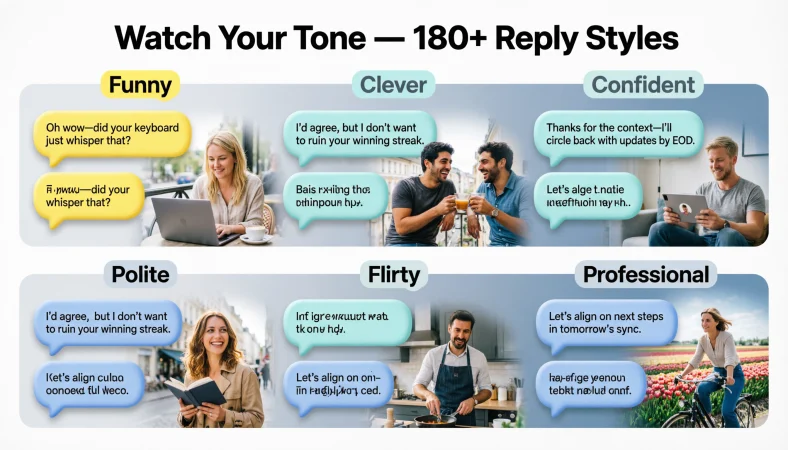
If someone tells you to “watch your tone,” they are usually saying that your way of speaking sounds disrespectful, rude, or too aggressive. Your response can either calm things down, add humor, or confidently make your point.
Top alternatives: “I’m watching it, thanks,” “Which tone would you prefer?”, “My tone is perfectly fine,” “Noted, but my point still stands,” “Let’s focus on what I actually said”
Few phrases can change the temperature of a conversation faster than “watch your tone.” You might hear it from a parent, coworker, friend, partner, teacher, or even someone in a random online argument. Sometimes it is a genuine request to communicate more respectfully.
Other times, it feels like someone is more bothered by how you said something than by what you actually said. That is where having the right watch your tone replies comes in handy. A clever response can keep the situation calm without making you look intimidated.
A funny one can break the tension, while a confident reply can remind someone that your words still matter. Whether you’re texting, dealing with a disagreement, replying in DMs, or handling an awkward face-to-face moment, the right words can make all the difference.
Funny Responses
- “I am watching it. It looks perfectly fine.”
Use this when someone playfully complains about your attitude.
Meaning: You turn the warning into a light joke. - “My tone has been placed under observation.”
Use this when you want to make a tense moment less serious.
Meaning: You humorously acknowledge their complaint. - “Sorry, my tone got a little too excited.”
Use this after realizing you sounded sharper than intended.
Meaning: You admit the tone without making the situation heavy. - “Should I lower the volume too?”
Use this when someone is being overly serious about your delivery.
Meaning: You jokingly exaggerate their concern. - “Tone checked. We’re good.”
Use this with a friend during playful banter.
Meaning: You signal that you understand the message. - “My tone has entered the chat.”
Use this in a funny text exchange.
Meaning: You playfully personify your attitude. - “Don’t worry, the tone department is handling it.”
Use this when someone jokingly calls you out.
Meaning: You respond with absurd humor. - “I’ll send my tone to therapy.”
Use this when the conversation is light enough for sarcasm.
Meaning: You poke fun at the situation. - “Tone? I thought we were discussing facts.”
Use this when someone focuses more on your delivery than your point.
Meaning: You redirect attention toward the actual issue. - “My tone needs a software update.”
Use this when you want a modern, playful response.
Meaning: You humorously suggest adjusting your communication. - “I’ll put my tone on silent mode.”
Use this with someone who appreciates playful texting.
Meaning: You jokingly promise to soften your delivery. - “Fine, I’ll give my tone a pep talk.”
Use this when you want to acknowledge the criticism without tension.
Meaning: You respond with friendly humor.
Brutal but Respectful Responses
- “I’ll watch my tone if you watch the way you speak to me.”
Use this when respect needs to go both ways.
Meaning: You calmly establish a boundary. - “You can dislike my tone without dismissing my point.”
Use this during a serious disagreement.
Meaning: You separate delivery from the substance of your argument. - “My tone can change, but the facts remain.”
Use this when someone is avoiding the main issue.
Meaning: You confidently stand behind your position. - “Respectfully, the message matters too.”
Use this when someone focuses entirely on your delivery.
Meaning: You ask them to consider the actual content. - “I hear you, but I also expect the same respect back.”
Use this when the conversation feels one-sided.
Meaning: You request mutual respect. - “I can adjust my tone without changing my opinion.”
Use this when you want to remain firm.
Meaning: You show that politeness does not mean surrender. - “Let’s address the issue instead of policing every word.”
Use this during an argument that keeps drifting into tone criticism.
Meaning: You bring the discussion back to substance. - “If my tone bothered you, we can fix that. The issue still needs discussing.”
Use this when both communication and substance matter.
Meaning: You acknowledge the concern while keeping your point alive. - “I’m open to feedback, not disrespect.”
Use this when someone is criticizing you aggressively.
Meaning: You distinguish constructive feedback from personal attacks. - “A calmer tone does not make an incorrect argument correct.”
Use this when someone is using tone to avoid your reasoning.
Meaning: You emphasize the importance of substance. - “You heard my tone. I hope you also heard my point.”
Use this after a heated discussion.
Meaning: You remind them not to overlook your message. - “We can discuss my tone after we discuss what happened.”
Use this when accountability is being avoided.
Meaning: You prioritize the real issue.
Flirty Responses
- “Which tone? The one that gets your attention?”
Use this when someone you like tells you to watch your tone.
Meaning: You turn the warning into playful flirting. - “You seem very interested in the way I talk.”
Use this when the conversation has obvious chemistry.
Meaning: You teasingly suggest they are paying extra attention to you. - “Maybe you just like my tone a little too much.”
Use this with a crush during playful banter.
Meaning: You confidently tease them about their interest. - “Careful, you might make me flirt harder.”
Use this when the exchange is already playful.
Meaning: You turn the correction into flirtatious tension. - “Tell me what tone you like and I’ll consider it.”
Use this when you want a cheeky response.
Meaning: You invite playful interaction. - “Is that your way of asking me to keep talking?”
Use this when someone clearly enjoys your attention.
Meaning: You turn their comment into a flirtatious tease. - “I’ll behave if you give me a good reason.”
Use this with someone you are comfortable flirting with.
Meaning: You create playful tension. - “You like confident tones, don’t you?”
Use this when the conversation has a teasing vibe.
Meaning: You frame your confidence as attractive. - “I could soften it, but where’s the fun in that?”
Use this when joking with a crush.
Meaning: You playfully defend your bold personality. - “Maybe my tone is exactly what got your attention.”
Use this when someone keeps focusing on how you speak.
Meaning: You confidently turn criticism into chemistry. - “If you wanted my attention, you could’ve just asked.”
Use this when the person is teasing you.
Meaning: You respond with playful confidence. - “I’ll watch my tone if you keep watching me.”
Use this when the flirtation is clearly mutual.
Meaning: You turn their words into a cheeky compliment.
Polite Responses
- “I understand. I’ll be more mindful of how I say it.”
Use this when you genuinely want to keep things respectful.
Meaning: You acknowledge their concern maturely. - “Thanks for letting me know. I’ll keep my tone respectful.”
Use this during a sensitive discussion.
Meaning: You show consideration without overexplaining. - “I didn’t mean to sound disrespectful, but I understand how it came across.”
Use this after unintentionally sounding harsh.
Meaning: You take responsibility for the delivery. - “That wasn’t my intention. I’ll phrase it differently.”
Use this when your words were misunderstood.
Meaning: You focus on improving communication. - “I appreciate the feedback.”
Use this in a mature conversation.
Meaning: You acknowledge the criticism calmly. - “Fair point. I could have said that better.”
Use this when you realize your delivery was poor.
Meaning: You accept responsibility without unnecessary drama. - “I hear you. Let’s keep the conversation respectful.”
Use this when both people need to calm down.
Meaning: You encourage mutual respect. - “I’ll keep that in mind.”
Use this when you want a short and neutral reply.
Meaning: You acknowledge their request without debating it. - “I understand what you mean.”
Use this when you want to de-escalate.
Meaning: You show that their concern has been heard. - “You’re right that my delivery could have been better.”
Use this when your wording came across too sharply.
Meaning: You own the communication issue. - “Let’s start over and keep things calm.”
Use this when a discussion has become tense.
Meaning: You offer a fresh start. - “I respect that. Let’s talk it through.”
Use this when you want constructive communication.
Meaning: You keep the conversation open and respectful.
Professional Responses
- “I’ll make sure my communication remains professional.”
Use this when responding to a workplace concern.
Meaning: You demonstrate professionalism. - “Understood. I’ll be mindful of my delivery.”
Use this in an office or formal setting.
Meaning: You acknowledge the feedback appropriately. - “I appreciate the feedback and will keep it in mind.”
Use this after receiving workplace criticism.
Meaning: You respond professionally without becoming defensive. - “My intention was not to come across disrespectfully.”
Use this when your message was misunderstood at work.
Meaning: You clarify your intent without escalating. - “I’m happy to clarify what I meant.”
Use this when your tone has caused confusion.
Meaning: You invite a constructive conversation. - “Let’s focus on the issue and find a solution.”
Use this during a workplace disagreement.
Meaning: You redirect attention toward problem-solving. - “I understand your concern regarding my delivery.”
Use this during formal feedback.
Meaning: You acknowledge their perspective. - “I’ll adjust my approach where necessary.”
Use this when you want to show flexibility.
Meaning: You indicate a willingness to improve. - “Thank you for pointing that out.”
Use this when feedback is genuinely useful.
Meaning: You accept the comment professionally. - “I want to make sure my message is understood correctly.”
Use this when tone has created confusion.
Meaning: You prioritize clear communication. - “Let’s keep the discussion constructive.”
Use this when workplace tension starts rising.
Meaning: You encourage productive dialogue. - “I respect your feedback, and I’ll consider it carefully.”
Use this after receiving a formal correction.
Meaning: You remain professional while retaining your judgment.
Creative Responses
- “My tone has a personality of its own.”
Use this when someone playfully criticizes your delivery.
Meaning: You make your response memorable and lighthearted. - “Consider the tone officially adjusted.”
Use this after being asked to soften your words.
Meaning: You acknowledge the request creatively. - “Let me put that sentence through the kindness filter.”
Use this when you want to rephrase something sharply worded.
Meaning: You humorously suggest making your words gentler. - “Tone detected. Recalibrating now.”
Use this in a playful text conversation.
Meaning: You pretend your communication is a technical system. - “I’ll add a little sugar to the next sentence.”
Use this when someone wants a softer delivery.
Meaning: You promise a friendlier approach. - “My words arrived before my manners did.”
Use this after saying something too bluntly.
Meaning: You admit that your delivery could have been better. - “Let’s give this conversation a softer soundtrack.”
Use this when tension is building.
Meaning: You creatively suggest calming things down. - “I’ll edit the tone, but not the truth.”
Use this when you want to stay honest.
Meaning: You promise better delivery without abandoning your point. - “Tone makeover incoming.”
Use this with someone who appreciates internet humor.
Meaning: You playfully announce a change in delivery. - “Let’s put the attitude on airplane mode.”
Use this when both sides need to cool down.
Meaning: You suggest temporarily removing tension. - “I’ll wrap the truth in nicer packaging.”
Use this when your honesty came across too strongly.
Meaning: You intend to remain honest but more tactful. - “Same message, friendlier font.”
Use this when you want to rephrase a sharp statement.
Meaning: You will change the presentation without changing the idea.
Sarcastic Responses
- “Absolutely. I’ll schedule a tone inspection immediately.”
Use this when someone is being overly serious.
Meaning: You respond with exaggerated sarcasm. - “Thanks for the reminder, Professor Tone.”
Use this with a friend who keeps correcting you.
Meaning: You gently tease them for being overly particular. - “Would you like a written report on my tone?”
Use this when someone keeps focusing on your delivery.
Meaning: You exaggerate their concern for comedic effect. - “I’ll alert the tone authorities.”
Use this when the situation is playful.
Meaning: You turn the criticism into absurd humor. - “My tone apologizes for its independent thinking.”
Use this when you want a witty text reply.
Meaning: You jokingly treat your tone as its own character. - “Noted. My tone has received the memo.”
Use this when you want a short sarcastic response.
Meaning: You acknowledge the comment with playful irony. - “I’ll make sure my tone fills out the paperwork.”
Use this during harmless banter.
Meaning: You exaggerate the seriousness of the request. - “Should I submit my tone for approval first?”
Use this when someone is micromanaging your words.
Meaning: You sarcastically question their control over your communication. - “My tone will reflect on this during its next performance review.”
Use this with a coworker you joke with.
Meaning: You make the situation sound hilariously corporate. - “Thanks. My tone really needed career advice.”
Use this when someone is being unnecessarily critical.
Meaning: You respond with dry humor. - “I’ll inform my tone that it has disappointed you.”
Use this during playful banter.
Meaning: You humorously personify your tone. - “I’ll try to make my tone more emotionally available.”
Use this when you want an internet-style joke.
Meaning: You turn the correction into a funny exaggeration.
Cute Responses
- “Okay, I’ll be nicer.”
Use this when you want to soften the moment quickly.
Meaning: You respond gently and affectionately. - “Oops, did my tone get a little spicy?”
Use this with a close friend or partner.
Meaning: You lightly admit your delivery was strong. - “Fine, I’ll use my sweet voice.”
Use this when teasing someone you care about.
Meaning: You promise a softer tone playfully. - “I promise I’m not trying to be mean.”
Use this when someone misunderstood your intention.
Meaning: You reassure them sincerely. - “Okay, okay, kindness mode activated.”
Use this in a playful text exchange.
Meaning: You humorously agree to soften your tone. - “My bad, I’ll add some sunshine to it.”
Use this after sounding a little blunt.
Meaning: You promise a warmer delivery. - “I’ll behave, promise.”
Use this with someone you have a playful relationship with.
Meaning: You respond with lighthearted charm. - “No attitude, just passion.”
Use this when someone mistakes enthusiasm for rudeness.
Meaning: You explain that your intensity is not intended negatively. - “Okay, I’ll turn down the sass.”
Use this with someone who knows your personality well.
Meaning: You acknowledge that your delivery was cheeky. - “I’ll use my nicest words next time.”
Use this after an awkward moment.
Meaning: You show willingness to communicate more gently. - “Consider me officially softened.”
Use this when you want a cute response.
Meaning: You playfully accept the correction. - “Peace and kindness restored.”
Use this after a small disagreement.
Meaning: You signal that you want to move forward positively.
Dramatic Responses
- “My tone? After everything we’ve been through?”
Use this when joking with someone close to you.
Meaning: You dramatically exaggerate a tiny complaint. - “I never thought my tone would betray me like this.”
Use this in a playful argument.
Meaning: You turn the moment into fake drama. - “Fine. I shall speak with the elegance of royalty.”
Use this when you want an over-the-top reply.
Meaning: You humorously promise to sound more refined. - “This is clearly a historic misunderstanding.”
Use this when a tiny issue becomes funny.
Meaning: You exaggerate the importance of the moment. - “My tone has been misunderstood once again.”
Use this when joking about your personality.
Meaning: You playfully defend your delivery. - “I shall now retire from the conversation.”
Use this with friends during harmless banter.
Meaning: You pretend the correction is a major event. - “My tone has officially entered its redemption era.”
Use this for a social-media-friendly joke.
Meaning: You humorously promise to improve. - “I will remember this moment forever.”
Use this when someone lightly calls you out.
Meaning: You exaggerate the seriousness for laughs. - “How could my innocent little tone cause such chaos?”
Use this during playful teasing.
Meaning: You dramatically pretend to be confused. - “The tone has spoken. The meeting is adjourned.”
Use this when ending a humorous argument.
Meaning: You close the exchange with theatrical confidence. - “Clearly, my tone needs its own character development.”
Use this when your delivery has become a running joke.
Meaning: You turn criticism into a funny storyline. - “I came here to communicate, not to star in a courtroom drama.”
Use this when a simple disagreement becomes intense.
Meaning: You humorously ask everyone to calm down.
Chill And Casual Responses
- “Yeah, fair. I’ll chill.”
Use this when you know your delivery was a little strong.
Meaning: You acknowledge the comment without making it serious. - “Got you.”
Use this when you want a quick, relaxed response.
Meaning: You show that you understand. - “No worries, I’ll keep it chill.”
Use this during a casual disagreement.
Meaning: You promise a calmer approach. - “Fair enough.”
Use this when you do not want to argue about tone.
Meaning: You acknowledge their perspective casually. - “Alright, I hear you.”
Use this when you want to de-escalate.
Meaning: You show that their concern has been heard. - “My bad, didn’t mean for it to sound like that.”
Use this when your message came across incorrectly.
Meaning: You clarify your intention casually. - “Okay, let’s reset.”
Use this when the conversation has become tense.
Meaning: You suggest starting fresh. - “No hard feelings.”
Use this when you want to keep things relaxed.
Meaning: You signal that you are not looking for conflict. - “I’m good, you’re good. We’re good.”
Use this when you want to end minor tension.
Meaning: You reassure everyone that the issue is not worth escalating. - “I’ll tone it down a bit.”
Use this when you want to compromise.
Meaning: You agree to communicate more gently. - “Got it. Message received.”
Use this when you want a short acknowledgment.
Meaning: You confirm that you understand. - “All good. Let’s move on.”
Use this when you want to stop dwelling on the issue.
Meaning: You encourage everyone to move forward.
Confident Responses
- “I can watch my tone without losing my confidence.”
Use this when someone mistakes confidence for disrespect.
Meaning: You protect your self-assurance while remaining respectful. - “I know how I sound, and I stand by what I said.”
Use this when your point matters.
Meaning: You confidently own your words. - “My tone can be adjusted. My boundaries cannot.”
Use this when someone is challenging a personal boundary.
Meaning: You make it clear that respect has limits. - “I’ll be respectful, but I won’t pretend I agree.”
Use this during a serious disagreement.
Meaning: You separate courtesy from agreement. - “Confidence is not disrespect.”
Use this when someone interprets assertiveness negatively.
Meaning: You defend your right to speak firmly. - “I can speak calmly and still be direct.”
Use this when someone wants you to soften your position.
Meaning: You emphasize balanced communication. - “You can question my tone, but my point deserves an answer.”
Use this when someone avoids the actual issue.
Meaning: You redirect the discussion toward substance. - “I’ll choose my words carefully, but I won’t shrink myself.”
Use this when you feel pressured to become overly passive.
Meaning: You maintain confidence without being hostile. - “Respectfully, I’m allowed to be assertive.”
Use this in a boundary-setting conversation.
Meaning: You defend healthy assertiveness. - “I hear your concern, but I’m comfortable with what I said.”
Use this when you do not want to backtrack unnecessarily.
Meaning: You acknowledge them without abandoning your position. - “I’ll keep the tone respectful and the message honest.”
Use this when both honesty and politeness matter.
Meaning: You commit to truthful communication. - “Being direct does not automatically mean being rude.”
Use this when someone confuses clarity with disrespect.
Meaning: You defend straightforward communication.
Emotional Responses
- “I wasn’t trying to hurt you. I was frustrated.”
Use this when emotions affected your delivery.
Meaning: You explain the feeling behind your tone. - “I’m sorry if my tone made you feel disrespected.”
Use this after an emotional misunderstanding.
Meaning: You show empathy for their experience. - “I could have expressed myself better.”
Use this when you recognize that frustration took over.
Meaning: You accept responsibility for your delivery. - “There’s more behind my tone than anger.”
Use this when someone misunderstands your emotions.
Meaning: You suggest that deeper feelings are involved. - “I was overwhelmed, not trying to be rude.”
Use this when stress affected your communication.
Meaning: You explain the emotional context. - “I care about this, which is why I sounded intense.”
Use this when passion was mistaken for hostility.
Meaning: You explain that strong emotion came from caring. - “I want us to understand each other, not fight.”
Use this during a meaningful disagreement.
Meaning: You prioritize connection over conflict. - “I hear you, and I don’t want my tone to get in the way.”
Use this when you want to repair communication.
Meaning: You show that the relationship matters. - “I’m willing to say it again more calmly.”
Use this when you genuinely want to resolve things.
Meaning: You offer a constructive reset. - “I’m upset, but I still respect you.”
Use this during an emotional disagreement.
Meaning: You separate frustration from personal disrespect. - “I hope you can hear what I meant, not just how I said it.”
Use this after a tense conversation.
Meaning: You ask them to consider your intention. - “Let’s take a breath and talk when we’re both calmer.”
Use this when emotions are running high.
Meaning: You prioritize a healthier conversation.
Sweet Responses
- “I’ll soften my tone, promise.”
Use this with someone you genuinely care about.
Meaning: You show that their feelings matter to you. - “I didn’t mean to sound harsh.”
Use this when your words came across too strongly.
Meaning: You clarify your intention kindly. - “You’re right, I could have said it more gently.”
Use this when you recognize a communication mistake.
Meaning: You accept the feedback warmly. - “Let’s not let a tone ruin a good conversation.”
Use this when you want to repair the moment.
Meaning: You encourage both people to move forward. - “I hear you. I’ll choose softer words.”
Use this when you want to reassure someone.
Meaning: You promise a more considerate approach. - “No disrespect intended, honestly.”
Use this when someone took your words personally.
Meaning: You clarify that you meant no harm. - “I care about what you’re saying.”
Use this when you want to reassure someone during disagreement.
Meaning: You show that you are listening. - “Okay, let’s start over nicely.”
Use this after a tense exchange.
Meaning: You invite a positive reset. - “I’ll trade the attitude for kindness.”
Use this when joking with someone close.
Meaning: You promise a warmer tone. - “Your feelings matter to me.”
Use this during a meaningful conversation.
Meaning: You prioritize emotional consideration. - “I’ll try again because I don’t want you to misunderstand me.”
Use this when communication matters deeply.
Meaning: You show patience and care. - “Peace? I’d rather keep things good between us.”
Use this after a small disagreement.
Meaning: You value harmony over winning.
Clever Responses
- “Tone is delivery. The message is still worth discussing.”
Use this when someone ignores the substance of your statement.
Meaning: You separate communication style from content. - “Let’s correct the tone without avoiding the topic.”
Use this during a disagreement.
Meaning: You keep the conversation focused. - “I can improve my delivery and still defend my position.”
Use this when someone expects you to completely back down.
Meaning: You combine tact with confidence. - “If the tone is the problem, let’s fix the tone and solve the problem.”
Use this when a discussion gets distracted.
Meaning: You move toward practical resolution. - “A respectful tone and an honest opinion can coexist.”
Use this when someone expects agreement.
Meaning: You show that politeness does not require surrender. - “I’ll adjust the volume, not the truth.”
Use this when you want a concise clever response.
Meaning: You promise better delivery while staying honest. - “Let’s discuss what I said instead of only how I said it.”
Use this when tone becomes the entire argument.
Meaning: You redirect attention toward substance. - “Communication has two parts: what you say and how you say it.”
Use this when both sides need perspective.
Meaning: You recognize that delivery matters without dismissing content. - “I’ll own my tone if you’ll address the issue.”
Use this during a serious disagreement.
Meaning: You invite mutual accountability. - “If my tone was unclear, I’m happy to clarify my meaning.”
Use this when someone genuinely misunderstood you.
Meaning: You prioritize clarity over defensiveness. - “I can change my tone without changing the facts.”
Use this when someone challenges your conclusion.
Meaning: You distinguish presentation from reality. - “Let’s aim for understanding instead of winning the argument.”
Use this when a discussion becomes competitive.
Meaning: You encourage productive communication.
Short And Direct Responses
- “Noted.”
Use this when you want a brief acknowledgment.
Meaning: You confirm that you heard them. - “I hear you.”
Use this when you want to keep things calm.
Meaning: You acknowledge their concern. - “Fair enough.”
Use this when you accept part of their point.
Meaning: You respond without escalating. - “Understood.”
Use this in a serious or formal situation.
Meaning: You clearly acknowledge the request. - “Point taken.”
Use this when their feedback has some merit.
Meaning: You admit that you understand their perspective. - “I’ll keep that in mind.”
Use this when you want a neutral response.
Meaning: You acknowledge their feedback. - “I’ll be more mindful.”
Use this when your delivery genuinely needs adjustment.
Meaning: You promise greater awareness. - “Got it.”
Use this in casual texting.
Meaning: You show that you understand. - “Message received.”
Use this when you want a confident but neutral response.
Meaning: You confirm that their words reached you. - “I’ll adjust.”
Use this when you want to avoid unnecessary debate.
Meaning: You indicate willingness to change your approach. - “Let’s keep it respectful.”
Use this when both people need to remain calm.
Meaning: You establish a mutual standard. - “Let’s move forward.”
Use this when you do not want to dwell on the moment.
Meaning: You encourage the conversation to continue productively.
Witty Responses
- “I’m watching it. It’s behaving beautifully.”
Use this with friends during playful teasing.
Meaning: You turn the warning into a joke. - “My tone has been officially reviewed.”
Use this when someone playfully corrects you.
Meaning: You respond with mock seriousness. - “Tone under control. Personality remains.”
Use this when you want to stay playful and confident.
Meaning: You promise restraint without hiding who you are. - “I’ll keep the tone classy and the point clear.”
Use this when you want a polished comeback.
Meaning: You combine confidence with respect. - “The tone may be bold, but the message is sincere.”
Use this when your personality is naturally direct.
Meaning: You explain that confidence is not hostility. - “I’ll lower the spice level.”
Use this with someone who knows your humor.
Meaning: You promise a softer delivery. - “Tone adjusted. No refunds.”
Use this during playful banter.
Meaning: You humorously acknowledge the correction. - “I’ll put my attitude back in its assigned seat.”
Use this when you want an amusing response.
Meaning: You jokingly promise to behave. - “My tone was just adding seasoning.”
Use this when someone calls your delivery spicy.
Meaning: You turn your attitude into a food joke. - “Consider the message delivered with extra flavor.”
Use this during friendly teasing.
Meaning: You playfully defend your expressive style. - “I’ll make the next sentence less dramatic.”
Use this after realizing you sounded intense.
Meaning: You promise a calmer delivery. - “Tone check passed with minor corrections.”
Use this when you want a clever text response.
Meaning: You acknowledge the criticism without taking it too seriously.
Calm And Mature Responses
- “I understand that my tone bothered you. Let’s talk about it calmly.”
Use this when a disagreement needs genuine resolution.
Meaning: You acknowledge their feelings while encouraging constructive dialogue. - “I’m willing to listen to how it came across.”
Use this when you want honest feedback.
Meaning: You show emotional maturity. - “I can see why you interpreted it that way.”
Use this when your intention and impact were different.
Meaning: You recognize their perspective. - “My intention was different, but I understand the impact.”
Use this after unintentionally offending someone.
Meaning: You distinguish intent from effect. - “Let’s clarify what I meant instead of assuming.”
Use this when there has been a misunderstanding.
Meaning: You encourage direct communication. - “I’m not interested in turning this into an argument.”
Use this when emotions begin escalating.
Meaning: You set a calm boundary. - “We can disagree without disrespecting each other.”
Use this during a difficult conversation.
Meaning: You establish a healthy communication standard. - “I’ll work on my delivery if we can work through the actual issue.”
Use this when both tone and substance matter.
Meaning: You encourage shared responsibility. - “Let’s slow down and make sure we understand each other.”
Use this when both people are frustrated.
Meaning: You prioritize understanding. - “I respect your perspective, even though mine is different.”
Use this when you strongly disagree.
Meaning: You demonstrate mature disagreement. - “I’d rather solve this than prove a point.”
Use this when an argument becomes competitive.
Meaning: You prioritize resolution. - “Let’s keep our words respectful and our discussion honest.”
Use this when setting the tone for a serious conversation.
Meaning: You balance kindness with honesty.
Replies For When You Are Actually Annoyed
- “I’ll watch my tone, but I’m still allowed to be frustrated.”
Use this when someone dismisses your emotions.
Meaning: You acknowledge your frustration without apologizing for having feelings. - “I’m annoyed, not disrespectful.”
Use this when your mood is being mistaken for hostility.
Meaning: You distinguish emotion from intentional disrespect. - “I’ll calm down, but I’d like you to hear me out.”
Use this when you still want your concerns addressed.
Meaning: You ask for space while keeping communication open. - “I’m frustrated because this matters to me.”
Use this when your intensity comes from genuine concern.
Meaning: You explain the emotion behind your delivery. - “I can lower my tone, but the problem is still there.”
Use this when someone focuses only on your attitude.
Meaning: You remind them that the underlying issue remains. - “I’m willing to calm down if we can actually address the issue.”
Use this when you want constructive action.
Meaning: You offer cooperation while requesting accountability. - “I don’t want to argue. I want to be heard.”
Use this when frustration is making communication difficult.
Meaning: You clearly state your goal. - “My frustration is real, even if my delivery was imperfect.”
Use this when both your emotions and tone matter.
Meaning: You take responsibility without invalidating yourself. - “Let’s talk when we can both listen properly.”
Use this when the current moment is too heated.
Meaning: You suggest a healthier time for discussion. - “I’ll work on my tone if you work on hearing my concern.”
Use this when communication feels one-sided.
Meaning: You ask for mutual effort. - “I’m not trying to attack you. I’m trying to explain why I’m upset.”
Use this during an emotional disagreement.
Meaning: You clarify your intention. - “I’ll speak calmly, but I won’t pretend everything is fine.”
Use this when you need to be honest about a problem.
Meaning: You choose composure without hiding your feelings.
Playful Comebacks
- “Tone noted. Sass retained.”
Use this with a friend who knows your humor.
Meaning: You promise moderation while keeping your personality. - “I’ll watch my tone if you watch your eyebrows.”
Use this during playful face-to-face teasing.
Meaning: You jokingly turn the criticism back around. - “My tone just has main-character energy.”
Use this when joking with friends.
Meaning: You playfully celebrate your expressive personality. - “Okay, okay, I’ll put the attitude back in the drawer.”
Use this after a lighthearted complaint.
Meaning: You jokingly agree to tone things down. - “I’ll keep my tone on its best behavior.”
Use this when you want a cute comeback.
Meaning: You humorously promise to behave. - “Tone check complete. Personality still loading.”
Use this in a funny text exchange.
Meaning: You turn the situation into playful tech humor. - “I’ll make it 20% less spicy.”
Use this when someone says you sound intense.
Meaning: You humorously promise a softer delivery. - “Fine, I’ll switch from bold mode to polite mode.”
Use this when you want a playful response.
Meaning: You joke about changing communication styles. - “My tone needs boundaries too.”
Use this when the conversation is light enough for wordplay.
Meaning: You turn the idea of boundaries into a joke. - “I promise the next sentence comes with a smile.”
Use this when your delivery sounded harsh.
Meaning: You suggest a friendlier approach. - “Tone adjusted. Drama reduced by 12%.”
Use this with someone who enjoys playful exaggeration.
Meaning: You make the situation sound like a funny measurement. - “Relax, my tone is just expressive.”
Use this when someone knows you are naturally animated.
Meaning: You explain your personality without escalating.
Replies That Set A Boundary
- “I’ll respect your feelings, but I expect the same in return.”
Use this when someone speaks to you disrespectfully.
Meaning: You establish mutual respect. - “You can tell me how you feel without talking down to me.”
Use this when the correction itself feels disrespectful.
Meaning: You set a clear communication boundary. - “I’m happy to discuss my tone, but not through insults.”
Use this when someone becomes aggressive.
Meaning: You refuse disrespectful communication. - “Let’s both watch our tone.”
Use this when the conversation is becoming heated on both sides.
Meaning: You make respect a shared responsibility. - “I’ll listen if we can speak to each other respectfully.”
Use this when you want to continue the conversation.
Meaning: You set a condition for productive communication. - “Please address what I said rather than attacking how I said it.”
Use this when tone becomes a distraction.
Meaning: You redirect the discussion toward substance. - “I’m not going to apologize for having a different opinion.”
Use this when someone expects automatic agreement.
Meaning: You protect your right to disagree. - “I can be respectful without being passive.”
Use this when someone confuses politeness with silence.
Meaning: You defend assertive communication. - “My tone is open to discussion, but so is yours.”
Use this when accountability needs to be mutual.
Meaning: You remind them that both people influence the conversation. - “Let’s keep this respectful from both sides.”
Use this during a tense exchange.
Meaning: You establish a two-way standard. - “I’ll lower my tone when the conversation becomes respectful.”
Use this when someone is already speaking aggressively.
Meaning: You refuse to accept a one-sided demand for politeness. - “I’m here to communicate, not be spoken down to.”
Use this when someone is being condescending.
Meaning: You clearly protect your dignity.
FAQs
What Does “Watch Your Tone” Mean?
“Watch your tone” usually means someone thinks your way of speaking sounds rude, disrespectful, aggressive, sarcastic, or overly demanding. Depending on the context, it can be a genuine request for respect or a way of challenging your attitude.
Can “Watch Your Tone” Be Flirty?
Yes, especially between people who already tease or flirt with each other. In a playful context, it can become an opening for cheeky replies such as “Which tone do you like?” or “Maybe you just like my tone.”
What Is A Good Emotional Reply To “Watch Your Tone”?
Try “I’m frustrated, not trying to disrespect you” or “I care about this, which is why I sounded intense.” These responses explain your feelings without unnecessarily escalating the situation.
Can You Say “Watch Your Tone” In A Professional Setting?
Yes, but it can sound confrontational. In professional situations, phrases such as “Let’s keep the discussion respectful” or “I’d appreciate a professional tone” are usually clearer and more constructive.
What If You Do Not Think Your Tone Was Rude?
You can calmly say, “I understand how it came across, but that wasn’t my intention.” You can also ask, “What specifically sounded disrespectful?” This gives the other person a chance to explain.
What If You Actually Were Too Harsh?
Own it. A simple “You’re right, I could have said that better” can prevent a small communication problem from becoming a much bigger argument.
Is Humor Appropriate When Someone Says “Watch Your Tone”?
It depends on the relationship and situation. Humor works well with friends, siblings, partners, and people who already understand your personality. It is usually better to stay calm and professional at work or during a serious conflict.
What Is The Best Response To “Watch Your Tone”?
The best response depends on the situation. For a calm approach, try “I hear you, I’ll be more mindful.” A confident approach, use “I can adjust my tone without changing my opinion.” For humor, try “Tone check complete.”
Conclusion
A good response to “watch your tone” does not have to turn into another argument. Sometimes the smartest move is to acknowledge the feedback, soften your delivery, and keep the conversation moving. Other times, you need to make it clear that confidence, honesty, and disagreement are not automatically disrespectful. The key is knowing your audience and reading the room.
A funny comeback can lighten the mood with friends, while a calm and professional response works better at work. Choose the reply that matches the moment, not just the one that sounds clever on paper. Save this list for your next awkward conversation, share your favorite response, and keep your communication confident, respectful, and unmistakably you.





1 thought on “180+ “Watch Your Tone” Replies That Are Funny, Clever, Confident & Perfect for Any Situation In 2026”