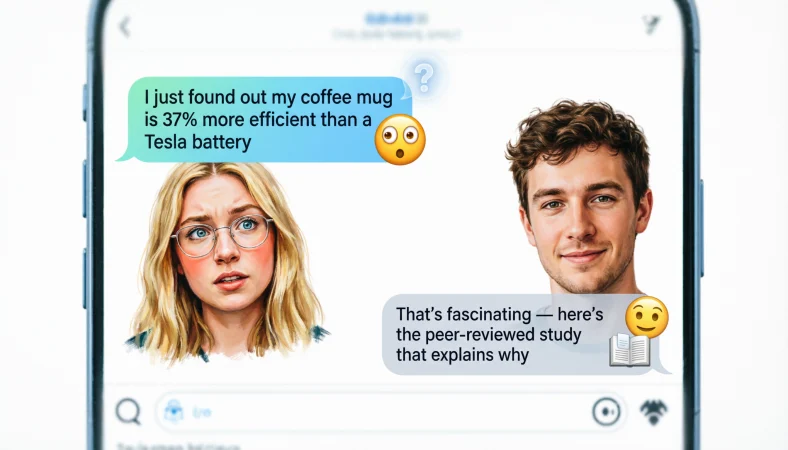
There are plenty of smart ways to respond when you don’t believe someone without starting an argument. The key is to stay calm, curious, and respectful while making it clear you’re not fully convinced.
Top alternatives: “That’s interesting, but I’m not convinced.”, “Can you explain that a little more?”, “I’m having a hard time believing that.”, “Do you have any proof?”, “I’ll need a little more convincing.”
We’ve all been there. A friend tells an unbelievable story, a coworker makes a questionable claim, or someone in your DMs drops a statement that sounds just a little too good to be true. Your first thought might be, “There’s no way that’s real.” But blurting that out isn’t always the best move.
Knowing smart ways to respond when you don’t believe someone helps you protect relationships while still standing your ground. Whether you’re texting your best friend, chatting with your crush, dealing with office gossip, or scrolling through social media, the right response can express healthy skepticism without sounding rude or confrontational. Sometimes a little humor works. Other times, a calm and thoughtful reply is the smarter choice. These ready-to-use responses will help you handle almost any situation with confidence, wit, and respect.
Polite Responses When You Don’t Believe Someone
That’s interesting, but I’m not completely convinced.
Example: Perfect when someone shares an unbelievable story.
Meaning: It politely expresses doubt without dismissing them.
Can you tell me a little more?
Example: Great when you want additional details.
Meaning: It encourages clarification instead of conflict.
I’m having a hard time believing that.
Example: Use after hearing an extraordinary claim.
Meaning: It honestly expresses your skepticism.
I might need a bit more proof.
Example: Perfect during a factual discussion.
Meaning: It asks for evidence respectfully.
That’s a bold claim.
Example: Great after hearing something surprising.
Meaning: It acknowledges the statement while remaining cautious.
I’m open to being convinced.
Example: Use during friendly debates.
Meaning: It shows you’re willing to listen.
Help me understand your point.
Example: Great when someone explains a complicated idea.
Meaning: It asks for clarification respectfully.
I’m not sure I’m there yet.
Example: Perfect after hearing an opinion you question.
Meaning: It gently says you aren’t convinced.
I’d love to see where you got that information.
Example: Great during conversations about facts.
Meaning: It politely requests a source.
That’s one perspective.
Example: Use during discussions with differing opinions.
Meaning: It respectfully acknowledges their viewpoint.
I’m going to keep an open mind.
Example: Great before making a final judgment.
Meaning: It shows fairness despite your doubts.
That sounds unusual.
Example: Perfect after hearing an unlikely story.
Meaning: It expresses skepticism gently.
Interesting… I’m just not fully sold yet.
Example: Great during casual conversations.
Meaning: It politely says you need more convincing.
Let’s say I’m cautiously skeptical.
Example: Perfect among friends.
Meaning: It expresses doubt in a lighthearted way.
I appreciate you sharing it anyway.
Example: Great when ending the discussion respectfully.
Meaning: It values the conversation despite your doubts.
Funny Responses When You Don’t Believe Someone
Sure… and my cat pays rent.
Example: Great for joking with close friends.
Meaning: It humorously says the story sounds unbelievable.
That sounds like a Netflix script.
Example: Perfect after hearing a wild story.
Meaning: It compares their claim to fictional entertainment.
I’m gonna need the director’s cut.
Example: Great when the story feels incomplete.
Meaning: It jokingly asks for more details.
Respectfully… cap.
Example: Perfect for Gen Z group chats.
Meaning: It playfully calls the statement unbelievable.
You almost had me.
Example: Great after an exaggerated story.
Meaning: It jokes that they nearly convinced you.
That’s a five-star imagination.
Example: Use with friends who love storytelling.
Meaning: It compliments their creativity while expressing doubt.
Source: Trust me, bro?
Example: Great for internet-savvy conversations.
Meaning: It humorously asks for evidence.
I’m filing this under ‘Things That Didn’t Happen.’
Example: Perfect for outrageous claims.
Meaning: It jokingly says you don’t believe it.
That plot twist needs a sequel.
Example: Great after an unbelievable ending.
Meaning: It playfully asks for more explanation.
My eyebrow just raised itself.
Example: Use after hearing something suspicious.
Meaning: It humorously signals disbelief.
Even Google would question that.
Example: Great after hearing unlikely facts.
Meaning: It jokes that the claim is hard to verify.
That story skipped a few chapters.
Example: Perfect when details don’t add up.
Meaning: It hints that something is missing.
You’re testing my trust issues.
Example: Great among close friends.
Meaning: It playfully admits you’re skeptical.
I need receipts, not cliffhangers.
Example: Perfect after vague claims.
Meaning: It humorously asks for proof.
That deserves an Oscar if it’s true.
Example: Great after dramatic stories.
Meaning: It jokes that the claim sounds cinematic.
Clever Responses When You Don’t Believe Someone
Extraordinary claims need extraordinary evidence.
Example: Great during thoughtful discussions.
Meaning: It politely asks for proof.
I’m listening, but I’m not convinced yet.
Example: Perfect for respectful debates.
Meaning: It stays open-minded while expressing doubt.
That’s an interesting theory.
Example: Great when someone shares an unlikely explanation.
Meaning: It acknowledges their idea without agreeing.
Walk me through the logic.
Example: Use when details seem inconsistent.
Meaning: It asks them to explain their reasoning.
I’d love to see the facts behind that.
Example: Perfect during conversations about news or statistics.
Meaning: It requests supporting evidence.
I’m connecting the dots… and something’s missing.
Example: Great when a story doesn’t make sense.
Meaning: It politely points out inconsistencies.
That raises more questions than answers.
Example: Use after hearing an unbelievable explanation.
Meaning: It expresses thoughtful skepticism.
I’m willing to hear more.
Example: Great before dismissing a claim.
Meaning: It keeps the conversation respectful.
Something isn’t adding up for me.
Example: Perfect when details conflict.
Meaning: It explains your uncertainty.
Convince me.
Example: Great for playful debates among friends.
Meaning: It challenges them to provide stronger evidence.
That’s possible, but not probable.
Example: Use when something seems unlikely.
Meaning: It distinguishes possibility from likelihood.
I’m keeping my skepticism switched on.
Example: Great during conversations about rumors.
Meaning: It says you’re staying cautious.
Let’s fact-check that together.
Example: Perfect when discussing questionable information.
Meaning: It invites a collaborative search for the truth.
I have questions… lots of them.
Example: Great after hearing an unbelievable story.
Meaning: It signals healthy curiosity.
I’ll believe it when the evidence catches up.
Example: Perfect for extraordinary claims.
Meaning: It says proof matters more than words.
Sarcastic Responses When You Don’t Believe Someone
Oh, absolutely… and unicorns file taxes too.
Example: Great with friends who enjoy sarcasm.
Meaning: It humorously compares their claim to something impossible.
Seems totally believable.
Example: Perfect when your tone clearly says otherwise.
Meaning: It sarcastically expresses disbelief.
I’ll add that to my collection of impossible stories.
Example: Great after an outrageous claim.
Meaning: It jokes that the story belongs in fiction.
Sure thing, detective.
Example: Use after someone confidently makes a questionable claim.
Meaning: It playfully teases their certainty.
That’s definitely one version of reality.
Example: Great during friendly banter.
Meaning: It suggests your perspectives differ.
Interesting fantasy.
Example: Perfect when someone exaggerates.
Meaning: It sarcastically hints the story feels fictional.
Did the plot write itself?
Example: Great after hearing a dramatic explanation.
Meaning: It compares their story to a movie.
I’m impressed by the confidence.
Example: Use when they sound certain without proof.
Meaning: It compliments their confidence while doubting the claim.
The math isn’t mathing.
Example: Perfect when details don’t line up.
Meaning: It humorously points out inconsistencies.
That’s adorable if true.
Example: Great for playful conversations.
Meaning: It lightly questions the story.
You almost convinced me for a second.
Example: Use after hearing an unbelievable tale.
Meaning: It jokes that they came close.
My skepticism just got a workout.
Example: Great after multiple unlikely claims.
Meaning: It humorously says you’re unconvinced.
I’ll pretend I bought that.
Example: Perfect for teasing friends.
Meaning: It sarcastically says you don’t believe it.
Nice try, though.
Example: Great after an obvious exaggeration.
Meaning: It playfully rejects the claim.
That’s going straight into the fiction section.
Example: Perfect after hearing a far-fetched story.
Meaning: It jokes that the story sounds made up.
Confident Responses When You Don’t Believe Someone
I’m going to stick with the facts for now.
Example: Great during a debate where evidence matters.
Meaning: It calmly prioritizes facts over assumptions.
I’m not convinced, and that’s okay.
Example: Perfect when opinions differ.
Meaning: It confidently accepts disagreement without conflict.
I’ll need more than words to believe that.
Example: Use after hearing a bold claim.
Meaning: It politely asks for stronger evidence.
I’m comfortable questioning that.
Example: Great when others accept a claim too quickly.
Meaning: It shows confidence in your own judgment.
I respect your opinion, but mine is different.
Example: Perfect during respectful conversations.
Meaning: It disagrees without being disrespectful.
That doesn’t line up with what I know.
Example: Great when the story contradicts known facts.
Meaning: It explains your skepticism clearly.
I’m happy to change my mind if the evidence changes.
Example: Use in thoughtful discussions.
Meaning: It shows confidence and open-mindedness.
I’m not ready to believe that yet.
Example: Perfect after hearing surprising news.
Meaning: It keeps your position honest and respectful.
I’ll wait until I know more.
Example: Great when the facts are still unclear.
Meaning: It avoids jumping to conclusions.
I’m choosing caution over assumptions.
Example: Use when someone spreads rumors.
Meaning: It emphasizes careful thinking.
I don’t see enough to support that claim.
Example: Great during fact-based conversations.
Meaning: It politely points out the lack of evidence.
I trust evidence more than confidence.
Example: Perfect when someone sounds convincing without proof.
Meaning: It values facts over persuasion.
I’m okay being the skeptical one.
Example: Great when everyone else agrees too quickly.
Meaning: It shows independent thinking.
I’ll believe it when it makes sense to me.
Example: Use after hearing an unbelievable explanation.
Meaning: It expresses personal judgment confidently.
Let’s agree that I’m not sold yet.
Example: Perfect for ending a debate respectfully.
Meaning: It acknowledges disagreement without hostility.
Professional Responses When You Don’t Believe Someone
Could you clarify what you mean?
Example: Great during workplace discussions.
Meaning: It requests more information professionally.
Do you have any supporting information?
Example: Perfect in meetings or presentations.
Meaning: It politely asks for evidence.
I’d like to verify that before drawing conclusions.
Example: Use before making a decision.
Meaning: It values accuracy over assumptions.
That’s an interesting perspective.
Example: Great when someone shares an opinion.
Meaning: It acknowledges their viewpoint respectfully.
Let’s review the facts together.
Example: Perfect during collaborative discussions.
Meaning: It encourages teamwork while verifying information.
I’m not certain that’s accurate.
Example: Great when information seems questionable.
Meaning: It expresses doubt professionally.
Can we confirm that source?
Example: Use when discussing reports or statistics.
Meaning: It asks for reliable verification.
I’d rather rely on verified information.
Example: Perfect in business settings.
Meaning: It emphasizes evidence-based decisions.
I’d like to understand the reasoning behind that.
Example: Great during strategy meetings.
Meaning: It encourages thoughtful explanation.
Let’s double-check before moving forward.
Example: Perfect before making important decisions.
Meaning: It promotes accuracy and caution.
I see your point, but I have some reservations.
Example: Great during professional disagreements.
Meaning: It expresses concern respectfully.
I’d appreciate more context.
Example: Use when details seem incomplete.
Meaning: It politely requests additional information.
That may be worth validating first.
Example: Perfect before accepting new information.
Meaning: It encourages fact-checking.
I’d like to hear the evidence before deciding.
Example: Great during formal discussions.
Meaning: It keeps an objective mindset.
Let’s keep an open mind until we know more.
Example: Perfect when information is still developing.
Meaning: It promotes fairness and patience.
Chill And Casual Responses When You Don’t Believe Someone
Hmm… I’m not buying it.
Example: Great when joking with friends.
Meaning: It casually expresses disbelief.
That’s a tough sell.
Example: Perfect after an unbelievable story.
Meaning: It says the claim isn’t convincing.
Maybe… but I’m skeptical.
Example: Great during friendly chats.
Meaning: It politely shares your doubts.
I’m gonna need proof.
Example: Use after hearing an extraordinary claim.
Meaning: It casually asks for evidence.
I don’t know about that one.
Example: Perfect when something sounds unlikely.
Meaning: It gently questions the statement.
Really though?
Example: Great after surprising news.
Meaning: It invites further explanation.
You sure about that?
Example: Perfect with close friends.
Meaning: It challenges the claim lightly.
That sounds a little suspicious.
Example: Great after hearing inconsistent details.
Meaning: It expresses doubt without being harsh.
I’m calling maybe on that.
Example: Perfect for casual conversations.
Meaning: It avoids giving full belief.
I’ll wait and see.
Example: Great when future events will reveal the truth.
Meaning: It postpones judgment.
You’ve got my attention, but not my belief.
Example: Use after an interesting story.
Meaning: It says you’re curious but unconvinced.
That’s one way to tell it.
Example: Great when a story feels exaggerated.
Meaning: It politely hints at disbelief.
I have questions.
Example: Perfect after hearing confusing information.
Meaning: It invites clarification.
Maybe you’re right… maybe not.
Example: Great during playful debates.
Meaning: It keeps things open-ended.
We’ll see about that.
Example: Perfect when the truth will become clear later.
Meaning: It delays your final opinion.
Brutal Responses When You Don’t Believe Someone
That doesn’t even sound believable.
Example: Use only with people who appreciate blunt honesty.
Meaning: It directly expresses disbelief.
You’re asking me to ignore common sense.
Example: Great during heated debates.
Meaning: It says the claim lacks logic.
None of that adds up.
Example: Perfect after hearing inconsistent details.
Meaning: It points out contradictions.
I don’t believe a word of it.
Example: Use when you’re completely unconvinced.
Meaning: It clearly rejects the claim.
That’s full of holes.
Example: Great after hearing a weak explanation.
Meaning: It says the story has major flaws.
You’re going to need a better story than that.
Example: Perfect after obvious exaggeration.
Meaning: It says the explanation isn’t convincing.
That sounds completely made up.
Example: Use when the claim feels fictional.
Meaning: It directly questions its truthfulness.
The facts don’t support that.
Example: Great during evidence-based discussions.
Meaning: It points to the lack of proof.
You’re expecting too much trust.
Example: Perfect after unbelievable claims.
Meaning: It says belief should be earned.
I’m not that easy to convince.
Example: Great when someone keeps insisting.
Meaning: It emphasizes your skepticism.
That explanation falls apart pretty quickly.
Example: Use after hearing inconsistent reasoning.
Meaning: It highlights logical weaknesses.
You’ll need stronger evidence than that.
Example: Perfect for factual conversations.
Meaning: It requests better proof.
I’m not ignoring the red flags.
Example: Great when something feels suspicious.
Meaning: It explains your caution.
I think you’re stretching the truth.
Example: Use when exaggeration seems obvious.
Meaning: It questions their honesty.
I’m sticking with reality on this one.
Example: Perfect for obvious exaggerations.
Meaning: It firmly rejects the unbelievable claim.
Funny Responses When You Secretly Think They’re Joking
I’ll believe that right after pigs start flying.
Example: Great for joking with close friends after a ridiculous claim.
Meaning: It humorously says the story sounds impossible.
That belongs in a Hollywood movie.
Example: Use after hearing an over-the-top story.
Meaning: It compares their claim to fiction.
You almost unlocked my trust.
Example: Perfect for playful group chats.
Meaning: It jokes that they came close to convincing you.
That’s a premium plot twist.
Example: Great after an unbelievable ending.
Meaning: It humorously praises the creativity of the story.
I’m going to need subtitles and evidence.
Example: Use when the explanation gets confusing.
Meaning: It jokingly asks for clarity and proof.
That sounds AI generated… just kidding.
Example: Great with internet-savvy friends.
Meaning: It playfully says the story feels unrealistic.
My lie detector just stretched.
Example: Perfect after a suspicious claim.
Meaning: It humorously hints at disbelief.
Did your imagination get a software update?
Example: Great when someone exaggerates wildly.
Meaning: It teases their storytelling skills.
That story has more twists than a pretzel.
Example: Use after hearing a complicated explanation.
Meaning: It jokes that the story feels overly dramatic.
Even my Wi-Fi connection sounds more reliable.
Example: Great for casual banter.
Meaning: It humorously questions the claim’s reliability.
I’ll put that in my ‘maybe never’ folder.
Example: Perfect after hearing an unbelievable promise.
Meaning: It playfully says you’re unconvinced.
You deserve an award for confidence.
Example: Great after someone tells an unlikely story with total certainty.
Meaning: It compliments their confidence while doubting the claim.
That’s one spicy story.
Example: Use after hearing an exaggerated tale.
Meaning: It playfully says the story is dramatic.
You should write novels.
Example: Great with friends who love telling stories.
Meaning: It jokingly suggests they’re very imaginative.
I’ll file that under ‘We’ll See.’
Example: Perfect when you aren’t convinced but want to keep things light.
Meaning: It postpones judgment with humor.
Respectful Responses When You Want To Keep The Peace
I see where you’re coming from.
Example: Great during conversations with family or coworkers.
Meaning: It acknowledges their perspective without agreeing.
We may see this differently.
Example: Perfect during respectful disagreements.
Meaning: It accepts different viewpoints.
I’m not convinced, but I respect your opinion.
Example: Use when discussing sensitive topics.
Meaning: It balances honesty with respect.
Let’s agree to disagree for now.
Example: Great when the discussion isn’t going anywhere.
Meaning: It ends the debate peacefully.
I appreciate you explaining your side.
Example: Perfect after hearing someone’s reasoning.
Meaning: It thanks them for sharing their perspective.
That’s something I’ll have to think about.
Example: Great when you don’t want to argue.
Meaning: It buys time without rejecting them outright.
I understand why you believe that.
Example: Use during emotional conversations.
Meaning: It validates their feelings without agreeing.
I’m still not fully convinced.
Example: Perfect after hearing all the details.
Meaning: It honestly shares your position.
Thanks for sharing your perspective.
Example: Great in calm discussions.
Meaning: It keeps the conversation respectful.
I’m willing to hear more if you have it.
Example: Use when remaining open-minded.
Meaning: It invites more information.
That’s fair, but I see it differently.
Example: Great when opinions clash.
Meaning: It respectfully expresses disagreement.
I don’t think we’re on the same page.
Example: Perfect during thoughtful debates.
Meaning: It recognizes differing viewpoints.
Let’s leave room for more facts.
Example: Great when information is incomplete.
Meaning: It encourages patience before reaching conclusions.
I appreciate the conversation either way.
Example: Use when wrapping up the discussion.
Meaning: It ends things on a positive note.
We don’t have to agree to respect each other.
Example: Perfect for preserving relationships.
Meaning: It emphasizes mutual respect despite disagreement.
FAQs
What does it mean when you don’t believe someone?
It simply means you’re skeptical about what they’ve said. That doesn’t automatically mean you think they’re lying. You may just need more evidence or clarification.
How can I tell someone I don’t believe them without sounding rude?
Stay calm, ask thoughtful questions, and focus on facts instead of making personal accusations. Respectful curiosity often works better than blunt rejection.
Is it okay to use humor when you don’t believe someone?
Yes, especially with close friends or people who enjoy playful banter. Just make sure the joke fits the relationship and the situation.
What if I’m wrong for doubting someone?
Be willing to admit it. A simple “Looks like I was mistaken” shows confidence, maturity, and honesty.
Should I always ask for proof?
Not necessarily. If the conversation isn’t important, it may be better to let it go. Save fact-checking for situations where accuracy truly matters.
Conclusion
Knowing smart ways to respond when you don’t believe someone is about more than winning an argument. It’s about communicating with confidence while respecting the other person’s feelings. Whether you’re replying with humor, professionalism, curiosity, or direct honesty, the best responses help you express skepticism without creating unnecessary conflict.
Remember, you don’t have to believe everything you hear, but you also don’t have to be disrespectful when you disagree. A thoughtful response can keep conversations productive, protect your relationships, and show emotional intelligence.
Save your favorite replies, adapt them to your own style, and use them whenever something sounds a little too unbelievable. If this guide helped you, bookmark it, share it with friends, and come back anytime you need a smart comeback.






1 thought on “150+ Best Responses When You Don’t Believe Someone (Polite, Honest & Clever) For 2026”