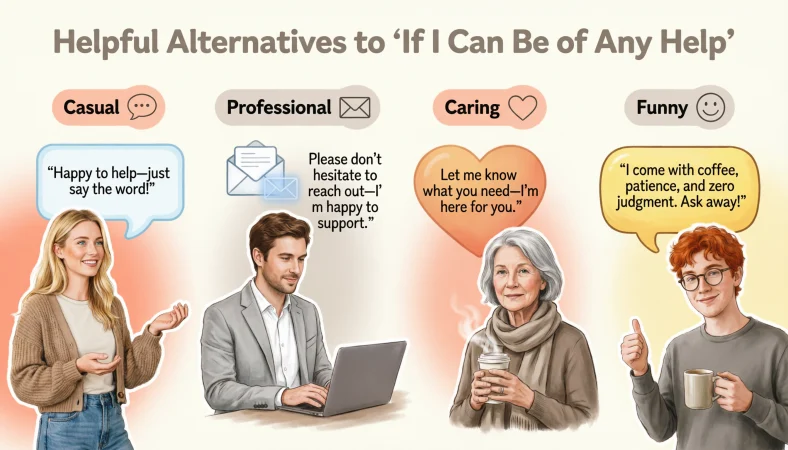
Looking for better “If I can be of any help” alternatives? You can make the phrase warmer, more natural, more professional, or more personal depending on the situation.
Top alternatives: Let me know how I can help, I’m happy to help, Please let me know if you need anything, I’m here if you need me, How can I support you?
Sometimes “If I can be of any help” sounds perfectly polite, but let’s be honest, it can also feel a little formal or scripted. Whether you’re texting a friend, replying to a coworker, sending a professional email, supporting someone going through a difficult moment, or offering help in a group chat, the right wording can make your message feel much more genuine.
That’s why having a few “If I can be of any help” alternatives ready is useful. You can sound warm without being overly emotional, professional without sounding stiff, or casual without seeming careless. A small change in wording can completely change the vibe of your message.
From simple “Let me know if you need anything” to thoughtful offers of support, these options give you plenty of ways to show you genuinely care.
Professional Alternatives
“Please let me know how I can assist.”
Use this in a professional email when offering practical support.
Meaning: It communicates willingness to help in a polished and respectful way.
“Please let me know if I can assist in any way.”
Use this when responding to a colleague who needs support.
Meaning: It offers assistance while keeping the tone professional.
“I’d be happy to assist.”
Use this after someone explains a work-related issue.
Meaning: It shows that you are willing and approachable.
“Please feel free to reach out if you need assistance.”
Use this in workplace correspondence or customer communication.
Meaning: It gives the other person permission to ask for help.
“I’m happy to support you with this.”
Use this when a coworker is handling an important task.
Meaning: It expresses practical and encouraging support.
“Let me know what support you need.”
Use this when someone has a specific challenge at work.
Meaning: It invites them to clearly explain how you can contribute.
“I’m available if you need assistance.”
Use this when offering help during a busy project.
Meaning: It lets someone know your time is available.
“I’d be glad to help with this.”
Use this when volunteering for a workplace task.
Meaning: It sounds positive, cooperative, and professional.
“Please don’t hesitate to contact me if you need anything.”
Use this in a formal email or follow-up message.
Meaning: It encourages the recipient to ask for help comfortably.
“I’m available to assist whenever needed.”
Use this when supporting a team or client.
Meaning: It communicates reliability and readiness.
“Let me know if there’s anything I can do.”
Use this in a professional but friendly exchange.
Meaning: It offers support without sounding overly formal.
“I’m happy to lend my support.”
Use this when responding to a colleague facing a difficult task.
Meaning: It conveys willingness to contribute.
Warm And Friendly Alternatives
“Let me know if you need anything.”
Use this when checking on a friend.
Meaning: It offers genuine support in a natural way.
“I’m here if you need me.”
Use this when someone is having a difficult day.
Meaning: It reassures them that they are not alone.
“I’ve got you if you need anything.”
Use this with someone you know well.
Meaning: It communicates loyalty and dependable support.
“Anything you need, just ask.”
Use this when reassuring a close friend.
Meaning: It makes your offer of help feel open and sincere.
“I’m happy to help however I can.”
Use this when someone is dealing with a stressful situation.
Meaning: It shows flexibility and genuine concern.
“You know where to find me if you need me.”
Use this when giving someone emotional space.
Meaning: It offers support without putting pressure on them.
“Just let me know what you need.”
Use this when a friend seems overwhelmed.
Meaning: It makes asking for help feel easy.
“I’m only a message away.”
Use this in a supportive text to someone you care about.
Meaning: It reminds them that support is close by.
“I’m here for whatever you need.”
Use this when comforting someone.
Meaning: It expresses strong emotional availability.
“Count on me if you need a hand.”
Use this when helping someone with a practical problem.
Meaning: It communicates reliability in a friendly way.
“You can always reach out to me.”
Use this when reassuring someone who may hesitate to ask for help.
Meaning: It creates a welcoming sense of support.
“I’m happy to be there for you.”
Use this when someone needs emotional encouragement.
Meaning: It shows care and personal support.
Casual Alternatives
“Need anything? Just let me know.”
Use this in a quick text to a friend.
Meaning: It offers help without making the message feel heavy.
“Let me know if you need a hand.”
Use this when someone is dealing with a practical task.
Meaning: It offers simple, friendly assistance.
“I can help if you want.”
Use this when someone seems unsure about asking for help.
Meaning: It gives them an easy option without pressure.
“Want me to help with anything?”
Use this when someone looks overwhelmed.
Meaning: It directly offers practical support.
“Just shout if you need me.”
Use this with a friend in a relaxed situation.
Meaning: It means they can contact you whenever necessary.
“I’m around if you need anything.”
Use this when checking in casually.
Meaning: It lets them know you are available.
“Give me a shout if you need help.”
Use this in a casual message.
Meaning: It makes your offer sound approachable and relaxed.
“Need backup? I’m here.”
Use this playfully when a friend has a problem.
Meaning: It offers support with a confident, lighthearted tone.
“I can lend a hand.”
Use this when someone has a task they cannot manage alone.
Meaning: It offers practical assistance in a casual way.
“Let me know what I can do.”
Use this when you want to keep things simple.
Meaning: It invites the person to explain what they need.
“I’m free if you need some help.”
Use this when you genuinely have time available.
Meaning: It makes your offer clear and practical.
“I’m here if anything comes up.”
Use this when ending a supportive text.
Meaning: It leaves the door open for future help.
Caring Alternatives
“I’m here to support you.”
Use this when someone is going through a challenging situation.
Meaning: It provides emotional reassurance and stability.
“You don’t have to handle this alone.”
Use this when someone feels overwhelmed.
Meaning: It reminds them that support is available.
“I’m here whenever you need someone.”
Use this when comforting someone you care about.
Meaning: It emphasizes emotional availability.
“Whatever you need, I’m here.”
Use this when offering heartfelt support.
Meaning: It communicates strong willingness to be there.
“You can lean on me if you need to.”
Use this when someone is facing emotional pressure.
Meaning: It offers reassurance and dependable support.
“I’m always happy to listen.”
Use this when someone needs to talk.
Meaning: It shows that emotional support matters to you.
“You can talk to me whenever you’re ready.”
Use this when giving someone space after a difficult experience.
Meaning: It offers support without forcing them to open up.
“I’m here, no pressure.”
Use this when someone needs time before accepting help.
Meaning: It reassures them that your support comes without demands.
“Whatever happens, you can count on me.”
Use this when reassuring a close friend.
Meaning: It communicates loyalty and consistency.
“I care about you, so please reach out if you need me.”
Use this in a heartfelt message.
Meaning: It connects your offer of help with genuine care.
“I’m not going anywhere if you need support.”
Use this when someone fears being left alone with a problem.
Meaning: It provides emotional reassurance.
“Take your time, and know I’m here.”
Use this when someone needs breathing room.
Meaning: It balances patience with genuine support.
Short And Simple Alternatives
“Let me know.”
Use this when you want a brief but supportive reply.
Meaning: It leaves the door open for them to ask for help.
“I’m here.”
Use this when someone needs emotional reassurance.
Meaning: It offers quiet but powerful support.
“Happy to help.”
Use this in casual or professional situations.
Meaning: It shows willingness without unnecessary wording.
“I’ve got you.”
Use this with someone you trust.
Meaning: It communicates confidence and dependable support.
“Anytime.”
Use this after offering assistance.
Meaning: It shows that helping them is not a burden.
“Just ask.”
Use this with a close friend or coworker.
Meaning: It encourages them to request help directly.
“I’m available.”
Use this when someone may need your time.
Meaning: It clearly communicates availability.
“Count on me.”
Use this when reassuring someone.
Meaning: It promises dependable support.
“I can help.”
Use this when you know you have something useful to offer.
Meaning: It makes your willingness clear and direct.
“I’m at your service.”
Use this playfully or in a formal setting.
Meaning: It expresses readiness to assist.
“I’m on it.”
Use this when you are ready to take action.
Meaning: It shows confidence and immediate willingness.
“Consider it handled.”
Use this when you can confidently take care of the issue.
Meaning: It reassures the person that you will manage the task.
Thoughtful Alternatives
“Tell me what would make things easier for you.”
Use this when someone is struggling with a complicated situation.
Meaning: It focuses on their needs rather than making assumptions.
“Is there anything I can take off your plate?”
Use this when a colleague or friend is overwhelmed.
Meaning: It offers practical relief from their workload.
“What would be most helpful right now?”
Use this when someone needs immediate support.
Meaning: It encourages them to identify their most important need.
“How can I make this a little easier for you?”
Use this when someone is having a difficult time.
Meaning: It shows empathy and a desire to reduce their stress.
“Would it help if I took care of something?”
Use this when offering practical assistance.
Meaning: It gives them a specific opportunity to accept help.
“Tell me where you’d like me to step in.”
Use this during teamwork or a stressful situation.
Meaning: It offers support while respecting their judgment.
“What can I do to make things smoother?”
Use this when solving a shared problem.
Meaning: It focuses on useful action.
“Is there a particular way I can support you?”
Use this during a meaningful personal or professional conversation.
Meaning: It invites the person to define the support they need.
“Let me know what would be most useful.”
Use this when you want to avoid offering irrelevant help.
Meaning: It keeps your support practical and considerate.
“Would you like me to help with anything specific?”
Use this when someone seems hesitant to ask.
Meaning: It gently encourages them to identify a need.
“I’d like to make this easier if I can.”
Use this when supporting someone under pressure.
Meaning: It communicates sincere concern.
“Tell me how I can make a difference.”
Use this when offering meaningful support.
Meaning: It shows that you want your help to matter.
Kind Alternatives For Difficult Situations
“I’m really sorry you’re dealing with this. I’m here if you need me.”
Use this when someone shares difficult news.
Meaning: It combines sympathy with genuine support.
“That sounds really difficult. Please reach out if you need anything.”
Use this when comforting someone after a stressful experience.
Meaning: It acknowledges their feelings while offering help.
“I’m thinking of you, and I’m here whenever you need support.”
Use this in a thoughtful message during a challenging time.
Meaning: It expresses care and emotional availability.
“Take care of yourself, and let me know how I can help.”
Use this when someone is dealing with a demanding situation.
Meaning: It encourages self-care while offering practical support.
“You have my full support.”
Use this when someone needs reassurance.
Meaning: It communicates confidence and solidarity.
“Whatever you’re facing, you don’t have to face it alone.”
Use this when someone feels isolated.
Meaning: It offers emotional comfort and companionship.
“I’m here to listen or help in whatever way feels right.”
Use this when someone needs flexibility.
Meaning: It respects their needs while offering support.
“Please take all the time you need. I’m here.”
Use this when someone needs space.
Meaning: It provides patience and reassurance.
“I hope things get easier soon. If you need me, I’m here.”
Use this when ending a supportive message.
Meaning: It expresses hope while keeping your offer open.
“You can reach out whenever you need someone.”
Use this when supporting someone through uncertainty.
Meaning: It reassures them that they have someone to turn to.
“I’m thinking about you and sending you plenty of support.”
Use this when you want to sound warm without being overly intense.
Meaning: It communicates kindness and encouragement.
“Whatever happens next, you have someone in your corner.”
Use this when reassuring a close friend.
Meaning: It communicates loyalty and emotional support.
Creative Alternatives
“Consider me your emergency support line.”
Use this playfully when a friend needs help.
Meaning: It says you are available whenever they need backup.
“Put me on the helpful-people list.”
Use this in a playful text.
Meaning: It offers assistance with a lighthearted twist.
“If there’s a way I can make this easier, I’m in.”
Use this when someone has a problem you want to help solve.
Meaning: It shows enthusiasm and willingness.
“Need an extra pair of hands? I volunteer.”
Use this when someone has a practical task.
Meaning: It offers immediate assistance in a fun way.
“Send the problem my way.”
Use this when you are confident you can help.
Meaning: It shows readiness to get involved.
“I’m officially available for helpful duties.”
Use this jokingly with friends or teammates.
Meaning: It makes an ordinary offer of help more entertaining.
“Point me toward the problem and I’ll see what I can do.”
Use this when someone needs practical assistance.
Meaning: It shows curiosity and willingness to contribute.
“Need a teammate? I’m reporting for duty.”
Use this when joining a friend or coworker on a task.
Meaning: It creates a playful sense of teamwork.
“If I can make even one thing easier, let me know.”
Use this in a thoughtful message.
Meaning: It combines warmth with a practical offer.
“I’m one message away from helping.”
Use this when reassuring someone over text.
Meaning: It emphasizes easy access to your support.
“Hand me a task and let’s make it happen.”
Use this when helping with a project.
Meaning: It communicates energy and action.
“I’m ready when you need backup.”
Use this when supporting a friend or teammate.
Meaning: It communicates dependable availability.
Funny Alternatives
“Need help, or should I just bring snacks?”
Use this when comforting a friend who could use some cheering up.
Meaning: It offers help with a playful touch.
“I accept requests for assistance, preferably with coffee involved.”
Use this jokingly with a friend or coworker.
Meaning: It keeps the offer helpful while adding humor.
“Need a hand, a pep talk, or both?”
Use this when someone seems overwhelmed.
Meaning: It offers both practical and emotional support.
“I’m available for problem-solving and unnecessary moral support.”
Use this in a playful text to a friend.
Meaning: It promises support without taking the situation too seriously.
“Your friendly neighborhood helper is on standby.”
Use this when offering casual support.
Meaning: It turns a simple offer into a fun message.
“If the situation requires snacks, I’m especially qualified.”
Use this when a friend is dealing with stress.
Meaning: It offers comfort through humor.
“Need backup? I brought enthusiasm.”
Use this when helping with a project.
Meaning: It shows willingness even if the task is difficult.
“I’m available, emotionally and technically speaking.”
Use this with a friend who needs different kinds of support.
Meaning: It playfully communicates broad availability.
“Give me the mission.”
Use this when someone needs help completing a task.
Meaning: It creates a playful sense of teamwork.
“I can help, assuming my two brain cells cooperate.”
Use this with a close friend.
Meaning: It offers assistance while joking about yourself.
“Need assistance? Your unpaid consultant has arrived.”
Use this when joking with friends.
Meaning: It makes your offer of help playful and informal.
“Tell me what needs fixing before I pretend I know how.”
Use this when offering help with humor.
Meaning: It shows willingness without pretending to have every answer.
Confident Alternatives
“Tell me what needs to be done.”
Use this when you are ready to take action.
Meaning: It sounds direct, capable, and helpful.
“I can take care of that.”
Use this when you have the skills to solve the issue.
Meaning: It communicates confidence and reliability.
“Leave it with me.”
Use this when you are comfortable handling a task.
Meaning: It reassures the other person that you can manage it.
“I’m happy to take this on.”
Use this in a workplace or team environment.
Meaning: It shows confidence and willingness to accept responsibility.
“I can step in here.”
Use this when someone needs additional support.
Meaning: It communicates readiness to contribute.
“I’ll see what I can do.”
Use this when you want to help without making unrealistic promises.
Meaning: It balances confidence with honesty.
“Let me handle this part.”
Use this during a shared task.
Meaning: It clearly defines how you can contribute.
“I’m ready to help wherever needed.”
Use this in teamwork situations.
Meaning: It shows flexibility and confidence.
“I can make myself available.”
Use this when offering your time.
Meaning: It communicates dependable availability.
“I’ll be glad to take care of it.”
Use this when you can solve a problem.
Meaning: It combines confidence with a friendly tone.
“Send it my way.”
Use this when someone needs your expertise or assistance.
Meaning: It shows you are ready to get involved.
“I’m happy to step up.”
Use this when volunteering for responsibility.
Meaning: It communicates initiative and confidence.
Gentle Alternatives
“Whenever you’re ready, I’m here.”
Use this when someone needs time before accepting help.
Meaning: It offers support without rushing them.
“Take your time, and let me know if you need anything.”
Use this after someone shares a difficult situation.
Meaning: It combines patience with availability.
“There’s no pressure, but I’m here if you need me.”
Use this when someone may feel uncomfortable accepting help.
Meaning: It reassures them that your support is optional.
“If it would help, I’d be happy to step in.”
Use this when offering practical assistance gently.
Meaning: It gives the person control over accepting your help.
“Whenever you need a little support, reach out.”
Use this when comforting someone.
Meaning: It creates a warm invitation without pressure.
“I’m here whenever you feel like talking.”
Use this when someone may need emotional support.
Meaning: It gives them space while keeping communication open.
“If there’s anything that would make this easier, tell me.”
Use this when someone is struggling.
Meaning: It offers thoughtful and practical assistance.
“You can come to me whenever you need.”
Use this with someone you trust deeply.
Meaning: It communicates safety and emotional availability.
“I’m happy to listen whenever you’re ready.”
Use this when someone needs to process their feelings.
Meaning: It offers patient emotional support.
“I hope you know you can ask me for help.”
Use this when someone tends to handle everything alone.
Meaning: It gently reminds them that support is available.
“I’m here, even if all you need is someone to listen.”
Use this when comforting a friend.
Meaning: It values emotional presence as much as practical help.
“Whatever feels helpful to you, I’m here.”
Use this when someone needs flexibility.
Meaning: It puts their comfort first.
Supportive Alternatives For Friends
“You know I’ve got your back.”
Use this with a close friend.
Meaning: It communicates loyalty and dependable support.
“Anything you need, I’m there.”
Use this when reassuring a friend.
Meaning: It shows that you are genuinely available.
“Just call me if you need backup.”
Use this when a friend has a stressful situation.
Meaning: It offers immediate and practical support.
“I’m always in your corner.”
Use this when encouraging someone through a challenge.
Meaning: It communicates loyalty and belief in them.
“Need me? You know where I am.”
Use this in a casual supportive text.
Meaning: It keeps your offer simple and pressure-free.
“I’ll help you figure it out.”
Use this when a friend feels stuck.
Meaning: It offers companionship rather than simply giving advice.
“We’ll get through it together.”
Use this when someone is facing a difficult problem.
Meaning: It emphasizes teamwork and emotional support.
“I’m here for the messy parts too.”
Use this when reassuring someone during a difficult period.
Meaning: It communicates that your support is genuine and lasting.
“Whatever you need, just say the word.”
Use this when offering broad support.
Meaning: It encourages your friend to ask without hesitation.
“You don’t have to figure everything out yourself.”
Use this when a friend is overwhelmed.
Meaning: It reminds them that asking for help is okay.
“I’ll be here when you need me.”
Use this when giving someone emotional reassurance.
Meaning: It promises steady support.
“We can tackle it together.”
Use this when helping a friend solve a problem.
Meaning: It turns the situation into a shared challenge.
Workplace And Team Alternatives
“Let me know where I can contribute.”
Use this during a team project.
Meaning: It offers practical help while respecting team roles.
“I’m happy to take on anything that would help.”
Use this when a team is under pressure.
Meaning: It shows initiative and cooperation.
“Let me know what I can take off your plate.”
Use this when a colleague has too much work.
Meaning: It offers concrete relief.
“I can jump in wherever needed.”
Use this during a busy project.
Meaning: It communicates flexibility and teamwork.
“I’m available to support the team.”
Use this in professional communication.
Meaning: It communicates reliability and collaboration.
“Let me know where you need an extra hand.”
Use this when a project needs additional help.
Meaning: It offers assistance in a friendly professional tone.
“I’d be glad to take care of that.”
Use this when accepting a workplace task.
Meaning: It communicates willingness and competence.
“I can help move this forward.”
Use this when contributing to a project.
Meaning: It shows an action-oriented approach.
“Let me know what I can pick up.”
Use this when sharing workload with teammates.
Meaning: It offers to take responsibility for a task.
“I’m happy to support however makes the most sense.”
Use this when the best form of help is unclear.
Meaning: It shows flexibility and good judgment.
“I can step in where it’s most useful.”
Use this when coordinating team support.
Meaning: It focuses on making your contribution valuable.
“Let me know what would be most helpful for the team.”
Use this during collaborative planning.
Meaning: It puts the group’s needs first.
Text Message Alternatives
“Hey, let me know if you need anything ❤️”
Use this when checking on someone you care about.
Meaning: It sounds warm, personal, and supportive.
“I’m here if you need me.”
Use this after a serious conversation.
Meaning: It provides simple emotional reassurance.
“Need anything? I’ve got you.”
Use this when checking on a friend.
Meaning: It combines a direct offer with confidence.
“Just text me if you need a hand.”
Use this in a casual conversation.
Meaning: It makes asking for help easy.
“I’m around if you need anything at all.”
Use this when someone may need support later.
Meaning: It communicates broad availability.
“Whatever you need, just message me.”
Use this when offering support over text.
Meaning: It keeps communication open.
“If you need me, I’m one text away.”
Use this when comforting someone.
Meaning: It emphasizes how easy it is to reach you.
“You know I’m here for you.”
Use this with someone close to you.
Meaning: It expresses familiarity and emotional support.
“Tell me what you need and I’ll see what I can do.”
Use this when someone has a specific problem.
Meaning: It offers realistic and practical help.
“I’m on standby if you need backup.”
Use this playfully with a friend.
Meaning: It communicates readiness with a relaxed vibe.
“No pressure, just know I’m here.”
Use this when someone needs space.
Meaning: It offers support without demanding a response.
“Whenever you need me, just reach out.”
Use this as a warm closing message.
Meaning: It keeps the door open for future support.
Formal And Polished Alternatives
“Should you require any assistance, please let me know.”
Use this in formal correspondence.
Meaning: It offers help in a traditional professional style.
“Please feel welcome to contact me should you need assistance.”
Use this in a polished business email.
Meaning: It communicates availability respectfully.
“I remain available should you require further support.”
Use this after completing a professional task.
Meaning: It shows continued availability.
“Please let me know if there is anything further I can assist with.”
Use this when concluding a client email.
Meaning: It offers additional support professionally.
“I would be pleased to provide any assistance required.”
Use this in formal written communication.
Meaning: It expresses willingness in a polished tone.
“Should anything arise, please feel free to reach out.”
Use this when closing a formal message.
Meaning: It leaves communication open.
“I am available should additional assistance be needed.”
Use this in workplace correspondence.
Meaning: It communicates professional readiness.
“Please feel free to contact me with any questions or concerns.”
Use this when supporting a client or colleague.
Meaning: It invites further communication.
“I would be happy to provide further assistance.”
Use this in a professional follow-up.
Meaning: It sounds courteous and service-oriented.
“Please let me know if further support would be useful.”
Use this when following up on an ongoing matter.
Meaning: It offers help without being intrusive.
“I remain at your disposal for any further assistance.”
Use this in highly formal correspondence.
Meaning: It communicates complete professional availability.
“Should you need anything further, please do not hesitate to contact me.”
Use this when ending a formal email.
Meaning: It provides a courteous invitation to continue the conversation.
Encouraging Alternatives
“You’ve got this, but I’m here if you need backup.”
Use this when motivating someone facing a challenge.
Meaning: It combines encouragement with practical support.
“I believe in you, and I’m here if you need me.”
Use this when encouraging someone close to you.
Meaning: It expresses confidence and emotional support.
“You can handle this, and you don’t have to do it alone.”
Use this when someone doubts themselves.
Meaning: It provides encouragement while offering companionship.
“Whatever happens, I’m in your corner.”
Use this when someone needs confidence.
Meaning: It communicates loyalty and encouragement.
“Keep going, and remember you can reach out anytime.”
Use this when supporting someone through a difficult task.
Meaning: It motivates them while keeping help available.
“I know you can do this, but I’m happy to help.”
Use this when someone needs encouragement and practical support.
Meaning: It balances confidence in them with willingness to assist.
“You don’t have to have all the answers right now.”
Use this when someone feels pressured.
Meaning: It reduces stress and creates room for support.
“Take it one step at a time. I’m here if you need me.”
Use this when someone feels overwhelmed.
Meaning: It encourages patience and reassurance.
“Whatever you decide, I’ll support you.”
Use this when someone is facing a difficult choice.
Meaning: It communicates acceptance and emotional support.
“You’re doing better than you think, and I’m here if you need anything.”
Use this when someone is being too hard on themselves.
Meaning: It provides encouragement and availability.
“You can always lean on me when things get tough.”
Use this with someone you trust deeply.
Meaning: It offers dependable emotional support.
“You’re not on your own with this.”
Use this when someone feels isolated.
Meaning: It reminds them that help and companionship are available.
Clever And Natural Alternatives
“Tell me what would actually help.”
Use this when you want to avoid offering vague support.
Meaning: It focuses directly on their needs.
“How can I make myself useful?”
Use this when you genuinely want to contribute.
Meaning: It offers help in a confident, natural way.
“Where can I step in?”
Use this when someone needs practical support.
Meaning: It asks them to identify where you can contribute.
“What can I take care of for you?”
Use this when someone has too much on their plate.
Meaning: It offers concrete assistance.
“What would make things easier?”
Use this when someone is struggling.
Meaning: It focuses on reducing their difficulty.
“Where would an extra hand help most?”
Use this when assisting with a project or task.
Meaning: It offers targeted support.
“What can I do to lighten the load?”
Use this when someone is overwhelmed.
Meaning: It shows empathy and practical willingness.
“Tell me where I can make things easier.”
Use this when supporting someone personally or professionally.
Meaning: It communicates thoughtful availability.
“What do you need from me?”
Use this when clarity is important.
Meaning: It encourages direct communication about support.
“How can I show up for you?”
Use this when offering meaningful emotional support.
Meaning: It asks how you can be genuinely helpful.
“What would be most useful right now?”
Use this when someone needs immediate assistance.
Meaning: It prioritizes their current needs.
“Give me something useful to do.”
Use this jokingly when you want to help.
Meaning: It shows eagerness to contribute.
Heartfelt Alternatives
“I’m here for you, whatever you need.”
Use this when someone close to you is struggling.
Meaning: It communicates deep care and support.
“You mean a lot to me, so please let me know if you need anything.”
Use this in a heartfelt message.
Meaning: It connects your offer of help with genuine affection.
“I care about you, and I’m always willing to help.”
Use this when reassuring someone important to you.
Meaning: It expresses sincere concern and availability.
“You never have to hesitate to reach out to me.”
Use this when someone is reluctant to ask for help.
Meaning: It encourages trust and openness.
“I’ll be here through the good days and the difficult ones.”
Use this when supporting someone through a long-term challenge.
Meaning: It communicates lasting loyalty.
“Whatever you’re going through, you can come to me.”
Use this when someone needs emotional reassurance.
Meaning: It creates a sense of safety and trust.
“I may not have all the answers, but I’ll be here.”
Use this when you cannot solve someone’s problem but want to support them.
Meaning: It offers presence without making unrealistic promises.
“You don’t have to explain everything. Just know I’m here.”
Use this when someone is emotionally exhausted.
Meaning: It offers support without requiring details.
“I’m here to help in whatever way feels right for you.”
Use this when someone needs personalized support.
Meaning: It respects their comfort and choices.
“No matter how small or big it feels, you can reach out.”
Use this when someone may minimize their own problems.
Meaning: It assures them that their needs matter.
“You have my support, always.”
Use this when giving someone heartfelt reassurance.
Meaning: It communicates steady care and loyalty.
“Whenever you need someone in your corner, I’ll be here.”
Use this when comforting someone close to you.
Meaning: It promises dependable emotional support.
FAQs
What Does “If I Can Be of Any Help” Mean?
It means you are offering assistance or support if the other person needs it. It is polite, considerate, and commonly used in professional or serious situations.
What Is A More Natural Alternative To “If I Can Be of Any Help”?
Try “Let me know if you need anything,” “I’m happy to help,” or “I’m here if you need me.” These sound more conversational and natural.
What Is A Professional Alternative?
Good professional options include “Please let me know how I can assist,” “I’d be happy to assist,” and “Please let me know if there is anything further I can help with.”
What Is A Warm Alternative For A Friend?
Try “I’ve got you,” “I’m here if you need me,” or “You know you can always reach out to me.”
Can “If I Can Be of Any Help” Sound Too Formal?
Yes. It can sound somewhat formal, especially in casual texts. For friends and everyday conversations, simpler wording usually feels warmer.
What Should I Say If I Want To Sound Caring?
Try “I’m here for you,” “You don’t have to handle this alone,” or “Whatever you need, I’m here.”
What If I Want To Offer Practical Help?
Use something specific such as “What can I take care of for you?” or “What can I take off your plate?”
Is “Let Me Know If You Need Anything” A Good Alternative?
Absolutely. It is one of the most natural, flexible, and widely appropriate alternatives for casual, personal, and many professional situations.
Can I Use These Alternatives In Emails?
Yes. Choose the wording according to the level of formality. For clients or formal business communication, use polished phrases such as “Please let me know how I can assist.”
How Do I Offer Help Without Sounding Pushy?
Use gentle wording such as “If it would help, I’d be happy to step in” or “No pressure, but I’m here if you need me.”
Conclusion
Finding the right way to offer support does not have to feel complicated. Sometimes a simple “Let me know if you need anything” says everything, while other situations call for something more professional, thoughtful, funny, or heartfelt. The best “If I can be of any help” alternatives are the ones that match the relationship and the moment.
Whether you are helping a coworker, comforting a friend, supporting someone through a difficult day, or simply letting someone know you care, your wording can make the offer feel much more genuine. Save your favorite lines, mix them into your texts and emails, and choose the one that fits naturally. A little kindness goes a long way, so keep these alternatives handy and make every supportive message count.