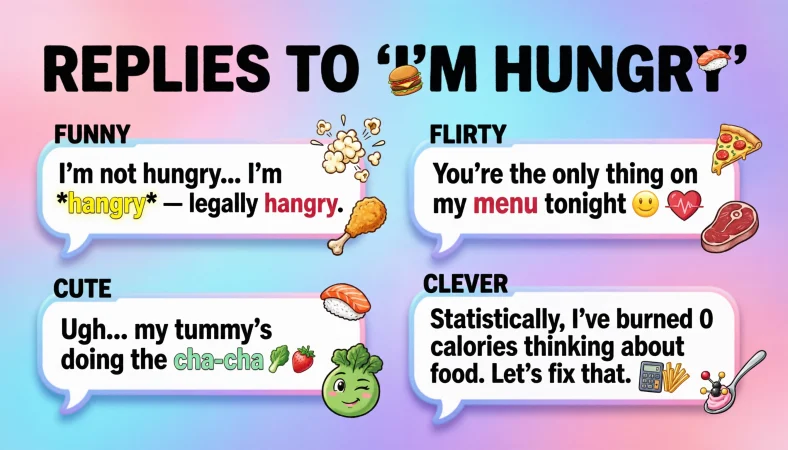
Wondering what to reply when a girl says im hungry? Match her vibe and the situation: try “What are you craving?”, “Let’s fix that,” or “Okay, important question: pizza, burgers, or something sweet?” for a natural response. A playful Reply could be “Is this your way of asking me to take you for food?” while a caring option is “You better go grab something before hunger turns you into a menace.”
Try these: “What are we eating?”, “Same, feed me too,” “Go get yourself a snack!”, “Hungry for food or attention?”, “Say less, let’s eat.”
Someone saying “I’m hungry” can be a simple statement, a subtle hint, or an invitation to start a fun conversation. Your Reply can be caring, funny, flirty, or practical depending on who sent it. Sometimes “Go eat something” works, but sometimes you can do much better than that.
When someone texts “I’m hungry,” you have plenty of ways to keep the conversation going. They might genuinely need food, be looking for suggestions, joking around, or hoping you’ll offer to grab something together. The best response depends on your relationship and the tone of the conversation. A close friend might enjoy a ridiculous food joke, while someone you’re dating may appreciate something a little more playful or flirty.
If you’re searching for what to reply when a girl says im hungry, this guide has responses for almost every mood. You can be sweet without sounding overly serious, funny without trying too hard, or flirty without making things awkward. Whether you want to ask what she wants, suggest your favorite food, offer to take her out, or simply make her laugh, the right Reply can turn a basic “I’m hungry” text into an actual conversation.
What to reply when a girl says im hungry
Ask what she is craving or turn it into a playful invitation, such as “What are you craving? Maybe I can help with that.” If you’re flirting, “Is that your subtle way of asking me to take you out for food?” keeps it light.
Reply
A good Reply to “I’m hungry” depends on the relationship and context. You can say “What are you in the mood for?”, “Let’s get you some food,” or “Food emergency detected. What are we ordering?”
Top Alternatives
- What are you craving? 👀
- Let’s get you some food!
- Okay, what are we ordering?
- Pizza or burgers? Choose wisely. 😂
- Sounds like a food emergency.
- Go eat before you start eating me. 😏
- Want me to recommend something?
- Is this a subtle invitation to go eat together?
Funny Responses
“What did the fridge ever do to you?”
Use this when a friend dramatically announces their hunger.
Meaning: It jokingly suggests they should stop ignoring the food sitting at home.
“Quick, deploy the snacks!”
Use this when someone sounds urgently hungry.
Meaning: It treats their hunger like a tiny emergency.
“Have you tried eating food?”
Use this for a friend who makes obvious statements.
Meaning: It playfully points out the hilariously obvious solution.
“This sounds like a job for DoorDash.”
Use this when someone wants food without leaving the couch.
Meaning: It humorously suggests ordering something immediately.
“I knew this day would come.”
Use this when someone tells you they are hungry after hours of talking about food.
Meaning: It exaggerates their hunger for comedic effect.
“Thoughts and prayers for your empty stomach.”
Use this when your friend is being extra dramatic about hunger.
Meaning: It jokingly treats hunger like a serious crisis.
“Your stomach just filed a complaint, huh?”
Use this when someone says they need food immediately.
Meaning: It gives their hunger a funny personality.
“Congratulations, you’ve discovered hunger.”
Use this when teasing someone who is being dramatic.
Meaning: It humorously celebrates an extremely normal human experience.
“We have officially entered snack o’clock.”
Use this during a random afternoon hunger attack.
Meaning: It turns the moment into an excuse for snacks.
“Say the word and I’ll send emergency fries.”
Use this when you want to be funny and caring.
Meaning: It offers comfort through an exaggerated food rescue.
“Your stomach said it’s time for a meeting.”
Use this when someone keeps talking about being hungry.
Meaning: It jokes that their stomach is demanding attention.
“Blink twice if you need a sandwich.”
Use this when a hungry friend is being dramatic.
Meaning: It playfully acts as though they are in serious need of rescue.
“I’m sorry, we don’t negotiate with hungry people.”
Use this when someone becomes grumpy without food.
Meaning: It teases them about the classic hungry mood.
“Plot twist: food solves this.”
Use this when someone is complaining about hunger.
Meaning: It humorously points out the obvious fix.
“Your stomach has entered its villain era.”
Use this when hunger has made someone unusually dramatic.
Meaning: It playfully exaggerates how powerful hunger can feel.
Brutal Responses
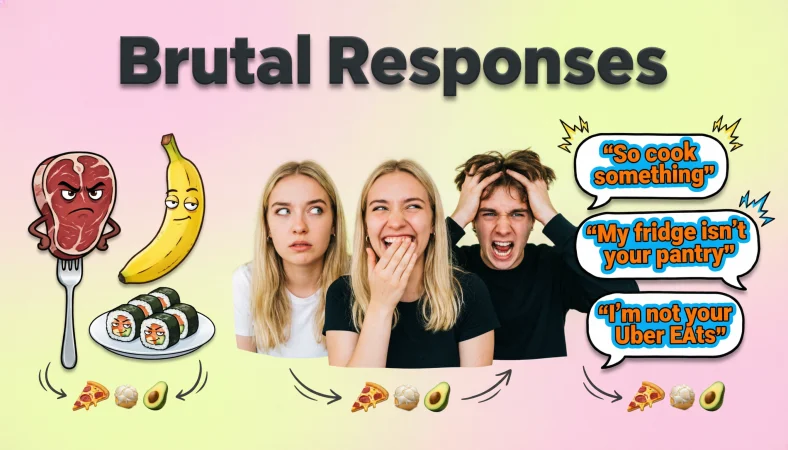
“Then eat.”
Use this when someone keeps complaining without doing anything about it.
Meaning: It gives a blunt and practical solution.
“And somehow this became my problem?”
Use this with a close friend who is being dramatic.
Meaning: It playfully refuses responsibility for their hunger.
“You’ve had three hours to solve that.”
Use this when someone has been hungry for a while.
Meaning: It jokingly calls out their lack of action.
“Sounds like a personal emergency.”
Use this when you want a dry response.
Meaning: It makes their hunger sound like something they need to handle themselves.
“There’s food. You know where it lives.”
Use this with someone who has food at home.
Meaning: It bluntly reminds them that they can feed themselves.
“I believe in you. Find a snack.”
Use this when you want brutal honesty with a little humor.
Meaning: It encourages them to take responsibility for their hunger.
“Your stomach has Wi-Fi, apparently.”
Use this when someone constantly broadcasts their hunger.
Meaning: It jokes about how frequently they announce it.
“Not every thought needs to become a group announcement.”
Use this with a friend who overshares.
Meaning: It lightly mocks their unnecessary hunger update.
“Congratulations on identifying the problem.”
Use this when someone announces hunger like a discovery.
Meaning: It sarcastically challenges them to find the solution too.
“Then stop talking and start chewing.”
Use this with a close friend who loves dramatic complaints.
Meaning: It bluntly tells them to solve the problem.
“I’m not your personal chef.”
Use this when someone expects you to make food.
Meaning: It sets a playful boundary around their request.
“The grocery store isn’t going to visit you.”
Use this when someone needs food but refuses to shop.
Meaning: It pushes them to take action.
“You have two hands and a kitchen.”
Use this when teasing someone who wants to be served.
Meaning: It humorously reminds them they can prepare something themselves.
“Okay, Gordon Ramsay, make something.”
Use this when someone acts helpless around food.
Meaning: It playfully challenges them to cook.
“Your hunger has been noted and ignored.”
Use this when you want maximum dry humor.
Meaning: It jokingly dismisses their complaint.
Flirty Responses
“Hungry for food or hungry for my attention?”
Use this when the conversation already has playful chemistry.
Meaning: It turns their hunger into a teasing flirt.
“I could take you out for food.”
Use this when you want to suggest spending time together.
Meaning: It combines caring with a subtle invitation.
“Careful, I might actually feed you.”
Use this when teasing someone you like.
Meaning: It offers playful affection with a flirty edge.
“Tell me what you’re craving, cutie.”
Use this when you want to sound warm and affectionate.
Meaning: It shows interest while keeping the tone romantic.
“I know a place you’d love.”
Use this when you want to turn hunger into a date idea.
Meaning: It subtly suggests going somewhere together.
“Are you hungry or just looking for an excuse to see me?”
Use this when you suspect they want attention.
Meaning: It playfully suggests their hunger might be an excuse.
“I’d share my food with you, and that means something.”
Use this when you want a cute romantic joke.
Meaning: It signals that sharing food is serious affection.
“I can fix that, handsome.”
Use this when flirting with a guy you like.
Meaning: It offers playful confidence and attention.
“I can fix that, pretty.”
Use this when flirting with someone you are attracted to.
Meaning: It combines reassurance with a compliment.
“Food first, flirting second. Or maybe both.”
Use this when the conversation is already playful.
Meaning: It keeps the romantic tension light and fun.
“Come here, hungry.”
Use this when you have an affectionate dynamic.
Meaning: It creates a cozy and teasing sense of closeness.
“I might let you steal a bite.”
Use this when joking about sharing food.
Meaning: It uses food as a playful excuse for flirtation.
“What if I’m your favorite thing on the menu?”
Use this when you want a bold flirt.
Meaning: It playfully positions yourself as the tempting option.
“I’ll feed you if you promise to keep me company.”
Use this when suggesting a casual date.
Meaning: It turns helping with food into an invitation for time together.
“Your timing is perfect. I was thinking about you too.”
Use this when you want to make their hunger message feel romantic.
Meaning: It shifts the conversation from food toward mutual interest.
Polite Responses
“What would you like to eat?”
Use this when you genuinely want to help.
Meaning: It responds thoughtfully and keeps the conversation practical.
“You should grab something to eat.”
Use this when someone mentions being hungry casually.
Meaning: It offers simple and friendly advice.
“I hope you find something delicious.”
Use this when you cannot help directly.
Meaning: It responds warmly without making a commitment.
“Have you decided what you’re craving?”
Use this when you want to continue the conversation.
Meaning: It shows interest in their preference.
“Maybe it’s time for a little food break.”
Use this during a busy day.
Meaning: It gently encourages them to take care of themselves.
“What sounds good right now?”
Use this when helping someone choose a meal.
Meaning: It invites them to share what they want.
“I hope you get something you really enjoy.”
Use this when keeping the response friendly.
Meaning: It expresses simple goodwill.
“You definitely deserve a good meal.”
Use this when someone has had a long day.
Meaning: It combines encouragement with kindness.
“Go treat yourself to something tasty.”
Use this when you want to encourage self-care.
Meaning: It gives them permission to enjoy a meal.
“Maybe a snack will help.”
Use this when the hunger is casual.
Meaning: It offers a practical and gentle suggestion.
“Let’s figure out what sounds good.”
Use this when you are involved in the meal decision.
Meaning: It shows willingness to help.
“Please make sure you eat something.”
Use this when you are concerned about them skipping meals.
Meaning: It communicates genuine care.
“What kind of food are you in the mood for?”
Use this when planning a meal together.
Meaning: It invites a specific answer.
“I hope you get to eat soon.”
Use this when you cannot be there.
Meaning: It expresses friendly concern.
“Enjoy your meal when you get one.”
Use this when ending a casual conversation.
Meaning: It sends a warm and polite wish.
Creative Responses
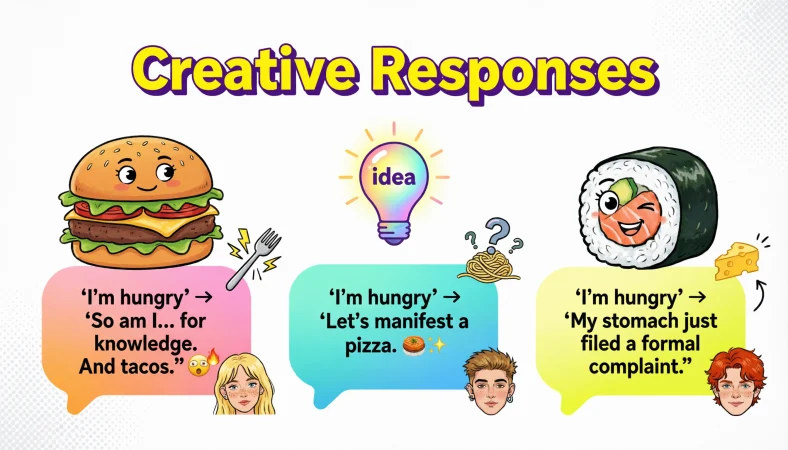
“Your stomach just dropped a new album called Feed Me.”
Use this when a friend loves ridiculous humor.
Meaning: It turns their hunger into a fake pop-culture moment.
“The snack prophecy has been fulfilled.”
Use this when everyone suddenly wants food.
Meaning: It makes an ordinary hunger moment sound legendary.
“Summoning the sacred sandwich.”
Use this when someone needs food urgently.
Meaning: It creates a silly imaginary food ritual.
“Your hunger arc begins now.”
Use this when joking about someone’s dramatic journey toward food.
Meaning: It turns hunger into a fictional character storyline.
“The stomach demands tribute.”
Use this when someone is extremely hungry.
Meaning: It humorously makes food sound like a payment.
“Alert: one human requires immediate snacks.”
Use this when someone is being dramatic.
Meaning: It presents hunger like a funny emergency broadcast.
“Operation Feed You is officially underway.”
Use this when you plan to help them find food.
Meaning: It makes getting a meal sound like a mission.
“Your stomach has submitted a formal request.”
Use this when someone keeps complaining about food.
Meaning: It gives their hunger a ridiculous official status.
“Initiating snack protocol.”
Use this when you want a playful response.
Meaning: It makes eating sound like a secret operation.
“The food gods have heard your plea.”
Use this when food is finally arriving.
Meaning: It humorously celebrates the arrival of a meal.
“This calls for carbohydrates and questionable decisions.”
Use this during a fun food run.
Meaning: It suggests treating hunger as an excuse for indulgence.
“Let’s turn that hunger into a five-star experience.”
Use this when planning a nice meal.
Meaning: It makes the meal feel exciting and special.
“Your stomach has entered the chat.”
Use this when someone suddenly starts talking about food.
Meaning: It personifies their hunger for comic effect.
“Welcome to the hunger games, snack edition.”
Use this with friends who love pop-culture jokes.
Meaning: It turns choosing food into a playful competition.
“I prescribe one large serving of whatever makes you happy.”
Use this when you want a creative caring response.
Meaning: It humorously frames food as the cure.
Sarcastic Responses
“Wow, groundbreaking information.”
Use this when someone states their hunger dramatically.
Meaning: It sarcastically suggests their statement is hardly surprising.
“Should I alert the authorities?”
Use this when someone acts like hunger is a catastrophe.
Meaning: It exaggerates the situation for humor.
“Thought you were powered by vibes.”
Use this when teasing someone who claims they never need food.
Meaning: It mocks their sudden hunger.
“Oh no, not the ancient curse of hunger.”
Use this when a friend is being dramatic.
Meaning: It makes a normal feeling sound ridiculously serious.
“What a shocking development.”
Use this after someone complains about being hungry again.
Meaning: It playfully mocks their predictable announcement.
“Should I call the snack department?”
Use this when someone expects immediate help.
Meaning: It sarcastically pretends there is an official hunger service.
“And I’m sure this is somehow my fault.”
Use this with a dramatic friend.
Meaning: It jokingly blames you for their hunger.
“Alert the press immediately.”
Use this when someone makes a big deal about needing food.
Meaning: It exaggerates their announcement.
“Breaking news: human requires food.”
Use this in a group chat.
Meaning: It turns their hunger into a fake news headline.
“Truly the plot twist nobody saw coming.”
Use this when someone suddenly says they are hungry.
Meaning: It sarcastically pretends the hunger is unexpected.
“This must be studied.”
Use this when their hunger seems unusually dramatic.
Meaning: It playfully treats the situation like a scientific mystery.
“I’ll add it to today’s list of world problems.”
Use this when teasing a friend.
Meaning: It sarcastically ranks their hunger as a major crisis.
“How will humanity survive?”
Use this when someone is dramatically hungry.
Meaning: It exaggerates their situation for laughs.
“We may never recover from this.”
Use this when someone is complaining about missing a meal.
Meaning: It adds absurd drama to a normal problem.
“Someone notify the United Nations.”
Use this when your friend needs food immediately.
Meaning: It humorously portrays hunger as an international crisis.
Cute Responses
“Aww, go get yourself something yummy.”
Use this when responding to someone you care about.
Meaning: It shows gentle affection and concern.
“I wish I could send you your favorite meal.”
Use this when you are away from them.
Meaning: It expresses care despite the distance.
“Please eat something, okay?”
Use this when someone tends to forget meals.
Meaning: It shows genuine concern in a soft way.
“Your tummy needs attention.”
Use this with someone who enjoys cute language.
Meaning: It makes their hunger sound adorable.
“Go find yourself a delicious little treat.”
Use this when encouraging someone to eat.
Meaning: It adds warmth and playfulness.
“You need snacks immediately, tiny human.”
Use this when teasing someone affectionately.
Meaning: It combines care with playful humor.
“I hope you get something that makes you smile.”
Use this when you want to sound thoughtful.
Meaning: It connects food with happiness and care.
“Feed that cute face.”
Use this when flirting affectionately.
Meaning: It shows playful attraction and concern.
“Your hungry self deserves a treat.”
Use this when encouraging a friend.
Meaning: It reminds them to enjoy something comforting.
“Go eat before you turn into a grumpy potato.”
Use this with a close friend.
Meaning: It affectionately teases them about hunger-induced moods.
“Sending imaginary snacks your way.”
Use this when you cannot physically help.
Meaning: It offers playful support from a distance.
“I hope your next bite is amazing.”
Use this when someone is waiting for food.
Meaning: It sends a sweet little wish.
“Okay, hungry one, food mission starts now.”
Use this when encouraging someone to eat.
Meaning: It sounds caring while keeping things playful.
“You better take care of yourself.”
Use this when you genuinely care about them.
Meaning: It communicates affection through concern.
“A good meal and a happy heart, that’s the plan.”
Use this when cheering someone up.
Meaning: It connects food with comfort and emotional warmth.
Dramatic Responses
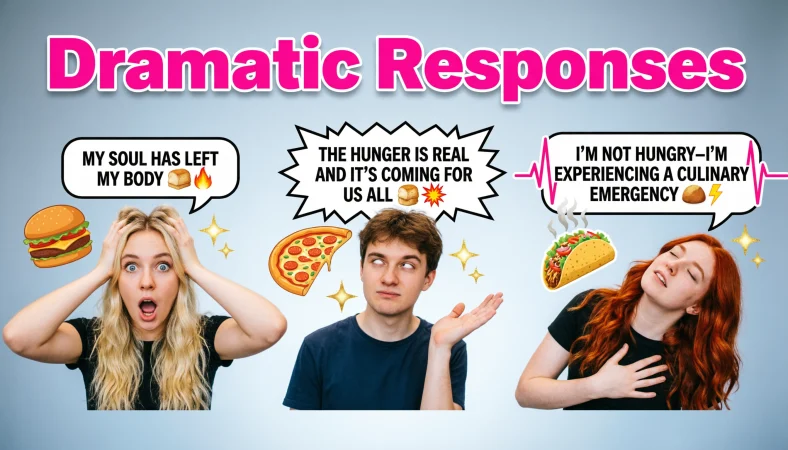
“This is a five-alarm hunger emergency!”
Use this when someone is extremely hungry.
Meaning: It exaggerates their hunger for comedic drama.
“We have minutes, perhaps seconds, to save the situation.”
Use this when a friend is getting hangry.
Meaning: It makes finding food sound like a high-stakes mission.
“The kingdom shall provide food!”
Use this when playing along with dramatic humor.
Meaning: It turns hunger into a royal crisis.
“Nobody move. We need a food strategy.”
Use this when deciding where to eat.
Meaning: It makes choosing a restaurant sound extremely serious.
“This hunger will be remembered in history.”
Use this when someone is complaining dramatically.
Meaning: It exaggerates the moment for laughs.
“I fear the stomach has taken control.”
Use this when someone is acting hangry.
Meaning: It jokingly suggests they are no longer in charge.
“We must act before the hunger wins.”
Use this when food is urgently needed.
Meaning: It frames eating as a heroic mission.
“The situation is dire. Bring carbohydrates.”
Use this when someone needs comfort food.
Meaning: It combines dramatic language with a practical solution.
“Tell my family I loved them. I’m ordering pizza.”
Use this when joking about extreme hunger.
Meaning: It exaggerates the hunger to an absurd level.
“I can hear the soundtrack of your hunger.”
Use this when someone is loudly complaining.
Meaning: It makes their hunger sound cinematic.
“This is not a drill.”
Use this when food is urgently needed.
Meaning: It humorously signals that the hunger should be taken seriously.
“The prophecy warned us about this moment.”
Use this when someone suddenly becomes extremely hungry.
Meaning: It turns a normal event into an epic prediction.
“Only food can save us now.”
Use this when everyone is hungry.
Meaning: It playfully makes food the ultimate solution.
“Brace yourself. The food hunt begins.”
Use this when heading out to eat.
Meaning: It makes a simple meal feel like an adventure.
“We are witnessing the final stage of hunger.”
Use this when someone is becoming hangry.
Meaning: It exaggerates their hunger for dramatic effect.
Chill And Casual Responses
“Same honestly.”
Use this when you are hungry too.
Meaning: It creates instant common ground.
“Let’s grab something.”
Use this when you want to eat together.
Meaning: It turns the message into a simple plan.
“What are you craving?”
Use this when deciding what to eat.
Meaning: It invites them to share their preference.
“I could eat too.”
Use this when their hunger reminds you that you need food.
Meaning: It casually joins their mood.
“Food sounds good right now.”
Use this when you are open to eating.
Meaning: It keeps the conversation relaxed.
“Want to order something?”
Use this when you are both nearby.
Meaning: It offers an easy solution.
“Let’s fix that.”
Use this when you want to help them get food.
Meaning: It shows casual willingness to take action.
“Go get some food, bestie.”
Use this with a close friend.
Meaning: It gives friendly encouragement.
“What’s on the menu?”
Use this when you are joking about their hunger.
Meaning: It asks what they want to eat.
“Snack run?”
Use this when you want something quick.
Meaning: It casually suggests going out for snacks.
“Honestly, mood.”
Use this when you completely understand their hunger.
Meaning: It shows easygoing agreement.
“Same. My stomach is protesting too.”
Use this when you are also hungry.
Meaning: It creates a funny sense of shared struggle.
“Let’s eat before we regret everything.”
Use this when hunger is getting serious.
Meaning: It suggests eating before becoming hangry.
“Pick a place.”
Use this when you are ready to eat.
Meaning: It gives them control over the food choice.
“I’m down for food.”
Use this when you want to make casual plans.
Meaning: It communicates enthusiasm without overthinking it.
Confident Responses
“I know exactly how to fix that.”
Use this when you want to take charge of the situation.
Meaning: It communicates confidence and initiative.
“Leave the food choice to me.”
Use this when you want to plan the meal.
Meaning: It shows decisiveness and confidence.
“Say less. We’re eating.”
Use this when you want to make immediate plans.
Meaning: It confidently turns hunger into action.
“I’ve got you.”
Use this when you want to offer support.
Meaning: It communicates reassurance and dependability.
“You’re eating well today.”
Use this when planning a nice meal for someone.
Meaning: It confidently promises a good food experience.
“Trust me, I know a spot.”
Use this when recommending a restaurant.
Meaning: It shows confidence in your choice.
“Consider dinner handled.”
Use this when you are taking responsibility for the plan.
Meaning: It communicates certainty and reassurance.
“I’m already thinking of the perfect place.”
Use this when you want to impress someone.
Meaning: It shows initiative and thoughtfulness.
“We’re not letting hunger win today.”
Use this when encouraging someone to eat.
Meaning: It confidently frames food as the next priority.
“You picked the right person to tell.”
Use this when you are good at finding food.
Meaning: It playfully highlights your ability to solve the problem.
“I have a plan.”
Use this when you want to take control.
Meaning: It creates anticipation and confidence.
“Food is happening. No debate.”
Use this when everyone needs to stop overthinking.
Meaning: It confidently settles the decision.
“I know what you need.”
Use this when you know their favorite food.
Meaning: It suggests familiarity and confidence.
“Let’s turn that hunger into a proper meal.”
Use this when someone has skipped eating.
Meaning: It encourages a satisfying and intentional meal.
“Don’t worry, I’ll make sure you eat.”
Use this when you are close to the person.
Meaning: It shows confident care and attention.
Emotional And Caring Responses
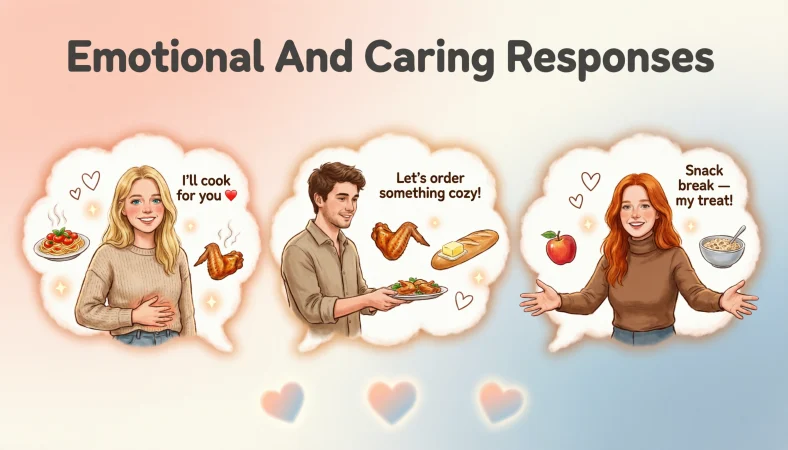
“Please eat something, you’ve had a long day.”
Use this when someone sounds exhausted.
Meaning: It shows genuine concern for their well-being.
“I wish I could bring you food right now.”
Use this when you are far away.
Meaning: It expresses affection and a desire to help.
“You’ve got to take care of yourself too.”
Use this when someone has been neglecting meals.
Meaning: It gently reminds them that self-care matters.
“I hope you get something comforting.”
Use this when they are having a rough day.
Meaning: It connects food with emotional comfort.
“Promise me you’ll eat something good.”
Use this when you care deeply about them.
Meaning: It expresses concern in a personal way.
“I know food probably isn’t everything, but I hope it makes today a little better.”
Use this when someone is emotionally drained.
Meaning: It offers gentle support without minimizing their feelings.
“You deserve a proper meal after everything today.”
Use this when someone has worked hard.
Meaning: It validates their effort and encourages rest.
“Take a break and eat, okay?”
Use this during a stressful day.
Meaning: It prioritizes their well-being.
“I hope you’re not forgetting to look after yourself.”
Use this when someone is unusually busy.
Meaning: It communicates concern beyond just food.
“If I were there, I’d make sure you had something to eat.”
Use this when you miss someone.
Meaning: It expresses closeness through imagined care.
“Go eat and give yourself a little reset.”
Use this when someone feels overwhelmed.
Meaning: It presents eating as a small act of self-care.
“You’ve been doing a lot today. Eat something.”
Use this when someone has been working nonstop.
Meaning: It recognizes their effort while encouraging them to pause.
“Your body needs fuel, so please don’t skip it.”
Use this when someone regularly forgets meals.
Meaning: It offers practical concern in a caring way.
“I hope your next meal feels like a hug.”
Use this when someone needs comfort.
Meaning: It uses a warm metaphor to express emotional support.
“Eat well, okay? I care about you.”
Use this when you want to be direct and sincere.
Meaning: It clearly connects the reminder to genuine affection.
Clever Responses
“Hunger is just your body’s way of sending a strongly worded email.”
Use this when someone likes clever humor.
Meaning: It gives a witty explanation for their hunger.
“Sounds like your stomach has opinions.”
Use this when someone is deciding what to eat.
Meaning: It playfully personifies their appetite.
“Food is the answer. The question was unnecessary.”
Use this when someone complains about hunger.
Meaning: It cleverly presents eating as the obvious solution.
“That’s one problem with a very delicious solution.”
Use this when recommending food.
Meaning: It frames hunger as an easy problem to solve.
“Your stomach has excellent timing.”
Use this when someone gets hungry at an inconvenient moment.
Meaning: It makes their hunger sound intentionally timed.
“Consider this your biological notification.”
Use this when someone ignores their hunger.
Meaning: It humorously compares hunger to a phone alert.
“The algorithm has determined that you need snacks.”
Use this with an internet-savvy friend.
Meaning: It makes hunger sound like a personalized recommendation.
“Your body just submitted a food request.”
Use this when someone says they are hungry.
Meaning: It turns a biological need into a clever joke.
“A surprisingly reasonable request from your stomach.”
Use this when someone asks for food.
Meaning: It humorously validates their hunger.
“Your appetite has entered its negotiation phase.”
Use this when someone cannot decide what to eat.
Meaning: It jokes about the struggle to choose food.
“Let’s solve this deliciously.”
Use this when you want to suggest eating together.
Meaning: It turns hunger into a fun problem-solving moment.
“Your stomach has excellent communication skills.”
Use this when someone announces hunger loudly.
Meaning: It jokes about how clearly they express their needs.
“I recommend a strategic deployment of carbohydrates.”
Use this when someone wants a clever response.
Meaning: It humorously presents food as a tactical solution.
“The evidence points strongly toward dinner.”
Use this when everyone is debating whether to eat.
Meaning: It cleverly pushes the group toward a meal.
“Case closed: you need food.”
Use this when someone keeps discussing their hunger.
Meaning: It humorously ends the debate.
Sweet And Supportive Responses
“Go get something you love.”
Use this when encouraging someone to enjoy a meal.
Meaning: It offers simple and genuine support.
“I hope you have a really good meal.”
Use this when you want to sound warm.
Meaning: It sends a thoughtful wish.
“You deserve something delicious.”
Use this after a stressful day.
Meaning: It gives them a little encouragement.
“Take care of that hungry heart and stomach.”
Use this when speaking affectionately.
Meaning: It combines emotional warmth with playful food language.
“Get your favorite food and enjoy every bite.”
Use this when cheering someone up.
Meaning: It encourages them to treat themselves.
“I hope you find exactly what you’re craving.”
Use this when you want to be thoughtful.
Meaning: It shows interest in their happiness.
“Food first, everything else later.”
Use this when someone is overwhelmed.
Meaning: It encourages them to pause and take care of themselves.
“Go eat something and come back happier.”
Use this with a friend who is feeling low.
Meaning: It playfully suggests food might improve their mood.
“Sending you good food energy.”
Use this when you cannot physically help.
Meaning: It offers cheerful support from a distance.
“May your next meal be ridiculously good.”
Use this when you want to make them smile.
Meaning: It sends a playful and positive wish.
“I hope you get a meal that makes your whole day better.”
Use this after a difficult day.
Meaning: It connects food with comfort and happiness.
“Don’t settle for boring food today.”
Use this when encouraging someone to treat themselves.
Meaning: It suggests they deserve something enjoyable.
“Eat something good and take a breather.”
Use this when someone is stressed.
Meaning: It encourages both nourishment and rest.
“You’ve earned a delicious little break.”
Use this after someone works hard.
Meaning: It recognizes their effort and encourages relaxation.
“Go feed yourself, superstar.”
Use this when encouraging someone affectionately.
Meaning: It combines praise, humor, and care.
FAQs
What Does “I’m Hungry” Usually Mean?
It usually means someone wants food, but depending on the context, it can also be a casual way to start a conversation or make plans.
Can “I’m Hungry” Have a Flirty Meaning?
Yes. In a playful or romantic conversation, it can create an opening for teasing, a food date, or affectionate flirting.
What Is a Good Flirty Response to “I’m Hungry”?
Try “Hungry for food or my attention?” or “I know a place you’d love.” Both keep the mood playful without being too intense.
What Is a Professional Response to “I’m Hungry”?
Keep it simple, such as “Maybe we should take a lunch break” or “Let’s grab something to eat when we have a chance.”
What If I Don’t Actually Mean a Caring Response?
You can keep it casual with something like “Same honestly” or “Go grab a snack.” You do not have to sound overly affectionate.
Is Humor Appropriate When Someone Says “I’m Hungry”?
Usually, yes, especially with friends or people you know well. If they seem genuinely unwell, stressed, or upset, a caring response is better than a joke.
How Do I Respond If Someone Is Hangry?
Offer a practical solution first, such as suggesting food or ordering something, then add humor if the situation allows it.
What Should I Say If My Crush Says “I’m Hungry”?
A playful option is “Are you hungry or just looking for an excuse to see me?” If you want something less bold, try “I know a place you’d love.”
What If Someone Says They Are Hungry but Won’t Choose Food?
Try “You pick the cuisine, I’ll help narrow it down.” It keeps the decision easy without adding pressure.
Can “I’m Hungry” Be a Hint to Hang Out?
Definitely. Sometimes people use it as a casual way to suggest getting food together without directly asking for a plan.
Conclusion
Knowing how to respond when someone says “I’m hungry” gives you way more options than simply saying “go eat.” You can make them laugh, flirt a little, show genuine concern, suggest a date, or turn a random food complaint into a fun conversation. The best reply depends on your relationship and the mood, so do not be afraid to switch things up.
A clever response can make you memorable, while a caring one can make someone feel genuinely seen. Save these replies for your next hungry friend, crush, coworker, or group-chat emergency. Pick your favorite, send it confidently, and let the food talk begin!






3 thoughts on “180+ Best Ways To Respond When Someone Says “I’m Hungry” Funny, Flirty, Cute & Text-Ready For 2026”