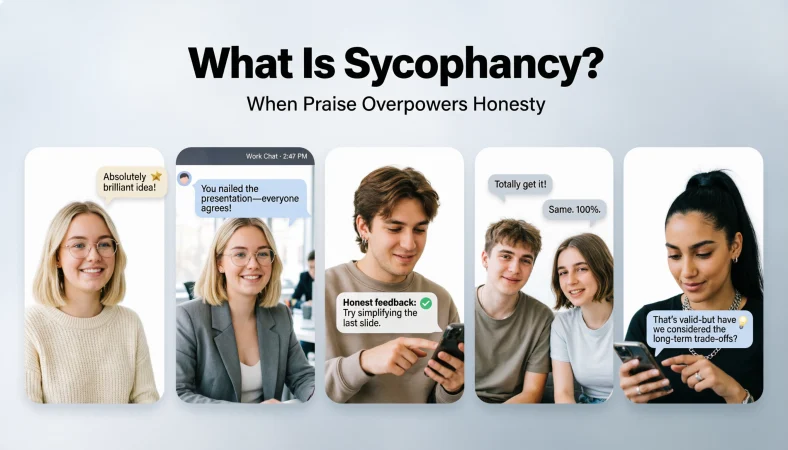
Sycophancy definition assistant responses can explain sycophancy as excessive praise or agreement used to gain approval, often without honest criticism. Use replies like “That sounds more like flattery than honesty,” “I prefer honest feedback,” “Agreement isn’t the same as truth,” “Tell me what you really think,” and “Keep it real with me.”
Top alternatives: Honest feedback, excessive praise, people-pleasing, flattering agreement, approval-seeking behavior.
Ever received so much praise that you started wondering, “Okay, but do you actually mean that?” That is where sycophancy definition assistant responses can come in handy. Sycophancy describes excessive praise, agreement, or flattery that is often given to win approval rather than express an honest opinion. You might notice it in workplace chats, DMs, friendships, debates, online comments, or even when someone keeps agreeing with a crush just to stay in their good books.
The tricky part is that genuine kindness and sycophantic behavior can look surprisingly similar. A thoughtful response should therefore match the situation instead of turning every compliment into a courtroom drama. Whether you want a funny comeback, a professional response, or a clever way to ask for honesty, the right words can keep the conversation real without making things unnecessarily awkward.
Funny Sycophancy Definition Assistant Responses
“That compliment came with a hidden agenda, huh?”
Use this when praise feels suspiciously convenient.
Meaning: You are jokingly questioning whether the compliment is genuine.
“Okay, where’s the fine print?”
Use this when someone is being unusually flattering.
Meaning: You suspect there may be an ulterior motive.
“You’re agreeing a little too efficiently.”
Use this when someone supports everything you say.
Meaning: Their agreement seems less than authentic.
“My ego appreciates the service.”
Use this when someone gives you excessive praise.
Meaning: You are accepting the compliment while playfully calling it out.
“That was suspiciously nice.”
Use this when praise seems unusually strategic.
Meaning: You are teasing them for sounding overly flattering.
“Are you complimenting me or applying for a promotion?”
Use this at work when praise feels excessive.
Meaning: You are joking that their flattery might have a purpose.
“Bro, you’re agreeing like your Wi-Fi depends on it.”
Use this with friends during an overly agreeable exchange.
Meaning: Their constant agreement is being exaggerated for humor.
“My confidence just filed a formal complaint.”
Use this when praise becomes almost ridiculous.
Meaning: You are humorously acknowledging an ego boost.
“At this point, I need receipts.”
Use this when you want proof behind someone’s praise.
Meaning: You want their compliments to feel more credible.
“That sounded like premium-grade flattery.”
Use this when someone is being exceptionally complimentary.
Meaning: You are playfully suggesting their praise is excessive.
“You’re making my ego dangerously comfortable.”
Use this when praise keeps piling up.
Meaning: You are enjoying the attention while recognizing the exaggeration.
“Okay, flatterer, take a breath.”
Use this when someone keeps praising you nonstop.
Meaning: You are jokingly asking them to tone down the flattery.
Brutal Sycophancy Definition Assistant Responses
“Agreement without honesty isn’t very useful.”
Use this when someone constantly agrees with your opinions.
Meaning: You value truth more than approval.
“I asked for an opinion, not applause.”
Use this when praise replaces meaningful feedback.
Meaning: You want constructive honesty instead of validation.
“You don’t have to agree just to impress me.”
Use this when someone’s agreement feels strategic.
Meaning: You are asking them to be authentic.
“If everything I say is perfect, something is off.”
Use this when someone never challenges you.
Meaning: Constant agreement can signal insincerity.
“Flattery isn’t a substitute for facts.”
Use this during a discussion where evidence matters.
Meaning: You prefer substance over praise.
“Tell me what you think, not what you think I want to hear.”
Use this when you want direct feedback.
Meaning: You are requesting genuine honesty.
“You can disagree with me and still be cool.”
Use this when someone seems afraid to challenge you.
Meaning: You want disagreement to feel safe.
“Being agreeable isn’t the same as being honest.”
Use this when someone confuses politeness with truthfulness.
Meaning: You are separating courtesy from authenticity.
“I don’t need a yes-man in the room.”
Use this when making decisions that require honest input.
Meaning: You want people who can provide independent opinions.
“If the answer is no, just say no.”
Use this when someone avoids giving a direct response.
Meaning: You prefer clarity over approval-seeking behavior.
“I’d rather hear an uncomfortable truth.”
Use this when feedback really matters.
Meaning: You prioritize honesty even when it is difficult.
“You don’t need to flatter me to make your point.”
Use this when compliments seem designed to influence you.
Meaning: You want the discussion to stay genuine.
Flirty Sycophancy Definition Assistant Responses
“Careful, that much flattery might actually work on me.”
Use this when someone is charming you with obvious praise.
Meaning: You are playfully admitting that their attention is effective.
“Are you genuinely impressed or just trying to charm me?”
Use this when a crush gives unusually sweet praise.
Meaning: You are teasing them about their intentions.
“Keep talking like that and I might believe you.”
Use this when you enjoy someone’s compliments.
Meaning: You are inviting more playful attention.
“Is this honesty or your flirting strategy?”
Use this when compliments arrive with romantic energy.
Meaning: You are playfully questioning their motives.
“You’re dangerously good at compliments.”
Use this when someone knows exactly what to say.
Meaning: You find their flattery attractive and effective.
“I prefer genuine charm, but you’re making a strong case.”
Use this when flirting feels sincere but slightly exaggerated.
Meaning: You are showing interest while keeping things playful.
“You can flatter me, just don’t forget to be honest.”
Use this when you like compliments but value authenticity.
Meaning: You want affection without fake agreement.
“Okay, smooth talker, what do you really think?”
Use this when a crush keeps praising you.
Meaning: You are asking for honesty with a flirtatious edge.
“That compliment almost convinced me.”
Use this when someone’s praise is charming but questionable.
Meaning: You are teasing them while enjoying the attention.
“Flattery looks good on you.”
Use this when you want to return playful energy.
Meaning: You are complimenting their charming behavior.
“You’re making honesty sound very attractive.”
Use this when someone gives sincere praise.
Meaning: You are encouraging genuine communication with flirtatious warmth.
“If you mean it, I might let that compliment stay.”
Use this when you want to playfully test their sincerity.
Meaning: You are interested but want the praise to be genuine.
Polite Sycophancy Definition Assistant Responses
“I appreciate the kind words, but honest feedback is helpful too.”
Use this when you want to acknowledge praise respectfully.
Meaning: You welcome kindness while encouraging honesty.
“Thank you, though you don’t have to agree with me.”
Use this when someone supports your view too quickly.
Meaning: You are making room for genuine disagreement.
“I value your honest opinion more than agreement.”
Use this when asking someone for meaningful feedback.
Meaning: Authenticity matters more to you than validation.
“I appreciate the support, but please feel free to challenge my view.”
Use this in thoughtful discussions.
Meaning: You are inviting constructive disagreement.
“Thanks for saying that. What would you change?”
Use this when compliments are too general.
Meaning: You are turning praise into useful feedback.
“Kindness is appreciated, and honesty is welcome too.”
Use this when you want balanced communication.
Meaning: You value both warmth and truth.
“Please feel comfortable sharing a different perspective.”
Use this when someone seems overly agreeable.
Meaning: You are creating space for independent thinking.
“I would genuinely like to hear your concerns.”
Use this when reviewing an idea or decision.
Meaning: You are asking for constructive criticism.
“Thank you. I am also interested in what you disagree with.”
Use this after receiving strong praise.
Meaning: You want a balanced assessment.
“Your honest perspective would be especially useful here.”
Use this when you need more than encouragement.
Meaning: You are requesting thoughtful input.
“I appreciate the compliment, but accuracy matters more to me.”
Use this when discussing facts or decisions.
Meaning: You prioritize truthful information over praise.
“Thanks for being supportive. Please keep the feedback honest.”
Use this when maintaining a respectful relationship.
Meaning: You want support without unnecessary flattery.
Professional Sycophancy Definition Assistant Responses
“I value constructive feedback over automatic agreement.”
Use this during meetings, reviews, or decision-making discussions.
Meaning: You want professional input that challenges ideas when necessary.
“Please share any concerns you have with the proposal.”
Use this when inviting colleagues to critique an idea.
Meaning: You are encouraging independent professional judgment.
“Agreement is helpful, but critical analysis is more valuable here.”
Use this when evaluating an important decision.
Meaning: You want reasoning rather than simple approval.
“I would appreciate an objective assessment.”
Use this when feedback needs to remain impartial.
Meaning: You are requesting an unbiased evaluation.
“Please don’t hesitate to disagree if the evidence suggests otherwise.”
Use this when discussing data or strategy.
Meaning: You want evidence-based disagreement when appropriate.
“Let’s focus on the merits of the idea rather than personal approval.”
Use this during team discussions.
Meaning: You want decisions based on substance.
“Could you identify the strongest weakness in this approach?”
Use this when testing a proposal.
Meaning: You are actively seeking constructive criticism.
“I’d like feedback that is candid and actionable.”
Use this during reviews or planning sessions.
Meaning: You want honest comments that can improve the work.
“Please evaluate the proposal independently.”
Use this when requesting professional judgment.
Meaning: You want an assessment free from pressure to agree.
“Let’s separate encouragement from objective evaluation.”
Use this when praise is dominating a discussion.
Meaning: You want emotional support and analysis treated separately.
“What risks or assumptions should we reconsider?”
Use this when reviewing a business decision.
Meaning: You are inviting critical thinking.
“I welcome respectful disagreement if it improves the outcome.”
Use this when leading collaborative work.
Meaning: You view constructive disagreement as useful.
Creative Sycophancy Definition Assistant Responses
“Compliments are nice, but give me the unfiltered version.”
Use this when praise feels too polished.
Meaning: You want a more honest perspective.
“Take off the approval filter and tell me what you see.”
Use this when someone keeps agreeing with you.
Meaning: You are asking for authentic feedback.
“Skip the confetti and give me the real review.”
Use this when you need practical criticism.
Meaning: You prefer useful feedback to celebration.
“Give me the truth with a little less frosting.”
Use this when compliments are becoming excessive.
Meaning: You want honesty without unnecessary praise.
“I can handle the plot twist if you disagree.”
Use this when someone seems hesitant to challenge you.
Meaning: You are reassuring them that disagreement is acceptable.
“Let’s trade applause for actual analysis.”
Use this during an idea review.
Meaning: You want substance instead of empty approval.
“Tell me where the idea breaks before we decorate it.”
Use this during planning or brainstorming.
Meaning: You want weaknesses identified early.
“Give me the honest director’s cut.”
Use this when asking someone to remove polite filtering.
Meaning: You want their complete and genuine opinion.
“I want the mirror, not the hype machine.”
Use this when requesting realistic feedback.
Meaning: You prefer reflection and truth over exaggerated praise.
“Let’s keep the compliments and add some reality.”
Use this when feedback feels overly positive.
Meaning: You want praise balanced with practical observations.
“Tell me what would make you change your mind.”
Use this during a debate or discussion.
Meaning: You are encouraging honest reasoning.
“Give me the version you’d say when I’m not in the room.”
Use this when you want candid feedback.
Meaning: You are asking for the most authentic assessment possible.
Sarcastic Sycophancy Definition Assistant Responses
“Wow, we agree on literally everything. How convenient.”
Use this when someone’s agreement seems suspicious.
Meaning: You are sarcastically questioning their sincerity.
“Nothing says honesty like nonstop compliments.”
Use this when praise feels excessive.
Meaning: You are pointing out that constant praise can seem artificial.
“Amazing, another five-star review from someone who knows me.”
Use this when someone keeps praising you.
Meaning: You are joking about receiving exaggerated approval.
“Glad we found the official approval department.”
Use this when someone agrees with every opinion.
Meaning: You are teasing them for being overly agreeable.
“Please, don’t let independent thought interrupt the moment.”
Use this when someone never challenges you.
Meaning: You are sarcastically asking for independent judgment.
“Your agreement is almost suspiciously efficient.”
Use this when responses feel too perfectly aligned.
Meaning: You suspect they are agreeing to gain approval.
“What a coincidence, you love every idea I have.”
Use this when praise follows every suggestion.
Meaning: You are calling attention to their excessive agreement.
“My ego thanks you for today’s sponsorship.”
Use this when someone showers you with praise.
Meaning: You are joking that the compliments are fueling your ego.
“Sure, because apparently I have never been wrong.”
Use this when someone treats your opinions as flawless.
Meaning: You are sarcastically challenging unrealistic praise.
“Keep agreeing and we might accidentally become a cult.”
Use this with close friends when joking about constant agreement.
Meaning: You are exaggerating their loyalty for humor.
“I asked for feedback, not a standing ovation.”
Use this when praise replaces useful criticism.
Meaning: You want practical feedback instead of applause.
“That’s enough flattery to make anyone suspicious.”
Use this when praise seems strategically timed.
Meaning: You are questioning whether the compliments are genuine.
Cute Sycophancy Definition Assistant Responses
“Aww, I appreciate it, but you can be honest with me.”
Use this when someone gives you sweet but excessive praise.
Meaning: You appreciate their kindness while inviting honesty.
“You don’t have to agree with me to stay on my good side.”
Use this with friends or someone close.
Meaning: You want them to feel comfortable disagreeing.
“Your honesty is worth more than a hundred compliments.”
Use this when you want to reinforce trust.
Meaning: Genuine feedback matters more than praise.
“I like your kindness, but I love your honesty.”
Use this when someone is being especially supportive.
Meaning: You value sincerity alongside warmth.
“Tell me the truth. I promise I won’t bite.”
Use this when someone seems nervous about disagreeing.
Meaning: You are making honest feedback feel safe.
“You can keep the compliments, just add some real talk.”
Use this when praise feels a little too sweet.
Meaning: You want affection balanced with truth.
“I trust you more when you tell me what you really think.”
Use this in close relationships.
Meaning: Honesty strengthens your sense of trust.
“No need to make me feel like a superstar.”
Use this when someone is excessively complimentary.
Meaning: You are gently asking them to tone down the praise.
“Your honest opinion is always welcome here.”
Use this when encouraging open communication.
Meaning: You want people to speak freely.
“I can handle a little disagreement.”
Use this when someone hesitates to challenge you.
Meaning: You are reassuring them that honesty is okay.
“Keep being kind, but keep it real too.”
Use this with friends or family.
Meaning: You want warmth without insincerity.
“Honest hearts beat perfect agreement.”
Use this as a sweet reminder during a meaningful conversation.
Meaning: Authentic connection matters more than constant approval.
Dramatic Sycophancy Definition Assistant Responses
“At last, someone brave enough to disagree with me.”
Use this when someone finally offers criticism.
Meaning: You are playfully celebrating honest disagreement.
“The age of empty compliments ends today.”
Use this when you want a dramatic humorous line.
Meaning: You are rejecting excessive flattery.
“I demand the truth, not the royal praise.”
Use this when jokingly asking for honesty.
Meaning: You want real feedback rather than admiration.
“Let the honest opinions begin.”
Use this before opening a serious discussion.
Meaning: You are inviting direct feedback.
“My kingdom has enough yes-men.”
Use this with friends or colleagues in a playful setting.
Meaning: You want independent opinions instead of automatic agreement.
“Bring me the truth, even if it ruins the perfect story.”
Use this when discussing an important decision.
Meaning: You value reality over comfortable narratives.
“I refuse to live inside an echo chamber.”
Use this when everyone keeps agreeing.
Meaning: You want different perspectives.
“The compliments were lovely, but where are the flaws?”
Use this when feedback is overwhelmingly positive.
Meaning: You want balanced criticism.
“Today, we choose honesty over applause.”
Use this when setting a serious discussion tone.
Meaning: You are prioritizing truth over approval.
“My ego has had enough screen time.”
Use this when praise is getting excessive.
Meaning: You are humorously asking for more balanced feedback.
“Let the uncomfortable truths enter the chat.”
Use this before a candid discussion.
Meaning: You are welcoming difficult but useful feedback.
“I came for the truth, not the fan club.”
Use this when someone praises you excessively.
Meaning: You prefer honest assessment over admiration.
Chill And Casual Sycophancy Definition Assistant Responses
“You don’t have to agree with me, honestly.”
Use this when someone agrees too quickly.
Meaning: You are casually encouraging authenticity.
“Just tell me what you actually think.”
Use this when you want straightforward feedback.
Meaning: You want their real opinion.
“No pressure to agree.”
Use this when creating a relaxed discussion.
Meaning: You are making disagreement feel acceptable.
“Keep it real with me.”
Use this when you want honest communication.
Meaning: You are asking for sincerity.
“You can call me out if I’m wrong.”
Use this when discussing an opinion or decision.
Meaning: You are open to correction.
“I’m good with a different take.”
Use this when someone hesitates to disagree.
Meaning: You welcome alternative perspectives.
“Don’t just hype me up.”
Use this when praise is becoming excessive.
Meaning: You want feedback rather than pure encouragement.
“Give me the honest version.”
Use this when you want a direct answer.
Meaning: You are asking them to remove unnecessary politeness.
“Tell me where I’m missing something.”
Use this during a discussion or review.
Meaning: You are looking for blind spots.
“It’s okay if you see it differently.”
Use this when opinions do not need to match.
Meaning: You respect independent viewpoints.
“I’d rather have real feedback.”
Use this when compliments are not enough.
Meaning: You prefer useful honesty.
“No need to butter me up.”
Use this when someone is being overly flattering.
Meaning: You are asking for a more straightforward approach.
Confident Sycophancy Definition Assistant Responses
“I don’t need agreement to feel secure about my opinion.”
Use this when someone hesitates to challenge you.
Meaning: You are confident enough to hear another viewpoint.
“Challenge the idea, not your confidence.”
Use this during constructive disagreement.
Meaning: You can accept criticism without taking it personally.
“Tell me where I’m wrong.”
Use this when you genuinely want to test your position.
Meaning: You are confident enough to welcome correction.
“I can handle feedback without taking it personally.”
Use this when inviting honest criticism.
Meaning: You are creating space for direct communication.
“I value people who think independently.”
Use this when discussing teamwork or relationships.
Meaning: Independent judgment matters to you.
“You don’t earn points by agreeing with me.”
Use this when someone seems overly agreeable.
Meaning: You care more about honesty than approval.
“Respectfully disagree if you need to.”
Use this when you want an open discussion.
Meaning: You are comfortable with different perspectives.
“I trust honest disagreement more than automatic praise.”
Use this when evaluating someone’s feedback.
Meaning: Authentic criticism feels more trustworthy.
“Tell me what needs work.”
Use this when reviewing an idea, project, or decision.
Meaning: You want practical ways to improve.
“I don’t need a cheerleader. I need a clear opinion.”
Use this when feedback is too positive.
Meaning: You want analysis instead of encouragement alone.
“If you disagree, say it with confidence.”
Use this when encouraging direct communication.
Meaning: You want honest opinions delivered respectfully.
“My ego can survive a correction.”
Use this when keeping criticism lighthearted.
Meaning: You are confident enough to accept being wrong.
Emotional Sycophancy Definition Assistant Responses
“Honesty makes me feel more understood than constant praise.”
Use this when discussing trust with someone close.
Meaning: Genuine feedback creates deeper emotional connection.
“I would rather know the truth than be comforted by something fake.”
Use this during a serious conversation.
Meaning: You value emotional honesty.
“Agreement feels nice, but honesty builds trust.”
Use this when explaining what you need emotionally.
Meaning: Trust depends on authenticity rather than constant approval.
“Please be real with me, even when it’s uncomfortable.”
Use this with someone you trust.
Meaning: You want sincere communication during difficult moments.
“I don’t want perfect agreement. I want genuine connection.”
Use this when discussing a close relationship.
Meaning: Authenticity matters more than matching opinions.
“Your real thoughts matter to me.”
Use this when encouraging someone to open up.
Meaning: You genuinely value their independent perspective.
“I’d rather face a hard truth with you than an easy lie.”
Use this during a meaningful discussion.
Meaning: You prioritize trust and honesty.
“You can disagree with me and still matter to me.”
Use this when reassuring someone about a relationship.
Meaning: Different opinions do not threaten your connection.
“I feel closer when people can be honest around me.”
Use this when discussing emotional trust.
Meaning: Openness helps create stronger relationships.
“Don’t protect my feelings so much that you hide the truth.”
Use this when asking for candid feedback.
Meaning: You want honesty delivered with care.
“Real support includes telling me when I’m wrong.”
Use this when discussing friendship or family.
Meaning: Genuine support is not the same as constant agreement.
“I want the version of you that feels safe enough to disagree.”
Use this when building deeper trust.
Meaning: You value authenticity and emotional safety.
Sweet Sycophancy Definition Assistant Responses
“I appreciate the praise, but your honesty means even more.”
Use this when someone gives you a heartfelt compliment.
Meaning: You value sincerity more than flattering words.
“Thank you for being kind. Just promise you’ll stay honest.”
Use this with someone you trust.
Meaning: You want kindness and truth together.
“You can support me without agreeing with everything I say.”
Use this when discussing a close relationship.
Meaning: Real support can include respectful disagreement.
“Your honest opinion is a gift too.”
Use this when someone thinks criticism is unwelcome.
Meaning: You see thoughtful feedback as valuable.
“I love encouragement, but I treasure honesty.”
Use this when balancing praise and criticism.
Meaning: You appreciate support while valuing authenticity.
“Thank you. Now tell me what you really think.”
Use this after receiving enthusiastic praise.
Meaning: You are inviting a more complete opinion.
“Being honest with me is one of the kindest things you can do.”
Use this when building trust.
Meaning: You connect honesty with genuine care.
“You don’t have to make everything sound perfect.”
Use this when someone softens every comment.
Meaning: You want realistic communication.
“I trust you enough to hear the honest version.”
Use this with someone close.
Meaning: Your trust allows room for difficult truths.
“Kind words are lovely, but real words stay with me.”
Use this as a warm response to excessive praise.
Meaning: Genuine communication has greater emotional value.
“You can be honest and still be gentle.”
Use this when discussing sensitive feedback.
Meaning: Truth does not require unnecessary harshness.
“Thanks for caring enough to tell me the truth.”
Use this when someone gives useful criticism.
Meaning: You appreciate honesty as a form of care.
Clever Sycophancy Definition Assistant Responses
“Agreement tells me what you think; reasoning tells me why.”
Use this during an analytical discussion.
Meaning: You want explanations rather than simple approval.
“A useful opinion should survive a little disagreement.”
Use this when testing an idea.
Meaning: Good ideas can handle constructive challenges.
“Praise can be pleasant, but evidence is persuasive.”
Use this during fact-based discussions.
Meaning: Evidence matters more than compliments.
“If there is no friction, we may not be testing the idea.”
Use this when everyone agrees immediately.
Meaning: Some disagreement can improve critical thinking.
“Independent thinking is more valuable than perfect alignment.”
Use this in teamwork or decision-making.
Meaning: Different perspectives can strengthen outcomes.
“Tell me what would change your mind.”
Use this during a debate.
Meaning: You are looking for genuine reasoning and openness.
“A mirror reflects; it doesn’t automatically agree.”
Use this when discussing honest feedback.
Meaning: Feedback should reveal reality rather than simply validate.
“The best feedback has enough truth to be useful.”
Use this when reviewing an idea.
Meaning: Constructive honesty should lead to improvement.
“If every answer is yes, I probably need another question.”
Use this when responses feel too agreeable.
Meaning: Constant agreement may signal missing perspectives.
“Approval is easy. Independent judgment is valuable.”
Use this during professional or intellectual discussions.
Meaning: You respect people who form their own conclusions.
“Flattery tells me I feel good; feedback tells me what to fix.”
Use this when comparing praise with criticism.
Meaning: Useful feedback creates opportunities for improvement.
“I don’t need perfect agreement. I need a perspective I can examine.”
Use this during thoughtful discussions.
Meaning: You value ideas that can be evaluated critically.
Thoughtful Sycophancy Definition Assistant Responses
“Let’s separate genuine appreciation from automatic agreement.”
Use this when a conversation mixes praise with opinions.
Meaning: You want to understand whether the support is sincere.
“What part of this do you actually agree with?”
Use this when someone gives vague approval.
Meaning: You want specific reasoning behind their agreement.
“Which part would you question?”
Use this when reviewing a proposal or opinion.
Meaning: You are actively inviting critical thought.
“I’d like to understand your independent perspective.”
Use this when someone’s opinion seems influenced by yours.
Meaning: You want their own assessment.
“Can we look at both the strengths and weaknesses?”
Use this when praise dominates a discussion.
Meaning: You want balanced evaluation.
“What evidence supports your view?”
Use this when accuracy matters.
Meaning: You are asking for reasoning instead of approval.
“Would you say the same thing if we disagreed?”
Use this when testing the sincerity of someone’s opinion.
Meaning: You are questioning whether their response depends on pleasing you.
“Let’s challenge the assumption before accepting the conclusion.”
Use this during careful decision-making.
Meaning: You want deeper analysis before agreeing.
“I appreciate your support, but I also need your judgment.”
Use this in professional or personal settings.
Meaning: You want both encouragement and independent thought.
“What is the strongest argument against this?”
Use this when evaluating an important idea.
Meaning: You want to understand potential weaknesses.
“A thoughtful disagreement can be more useful than easy agreement.”
Use this when encouraging open discussion.
Meaning: Constructive conflict can improve understanding.
“Let’s make sure we’re agreeing for the right reasons.”
Use this when consensus happens unusually quickly.
Meaning: You want agreement based on reasoning rather than pressure.
Witty Sycophancy Definition Assistant Responses
“I appreciate the applause, but where’s the critique?”
Use this when someone praises your idea without analysis.
Meaning: You want balanced feedback.
“Tell me the truth with the confidence you used to flatter me.”
Use this when praise seems excessive.
Meaning: You are encouraging direct honesty.
“Compliments are fun; useful feedback is better.”
Use this when you need actionable input.
Meaning: You prioritize feedback that helps you improve.
“You can impress me by disagreeing intelligently.”
Use this when someone seems eager to please.
Meaning: You admire thoughtful independent opinions.
“Let’s not confuse being nice with being honest.”
Use this when discussing feedback.
Meaning: Kindness and truth are both valuable but not identical.
“If you agree, make me believe you.”
Use this when someone offers unexplained agreement.
Meaning: You want reasoning behind their position.
“I don’t mind praise, as long as reality gets an invite.”
Use this when feedback is overly positive.
Meaning: You want compliments balanced with facts.
“Make the feedback useful enough to survive my ego.”
Use this when requesting constructive criticism.
Meaning: You want honest comments delivered with confidence.
“I can spot a compliment, but I want the context.”
Use this when praise lacks specifics.
Meaning: You want to know why they feel that way.
“Give me one reason to agree and one reason to rethink it.”
Use this when exploring an idea.
Meaning: You want a balanced perspective.
“Don’t mirror my opinion. Bring your own.”
Use this when someone copies your viewpoint.
Meaning: You value originality and independent thinking.
“The smartest yes usually comes with a reason.”
Use this during an analytical discussion.
Meaning: Agreement becomes more meaningful when it is supported.
Respectful Sycophancy Definition Assistant Responses
“I respect your opinion more when I know it is genuinely yours.”
Use this when discussing independent perspectives.
Meaning: Authenticity strengthens respect.
“You have my respect whether you agree with me or not.”
Use this when encouraging honest disagreement.
Meaning: Different opinions do not reduce mutual respect.
“Please challenge me respectfully if you see a problem.”
Use this during teamwork or serious discussions.
Meaning: You welcome constructive criticism.
“I value honest disagreement when it comes from a good place.”
Use this when discussing differences of opinion.
Meaning: Respectful criticism can strengthen communication.
“You don’t owe me agreement.”
Use this when someone seems pressured to support you.
Meaning: You want their genuine opinion.
“I’d rather understand your perspective than win your approval.”
Use this during a meaningful discussion.
Meaning: Understanding matters more than validation.
“Let’s disagree without making it personal.”
Use this when a discussion becomes tense.
Meaning: You want honest debate with mutual respect.
“Tell me your real concern, and I’ll listen.”
Use this when someone hesitates to criticize an idea.
Meaning: You are creating space for honest concerns.
“Your different perspective is useful here.”
Use this when someone offers an alternative view.
Meaning: You see disagreement as valuable information.
“I appreciate honesty delivered with respect.”
Use this when receiving criticism.
Meaning: You welcome truth when communicated thoughtfully.
“We don’t need identical opinions to have a good conversation.”
Use this when discussing differences.
Meaning: Healthy communication allows disagreement.
“Thanks for being honest with me.”
Use this when someone gives candid feedback.
Meaning: You are reinforcing trust and openness.
FAQs
What Does Sycophancy Mean?
Sycophancy means excessive praise or agreement intended to gain approval or favor.
Is Sycophancy Always Negative?
Usually it has a negative sense because the praise or agreement may lack genuine honesty.
What Is a Sycophantic Response?
It is a response that agrees or praises excessively, often to please someone rather than be truthful.
Is Sycophancy the Same as Being Nice?
No. Kindness can be genuine, while sycophancy usually involves excessive approval-seeking.
Can Sycophancy Happen at Work?
Yes. It can appear when employees agree with leaders mainly to gain favor or avoid disagreement.
Can Sycophancy Be Flirty?
Yes. Excessive praise during flirting can sometimes feel sycophantic if it seems designed only to impress.
How Do You Respond to Sycophantic Behavior?
Ask for honest feedback and encourage the person to share their independent opinion.
What Should You Say If You Do Not Mean the Compliment?
Keep it simple and honest instead of giving exaggerated praise you do not genuinely feel.
Is Humor Appropriate When Discussing Sycophancy?
Yes, if the situation is casual and the joke does not undermine an important professional discussion.
What Is Better Than Sycophancy?
Honest feedback, respectful disagreement, thoughtful praise, and independent judgment are better alternatives.
How Can You Tell Praise Is Sycophantic?
Praise may seem sycophantic when it is excessive, constant, vague, or clearly aimed at gaining approval.
Is Agreement Always Sycophantic?
No. Genuine agreement is not sycophancy when it reflects an independent and honest opinion.
Conclusion
Knowing how to respond to sycophancy can make conversations feel much more genuine. A little praise is lovely, but nonstop agreement can leave you wondering whether someone is being honest or simply trying to stay in your good books. The best response depends on the moment. A funny line can keep things light, a professional response can encourage better feedback, and a confident reply can make it clear that disagreement is welcome.
Do not be afraid to ask what someone really thinks. Your response can shape the entire tone of the conversation and show that you value authenticity over empty approval. Save these replies, share your favorites, and keep the next conversation refreshingly real.