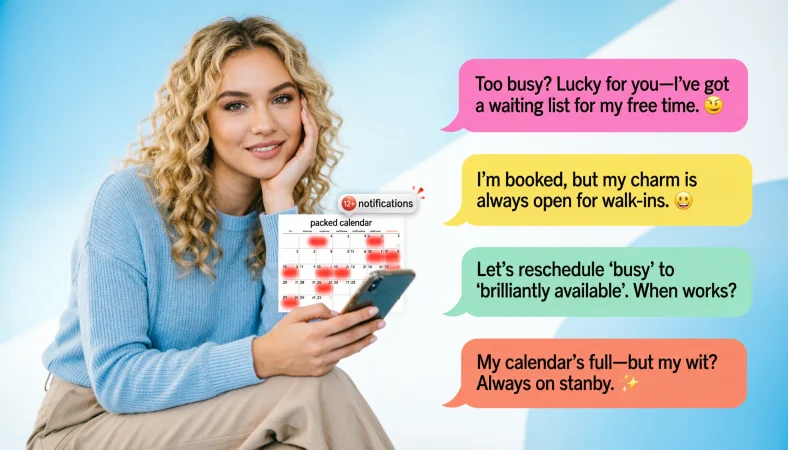
The best response to “I’m too busy” depends on the situation and your relationship with the person. Whether you want to answer you’re too busy, ask are you busy today, mention despite your busy schedule, or respond when someone is too busy to reply, keep your message calm, respectful, and true to the situation.
Top alternatives: “No worries, let me know when you’re free,” “Busy is fine, just be honest,” “I’ll catch you when life calms down,” “Sounds like your schedule is winning,” “All good, I won’t compete with your calendar.”
“I’m too busy” can mean genuinely overwhelmed, politely unavailable, or sometimes just a soft way of creating distance. The right reply helps you stay confident without sounding needy, annoyed, or overly dramatic.
When someone says they are busy, it can be hard to know whether to give them space, check in later, or simply move on with your day. If you are wondering what to say when someone is too busy for you, a relaxed response usually works better than sending several messages or making the situation more serious than it needs to be.
You can also use short replies when the conversation is casual. Messages like okay busy, you still busy, or you must be busy can sound completely different depending on your tone. And if you are the one explaining your schedule, phrases such as i’m to busy and i have been so busy can help you explain why you have been quiet without overexplaining.
You’re too busy
“you’re too busy” can sound teasing, frustrated, or slightly sarcastic depending on the context. A softer version is, “You’ve been pretty busy lately, huh?”
Are you busy today
If you are asking are you busy today, keep it simple: “Are you free today, or is it another chaotic one?” It sounds casual while giving them room to answer honestly.
Despite your busy schedule
Despite your busy schedule is a polite phrase for acknowledging that someone has a lot going on. For example, “I really appreciate you making time despite your busy schedule.”
Too busy to reply
If someone is too busy to reply, avoid immediately assuming they are ignoring you. You can say, “No worries, reply whenever you get a chance.”
Okay busy
Okay busy works as a playful, short response when someone tells you they are occupied. Depending on your relationship, you can make it warmer with, “Okay busy person, I’ll let you get back to it.”
You still busy
You still busy is a casual way to check whether someone has become available. A slightly smoother version is, “You still busy, or can I steal a minute?”
You must be busy
You must be busy can show that you understand why someone has not responded. To keep it friendly, try, “You must be busy, no worries. Catch you when you’re free.”
I’m to busy
If you mean i’m to busy, the correct spelling is “I’m too busy.” It means you currently have too many things demanding your attention to do something else.
I have been so busy
I have been so busy is a natural way to explain why you have been unavailable or slow to respond. You can make it more conversational by adding, “Sorry I’ve been quiet, things have been nonstop lately.”
Funny Responses
“Busy enough to run a small country, huh?”
Use it when a friend dramatically complains about having no free time.
Meaning: You are teasing them about their ridiculously packed schedule.
“Should I send an appointment request?”
Use it when someone keeps saying they are too busy to hang out.
Meaning: You are joking that getting their time requires official scheduling.
“I’ll wait patiently in the waiting room.”
Use it when someone jokingly acts unavailable.
Meaning: You are playfully pretending they are extremely important.
“Your calendar is starting to feel personal.”
Use it when someone repeatedly has no time.
Meaning: Their schedule seems hilariously determined to keep you apart.
“Busy or secretly booked for something more interesting?”
Use it with a close friend when teasing them.
Meaning: You are jokingly questioning what has their attention.
“Okay, CEO of Being Busy.”
Use it when someone constantly talks about their schedule.
Meaning: You are playfully exaggerating how busy they are.
“I’ll pencil myself in for 2047.”
Use it when someone keeps postponing plans.
Meaning: You are humorously suggesting their availability is extremely limited.
“No worries, I’ll fight your calendar for custody.”
Use it with someone you are comfortable joking with.
Meaning: You are dramatically teasing their schedule.
“Blink twice if your calendar needs help.”
Use it when their schedule sounds completely chaotic.
Meaning: You are joking that their workload has taken over their life.
“Busy is a personality trait now?”
Use it when someone repeatedly uses being busy as an excuse.
Meaning: You are lightly calling out the pattern.
“I respect the grind, but your calendar is doing too much.”
Use it when someone genuinely has a packed schedule.
Meaning: You understand their workload while keeping things playful.
“Cool, I’ll schedule my disappearance accordingly.”
Use it when you want a dry, funny response.
Meaning: You are jokingly stepping back without making a scene.
Brutal Responses
“Busy people make time for what matters.”
Use it when someone repeatedly avoids making plans.
Meaning: You are directly suggesting that priorities matter more than excuses.
“No worries, I won’t compete for attention.”
Use it when you feel someone is consistently unavailable.
Meaning: You are confidently refusing to chase them.
“That tells me everything I need to know.”
Use it when their lack of availability feels intentional.
Meaning: You are choosing to read the situation and move on.
“I’m not asking for your entire weekend.”
Use it when someone exaggerates how difficult it is to make plans.
Meaning: You are pointing out that a little effort would be enough.
“Then I’ll stop asking.”
Use it after several failed attempts to make plans.
Meaning: You are setting a clear boundary without begging.
“No problem. I match energy.”
Use it when you notice someone consistently gives minimal effort.
Meaning: You will give the same level of effort they give you.
“Busy is understandable. Repeatedly unavailable is different.”
Use it when someone continually avoids making time.
Meaning: You are distinguishing genuine busyness from a pattern of avoidance.
“I respect your time, so I’ll stop taking up space in it.”
Use it when you decide to step back gracefully.
Meaning: You are choosing self-respect over chasing.
“You don’t have to explain. I got the message.”
Use it when someone repeatedly declines without suggesting another time.
Meaning: You understand their lack of interest and will not push further.
“No hard feelings. I prefer mutual effort anyway.”
Use it when ending a one-sided dynamic.
Meaning: You value balanced relationships.
“If it’s always a bad time, maybe it’s simply not the right connection.”
Use it when someone continually avoids meeting.
Meaning: You are accepting the situation without blaming yourself.
“All good. I know where I stand now.”
Use it when their actions have made their priorities clear.
Meaning: You are confidently accepting the reality of the situation.
Flirty Responses

“Too busy for me? That sounds like a scheduling challenge.”
Use it when flirting with someone who genuinely has a packed schedule.
Meaning: You are playfully suggesting you still want their attention.
“I’ll steal five minutes when you least expect it.”
Use it when teasing a crush about being busy.
Meaning: You want a little time together without sounding demanding.
“Then I’ll wait for my VIP appointment.”
Use it when someone playfully claims to be unavailable.
Meaning: You are turning their busyness into flirtatious banter.
“I could be your favorite distraction.”
Use it when the conversation already has chemistry.
Meaning: You are suggesting that spending time with you would be fun.
“Busy schedule, huh? I might have to bribe you with coffee.”
Use it when trying to make plans with someone you like.
Meaning: You are offering a playful reason to meet.
“I only need a little of your time to make you smile.”
Use it when flirting with someone who is genuinely busy.
Meaning: You are showing interest while keeping the tone sweet.
“Tell me when the CEO of Busy is available.”
Use it when teasing your crush.
Meaning: You are playfully challenging their unavailable persona.
“I’ll take whatever time you can spare.”
Use it when you want a warm, slightly romantic reply.
Meaning: Even a little time with them feels valuable.
“Maybe I should become your calendar notification.”
Use it when you want a playful flirt.
Meaning: You are joking that they should remember you.
“I guess I’ll have to become worth rearranging your schedule for.”
Use it when the flirtation is already mutual.
Meaning: You are confidently challenging them to make time.
“Busy looks good on you, but free looks better.”
Use it when complimenting someone playfully.
Meaning: You would rather spend relaxed time with them.
“Just say when, and I’ll make the time.”
Use it when you want to show genuine romantic interest.
Meaning: You are making it clear that you are willing to prioritize them.
Polite Responses
“No worries, I completely understand.”
Use it when someone genuinely has a busy schedule.
Meaning: You respect their circumstances without pressure.
“That’s okay. Just let me know when you’re available.”
Use it when you still want to make plans later.
Meaning: You are leaving the door open while giving them control.
“I understand. Take care of what you need to.”
Use it when someone has important responsibilities.
Meaning: You are showing patience and consideration.
“No problem at all.”
Use it when you want a simple, friendly response.
Meaning: You are not taking their unavailability personally.
“I hope things settle down for you soon.”
Use it when someone sounds genuinely overwhelmed.
Meaning: You are expressing concern without adding pressure.
“Whenever you have some free time, feel free to reach out.”
Use it when you want them to contact you later.
Meaning: You are politely putting the next step in their hands.
“I appreciate you letting me know.”
Use it when someone communicates honestly about their schedule.
Meaning: You value clear communication.
“Totally understandable. We can find another time.”
Use it when plans need to be postponed.
Meaning: You are flexible and willing to reschedule.
“Take your time. We can catch up later.”
Use it when speaking to a friend who is overwhelmed.
Meaning: You are giving them breathing room.
“No pressure whatsoever.”
Use it when you want to make someone comfortable declining plans.
Meaning: You are removing any sense of obligation.
“I hope everything goes smoothly for you.”
Use it when someone is dealing with a demanding period.
Meaning: You are responding with genuine goodwill.
“Whenever works for you is fine.”
Use it when you are flexible about meeting later.
Meaning: You are showing patience and understanding.
Professional Responses
“Understood. Please let me know when your schedule allows.”
Use it when coordinating with a busy colleague.
Meaning: You respect their workload while keeping communication open.
“No problem. We can revisit this when you have availability.”
Use it when a work discussion needs to be postponed.
Meaning: You are keeping the situation professional and flexible.
“Thanks for letting me know. I’ll follow up later.”
Use it when someone cannot respond immediately.
Meaning: You acknowledge their situation and establish a next step.
“I understand. I’ll work around your availability.”
Use it when arranging a professional meeting.
Meaning: You are willing to accommodate their schedule.
“That’s completely fine. Please prioritize your current commitments.”
Use it when a colleague is overloaded.
Meaning: You respect their existing responsibilities.
“No concerns. We can find a more suitable time.”
Use it when rescheduling a meeting.
Meaning: You are keeping the conversation calm and solution-focused.
“Understood. I’ll wait for your confirmation.”
Use it when someone needs time before committing.
Meaning: You are leaving the decision with them.
“Thanks for the update. We can reconnect when convenient.”
Use it when communication needs to pause.
Meaning: You are remaining professional without applying pressure.
“I appreciate the heads-up.”
Use it when someone informs you that they cannot meet.
Meaning: You value their communication.
“No problem. Let’s keep the conversation open.”
Use it when postponing a professional discussion.
Meaning: You are maintaining a positive relationship.
“I understand your schedule is demanding.”
Use it when acknowledging someone’s workload.
Meaning: You are showing professional empathy.
“Whenever you have capacity, we can pick this back up.”
Use it when a colleague needs to delay a project discussion.
Meaning: You are respecting their workload while keeping the matter active.
Creative Responses
“I’ll leave a little space on your calendar for me.”
Use it when teasing someone who has a packed schedule.
Meaning: You are playfully suggesting there should be room for you.
“Apparently your calendar has become the main character.”
Use it when someone’s schedule dominates every conversation.
Meaning: You are humorously exaggerating their busyness.
“I’ll send a carrier pigeon when you’re free.”
Use it when someone jokingly claims they have no time.
Meaning: You are playfully adapting to their impossible schedule.
“Let’s call it a rain check with better timing.”
Use it when postponing plans.
Meaning: You remain optimistic about meeting later.
“I’ll wait for the stars, the moon, and your free afternoon.”
Use it when someone is rarely available.
Meaning: You are dramatically joking about their schedule.
“Your schedule sounds like a puzzle. I’m willing to solve it.”
Use it when you still want to make plans.
Meaning: You are showing playful determination.
“I’ll bookmark this friendship until further notice.”
Use it when a friend is temporarily overwhelmed.
Meaning: You are jokingly saying the connection can wait.
“Your free time must be a mythical creature.”
Use it when someone never seems available.
Meaning: You are teasing them about their nonexistent downtime.
“I’ll submit my application for five minutes of your time.”
Use it when playfully asking someone to meet.
Meaning: You are turning scheduling into a humorous application process.
“When the calendar gods approve, let me know.”
Use it when someone keeps postponing plans.
Meaning: You are playfully accepting that their schedule controls everything.
“I’ll reserve a tiny corner of your future free time.”
Use it when you want to stay optimistic about meeting.
Meaning: You are gently suggesting that plans can happen later.
“Busy season today, fun season tomorrow.”
Use it when someone is temporarily overwhelmed.
Meaning: You are staying positive about better timing ahead.
Sarcastic Responses

“Wow, I never would have guessed from the twelve reminders.”
Use it when someone repeatedly emphasizes how busy they are.
Meaning: You are sarcastically teasing them about their schedule.
“Breaking news: you’re busy.”
Use it when someone makes a dramatic announcement about their workload.
Meaning: You are playfully mocking the obvious.
“Thank you for the official scheduling update.”
Use it when someone repeatedly gives you availability excuses.
Meaning: You are humorously treating their message like corporate news.
“Your calendar must be absolutely thrilled.”
Use it when teasing someone who constantly has plans.
Meaning: You are joking that their schedule is their best friend.
“I’ll alert the authorities.”
Use it when someone jokingly says they are too busy.
Meaning: You are exaggerating their situation for comedy.
“Understood, Your Majesty.”
Use it when a friend acts overly important because they are busy.
Meaning: You are playfully mocking their VIP behavior.
“Please let me know when your royal schedule permits.”
Use it when someone repeatedly postpones plans.
Meaning: You are teasing their lack of availability.
“No rush. I’ll just age gracefully over here.”
Use it when someone takes forever to make plans.
Meaning: You are joking about how long you have been waiting.
“Busy? Shocking. Absolutely shocking.”
Use it when someone always gives the same excuse.
Meaning: You are playfully pretending to be surprised.
“I’ll notify the calendar department.”
Use it when someone says they are unavailable.
Meaning: You are turning their schedule into a running joke.
“Got it. Your schedule has won again.”
Use it when plans are repeatedly canceled.
Meaning: You are sarcastically accepting defeat.
“I’ll try to catch you between your extremely important meetings.”
Use it when teasing someone about being busy.
Meaning: You are playfully exaggerating their importance.
Cute Responses
“Aww, okay. Take care of yourself first.”
Use it when someone genuinely has a stressful schedule.
Meaning: You care about their wellbeing more than immediate plans.
“I’ll be here when you get a breather.”
Use it when supporting a busy friend or crush.
Meaning: You are patiently offering your presence.
“Go handle your busy life, superstar.”
Use it when teasing someone affectionately.
Meaning: You support them while keeping things playful.
“Just don’t forget about me.”
Use it with someone you are close to.
Meaning: You want reassurance that you still matter to them.
“I’ll save you a little piece of my day.”
Use it when you hope to reconnect later.
Meaning: You are showing that you value the relationship.
“Okay, busy bee. Go do your thing.”
Use it with a friend or romantic interest.
Meaning: You are affectionately acknowledging their workload.
“Message me when you finally escape the chaos.”
Use it when someone has a hectic day.
Meaning: You are inviting them to reconnect later.
“I’ll be your low-pressure person.”
Use it when someone feels overwhelmed.
Meaning: You want them to feel comfortable without additional demands.
“No worries, I’ll wait for your free-time miracle.”
Use it when joking with someone who is always busy.
Meaning: You are staying lighthearted about their schedule.
“Go conquer your to-do list.”
Use it when encouraging someone who has lots to accomplish.
Meaning: You are supporting their productivity.
“Take your time, I’m not going anywhere.”
Use it when you genuinely want to give them space.
Meaning: You are offering reassurance and patience.
“Just remember your favorite person exists.”
Use it when playfully reminding someone about you.
Meaning: You are combining affection with gentle teasing.
Dramatic Responses
“Fine. I shall wait for the prophecy of your availability.”
Use it when someone jokingly seems impossible to schedule.
Meaning: You are dramatically exaggerating the situation.
“Our calendars were never meant to align.”
Use it when plans keep falling apart.
Meaning: You are joking that fate is against your schedules.
“Perhaps one day, the stars will grant us an afternoon.”
Use it when someone has an absurdly packed schedule.
Meaning: You are humorously treating free time like destiny.
“I have accepted my fate.”
Use it when plans get postponed again.
Meaning: You are playfully pretending to surrender.
“This is the greatest scheduling tragedy of our generation.”
Use it when plans repeatedly fail.
Meaning: You are exaggerating the situation for laughs.
“Tell my future self I tried.”
Use it when you have given up on making immediate plans.
Meaning: You are dramatically admitting defeat.
“The calendar has defeated us once again.”
Use it when scheduling becomes impossible.
Meaning: You are turning a simple inconvenience into an epic battle.
“I shall return when your schedule has mercy.”
Use it when stepping back from a busy person.
Meaning: You are giving them space while keeping things humorous.
“Our reunion shall be legendary.”
Use it when someone will not be available for a while.
Meaning: You are making the eventual meetup sound exciting.
“The waiting begins.”
Use it when someone says they are too busy.
Meaning: You are dramatically exaggerating your patience.
“Perhaps destiny will send us an available weekend.”
Use it when plans keep getting delayed.
Meaning: You are joking about how difficult scheduling has become.
“I’ll mark this day in the history books.”
Use it when someone finally gives you a possible free date.
Meaning: You are humorously celebrating their availability.
Chill And Casual Responses

“No worries, hit me up when you’re free.”
Use it when a friend cannot make plans.
Meaning: You are keeping things relaxed and leaving the next move to them.
“All good, life happens.”
Use it when someone genuinely has too much going on.
Meaning: You understand that plans sometimes have to wait.
“No stress.”
Use it when you want a quick, casual response.
Meaning: You are showing that you are not upset.
“Catch you later.”
Use it when someone is unavailable right now.
Meaning: You are keeping the interaction easygoing.
“Do your thing. We’ll figure it out.”
Use it when a friend needs to focus on responsibilities.
Meaning: You trust that another opportunity will come.
“Fair enough.”
Use it when you accept their explanation.
Meaning: You are acknowledging their situation without judgment.
“Take care of business first.”
Use it when someone has important work to finish.
Meaning: You are encouraging them to handle their priorities.
“No biggie. Another time.”
Use it when plans need to be postponed.
Meaning: You are staying relaxed about the change.
“Whenever you’re free.”
Use it when you are flexible about meeting.
Meaning: You are leaving the timing open.
“Sounds good. Keep me posted.”
Use it when you still want to make plans later.
Meaning: You are keeping communication open without pressure.
“I get it. Busy days happen.”
Use it when someone explains that they have too much going on.
Meaning: You are responding with understanding.
“Cool, we’ll catch up when the chaos dies down.”
Use it when a friend has a temporary busy period.
Meaning: You expect things to become easier later.
Confident Responses
“No problem. I’m not going to chase.”
Use it when someone repeatedly says they are unavailable.
Meaning: You are protecting your time and self-respect.
“All good. Reach out when you’re ready.”
Use it when you want to leave the next move to them.
Meaning: You are confident enough to stop pursuing.
“I respect your schedule, and I respect mine too.”
Use it when someone is consistently unavailable.
Meaning: You value mutual consideration.
“No pressure. I know my worth.”
Use it when you want to step back confidently.
Meaning: You refuse to measure your value by someone else’s availability.
“I’ll match the effort I receive.”
Use it when communication feels one-sided.
Meaning: You are setting a boundary around mutual effort.
“If you want to make time, you know where to find me.”
Use it when someone has repeatedly postponed plans.
Meaning: You are putting the responsibility for future contact on them.
“I’m good either way.”
Use it when you do not want to appear dependent on their response.
Meaning: Your plans and happiness do not depend on their availability.
“No hard feelings. I’ll keep moving.”
Use it when you decide to stop waiting.
Meaning: You are choosing confidence over frustration.
“I don’t need constant attention to know my value.”
Use it when someone seems distant.
Meaning: Your self-worth is independent of their attention.
“I’ll let your actions speak.”
Use it when someone’s words and availability do not match.
Meaning: You are paying attention to behavior rather than excuses.
“I’m not here to force a connection.”
Use it when someone repeatedly avoids making time.
Meaning: You prefer genuine interest over forced interaction.
“No worries. The right people make room.”
Use it when ending a one-sided situation.
Meaning: You believe mutual interest should involve effort.
Emotional Responses
“I understand, but I’d appreciate honesty if you’re not interested.”
Use it when you suspect “I’m too busy” is not the whole story.
Meaning: You are asking for clarity without being aggressive.
“I don’t mind waiting, but I don’t want to feel ignored.”
Use it when someone matters to you but communication has become distant.
Meaning: You are expressing your emotional needs honestly.
“I know life gets hectic, so I’m trying not to take it personally.”
Use it when someone genuinely has a demanding period.
Meaning: You are acknowledging your feelings while giving them grace.
“I miss talking to you, but I understand you have a lot going on.”
Use it when a friend or romantic interest becomes busy.
Meaning: You are expressing affection without demanding attention.
“I just want to know where I stand.”
Use it when repeated cancellations leave you uncertain.
Meaning: You are asking for emotional clarity.
“I’m happy to give you space if that’s what you need.”
Use it when someone seems overwhelmed.
Meaning: You are offering support without forcing contact.
“I care about you, so I’d rather have honesty than excuses.”
Use it when you suspect someone is avoiding you.
Meaning: You value truth and emotional transparency.
“I understand being busy. I just need communication.”
Use it when someone disappears without explanation.
Meaning: You are calmly communicating a relationship need.
“I don’t expect all your time. I just value some effort.”
Use it when someone rarely makes plans with you.
Meaning: You want balanced attention rather than constant availability.
“I hope things get easier for you soon.”
Use it when someone is genuinely overwhelmed.
Meaning: You care about their situation without making it about yourself.
“I’ll give you the space you need.”
Use it when someone directly says they are overwhelmed.
Meaning: You are respecting their boundaries.
“I just wanted to feel like I mattered too.”
Use it when repeated unavailability has hurt your feelings.
Meaning: You are honestly expressing the emotional impact.
Sweet Responses
“I understand. Take all the time you need.”
Use it when someone you care about is overwhelmed.
Meaning: You are offering patience and support.
“I’ll be here when things calm down.”
Use it when someone temporarily cannot make time.
Meaning: You are reassuring them that the connection can wait.
“Go take care of yourself first.”
Use it when someone sounds exhausted.
Meaning: You prioritize their wellbeing over your plans.
“I know you have a lot going on. No pressure.”
Use it when you want to be supportive.
Meaning: You are removing expectations from the situation.
“Whenever you’re ready, I’d love to catch up.”
Use it when you still want to see someone later.
Meaning: You are keeping the invitation warm and open.
“I hope your busy season gets easier.”
Use it when someone’s workload is temporary.
Meaning: You genuinely wish them relief.
“You’ve got a lot on your plate. Be kind to yourself.”
Use it when someone seems overwhelmed.
Meaning: You are showing care beyond your own plans.
“I’ll happily take a rain check.”
Use it when plans need to be postponed.
Meaning: You are accepting the change positively.
“No rush. Good things can wait.”
Use it when you want to reassure someone.
Meaning: You are choosing patience over pressure.
“Just take care of what matters right now.”
Use it when someone has important responsibilities.
Meaning: You respect their priorities.
“I’m rooting for you from the sidelines.”
Use it when someone is going through a busy period.
Meaning: You are offering quiet encouragement.
“When you finally get a moment, come find me.”
Use it with a close friend or romantic interest.
Meaning: You are inviting reconnection without pressure.
Clever Responses
“Busy is a reason, not a permanent address.”
Use it when someone has been unavailable for a long time.
Meaning: You understand busyness but recognize that patterns matter.
“I’ll take clarity over creativity.”
Use it when you suspect someone is using busyness as an excuse.
Meaning: You prefer honest communication to vague explanations.
“Time is usually about priorities, but I respect yours.”
Use it when stepping back from someone unavailable.
Meaning: You acknowledge that people choose how they spend their time.
“I won’t fight your schedule. I’ll let you decide where I fit.”
Use it when you want to stop chasing.
Meaning: You are leaving the decision with them.
“Availability says a lot without saying much.”
Use it when someone’s behavior has become clear.
Meaning: Their actions are giving you useful information.
“I’ll leave the invitation open, not the pressure.”
Use it when postponing plans.
Meaning: You remain interested without demanding a response.
“No worries. I value quality time, not forced time.”
Use it when someone says they are too busy.
Meaning: You would rather meet when both people genuinely want to.
“Your schedule is yours. My time is mine.”
Use it when establishing a healthy boundary.
Meaning: You respect both people’s time equally.
“I’ll let interest find its own way.”
Use it when you decide to stop pursuing someone.
Meaning: Genuine interest should not need constant chasing.
“If timing matters, effort usually reveals it.”
Use it when someone continually postpones plans.
Meaning: You are paying attention to whether they make any effort.
“No resentment, just recalibration.”
Use it when changing how much effort you give someone.
Meaning: You are adjusting your expectations without creating drama.
“I’ll leave room for possibilities, not expectations.”
Use it when you want to remain open but detached.
Meaning: You are optimistic without becoming dependent on an outcome.
Playful And Sassy Responses
“Busy is cute, but communication is cuter.”
Use it when teasing someone who rarely replies.
Meaning: You are asking for better communication in a playful way.
“Okay, but don’t make me file a missing-person report.”
Use it when a friend disappears into work.
Meaning: You miss them but are keeping the mood light.
“Fine, I’ll stop being your favorite distraction.”
Use it when someone says they cannot chat.
Meaning: You are teasing them while giving them space.
“I see the calendar has chosen violence.”
Use it when someone’s schedule ruins your plans.
Meaning: You are humorously blaming the schedule.
“Busy era activated, apparently.”
Use it when someone enters a hectic period.
Meaning: You are jokingly labeling their current lifestyle.
“I’ll try not to take it personally, Your Busy-ness.”
Use it when teasing a close friend.
Meaning: You are making their busyness sound like royal status.
“Okay, go be productive or whatever.”
Use it when playfully letting someone return to work.
Meaning: You are pretending to be unimpressed while respecting their priorities.
“I’ll survive this devastating separation.”
Use it when someone cannot hang out for a short time.
Meaning: You are exaggerating your disappointment for fun.
“Fine, I’ll give your inbox custody of you.”
Use it when someone is buried in messages.
Meaning: You are playfully accepting defeat.
“Your schedule needs a personality makeover.”
Use it when someone’s calendar is constantly packed.
Meaning: You are teasing them about having no downtime.
“Go conquer your chaos. I’ll be around.”
Use it when someone genuinely needs to focus.
Meaning: You support them while remaining relaxed.
“Okay, but I expect a comeback story.”
Use it when someone is temporarily unavailable.
Meaning: You expect them to reconnect when life gets calmer.
FAQs
What does “I’m too busy” mean?
“I’m too busy” usually means someone currently has limited time or attention. However, depending on the context, it can also be a polite way of declining plans or avoiding a conversation.
What is the best reply to “I’m too busy”?
A safe, confident response is “No worries, let me know when you’re free.” It respects their time while putting the responsibility for reconnecting on them.
Does “I’m too busy” mean they are not interested?
Not necessarily. Some people genuinely have demanding jobs, studies, family responsibilities, or stressful periods. The bigger clue is whether they eventually make an effort to reconnect or suggest another time.
What does “I’m too busy” mean from a crush?
It can mean they genuinely have a packed schedule, but it can also be a soft rejection. Pay attention to their actions, especially whether they suggest another time to talk or meet.
What is a flirty response to “I’m too busy”?
Try “I could be your favorite distraction.” It keeps things playful without demanding their attention.
What should I say if I genuinely do not mean to make plans?
Be honest and kind. Try “I’m really busy right now, but I appreciate the invitation. I’ll reach out when I have more time.”
Is it rude to say “busy people make time”?
It can sound harsh, especially if the person genuinely has serious responsibilities. Save that response for situations where there is a clear pattern of avoidance and you want to be direct.
What is a professional reply to “I’m too busy”?
Try “No problem. Please let me know when your schedule allows.” It is respectful, concise, and appropriate for workplace communication.
Should I keep texting someone who says they are too busy?
Usually, give them some space. If they are interested, they can reach out when they have time. Repeatedly chasing someone can create unnecessary pressure.
What is a funny response to “I’m too busy”?
Try “Should I send an appointment request?” It is playful and works especially well with friends or someone you already joke with.
What is a confident response to “I’m too busy”?
Try “All good. Reach out when you’re ready.” It shows interest without making you look dependent on their attention.
What if they always say they are too busy?
Look at the pattern rather than one message. If they repeatedly decline and never suggest another time, it may be worth stepping back and matching their level of effort.
Can I use humor when someone says they are too busy?
Yes, if you know the person well and they are comfortable with playful teasing. If they seem genuinely stressed, a supportive response is usually better.
How do I respond without sounding desperate?
Keep it short and give them space. “No worries, hit me up when you’re free” sounds relaxed, confident, and respectful.
How do I respond if I feel hurt?
Be honest without attacking them. Try “I understand you’re busy. I just appreciate clear communication.” This expresses your feelings while keeping the conversation mature.
What to say when someone is too busy for you
A good response to someone who is too busy is: “I get that you’re busy, just let me know when you have some time.” It shows understanding without making you seem like you’re waiting around.
Conclusion
When someone says “I’m too busy,” your response can say a lot about your confidence, boundaries, and communication style. You can keep things funny with “Okay, CEO of Being Busy,” stay sweet with “Take care of yourself first,” flirt with “I could be your favorite distraction,” or step back confidently with “Reach out when you’re ready.” The important thing is not to chase, pressure, or instantly assume the worst.
Look at the bigger pattern and choose a response that matches the relationship. Sometimes people genuinely need space, and sometimes their actions reveal that your priorities simply do not match. Either way, you have plenty of ways to respond with personality. Save your favorites, share them with a friend, and keep your next reply effortlessly cool!