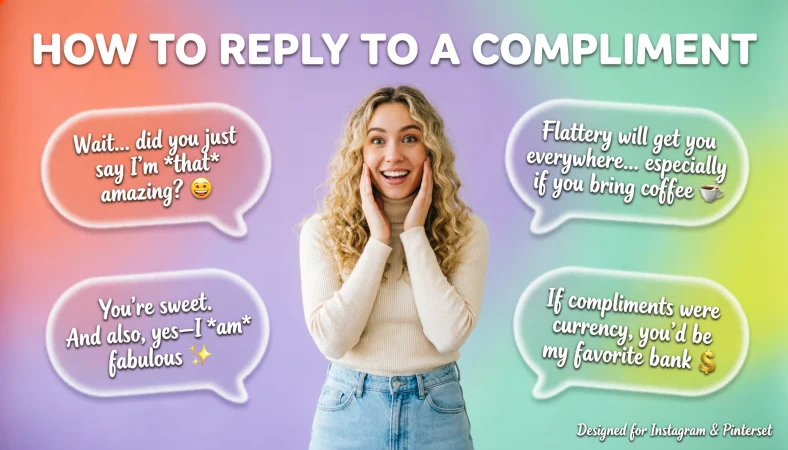
When someone says “I am flattered,” they usually mean they appreciate the compliment, attention, or kind words you gave them. Your reply can be sweet, funny, confident, or flirty depending on the vibe.
Top alternatives: “You deserve it,” “I’m just telling the truth,” “Good, because I meant it,” “You should be,” “Just wait, I’m not done complimenting you yet”
You finally give someone a compliment, shoot your shot, or say something genuinely sweet, and they hit you with, “I am flattered.” Now what? This little phrase can be a conversation closer, a polite acknowledgment, or a tiny opening for something more playful. It might pop up in a text, Instagram DM, workplace chat, friendly conversation, or a flirty exchange with your crush.
That is why knowing the right reply to “I am flattered” can completely change the energy. You can keep things light with a joke, respond warmly without overdoing it, or turn up the flirtiness if the moment feels right. The trick is matching their tone instead of making the conversation feel like a scripted rom-com audition. From clever comebacks to sweet responses and confident one-liners, these replies give you plenty of ways to keep the conversation naturally moving.
Funny Responses
“Good, because I wasn’t planning to take it back.”
Use it when you want to turn a compliment into a playful joke.
Meaning: You are confidently standing behind what you said.
“Mission accomplished.”
Use it after giving someone a compliment and getting a positive reaction.
Meaning: You are joking that making them feel good was the goal.
“Excellent. My work here is done.”
Use it when you want a silly, lighthearted response.
Meaning: You are playfully pretending the compliment was a successful assignment.
“Please remain flattered until further notice.”
Use it when teasing someone after they appreciate your compliment.
Meaning: You want to keep the playful mood going.
“As you should be.”
Use it when you want a short, confident comeback.
Meaning: You think your compliment was completely deserved.
“I accept compliments in return, by the way.”
Use it when you want to jokingly fish for a compliment.
Meaning: You are playfully inviting them to compliment you too.
“Don’t let it go to your head.”
Use it when you are joking with a friend or crush.
Meaning: You are balancing your praise with playful teasing.
“That was only level one.”
Use it when you want to hint that more compliments are coming.
Meaning: You are playfully suggesting you have more nice things to say.
“I knew my charm would eventually work.”
Use it when you want a goofy confident response.
Meaning: You are jokingly taking credit for making them feel flattered.
“Glad my compliment subscription is working.”
Use it when texting someone who enjoys your attention.
Meaning: You are turning your compliments into a humorous service.
“No refunds on compliments.”
Use it when someone jokingly questions your praise.
Meaning: You are saying your compliment is final.
“Flattered looks good on you.”
Use it when you want a playful twist.
Meaning: You are complimenting them again while keeping things fun.
Flirty Responses
“Good, because I meant every word.”
Use it when a crush responds positively to your compliment.
Meaning: You are showing sincere romantic interest.
“You should be. I don’t compliment just anyone.”
Use it when you want to sound selective and confident.
Meaning: You are making the compliment feel more special.
“I’m glad, because I was hoping you’d like hearing it.”
Use it when you want a softer romantic tone.
Meaning: Their reaction matters to you.
“Just wait until I start flirting properly.”
Use it when the conversation already feels playful.
Meaning: You are teasing that your flirting can get even stronger.
“You make it very easy to compliment you.”
Use it when flirting naturally.
Meaning: Their qualities genuinely inspire your compliments.
“I could make you feel even more flattered.”
Use it when you want bold flirting.
Meaning: You are confidently hinting at more romantic attention.
“I’m just getting started.”
Use it when you want to keep some mystery.
Meaning: You have more compliments or flirting ready.
“Good. I like making you smile.”
Use it when the interaction feels warm and affectionate.
Meaning: Their happiness matters to you.
“Honestly, you deserve way more compliments.”
Use it when you want to be sweet and flirty.
Meaning: You genuinely admire them.
“I was hoping you’d be a little flattered.”
Use it when you want to sound subtly vulnerable.
Meaning: You cared about how they would receive your compliment.
“If you’re flattered now, imagine how you’ll feel later.”
Use it when playful flirting is already established.
Meaning: You are teasingly promising more affection.
“You’re cute when you’re flattered.”
Use it when you want a charming romantic reply.
Meaning: Their reaction itself has become attractive to you.
Sweet Responses
“You deserve every kind word.”
Use it after giving someone a sincere compliment.
Meaning: You genuinely believe they are worthy of praise.
“I’m glad it made you feel good.”
Use it when you want a warm and thoughtful response.
Meaning: Their positive reaction makes you happy.
“I meant it from the heart.”
Use it when your compliment was completely sincere.
Meaning: You want them to know your words were genuine.
“You really do deserve to hear it.”
Use it when complimenting someone who tends to underestimate themselves.
Meaning: You want to reinforce their worth.
“I’m happy you appreciated it.”
Use it in a friendly or respectful conversation.
Meaning: You value their reaction to your kind words.
“Sometimes people need to hear how great they are.”
Use it when giving encouragement.
Meaning: You believe compliments can brighten someone’s day.
“I was only being honest.”
Use it when you want to keep the compliment sincere.
Meaning: You were simply stating what you genuinely think.
“You made it easy to say something nice.”
Use it when someone responds warmly to your praise.
Meaning: Their personality naturally inspires kindness.
“I hope it made your day a little better.”
Use it after giving a meaningful compliment.
Meaning: You wanted your words to have a positive effect.
“I’m glad you received it the way I meant it.”
Use it when you want to emphasize sincerity.
Meaning: You intended the compliment to be genuine and respectful.
“You deserve to feel appreciated.”
Use it when comforting or encouraging someone.
Meaning: You want them to recognize their own value.
“Keep that feeling. You earned it.”
Use it when giving someone heartfelt encouragement.
Meaning: Their accomplishments or qualities genuinely deserve recognition.
Confident Responses
“As you should be.”
Use it when you want a short, confident comeback.
Meaning: You believe your compliment was fully deserved.
“I only speak facts.”
Use it when you want a bold internet-style response.
Meaning: You are confidently saying the compliment was true.
“I said what I said.”
Use it when someone playfully doubts your compliment.
Meaning: You are standing firmly behind your words.
“I don’t give compliments I don’t mean.”
Use it when you want to sound sincere and self-assured.
Meaning: You carefully choose your compliments.
“You earned the compliment.”
Use it when praising someone’s qualities or achievements.
Meaning: You believe their actions genuinely deserve recognition.
“I have excellent taste.”
Use it when complimenting someone’s appearance or personality.
Meaning: You jokingly imply your praise proves your good judgment.
“I know a good thing when I see one.”
Use it when flirting confidently.
Meaning: You are making it clear that you admire them.
“There was no way I was keeping that compliment to myself.”
Use it when you genuinely wanted to praise someone.
Meaning: Their qualities were too noticeable to ignore.
“You made the compliment necessary.”
Use it when teasing someone you admire.
Meaning: They gave you an obvious reason to praise them.
“Confidence looks good on you too.”
Use it when they accept your compliment confidently.
Meaning: You are complimenting their attitude as well.
“I meant every syllable.”
Use it when you want a dramatic confident touch.
Meaning: You strongly stand behind your compliment.
“Take the compliment. You deserve it.”
Use it when someone tries to brush off your praise.
Meaning: You want them to accept positive recognition.
Cute Responses
“Aww, then my job is done.”
Use it when you want to keep the exchange adorable.
Meaning: You are happy that your compliment made them feel good.
“Good, because you’re adorable.”
Use it when chatting with someone you like.
Meaning: You are adding another cute compliment.
“That little reaction was exactly what I wanted.”
Use it when they respond shyly to your praise.
Meaning: Their reaction made you smile.
“You’re making this too easy for me.”
Use it when they give you plenty of reasons to compliment them.
Meaning: Their personality naturally brings out your affection.
“I’m glad you liked it.”
Use it when keeping things simple and warm.
Meaning: You appreciate their positive reaction.
“You’re welcome, cutie.”
Use it when flirting casually.
Meaning: You are responding with affectionate charm.
“Now you’re making me blush too.”
Use it when they react warmly to your compliment.
Meaning: Their response has turned the sweetness back toward you.
“That smile was worth the compliment.”
Use it when you notice they are happy.
Meaning: Their happiness is what mattered to you.
“You’re very welcome.”
Use it when you want a gentle and friendly reply.
Meaning: You are warmly acknowledging their appreciation.
“I’m just glad I could make you smile.”
Use it when you want a wholesome response.
Meaning: Their happiness is the main reason behind your compliment.
“Keep being wonderful.”
Use it when encouraging someone you care about.
Meaning: You want them to continue being themselves.
“You’re welcome, but I still mean it.”
Use it when they seem shy about receiving praise.
Meaning: You are reassuring them that the compliment was sincere.
Sarcastic Responses
“I know. Try to contain yourself.”
Use it when joking with someone who reacts dramatically.
Meaning: You are playfully exaggerating their reaction.
“Please, no fainting.”
Use it when someone acts overly impressed by your compliment.
Meaning: You are teasing them about enjoying the praise.
“I’ll add ‘professional flatterer’ to my résumé.”
Use it when you want a witty sarcastic response.
Meaning: You are joking about your ability to compliment people.
“Careful, compliments may cause confidence.”
Use it when teasing someone.
Meaning: You are joking that your praise might make them overly confident.
“Don’t get too comfortable.”
Use it when you want playful sarcasm.
Meaning: You are joking that compliments are not guaranteed forever.
“I accept your acceptance.”
Use it when you want dry humor.
Meaning: You are making their acknowledgment unnecessarily formal.
“Glad we could make this official.”
Use it when someone responds dramatically to your compliment.
Meaning: You are treating the exchange like a major agreement.
“That’s the appropriate response.”
Use it when teasing someone after they say they are flattered.
Meaning: You are jokingly approving their reaction.
“Excellent. The compliment has been received.”
Use it when you want mock-corporate humor.
Meaning: You are treating the conversation like a formal transaction.
“I’ll expect a thank-you speech later.”
Use it when joking about giving someone a compliment.
Meaning: You are exaggerating the importance of your praise.
“Please direct all admiration to my ego.”
Use it when joking about your own confidence.
Meaning: You are playfully making yourself the star.
“Glad my compliment department is doing well.”
Use it when you want silly workplace-style humor.
Meaning: You are pretending compliments are your professional specialty.
Clever Responses
“Flattery works both ways, you know.”
Use it when you want to subtly invite a compliment.
Meaning: You are cleverly suggesting they can praise you too.
“Then I chose my words wisely.”
Use it when your compliment gets a positive reaction.
Meaning: You are confidently pleased with your delivery.
“I was aiming for flattered, not speechless.”
Use it when they seem especially surprised.
Meaning: You are playfully acknowledging the impact of your compliment.
“That was the intended outcome.”
Use it when you want a clever, composed response.
Meaning: Making them feel appreciated was deliberate.
“Good. The compliment landed exactly where I wanted.”
Use it when teasing someone.
Meaning: You are pleased your words had the desired effect.
“A compliment is wasted if it stays unsaid.”
Use it when explaining why you praised them.
Meaning: You believe genuine appreciation should be expressed.
“Consider it an accurate observation.”
Use it when you want a smart, understated comeback.
Meaning: You are implying the compliment was simply a fact.
“I prefer honest compliments over empty ones.”
Use it when emphasizing sincerity.
Meaning: You value authenticity.
“You can be flattered and still pretend to be humble.”
Use it when teasing someone confidently.
Meaning: You are playfully calling out their reaction.
“I was simply reporting what I noticed.”
Use it when giving a clever compliment.
Meaning: You are joking that your praise was just an objective observation.
“Truth tends to have that effect.”
Use it when you want a confident witty response.
Meaning: You are implying your compliment was undeniable.
“I’m glad reality is treating you kindly today.”
Use it when you want playful cleverness.
Meaning: You are jokingly presenting your compliment as a statement of fact.
Polite Responses
“You’re very welcome.”
Use it when responding respectfully to someone who appreciates your compliment.
Meaning: You are acknowledging their gratitude warmly.
“I’m glad you feel that way.”
Use it in a polite social exchange.
Meaning: You appreciate their positive reaction.
“I meant it sincerely.”
Use it when you want to emphasize genuine appreciation.
Meaning: Your compliment was honest.
“It was my pleasure to say it.”
Use it when responding to someone respectfully.
Meaning: You were happy to express your appreciation.
“You deserve the recognition.”
Use it when praising someone’s work or qualities.
Meaning: Their effort or character genuinely merits praise.
“I’m happy my words were appreciated.”
Use it in a thoughtful conversation.
Meaning: You value their positive response.
“I simply wanted to give credit where it was due.”
Use it when praising someone’s accomplishment.
Meaning: You believe recognition was deserved.
“Thank you for receiving it so graciously.”
Use it in a more formal social situation.
Meaning: You appreciate their polite reaction.
“It was genuinely meant as a compliment.”
Use it when you want to avoid misunderstanding.
Meaning: Your words were intended positively.
“I’m glad it came across the right way.”
Use it when the compliment could have been interpreted differently.
Meaning: You are relieved your intention was understood.
“You’re quite deserving of the praise.”
Use it when you want a polished response.
Meaning: You believe the compliment was justified.
“I’m glad you appreciated it.”
Use it when keeping your response simple and respectful.
Meaning: You value their acknowledgment.
Professional Responses
“You’re very welcome. I genuinely meant it.”
Use it after complimenting a colleague’s work.
Meaning: You are professionally reinforcing your appreciation.
“You earned the recognition.”
Use it when praising someone’s performance.
Meaning: Their work deserves acknowledgment.
“I’m glad you appreciated the feedback.”
Use it in a professional discussion.
Meaning: You are keeping the exchange positive and constructive.
“It was well deserved.”
Use it when someone receives praise for an achievement.
Meaning: You believe their results justify the compliment.
“I simply wanted to acknowledge your effort.”
Use it when recognizing someone’s contribution.
Meaning: You value the work they put in.
“You did an excellent job.”
Use it when responding to appreciation professionally.
Meaning: You are reinforcing the positive assessment.
“I’m pleased the feedback was helpful.”
Use it after offering professional praise.
Meaning: You care about the usefulness of your words.
“Credit is due where credit is earned.”
Use it when recognizing a colleague’s contribution.
Meaning: You believe recognition should follow genuine effort.
“I appreciate your response.”
Use it in a formal professional exchange.
Meaning: You are respectfully acknowledging their reaction.
“It was simply an honest observation.”
Use it when someone thanks you for positive professional feedback.
Meaning: You are emphasizing sincerity.
“You have every reason to be proud.”
Use it when praising a professional achievement.
Meaning: You are encouraging confidence in their work.
“Keep up the great work.”
Use it after recognizing someone’s accomplishments.
Meaning: You are offering continued encouragement.
Chill And Casual Responses
“Of course!”
Use it when you want a relaxed response.
Meaning: You are casually accepting their reaction.
“No worries, you deserve it.”
Use it with friends or acquaintances.
Meaning: You are keeping the compliment warm and low-pressure.
“Anytime.”
Use it when you want an effortless response.
Meaning: You are saying compliments are easy to give.
“Just being honest.”
Use it when you want to keep things casual.
Meaning: You genuinely meant what you said.
“You know it.”
Use it when teasing someone confidently.
Meaning: You assume they already recognize the compliment is true.
“Glad you liked it.”
Use it in casual texting.
Meaning: You are happy they appreciated your words.
“Nothing but facts.”
Use it when you want a modern, confident reply.
Meaning: You are joking that your compliment was completely true.
“You’re welcome!”
Use it when keeping things simple.
Meaning: You are warmly acknowledging their appreciation.
“Couldn’t help myself.”
Use it when their qualities made you want to compliment them.
Meaning: The compliment felt natural and spontaneous.
“Had to say it.”
Use it when you want a casual, confident response.
Meaning: You felt the compliment needed to be expressed.
“Glad it landed well.”
Use it when you are unsure how your compliment would be received.
Meaning: You are happy they interpreted it positively.
“Just spreading good vibes.”
Use it when you want a relaxed, positive response.
Meaning: You like making people feel appreciated.
Romantic Responses
“You make it easy to feel that way about you.”
Use it when responding to someone you genuinely admire.
Meaning: Their qualities naturally inspire your affection.
“I’m glad you know how special you are to me.”
Use it in a more emotionally intimate conversation.
Meaning: You want them to understand their importance to you.
“I could say much more, honestly.”
Use it when you want to hint at deeper feelings.
Meaning: Your compliment only scratches the surface of your admiration.
“You deserve to hear it more often.”
Use it when comforting or encouraging someone you love.
Meaning: You believe they are not appreciated enough.
“Making you smile is becoming my favorite thing.”
Use it when the conversation is romantic.
Meaning: Their happiness brings you personal joy.
“I’m only telling you what my heart already knows.”
Use it when you want an affectionate, romantic reply.
Meaning: Your compliment comes from genuine feelings.
“You have no idea how much I admire you.”
Use it when expressing deeper appreciation.
Meaning: Your feelings are stronger than the compliment suggests.
“I hope you never get tired of hearing it.”
Use it when you regularly compliment someone special.
Meaning: You want to keep reminding them how much you value them.
“I could compliment you all night.”
Use it when flirting romantically.
Meaning: You enjoy giving them attention and praise.
“You bring out the soft side of me.”
Use it when someone makes you feel affectionate.
Meaning: Your feelings for them make you more emotionally open.
“You’re worth every compliment.”
Use it when expressing genuine romantic admiration.
Meaning: You believe their value goes beyond words.
“I’ll keep reminding you until you believe me.”
Use it when someone struggles to accept compliments.
Meaning: You want them to recognize how highly you think of them.
Playful Responses
“Careful, I might start enjoying this.”
Use it when their reaction makes the exchange fun.
Meaning: You are playfully embracing the attention.
“Now we’re both having a good time.”
Use it when the conversation feels mutually playful.
Meaning: You are enjoying the positive energy between you.
“That reaction deserves another compliment.”
Use it when they respond adorably.
Meaning: Their reaction gives you another reason to praise them.
“Okay, but don’t make me blush.”
Use it when they respond with their own compliment.
Meaning: You are playfully admitting their response affected you.
“I knew you’d appreciate my excellent taste.”
Use it when complimenting someone you like.
Meaning: You are joking that your compliment proves your good judgment.
“Look at us being wholesome.”
Use it when the exchange is unexpectedly sweet.
Meaning: You are playfully acknowledging the positive moment.
“This conversation is getting dangerously cute.”
Use it when flirting lightly.
Meaning: The interaction is becoming more affectionate.
“I think we’re both winning here.”
Use it when compliments are going both ways.
Meaning: You are enjoying the mutual positive energy.
“Should I stop before you get too flattered?”
Use it when teasing someone after multiple compliments.
Meaning: You are jokingly threatening to continue praising them.
“You’re making this too much fun.”
Use it when the conversation becomes playful.
Meaning: You are enjoying their reaction.
“I like this version of you.”
Use it when they become shy or playful.
Meaning: You find their reaction especially charming.
“Okay, now I’m tempted to keep going.”
Use it when they react positively to your compliment.
Meaning: Their reaction encourages more playful praise.
Amazing And Sassy Responses
“You’re welcome. Try not to let it inflate your ego.”
Use it when teasing a confident friend.
Meaning: You are mixing praise with playful attitude.
“Enjoy it while it lasts.”
Use it when joking with someone who likes attention.
Meaning: You are pretending your compliments are rare.
“Don’t get used to me being this nice.”
Use it when teasing someone you know well.
Meaning: You are playfully presenting your kindness as unusual.
“I know. It’s a lot to handle.”
Use it when you want a bold sarcastic comeback.
Meaning: You are exaggerating the power of your compliment.
“Try not to become unbearable now.”
Use it with someone who loves playful roasting.
Meaning: You are teasing them about becoming too confident.
“That was your daily compliment. Use it wisely.”
Use it when joking with a friend.
Meaning: You are pretending your praise comes with a daily limit.
“You’re welcome. My kindness is legendary.”
Use it when you want exaggerated confidence.
Meaning: You are making fun of your own generosity.
“Fine, you can be flattered for five minutes.”
Use it when teasing someone playfully.
Meaning: You are pretending to control how long they can enjoy the compliment.
“I’ll allow the ego boost.”
Use it when someone enjoys your praise.
Meaning: You are jokingly giving them permission to feel good.
“Just remember who made you feel this good.”
Use it when flirting with confidence.
Meaning: You are playfully drawing attention to your role in the moment.
“Your ego owes me rent now.”
Use it when someone gets visibly confident after your compliment.
Meaning: You are joking that your praise has made their ego bigger.
“I hope your confidence has room for one more compliment.”
Use it when you want a sassy but positive response.
Meaning: You are teasing them while offering more praise.
Emotional And Heartfelt Responses
“I really meant it, and I hope you know that.”
Use it when your compliment comes from genuine feelings.
Meaning: You want them to understand your sincerity.
“You deserve to hear good things about yourself.”
Use it when encouraging someone who lacks confidence.
Meaning: You want them to recognize their own worth.
“I’m glad I could remind you how appreciated you are.”
Use it when comforting someone important to you.
Meaning: You want them to feel valued.
“Sometimes we need someone else to say what we forget about ourselves.”
Use it during a meaningful conversation.
Meaning: You believe outside encouragement can restore confidence.
“I hope you never doubt the good I see in you.”
Use it when expressing deep appreciation.
Meaning: You want them to trust your positive view of them.
“I said it because I genuinely see those qualities in you.”
Use it when someone questions your compliment.
Meaning: Your praise comes from real observation.
“You mean more to me than a simple compliment can explain.”
Use it when expressing deeper affection.
Meaning: Your feelings go beyond the words you initially used.
“I’m happy my words reached you.”
Use it when someone responds emotionally to your praise.
Meaning: You care that your message had a meaningful impact.
“You deserve to feel seen and appreciated.”
Use it when offering emotional support.
Meaning: You want them to know their presence matters.
“I hope you carry that compliment with you today.”
Use it after giving someone encouragement.
Meaning: You want the positive feeling to last.
“There was no hidden agenda. I simply wanted you to know.”
Use it when someone wonders about your intentions.
Meaning: Your appreciation was genuine and uncomplicated.
“I’m glad you let yourself accept something nice.”
Use it when someone usually rejects compliments.
Meaning: You want them to become more comfortable recognizing their worth.
Short And Smooth Responses
“You deserve it.”
Use it when you want a direct and confident reply.
Meaning: Their qualities genuinely justify your compliment.
“Anytime.”
Use it for a relaxed, effortless response.
Meaning: You are happy to compliment them again.
“Just being honest.”
Use it when you want to keep things natural.
Meaning: Your words reflected what you truly think.
“I meant it.”
Use it when you want sincerity without extra explanation.
Meaning: You stand behind the compliment.
“Glad you liked it.”
Use it when you want a friendly response.
Meaning: You appreciate their positive reaction.
“You’re welcome.”
Use it when you want to keep things simple.
Meaning: You are politely acknowledging their response.
“Of course.”
Use it when you want a warm and confident answer.
Meaning: Complimenting them felt completely natural.
“No lies detected.”
Use it when you want a modern playful response.
Meaning: You are joking that your compliment was completely truthful.
“Had to say it.”
Use it when you want a casual response.
Meaning: Their qualities made the compliment unavoidable.
“You know it’s true.”
Use it when teasing someone confidently.
Meaning: You believe they already know the compliment is accurate.
“Glad I could make you smile.”
Use it when you want a sweet short reply.
Meaning: Their happiness is what matters most.
“And I’ll say it again.”
Use it when you want confident affection.
Meaning: You are not taking back your compliment anytime soon.
FAQs
What does “I am flattered” mean?
“I am flattered” usually means someone feels pleased, honored, or complimented by what you said or did. It is generally a positive response.
Is “I am flattered” always a good sign?
Usually, yes, but context matters. Someone may say it sincerely, politely, playfully, or even slightly awkwardly depending on the situation.
What is the best reply to “I am flattered”?
A safe and natural response is “You deserve it.” If the conversation is flirty, “Good, because I meant every word” works especially well.
What does “I am flattered” mean romantically?
In a romantic conversation, it can mean they appreciate your attention or compliment. It does not automatically mean they return your feelings, so pay attention to their overall tone.
What should I say if I do not actually mean the compliment?
Keep things honest and simple. If you were being playful, say “I was just teasing you.” Avoid continuing a compliment you do not genuinely mean.
Can I flirt after someone says “I am flattered”?
Yes, if the conversation already has mutual flirtatious energy. Try something like “You’re cute when you’re flattered.”
Is “I am flattered” formal?
It can be. The phrase works in professional, social, romantic, and casual situations, depending on how it is delivered.
What is a professional reply to “I am flattered”?
Try “You earned the recognition” or “It was well deserved.” Both keep the tone respectful and appropriate.
What is a funny reply to “I am flattered”?
Try “Excellent. My work here is done.” It is light, playful, and easy to use with friends.
Can “I am flattered” be sarcastic?
Yes. Tone and context matter. Someone might use it genuinely or sarcastically when they receive unexpected attention or praise.
How do I reply without sounding too eager?
Keep it short and confident. “Just being honest” or “You deserve it” feels natural without overexplaining.
How do I make my reply more flirty?
Add a little confidence and teasing. “Just wait until I start flirting properly” is playful when the situation already feels romantic.
Conclusion
Knowing how to reply to “I am flattered” gives you an easy way to keep a compliment from becoming an awkward conversation dead end. Whether you want to be funny, sweet, confident, professional, sarcastic, or a little flirty, the right response depends on the relationship and the mood. A simple “You deserve it” can feel sincere, while “You’re cute when you’re flattered” adds instant playful energy.
The best part is that you do not need a perfect line every time. Just sound like yourself, read the room, and let the conversation breathe. Save your favorite replies, share this list with someone who loves a good comeback, and keep a few ready for your next compliment-worthy moment.









1 thought on “180+ Best Replies To “I Am Flattered” That Keep The Conversation Fun, Flirty & Smooth For 2026”