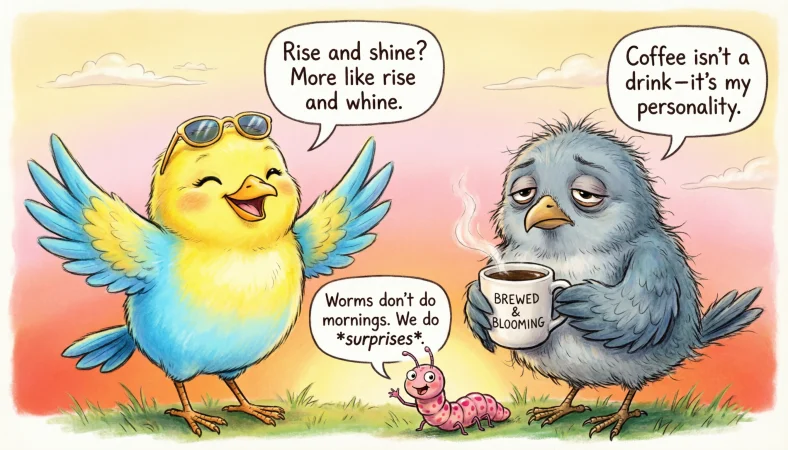
The best early bird gets the worm replies turn this classic saying into something funny, witty, confident, or even flirty. Whether someone is talking about waking up early, getting ahead at work, or teasing you for sleeping in, the right comeback keeps the conversation entertaining.
Top alternatives: “Then I’ll take the coffee instead,” “Who said I wanted the worm?”, “Early bird, late legend,” “I prefer the second mouse gets the cheese,” “Good for the bird, I like my sleep.”
Someone drops “The early bird gets the worm,” and suddenly you are expected to defend your sleep schedule like it is a courtroom case. Maybe a friend is bragging about waking up at 5 AM, a coworker is celebrating getting ahead, or your crush is teasing you for sleeping until noon.
Either way, this old-school proverb is basically an invitation for a clever comeback. You can agree with it, flip it completely, or turn it into a meme-worthy response about coffee, sleep, ambition, or questionable morning decisions. The best early bird gets the worm replies match the mood while keeping the conversation natural.
From brutal one-liners and sarcastic comebacks to cute and flirty responses, these replies give you plenty of ammunition for texts, DMs, group chats, work banter, and everyday conversations.
Funny Responses
“Yeah, but the second bird gets breakfast without the early shift.”
Use it when a friend brags about waking up early.
Meaning: You are joking that sleeping longer has its benefits.
“I’m more of a brunch bird.”
Use it when someone teases you about sleeping in.
Meaning: You prefer a relaxed morning over an early start.
“Who needs a worm before coffee?”
Use it when someone talks about early mornings.
Meaning: You are humorously prioritizing caffeine.
“The early bird gets the worm, but I get eight hours.”
Use it when defending your sleep schedule.
Meaning: You value rest more than catching an early opportunity.
“That worm better come with coffee.”
Use it when joking about waking up early.
Meaning: You need caffeine before embracing productivity.
“I’ll let the early bird handle that.”
Use it when you are happily avoiding an early task.
Meaning: You are perfectly comfortable letting someone else go first.
“Plot twist: the worm is on vacation.”
Use it when making fun of the proverb.
Meaning: You are playfully ruining the logic of the saying.
“I woke up early once. Never again.”
Use it after someone praises early mornings.
Meaning: You dramatically reject the early-bird lifestyle.
“The early bird gets the worm. The sleepy bird gets peace.”
Use it when someone challenges your sleeping habits.
Meaning: You think relaxation is a worthy alternative.
“I prefer being the bird that orders delivery.”
Use it when someone tells you to wake up earlier.
Meaning: You are joking that convenience beats hunting for breakfast.
“That sounds like a problem for tomorrow’s bird.”
Use it when someone pressures you about an early task.
Meaning: You are humorously postponing responsibility.
“I’m not late. I’m fashionably nocturnal.”
Use it when teasing friends about your schedule.
Meaning: You are turning your unusual routine into a joke.
Brutal Responses
“The early bird gets the worm. The smart bird gets breakfast somewhere else.”
Use it when someone acts superior about waking early.
Meaning: You are challenging the idea that early always means better.
“Congrats. You defeated sleep.”
Use it sarcastically when someone brags about waking early.
Meaning: You are mocking their unnecessary pride.
“Being awake early isn’t a personality.”
Use it when someone constantly talks about their early schedule.
Meaning: You are reminding them that waking early is not an achievement by itself.
“The early bird gets tired earlier.”
Use it when someone criticizes your sleeping habits.
Meaning: You are pointing out the downside of their routine.
“Enjoy your worm. I’ll enjoy my peace.”
Use it when someone tries to pressure you into waking early.
Meaning: You confidently choose your own priorities.
“Not every bird wants your worm.”
Use it when someone assumes everyone wants the same thing.
Meaning: You are rejecting their idea that early opportunities matter to everyone.
“Good for you. I’m still impressed by my alarm clock.”
Use it when someone brags about getting up early.
Meaning: You are sarcastically minimizing their accomplishment.
“You caught a worm. I caught another hour of sleep.”
Use it when comparing schedules with a friend.
Meaning: You believe you got the better deal.
“I’ll trade the worm for a better life choice.”
Use it when someone pushes the proverb too seriously.
Meaning: You are confidently rejecting the pressure.
“Congratulations on being awake before everyone else.”
Use it when someone acts superior about waking early.
Meaning: You are giving them a deliberately unimpressive compliment.
“The early bird gets the worm. The annoying bird gets blocked.”
Use it only for playful banter with a close friend.
Meaning: You are dramatically warning them to stop teasing.
“Wake up early if you want. I’ll wake up when I want.”
Use it when someone tries to dictate your schedule.
Meaning: You are firmly protecting your independence.
Flirty Responses
“Maybe the early bird gets the worm, but the charming bird gets my attention.”
Use it when flirting with someone who loves morning routines.
Meaning: You are turning the proverb into a playful compliment.
“Then I guess I need to wake up early for you.”
Use it when a crush teases you about sleeping late.
Meaning: You are showing romantic interest in a playful way.
“I’d wake up early if you were the reward.”
Use it when flirting with someone you really like.
Meaning: Their presence would make an early morning worthwhile.
“Forget the worm. How about breakfast together?”
Use it when turning the saying into a date suggestion.
Meaning: You are smoothly moving from banter toward spending time together.
“The early bird gets the worm, but you get me.”
Use it when you want a confident romantic comeback.
Meaning: You are playfully presenting yourself as the better prize.
“I could make mornings worth waking up for.”
Use it when flirting with someone who loves mornings.
Meaning: You are suggesting that you could make their mornings more exciting.
“Maybe I’ll become a morning person for the right person.”
Use it when flirting with a crush.
Meaning: You are hinting that they could inspire a lifestyle change.
“If you’re the worm, suddenly I’m an early bird.”
Use it only when the conversation is clearly playful and flirty.
Meaning: You are using cheeky wordplay to flirt.
“I’ll meet you before breakfast.”
Use it when making early plans with someone you like.
Meaning: You are showing enthusiasm about seeing them.
“I don’t chase worms, but I might chase you.”
Use it for confident flirtatious banter.
Meaning: You are making your attraction obvious.
“Coffee, sunrise, and you? Tempting.”
Use it when someone suggests an early morning meetup.
Meaning: You like the idea of spending a quiet morning together.
“For you, I might set two alarms.”
Use it when teasing a crush about an early date.
Meaning: You are playfully saying they are worth the effort.
Polite Responses
“That’s certainly one way to look at it.”
Use it when you want to respond without arguing.
Meaning: You acknowledge the saying without fully agreeing.
“There’s definitely something to that.”
Use it when someone makes a point about starting early.
Meaning: You politely recognize the value of preparation.
“I suppose getting an early start can help.”
Use it in a casual conversation about productivity.
Meaning: You agree in a measured way.
“True, timing can make a big difference.”
Use it when discussing opportunities.
Meaning: You recognize that being prepared can be useful.
“Fair point. Sometimes early preparation pays off.”
Use it when someone makes a reasonable argument.
Meaning: You are politely agreeing.
“Absolutely, when the opportunity is worth catching.”
Use it when talking about work or goals.
Meaning: You agree while adding your own perspective.
“That’s a classic saying for a reason.”
Use it when someone quotes the proverb.
Meaning: You acknowledge its traditional wisdom.
“I can see why people believe that.”
Use it when you do not completely share their opinion.
Meaning: You respect their viewpoint.
“Sometimes being early really does help.”
Use it in a work or school discussion.
Meaning: You agree that preparation has advantages.
“Good reminder to stay prepared.”
Use it when someone offers the saying as advice.
Meaning: You appreciate the practical message.
“I’ll keep that in mind.”
Use it when someone gives you motivational advice.
Meaning: You are acknowledging their suggestion respectfully.
“Point taken.”
Use it when someone makes a fair argument.
Meaning: You accept their point without overexplaining.
Professional Responses
“Absolutely. Preparation often creates opportunities.”
Use it during a workplace conversation about planning.
Meaning: You agree that being prepared can provide an advantage.
“There’s value in getting ahead of deadlines.”
Use it when discussing work habits.
Meaning: You recognize the professional benefit of starting early.
“I agree. Early preparation can reduce pressure later.”
Use it when talking about projects.
Meaning: You support planning ahead.
“That’s a good reminder to stay proactive.”
Use it when a colleague mentions the proverb.
Meaning: You connect the saying to professional initiative.
“Getting an early start can certainly improve efficiency.”
Use it in a workplace discussion.
Meaning: You acknowledge the productivity benefit.
“I think timing and preparation both matter.”
Use it when discussing business opportunities.
Meaning: You believe success requires more than simply being early.
“Being proactive definitely has its advantages.”
Use it during professional banter.
Meaning: You recognize the value of taking initiative.
“Agreed. The sooner we prepare, the better.”
Use it when planning a project.
Meaning: You support starting ahead of schedule.
“Early action can make a meaningful difference.”
Use it when discussing deadlines or goals.
Meaning: You emphasize timely action.
“That’s a useful principle for staying organized.”
Use it when discussing productivity.
Meaning: You see the proverb as practical advice.
“I’ll take that as a reminder to plan ahead.”
Use it when someone gives you the proverb as advice.
Meaning: You are accepting the lesson constructively.
“Good point. Opportunities often reward preparation.”
Use it in a professional or educational setting.
Meaning: You agree that readiness can improve results.
Creative Responses
“The early bird gets the worm, but the creative bird invents breakfast.”
Use it when you want an imaginative comeback.
Meaning: You prefer creating opportunities rather than following the traditional path.
“What if the bird became a baker?”
Use it when joking about the proverb.
Meaning: You are humorously changing the entire story.
“I’m waiting for the proverb with better snacks.”
Use it when someone quotes the saying.
Meaning: You are playfully rejecting the boring metaphor.
“The early bird gets the worm. I’m writing my own bird lore.”
Use it when making a quirky comeback.
Meaning: You like creating your own rules.
“Maybe the worm has better plans.”
Use it when flipping the proverb around.
Meaning: You are giving the traditional target of the saying a funny perspective.
“I prefer opportunities that come with pancakes.”
Use it when discussing early mornings.
Meaning: You are replacing the worm with something more appealing.
“The wise bird checks the menu first.”
Use it when someone tells you to act quickly.
Meaning: You prefer making informed decisions.
“Perhaps the second bird gets the better deal.”
Use it when defending a later start.
Meaning: You are suggesting that waiting can have advantages.
“I’m waiting for the bird with Wi-Fi.”
Use it in a modern group chat.
Meaning: You are updating the old proverb with internet humor.
“My bird operates on premium timing.”
Use it when someone asks why you are not up early.
Meaning: You are joking that your schedule is intentionally different.
“I’m not chasing worms. I’m building a bakery.”
Use it when talking about ambition.
Meaning: You prefer creating something bigger than chasing small opportunities.
“The early bird gets the worm. The visionary bird gets the whole garden.”
Use it as an ambitious comeback.
Meaning: You are thinking beyond the obvious reward.
Sarcastic Responses
“Wow, groundbreaking bird journalism.”
Use it when someone quotes the proverb dramatically.
Meaning: You are sarcastically pretending the saying is revolutionary.
“Thank you, Professor Bird.”
Use it when someone gives you the proverb as life advice.
Meaning: You are playfully mocking their wisdom.
“Yes, I’ve heard that one approximately 9,000 times.”
Use it when someone repeats the familiar saying.
Meaning: You are humorously pointing out how common it is.
“Please tell me more about your bird-based philosophy.”
Use it when teasing someone who takes the proverb seriously.
Meaning: You are sarcastically inviting more of their wisdom.
“Amazing. The birds have spoken.”
Use it when someone finishes a motivational speech with the proverb.
Meaning: You are dramatically mocking the advice.
“I’ll alert the worms immediately.”
Use it when joking about the saying.
Meaning: You are deliberately taking the metaphor too literally.
“Deep. Truly inspirational.”
Use it when someone acts profound about waking early.
Meaning: You are sarcastically exaggerating the wisdom.
“And here I thought breakfast came from a kitchen.”
Use it when someone quotes the proverb.
Meaning: You are humorously challenging the metaphor.
“Breaking news: birds eat worms.”
Use it when someone presents the saying like new information.
Meaning: You are mocking how obvious it sounds.
“The bird has entered its productivity era.”
Use it when someone is bragging about waking early.
Meaning: You are making fun of their motivational energy.
“Someone give this bird a podcast.”
Use it when a friend becomes overly motivational.
Meaning: You are teasing their sudden life-coach behavior.
“Thank goodness we solved productivity forever.”
Use it after someone gives the proverb as serious advice.
Meaning: You are sarcastically exaggerating its importance.
Cute Responses
“Aww, go get your little worm, early bird.”
Use it when teasing someone affectionately.
Meaning: You are playfully accepting their early-riser identity.
“Okay, little sunrise champion.”
Use it when a friend proudly wakes early.
Meaning: You are giving them a cute nickname.
“You get the worm, I’ll get the cozy blanket.”
Use it when comparing your routines.
Meaning: You are choosing comfort over early mornings.
“Wake up early and save me a worm.”
Use it when joking with someone close.
Meaning: You are playfully asking them to include you in their plans.
“Good morning, ambitious birdie.”
Use it as a cute text to an early riser.
Meaning: You are affectionately teasing their productivity.
“You go catch the worm. I’ll be cheering from bed.”
Use it when someone has an early start.
Meaning: You support them while enjoying your sleep.
“That’s adorable. Look at you being productive.”
Use it when someone wakes early and gets things done.
Meaning: You are giving them affectionate praise.
“Save some sunshine for me.”
Use it when someone is already up at sunrise.
Meaning: You are playfully connecting their early morning to positivity.
“I’ll meet you after my beauty sleep.”
Use it when a friend wants you up early.
Meaning: You are humorously defending your sleep.
“You be the early bird. I’ll be your sleepy sidekick.”
Use it when teasing a close friend or partner.
Meaning: You are creating a cute contrast between your routines.
“The worm can wait. Cuddles come first.”
Use it in a romantic or affectionate context.
Meaning: You are prioritizing closeness over productivity.
“Okay, sunshine. Go conquer your morning.”
Use it when encouraging someone who loves early starts.
Meaning: You are being supportive and affectionate.
Dramatic Responses
“The early bird gets the worm, but at what cost?”
Use it when someone becomes overly serious about waking early.
Meaning: You are turning a simple proverb into an epic dilemma.
“I refuse to live under the tyranny of the worm.”
Use it when jokingly rejecting early mornings.
Meaning: You are dramatically defending your sleep.
“Another sunrise, another battle.”
Use it when talking about getting up early.
Meaning: You are humorously treating mornings like warfare.
“The worm has chosen its champion.”
Use it when someone wakes up extremely early.
Meaning: You are making their morning routine sound legendary.
“Today, the bird rises. Tomorrow, the worm falls.”
Use it when creating an over-the-top comeback.
Meaning: You are turning the proverb into an action movie.
“I will not be manipulated by ancient bird propaganda.”
Use it when someone pressures you to wake early.
Meaning: You are dramatically rejecting traditional advice.
“My sleep shall not be sacrificed for a worm.”
Use it when defending a late morning.
Meaning: You consider sleep more valuable than the reward.
“The dawn has summoned you. I shall remain in darkness.”
Use it when joking with an early-rising friend.
Meaning: You are dramatically choosing to sleep.
“The battle for breakfast begins at sunrise.”
Use it when making an early morning sound epic.
Meaning: You are exaggerating the importance of getting up early.
“Tell the worm I died peacefully in my sleep.”
Use it when joking about refusing an early start.
Meaning: You are dramatically choosing sleep over opportunity.
“I shall rise when destiny allows.”
Use it when someone tells you to wake early.
Meaning: You are humorously pretending your sleep schedule is destiny.
“The early bird may have the worm, but I have the plot.”
Use it when making an exaggerated comeback.
Meaning: You are joking that your story matters more than the reward.
Chill And Casual Responses
“Fair enough, but I like my mornings slow.”
Use it when someone praises early starts.
Meaning: You prefer a relaxed routine.
“True, but I’m good with my timing.”
Use it when someone suggests you should wake earlier.
Meaning: You are comfortable with your own schedule.
“You do mornings. I’ll do afternoons.”
Use it when comparing routines with a friend.
Meaning: You are casually accepting different schedules.
“Whatever works, honestly.”
Use it when someone quotes the proverb.
Meaning: You do not feel strongly about the debate.
“Maybe. I’m not rushing it.”
Use it when someone tells you to act sooner.
Meaning: You prefer taking your time.
“I’ll get there when I get there.”
Use it when defending a slower pace.
Meaning: You are comfortable moving at your own speed.
“Early, late, somewhere in between. We’ll survive.”
Use it when joking about schedules.
Meaning: You are keeping the situation relaxed.
“I’m team whenever I feel like it.”
Use it when someone asks why you sleep late.
Meaning: You value flexibility.
“No stress. The worm isn’t going anywhere.”
Use it when someone tells you to hurry.
Meaning: You are encouraging a calmer approach.
“I’ll catch the next opportunity.”
Use it when choosing not to rush.
Meaning: You believe there will be another chance.
“I like to let the morning marinate.”
Use it when joking about slow mornings.
Meaning: You enjoy taking your time before starting the day.
“I’m just operating on my own clock.”
Use it when someone comments on your schedule.
Meaning: You are comfortable doing things differently.
Confident Responses
“I don’t need to be first to be successful.”
Use it when someone equates early action with success.
Meaning: You believe results matter more than being first.
“The right opportunity doesn’t always require rushing.”
Use it when someone pressures you to act immediately.
Meaning: You value thoughtful timing.
“I know when to move and when to wait.”
Use it when discussing decisions or opportunities.
Meaning: You trust your judgment.
“I’m not competing with the clock.”
Use it when someone compares your schedule to theirs.
Meaning: You refuse unnecessary pressure.
“My timing works for me.”
Use it when defending your routine.
Meaning: You are confident in your choices.
“I’ll take the opportunity that actually matters.”
Use it when someone tells you to chase every opportunity.
Meaning: You prioritize quality over speed.
“Being early helps. Being prepared helps more.”
Use it when discussing success.
Meaning: You believe preparation is more important than simply arriving early.
“I don’t have to follow someone else’s schedule.”
Use it when someone pressures you to wake early.
Meaning: You value independence.
“I’m playing the long game.”
Use it when someone questions your slower approach.
Meaning: You are focused on long-term results.
“The worm isn’t the goal. The whole garden is.”
Use it when talking about ambition.
Meaning: You are focused on bigger achievements.
“I choose my timing intentionally.”
Use it when explaining your approach to work or life.
Meaning: Your timing is deliberate rather than accidental.
“First doesn’t always mean best.”
Use it when someone says early is automatically better.
Meaning: You believe quality matters more than simply being first.
Emotional Responses
“Sometimes I just need a little more time.”
Use it when someone pressures you to move quickly.
Meaning: You are honestly expressing your need for patience.
“I know the saying, but everyone has their own pace.”
Use it when discussing personal growth.
Meaning: You believe people should not compare timelines.
“I’m trying to move forward without rushing myself.”
Use it when talking about personal goals.
Meaning: You want progress without unnecessary pressure.
“Maybe my path just takes a different route.”
Use it when someone compares your progress to theirs.
Meaning: You accept that different people have different journeys.
“I’d rather arrive ready than arrive first.”
Use it when discussing an important decision.
Meaning: You prioritize preparation over speed.
“Sometimes waiting is part of getting it right.”
Use it when explaining why you are taking your time.
Meaning: Patience can be valuable.
“I’m not behind. I’m moving at my pace.”
Use it when someone makes you feel late in life.
Meaning: You reject unhealthy comparisons.
“The timing may be different, but the goal is still there.”
Use it when discussing long-term ambitions.
Meaning: A slower timeline does not mean giving up.
“I don’t want to rush something just because everyone else is early.”
Use it when making a personal decision.
Meaning: You want your choices to reflect your needs.
“I’m learning that my pace matters too.”
Use it when discussing personal growth.
Meaning: You are becoming more comfortable with your own timeline.
“Not every opportunity needs an immediate answer.”
Use it when someone pressures you to decide quickly.
Meaning: You want time to make thoughtful choices.
“I’m okay with getting there differently.”
Use it when someone questions your path.
Meaning: You accept your individuality and timeline.
Sweet Responses
“You get the worm, I’ll bring the coffee.”
Use it when joking with an early-rising friend.
Meaning: You are complementing their routine with something thoughtful.
“Good for you. I hope your morning is amazing.”
Use it when someone is excited about waking early.
Meaning: You are responding warmly even if you disagree.
“Then go get it, superstar.”
Use it when encouraging someone before a busy day.
Meaning: You are cheering them on.
“I’ll be rooting for you from my cozy bed.”
Use it when teasing someone about their early start.
Meaning: You support them while happily sleeping in.
“May your worm be delicious.”
Use it as a silly affectionate reply.
Meaning: You are playfully wishing them success.
“Go catch that opportunity.”
Use it when someone is pursuing an important goal.
Meaning: You are encouraging their ambition.
“Early bird energy looks good on you.”
Use it when complimenting someone’s productive morning.
Meaning: You admire their enthusiasm.
“I love that you’re motivated.”
Use it when someone is excited about starting early.
Meaning: You are genuinely encouraging their positive attitude.
“Save some success for the rest of us.”
Use it when teasing a highly productive friend.
Meaning: You are playfully complimenting their ambition.
“You go get the worm. I’ll save you a seat.”
Use it when making plans with someone.
Meaning: You are supportive and welcoming.
“Keep shining, early bird.”
Use it as a cheerful morning text.
Meaning: You are giving them an affectionate motivational boost.
“I hope today gives you exactly what you’re chasing.”
Use it when someone has an important day ahead.
Meaning: You are wishing them meaningful success.
Clever Responses
“The early bird gets the worm, but preparation gets the prize.”
Use it when discussing success or productivity.
Meaning: You believe preparation matters more than simply waking early.
“Timing beats rushing.”
Use it when someone encourages you to hurry.
Meaning: You believe smart timing is better than unnecessary speed.
“The first move matters less than the right move.”
Use it when discussing decisions.
Meaning: You prioritize good judgment over being first.
“The early bird gets the worm. The strategic bird gets the opportunity.”
Use it in an ambitious conversation.
Meaning: You are emphasizing strategy over speed.
“Being early is useful. Knowing why you’re early is better.”
Use it when someone praises early action.
Meaning: You value purpose behind productivity.
“Sometimes the second bird gets a better worm.”
Use it as a clever twist on the proverb.
Meaning: Waiting can occasionally create a better outcome.
“The worm is only valuable if you actually want it.”
Use it when someone pressures you to chase an opportunity.
Meaning: Success depends on choosing meaningful goals.
“I’d rather choose the right race than win the wrong one.”
Use it when discussing priorities.
Meaning: You care about pursuing the right goals rather than simply winning.
“Early is a strategy, not a universal law.”
Use it when someone treats the proverb as absolute truth.
Meaning: You believe different situations require different approaches.
“The best opportunities reward preparation, not panic.”
Use it when someone encourages rushing.
Meaning: Calm preparation is more valuable than frantic action.
“The clock measures time, not success.”
Use it when someone judges you by how early you start.
Meaning: Your results matter more than your schedule.
“The smartest bird knows which worm is worth catching.”
Use it when discussing opportunities.
Meaning: Discernment matters as much as speed.
Playful And Sassy Responses
“The early bird gets the worm. I get the last word.”
Use it when joking with someone competitive.
Meaning: You are playfully claiming victory in the conversation.
“Keep your worm. I have snacks.”
Use it when someone brags about waking early.
Meaning: You have your own, more appealing rewards.
“I’m the bird that sleeps through the motivational speech.”
Use it when teasing someone overly inspirational.
Meaning: You are jokingly rejecting their productivity lecture.
“Early bird? I’m more of a luxury bird.”
Use it when defending a late start.
Meaning: You are humorously presenting your routine as premium.
“The worm can wait. My playlist just started.”
Use it when someone tells you to hurry.
Meaning: You have chosen entertainment over rushing.
“I don’t chase worms. I attract opportunities.”
Use it as a confident, sassy comeback.
Meaning: You believe opportunities can come through smart choices.
“Tell the worm I said good luck.”
Use it when someone is determined to wake early.
Meaning: You are playfully opting out.
“My alarm and I are currently not on speaking terms.”
Use it when discussing early mornings.
Meaning: You strongly dislike waking up early.
“I’ll catch the worm after my beauty sleep.”
Use it when someone teases you for sleeping late.
Meaning: You are prioritizing rest while keeping the tone playful.
“The early bird gets the worm. The iconic bird gets brunch.”
Use it as a stylish comeback about weekend plans.
Meaning: You prefer enjoying the day on your own terms.
“I’m not late. I’m giving everyone else a head start.”
Use it when joking about arriving later.
Meaning: You are confidently turning lateness into a joke.
“Early bird energy? Respectfully, no.”
Use it when someone tries to recruit you into early mornings.
Meaning: You are playfully rejecting the lifestyle.
FAQs
What does “The early bird gets the worm” mean?
It means people who act early or take initiative may have an advantage over those who wait.
What is a funny reply to “The early bird gets the worm”?
Try “The second bird gets breakfast without waking up at 5 AM.” It flips the proverb while making the joke about sleep.
What is a sarcastic reply to “The early bird gets the worm”?
Try “Wow, groundbreaking bird journalism.” It works especially well when someone is acting overly wise about waking early.
What is a flirty reply to “The early bird gets the worm”?
Try “I’d wake up early if you were the reward.” It turns the proverb into a playful romantic compliment.
Can I use these replies at work?
Yes. For professional settings, stick with clever but respectful options such as “Preparation often creates opportunities” or “Timing and preparation both matter.”
What does the saying mean in a relationship?
In relationships, it can suggest that making the first move, communicating early, or taking initiative can create opportunities. The exact meaning depends on the context.
Is “The early bird gets the worm” good advice?
It can be. Starting early and being proactive can help, but being early does not automatically guarantee success. Preparation, timing, strategy, and persistence matter too.
What should I say if I disagree with the saying?
Try “First doesn’t always mean best.” It is short, confident, and leaves room for a different perspective.
What is a good reply for someone who loves waking up early?
Try “You get the worm, I’ll bring the coffee.” It is friendly, playful, and easy to use with friends.
What is a good reply if I love sleeping in?
Try “The early bird gets the worm, but I get eight hours.” It makes your preference clear without taking the conversation too seriously.
Is humor appropriate when replying to this saying?
Absolutely. The proverb is familiar and easy to twist, which makes it perfect for funny, sarcastic, and meme-style comebacks.
What is a confident response to the saying?
Try “I don’t need to be first to be successful.” It shows confidence without attacking the person who said it.
What is a cute response?
Try “Aww, go get your little worm, early bird.” It works especially well with someone you are close to.
What is a clever response?
Try “The smartest bird knows which worm is worth catching.” It adds a thoughtful twist to the traditional proverb.
Can these replies work in texts and DMs?
Yes. Short responses such as “I’m more of a brunch bird” or “Keep your worm. I have snacks” work naturally in texts, Instagram DMs, group chats, and casual conversations.
Conclusion
“The early bird gets the worm” may be an old saying, but your comeback definitely does not have to sound old-fashioned. You can turn it into a hilarious sleep joke, a brilliant clapback, a clever life lesson, or even a flirty invitation for breakfast. The best response depends on the person, the mood, and what you actually want to communicate. Remember, being quick is not always the same as being smart, and being late is not automatically a failure.
Sometimes the best move is knowing when to act, when to wait, and when to order brunch instead. Save your favorite comebacks, share this list with your fellow sleepy birds, and bring some fresh energy to your next conversation!