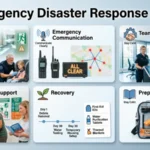
Plain Compassion Crisis Response (PCCR) is a nonprofit humanitarian organization focused on disaster relief, crisis response, volunteer training, and support for communities affected by disasters and conflict. It was formed in 2014 in response to the refugee crisis in northern Iraq.
Top alternatives: PCCR disaster response, humanitarian crisis response, emergency relief organization, disaster volunteer response, humanitarian aid response
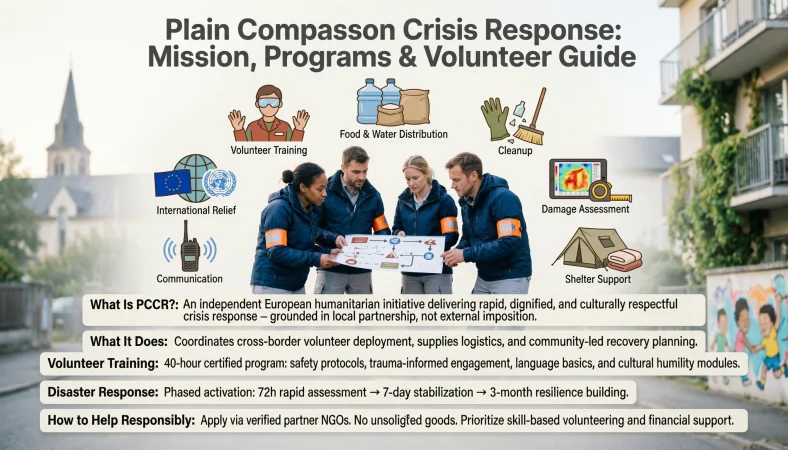
When you first see plain compassion crisis response, it can sound like a phrase describing a general approach to emergencies. In reality, it is also the name of a specific humanitarian organization. PCCR describes its work as bringing hope, resources, leadership, and relief to people affected by disasters and crises. Its programs include U.S. disaster response, international work, volunteer training, cleanup, food and water distribution, damage assessment, and other forms of immediate assistance.
Whether you are researching the organization, writing a social media post, looking into volunteering, or simply trying to understand what PCCR does, the right wording matters. A clear response can help people understand the mission without turning a serious crisis into a complicated information dump. Think less corporate jargon, more human clarity.
Simple Plain Compassion Crisis Response Explanations
Plain Compassion Crisis Response is a humanitarian organization focused on disaster relief.
Example: Use this when introducing PCCR to someone unfamiliar with the organization.
Meaning: It gives a straightforward overview of the organization’s central purpose.
PCCR helps communities affected by disasters and crises.
Example: Use this as a short description for a profile or article.
Meaning: It summarizes the organization’s relief-focused work.
PCCR stands for Plain Compassion Crisis Response.
Example: Use this when explaining the acronym in a social post.
Meaning: It identifies the organization’s full name.
The organization was formed in 2014.
Example: Use this when writing a brief history section.
Meaning: It provides the organization’s documented founding timeframe.
PCCR began in response to a refugee crisis in northern Iraq.
Example: Use this when explaining how the organization started.
Meaning: Its documented origins are connected to the refugee crisis in the Kurdistan region of northern Iraq.
Its work includes both U.S. and international crisis response.
Example: Use this when describing the organization’s geographic scope.
Meaning: PCCR operates programs focused on domestic and international disaster situations.
PCCR trains volunteers for disaster response.
Example: Use this when explaining its training program.
Meaning: Volunteer preparation is an important part of the organization’s model.
Its response work can include immediate relief and cleanup.
Example: Use this when summarizing field activities.
Meaning: PCCR describes immediate disaster assistance as a major part of its work.
PCCR connects trained volunteers with crisis response opportunities.
Example: Use this when explaining volunteering.
Meaning: Training is linked to potential field participation.
The organization describes its mission around hope and humanitarian support.
Example: Use this in a mission-focused article.
Meaning: Its public materials emphasize helping people affected by disasters.
PCCR works with communities and other organizations during disasters.
Example: Use this when explaining how disaster response is coordinated.
Meaning: Its response model includes cooperation with local communities and other groups.
Its work can involve difficult-to-reach disaster areas.
Example: Use this when describing why crisis logistics matter.
Meaning: PCCR says it seeks to provide relief in areas that may be difficult to access.
Professional Plain Compassion Crisis Response Descriptions
Plain Compassion Crisis Response provides humanitarian disaster assistance.
Example: Use this in a professional organization profile.
Meaning: It describes the organization in formal, neutral language.
PCCR combines volunteer training with field response.
Example: Use this in a nonprofit research summary.
Meaning: Training and deployment are connected parts of its model.
The organization focuses on urgent needs during disaster situations.
Example: Use this when discussing its operational priorities.
Meaning: PCCR describes immediate relief as a central part of its response work.
Its First Response program prepares volunteers for disaster situations.
Example: Use this in a volunteer information page.
Meaning: The program is designed to equip people for crisis response.
PCCR can deploy trained teams during disaster responses.
Example: Use this when explaining field operations.
Meaning: Its program includes organized teams responding to disaster needs.
Field response can include assessment, cleanup, and relief distribution.
Example: Use this when summarizing operational activities.
Meaning: These are examples specifically described in PCCR’s U.S. disaster response materials.
Food and water distribution are among its listed relief activities.
Example: Use this in a humanitarian aid overview.
Meaning: Immediate nourishment is identified as an early response priority.
Damage assessment is part of the organization’s first-response activities.
Example: Use this when describing disaster assessment work.
Meaning: Teams may assess conditions to help identify urgent needs.
PCCR describes its response as bridging community needs with relief organizations.
Example: Use this in a professional report.
Meaning: Its response model includes coordination between affected communities and organizations.
The organization can transition away when immediate response needs stabilize.
Example: Use this when explaining the difference between relief and rebuilding.
Meaning: PCCR says its immediate response may end or be handed off as needs change.
Volunteer preparation is treated as a serious part of field readiness.
Example: Use this when discussing training requirements.
Meaning: PCCR emphasizes preparation before deployment.
Crisis response requires organization, communication, and practical support.
Example: Use this as a general disaster-response takeaway.
Meaning: Effective response involves more than simply arriving at a disaster site.
Friendly Plain Compassion Crisis Response Messages
“PCCR is all about showing up when people need help.”
Example: Use this as a friendly social media introduction.
Meaning: It presents the organization’s relief mission in conversational language.
“Think disaster relief, trained volunteers, and practical support.”
Example: Use this when giving someone a quick overview.
Meaning: It highlights several major parts of PCCR’s work.
“Plain Compassion Crisis Response puts humanitarian action into practice.”
Example: Use this as a warm article description.
Meaning: It connects the organization’s mission with field activity.
“PCCR brings people and resources together during crises.”
Example: Use this when explaining its response role.
Meaning: It emphasizes coordination and assistance.
“The goal is simple: help people facing difficult situations.”
Example: Use this for a casual introduction.
Meaning: It summarizes the humanitarian purpose without unnecessary jargon.
“PCCR trains people before sending them into disaster response.”
Example: Use this when explaining its volunteer model.
Meaning: It highlights the importance of preparation.
“Disaster response takes teamwork, not superhero energy.”
Example: Use this for a light social caption.
Meaning: It emphasizes coordinated action rather than individual heroics.
“Relief work starts with understanding what people actually need.”
Example: Use this when discussing community-centered response.
Meaning: It emphasizes identifying real needs before distributing assistance.
“Sometimes the most useful help is practical help.”
Example: Use this when describing cleanup, food, water, or shelter assistance.
Meaning: It highlights tangible forms of relief.
“Crisis response is compassion with a plan.”
Example: Use this as a short educational caption.
Meaning: It combines empathy with organized action.
“Helping after a disaster takes preparation and patience.”
Example: Use this when discussing volunteer expectations.
Meaning: It reminds readers that meaningful relief requires planning.
“Hope becomes useful when it turns into action.”
Example: Use this as a mission-inspired social caption.
Meaning: It connects encouragement with practical assistance.
Volunteer-Focused Plain Compassion Crisis Response Ideas
“Start by learning before you deploy.”
Example: Use this when encouraging prospective volunteers to consider training.
Meaning: Preparation is an important part of responsible disaster response.
“Training can turn good intentions into useful skills.”
Example: Use this when discussing volunteer preparation.
Meaning: Skills can help volunteers contribute more effectively.
“Ask questions before joining a response.”
Example: Use this when researching volunteer opportunities.
Meaning: Understanding expectations helps people make informed choices.
“Know the mission before packing the bags.”
Example: Use this as a memorable volunteer reminder.
Meaning: Volunteers should understand the organization’s purpose and needs first.
“Disaster work is teamwork from start to finish.”
Example: Use this when describing field operations.
Meaning: Crisis response depends on coordinated effort.
“Useful volunteers are prepared volunteers.”
Example: Use this in a volunteer-focused post.
Meaning: Preparation can make participation more productive.
“Learn the process before entering the field.”
Example: Use this when explaining why training matters.
Meaning: Volunteers benefit from understanding procedures before deployment.
“Listen to local needs before bringing supplies.”
Example: Use this when discussing responsible disaster donations.
Meaning: PCCR specifically advises people to identify actual needs rather than simply transporting unsolicited supplies.
“Do not assume every disaster needs the same thing.”
Example: Use this when teaching basic disaster-relief awareness.
Meaning: Needs can change quickly between locations and stages of response.
“Coordinate before you arrive.”
Example: Use this when discussing independent disaster volunteering.
Meaning: Coordination can prevent duplication and logistical problems.
“Your skills may be more useful than random supplies.”
Example: Use this when discussing volunteer contributions.
Meaning: Specialized skills can sometimes address specific response needs.
“Good intentions work better with good preparation.”
Example: Use this as a final volunteer reminder.
Meaning: Compassion becomes more useful when paired with readiness.
Humanitarian Plain Compassion Crisis Response Responses
“People affected by disasters need practical support.”
Example: Use this in a humanitarian awareness post.
Meaning: Relief often involves meeting immediate physical and community needs.
“Food and water can become urgent priorities after disasters.”
Example: Use this when explaining immediate relief.
Meaning: PCCR identifies nourishment needs among early response priorities.
“Cleanup can help communities begin moving forward.”
Example: Use this when discussing post-disaster field work.
Meaning: Clearing debris and damaged areas can support immediate recovery.
“Damage assessment helps responders understand the situation.”
Example: Use this in an educational article.
Meaning: Assessment provides information about conditions and needs.
“Shelter needs can become a major concern after disasters.”
Example: Use this when explaining early response priorities.
Meaning: Safe, usable living spaces are among the needs PCCR describes addressing.
“Relief begins with listening.”
Example: Use this as a humanitarian campaign caption.
Meaning: Understanding actual community needs should guide assistance.
“One community can have many different needs.”
Example: Use this when discussing disaster complexity.
Meaning: Vulnerable households and individuals may require different forms of assistance.
“Immediate relief and long-term rebuilding are different stages.”
Example: Use this in an educational post.
Meaning: PCCR describes focusing primarily on immediate relief before handing rebuilding needs to other organizations.
“Disaster response is rarely one-size-fits-all.”
Example: Use this when discussing humanitarian planning.
Meaning: Each crisis can require a different response.
“Local knowledge can make relief more relevant.”
Example: Use this when discussing community coordination.
Meaning: People close to the situation can help identify changing needs.
“Good relief responds to actual needs, not assumptions.”
Example: Use this as a humanitarian awareness message.
Meaning: Assistance is more useful when based on current information.
“Compassion works best when it reaches people where they are.”
Example: Use this as a closing social media caption.
Meaning: It emphasizes practical, people-centered support.
Social Media Friendly Plain Compassion Crisis Response Captions
“Compassion, coordination, action. That’s the whole vibe.”
Example: Use this as a short nonprofit social caption.
Meaning: It presents crisis response as organized compassion.
“When disaster hits, preparation matters.”
Example: Use this for a volunteer-training post.
Meaning: It emphasizes readiness.
“Helping is more than posting. Sometimes it means showing up.”
Example: Use this for a humanitarian awareness post.
Meaning: It encourages practical involvement.
“Hope needs hands and feet.”
Example: Use this as a memorable volunteer caption.
Meaning: It suggests turning encouragement into action.
“Disaster response is teamwork in real time.”
Example: Use this beneath a field photograph.
Meaning: It highlights collaboration.
“Small acts can become serious support.”
Example: Use this for a fundraising or volunteer post.
Meaning: Individual contributions can become part of broader relief efforts.
“Training today, helping tomorrow.”
Example: Use this for a volunteer-training announcement.
Meaning: Training prepares people for future response opportunities.
“The goal is not just to arrive. It is to be useful.”
Example: Use this when discussing responsible volunteering.
Meaning: Effective response requires relevant preparation.
“Community first, assumptions second.”
Example: Use this in an educational disaster-response graphic.
Meaning: Relief should consider actual local needs.
“When everything feels chaotic, coordination matters.”
Example: Use this as a crisis-response caption.
Meaning: Organization helps responders work effectively.
“Humanitarian work is people helping people.”
Example: Use this for a simple nonprofit post.
Meaning: It emphasizes the human purpose behind relief.
“Bring compassion, Bring skills. Bring patience.”
Example: Use this for volunteer recruitment content.
Meaning: It summarizes qualities useful in disaster response.
Plain Compassion Crisis Response Training Responses
“Training is the first step toward responsible response.”
Example: Use this when explaining PCCR’s First Response program.
Meaning: Preparation precedes field participation.
“Learn the basics before facing the unexpected.”
Example: Use this as a training promotion line.
Meaning: Preparation helps people respond more effectively.
“Good response starts before disaster strikes.”
Example: Use this for a training campaign.
Meaning: Readiness is developed before an emergency happens.
“Practice matters when the situation is real.”
Example: Use this when discussing disaster training.
Meaning: Skills become particularly important under pressure.
“Prepared teams can respond with more structure.”
Example: Use this when explaining why organizations train volunteers.
Meaning: Training can support coordinated field operations.
“Training gives volunteers a clearer starting point.”
Example: Use this in a volunteer information article.
Meaning: Preparation can make expectations and responsibilities clearer.
“Know your role before you enter the field.”
Example: Use this in a training presentation.
Meaning: Defined responsibilities can improve coordination.
“Crisis response is not the place for guesswork.”
Example: Use this as a memorable training caption.
Meaning: Disaster work requires preparation and sound judgment.
“Skills matter when conditions change quickly.”
Example: Use this when describing disaster environments.
Meaning: Training can help volunteers adapt to changing circumstances.
“Learn, practice, communicate, respond.”
Example: Use this as a training graphic headline.
Meaning: It summarizes a structured approach to preparedness.
“Training connects compassion with competence.”
Example: Use this as a volunteer-focused caption.
Meaning: Good intentions become more useful when paired with relevant skills.
“Preparation helps volunteers serve responsibly.”
Example: Use this when explaining the purpose of PCCR training.
Meaning: Training is intended to equip people for field situations.
Emergency Relief Plain Compassion Crisis Response Ideas
“First, identify the urgent needs.”
Example: Use this when describing initial disaster response.
Meaning: Response should begin by understanding what is most pressing.
“Food and water can come first.”
Example: Use this in an emergency relief overview.
Meaning: PCCR identifies immediate nourishment as a response priority.
“Then assess what the community needs next.”
Example: Use this when describing response planning.
Meaning: Relief priorities can change as conditions develop.
“Clear roads when access is blocked.”
Example: Use this when describing cleanup operations.
Meaning: Opening access routes can help residents and other responders reach affected areas.
“Address urgent shelter needs.”
Example: Use this in a disaster-response explanation.
Meaning: Temporary or damaged housing can require immediate attention.
“Coordinate with people already on the ground.”
Example: Use this when explaining responsible assistance.
Meaning: Existing local knowledge can prevent duplicated or unsuitable efforts.
“Do not overwhelm a disaster zone with unnecessary donations.”
Example: Use this as a donor-awareness message.
Meaning: PCCR warns that unsolicited supplies can sometimes exceed actual needs.
“Needs can change within hours.”
Example: Use this when explaining disaster logistics.
Meaning: What is urgently needed today may be plentiful tomorrow.
“Relief should follow current information.”
Example: Use this in a disaster-awareness article.
Meaning: Accurate, current information helps guide useful assistance.
“Immediate relief is different from rebuilding.”
Example: Use this when explaining response phases.
Meaning: PCCR says its immediate response may end when needs shift toward rebuilding.
“Respond with structure, not panic.”
Example: Use this as a crisis-response reminder.
Meaning: Organized action can be more useful than rushed reactions.
“Help where the need is actually greatest.”
Example: Use this when describing humanitarian priorities.
Meaning: PCCR says it focuses on urgent needs and vulnerable groups.
Plain Compassion Crisis Response Volunteer Messages
“Interested in helping? Start by learning about the training.”
Example: Use this when replying to someone asking how to volunteer.
Meaning: It directs them toward the organization’s preparation process.
“Volunteer work begins with understanding the mission.”
Example: Use this when answering a volunteer inquiry.
Meaning: People should know what the organization actually does.
“Ask what skills the team currently needs.”
Example: Use this when discussing specialized volunteering.
Meaning: Relevant skills may be more useful than general assistance.
“Check current field opportunities before making plans.”
Example: Use this when someone wants to deploy internationally.
Meaning: PCCR says available international fields can change periodically.
“Training is generally the first step for deployment.”
Example: Use this when explaining PCCR’s volunteer pathway.
Meaning: PCCR identifies First Response Training as the first step for many deployment opportunities.
“Ask questions before committing.”
Example: Use this when someone is unsure about volunteer responsibilities.
Meaning: Informed participation starts with clear expectations.
“Be ready for practical work.”
Example: Use this when describing U.S. disaster response.
Meaning: Cleanup and relief work can be physically practical and hands-on.
“Expect teamwork rather than solo missions.”
Example: Use this when describing field response.
Meaning: Disaster response is organized around teams and coordination.
“Follow the response plan.”
Example: Use this when discussing field discipline.
Meaning: Structured procedures help teams work safely and efficiently.
“Respect local communities.”
Example: Use this as a basic humanitarian principle.
Meaning: Disaster response should remain attentive to the people being served.
“Stay flexible because needs can change.”
Example: Use this when preparing volunteers.
Meaning: Disaster situations can evolve quickly.
“Bring humility as well as enthusiasm.”
Example: Use this as a volunteer reminder.
Meaning: Helping effectively requires listening as well as energy.
Compassionate Plain Compassion Crisis Response Messages
“People need dignity as much as supplies.”
Example: Use this in a humanitarian awareness article.
Meaning: Effective relief should treat affected people with respect.
“Listen before assuming.”
Example: Use this when discussing community-centered relief.
Meaning: Understanding needs should come before deciding what assistance to provide.
“Support should meet real needs.”
Example: Use this in a disaster donation post.
Meaning: Useful assistance depends on accurate information.
“Compassion can be practical.”
Example: Use this as a short humanitarian caption.
Meaning: Caring can involve food, water, cleanup, shelter, transportation, or other concrete assistance.
“A helping hand still needs direction.”
Example: Use this when discussing volunteer coordination.
Meaning: Good intentions become more effective with organization.
“People remember how they were treated during difficult moments.”
Example: Use this in a reflection post.
Meaning: Respectful interaction matters alongside material assistance.
“Hope can be expressed through practical service.”
Example: Use this in a mission-focused caption.
Meaning: Humanitarian support can turn encouragement into action.
“Kindness is stronger when it is informed.”
Example: Use this in a disaster-awareness post.
Meaning: Good information helps direct kindness toward actual needs.
“The community should not become an afterthought.”
Example: Use this when discussing response planning.
Meaning: Local people should remain central to relief decisions.
“Help should never create more problems.”
Example: Use this when discussing unsolicited disaster donations.
Meaning: Poorly coordinated assistance can create logistical burdens.
“Compassion listens, learns, and responds.”
Example: Use this as a humanitarian campaign line.
Meaning: Effective compassion combines empathy with informed action.
“The human side of disaster response matters.”
Example: Use this in a nonprofit article.
Meaning: Relief involves people, relationships, dignity, and practical needs.
Plain Compassion Crisis Response Social Post Ideas
“Disaster response starts with people.”
Example: Use this as an opening line for a nonprofit post.
Meaning: It puts affected communities at the center of the message.
“Behind every disaster statistic is a person.”
Example: Use this in a humanitarian awareness campaign.
Meaning: It encourages readers to remember the human impact.
“Prepared volunteers can turn concern into action.”
Example: Use this for a volunteer-training post.
Meaning: Training can help transform willingness into useful participation.
“Relief is not random. It is coordinated.”
Example: Use this in an educational graphic.
Meaning: Organized response helps direct resources appropriately.
“Show up ready to listen.”
Example: Use this as a volunteer caption.
Meaning: Listening is an important part of responsible service.
“Give support where it is actually needed.”
Example: Use this for a disaster donation message.
Meaning: Assistance should respond to current needs.
“One response can involve dozens of moving parts.”
Example: Use this when explaining disaster logistics.
Meaning: Crisis response includes coordination, supplies, people, transport, and communication.
“The work may be messy, but the mission is clear.”
Example: Use this for a cleanup-response photograph.
Meaning: Practical disaster work can be difficult while still serving a clear purpose.
“Training today can prepare someone for tomorrow’s emergency.”
Example: Use this as a preparedness caption.
Meaning: Training builds readiness before crises happen.
“Local needs change. Good responders pay attention.”
Example: Use this as a disaster-relief educational post.
Meaning: Effective response requires current information.
“Compassion is not just a feeling. It can become a plan.”
Example: Use this as a nonprofit campaign line.
Meaning: Empathy can lead to organized action.
“Bring hope, but bring practical help too.”
Example: Use this as a humanitarian social caption.
Meaning: Encouragement becomes stronger when paired with tangible assistance.
Plain Compassion Crisis Response Crisis Communication
“Check the source before sharing disaster information.”
Example: Use this when responding to dramatic posts online.
Meaning: Reliable information matters during rapidly changing emergencies.
“Not every viral disaster post tells the whole story.”
Example: Use this as a media-literacy reminder.
Meaning: Social media information can be incomplete or taken out of context. PCCR specifically warns about inaccurate information circulating during disasters.
“Verify the current need before donating supplies.”
Example: Use this when someone wants to send physical goods immediately.
Meaning: Needs can change quickly during disaster response.
“Ask local contacts what is actually needed.”
Example: Use this when advising potential donors.
Meaning: PCCR recommends checking with local churches and contacts about current needs.
“Information should help people act, not just worry.”
Example: Use this in a crisis communication post.
Meaning: Useful updates should provide context and practical direction.
“Share verified updates, not rumors.”
Example: Use this as a social media reminder.
Meaning: Reliable information can reduce confusion.
“Context matters during a crisis.”
Example: Use this when discussing viral images or reports.
Meaning: Isolated events can be misunderstood without broader information.
“Check whether the need has already been met.”
Example: Use this before organizing a donation drive.
Meaning: Previously urgent supplies may already be abundant.
“Ask what is needed now, not what was needed yesterday.”
Example: Use this when organizing disaster assistance.
Meaning: Current information is more useful than outdated requests.
“Avoid turning a crisis into content without context.”
Example: Use this when creating humanitarian social posts.
Meaning: Sensitive events deserve accurate and respectful communication.
“Useful communication reduces confusion.”
Example: Use this when writing a disaster-response update.
Meaning: Clear information helps people understand what is happening.
“Good crisis communication is calm, clear, and current.”
Example: Use this as a communication checklist.
Meaning: Effective updates should avoid unnecessary confusion and outdated information.
Practical Plain Compassion Crisis Response Answers
“What does PCCR actually do?”
Example: Use this as a question heading in an explainer.
Meaning: It introduces the organization’s disaster relief and response activities.
“PCCR trains volunteers and responds to disasters.”
Example: Use this as a short answer to that question.
Meaning: It summarizes two central areas of its work.
“Does PCCR work internationally?”
Example: Use this when answering a volunteer’s question.
Meaning: It introduces the organization’s international response work.
“Does PCCR respond inside the United States?”
Example: Use this when explaining its programs.
Meaning: Its First Response program includes U.S. disaster response.
“How does volunteering work?”
Example: Use this as an FAQ heading.
Meaning: It introduces the organization’s volunteer pathway.
“Start with First Response Training.”
Example: Use this when explaining the usual volunteer starting point.
Meaning: PCCR identifies training as the first step for many deployment opportunities.
“What happens after a disaster?”
Example: Use this as a disaster-response explainer heading.
Meaning: It opens discussion about assessment, relief, cleanup, and coordination.
“First responders assess immediate needs.”
Example: Use this when describing PCCR’s response plan.
Meaning: Assessment helps teams prioritize early action.
“Why does coordination matter?”
Example: Use this when discussing disaster logistics.
Meaning: Coordination helps prevent duplicated or unsuitable assistance.
“Why should people verify donation needs?”
Example: Use this when writing donor guidance.
Meaning: PCCR says disaster needs can change quickly and unsolicited supplies can become excessive.
“Does disaster response mean rebuilding?”
Example: Use this when explaining different relief stages.
Meaning: Immediate response and long-term rebuilding are distinct phases.
“What makes humanitarian response useful?”
Example: Use this as a final explainer question.
Meaning: Useful response combines relevant assistance, coordination, preparation, and respect.
Clever Plain Compassion Crisis Response Explanations
“Compassion plus coordination equals useful response.”
Example: Use this as a memorable infographic phrase.
Meaning: Empathy becomes more effective when paired with organized action.
“Do not confuse activity with impact.”
Example: Use this when discussing disaster volunteering.
Meaning: Busy-looking actions are not necessarily useful actions.
“The right supply beats the biggest pile.”
Example: Use this for donor education.
Meaning: Relevant supplies are more useful than unnecessary quantities.
“Ask first, act second.”
Example: Use this as a volunteer reminder.
Meaning: Understanding current needs should guide action.
“Current information beats yesterday’s headline.”
Example: Use this in crisis communication.
Meaning: Disaster situations can change rapidly.
“Training turns enthusiasm into readiness.”
Example: Use this in volunteer recruitment content.
Meaning: Preparation makes participation more structured.
“Response is a process, not a photo opportunity.”
Example: Use this as a serious humanitarian caption.
Meaning: Disaster work involves sustained coordination and practical tasks.
“The emergency may be loud, but the response needs clarity.”
Example: Use this in a crisis communication article.
Meaning: Calm organization matters during chaotic situations.
“Local knowledge is valuable data.”
Example: Use this when discussing community coordination.
Meaning: People close to the crisis can provide important information about needs.
“Relief works better when it follows reality.”
Example: Use this in a disaster-response infographic.
Meaning: Current conditions should guide assistance.
“Compassion should have a direction.”
Example: Use this as a volunteer campaign phrase.
Meaning: Caring becomes more useful when directed toward specific needs.
“Preparedness is compassion before the crisis.”
Example: Use this as a training campaign line.
Meaning: Preparation can improve future response capacity.
Faith And Mission Focused Plain Compassion Crisis Response Messages
“PCCR describes its mission in terms of bringing hope into disaster.”
Example: Use this when summarizing the organization’s stated mission.
Meaning: Hope and disaster relief are central themes in its public materials.
“The organization connects humanitarian service with its Christian faith.”
Example: Use this in a neutral organizational overview.
Meaning: PCCR’s public materials explicitly describe a Christian faith foundation.
“PCCR says its purpose is to help people experience God’s love.”
Example: Use this when accurately describing its stated purpose.
Meaning: This reflects the organization’s own published mission language.
“Its response model combines relief with spiritual support.”
Example: Use this when describing its First Response materials.
Meaning: PCCR lists prayer and emotional support among its disaster-response activities.
“Service is part of PCCR’s stated Christian mission.”
Example: Use this in a factual organization profile.
Meaning: Its mission materials connect faith with humanitarian action.
“Hope is a recurring theme in the organization’s public messaging.”
Example: Use this in a mission overview.
Meaning: The organization repeatedly describes its work using the language of hope.
“PCCR describes disaster relief as an opportunity to serve.”
Example: Use this in a faith-based organization summary.
Meaning: Service is part of its stated approach to crisis work.
“Prayer support appears within its U.S. disaster response description.”
Example: Use this when documenting program activities.
Meaning: PCCR lists prayer and emotional support alongside practical relief.
“Its mission connects faith, training, and humanitarian response.”
Example: Use this when summarizing organizational priorities.
Meaning: These themes appear across its published mission and training materials.
“PCCR describes its volunteers as people prepared to serve in crisis areas.”
Example: Use this when explaining the organization’s volunteer vision.
Meaning: Training and service are closely linked in its public materials.
“The organization says its work extends beyond one type of disaster.”
Example: Use this when discussing its humanitarian scope.
Meaning: PCCR describes responding to different kinds of disasters and crises.
“Its message combines practical relief with a faith-based mission.”
Example: Use this as a neutral closing description.
Meaning: Both elements are documented in the organization’s public materials.
Short Plain Compassion Crisis Response Captions
“Compassion in action.”
Example: Use this beneath a volunteer photograph.
Meaning: It presents humanitarian service in three simple words.
“Ready to respond.”
Example: Use this for a training-related post.
Meaning: It highlights preparedness.
“Hope into disaster.”
Example: Use this when echoing PCCR’s public mission language.
Meaning: It reflects the organization’s stated emphasis on bringing hope during disasters.
“Train. Equip. Serve.”
Example: Use this for volunteer recruitment content.
Meaning: It summarizes the preparation-to-service concept.
“People first.”
Example: Use this for a community-centered relief post.
Meaning: It emphasizes affected people.
“Help where it matters.”
Example: Use this for a humanitarian awareness graphic.
Meaning: It encourages relevant assistance.
“Prepared to help.”
Example: Use this for a training photo.
Meaning: It connects preparation with service.
“Relief starts with listening.”
Example: Use this for a disaster-response graphic.
Meaning: It emphasizes understanding needs.
“Serve with purpose.”
Example: Use this for a volunteer campaign.
Meaning: It encourages intentional service.
“Hope needs action.”
Example: Use this for a nonprofit campaign.
Meaning: It connects encouragement with practical support.
“Respond with compassion.”
Example: Use this as a general crisis-response caption.
Meaning: It emphasizes humane conduct.
“Together, we respond.”
Example: Use this beneath a team photograph.
Meaning: It highlights collective action.
Plain Compassion Crisis Response Final Takeaways
“PCCR is a nonprofit humanitarian organization.”
Example: Use this as the first line of a final summary.
Meaning: It identifies the organization’s basic structure and purpose.
“Its history began with a refugee crisis in northern Iraq.”
Example: Use this when summarizing its origins.
Meaning: Its published history traces its formation to that crisis.
“Its programs include disaster response and volunteer training.”
Example: Use this in a final organization overview.
Meaning: These are major components of its published programs.
“Its U.S. response includes assessment, cleanup, food, and water support.”
Example: Use this when summarizing its First Response program.
Meaning: These activities are listed in PCCR’s U.S. disaster-response description.
“International opportunities can change over time.”
Example: Use this when discussing potential deployment.
Meaning: PCCR says its international fields open and change periodically.
“Training is emphasized before many deployments.”
Example: Use this when describing volunteer preparation.
Meaning: PCCR identifies First Response Training as an important pathway toward deployment.
“Current needs should guide donations.”
Example: Use this when explaining responsible disaster giving.
Meaning: PCCR advises people to check with local contacts before sending supplies.
“Disaster needs can change quickly.”
Example: Use this in a donor education article.
Meaning: Relief requirements may shift rapidly during a response.
“Reliable information matters during emergencies.”
Example: Use this in a crisis communication guide.
Meaning: PCCR warns that disaster information circulating online can be inaccurate or misleading.
“Immediate response is not the same as rebuilding.”
Example: Use this when explaining relief phases.
Meaning: PCCR describes transitioning or handing off work when immediate needs stabilize.
“Compassion becomes practical through preparation and coordination.”
Example: Use this as a final humanitarian takeaway.
Meaning: Effective response combines care with organized action.
“The simplest response is often: listen, prepare, coordinate, help.”
Example: Use this as the closing line of a crisis-response article.
Meaning: It summarizes the core ideas without overcomplicating humanitarian work.
FAQs
What is Plain Compassion Crisis Response?
Plain Compassion Crisis Response, commonly called PCCR, is a nonprofit humanitarian organization formed in 2014. It focuses on disaster relief, crisis response, volunteer training, and humanitarian assistance.
What does PCCR stand for?
PCCR stands for Plain Compassion Crisis Response.
What does Plain Compassion Crisis Response do?
Its published programs include U.S. disaster response, international crisis work, volunteer training, damage assessment, cleanup, food and water distribution, shelter-related assistance, and other relief activities.
When was Plain Compassion Crisis Response founded?
PCCR says it was formed in the fall of 2014 in response to the refugee crisis in the Kurdistan region of northern Iraq.
Does PCCR work internationally?
Yes. PCCR describes both international and U.S. response programs, with international fields changing periodically according to its volunteer information.
Can people volunteer with PCCR?
Yes. PCCR has a volunteer program and says its First Response Training is generally the first step for people interested in deployment, although specific opportunities can vary.
What is PCCR First Response Training?
It is a training program designed to prepare volunteers for disaster response, with an emphasis on knowledge, practical skills, leadership, and field readiness.
Does PCCR only respond to natural disasters?
No. Its published materials describe work involving natural disasters as well as humanitarian crises and conflict-related situations.
What should people donate during a disaster?
The most appropriate donation depends on the current situation. PCCR advises people to check with local churches or contacts to identify actual needs rather than simply collecting supplies and traveling to a disaster area.
Is humor appropriate when talking about crisis response?
Light humor can work in educational or volunteer content, but serious disaster situations require sensitivity. Humor should never minimize suffering or make affected communities the punchline.
What if I do not know what to say about a disaster?
Keep it simple and respectful. Try phrases such as “Thinking of everyone affected,” “How can I help?” or “I hope everyone is safe.”
How can I describe PCCR professionally?
A concise option is: “Plain Compassion Crisis Response is a nonprofit humanitarian organization focused on disaster relief, crisis response, and volunteer training.”
Conclusion
Understanding plain compassion crisis response becomes much easier when you look beyond the name and into the work behind it. PCCR describes a model built around humanitarian relief, volunteer preparation, disaster response, coordination, and practical assistance. Its public materials also emphasize hope, faith, and service. Whether you are researching the organization, creating educational content, considering volunteer opportunities, or simply trying to explain PCCR to someone else, clear wording makes the message more useful.
The best response is usually human, respectful, and focused on real needs rather than unnecessary jargon. Save this guide for future reference, share it with someone researching humanitarian response, and keep the conversation focused on informed, compassionate action.