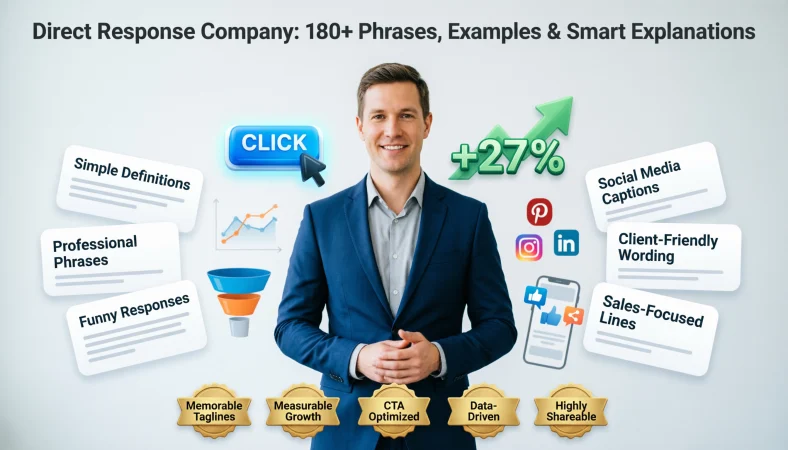
A direct response company focuses on marketing designed to generate an immediate, measurable action, such as a purchase, signup, booking, inquiry, or download. Unlike broad brand advertising, direct response marketing is built around trackable results and clear calls to action.
Top alternatives: performance marketing company, direct response agency, conversion marketing company, results-driven marketing agency, response marketing company
A direct response company is all about one simple question: Did the marketing make people do something? Instead of only building awareness, these companies create campaigns that encourage measurable actions. That might mean clicking an ad, buying a product, filling out a form, calling a business, or subscribing to an offer.
You may hear the term in marketing meetings, business DMs, agency proposals, sales calls, or conversations about advertising performance. Knowing how to describe a direct response company clearly can make complicated marketing language much easier to understand.
Whether you need a professional explanation, a quick definition, a clever social caption, or a polished business description, the right wording matters. A good phrase can turn marketing jargon into something instantly understandable, without making it sound like it came straight from a 40-page corporate presentation.
1. Simple Responses About a Direct Response Company
It’s a company focused on getting measurable results.
Example: Use this when someone wants a simple explanation without marketing jargon.
Meaning: It emphasizes measurable actions rather than general awareness.
It turns marketing into action.
Example: Use this as a quick explanation during a casual business conversation.
Meaning: It highlights the action-oriented nature of direct response marketing.
It focuses on results you can track.
Example: Use this when explaining the concept to someone unfamiliar with performance marketing.
Meaning: It points to measurable outcomes such as sales, leads, or signups.
It’s built around response, not just recognition.
Example: Use this when comparing direct response marketing with traditional branding.
Meaning: It explains that the goal is to encourage an immediate response.
It asks customers to take action.
Example: Use this for a beginner-friendly definition in a conversation.
Meaning: It focuses on actions such as buying, clicking, calling, or registering.
It measures what marketing actually produces.
Example: Use this when discussing campaign performance with a colleague.
Meaning: It stresses accountability and measurable outcomes.
It connects advertising with action.
Example: Use this when describing the business model in a presentation.
Meaning: It shows how marketing activity is linked to customer behavior.
It’s marketing with a measurable destination.
Example: Use this as a polished but approachable explanation.
Meaning: It suggests every campaign has a specific goal.
It focuses on turning attention into action.
Example: Use this when explaining the purpose of a campaign to a client.
Meaning: It describes the journey from seeing an advertisement to responding.
It’s designed to make results visible.
Example: Use this when explaining why tracking matters.
Meaning: It highlights measurable campaign performance.
It doesn’t stop at getting noticed.
Example: Use this when contrasting branding with direct response campaigns.
Meaning: It shows that attention is only the beginning.
It gives marketing a clear job to do.
Example: Use this when explaining the concept to a business owner.
Meaning: It communicates that campaigns are created around specific objectives.
2. Professional Ways to Describe a Direct Response Company
A direct response company specializes in measurable customer acquisition.
Example: Use this wording in a business profile or professional introduction.
Meaning: It presents the company as focused on acquiring customers through measurable campaigns.
We build campaigns around measurable customer actions.
Example: Use this in an agency presentation or company overview.
Meaning: It communicates a results-focused marketing approach.
Our focus is performance, conversion, and measurable growth.
Example: Use this for professional marketing materials.
Meaning: It positions the company around outcomes rather than exposure alone.
We connect marketing investment with measurable outcomes.
Example: Use this when explaining value to potential clients.
Meaning: It emphasizes accountability for marketing spend.
We create campaigns designed to generate immediate responses.
Example: Use this in a service description.
Meaning: It clearly defines the action-oriented nature of the business.
Our campaigns are built for measurable performance.
Example: Use this on a website or agency profile.
Meaning: It highlights tracking and campaign effectiveness.
We turn audience attention into measurable customer action.
Example: Use this in a company pitch.
Meaning: It describes how marketing attention can lead to conversions.
We specialize in response-driven marketing strategies.
Example: Use this as a concise business description.
Meaning: It establishes the company as a specialist in direct response methods.
Our approach combines persuasive messaging with performance tracking.
Example: Use this when explaining your methodology professionally.
Meaning: It connects creative communication with measurable results.
We develop campaigns with clear conversion objectives.
Example: Use this in an agency proposal.
Meaning: It shows that campaigns are designed around specific actions.
We measure marketing by what customers do next.
Example: Use this as a memorable professional tagline.
Meaning: It puts customer behavior at the center of campaign evaluation.
We help businesses turn marketing into measurable growth.
Example: Use this on a company website or LinkedIn profile.
Meaning: It presents the company’s value in clear business language.
3. Funny Responses About a Direct Response Company
Basically, we ask marketing to prove it came to work.
Example: Use this in a casual conversation with a marketing-savvy friend.
Meaning: It humorously describes performance accountability.
We like our marketing with receipts.
Example: Use this as a playful social media caption.
Meaning: It jokes about tracking measurable results.
No mysterious marketing magic here.
Example: Use this when explaining a results-driven approach informally.
Meaning: It suggests campaigns are evaluated using real data.
We prefer clicks over applause.
Example: Use this as a witty marketing statement.
Meaning: It prioritizes customer action over vanity metrics.
Our campaigns have homework: get results.
Example: Use this as a lighthearted agency introduction.
Meaning: It humorously gives campaigns a measurable responsibility.
We don’t just chase attention. We chase action.
Example: Use this in a social post about performance marketing.
Meaning: It contrasts attention with measurable customer behavior.
Marketing, but with a scoreboard.
Example: Use this as a short explanation for someone unfamiliar with the concept.
Meaning: It compares performance tracking with keeping score.
We make ads earn their lunch.
Example: Use this for playful marketing content.
Meaning: It suggests advertisements should generate measurable value.
If the numbers aren’t moving, neither are we.
Example: Use this when joking about performance-focused campaigns.
Meaning: It communicates a strong focus on results.
We like campaigns that do more than look pretty.
Example: Use this when discussing creative advertising.
Meaning: It emphasizes effectiveness alongside presentation.
Our favorite marketing metric is ‘it worked.’
Example: Use this for a humorous business caption.
Meaning: It celebrates successful measurable outcomes.
We put the ‘response’ in direct response.
Example: Use this as a playful tagline.
Meaning: It highlights the defining purpose of the marketing model.
4. Clever Ways to Explain a Direct Response Company
Think of it as marketing with a built-in action plan.
Example: Use this when simplifying the concept for beginners.
Meaning: It explains that campaigns are designed to encourage specific behavior.
The goal isn’t just attention. It’s what happens after attention.
Example: Use this in a marketing discussion.
Meaning: It focuses on post-ad customer behavior.
It turns advertising from a message into a measurable experiment.
Example: Use this when discussing campaign optimization.
Meaning: It highlights testing and performance measurement.
Every campaign has a question and a measurable answer.
Example: Use this in a strategy presentation.
Meaning: It describes the testable nature of direct response marketing.
It connects the ad to the action.
Example: Use this as a short explanation.
Meaning: It describes the relationship between advertising and conversion.
The customer response becomes part of the data.
Example: Use this when explaining campaign tracking.
Meaning: It shows how customer behavior informs marketing decisions.
It treats marketing like a performance game, not a guessing game.
Example: Use this in an educational post.
Meaning: It emphasizes data-driven decision-making.
The campaign has a destination, not just a direction.
Example: Use this when discussing marketing goals.
Meaning: It suggests campaigns are built around defined outcomes.
Attention starts the process, but action completes it.
Example: Use this in a presentation or article.
Meaning: It explains the importance of conversion.
The real headline is what the audience does next.
Example: Use this when discussing advertising effectiveness.
Meaning: It shifts focus from creative alone to customer response.
It makes marketing easier to evaluate.
Example: Use this when explaining the practical benefit of direct response campaigns.
Meaning: It highlights the value of measurable outcomes.
It turns customer behavior into marketing intelligence.
Example: Use this in a professional discussion.
Meaning: It emphasizes learning from measurable responses.
5. Short Responses About Direct Response Companies
Results first.
Example: Use this as a concise business tagline.
Meaning: It communicates a performance-oriented philosophy.
Built for action.
Example: Use this in a website headline.
Meaning: It highlights immediate customer response.
Marketing that moves people.
Example: Use this as a memorable company description.
Meaning: It suggests marketing is designed to inspire action.
Track it. Test it. Improve it.
Example: Use this for a performance marketing caption.
Meaning: It captures the iterative nature of direct response campaigns.
Action over awareness.
Example: Use this when contrasting two marketing approaches.
Meaning: It prioritizes measurable customer behavior.
Measure what matters.
Example: Use this as a short professional slogan.
Meaning: It stresses meaningful performance metrics.
From message to response.
Example: Use this in an agency presentation.
Meaning: It summarizes the direct response process.
Built around conversion.
Example: Use this for a business profile.
Meaning: It emphasizes turning prospects into customers.
Performance with purpose.
Example: Use this as a polished marketing tagline.
Meaning: It connects measurable results with strategic intent.
Marketing with accountability.
Example: Use this in professional copy.
Meaning: It highlights responsibility for campaign outcomes.
Response drives results.
Example: Use this as a campaign-focused tagline.
Meaning: It connects customer response with business performance.
Make attention count.
Example: Use this as a social media caption.
Meaning: It suggests turning audience attention into measurable value.
6. Social Media-Friendly Responses
Not just likes. We want actions.
Example: Use this for a social post explaining performance marketing.
Meaning: It contrasts engagement with deeper customer behavior.
Good marketing gets attention. Great marketing gets a response.
Example: Use this as an educational LinkedIn or Instagram caption.
Meaning: It emphasizes the difference between visibility and action.
Clicks, leads, sales, repeat.
Example: Use this as a punchy marketing graphic caption.
Meaning: It summarizes the desired customer journey.
Your ad shouldn’t just sit there looking expensive.
Example: Use this as a humorous business post.
Meaning: It suggests advertising should produce measurable value.
Make the scroll stop for a reason.
Example: Use this when discussing social advertising.
Meaning: It connects attention with a desired action.
Attention is nice. Conversion is nicer.
Example: Use this as a short social caption.
Meaning: It humorously prioritizes measurable business outcomes.
Marketing that asks, ‘What happens next?’
Example: Use this as an introductory social media hook.
Meaning: It highlights customer action after exposure.
Less guessing, more measuring.
Example: Use this in a performance marketing post.
Meaning: It promotes data-driven campaign decisions.
The goal is action, not just impressions.
Example: Use this for educational content.
Meaning: It distinguishes direct response from awareness-focused advertising.
Turn views into value.
Example: Use this as a social media headline.
Meaning: It focuses on converting attention into business results.
Make every click count.
Example: Use this for an advertising campaign caption.
Meaning: It emphasizes the value of measurable customer actions.
Marketing that gets people moving.
Example: Use this as a catchy company tagline.
Meaning: It communicates an action-oriented marketing strategy.
7. Client-Friendly Responses
We focus on outcomes that matter to your business.
Example: Use this when introducing services to a potential client.
Meaning: It reassures clients that campaigns are tied to meaningful goals.
We’ll help you turn attention into action.
Example: Use this during a client presentation.
Meaning: It explains the company’s role in improving customer response.
Your marketing should have a measurable purpose.
Example: Use this when discussing campaign strategy.
Meaning: It encourages clients to establish clear objectives.
We build campaigns around your desired customer action.
Example: Use this in a proposal.
Meaning: It shows that campaigns begin with business goals.
We don’t just launch campaigns. We measure what happens next.
Example: Use this when explaining campaign management.
Meaning: It emphasizes ongoing performance evaluation.
Every campaign starts with a goal.
Example: Use this during a strategy meeting.
Meaning: It establishes goal-setting as the foundation of direct response marketing.
We connect creative ideas with measurable business outcomes.
Example: Use this in professional client communication.
Meaning: It balances creativity with performance.
We test what works and improve what doesn’t.
Example: Use this when explaining optimization.
Meaning: It communicates a practical testing mindset.
Your audience response tells us what to improve.
Example: Use this when discussing campaign data.
Meaning: It shows how customer behavior guides optimization.
We make performance easier to understand.
Example: Use this in a client-facing service description.
Meaning: It promises clearer campaign measurement.
The objective is simple: create action that supports growth.
Example: Use this during a sales presentation.
Meaning: It connects customer response with business growth.
We want your marketing spend working as hard as possible.
Example: Use this in a client proposal.
Meaning: It focuses on improving the effectiveness of marketing investment.
8. Sales-Focused Responses
We turn prospects into measurable opportunities.
Example: Use this when describing lead-generation services.
Meaning: It focuses on moving potential customers toward conversion.
The campaign starts the conversation and the offer drives the action.
Example: Use this when discussing a sales funnel.
Meaning: It explains how messaging and offers work together.
Every response can become a sales opportunity.
Example: Use this in a sales strategy discussion.
Meaning: It highlights the commercial value of customer engagement.
We build campaigns that encourage the next step.
Example: Use this when describing lead-generation campaigns.
Meaning: It focuses on moving prospects through the buying journey.
From prospect to customer, every step matters.
Example: Use this during a sales presentation.
Meaning: It emphasizes the importance of the entire conversion process.
The offer needs to earn the click.
Example: Use this when reviewing advertising creative.
Meaning: It stresses the importance of a compelling offer.
Good copy creates interest. Great copy creates action.
Example: Use this when discussing sales copywriting.
Meaning: It connects persuasive messaging with customer response.
We make the next step obvious.
Example: Use this when describing calls to action.
Meaning: It emphasizes clarity in the customer journey.
The right message can move a buyer forward.
Example: Use this in a sales strategy conversation.
Meaning: It highlights persuasive communication.
We optimize for customers, not empty numbers.
Example: Use this when discussing campaign metrics.
Meaning: It prioritizes meaningful commercial outcomes.
Every click has potential.
Example: Use this as a marketing sales tagline.
Meaning: It presents customer actions as opportunities.
The goal is measurable movement through the funnel.
Example: Use this in a professional marketing discussion.
Meaning: It describes progress toward conversion.
9. Results-Driven Responses
We let the results do the talking.
Example: Use this as a company tagline.
Meaning: It suggests performance provides evidence of effectiveness.
If we can measure it, we can improve it.
Example: Use this when discussing campaign optimization.
Meaning: It connects measurement with continuous improvement.
Performance isn’t a bonus. It’s the point.
Example: Use this in a professional marketing post.
Meaning: It makes results central to the company’s purpose.
Numbers help tell the real story.
Example: Use this when reviewing campaign performance.
Meaning: It emphasizes data over assumptions.
We optimize around outcomes.
Example: Use this as a concise professional statement.
Meaning: It communicates a focus on business results.
Results create the feedback loop.
Example: Use this during a strategy presentation.
Meaning: It explains how campaign performance guides future decisions.
The data tells us where to go next.
Example: Use this when explaining optimization.
Meaning: It presents performance data as a strategic guide.
We test, learn, and scale what works.
Example: Use this in an agency profile.
Meaning: It summarizes a performance-driven growth approach.
Every campaign teaches us something.
Example: Use this in an educational marketing post.
Meaning: It highlights learning through measurable responses.
The goal is sustainable performance.
Example: Use this in a business presentation.
Meaning: It emphasizes consistent results rather than one-time wins.
We measure before we celebrate.
Example: Use this as a playful performance tagline.
Meaning: It humorously prioritizes evidence over assumptions.
Results turn strategy into proof.
Example: Use this in a professional marketing article.
Meaning: It suggests performance validates strategic decisions.
10. Confident Responses About a Direct Response Company
We don’t just promise performance. We measure it.
Example: Use this when presenting a company’s value proposition.
Meaning: It expresses confidence through measurable accountability.
We know the goal before the campaign begins.
Example: Use this in a professional company introduction.
Meaning: It communicates strategic clarity.
We build for action from day one.
Example: Use this as a business tagline.
Meaning: It shows that response is considered from the start.
We believe marketing should earn its place on the budget.
Example: Use this during a client pitch.
Meaning: It connects marketing investment with performance.
Creative matters, but results matter too.
Example: Use this when discussing advertising strategy.
Meaning: It balances creativity with effectiveness.
We make every campaign accountable.
Example: Use this on a company website.
Meaning: It communicates strong performance standards.
We turn marketing goals into measurable actions.
Example: Use this in an agency profile.
Meaning: It describes strategic execution clearly.
We focus on what moves the business forward.
Example: Use this in a client presentation.
Meaning: It positions the company around meaningful growth.
We build campaigns with purpose, not guesswork.
Example: Use this as a professional tagline.
Meaning: It emphasizes intentional strategy.
We know attention is only step one.
Example: Use this in an educational post.
Meaning: It explains that conversion is the larger objective.
We make performance part of the plan.
Example: Use this when explaining the company’s process.
Meaning: It shows that measurement is built into campaign strategy.
Our campaigns are designed to make an impact you can measure.
Example: Use this in a company profile.
Meaning: It combines persuasive confidence with measurable outcomes.
11. Creative Responses About Direct Response Marketing
We turn marketing ideas into measurable moments.
Example: Use this as a creative agency caption.
Meaning: It blends creativity with performance.
Great creative should invite action.
Example: Use this when discussing advertising concepts.
Meaning: It connects creativity with customer behavior.
A strong message opens the door. A strong offer gets people through it.
Example: Use this when explaining conversion strategy.
Meaning: It describes how messaging and offers work together.
Make them notice. Give them a reason to respond.
Example: Use this as a campaign planning principle.
Meaning: It summarizes the two-step journey from attention to action.
Creativity gets attention; strategy gives it somewhere to go.
Example: Use this in a marketing presentation.
Meaning: It shows why creative work needs strategic direction.
Turn curiosity into a click.
Example: Use this as an advertising tagline.
Meaning: It focuses on converting interest into action.
Give the audience a reason to move.
Example: Use this in creative campaign planning.
Meaning: It highlights the importance of motivation.
Make the message memorable and the action obvious.
Example: Use this when writing advertising copy.
Meaning: It combines creative impact with conversion clarity.
Ideas are powerful when they produce action.
Example: Use this in an agency presentation.
Meaning: It defines successful creativity through measurable response.
Create attention with a purpose.
Example: Use this for social advertising content.
Meaning: It suggests attention should serve a specific objective.
A good campaign catches eyes. A great one catches responses.
Example: Use this as a marketing caption.
Meaning: It contrasts visibility with action.
Creativity gets the invitation; conversion gets the RSVP.
Example: Use this as a playful marketing metaphor.
Meaning: It humorously describes the journey from attention to response.
12. Sarcastic Responses About Direct Response Companies
Because apparently marketing should actually work.
Example: Use this as a playful response in a marketing discussion.
Meaning: It jokingly emphasizes performance.
We know, measuring results sounds radical.
Example: Use this when teasing vague marketing strategies.
Meaning: It humorously supports data-driven marketing.
Yes, we like numbers. They tend to be honest.
Example: Use this in a casual professional conversation.
Meaning: It suggests data provides clearer evidence than opinions.
Brand awareness is lovely. Sales are lovely too.
Example: Use this as a cheeky social caption.
Meaning: It humorously balances awareness with revenue.
We ask ads to do more than look expensive.
Example: Use this in a lighthearted marketing post.
Meaning: It criticizes campaigns that lack measurable results.
No crystal ball required, just tracking.
Example: Use this when explaining campaign measurement.
Meaning: It jokes about replacing guesswork with data.
We prefer proof over marketing folklore.
Example: Use this in a performance-focused discussion.
Meaning: It favors measurable evidence over assumptions.
Turns out clicks can be counted. Who knew?
Example: Use this as playful social media copy.
Meaning: It humorously points to measurable customer actions.
We brought spreadsheets to the advertising party.
Example: Use this as a fun company caption.
Meaning: It jokes about combining creativity with analytics.
Guesswork had a good run.
Example: Use this when promoting data-driven campaigns.
Meaning: It suggests measurable marketing is more reliable than assumptions.
Our ads have one small requirement: results.
Example: Use this as a witty company statement.
Meaning: It emphasizes performance expectations.
We aren’t allergic to metrics.
Example: Use this as a humorous marketing tagline.
Meaning: It signals comfort with measurement and analytics.
13. Friendly And Casual Responses
It’s basically marketing built to get a response.
Example: Use this when explaining the term to a friend.
Meaning: It provides an easygoing definition.
Think ads with a clear mission.
Example: Use this in a casual explanation.
Meaning: It describes purposeful advertising.
The idea is simple: get people to act.
Example: Use this when someone asks for the basic concept.
Meaning: It summarizes direct response marketing in plain language.
It focuses on what people actually do.
Example: Use this during an informal marketing discussion.
Meaning: It emphasizes customer behavior.
It’s marketing you can track from click to action.
Example: Use this when discussing online campaigns.
Meaning: It explains the measurable journey.
Basically, attention with an agenda.
Example: Use this as a witty explanation.
Meaning: It suggests marketing attention is designed to lead somewhere.
It’s less ‘look at us’ and more ‘here’s what to do next.’
Example: Use this when comparing brand and response marketing.
Meaning: It highlights calls to action.
The goal is to make something happen.
Example: Use this as a simple definition.
Meaning: It communicates the action-oriented purpose.
It turns ads into action starters.
Example: Use this in a casual social media post.
Meaning: It describes advertising as a trigger for customer behavior.
It’s marketing with a scoreboard.
Example: Use this when explaining performance measurement.
Meaning: It uses a simple metaphor for tracking results.
The campaign wants a response, not just a view.
Example: Use this when explaining campaign goals.
Meaning: It distinguishes engagement from action.
Short version: marketing that wants receipts.
Example: Use this as a humorous definition.
Meaning: It highlights the importance of measurable evidence.
14. Smart Business Responses
A direct response company focuses on measurable customer behavior.
Example: Use this in a business article or professional presentation.
Meaning: It defines the business model in precise language.
Its value comes from connecting marketing activity with measurable outcomes.
Example: Use this when discussing agency performance.
Meaning: It explains the commercial importance of tracking.
Direct response campaigns typically include a clear call to action.
Example: Use this when explaining campaign structure.
Meaning: It identifies one of the defining characteristics of response marketing.
The model works particularly well when results can be attributed to specific campaigns.
Example: Use this in a marketing strategy discussion.
Meaning: It highlights the importance of attribution.
A direct response company is built around action and measurement.
Example: Use this as a professional definition.
Meaning: It summarizes the two central ideas behind the model.
Its campaigns are designed around specific customer outcomes.
Example: Use this in an agency description.
Meaning: It emphasizes goal-oriented campaign planning.
Performance data helps shape future campaign decisions.
Example: Use this when discussing optimization.
Meaning: It explains how measurement supports better marketing.
The approach makes testing a central part of marketing.
Example: Use this in educational content.
Meaning: It highlights the role of experimentation.
The customer response provides valuable campaign feedback.
Example: Use this in a strategy presentation.
Meaning: It explains how responses inform optimization.
Direct response marketing connects persuasion with measurable behavior.
Example: Use this in an industry article.
Meaning: It describes the relationship between copy, offers, and action.
The ultimate objective is measurable business growth.
Example: Use this in professional marketing content.
Meaning: It connects customer action with commercial results.
Clear goals make direct response campaigns easier to evaluate.
Example: Use this when discussing campaign planning.
Meaning: It explains why defined objectives matter.
15. Tagline-Style Responses For a Direct Response Company
Marketing that moves.
Example: Use this as a short company tagline.
Meaning: It communicates action and momentum.
Built for measurable growth.
Example: Use this on a business website.
Meaning: It focuses on trackable business improvement.
Attention into action.
Example: Use this as a concise agency slogan.
Meaning: It summarizes the direct response journey.
Make marketing accountable.
Example: Use this in a professional campaign message.
Meaning: It emphasizes measurable performance.
Results you can see. Actions you can measure.
Example: Use this for a company banner or social graphic.
Meaning: It highlights transparency and measurement.
From clicks to customers.
Example: Use this as a digital marketing tagline.
Meaning: It describes the path from advertising interaction to conversion.
Turn interest into action.
Example: Use this on a landing page.
Meaning: It focuses on converting audience attention.
Performance with purpose.
Example: Use this as a polished agency slogan.
Meaning: It connects strategic intent with measurable outcomes.
Where marketing meets measurable results.
Example: Use this in a company profile.
Meaning: It clearly positions the company around performance.
Make every response count.
Example: Use this as a campaign tagline.
Meaning: It emphasizes the value of every customer action.
Create. Test. Convert.
Example: Use this as a compact performance marketing slogan.
Meaning: It captures the core campaign process.
Marketing built to deliver.
Example: Use this as a website headline.
Meaning: It communicates a confident results-oriented position.
FAQs
What does “direct response company” mean?
A direct response company is a business that focuses on marketing designed to generate measurable customer actions, such as purchases, leads, calls, signups, bookings, or clicks.
Is a direct response company the same as a marketing agency?
Not always. A marketing agency may focus on branding, awareness, public relations, content, or many other areas. A direct response company specifically emphasizes measurable customer responses and performance.
What does a direct response company do?
It can create advertising, landing pages, sales copy, email campaigns, offers, funnels, and other marketing activities designed to encourage measurable action.
Is direct response marketing emotional?
It can be. Strong direct response campaigns often use emotions, urgency, curiosity, benefits, trust, or relatable problems to motivate people to act.
Can a direct response company work with small businesses?
Yes. Small businesses can use direct response strategies for lead generation, online sales, bookings, phone calls, email signups, and other measurable objectives.
Is direct response marketing professional?
Absolutely. It is widely used in digital advertising, ecommerce, lead generation, sales campaigns, and performance marketing.
What should I say if I do not understand the term?
You can simply ask, “Do you mean a company that focuses on measurable marketing results?” This keeps the conversation clear without pretending to understand unfamiliar jargon.
Can I use humor when explaining a direct response company?
Yes, especially in casual conversations or social media. For professional presentations, keep the humor light and make sure the definition remains clear.
What is the difference between direct response and brand marketing?
Brand marketing often focuses on awareness, recognition, and long-term perception. Direct response marketing focuses more heavily on encouraging and measuring specific customer actions.
What are common direct response goals?
Common goals include purchases, leads, registrations, calls, bookings, downloads, subscriptions, and other actions that can be tracked.
Conclusion
A direct response company puts action and measurement at the center of marketing. Whether you’re explaining the term to a friend, writing a company bio, preparing a client presentation, or creating a catchy social media caption, the right wording can make the concept instantly easier to understand. The best responses are clear, confident, and specific about what the marketing is designed to achieve.
You can keep things professional, add a little humor, or make the wording short enough for a social post. Save this list for your next marketing conversation, share it with someone who loves business jargon, and reuse your favorite lines whenever you need to explain direct response marketing without making it sound complicated.