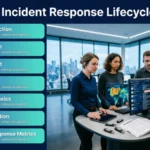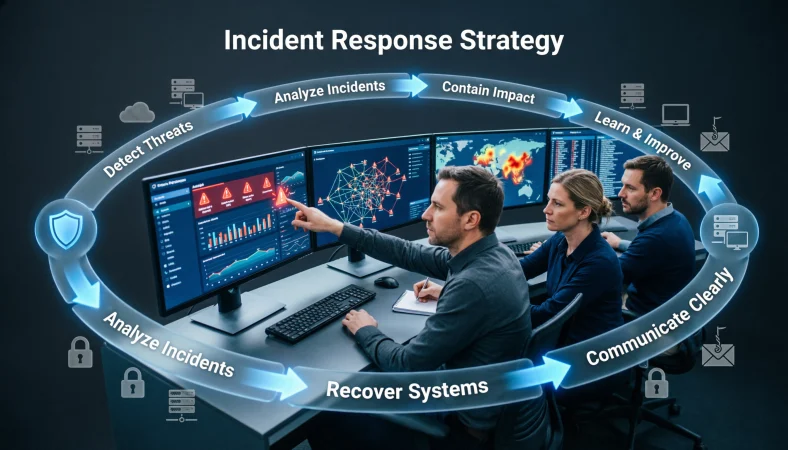
An incident response strategy is a structured approach for preparing an organization to detect, respond to, contain, recover from, and learn from cybersecurity incidents. Current NIST guidance places incident response within broader cybersecurity risk management and emphasizes Detect, Respond, Recover, and continuous improvement.
Top alternatives: incident response plan, incident handling strategy, cybersecurity response strategy, security incident strategy, incident management strategy
When a security incident hits, nobody wants the team group chat to become 47 people typing “What happened?” at the same time. A solid incident response strategy gives everyone a clearer path when phishing, malware, ransomware, data exposure, suspicious logins, or service disruptions appear.
Whether you are working in cybersecurity, managing IT, protecting a business, or simply trying to understand how incident response works, the strategy matters because speed without structure can create even more problems.
Modern NIST guidance treats incident response as part of broader cybersecurity risk management, with Detect, Respond, and Recover at the center and continuous improvement feeding lessons back into the wider security program.
The right strategy therefore is not just about putting out today’s fire. It is about knowing who acts, what gets prioritized, how evidence is handled, how communication works, and what changes afterward so the same headache is less likely to return.
Incident Response Strategy Basics
Start with a strategy, not panic.
Example: Use this when introducing incident response planning to a new security team.
Meaning: A predefined approach helps people make structured decisions during stressful events.
Define what counts as an incident.
Example: Use this when creating the first version of an organizational response framework.
Meaning: Clear definitions prevent confusion about which events require formal response.
Know who owns the response.
Example: Use this when assigning incident leadership responsibilities.
Meaning: Ownership prevents critical decisions from falling between departments.
Build around Detect, Respond, and Recover.
Example: Use this when aligning a response strategy with current NIST guidance.
Meaning: These functions provide a practical structure for handling incidents.
Make continuous improvement part of the strategy.
Example: Use this after reviewing an incident that exposed a process weakness.
Meaning: Lessons learned should influence future cybersecurity decisions.
Document important decisions.
Example: Use this during a high-impact security event.
Meaning: Decision records improve accountability and make later review easier.
Set clear escalation rules.
Example: Use this when deciding when analysts should involve leadership.
Meaning: Escalation criteria help serious incidents receive appropriate attention.
Protect communication channels.
Example: Use this when planning communications for a compromised email environment.
Meaning: Response teams need trusted ways to coordinate when normal systems may be affected.
Identify critical assets before an incident.
Example: Use this during annual security planning.
Meaning: Asset priorities help responders focus on systems with the greatest business importance.
Define response priorities.
Example: Use this when several systems are affected simultaneously.
Meaning: Priorities help teams allocate limited response resources intelligently.
Keep the strategy flexible.
Example: Use this when preparing for unfamiliar attack scenarios.
Meaning: Real incidents rarely follow a perfectly scripted sequence.
Test the strategy regularly.
Example: Use this before an organization depends on its response plan during a major breach.
Meaning: Exercises reveal weaknesses before a real incident exposes them.
Funny Incident Response Strategy Ideas
Keep calm and check the logs.
Example: Use this as a light team reminder during security training.
Meaning: It adds humor while reinforcing evidence-based investigation.
No, rebooting is not the whole strategy.
Example: Use this when teaching new responders about structured investigation.
Meaning: It reminds people that incidents require more than quick technical fixes.
The incident did not RSVP.
Example: Use this in an internal cybersecurity awareness presentation.
Meaning: It humorously captures how unexpected security events can appear.
First rule of incident response: know who to call.
Example: Use this when explaining escalation contacts.
Meaning: It highlights the importance of having responsible people identified beforehand.
Logs are basically the security team’s receipts.
Example: Use this when introducing log analysis to beginners.
Meaning: Logs can provide evidence about what happened and when.
Do not let the group chat become the SOC.
Example: Use this when discussing formal communication channels.
Meaning: Critical incidents need organized communication rather than scattered messages.
The faster you panic, the slower you investigate.
Example: Use this during an incident response workshop.
Meaning: Emotional reactions can interfere with careful analysis.
Every alert is not the final boss.
Example: Use this when explaining alert triage.
Meaning: Analysts need to determine which alerts represent genuine threats.
Contain first, celebrate later.
Example: Use this when discussing response priorities.
Meaning: Stabilizing an incident should come before declaring victory.
Do not delete the evidence because it looks scary.
Example: Use this when training staff on evidence preservation.
Meaning: Evidence can be essential for understanding and documenting an incident.
Security work without documentation is memory with extra steps.
Example: Use this when encouraging responders to record actions.
Meaning: Written records make investigations easier to reconstruct.
The best incident is the one your team already rehearsed.
Example: Use this when promoting tabletop exercises.
Meaning: Practice can make real-world response more organized.
Professional Incident Response Strategy Examples
Define roles before incidents occur.
Example: Use this in an organizational incident response policy.
Meaning: Preassigned responsibilities reduce uncertainty during an emergency.
Establish formal escalation procedures.
Example: Use this when building an enterprise response program.
Meaning: Escalation procedures identify when and how incidents move to higher-level responders.
Maintain an incident severity model.
Example: Use this when categorizing security events.
Meaning: Severity criteria help teams prioritize response resources.
Establish executive communication procedures.
Example: Use this when preparing for incidents with business impact.
Meaning: Leadership needs timely information to make informed decisions.
Coordinate security, IT, legal, and communications teams.
Example: Use this for organization-wide incident planning.
Meaning: Major incidents can affect technical, legal, operational, and reputational areas simultaneously.
Document response authorities.
Example: Use this when deciding who can isolate systems or disable accounts.
Meaning: Clear authority reduces delays during time-sensitive decisions.
Define evidence-handling procedures.
Example: Use this when formalizing forensic response.
Meaning: Consistent evidence handling supports reliable investigation.
Maintain current contact information.
Example: Use this during quarterly response-plan reviews.
Meaning: Outdated contacts can create serious delays during an incident.
Establish secure backup communication methods.
Example: Use this when email could become unavailable or compromised.
Meaning: Alternate communication keeps responders connected.
Review response performance after incidents.
Example: Use this during post-incident management meetings.
Meaning: Reviews identify what worked and what needs improvement.
Align incident response with business priorities.
Example: Use this when designing an enterprise security program.
Meaning: Response decisions should consider operational impact and critical services.
Treat incident response as an ongoing capability.
Example: Use this when presenting a long-term cybersecurity strategy.
Meaning: Effective response requires continuous preparation, testing, learning, and improvement.
Incident Response Strategy For Detection And Analysis
Define what suspicious activity looks like.
Example: Use this when developing monitoring rules.
Meaning: Clear detection criteria make unusual behavior easier to identify.
Centralize important security alerts.
Example: Use this when improving security operations visibility.
Meaning: Centralized alerts can make patterns easier to recognize.
Prioritize alerts by potential impact.
Example: Use this when analysts face a large alert queue.
Meaning: Prioritization helps responders focus attention where it matters most.
Verify before escalating routine alerts.
Example: Use this when reducing unnecessary incident escalations.
Meaning: Basic validation helps separate genuine incidents from false positives.
Preserve relevant logs early.
Example: Use this when investigating suspicious activity.
Meaning: Timely preservation reduces the chance of losing useful evidence.
Establish a timeline of events.
Example: Use this when reconstructing an attack.
Meaning: A timeline helps connect actions and identify possible attack progression.
Identify affected accounts.
Example: Use this during a suspected credential compromise.
Meaning: Account analysis can reveal the scope of unauthorized activity.
Identify affected systems.
Example: Use this during malware or unauthorized-access investigations.
Meaning: System identification helps define the incident’s potential scope.
Compare activity against normal behavior.
Example: Use this when investigating unusual login patterns.
Meaning: Baselines can make abnormal activity easier to recognize.
Separate facts from assumptions.
Example: Use this when briefing incident leadership.
Meaning: Clear distinction prevents guesses from becoming treated as confirmed findings.
Record investigation timestamps.
Example: Use this during a detailed security investigation.
Meaning: Accurate timestamps help establish a reliable incident timeline.
Reassess the scope as evidence changes.
Example: Use this when a small alert reveals additional affected systems.
Meaning: Incident scope can expand as investigation produces new information.
Incident Response Strategy For Containment
Contain the incident before it spreads further.
Example: Use this when unauthorized activity is actively affecting multiple systems.
Meaning: Containment aims to limit additional damage while investigation continues.
Choose containment based on the incident type.
Example: Use this when comparing malware and denial-of-service response procedures.
Meaning: Different incidents can require very different containment actions.
Define isolation procedures in advance.
Example: Use this when creating malware-response playbooks.
Meaning: Predefined procedures can reduce decision delays.
Consider business availability before isolation.
Example: Use this when a critical production server is affected.
Meaning: Containment decisions can involve a balance between security and service continuity.
Preserve evidence while containing.
Example: Use this when isolating a compromised endpoint.
Meaning: Containment should avoid unnecessarily destroying information needed for investigation.
Document temporary containment measures.
Example: Use this when applying emergency network restrictions.
Meaning: Documentation makes temporary actions easier to track and reverse.
Define who can authorize disruptive actions.
Example: Use this when preparing a high-impact containment procedure.
Meaning: Authorization rules prevent confusion over major operational changes.
Consider partial containment.
Example: Use this when isolating only confirmed affected systems.
Meaning: A targeted approach may limit disruption while reducing the threat.
Monitor after containment.
Example: Use this after isolating a suspected compromised host.
Meaning: Continued monitoring can reveal whether the threat remains active elsewhere.
Set expiration points for temporary controls.
Example: Use this when creating emergency firewall restrictions.
Meaning: Time limits help prevent temporary measures from becoming forgotten permanent settings.
Prepare different containment playbooks.
Example: Use this when supporting multiple incident categories.
Meaning: Different threats can require different containment strategies.
Reassess containment as new evidence appears.
Example: Use this when an incident changes during investigation.
Meaning: Response decisions should adapt to the latest available information.
Incident Response Strategy For Eradication And Recovery
Remove the underlying cause before declaring recovery.
Example: Use this after containing malware on several endpoints.
Meaning: Recovery should address the condition that allowed the incident to persist.
Verify systems before returning them to service.
Example: Use this when restoring a compromised server.
Meaning: Validation reduces the risk of returning an unsafe system to production.
Restore from trusted sources.
Example: Use this during recovery after destructive malware.
Meaning: Trusted recovery sources reduce the chance of reintroducing compromised components.
Reset compromised credentials when appropriate.
Example: Use this after confirmed credential exposure.
Meaning: Credential changes can reduce continued unauthorized access.
Patch exploited weaknesses.
Example: Use this after identifying the vulnerability involved in an incident.
Meaning: Remediation should address known weaknesses where applicable.
Validate security controls after recovery.
Example: Use this after rebuilding an affected system.
Meaning: Recovery is incomplete if protective controls remain ineffective.
Monitor restored systems closely.
Example: Use this after returning critical services online.
Meaning: Additional monitoring can reveal recurring malicious activity.
Recover critical services according to business priority.
Example: Use this during a major outage.
Meaning: Prioritization helps restore essential operations first.
Record every major recovery action.
Example: Use this when rebuilding several affected systems.
Meaning: Documentation supports accountability and future lessons learned.
Do not rush the final recovery check.
Example: Use this when leadership wants systems restored immediately.
Meaning: Speed without validation can allow the original problem to return.
Confirm normal operations after recovery.
Example: Use this when services have been restored.
Meaning: Technical recovery should be accompanied by operational verification.
Feed recovery lessons into future planning.
Example: Use this after completing a major incident.
Meaning: Recovery experience should improve the next response cycle.
Incident Response Strategy For Ransomware
Identify affected systems quickly.
Example: Use this when ransomware activity is suspected across multiple endpoints.
Meaning: Scope awareness supports informed containment decisions.
Isolate affected systems according to the response plan.
Example: Use this when confirmed malicious encryption activity appears.
Meaning: Isolation can help limit further spread.
Protect unaffected systems.
Example: Use this when a ransomware incident begins expanding.
Meaning: Preventive actions can reduce additional exposure.
Preserve relevant evidence.
Example: Use this during forensic investigation.
Meaning: Evidence can help establish how the incident occurred.
Identify the initial access path.
Example: Use this after ransomware containment.
Meaning: Understanding initial access helps address the underlying problem.
Review privileged account activity.
Example: Use this when investigating widespread encryption.
Meaning: Privileged accounts may be relevant to the incident’s scope.
Validate backups before relying on them.
Example: Use this before starting major restoration work.
Meaning: Recovery depends on trustworthy and usable backup data.
Prioritize critical business systems.
Example: Use this when many systems require restoration.
Meaning: Business priorities help determine recovery order.
Coordinate technical and leadership teams.
Example: Use this during a high-impact ransomware event.
Meaning: Major incidents require both technical response and business decision-making.
Document ransomware-related decisions.
Example: Use this during a formal incident review.
Meaning: Clear records support later analysis and accountability.
Review recovery dependencies.
Example: Use this before restoring interconnected services.
Meaning: Dependencies can affect the order and safety of recovery.
Turn the incident into a security improvement plan.
Example: Use this after recovery is complete.
Meaning: Ransomware lessons can guide future defensive improvements.
Incident Response Strategy For Phishing And Credential Attacks
Treat suspicious credential activity seriously.
Example: Use this when unusual login behavior follows a phishing campaign.
Meaning: Credential compromise can provide attackers with continued access.
Identify affected accounts.
Example: Use this after employees report entering credentials into a suspicious page.
Meaning: Account identification helps determine the potential scope.
Review authentication activity.
Example: Use this during a suspected account takeover.
Meaning: Authentication records can reveal unusual access patterns.
Reset compromised credentials when warranted.
Example: Use this after confirming credential exposure.
Meaning: Credential changes can reduce the chance of continued misuse.
Revoke active sessions when appropriate.
Example: Use this during confirmed account compromise.
Meaning: Session invalidation can interrupt unauthorized access.
Investigate related mailbox activity.
Example: Use this after a corporate account appears compromised.
Meaning: Attackers may use compromised mailboxes for additional activity.
Search for related phishing messages.
Example: Use this after one employee reports a suspicious email.
Meaning: Similar messages may have reached other users.
Warn potentially affected users quickly.
Example: Use this when a phishing campaign is still active.
Meaning: Timely communication can reduce additional interaction with the campaign.
Preserve suspicious emails for investigation.
Example: Use this when analyzing a phishing campaign.
Meaning: Message details can help investigators understand the attack.
Review access permissions after compromise.
Example: Use this when a privileged account may have been affected.
Meaning: Excessive permissions can increase potential impact.
Improve phishing reporting procedures.
Example: Use this after a successful phishing incident.
Meaning: Easy reporting can help security teams detect future campaigns sooner.
Use the incident to improve awareness.
Example: Use this during post-incident security training.
Meaning: Real examples can make future phishing guidance more memorable.
Incident Response Strategy For Data Breaches
Confirm what information may be affected.
Example: Use this when investigating suspected unauthorized data access.
Meaning: Data identification helps determine potential impact.
Determine the affected systems.
Example: Use this during a suspected database compromise.
Meaning: System scope helps guide containment and investigation.
Preserve relevant evidence.
Example: Use this during forensic analysis of unauthorized access.
Meaning: Evidence helps establish what happened.
Identify the likely access path.
Example: Use this when analyzing a suspected data exposure.
Meaning: Understanding access helps identify security weaknesses.
Determine the incident timeline.
Example: Use this when reviewing historical access records.
Meaning: Timing helps establish the sequence of events.
Coordinate security and legal teams.
Example: Use this when an incident may involve regulated information.
Meaning: Data incidents can create technical and legal considerations.
Use verified information in communications.
Example: Use this when preparing internal incident updates.
Meaning: Accurate communication reduces unnecessary confusion.
Avoid guessing about affected data.
Example: Use this when evidence is incomplete.
Meaning: Unconfirmed assumptions can create misleading reports.
Identify whether access is ongoing.
Example: Use this during an active data exposure investigation.
Meaning: Continuing access changes the urgency of containment.
Review data access controls.
Example: Use this after identifying unauthorized access.
Meaning: Permission weaknesses may need remediation.
Document investigative findings.
Example: Use this when preparing an incident report.
Meaning: Structured findings make later review easier.
Feed breach lessons into risk management.
Example: Use this after completing the investigation.
Meaning: Lessons can guide future security improvements.
Incident Response Strategy For Cloud Environments
Inventory important cloud assets.
Example: Use this when building a cloud incident response program.
Meaning: Responders need visibility into the systems they may have to investigate.
Understand cloud account boundaries.
Example: Use this when investigating suspicious activity across multiple environments.
Meaning: Clear ownership helps responders determine where actions should occur.
Monitor identity activity.
Example: Use this when investigating suspicious cloud access.
Meaning: Identity events can reveal unauthorized activity.
Protect privileged cloud accounts.
Example: Use this during cloud security planning.
Meaning: High-privilege accounts can have broad access to critical resources.
Document cloud-specific response actions.
Example: Use this when creating cloud incident playbooks.
Meaning: Cloud environments may require response procedures different from traditional infrastructure.
Preserve relevant cloud logs.
Example: Use this when investigating unauthorized activity.
Meaning: Logs can help establish what actions occurred.
Understand service dependencies.
Example: Use this when containing an incident affecting production workloads.
Meaning: Cloud services often depend on interconnected components.
Coordinate with cloud providers when necessary.
Example: Use this when an incident involves provider-managed infrastructure.
Meaning: Some evidence or response actions may require provider coordination.
Test cloud recovery procedures.
Example: Use this before relying on cloud backups during an emergency.
Meaning: Recovery procedures should be validated before a real incident.
Use least privilege where practical.
Example: Use this when reducing the potential impact of compromised accounts.
Meaning: Limited permissions can reduce unnecessary access.
Review cloud configurations after incidents.
Example: Use this when a misconfiguration contributed to exposure.
Meaning: Configuration weaknesses should be addressed during remediation.
Keep cloud response documentation current.
Example: Use this during regular security reviews.
Meaning: Cloud architectures change quickly, so stale procedures can become unreliable.
Incident Response Strategy For Small Businesses
Keep the strategy simple enough to use.
Example: Use this when creating an incident plan for a small company.
Meaning: A practical plan is more useful than a giant document nobody reads.
Name a primary incident coordinator.
Example: Use this when assigning responsibility in a small IT team.
Meaning: One clear coordinator reduces uncertainty.
Create a short emergency contact list.
Example: Use this when preparing a small-business response folder.
Meaning: Key contacts should be easy to find under pressure.
Identify the most important systems.
Example: Use this when prioritizing limited security resources.
Meaning: Critical systems deserve stronger response preparation.
Keep reliable backups.
Example: Use this when preparing for destructive incidents.
Meaning: Recoverable data can be essential to business continuity.
Practice basic phishing response.
Example: Use this during employee security training.
Meaning: Phishing is easier to manage when employees know how to report it.
Know when to call outside specialists.
Example: Use this when an incident exceeds internal expertise.
Meaning: External support can provide specialized investigation or recovery capabilities.
Create an offline copy of critical contacts.
Example: Use this when preparing for a scenario where normal systems are unavailable.
Meaning: Offline information remains accessible during certain technology disruptions.
Document critical vendor contacts.
Example: Use this when preparing for service-related incidents.
Meaning: Vendor support may become important during recovery.
Define who communicates with customers.
Example: Use this when planning for customer-facing incidents.
Meaning: Clear communication ownership reduces inconsistent messaging.
Review the plan at least periodically.
Example: Use this during annual business continuity planning.
Meaning: People, systems, and vendors change over time.
Practice before the emergency.
Example: Use this when introducing tabletop exercises to a small team.
Meaning: Rehearsal can reveal gaps while there is still time to fix them.
Incident Response Strategy For Large Enterprises
Build cross-functional response capability.
Example: Use this when designing an enterprise incident response program.
Meaning: Large incidents can involve security, IT, legal, communications, and leadership.
Define multiple escalation levels.
Example: Use this when handling incidents with different levels of business impact.
Meaning: Escalation tiers help match response resources to incident severity.
Maintain detailed response playbooks.
Example: Use this when supporting multiple incident categories.
Meaning: Playbooks provide structured guidance for recurring scenarios.
Integrate threat intelligence where useful.
Example: Use this when investigating suspicious activity.
Meaning: Relevant intelligence can provide additional context for analysis.
Centralize incident reporting.
Example: Use this when managing security events across many business units.
Meaning: Central reporting can improve visibility.
Define regional responsibilities.
Example: Use this when an organization operates across multiple countries.
Meaning: Local teams may have different systems, responsibilities, and requirements.
Coordinate technical and executive response.
Example: Use this during a high-impact enterprise incident.
Meaning: Technical actions and business decisions need to remain aligned.
Test major response scenarios.
Example: Use this during annual security exercises.
Meaning: Large-scale exercises can expose coordination problems.
Measure response performance.
Example: Use this when reviewing incident response maturity.
Meaning: Metrics can help identify operational weaknesses.
Maintain resilient communication methods.
Example: Use this when planning for widespread technology disruption.
Meaning: Response teams need dependable communication during major incidents.
Integrate response with risk management.
Example: Use this when aligning security operations with enterprise governance.
Meaning: Current NIST guidance treats incident response as part of broader cybersecurity risk management.
Continuously improve the response program.
Example: Use this after exercises, incidents, and major technology changes.
Meaning: Enterprise response capability needs ongoing adjustment rather than one-time planning.
Incident Response Strategy For Communication And Teamwork
Create a clear communication hierarchy.
Example: Use this when defining who receives incident updates.
Meaning: Structured communication prevents important information from getting lost.
Use concise incident updates.
Example: Use this during an active investigation.
Meaning: Short factual updates help decision-makers understand the current situation quickly.
Separate confirmed facts from working theories.
Example: Use this when briefing executives during an evolving incident.
Meaning: It prevents speculation from being mistaken for evidence.
Use secure channels for sensitive information.
Example: Use this when discussing an active compromise.
Meaning: Sensitive incident details should not be casually shared through untrusted channels.
Define communication ownership.
Example: Use this when preparing customer-facing incident procedures.
Meaning: Clear ownership helps keep messaging consistent.
Keep technical updates understandable.
Example: Use this when security analysts brief business leaders.
Meaning: Decision-makers need useful information without unnecessary technical jargon.
Document important communications.
Example: Use this during a major incident.
Meaning: Records help reconstruct decisions and timelines later.
Avoid dramatic language.
Example: Use this when writing an internal incident update.
Meaning: Calm wording supports accurate decision-making.
Update stakeholders at agreed intervals.
Example: Use this during a prolonged investigation.
Meaning: Regular updates reduce uncertainty without flooding people with messages.
Create an escalation contact tree.
Example: Use this when designing an enterprise response plan.
Meaning: A contact tree helps teams reach the right people quickly.
Practice communication during tabletop exercises.
Example: Use this during a simulated ransomware scenario.
Meaning: Exercises test whether communication procedures actually work.
Close the communication loop.
Example: Use this after an incident has been resolved.
Meaning: Stakeholders should understand the outcome, next steps, and lessons where appropriate.
Incident Response Strategy For Compliance And Documentation
Maintain an incident record.
Example: Use this for every formally investigated security incident.
Meaning: A central record creates a structured history of response activity.
Record key timestamps.
Example: Use this during incident investigation and recovery.
Meaning: Accurate timing supports reconstruction and analysis.
Document major response decisions.
Example: Use this when isolating critical systems.
Meaning: Decision records explain why significant actions were taken.
Track affected assets.
Example: Use this during incident scope analysis.
Meaning: Asset tracking helps responders understand impact.
Record evidence sources.
Example: Use this during forensic investigations.
Meaning: Evidence provenance supports reliable analysis.
Document containment actions.
Example: Use this after applying emergency controls.
Meaning: Documentation helps teams understand what changed.
Record recovery actions.
Example: Use this after restoring affected systems.
Meaning: Recovery records support later validation and lessons learned.
Keep incident reports factual.
Example: Use this when preparing a post-incident summary.
Meaning: Factual reporting separates evidence from assumptions.
Protect sensitive incident records.
Example: Use this when storing investigation materials.
Meaning: Incident documentation can itself contain sensitive information.
Define retention requirements.
Example: Use this when designing an incident documentation program.
Meaning: Records should be managed according to applicable organizational and legal requirements.
Use standardized incident templates.
Example: Use this across a security operations team.
Meaning: Templates make documentation more consistent.
Turn documentation into improvement actions.
Example: Use this during a post-incident review.
Meaning: Documentation becomes valuable when it informs concrete security improvements.
Incident Response Strategy Best Practices And Quick Tips
Plan before the incident happens.
Example: Use this as the first rule of a new response program.
Meaning: Preparation gives responders a starting point when pressure is high.
Keep response roles obvious.
Example: Use this when reviewing an incident plan.
Meaning: Everyone should know who is responsible for what.
Prioritize impact, not noise.
Example: Use this when analysts face hundreds of alerts.
Meaning: Response resources should focus on meaningful risk.
Preserve evidence early.
Example: Use this when a security event becomes a formal investigation.
Meaning: Early action can reduce the chance of losing useful information.
Contain thoughtfully.
Example: Use this when deciding whether to isolate a production system.
Meaning: Containment should reduce risk while considering operational consequences.
Communicate with facts.
Example: Use this during executive incident briefings.
Meaning: Accurate information supports better decisions.
Test your assumptions.
Example: Use this when an investigation appears to have an obvious explanation.
Meaning: Evidence should support conclusions rather than assumptions driving the investigation.
Keep playbooks practical.
Example: Use this when updating a lengthy response document.
Meaning: Responders need actionable guidance during real incidents.
Review third-party dependencies.
Example: Use this when a vendor service is involved in an incident.
Meaning: External dependencies can affect containment and recovery.
Measure response improvements.
Example: Use this after completing an incident exercise.
Meaning: Measurement helps determine whether changes actually improve response capability.
Learn from every significant incident.
Example: Use this during post-incident review.
Meaning: Lessons learned should strengthen future cybersecurity risk management.
Remember that the strategy is never truly finished.
Example: Use this when closing an annual incident response review.
Meaning: Threats, technology, teams, and business priorities change, so the strategy should evolve continuously.
FAQs
What does incident response strategy mean?
An incident response strategy is the overall approach an organization uses to prepare for, detect, respond to, recover from, and learn from cybersecurity incidents.
What are the main parts of an incident response strategy?
Current NIST guidance places incident response around Detect, Respond, and Recover, supported by broader cybersecurity risk management and continuous improvement.
Is an incident response strategy the same as an incident response plan?
Not exactly. A strategy establishes the overall approach, priorities, roles, and objectives, while a plan turns that approach into more specific procedures and actions.
Can an incident response strategy be used for phishing?
Yes. A phishing response strategy can cover detection, affected-account identification, credential protection, investigation, communication, containment, and lessons learned.
Is incident response only for cybersecurity teams?
No. Significant incidents can involve IT, legal, communications, leadership, operations, vendors, and other business functions.
Why is communication important in incident response?
Clear communication helps teams coordinate actions, escalate appropriately, avoid conflicting information, and keep decision-makers informed.
What should an incident response strategy include?
It typically covers roles, escalation criteria, incident categories, detection, response priorities, containment, recovery, communication, documentation, and continuous improvement.
How often should an incident response strategy be tested?
Organizations should test it regularly and whenever significant systems, responsibilities, threats, or business processes change.
Does NIST still use the old preparation, detection, containment, eradication, and recovery model?
NIST SP 800-61 Revision 3 replaced Revision 2 in April 2025 and aligns incident response with CSF 2.0’s Detect, Respond, and Recover functions.
What should you do if you do not have a formal incident response strategy?
Start with a basic framework for incident identification, contacts, escalation, containment, recovery, communication, and post-incident review, then expand it as the organization matures.
Is humor appropriate in incident response?
Humor can work in training, awareness content, and team culture, but active security incidents require clear, calm, professional communication.
Why should incident response strategies be updated?
Threats, technologies, business systems, teams, vendors, and risks change over time, so response capabilities need continuous improvement rather than one-time planning.
Conclusion
A strong incident response strategy gives teams something much more useful than a giant document sitting untouched in a shared folder. It creates structure when security incidents get messy, helps people understand their roles, supports better communication, and turns hard lessons into future improvements. From phishing and ransomware to cloud incidents and data exposure, the goal is not to predict every possible problem.
It is to build a flexible response capability that can adapt when the unexpected shows up. Start simple, test your procedures, document what happens, and keep improving the strategy as your environment changes. Save this guide for your next security planning session, share it with your team, and keep building a response process that is ready when it matters.