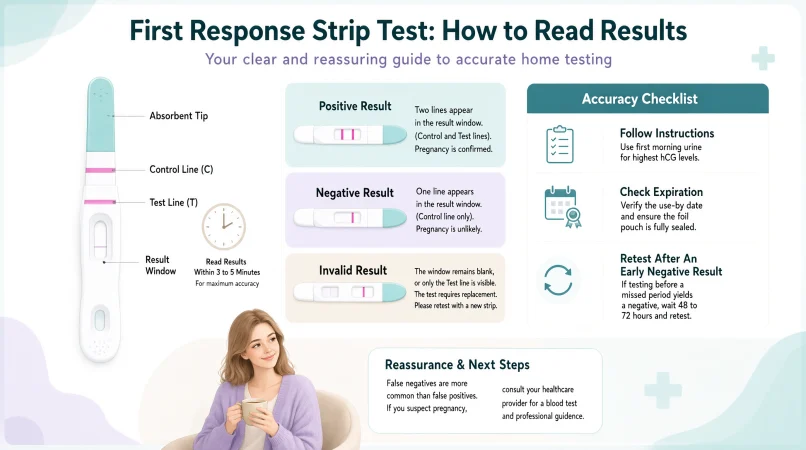
The first response strip test commonly refers to a pregnancy test strip sold under the First Response brand or a similar first-response testing product. If you’re using a pregnancy test strip, follow the package instructions carefully, check the result within the stated reading window, and remember that testing too early can affect accuracy.
Top related searches: First Response pregnancy test strip, how to use a First Response test, First Response test results, First Response faint line meaning, when to take a First Response pregnancy test.
Waiting for a pregnancy test result can make a few minutes feel like an entire season finale. Whether you’re testing early, checking a result before work, or searching online because a line looks lighter than expected, the first response strip test can bring up plenty of questions.
You might be wondering how to use the test, when to read it, what a faint line means, or whether a negative result is reliable.
The good news is that understanding the instructions and timing can make the experience less confusing. Pregnancy tests detect human chorionic gonadotropin (hCG), a hormone that increases during pregnancy. However, results depend on factors such as when you test and how you follow the directions.
This guide explains common test questions, result interpretations, practical next steps, and ways to discuss the experience clearly without jumping to conclusions.
Simple First Response Strip Test Explanations
1. A home pregnancy test that checks for hCG.
Example: Use this explanation when someone asks what a pregnancy test strip detects.
Meaning: The test looks for human chorionic gonadotropin, a hormone associated with pregnancy.
2. A test designed to provide a result within a specified time.
Example: Use this when explaining why the package includes a reading window.
Meaning: Results should be interpreted according to the manufacturer’s timing instructions.
3. A test that requires careful handling.
Example: Use this when reminding someone to follow the instructions before testing.
Meaning: Correct use helps reduce avoidable testing errors.
4. A result that depends partly on testing time.
Example: Use this when someone tests before their expected period.
Meaning: Testing early may produce a negative result even when pregnancy is present.
5. A test that detects a hormone rather than pregnancy symptoms.
Example: Use this when explaining why symptoms alone cannot confirm pregnancy.
Meaning: The test checks for hCG instead of relying on how someone feels.
6. A result that must be read within the stated window.
Example: Use this when someone notices a line long after the test was completed.
Meaning: Changes after the reading window may not be valid results.
7. A test that can show a positive or negative result.
Example: Use this when describing the basic purpose of a home pregnancy test.
Meaning: The displayed result helps indicate whether hCG was detected at the test’s threshold.
8. A product whose exact instructions depend on its model.
Example: Use this when comparing a strip test with a digital test.
Meaning: Different test formats may have different steps and result displays.
9. A test that may need repeating after an early negative result.
Example: Use this when a period has not started despite a negative test.
Meaning: Retesting after a short interval may help clarify the result.
10. A tool that does not replace medical advice.
Example: Use this when a person has conflicting test results or ongoing concerns.
Meaning: A healthcare professional can help interpret uncertainty.
11. A test result that should be checked for validity.
Example: Use this when the control indicator does not appear as directed.
Meaning: A test without its required control indication may be invalid.
12. A product that should be stored as directed.
Example: Use this when explaining why package storage instructions matter.
Meaning: Proper storage helps preserve the test’s intended performance.
Funny Responses About First Response Strip Tests
1. These five minutes have the suspense of a season finale.
Example: Use when joking about the wait for a test result.
Meaning: Expresses nervous anticipation with humor.
2. My sense of time has officially left the chat.
Example: Use when the waiting period feels unusually long.
Meaning: Makes the emotional wait sound relatable.
3. Suddenly, reading instructions is my new favorite hobby.
Example: Use when carefully checking every step before testing.
Meaning: Jokes about becoming extra detail-oriented in a stressful moment.
4. The clock has never moved this slowly.
Example: Use when waiting for the result within the instructed window.
Meaning: Captures the tension of waiting.
5. This tiny test has a very big job.
Example: Use when describing the importance of the result.
Meaning: Highlights how much emotional weight a small test can carry.
6. I came for an answer, not a suspense thriller.
Example: Use when the waiting period feels nerve-racking.
Meaning: Turns uncertainty into a playful observation.
7. My brain has opened seventeen tabs already.
Example: Use when overthinking every possible result.
Meaning: Expresses anxious thoughts without making a medical claim.
8. The instructions got more attention than my last exam.
Example: Use when rereading the package before testing.
Meaning: Jokes about taking the process very seriously.
9. Five minutes? Apparently, that’s a whole calendar year.
Example: Use when the stated waiting time feels endless.
Meaning: Exaggerates the feeling of anticipation.
10. The test is quiet, but my thoughts are doing karaoke.
Example: Use when trying to stay calm while waiting.
Meaning: Describes a busy mind in a lighthearted way.
11. I need patience, water, and possibly a new hobby.
Example: Use when distracting yourself during the wait.
Meaning: Suggests a gentle way to manage nervous energy.
12. Tiny strip, main-character energy.
Example: Use when joking about how important the result feels.
Meaning: Adds playful emphasis without predicting the outcome.
Clear Responses About Positive First Response Test Results
1. A positive result usually means hCG was detected.
Example: Use when explaining a positive home pregnancy test.
Meaning: The result suggests pregnancy, but clinical follow-up may be appropriate.
2. Follow the instructions to confirm the result is valid.
Example: Use when someone is unsure how to interpret the display.
Meaning: Correct timing and a valid control indicator matter.
3. A positive result is worth discussing with a healthcare professional.
Example: Use when planning next steps after a positive test.
Meaning: Encourages appropriate follow-up care.
4. Check the result within the manufacturer’s reading window.
Example: Use when a line appears during the instructed time.
Meaning: Results should be interpreted using the product’s stated timing.
5. A line-based test may show two lines when positive.
Example: Use when explaining a test that uses a control line and a test line.
Meaning: The exact display depends on the specific product’s instructions.
6. A faint test line can still indicate a positive result.
Example: Use when a faint line appears within the valid reading window.
Meaning: A faint line may reflect detectable hCG, so follow the test instructions and seek clarification if needed.
7. Do not judge a result by line darkness alone.
Example: Use when comparing two tests taken on different days.
Meaning: Line intensity is not a reliable standalone measure of pregnancy progression.
8. A digital result may be easier for some people to read.
Example: Use when someone struggles to interpret lines.
Meaning: A different test format may reduce uncertainty about the display.
9. A positive result does not estimate pregnancy health by itself.
Example: Use when someone asks whether a test can confirm that everything is progressing normally.
Meaning: A home test detects hCG but cannot assess pregnancy viability.
10. Check the expiration date before relying on a test.
Example: Use when a test has been stored for a long time.
Meaning: Expired products may not perform as intended.
11. Avoid interpreting a line that appears after the reading window.
Example: Use when a mark develops after the instructed time has passed.
Meaning: Late changes may be evaporation or drying artifacts rather than a valid result.
12. Ask a clinician if the result conflicts with your circumstances.
Example: Use when symptoms, timing, or multiple test results do not seem to agree.
Meaning: Professional guidance can help resolve uncertainty.
Calm Responses to a Negative First Response Strip Test
1. A negative result means the test did not detect enough hCG.
Example: Use when explaining a negative result in simple terms.
Meaning: The result may be negative because hCG is absent or below the test’s detection threshold.
2. Testing too early can lead to a false negative.
Example: Use when a test is taken before the expected period.
Meaning: hCG may not yet be high enough for the test to detect.
3. Consider retesting if your period does not arrive.
Example: Use when a negative result is followed by a missed period.
Meaning: Another test may help clarify the result.
4. Follow the package directions for any repeat test.
Example: Use when planning to test again.
Meaning: Correct technique helps make the result more reliable.
5. First-morning urine may help when testing early.
Example: Use when taking a test close to the expected period.
Meaning: Urine may be more concentrated in the morning, though instructions vary by product.
6. A negative result does not always settle the question immediately.
Example: Use when pregnancy is still possible after an early test.
Meaning: Timing affects how confidently a negative result can be interpreted.
7. Check whether the test was used correctly.
Example: Use when the result seems unexpected.
Meaning: Incorrect use can affect the validity of the result.
8. Make sure the control indicator appeared as instructed.
Example: Use when reviewing a test that may not have worked properly.
Meaning: The control indication helps show whether the test functioned correctly.
9. Avoid drinking excessive fluids just before testing.
Example: Use when testing early and trying to avoid overly diluted urine.
Meaning: Excess fluid intake can dilute urine and potentially affect early detection.
10. Consider professional advice if uncertainty continues.
Example: Use when repeat tests remain negative but a period is still absent.
Meaning: A clinician can help determine whether further evaluation is needed.
11. Seek urgent care for severe pain or heavy bleeding.
Example: Use when concerning symptoms occur regardless of the home test result.
Meaning: Serious symptoms need medical assessment rather than repeated home testing.
12. Give yourself time to process an unexpected result.
Example: Use when a negative test brings relief, disappointment, or uncertainty.
Meaning: Acknowledges that test results can carry different emotions.
Polite Responses to Questions About First Response Strip Tests
1. Please check the instructions included with your exact test.
Example: Use when someone asks how to use a specific model.
Meaning: Directs them to the product’s official directions.
2. Could you confirm which test version you have?
Example: Use when instructions may differ between products.
Meaning: Helps identify the right guidance.
3. It may help to check the expiration date first.
Example: Use when someone is unsure whether a stored test is usable.
Meaning: Encourages a basic validity check.
4. Please read the result only within the stated time window.
Example: Use when someone asks about a line that appeared much later.
Meaning: Reinforces correct result interpretation.
5. You can repeat the test if the result is unclear.
Example: Use when the first result is ambiguous and the instructions allow retesting.
Meaning: Offers a practical option for resolving uncertainty.
6. A pharmacist may be able to explain the product instructions.
Example: Use when someone needs help understanding a test’s directions.
Meaning: Suggests a suitable source of product guidance.
7. A healthcare professional can help interpret conflicting results.
Example: Use when home tests disagree.
Meaning: Encourages appropriate medical support.
8. It is understandable to have questions about a faint line.
Example: Use when someone feels worried about an unclear result.
Meaning: Validates their concern without assuming the outcome.
9. Could you share when the test was taken relative to your period?
Example: Use when helping someone understand the limits of an early result.
Meaning: Timing is relevant to interpreting a home pregnancy test.
10. Please avoid sharing personal test photos publicly if privacy concerns you.
Example: Use when someone is considering posting a result online.
Meaning: Encourages thoughtful protection of personal information.
11. The result alone cannot answer every medical question.
Example: Use when someone wants to know how far along a pregnancy is.
Meaning: Explains the limits of a home pregnancy test.
12. If you feel unsure, getting medical guidance is a reasonable next step.
Example: Use when someone is anxious about the result.
Meaning: Offers a supportive path forward.
Professional Responses About First Response Strip Tests
1. Please follow the manufacturer’s instructions for use.
Example: Use in a health information article or patient guidance note.
Meaning: Emphasizes product-specific directions.
2. Interpret the result within the specified reading interval.
Example: Use when explaining the correct timing for result interpretation.
Meaning: Helps prevent misreading changes that occur later.
3. Verify that the test’s control indicator is present.
Example: Use when describing how to assess test validity.
Meaning: Confirms that the required control feature appeared.
4. Consider the timing of the test relative to the expected period.
Example: Use when explaining a possible early false negative.
Meaning: Places the result in its testing context.
5. Repeat testing according to the product guidance if needed.
Example: Use when an initial result is negative but uncertainty remains.
Meaning: Encourages following the recommended retesting approach.
6. Consult a healthcare professional when results remain uncertain.
Example: Use in patient-facing informational material.
Meaning: Directs unresolved questions to qualified care.
7. Do not use a home test to assess pregnancy viability.
Example: Use when someone asks whether a darker line guarantees a healthy pregnancy.
Meaning: Clarifies that a home test cannot establish viability.
8. Review the expiration date and storage conditions.
Example: Use when checking whether a test has been stored appropriately.
Meaning: Addresses factors that may affect test performance.
9. Explain the limitations of early pregnancy testing.
Example: Use in a health education setting.
Meaning: Helps people understand why timing can affect results.
10. Avoid making a diagnosis from a photo alone.
Example: Use when responding to an online request to identify a faint line.
Meaning: A photograph cannot reliably replace proper testing instructions or clinical assessment.
11. Document the timing and result if discussing it with a clinician.
Example: Use when preparing for a healthcare appointment.
Meaning: Provides relevant context for a professional discussion.
12. Seek prompt medical assessment for severe or concerning symptoms.
Example: Use in patient guidance when pain, fainting, or heavy bleeding occurs.
Meaning: Prioritizes safety over relying on a home test result.
Creative Ways to Explain First Response Strip Test Results
1. The test looks for a hormone signal, not a collection of symptoms.
Example: Use when explaining why pregnancy symptoms alone cannot confirm pregnancy.
Meaning: Highlights what the test actually measures.
2. Timing can change what the test is able to detect.
Example: Use when explaining an early negative result.
Meaning: Shows why a test taken later may produce a different result.
3. The reading window is part of the instructions, not a suggestion.
Example: Use when someone checks the test long after the stated time.
Meaning: Reinforces that timing is essential to valid interpretation.
4. A faint line deserves careful interpretation, not instant conclusions.
Example: Use when a test line is barely visible.
Meaning: Encourages following the instructions and considering retesting or professional advice.
5. A control line is a validity check, not a pregnancy result by itself.
Example: Use when explaining a line-based test.
Meaning: Distinguishes the control indicator from the test indicator.
6. One home test cannot answer every pregnancy question.
Example: Use when someone asks about gestational age or pregnancy health.
Meaning: Explains the test’s limited purpose.
7. A repeat test can add information, but timing still matters.
Example: Use when a second test is planned after an early negative result.
Meaning: Reminds users that results should be interpreted in context.
8. The package directions are the test’s instruction manual.
Example: Use when someone is tempted to guess how the strip works.
Meaning: Encourages using the correct product guidance.
9. A photo may look different from the test in person.
Example: Use when someone compares a test image online.
Meaning: Lighting, angle, and image quality can affect how lines appear.
10. A positive result is a reason to plan the next step.
Example: Use when discussing what to do after a positive home test.
Meaning: Encourages appropriate follow-up rather than speculation.
11. A negative result is a snapshot of that testing moment.
Example: Use when someone tests very early.
Meaning: Explains why the result may not settle the question permanently.
12. Clear instructions make a stressful moment easier to navigate.
Example: Use in an educational post about home pregnancy testing.
Meaning: Emphasizes the value of understandable, accurate guidance.
Supportive Responses for Someone Waiting for a Test Result
1. Whatever the result, you deserve support.
Example: Use when a friend feels anxious about testing.
Meaning: Offers care without assuming what outcome they want.
2. Take a breath and follow the instructions one step at a time.
Example: Use when someone feels overwhelmed before testing.
Meaning: Encourages a calmer approach.
3. You don’t have to figure everything out this minute.
Example: Use when a result brings uncertainty.
Meaning: Reminds someone that next steps can happen gradually.
4. It’s okay to have mixed feelings about testing.
Example: Use when someone feels hopeful and nervous at once.
Meaning: Validates complex emotions.
5. Let’s focus on what the result actually says.
Example: Use when someone is overinterpreting an unclear mark.
Meaning: Encourages evidence-based interpretation.
6. If you’re unsure, we can look at the instructions together.
Example: Use when a friend needs help understanding the test.
Meaning: Offers practical support.
7. You can choose someone you trust to talk this through with.
Example: Use when someone feels alone while waiting.
Meaning: Encourages connection with a trusted support person.
8. It’s fine to take a moment before deciding what comes next.
Example: Use when the result feels emotionally significant.
Meaning: Gives space to process the information.
9. You deserve clear information, not internet panic.
Example: Use when online searches are increasing someone’s anxiety.
Meaning: Encourages reliable guidance over frightening speculation.
10. If the result is unclear, getting help is a sensible choice.
Example: Use when someone is unsure how to interpret a test.
Meaning: Normalizes asking for professional support.
11. You can protect your privacy while getting the answers you need.
Example: Use when someone is considering sharing a test result online.
Meaning: Supports both informed decisions and personal boundaries.
12. One step at a time is enough for today.
Example: Use when someone feels overwhelmed by possible next steps.
Meaning: Offers gentle reassurance without promising an outcome.
Common Mistakes When Using a First Response Strip Test
1. Testing before the recommended time.
Example: Use when someone tests several days before the expected period.
Meaning: Early testing can increase the chance of a false negative.
2. Reading the result after the stated time window.
Example: Use when a mark appears after the test has dried.
Meaning: Late changes may not be valid results.
3. Skipping the package instructions.
Example: Use when someone assumes every pregnancy test works the same way.
Meaning: Different products may require different procedures.
4. Using an expired test.
Example: Use when a test has been stored in a drawer for a long time.
Meaning: Expiration can affect whether the product performs as intended.
5. Ignoring the control indicator.
Example: Use when no control line or required indicator appears.
Meaning: The test may be invalid and should be handled according to its instructions.
6. Drinking excessive amounts of water before early testing.
Example: Use when someone wants to test early after drinking several glasses of water.
Meaning: Diluted urine may make low hCG levels harder to detect.
7. Assuming a faint line always means the same thing.
Example: Use when comparing line intensity without checking timing or instructions.
Meaning: The line must be interpreted within the product’s reading rules.
8. Treating one negative result as final when testing early.
Example: Use when a period is late despite an early negative test.
Meaning: Retesting or professional advice may be appropriate.
9. Comparing unrelated test photos online.
Example: Use when someone tries to interpret their result using another person’s photo.
Meaning: Photos cannot reliably establish the meaning of a different test.
10. Assuming a positive test confirms pregnancy health.
Example: Use when someone believes a positive result guarantees normal progression.
Meaning: A home test detects hCG but does not assess viability.
11. Storing the test outside the recommended conditions.
Example: Use when a test has been kept in a hot or damp place.
Meaning: Incorrect storage may affect test performance.
12. Ignoring serious symptoms because of a negative test.
Example: Use when someone has severe pain or heavy bleeding despite a negative result.
Meaning: Concerning symptoms require medical assessment regardless of a home test.
FAQs
What Is a First Response Strip Test?
It usually refers to a home pregnancy test strip used to detect hCG in urine.
When Should I Take a First Response Pregnancy Test?
Follow the product instructions. Testing on or after your expected period may improve reliability.
Can a First Response Strip Test Detect Early Pregnancy?
Some tests can detect pregnancy early, but results depend on timing and the specific product.
What Does a Faint Line Mean?
A faint line within the valid reading window may indicate a positive result. Follow the package directions.
What Does a Negative Result Mean?
It means the test did not detect enough hCG at that time. Early testing can cause false negatives.
Can I Read the Test After the Time Window?
No. Follow the stated reading window because later changes may not be valid.
What If the Control Line Does Not Appear?
The test may be invalid. Follow the package instructions and use a new test if directed.
Should I Retest After a Negative Result?
If your period has not arrived or pregnancy is still possible, follow the instructions for retesting.
Can a Pregnancy Test Confirm a Healthy Pregnancy?
No. A home test detects hCG but cannot determine pregnancy viability or health.
What If I Have Severe Pain or Heavy Bleeding?
Seek urgent medical care, even if your home pregnancy test is negative.
Conclusion
Using a First Response strip test can bring up a mix of hope, nerves, questions, and uncertainty. The best way to approach it is to follow the exact product instructions, respect the reading window, and interpret the result in context. A faint line, an early negative result, or an unclear display may need another step rather than an instant conclusion.
If results remain confusing, a pharmacist or healthcare professional can help you understand your options. Most importantly, give yourself room to process the experience without pressure from online speculation. Save this guide for quick reference, share it with someone who needs reliable information, and take your next step with care and confidence.