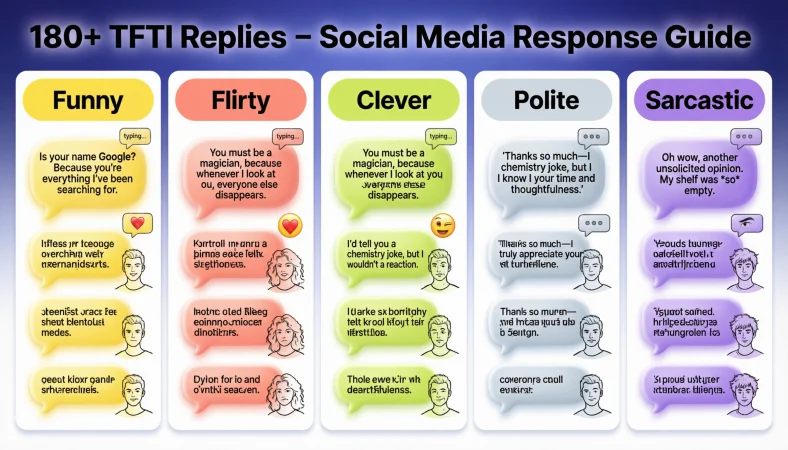
“TFTI” means “Thanks for the invite,” but it is usually used sarcastically when someone was left out of plans. The best TFTI replies can be funny, confident, playful, or politely apologetic depending on the situation.
Top alternatives: “Sorry, next time!”, “You were definitely missed!”, “My bad, I owe you one!”, “There’s always next time!”, “We thought you were busy!”
When someone drops a dry “TFTI” in your messages, you instantly know there is a little side-eye hiding behind those four letters. Maybe your friends went out without you, someone forgot to invite you, or a group chat suddenly became suspiciously quiet.
Knowing how to respond can turn an awkward moment into a funny one. A good reply can smooth things over, tease your friends, or show that you genuinely did not mean to leave anyone out. The key is matching your response to the relationship and mood.
These TFTI replies give you plenty of options for texts, DMs, group chats, friends, coworkers, and even playful crush situations. Whether you want to apologize, joke around, or serve up some harmless sarcasm, there is a response here for almost every social situation.
Funny TFTI Replies
“My bad, the invitation got lost in the group chat.”
Use this when you want to make a friend laugh after forgetting them.
Meaning: You are admitting the oversight in a playful way.
“We were saving you a seat in spirit.”
Use this when someone jokingly complains about being excluded.
Meaning: You are teasing them while keeping things light.
“Your invite is currently stuck in traffic.”
Use this when you need a ridiculous excuse for forgetting someone.
Meaning: You are turning the awkward moment into a joke.
“Oops, our bad. The guest list was feeling selective.”
Use this when friends are teasing you about making plans without them.
Meaning: You acknowledge the situation with humor.
“We thought you were booked and famous.”
Use this when the person is usually busy.
Meaning: You jokingly blame their imaginary celebrity schedule.
“The committee has been notified.”
Use this when you want an absurdly formal response.
Meaning: You are pretending the situation is being handled officially.
“I blame the calendar. It has betrayed us all.”
Use this when you want a goofy excuse.
Meaning: You are avoiding taking the situation too seriously.
“You were invited telepathically.”
Use this when a close friend says TFTI jokingly.
Meaning: You are playfully claiming they should have sensed the invitation.
“Honestly, the invitation was still buffering.”
Use this for a casual group-chat comeback.
Meaning: You are joking that the invite was delayed.
“We left room for your dramatic entrance.”
Use this when the person loves making an entrance.
Meaning: You are teasing them affectionately.
“Next time, you get the VIP package.”
Use this when you genuinely want to include them next time.
Meaning: You are promising better treatment.
“Okay, okay, put the pitchfork away.”
Use this when a friend is playfully annoyed.
Meaning: You are jokingly asking them to calm down.
Clever TFTI Replies
“Technically, you were invited by implication.”
Use this when you want a witty excuse.
Meaning: You are humorously stretching the definition of an invitation.
“I assumed your presence was automatic.”
Use this with a close friend who normally joins everything.
Meaning: You are suggesting they are part of the inner circle.
“You noticed. Respect.”
Use this when someone catches you leaving them out.
Meaning: You are acknowledging their observation with playful confidence.
“Point taken. Your invitation privileges are restored.”
Use this after someone jokingly complains.
Meaning: You are pretending they had official invitation privileges.
“Consider this a temporary scheduling error.”
Use this when you want to sound clever but casual.
Meaning: You are framing the situation as an innocent mistake.
“I plead guilty to poor group-chat management.”
Use this when the plans happened in a busy chat.
Meaning: You accept responsibility with humor.
“Noted for the next edition.”
Use this when future plans are likely.
Meaning: You are promising to remember them next time.
“Your absence was statistically significant.”
Use this with someone who enjoys dry humor.
Meaning: You are joking that they were noticeably missing.
“We clearly underestimated your invitation expectations.”
Use this when someone is playfully demanding an invite.
Meaning: You are teasing them without being dismissive.
“Lesson learned. Attendance matters.”
Use this after forgetting someone.
Meaning: You are lightly admitting the mistake.
“Your feedback has been received and forwarded.”
Use this in a playful group chat.
Meaning: You are humorously pretending to process their complaint.
“I shall revise the guest-list algorithm.”
Use this with friends who enjoy nerdy jokes.
Meaning: You are turning the situation into a clever tech-style joke.
Sarcastic TFTI Replies
“You’re welcome for the character development.”
Use this when a friend dramatically complains about missing out.
Meaning: You are playfully exaggerating the situation.
“Glad you finally noticed.”
Use this only with someone who understands your humor.
Meaning: You are giving the complaint a cheeky twist.
“Oh, we thought you were too important.”
Use this when teasing a close friend.
Meaning: You are sarcastically blaming their supposed importance.
“Next time, we’ll submit a formal invitation.”
Use this after someone sends a sarcastic TFTI.
Meaning: You are matching their sarcasm with playful formality.
“Please accept our deepest apologies.”
Use this when the situation is clearly not serious.
Meaning: You are jokingly making the mistake sound enormous.
“We will investigate this shocking incident.”
Use this in a group chat after someone complains.
Meaning: You are treating the exclusion like a major event.
“Truly, the scandal of the century.”
Use this when the person is being dramatic.
Meaning: You are playfully exaggerating their complaint.
“We’ll alert the press immediately.”
Use this when someone wants attention for being left out.
Meaning: You are teasing them about making a big deal of it.
“Your complaint has been escalated to management.”
Use this for a funny workplace-style joke among friends.
Meaning: You are pretending their complaint is being officially handled.
“We deeply regret your disappointment.”
Use this when the tone is clearly playful.
Meaning: You are mock-apologizing in an exaggerated way.
“The invitation department has been fired.”
Use this when you forgot to include someone.
Meaning: You are jokingly assigning blame.
“Please allow 3 to 5 business days for your apology.”
Use this when someone wants you to admit fault.
Meaning: You are making the apology intentionally ridiculous.
Flirty TFTI Replies
“I was waiting for a reason to invite you personally.”
Use this with someone you are interested in.
Meaning: You are turning the complaint into a subtle flirt.
“Next time, you’re coming with me.”
Use this when you want to suggest spending time together.
Meaning: You are showing direct interest.
“Maybe I wanted an excuse to see you separately.”
Use this when the flirting is already mutual.
Meaning: You are implying that one-on-one time sounds better.
“Your invite is coming with extra attention.”
Use this when teasing a crush.
Meaning: You are promising special treatment.
“I’ll make it up to you over coffee.”
Use this when you want to turn the situation into a date.
Meaning: You are offering a casual one-on-one meetup.
“Honestly, I should’ve invited my favorite person first.”
Use this when you want a sweeter flirt.
Meaning: You are subtly calling them special.
“Next invite comes with a reserved seat beside me.”
Use this when you want to flirt without being too intense.
Meaning: You are hinting at wanting them close.
“I owe you an invitation and maybe a little flirting.”
Use this when the conversation already has playful chemistry.
Meaning: You are openly adding flirtation to the apology.
“You’re officially on my VIP list now.”
Use this when you want a confident flirty reply.
Meaning: You are making them feel chosen.
“How about I make it up to you in person?”
Use this when you want to move the conversation toward meeting.
Meaning: You are showing clear interest.
“I was hoping you’d call me out so I could invite you properly.”
Use this when teasing someone you like.
Meaning: You are creating a playful excuse to continue flirting.
“Next time, I’m saving the best company for myself.”
Use this when you want a confident romantic hint.
Meaning: You are suggesting you want their company.
Polite TFTI Replies
“Sorry about that! I honestly didn’t mean to leave you out.”
Use this when someone is genuinely upset.
Meaning: You are offering a sincere apology.
“I’m really sorry, it wasn’t intentional.”
Use this when you want to clear up a misunderstanding.
Meaning: You are reassuring them that there was no bad intention.
“My apologies, I should have included you.”
Use this when you know you made a mistake.
Meaning: You are taking responsibility respectfully.
“I’m sorry you felt left out.”
Use this when emotions are involved.
Meaning: You are acknowledging how the situation affected them.
“I completely understand why you’re annoyed.”
Use this when someone has a valid reason to be disappointed.
Meaning: You are validating their feelings.
“That was an oversight on my part. Sorry!”
Use this when you accidentally forgot them.
Meaning: You are admitting the mistake clearly.
“I should have checked with you first.”
Use this when plans were made without considering them.
Meaning: You are accepting responsibility.
“I hope you know it wasn’t personal.”
Use this when you want to prevent hurt feelings.
Meaning: You are reassuring them that the exclusion was not deliberate.
“I’m sorry. I’ll make sure to include you next time.”
Use this when future plans are likely.
Meaning: You are apologizing and offering reassurance.
“Thanks for telling me. I’ll keep that in mind.”
Use this when you want to respond calmly.
Meaning: You are acknowledging their concern maturely.
“You’re right, I should have reached out.”
Use this when the other person has a fair point.
Meaning: You are accepting their criticism without arguing.
“Sorry about the mix-up. I hope we’re good.”
Use this when you want to quickly repair the mood.
Meaning: You are seeking to restore the relationship.
Professional TFTI Replies
“Apologies for the oversight. I should have included you.”
Use this when a coworker feels excluded from a work-related plan.
Meaning: You are taking responsibility professionally.
“Sorry about that. I’ll make sure you’re included next time.”
Use this for workplace planning issues.
Meaning: You are offering a clear correction.
“My apologies, that was an unintentional omission.”
Use this in a formal professional message.
Meaning: You are explaining that the exclusion was accidental.
“Thanks for pointing that out. I’ll be more mindful next time.”
Use this when someone raises a concern at work.
Meaning: You are responding constructively.
“I’m sorry for the confusion regarding the invitation.”
Use this when communication caused the issue.
Meaning: You are addressing the misunderstanding professionally.
“Please accept my apologies for the oversight.”
Use this when a more formal response is appropriate.
Meaning: You are expressing sincere professional regret.
“I understand your concern, and I apologize for the omission.”
Use this when someone is genuinely disappointed.
Meaning: You are validating their concern respectfully.
“I’ll make sure the appropriate people are included going forward.”
Use this when the issue involves meetings or group planning.
Meaning: You are promising better communication.
“That was an oversight on my end. Thank you for flagging it.”
Use this when you want to acknowledge responsibility professionally.
Meaning: You are accepting the feedback gracefully.
“Sorry for the mix-up. I’ll correct it moving forward.”
Use this when the problem can still be fixed.
Meaning: You are focusing on a practical solution.
“I appreciate you bringing this to my attention.”
Use this when you want a calm professional response.
Meaning: You are showing that you take the feedback seriously.
“I apologize for the misunderstanding and any inconvenience caused.”
Use this for formal workplace communication.
Meaning: You are giving a respectful and polished apology.
Cute TFTI Replies
“Aww, we missed you!”
Use this with a close friend who feels left out.
Meaning: You are showing genuine affection.
“You should’ve been there with us!”
Use this when you actually wish they had joined.
Meaning: You are reassuring them that their company was wanted.
“Next time, you’re coming. No excuses.”
Use this playfully with a close friend.
Meaning: You are making them feel included in future plans.
“Our plans were missing your energy.”
Use this when someone adds fun to the group.
Meaning: You are telling them they were genuinely missed.
“We saved all the fun stories for you.”
Use this when you want to reconnect after the event.
Meaning: You are inviting them into the experience afterward.
“Okay, okay, you’re officially invited next time.”
Use this when the complaint is playful.
Meaning: You are promising inclusion with a cute tone.
“It wasn’t the same without you.”
Use this when you want to make the person feel appreciated.
Meaning: You are expressing that their presence matters.
“Sending you an imaginary invitation right now.”
Use this for a silly text response.
Meaning: You are keeping the exchange lighthearted.
“You belong on the guest list, obviously.”
Use this with a close friend.
Meaning: You are reassuring them that they are part of the group.
“Come back next time and restore the balance.”
Use this when the person normally joins your plans.
Meaning: You are joking that their presence completes the group.
“We owe you a proper invite.”
Use this when you want to acknowledge the mistake sweetly.
Meaning: You are promising to do better.
“Next time, your spot is already saved.”
Use this when you want a warm and reassuring response.
Meaning: You are making them feel welcome.
Chill And Casual TFTI Replies
“My bad 😂 Next time!”
Use this for a simple response to a friend.
Meaning: You are apologizing without making it heavy.
“Oops, we forgot to loop you in.”
Use this when the omission was accidental.
Meaning: You are casually acknowledging the mistake.
“Haha, next one’s on us.”
Use this when you want to move forward quickly.
Meaning: You are promising another opportunity.
“You should’ve pulled up!”
Use this when the person could have joined easily.
Meaning: You are playfully suggesting they take initiative too.
“We’ll catch you next time.”
Use this when another outing is likely.
Meaning: You are keeping things relaxed and positive.
“Honestly, my bad.”
Use this when you want a straightforward apology.
Meaning: You are accepting responsibility casually.
“You know you’re always welcome.”
Use this with someone who is part of your social circle.
Meaning: You are reassuring them that they are included.
“Next plan, you’re first on the list.”
Use this when you want to smooth things over.
Meaning: You are promising to remember them.
“Haha, noted!”
Use this when their TFTI is clearly playful.
Meaning: You are acknowledging their complaint without overexplaining.
“We’ll make it up to you.”
Use this when you genuinely want another hangout.
Meaning: You are promising a chance to reconnect.
“You know how group plans get.”
Use this when plans came together quickly.
Meaning: You are offering a casual explanation.
“No hard feelings, yeah?”
Use this when you want to make sure everything is fine.
Meaning: You are checking that the relationship is okay.
Confident TFTI Replies
“You know I would’ve invited you if the timing worked.”
Use this when you want to sound calm and assured.
Meaning: You are confidently explaining the situation.
“No need for the formal complaint.”
Use this when a friend is jokingly annoyed.
Meaning: You are confidently matching their humor.
“Next time, just say you want in.”
Use this when the person could have asked to join.
Meaning: You are encouraging direct communication.
“You’re not forgotten, promise.”
Use this when you want reassurance without over-apologizing.
Meaning: You are confidently saying they still matter.
“Relax, your invite is coming.”
Use this when plans are still being organized.
Meaning: You are keeping the situation upbeat.
“I know, I know. I owe you one.”
Use this when you accept responsibility casually.
Meaning: You are admitting the mistake with confidence.
“You’ll get the next invite.”
Use this when another event is coming up.
Meaning: You are giving a clear promise.
“Fair point. I’ll fix that next time.”
Use this when the person has a legitimate complaint.
Meaning: You are confidently acknowledging their point.
“Noted. Your name is moving to the top.”
Use this when you want a playful promise.
Meaning: You are making them feel prioritized.
“Consider yourself officially back in the loop.”
Use this when reconnecting after an omission.
Meaning: You are reassuring them that they are included.
“You know where to find me next time.”
Use this when the situation is casual and friendly.
Meaning: You are encouraging them to join in.
“Message received loud and clear.”
Use this when their complaint is obvious.
Meaning: You are acknowledging it confidently.
Creative TFTI Replies
“Your invitation is arriving by carrier pigeon.”
Use this when you want a completely unexpected joke.
Meaning: You are humorously pretending the invite is delayed.
“The guest list has entered its redemption era.”
Use this with friends who enjoy internet-style humor.
Meaning: You are joking that the guest list will improve.
“Your VIP badge is printing as we speak.”
Use this when promising a future invitation.
Meaning: You are playfully upgrading their status.
“The invitation fairy forgot your address.”
Use this for a silly response to a close friend.
Meaning: You are inventing a cute excuse.
“Your name was accidentally placed in the secret files.”
Use this when you want a mysterious joke.
Meaning: You are turning the omission into playful fiction.
“The council has voted. You’re invited next time.”
Use this when you want a dramatic creative response.
Meaning: You are pretending your friends have an official council.
“Your guest pass is being upgraded.”
Use this when you want to promise something better next time.
Meaning: You are making the next invitation sound special.
“The group-chat gods have been consulted.”
Use this when the plans happened through messages.
Meaning: You are jokingly blaming fate for the omission.
“Your invitation was trapped in another dimension.”
Use this when you want an absurd excuse.
Meaning: You are making the situation deliberately ridiculous.
“The guest-list universe has shifted.”
Use this when joking with someone who likes dramatic humor.
Meaning: You are pretending the omission was cosmic destiny.
“Your official invitation awaits its grand entrance.”
Use this when you plan to invite them later.
Meaning: You are making a future invite sound exciting.
“I’m filing this under ‘things we fix immediately.’”
Use this when you want to acknowledge the complaint creatively.
Meaning: You are promising to correct the situation.
Dramatic TFTI Replies
“How will we ever recover from this?”
Use this when someone is obviously joking about being excluded.
Meaning: You are exaggerating the situation for laughs.
“The betrayal has been documented.”
Use this when a friend sends TFTI dramatically.
Meaning: You are pretending the situation is deeply serious.
“This friendship may never be the same.”
Use this when everyone knows you are joking.
Meaning: You are playfully turning a small issue into a huge event.
“I shall now enter my reflective era.”
Use this when you want a dramatic internet-style comeback.
Meaning: You are joking about learning from your mistake.
“The council will hear of this.”
Use this when you want a theatrical response.
Meaning: You are humorously escalating the situation.
“Prepare yourself for the apology tour.”
Use this when you forgot someone from plans.
Meaning: You are exaggerating the apology process.
“I accept responsibility for this historic moment.”
Use this when the situation is clearly harmless.
Meaning: You are jokingly taking full responsibility.
“We have disappointed the people.”
Use this in a group chat after someone complains.
Meaning: You are making the mistake sound hilariously important.
“A tragedy of truly legendary proportions.”
Use this when a friend is being dramatic.
Meaning: You are matching their exaggerated energy.
“The friendship tribunal is now in session.”
Use this when your group enjoys theatrical jokes.
Meaning: You are pretending the issue requires a formal hearing.
“I fear we have entered a dark chapter.”
Use this when you want an exaggerated comeback.
Meaning: You are humorously treating the situation as serious.
“History will remember this mistake.”
Use this when everyone knows it is harmless.
Meaning: You are playfully exaggerating the consequences.
Sweet TFTI Replies
“I’m genuinely sorry we missed you.”
Use this when you want to show sincere care.
Meaning: You are expressing genuine regret.
“You were definitely missed.”
Use this when someone was absent from a gathering.
Meaning: You are reminding them that their presence matters.
“I’ll make sure you’re included next time.”
Use this when you want to reassure them.
Meaning: You are promising better communication.
“I never want you to feel left out.”
Use this when the person is genuinely hurt.
Meaning: You are showing emotional consideration.
“I should have reached out, and I’m sorry.”
Use this when you know you made the mistake.
Meaning: You are giving a sincere apology.
“You mean too much to us to leave you out intentionally.”
Use this when reassuring a close friend.
Meaning: You are emphasizing their importance.
“I hope you know it was never personal.”
Use this when explaining an accidental omission.
Meaning: You are reassuring them about your intentions.
“Next time, we’re making sure you’re there.”
Use this when you want to promise inclusion.
Meaning: You are making a warm commitment.
“We definitely owe you some quality time.”
Use this when you want to reconnect.
Meaning: You are offering to spend time together.
“I’m sorry. Let me make it up to you.”
Use this when you want to repair the situation.
Meaning: You are offering a positive next step.
“Your company is always welcome.”
Use this when you want to reassure someone gently.
Meaning: You are making them feel valued.
“Let’s plan something together soon.”
Use this when you want to turn regret into action.
Meaning: You are suggesting a fresh opportunity to connect.
Witty TFTI Replies
“You noticed the missing invitation. Impressive.”
Use this when the person is teasing you.
Meaning: You are responding with playful wit.
“Your detective work is unmatched.”
Use this when someone immediately notices they were excluded.
Meaning: You are joking about their attention to detail.
“You have successfully identified the plot twist.”
Use this when the situation is clearly playful.
Meaning: You are turning the omission into a funny storyline.
“Case closed: you’re invited next time.”
Use this when you want a quick clever response.
Meaning: You are promising inclusion.
“Excellent observation, detective.”
Use this when someone calls you out jokingly.
Meaning: You are teasing them for noticing.
“Your complaint has unlocked the next level.”
Use this when you want a gaming-style joke.
Meaning: You are suggesting their complaint earned them an upgrade.
“You have activated the apology protocol.”
Use this when the other person is joking.
Meaning: You are pretending the situation has an official procedure.
“Plot twist: I owe you an invite.”
Use this when you want to admit fault cleverly.
Meaning: You are acknowledging the mistake with humor.
“Your timing is impeccable.”
Use this when they complain right after seeing the plans.
Meaning: You are playfully pointing out their timing.
“The evidence is unfortunately against me.”
Use this when you clearly forgot them.
Meaning: You are admitting defeat in a humorous way.
“You caught me. Fair play.”
Use this when you want a short witty response.
Meaning: You are confidently accepting the callout.
“Touché. I’ll do better next round.”
Use this when the person has a fair point.
Meaning: You are acknowledging the mistake while keeping things friendly.
Playful TFTI Replies
“Don’t worry, your invite is emotionally attached to this message.”
Use this when you want a silly text response.
Meaning: You are joking that the invitation was somehow there.
“You’re invited to the next episode.”
Use this when treating your plans like a TV series.
Meaning: You are playfully promising another chance.
“Next time, I’m putting your name in bold.”
Use this when you forgot someone.
Meaning: You are promising not to overlook them again.
“Okay, you caught us 😂”
Use this when a friend is jokingly calling you out.
Meaning: You are admitting it without making things awkward.
“Fine, you can come to the next one.”
Use this when teasing a close friend.
Meaning: You are playfully pretending they need permission.
“Your complaint has been accepted.”
Use this when you want a short playful comeback.
Meaning: You are humorously treating their message like an official request.
“We’ll put you on the priority list.”
Use this when promising future inclusion.
Meaning: You are playfully saying they will be prioritized.
“I’ll make it up to you with snacks.”
Use this when food is a guaranteed way to lighten the mood.
Meaning: You are offering a fun peace offering.
“Okay, okay, I hear you.”
Use this when someone is lightly annoyed.
Meaning: You are acknowledging their feelings casually.
“Your invitation privileges have been renewed.”
Use this when you want a playful official-sounding joke.
Meaning: You are pretending they had special invitation privileges.
“Next time, you’re getting the first text.”
Use this when you genuinely want to include them.
Meaning: You are promising to contact them early.
“Peace offering incoming.”
Use this when you want to repair the mood playfully.
Meaning: You are promising a small gesture to make things right.
Friendly TFTI Replies
“Sorry, friend! We’ll get you next time.”
Use this with someone you care about.
Meaning: You are apologizing warmly and casually.
“You know you’re always welcome.”
Use this when you want to reassure someone.
Meaning: You are reminding them that they belong.
“My bad for not reaching out.”
Use this when you know you forgot them.
Meaning: You are taking responsibility naturally.
“We should’ve checked with you first.”
Use this when the person had expected to be included.
Meaning: You are recognizing their perspective.
“Let’s make the next plan together.”
Use this when you want to include them in future arrangements.
Meaning: You are turning the awkward moment into a positive plan.
“You’re definitely coming next time.”
Use this when another outing is likely.
Meaning: You are making a friendly promise.
“Sorry about that, honestly.”
Use this when you want to sound sincere but relaxed.
Meaning: You are giving a genuine apology.
“No shade intended, promise.”
Use this when the omission might have looked deliberate.
Meaning: You are clarifying that there was no bad intention.
“We owe you one.”
Use this when you want a short friendly response.
Meaning: You are acknowledging that you need to make it up to them.
“Next hangout is yours.”
Use this when you want to offer another opportunity.
Meaning: You are promising to include them.
“You should’ve been there!”
Use this when you genuinely wanted them around.
Meaning: You are letting them know they were missed.
“All good, we’ll fix this.”
Use this when you want to end the awkwardness quickly.
Meaning: You are confidently moving toward a solution.
Short TFTI Replies
“My bad!”
Use this when you want a quick apology.
Meaning: You are admitting the oversight.
“Next time!”
Use this when future plans are likely.
Meaning: You are promising another opportunity.
“Oops, sorry!”
Use this when the omission was accidental.
Meaning: You are giving a casual apology.
“You’re invited next round.”
Use this when you want a playful promise.
Meaning: You are assuring them they will be included.
“We missed you!”
Use this when you genuinely wish they were there.
Meaning: You are expressing affection.
“Fair point 😂”
Use this when the complaint is playful.
Meaning: You are acknowledging their point with humor.
“I owe you one.”
Use this when you want to make amends.
Meaning: You are promising to return the favor.
“You caught me.”
Use this when someone notices the omission.
Meaning: You are admitting it playfully.
“Totally unintentional!”
Use this when you want to clarify your intentions.
Meaning: You are reassuring them it was accidental.
“You know better than that 😂.”
Use this with someone who could have asked to join.
Meaning: You are playfully shifting some responsibility back.
“Noted for next time.”
Use this when you want to keep things simple.
Meaning: You are promising to remember them.
“We’ll make it up to you.”
Use this when you want a warm but concise response.
Meaning: You are promising another chance to hang out.
Respectful TFTI Replies
“I understand why you feel left out, and I’m sorry.”
Use this when someone is genuinely hurt.
Meaning: You are validating their feelings respectfully.
“I should have communicated better.”
Use this when poor communication caused the issue.
Meaning: You are accepting responsibility.
“I appreciate you letting me know.”
Use this when you want to respond maturely.
Meaning: You are showing openness to feedback.
“I didn’t intend to exclude you.”
Use this when the person thinks the omission was deliberate.
Meaning: You are clearly explaining your intention.
“I’m sorry that came across that way.”
Use this when the situation created an unintended impression.
Meaning: You are acknowledging their experience.
“You’re right, I could have handled that better.”
Use this when you recognize your mistake.
Meaning: You are accepting responsibility without excuses.
“I hope we can clear this up.”
Use this when the issue feels more serious.
Meaning: You are inviting a calm resolution.
“That wasn’t my intention at all.”
Use this when you want to clarify your motives.
Meaning: You are reassuring the person.
“I’ll make sure we communicate better next time.”
Use this when planning issues caused confusion.
Meaning: You are offering a practical improvement.
“I’m sorry for making you feel excluded.”
Use this when the person is emotionally affected.
Meaning: You are directly acknowledging their feelings.
“Thanks for being honest with me.”
Use this when someone expresses disappointment.
Meaning: You are encouraging open communication.
“I value our friendship, so I don’t want this to sit awkwardly.”
Use this when the relationship matters deeply.
Meaning: You are showing that you want to resolve the tension.
Sassy But Friendly TFTI Replies
“You could’ve asked, you know 😂.”
Use this when a friend could easily have joined.
Meaning: You are lightly reminding them to communicate too.
“You saw the plans and chose mystery.”
Use this when they knew about the outing but stayed quiet.
Meaning: You are teasing them for not speaking up.
“Next time, don’t wait for the invitation committee.”
Use this with a confident friend.
Meaning: You are encouraging them to be proactive.
“You’re acting like I banned you.”
Use this when their complaint is obviously playful.
Meaning: You are exaggerating their reaction for humor.
“The dramatics are noted.”
Use this when a friend is making a big deal out of it.
Meaning: You are teasing them gently.
“Okay, celebrity, calm down.”
Use this when they expect special treatment.
Meaning: You are playfully teasing their sense of importance.
“You really had to hit me with TFTI, huh?”
Use this when you want to acknowledge their sarcasm.
Meaning: You are playfully calling out their complaint.
“Your attendance was not mandatory, your honor.”
Use this with someone who enjoys silly sarcasm.
Meaning: You are humorously defending the plans.
“You could’ve pulled up, bestie.”
Use this when the person was welcome to join.
Meaning: You are keeping the response friendly and confident.
“Don’t worry, your VIP status remains intact.”
Use this when teasing someone you know well.
Meaning: You are reassuring them while joking around.
“We’ll put your name in giant letters next time.”
Use this when you accidentally forgot them.
Meaning: You are promising not to overlook them again.
“Okay, point made. We hear you.”
Use this when the person wants acknowledgment.
Meaning: You are confidently ending the complaint without escalating it.
Best TFTI Replies For Friends
“My bad, bestie. You were genuinely missed.”
Use this when a close friend was left out accidentally.
Meaning: You are combining humor with sincere affection.
“Next plan is already yours.”
Use this when you want to make amends.
Meaning: You are promising to include them.
“I owe you a proper hangout.”
Use this when you want to reconnect one-on-one.
Meaning: You are offering quality time.
“You know we love having you around.”
Use this when reassuring a close friend.
Meaning: You are reminding them that they are valued.
“Sorry, the plans came together so randomly.”
Use this when the outing was spontaneous.
Meaning: You are providing a casual explanation.
“We’ll get you in on the next one.”
Use this when another outing is likely.
Meaning: You are making a friendly promise.
“No intentional exclusion here, promise.”
Use this when they suspect you left them out deliberately.
Meaning: You are clarifying your intentions.
“You should’ve texted me!”
Use this when they could have joined by asking.
Meaning: You are gently pointing out that communication works both ways.
“Okay, okay, I’ll take the L.”
Use this when you want to admit fault playfully.
Meaning: You are accepting responsibility without making it serious.
“We owe you food now.”
Use this when you want to turn the apology into a plan.
Meaning: You are offering a fun peace offering.
“Next time, you’re getting the first invite.”
Use this when you genuinely want to prioritize them.
Meaning: You are promising better communication.
“Come on, you know you’re part of the crew.”
Use this when you want to reassure someone warmly.
Meaning: You are emphasizing their place in the friend group.
FAQs
What Does TFTI Mean?
TFTI usually means “Thanks for the invite.” It is often used sarcastically when someone was not invited to plans.
Is TFTI Always Sarcastic?
No. It can sometimes be genuine, but online and in texting, it is commonly used as a playful or sarcastic complaint.
What Is a Funny Reply to TFTI?
Try “Your invitation was stuck in traffic” or “We invited you telepathically.” These work best with friends who understand your humor.
What Does TFTI Mean From a Crush?
If a crush says TFTI, they may simply be teasing you about being left out. Depending on the context, it can also be a playful way to get your attention.
How Do I Reply If I Actually Forgot Someone?
Keep it simple and sincere. Try “My bad, I genuinely didn’t mean to leave you out. I’m sorry.”
What If I Did Not Mean to Invite Them?
You do not need to fake an invitation. A respectful response such as “I’m sorry it came across that way, but this was a small plan” can set the boundary without being rude.
Can I Use Humor When Someone Says TFTI?
Yes, if you know the person well and the situation is clearly lighthearted. Avoid jokes when someone is genuinely hurt or upset.
Is TFTI Appropriate at Work?
It can appear in casual workplace chats, but professional situations usually call for clearer language. A simple apology or explanation is safer.
What Is a Polite Reply to TFTI?
Try “Sorry about that. It wasn’t intentional, and I’ll make sure to include you next time.”
What Is a Flirty Reply to TFTI?
Try “I was waiting for a reason to invite you personally.” It works especially well when there is already playful chemistry.
Conclusion
A good TFTI reply can completely change the mood of a conversation. Instead of letting a little awkwardness turn into unnecessary drama, you can answer with humor, warmth, confidence, or a genuine apology. The best response depends on who sent the message and what they actually mean behind those four letters.
Friends may want a funny comeback, while someone who feels genuinely excluded may appreciate an honest apology. Do not be afraid to switch up your style and match the energy in the room, or group chat. Save these replies for your next social plot twist, share your favorites, and keep a few ready for when TFTI inevitably appears in your messages!