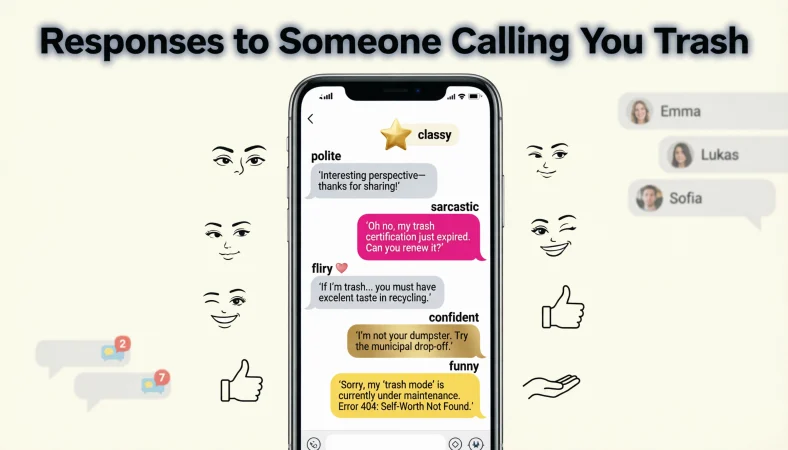
When someone calls you “trash,” the best response depends on your mood and the situation. You can stay classy, throw in humor, respond confidently, or shut the comment down without losing your cool.
Top alternatives: That’s your opinion, I’ll take that under advisement, You tried, but I’m still standing, Respectfully, I disagree, Your words don’t define me
Getting called “trash” is one of those moments when your brain suddenly opens 47 tabs and none of them contain a decent comeback. Whether it happens in a text, DM, group chat, workplace disagreement, gaming session, friendship drama, or even from a crush trying to tease you, the right response can completely change the energy.
Responses to someone calling you trash do not always have to be aggressive. Sometimes the best comeback is funny, confident, sarcastic, or simply calm enough to leave the other person wondering why they bothered. Your response can show that you are unbothered, set a boundary, or turn an awkward insult into a laugh.
The trick is knowing when to clap back and when to keep your dignity. So, if someone just tossed “trash” your way, here are plenty of replies for almost every mood.
Funny Responses To Someone Calling You Trash
- “At least I’m recyclable.”
Use this when someone throws the insult at you jokingly.
Meaning: It turns the insult into a clever environmental joke. - “And yet you’re still talking about me.”
Use this when someone seems unusually focused on insulting you.
Meaning: It humorously points out that you have their attention. - “Trash? Please put me in the premium bin.”
Use this when you want an absurd and playful comeback.
Meaning: It exaggerates the insult into something ridiculous. - “I prefer limited edition.”
Use this when you want a confident joke instead of an argument.
Meaning: It playfully reframes the insult as uniqueness. - “Bold of you to review me without a subscription.”
Use this when someone acts like an expert on your personality.
Meaning: It mocks their unnecessary evaluation. - “Thanks for the feedback, Yelp.”
Use this when someone gives an unsolicited insult.
Meaning: It turns their criticism into a funny fake review. - “That’s cute. Did you rehearse it?”
Use this when the insult feels predictable.
Meaning: It suggests their comeback was not particularly original. - “I’ll add that to my collection of opinions nobody requested.”
Use this when someone gives you an unnecessary judgment.
Meaning: It dismisses the insult with playful sarcasm. - “Trash with excellent Wi-Fi, though.”
Use this when you want a silly modern comeback.
Meaning: It makes fun of the insult rather than taking it seriously. - “Imagine wasting good vocabulary on me.”
Use this when someone is trying too hard to insult you.
Meaning: It humorously suggests they could have chosen better words. - “I’ve heard worse from better people.”
Use this when you want humor with a confident edge.
Meaning: It implies their opinion does not carry much weight. - “Okay, comedian, your set is over.”
Use this when someone keeps making insulting jokes.
Meaning: It playfully signals that their routine has gone on long enough.
Confident Responses To Someone Calling You Trash
- “Your opinion doesn’t define me.”
Use this when you want to stay composed during a personal insult.
Meaning: It makes clear that your identity is not controlled by someone else’s judgment. - “You’re entitled to your opinion.”
Use this when you want to remain calm and mature.
Meaning: It acknowledges their view without accepting it as truth. - “I know who I am.”
Use this when someone tries to undermine your confidence.
Meaning: It shows strong self-awareness and self-respect. - “Call me whatever you want. I’m still me.”
Use this when you refuse to let an insult affect you.
Meaning: It communicates emotional independence. - “I’m comfortable with myself.”
Use this when someone is trying to provoke insecurity.
Meaning: It shows that their words have not shaken your confidence. - “That label doesn’t fit me.”
Use this when someone makes a personal judgment about you.
Meaning: It firmly rejects their characterization. - “I don’t need your approval.”
Use this when someone expects their opinion to hurt you.
Meaning: It reinforces your independence. - “Think what you want.”
Use this when you do not want to waste energy arguing.
Meaning: It shows that you are choosing not to engage. - “I’m not going to argue about my worth.”
Use this when an insult becomes personal.
Meaning: It sets a confident boundary. - “You can keep that opinion to yourself.”
Use this when you want to discourage further insults.
Meaning: It firmly communicates that their negativity is unwanted. - “I’m good with who I am.”
Use this when someone tries to make you question yourself.
Meaning: It demonstrates self-acceptance. - “That says more about you than me.”
Use this when someone makes a harsh personal judgment.
Meaning: It suggests their behavior reveals more about their mindset.
Clever Responses To Someone Calling You Trash
- “Interesting conclusion based on very little evidence.”
Use this when someone judges you without knowing the full story.
Meaning: It challenges their assumption without becoming aggressive. - “That’s quite a confident assessment.”
Use this when someone makes an exaggerated judgment about you.
Meaning: It subtly questions how certain they are. - “I’ll consider that opinion after reviewing the evidence.”
Use this when you want a witty, intellectual-style comeback.
Meaning: It humorously treats their insult like a serious case. - “Your argument could use some supporting points.”
Use this when someone insults you without explaining why.
Meaning: It cleverly calls out the lack of reasoning. - “That’s one interpretation.”
Use this when you want an understated response.
Meaning: It refuses to treat their opinion as objective truth. - “Noted, although not particularly persuasive.”
Use this when you want to sound calm and sharp.
Meaning: It acknowledges their comment while dismissing its impact. - “I admire your confidence in that conclusion.”
Use this when someone sounds overly certain.
Meaning: It subtly questions their judgment. - “You’re entitled to your version of events.”
Use this during an argument where perspectives differ.
Meaning: It recognizes disagreement without surrendering your position. - “That’s a strong statement for someone with no evidence.”
Use this when an insult comes without explanation.
Meaning: It challenges the credibility of their claim. - “I’ll file that under personal opinions.”
Use this when you want a polished dismissal.
Meaning: It reminds them that their statement is subjective. - “I expected better from your vocabulary.”
Use this when the insult feels lazy.
Meaning: It cleverly criticizes the quality of their comeback. - “You made your point, even if I disagree with it.”
Use this when you want to end an argument intelligently.
Meaning: It acknowledges their statement without accepting their judgment.
Sarcastic Responses To Someone Calling You Trash
- “Wow, groundbreaking insult.”
Use this when someone says something predictable.
Meaning: It sarcastically mocks the originality of their comment. - “Did that one take all afternoon?”
Use this when the insult sounds rehearsed or weak.
Meaning: It jokes about how much effort they supposedly needed. - “You really brought your A-game today.”
Use this when their insult is unimpressive.
Meaning: It sarcastically suggests their comeback was excellent. - “I’ll try to recover from this devastating review.”
Use this when you want dramatic sarcasm.
Meaning: It exaggerates the insult to make it harmlessly funny. - “I’m absolutely shattered. Truly.”
Use this when you want obvious irony.
Meaning: It pretends the insult has deeply affected you. - “Thank you for your deeply important contribution.”
Use this when someone gives an unnecessary opinion.
Meaning: It sarcastically minimizes the value of their comment. - “Please, tell me more about my life.”
Use this when someone acts like they know everything about you.
Meaning: It mocks their unnecessary authority. - “Your concern has been noted by absolutely nobody.”
Use this with someone who enjoys dry humor.
Meaning: It dismisses their opinion sarcastically. - “I’ll frame that comment.”
Use this when someone delivers a particularly silly insult.
Meaning: It humorously pretends their insult is memorable. - “What a powerful moment in human history.”
Use this when someone makes a dramatic insult.
Meaning: It uses exaggerated sarcasm to make the moment funny. - “And here I was hoping for something original.”
Use this when the insult feels basic.
Meaning: It sarcastically criticizes their lack of creativity. - “Congratulations, you used an insult.”
Use this when someone seems proud of their comeback.
Meaning: It humorously points out how little their comment accomplished.
Polite Responses To Someone Calling You Trash
- “I respectfully disagree.”
Use this when you want to remain civil during a disagreement.
Meaning: It rejects their judgment without escalating the situation. - “I don’t think that’s a fair description.”
Use this when someone makes an unfair personal judgment.
Meaning: It calmly challenges their statement. - “I’d rather keep this conversation respectful.”
Use this when an interaction starts becoming hostile.
Meaning: It establishes a clear boundary. - “I understand that’s how you feel.”
Use this when you want to acknowledge their emotion without agreeing.
Meaning: It separates their feelings from your own perspective. - “We clearly see things differently.”
Use this when an argument is going nowhere.
Meaning: It recognizes disagreement without attacking them. - “Let’s keep the conversation constructive.”
Use this during a serious disagreement.
Meaning: It redirects the interaction toward useful discussion. - “I’d prefer not to trade insults.”
Use this when someone is becoming disrespectful.
Meaning: It politely refuses to participate in personal attacks. - “You’re welcome to your perspective.”
Use this when you want to close the discussion gracefully.
Meaning: It allows disagreement without accepting the insult. - “I don’t think name-calling helps.”
Use this when someone resorts to personal attacks.
Meaning: It points out that insults do not solve the issue. - “Let’s focus on the actual issue.”
Use this when an argument has become personal.
Meaning: It moves attention away from insults. - “I hear you, but I disagree.”
Use this when you want to acknowledge someone without backing down.
Meaning: It combines respect with confidence. - “I’m happy to discuss the issue respectfully.”
Use this when you are willing to continue a disagreement constructively.
Meaning: It keeps communication open while setting standards.
Brutal Yet Classy Responses To Someone Calling You Trash
- “Your insult doesn’t become true just because you said it.”
Use this when someone presents their opinion as fact.
Meaning: It firmly separates their judgment from reality. - “If that’s the best you have, I’m not worried.”
Use this when someone tries to intimidate you.
Meaning: It shows that their insult failed to affect you. - “I expected more from you.”
Use this when someone you know behaves disrespectfully.
Meaning: It communicates disappointment rather than rage. - “You can do better than that.”
Use this when the insult feels childish.
Meaning: It calmly challenges the quality of their behavior. - “I won’t lower myself to match that energy.”
Use this when you want to stay above the argument.
Meaning: It emphasizes self-control and dignity. - “That was more revealing than you probably intended.”
Use this when someone’s insult exposes their attitude.
Meaning: It suggests their behavior says something about them. - “You’re trying very hard to get a reaction.”
Use this when someone is clearly provoking you.
Meaning: It shows that you recognize their tactic. - “I’m not offended by an opinion I don’t respect.”
Use this when someone expects their words to hurt.
Meaning: It communicates strong emotional independence. - “You said it. I’m still unbothered.”
Use this when you want a short, confident comeback.
Meaning: It shows that their insult had little effect. - “That sounded better in your head, didn’t it?”
Use this when their insult falls flat.
Meaning: It humorously points out that their comment was ineffective. - “I’ll survive your assessment.”
Use this when someone acts like their judgment is decisive.
Meaning: It makes clear that you do not depend on their approval. - “Keep your opinion. I’ll keep my peace.”
Use this when you want to end the interaction with dignity.
Meaning: It prioritizes peace over pointless conflict.
Playful Responses To Someone Calling You Trash
- “Only on weekdays.”
Use this when a friend jokingly calls you trash.
Meaning: It turns the insult into playful banter. - “You say that like it’s news.”
Use this when teasing someone back.
Meaning: It exaggerates your comfort with the joke. - “And somehow you still like me.”
Use this when there is obvious friendship or chemistry.
Meaning: It playfully highlights the relationship between you. - “Yet here you are, still talking to me.”
Use this when someone keeps coming back despite teasing you.
Meaning: It turns their attention into your comeback. - “I’m your favourite kind of trash, admit it.”
Use this when playful flirting is involved.
Meaning: It turns the insult into affectionate teasing. - “Aww, you noticed.”
Use this when you want to sound amused rather than offended.
Meaning: It playfully accepts the attention. - “Careful, you’re making me sound interesting.”
Use this when someone exaggerates their criticism.
Meaning: It turns negativity into playful confidence. - “That’s why you keep me around.”
Use this with a close friend who enjoys banter.
Meaning: It jokingly suggests they secretly enjoy your personality. - “Trash but entertaining.”
Use this as a short group-chat comeback.
Meaning: It accepts the joke while adding confidence. - “I prefer chaotic excellence.”
Use this when you want a playful self-description.
Meaning: It turns criticism into a fun personality trait. - “You love this trash, though.”
Use this with someone who clearly enjoys your company.
Meaning: It teasingly points out their affection. - “Don’t pretend you’re not entertained.”
Use this when someone is clearly enjoying the interaction.
Meaning: It suggests their criticism is partly playful.
Chill And Casual Responses To Someone Calling You Trash
- “Okay, if you say so.”
Use this when you cannot be bothered to argue.
Meaning: It casually dismisses the insult. - “Cool story.”
Use this when someone wants a reaction from you.
Meaning: It signals that you are not taking the comment seriously. - “Noted.”
Use this when you want a one-word response.
Meaning: It acknowledges the comment without giving it emotional power. - “Whatever works for you.”
Use this when you want to move on.
Meaning: It shows that their opinion is not worth debating. - “If that’s what you think.”
Use this when you disagree but do not want conflict.
Meaning: It keeps the interaction calm and detached. - “Fair enough.”
Use this when you want to acknowledge their perspective.
Meaning: It accepts that people can have different opinions. - “I’m good.”
Use this when someone is trying to upset you.
Meaning: It communicates emotional composure. - “No worries.”
Use this when you want to avoid unnecessary drama.
Meaning: It shows that you are choosing not to take offense. - “We’ll agree to disagree.”
Use this when the conversation is becoming repetitive.
Meaning: It ends the disagreement without hostility. - “Anyway, moving on.”
Use this when you want to redirect the conversation.
Meaning: It shows that the insult does not deserve more attention. - “That’s your call.”
Use this when someone insists on judging you.
Meaning: It leaves their opinion with them. - “All good over here.”
Use this when you want to show that you are unaffected.
Meaning: It communicates calm confidence.
Smart Responses To Someone Calling You Trash
- “Criticism is useful when it comes with substance.”
Use this when someone offers only an insult.
Meaning: It distinguishes constructive feedback from name-calling. - “If you have an actual issue, say it clearly.”
Use this when you are willing to discuss the problem.
Meaning: It invites direct communication instead of insults. - “Labels are easy. Understanding takes effort.”
Use this during a deeper disagreement.
Meaning: It suggests that judging someone is easier than understanding them. - “Let’s talk about what actually happened.”
Use this when an argument has become personal.
Meaning: It redirects attention toward facts. - “I’m open to feedback, not disrespect.”
Use this when someone claims they are simply being honest.
Meaning: It clearly separates honesty from rudeness. - “Tell me what I did, not what you think I am.”
Use this when someone attacks your character.
Meaning: It asks for specific behavior rather than broad labels. - “Specific criticism is more useful than name-calling.”
Use this when you want to encourage mature communication.
Meaning: It challenges them to explain their complaint. - “If there’s a problem, we can address it.”
Use this when you want to solve the underlying issue.
Meaning: It shows willingness to communicate constructively. - “I’m listening if you want to explain yourself.”
Use this when you want clarity before reacting.
Meaning: It gives them an opportunity to provide context. - “You’re describing your reaction, not my identity.”
Use this when an insult feels deeply personal.
Meaning: It reminds both sides that emotions and facts are different. - “Let’s separate the person from the problem.”
Use this during a serious disagreement.
Meaning: It encourages respectful problem-solving. - “I’d rather solve the issue than trade labels.”
Use this when you want to end pointless arguing.
Meaning: It prioritizes resolution over personal attacks.
Cute Responses To Someone Calling You Trash
- “Still your favourite, though.”
Use this when someone teases you affectionately.
Meaning: It turns the insult into playful closeness. - “Aww, you’re thinking about me again.”
Use this when someone playfully insults you for attention.
Meaning: It makes their comment sound like affection. - “You say trash, I hear adorable.”
Use this when you want a sweet, silly comeback.
Meaning: It playfully refuses to accept the insult. - “That’s a funny way to say you missed me.”
Use this when someone teases you after not talking for a while.
Meaning: It turns their negativity into affectionate banter. - “You’re only saying that because you like me.”
Use this when the teasing feels flirtatious.
Meaning: It playfully suggests hidden affection. - “I’ll forgive you this time.”
Use this when you want to keep things light.
Meaning: It jokingly positions you as generously overlooking the insult. - “You’re cute when you’re wrong.”
Use this with someone you are comfortable teasing.
Meaning: It combines affection with playful disagreement. - “That’s okay, I still like you.”
Use this when you want to defuse a tense moment.
Meaning: It responds with warmth instead of hostility. - “Your opinion is adorable.”
Use this when someone gives a playful insult.
Meaning: It turns their comment into something harmless. - “I’ll pretend I didn’t hear that.”
Use this when you want a cute, dramatic response.
Meaning: It shows mock offense without real hostility. - “You’re lucky you’re charming.”
Use this when teasing someone who crossed the line slightly.
Meaning: It playfully forgives them while keeping the banter alive. - “Okay, meanie, I’m still smiling.”
Use this when you want to show the insult did not hurt you.
Meaning: It responds with cheerful resilience.
Flirty Responses To Someone Calling You Trash
- “And yet you keep coming back.”
Use this when someone you like is teasing you.
Meaning: It playfully points out their continued interest. - “You must like my kind of trouble.”
Use this when there is obvious romantic chemistry.
Meaning: It turns the insult into flirtatious teasing. - “Careful, you’re sounding obsessed.”
Use this when someone keeps focusing on you.
Meaning: It playfully suggests they are more interested than they admit. - “You call me trash, but you keep giving me attention.”
Use this when flirting through playful banter.
Meaning: It highlights the contradiction between their words and behavior. - “If I’m trash, why are you still here?”
Use this when you want a confident flirty challenge.
Meaning: It suggests their interest tells a different story. - “You’re flirting badly, but I’ll allow it.”
Use this when the insult feels like playful flirting.
Meaning: It reframes the comment as awkward romantic attention. - “You could just say you like me.”
Use this when someone is obviously teasing you.
Meaning: It turns their insult into a confession joke. - “I think you secretly like this attitude.”
Use this when there is established chemistry.
Meaning: It playfully suggests they enjoy your personality. - “Keep talking, you’re making this interesting.”
Use this when you want to maintain playful tension.
Meaning: It shows that you are enjoying the banter. - “You’re giving me way too much attention for someone who dislikes me.”
Use this when their teasing continues.
Meaning: It points out their apparent fascination. - “Maybe I’m exactly your type.”
Use this when you want a confident romantic comeback.
Meaning: It turns the insult into playful attraction. - “Say it again, but make it sound like a compliment.”
Use this when you want to flirt through teasing.
Meaning: It invites them to turn their insult into praise.
Emotional Responses To Someone Calling You Trash
- “That actually hurt more than you probably realize.”
Use this when the comment genuinely affects you.
Meaning: It honestly communicates emotional impact. - “I’d appreciate it if you didn’t speak to me like that.”
Use this when you want to set a serious boundary.
Meaning: It clearly asks for respectful treatment. - “You may be upset, but that doesn’t make the insult okay.”
Use this during an emotional argument.
Meaning: It recognizes their feelings while rejecting disrespect. - “I expected better from you.”
Use this when someone close to you says something hurtful.
Meaning: It communicates disappointment and emotional hurt. - “I’m willing to talk, but not while being insulted.”
Use this when you still want to resolve the conflict.
Meaning: It establishes a healthy boundary. - “There’s a difference between honesty and cruelty.”
Use this when someone claims their insult is simply truthful.
Meaning: It challenges the idea that hurtful speech is automatically honest. - “I don’t deserve to be spoken to that way.”
Use this when someone crosses a serious boundary.
Meaning: It reinforces your right to respectful communication. - “If I upset you, tell me what I did.”
Use this when you genuinely want to understand their anger.
Meaning: It invites specific communication instead of insults. - “I’d rather understand what’s wrong than fight.”
Use this when you want to de-escalate an emotional situation.
Meaning: It prioritizes understanding over conflict. - “Words matter, especially from someone I care about.”
Use this when the insult comes from someone close.
Meaning: It explains why their comment has emotional weight. - “I’m not going to pretend that was okay.”
Use this when someone tries to dismiss their hurtful behavior.
Meaning: It firmly acknowledges that a boundary was crossed. - “Let’s talk when we can both be respectful.”
Use this when the conversation has become emotionally heated.
Meaning: It pauses the conflict while leaving room for resolution.
Dramatic Responses To Someone Calling You Trash
- “After everything we’ve been through, this is how you repay me?”
Use this when jokingly exaggerating a friend’s insult.
Meaning: It creates theatrical humor around a harmless comment. - “My reputation will never recover.”
Use this when you want an exaggerated reaction.
Meaning: It humorously pretends the insult is devastating. - “I need a moment to process this historic betrayal.”
Use this when someone close to you teases you.
Meaning: It turns the insult into playful drama. - “I shall never look at you the same way again.”
Use this when joking around with friends.
Meaning: It dramatically exaggerates your reaction. - “This is my villain origin story.”
Use this when you want an internet-friendly dramatic comeback.
Meaning: It jokingly treats the insult as the beginning of a fictional transformation. - “Someone call the emotional support team.”
Use this when you want to make everyone laugh.
Meaning: It exaggerates your need for help. - “I was not prepared for such betrayal.”
Use this when someone unexpectedly insults you.
Meaning: It turns surprise into theatrical humor. - “My heart has officially left the group chat.”
Use this in a funny group-chat situation.
Meaning: It humorously announces your mock emotional departure. - “This chapter of my life is called disappointment.”
Use this when someone delivers a playful insult.
Meaning: It adds dramatic storytelling to the moment. - “I’ll be recovering from this for approximately three business days.”
Use this when you want a modern humorous response.
Meaning: It jokingly exaggerates how badly the insult affected you. - “I demand an apology and possibly snacks.”
Use this when teasing someone you know well.
Meaning: It turns fake outrage into a playful request. - “Tell my story when I’m gone.”
Use this when you want extremely exaggerated humor.
Meaning: It humorously pretends the insult was catastrophic.
Short And Simple Responses To Someone Calling You Trash
- “Your opinion.”
Use this when you want a very brief dismissal.
Meaning: It reminds them that their statement is subjective. - “Noted.”
Use this when you want to acknowledge the comment without arguing.
Meaning: It keeps your response emotionally neutral. - “Okay.”
Use this when you refuse to give the insult attention.
Meaning: It communicates indifference. - “Think again.”
Use this when you want a short confident comeback.
Meaning: It challenges their judgment. - “Keep thinking that.”
Use this when you want to sound completely unbothered.
Meaning: It shows that their opinion will not change your behavior. - “If you say so.”
Use this when you do not want to argue.
Meaning: It dismisses the statement without escalating. - “I disagree.”
Use this when you want a mature and direct response.
Meaning: It clearly rejects their judgment. - “That’s cute.”
Use this when you want a playful dismissal.
Meaning: It makes the insult seem insignificant. - “Moving on.”
Use this when you want to end the interaction.
Meaning: It signals that the conversation is not worth continuing. - “Good to know.”
Use this when you want dry, detached humor.
Meaning: It acknowledges the comment without accepting it. - “Noted and ignored.”
Use this when someone clearly wants attention.
Meaning: It humorously says their insult will not matter. - “I’m still standing.”
Use this when someone expects their words to hurt you.
Meaning: It communicates resilience and confidence.
Respectful Responses To Someone Calling You Trash
- “Please speak to me respectfully.”
Use this when someone crosses a personal boundary.
Meaning: It directly requests respectful communication. - “I’m happy to discuss the issue without insults.”
Use this when you want to resolve a disagreement.
Meaning: It keeps the door open for mature conversation. - “Let’s not make this personal.”
Use this when an argument shifts toward character attacks.
Meaning: It redirects attention toward the actual disagreement. - “If something I did upset you, tell me directly.”
Use this when you want specific feedback.
Meaning: It encourages honest communication instead of name-calling. - “I respect your right to disagree with me.”
Use this when you want to acknowledge different opinions.
Meaning: It shows maturity without surrendering your position. - “I don’t think insults are going to solve this.”
Use this when the discussion becomes hostile.
Meaning: It points out that name-calling is unproductive. - “We can disagree without disrespecting each other.”
Use this when you want to establish a healthy boundary.
Meaning: It promotes respectful disagreement. - “I’m going to step away from this conversation for now.”
Use this when the interaction becomes too hostile.
Meaning: It protects your peace by creating distance. - “I’d rather have an honest conversation.”
Use this when you believe there is a deeper issue.
Meaning: It invites sincerity instead of insults. - “That language isn’t necessary.”
Use this when someone becomes unnecessarily rude.
Meaning: It calmly calls out their behavior. - “I’m listening if you want to explain the problem.”
Use this when you want to understand their frustration.
Meaning: It encourages productive communication. - “Let’s handle this like adults.”
Use this when an argument becomes childish.
Meaning: It calls for maturity and self-control.
Creative Responses To Someone Calling You Trash
- “Plot twist: I’m the recycling symbol.”
Use this when you want an unexpected funny comeback.
Meaning: It creatively flips the insult. - “You’ve mistaken confidence for trash.”
Use this when someone dislikes your assertive personality.
Meaning: It reframes their criticism as discomfort with confidence. - “That insult needs a software update.”
Use this when someone gives a tired comeback.
Meaning: It jokes that their insult is outdated. - “Wrong character, try again.”
Use this when someone misjudges your personality.
Meaning: It playfully suggests they have misunderstood you. - “I’m not trash, I’m an acquired taste.”
Use this when you want a clever self-confidence boost.
Meaning: It reframes being misunderstood as having a unique personality. - “That review needs a second draft.”
Use this when someone’s criticism feels rushed.
Meaning: It humorously suggests their judgment needs improvement. - “You just unlocked my unbothered era.”
Use this when you want a modern social-media-style comeback.
Meaning: It communicates that the insult will not control your mood. - “I came with personality, not packaging instructions.”
Use this when someone criticizes how you behave.
Meaning: It playfully celebrates individuality. - “Wrong bin, darling.”
Use this when you want a short, cheeky comeback.
Meaning: It rejects the label with playful confidence. - “That opinion belongs in the drafts.”
Use this when someone says something unnecessary online.
Meaning: It humorously suggests their comment should never have been posted. - “I’m a limited release, you’ll have to cope.”
Use this when you want exaggerated confidence.
Meaning: It presents your uniqueness as something others simply have to accept. - “Congratulations, you’ve discovered banter.”
Use this when a friend makes a playful insult.
Meaning: It turns the exchange into lighthearted banter.
When Someone Calls You Trash During An Argument
- “Let’s stick to what actually happened.”
Use this when an argument becomes personal.
Meaning: It redirects the conversation toward facts. - “If you’re angry, tell me why.”
Use this when someone lashes out without explaining themselves.
Meaning: It invites honest communication. - “Calling me names won’t change the situation.”
Use this when someone uses insults to win an argument.
Meaning: It points out that name-calling does not solve anything. - “I’m willing to hear your side, but not insults.”
Use this when you still want to resolve the disagreement.
Meaning: It combines openness with a firm boundary. - “Let’s focus on the behavior, not my character.”
Use this when someone attacks who you are instead of what happened.
Meaning: It asks for specific and useful criticism. - “You can be upset without disrespecting me.”
Use this when emotions are running high.
Meaning: It acknowledges their anger while rejecting disrespect. - “If I made a mistake, tell me what it was.”
Use this when you are genuinely open to accountability.
Meaning: It asks for constructive information instead of labels. - “I’m not going to defend myself against a name.”
Use this when the argument has become insulting.
Meaning: It refuses to engage with vague personal attacks. - “We can solve this without attacking each other.”
Use this when you want to de-escalate conflict.
Meaning: It encourages cooperation instead of hostility. - “I hear your frustration, but that language needs to stop.”
Use this when someone is clearly angry.
Meaning: It validates their emotion while establishing a boundary. - “Let’s take a breath and start again.”
Use this when the conversation has become heated.
Meaning: It creates an opportunity to reset the discussion. - “If respect is off the table, so am I.”
Use this when someone refuses to stop insulting you.
Meaning: It makes continued communication conditional on basic respect.
FAQs
What does it mean when someone calls you “trash”?
Usually, “trash” is an insulting way of saying they think someone is bad, unpleasant, disappointing, or behaving poorly. The exact meaning depends heavily on context and tone.
Could someone call you “trash” as a joke?
Yes. Close friends, siblings, gaming friends, and romantic partners sometimes use insults as playful banter. Their tone, relationship, and the surrounding conversation usually reveal whether it is serious.
What is the best response when someone calls you trash?
The best response depends on the situation. “That’s your opinion” works for staying calm, while “I prefer limited edition” works for playful banter. If the insult is serious, “Please speak to me respectfully” is a stronger choice.
Can a response be flirty?
Absolutely. If the person is teasing you flirtatiously, replies such as “You could just say you like me” or “And yet you keep coming back” can turn the exchange into playful chemistry.
What should I say if I am genuinely hurt?
Be direct. Try “That actually hurt more than you realize” or “I’d appreciate it if you didn’t speak to me that way.” Honest communication is usually better than pretending everything is funny.
What is a professional response?
Keep it calm and focused. “I’d rather keep this conversation respectful” or “Let’s focus on the actual issue” works well in workplace disagreements.
Should I insult them back?
Not necessarily. A clever response can be much more effective than escalating the situation. If someone is genuinely trying to provoke you, staying composed can take away the reaction they want.
Is humor appropriate when someone calls you trash?
Humor works when the relationship and situation are lighthearted. If the comment is cruel, repeated, or happening in a serious conflict, a clear boundary is usually better.
What if they call me trash online?
You can ignore, mute, block, or report the person if necessary. If you choose to respond, short lines such as “Noted” or “Your opinion” can avoid feeding unnecessary online drama.
How do I respond without sounding insecure?
Keep your response short and calm. Lines such as “I know who I am,” “Think what you want,” and “Your opinion doesn’t define me” communicate confidence without overexplaining yourself.
Conclusion
Being called “trash” can catch you off guard, but you do not have to let one insult control the entire conversation. The strongest responses are not always the loudest ones. Sometimes a funny comeback gets the group laughing, while a confident line quietly shuts the situation down. In more serious moments, a respectful boundary can say far more than an insult ever could.
Your response shapes the impression you leave, so choose one that matches your personality and the situation. Save this list for your next group chat, DM, argument, or awkward exchange, and share it with someone who always needs a comeback five minutes too late. Keep your confidence, choose your words, and reply like you mean it.







3 thoughts on “180+ Best Responses To “You’re Trash”: Funny, Clever & Confident Comebacks For 2026”