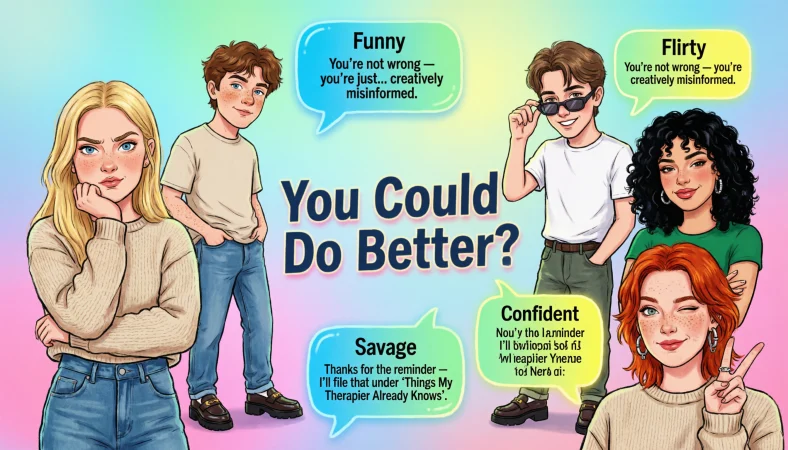
When someone says “you could do better,” they may be teasing you, expressing insecurity, criticizing your choice, or genuinely trying to look out for you. The best replies to “you could do better” depend on whether you want to be funny, flirty, confident, polite, or brutally honest.
Top alternatives: “I already did,” “Better than what?”, “I know what I want,” “Thanks, but I’m good,” “Maybe I like what I have.”
Someone saying “you could do better” can land in a hundred different ways. Maybe a friend is judging your crush, your partner is feeling insecure, someone is throwing shade, or a coworker is questioning your choice. Sometimes it is genuine advice. Other times, it is basically a verbal side-eye with Wi-Fi. Your reply matters because the wrong response can turn a tiny comment into a full-blown drama episode.
The right one can make you sound confident, funny, mature, or effortlessly unbothered. Whether you are texting, replying in DMs, joking with friends, talking to a crush, or handling a comment at work, these replies to “you could do better” give you options for every mood. Pick your vibe, send the line, and keep the conversation moving without losing yourself in the process.
Funny Responses
“Better? I’m already emotionally overqualified.”
Use it when someone jokes that your standards should be higher.
Meaning: You are playfully defending your choice with exaggerated confidence.
“I could, but where’s the fun in that?”
Use it when teasing friends about your questionable taste.
Meaning: You know your choice may be imperfect and you are embracing it.
“Better is subjective, bestie.”
Use it when someone confidently judges your romantic choice.
Meaning: You are reminding them that preferences are personal.
“I checked the upgrade section. Nothing impressed me.”
Use it when someone suggests replacing your partner or crush.
Meaning: You are jokingly saying no alternative looks better.
“My heart apparently skipped the software update.”
Use it when laughing about your unexpected attraction.
Meaning: You are admitting your feelings do not always follow logic.
“I tried. The better option was unavailable.”
Use it for a playful excuse after being told to upgrade.
Meaning: You are humorously dismissing the suggestion.
“Better according to who, the committee?”
Use it when someone acts like they are the official judge of your choices.
Meaning: You are jokingly challenging their authority.
“I would, but my standards have plot twists.”
Use it when your dating choices confuse your friends.
Meaning: Your preferences are unpredictable but intentional.
“Please submit your complaint in triplicate.”
Use it when someone keeps criticizing your choice.
Meaning: You are turning their opinion into a silly bureaucratic joke.
“I’m not shopping for a human right now.”
Use it when someone talks about your partner like a product.
Meaning: You are playfully rejecting the idea of upgrading people.
“Bold of you to assume I’m taking applications.”
Use it when someone suggests you should date someone else.
Meaning: You are jokingly closing the door to alternatives.
“I could do better, but I could also do worse.”
Use it when you want a funny but balanced comeback.
Meaning: You are pointing out that perfection is not the goal.
Brutal Responses
“I could, but I’m not interested in your opinion.”
Use it when someone crosses a line with unsolicited criticism.
Meaning: You are firmly shutting down their judgment.
“Better for you maybe, not for me.”
Use it when someone assumes their standard is universal.
Meaning: You are separating their preferences from yours.
“I don’t remember asking for a review.”
Use it when someone critiques your relationship without being invited.
Meaning: You are making it clear their feedback was unwanted.
“Good thing I choose for myself.”
Use it when someone keeps insisting they know what is best for you.
Meaning: You are confidently reclaiming control over your decisions.
“Your opinion isn’t my dating strategy.”
Use it when a friend becomes overly judgmental.
Meaning: You are refusing to let their standards guide your life.
“I could do better at ignoring unsolicited advice.”
Use it when you want a sharp response with a little wit.
Meaning: You are indirectly telling them to stop talking.
“Interesting. I’ll file that under things I didn’t ask.”
Use it when someone gives unwanted commentary.
Meaning: Their opinion has been dismissed without much emotional effort.
“You’re confusing your preference with my reality.”
Use it during a serious disagreement about your choices.
Meaning: You are pointing out that their judgment is subjective.
“I’m comfortable with my choice. Are you?”
Use it when someone seems unusually invested in your decision.
Meaning: You are turning their judgment back toward them.
“Maybe worry about your own upgrade.”
Use it when someone is being particularly disrespectful.
Meaning: You are returning the criticism with equal energy.
“I don’t need permission to choose who makes me happy.”
Use it when someone questions your relationship.
Meaning: You are confidently defending your autonomy.
“If I wanted your ranking, I’d ask for one.”
Use it when someone starts comparing your partner to others.
Meaning: You are firmly rejecting their unsolicited evaluation.
Flirty Responses
“Maybe I already found my better.”
Use it when your crush says you deserve someone better.
Meaning: You are subtly suggesting that you consider them worth choosing.
“What if you’re the better I was looking for?”
Use it when the conversation is already flirtatious.
Meaning: You are turning their comment into a romantic hint.
“Better than you? That sounds impossible.”
Use it when you want playful confidence with your crush.
Meaning: You are complimenting them while keeping things light.
“I think my heart has already made its decision.”
Use it when someone questions your romantic interest.
Meaning: You are saying your feelings matter more than comparisons.
“Maybe I don’t want better. Maybe I want you.”
Use it when you want a direct romantic reply.
Meaning: You are clearly expressing attraction.
“Careful, you’re making yourself sound like my type.”
Use it when someone jokingly claims you could do better.
Meaning: You are playfully revealing that you like them.
“Who said I was looking for better?”
Use it when flirting with someone who doubts themselves.
Meaning: You are showing that your interest is personal, not comparative.
“I like what I like, and apparently I like you.”
Use it when you want a casual confession.
Meaning: You are admitting attraction without making it overly serious.
“Better is boring. I want chemistry.”
Use it when explaining why you chose someone unexpected.
Meaning: You value connection over superficial standards.
“Maybe my standards are exactly where they need to be.”
Use it when flirting while defending your choice.
Meaning: You are confidently implying that your choice is intentional.
“You’re making it really hard to disagree.”
Use it when someone you like gives you a compliment or challenge.
Meaning: You are flirting while keeping the response teasing.
“I already know who I want.”
Use it when you want to sound confident and romantic.
Meaning: You are signaling that your feelings are settled.
Polite Responses
“I appreciate your concern, but I’m happy with my choice.”
Use it when a friend genuinely means well.
Meaning: You acknowledge their concern without accepting their judgment.
“Thanks for looking out for me.”
Use it when the comment comes from someone who cares.
Meaning: You are responding warmly while keeping your independence.
“I understand where you’re coming from.”
Use it when you want to avoid an argument.
Meaning: You are recognizing their perspective without agreeing.
“I respect your opinion, even if I see it differently.”
Use it during a disagreement with someone close.
Meaning: You are setting a mature boundary.
“I’m comfortable with the decision I made.”
Use it when someone questions your personal choice.
Meaning: You are calmly standing by yourself.
“I think everyone has different standards.”
Use it when someone compares your choice to theirs.
Meaning: You are emphasizing that preferences differ.
“That’s fair, but I’m happy where I am.”
Use it when you want a peaceful response.
Meaning: You are acknowledging their comment without changing your mind.
“I’ll keep that in mind.”
Use it when you do not want to debate the issue.
Meaning: You are politely ending the discussion.
“I appreciate the advice.”
Use it when someone offers sincere relationship advice.
Meaning: You are being gracious without promising to follow it.
“I see it differently, but I respect your perspective.”
Use it during a thoughtful conversation.
Meaning: You are disagreeing without becoming defensive.
“I’m the one who has to live with my choice, so I trust myself.”
Use it when someone keeps pushing their opinion.
Meaning: You are politely asserting personal responsibility.
“Thanks, but I think I’ll make that call myself.”
Use it when someone wants to decide for you.
Meaning: You are respectfully maintaining your independence.
Professional Responses
“I appreciate the feedback, but I’m confident in my decision.”
Use it when the comment appears in a workplace discussion.
Meaning: You accept feedback while maintaining professional confidence.
“Could you clarify what you mean by ‘better’?”
Use it when a colleague makes a vague criticism.
Meaning: You are asking them to support their judgment with specifics.
“I’d prefer to focus on the criteria rather than comparisons.”
Use it when discussing a professional decision.
Meaning: You are redirecting the conversation toward objective factors.
“That’s one perspective, but there are other considerations.”
Use it during a disagreement about a choice.
Meaning: You are calmly acknowledging that multiple factors matter.
“I’m open to constructive feedback.”
Use it when you want to keep a discussion productive.
Meaning: You welcome useful criticism rather than personal judgment.
“What specific improvement would you recommend?”
Use it when someone says your work could be better.
Meaning: You are asking for actionable feedback.
“Let’s discuss the measurable differences.”
Use it when someone makes a broad comparison.
Meaning: You want evidence rather than vague opinions.
“I’m comfortable with the rationale behind my decision.”
Use it during a formal disagreement.
Meaning: You are showing confidence without becoming defensive.
“I understand your point, but I reached a different conclusion.”
Use it when handling professional criticism.
Meaning: You disagree respectfully.
“I’ll consider your perspective.”
Use it when you want to acknowledge feedback diplomatically.
Meaning: You are listening without automatically agreeing.
“Let’s focus on what works best for the situation.”
Use it when someone tries to turn a decision into a comparison.
Meaning: You are moving the conversation toward practical results.
“I value thoughtful feedback, so specific examples would help.”
Use it when criticism feels too general.
Meaning: You are requesting useful information rather than reacting emotionally.
Creative Responses
“Better is a destination. I’m enjoying the journey.”
Use it when someone questions your current choice.
Meaning: You are embracing the present instead of chasing perfection.
“My story isn’t written by other people’s standards.”
Use it when someone judges your life choices.
Meaning: You are emphasizing individuality.
“Maybe I’m not looking for better. I’m looking for real.”
Use it when discussing relationships.
Meaning: Authentic connection matters more to you than appearances.
“Some choices make sense only to the person living them.”
Use it during a deep conversation about your decisions.
Meaning: You are explaining why outsiders may not understand your choice.
“Better on paper doesn’t always mean better in life.”
Use it when someone compares two people or options.
Meaning: Real-life compatibility matters more than surface-level advantages.
“I’d rather choose what feels right than what looks impressive.”
Use it when someone focuses too heavily on appearances.
Meaning: You prioritize personal fulfillment.
“My compass points somewhere different.”
Use it when your priorities differ from someone else’s.
Meaning: You follow your own direction.
“The upgrade isn’t always the answer.”
Use it when someone treats relationships like products.
Meaning: You are challenging the idea that newer or different automatically means better.
“Maybe the magic is in the imperfect parts.”
Use it when someone points out flaws.
Meaning: You appreciate authenticity instead of perfection.
“I’m choosing connection over comparison.”
Use it when someone ranks people or choices.
Meaning: Emotional value matters more to you than competition.
“Not everything valuable comes with a five-star rating.”
Use it when someone judges your choice too quickly.
Meaning: Worth cannot always be measured by public approval.
“I’m not chasing a better option. I’m building a better life.”
Use it when discussing broader life choices.
Meaning: Your focus is personal growth rather than comparison.
Sarcastic Responses
“Wow, thanks, dating committee.”
Use it when someone acts like an expert on your love life.
Meaning: You are sarcastically mocking their authority.
“Groundbreaking analysis.”
Use it after receiving an obvious opinion.
Meaning: You are playfully suggesting their comment was not especially insightful.
“Thanks, I’ll alert the press.”
Use it when someone dramatically states their judgment.
Meaning: You are making their opinion sound hilariously important.
“Noted and immediately misplaced.”
Use it when you have no intention of following their advice.
Meaning: You heard them but are not taking the advice seriously.
“What would I do without your unsolicited wisdom?”
Use it when someone repeatedly gives unwanted advice.
Meaning: You are sarcastically highlighting their overconfidence.
“Fascinating. Anyway…”
Use it when you want to move past the comment quickly.
Meaning: You are signaling that their opinion does not deserve much attention.
“Thanks for the performance review.”
Use it when someone critiques your personal life.
Meaning: You are sarcastically treating their judgment like workplace feedback.
“I’ll add that to my imaginary suggestion box.”
Use it when you want a playful dismissal.
Meaning: Their opinion is being politely ignored.
“Your confidence in my life choices is inspiring.”
Use it when someone is overly certain about what you should do.
Meaning: You are teasing them for being too invested.
“Amazing. Another opinion I didn’t request.”
Use it when unsolicited advice becomes annoying.
Meaning: You are calling out their lack of invitation.
“I’ll consult the council of people who actually asked.”
Use it when someone gets overly judgmental.
Meaning: You are sarcastically reminding them that nobody requested their verdict.
“Thanks, Yelp.”
Use it when someone rates your choice like a review.
Meaning: You are jokingly reducing their judgment to an online rating.
Cute Responses
“Aww, but I like what I have.”
Use it when a friend gently questions your choice.
Meaning: You are responding warmly and confidently.
“Maybe I’m exactly where I’m supposed to be.”
Use it when someone worries about your choice.
Meaning: You trust your current path.
“I think my heart knows something you don’t.”
Use it when someone questions your romantic feelings.
Meaning: You believe your emotional connection is difficult for others to see.
“I’m happy, and that counts for something.”
Use it when someone suggests you deserve something different.
Meaning: Your happiness is the most important measurement.
“Maybe I just have a soft spot for this one.”
Use it when teasing about someone you like.
Meaning: You are admitting affection in a cute way.
“My heart already voted.”
Use it when someone asks why you chose someone.
Meaning: Your feelings have already made the decision.
“I think I found my favorite person.”
Use it when defending someone you care about.
Meaning: You are expressing genuine affection.
“Better isn’t always sweeter.”
Use it when someone compares your relationship to another.
Meaning: Emotional warmth matters more than perceived superiority.
“I like my choice, thank you very much.”
Use it when playfully defending your favorite person.
Meaning: You are affectionately standing your ground.
“My little heart says otherwise.”
Use it when you want a soft, playful comeback.
Meaning: Your feelings disagree with their judgment.
“Maybe I’m just happy with my person.”
Use it when talking about a partner.
Meaning: You value the relationship you already have.
“I think we’re pretty cute together.”
Use it when someone questions your relationship.
Meaning: You are confidently celebrating your connection.
Dramatic Responses
“Better? After everything we’ve been through?”
Use it when jokingly exaggerating a friend’s comment.
Meaning: You are turning a simple opinion into a mock emotional crisis.
“My heart cannot survive this betrayal.”
Use it when someone insults your choice playfully.
Meaning: You are pretending to be dramatically wounded.
“I shall never recover from this accusation.”
Use it when you want an intentionally theatrical comeback.
Meaning: You are making the moment funny through exaggeration.
“And here I thought you understood me.”
Use it when teasing someone close to you.
Meaning: You are jokingly acting betrayed by their opinion.
“This is the villain origin story.”
Use it when someone’s comment annoys you in a funny way.
Meaning: You are dramatically exaggerating their criticism.
“Pack your bags. We’re ending this friendship.”
Use it when joking with a close friend.
Meaning: You are pretending their opinion is a friendship-ending offense.
“My standards have officially filed for emotional damages.”
Use it when someone questions your taste.
Meaning: You are exaggerating your reaction for comedy.
“I need a moment to process this disrespect.”
Use it when a friend makes a amazing joke.
Meaning: You are playfully pretending to be offended.
“Someone call the orchestra. This is devastating.”
Use it when you want maximum theatrical energy.
Meaning: You are turning criticism into a mock tragedy.
“I came here for support, not a plot twist.”
Use it when a friend unexpectedly criticizes your choice.
Meaning: You expected encouragement instead of judgment.
“My confidence has left the chat.”
Use it when you want a modern dramatic joke.
Meaning: You are pretending their comment seriously affected you.
“This betrayal deserves its own documentary.”
Use it when joking about an especially fierce comment.
Meaning: You are dramatically exaggerating the situation.
Chill And Casual Responses
“I’m good, honestly.”
Use it when you want to keep things simple.
Meaning: You are saying you are comfortable with your choice.
“Nah, I like where I’m at.”
Use it with friends who question your decisions.
Meaning: You are casually standing by yourself.
“I’m happy with it, so we’re good.”
Use it when you want to end the discussion peacefully.
Meaning: Your satisfaction matters more than outside opinions.
“Maybe, but I’m not worried about it.”
Use it when someone suggests you should change something.
Meaning: You are refusing to overthink their comment.
“I hear you, but I’m chilling.”
Use it when someone gives unsolicited advice.
Meaning: You acknowledge them without feeling pressured.
“It works for me.”
Use it when someone questions your choice.
Meaning: Personal suitability matters more than comparison.
“I’m not stressing about it.”
Use it when someone tries to make you doubt yourself.
Meaning: You are choosing peace over unnecessary debate.
“Different standards, I guess.”
Use it when you and someone else disagree.
Meaning: You accept that your preferences are different.
“I’m doing just fine.”
Use it when someone implies you settled.
Meaning: You confidently reject the idea that you are unhappy.
“No complaints over here.”
Use it when someone asks whether you regret your choice.
Meaning: You are content with your situation.
“I’ll take my chances.”
Use it when someone warns you about your decision.
Meaning: You understand the risk and accept it.
“I know what works for me.”
Use it when you want a calm but confident response.
Meaning: You trust your own judgment.
Confident Responses
“I know what I want.”
Use it when someone questions your decision.
Meaning: You are confidently asserting self-awareness.
“I’m not settling. I’m choosing.”
Use it when someone assumes your choice is a compromise.
Meaning: You see your decision as intentional rather than desperate.
“I trust my judgment.”
Use it when someone repeatedly challenges your choices.
Meaning: You have confidence in your ability to decide.
“I don’t need the best according to everyone else.”
Use it when someone imposes their standards on you.
Meaning: Your definition of success is personal.
“I’m happy with what I chose.”
Use it when you want a straightforward confident reply.
Meaning: You are satisfied and do not need validation.
“I choose based on what matters to me.”
Use it when someone focuses on superficial qualities.
Meaning: Your priorities guide your decisions.
“I’m not competing for anyone’s approval.”
Use it when someone keeps judging you.
Meaning: You refuse to make choices for external validation.
“I know my worth, and I know what I value.”
Use it when defending a personal decision.
Meaning: You understand both your standards and priorities.
“I’m not interested in someone else’s definition of better.”
Use it when someone insists their standard is correct.
Meaning: You reject comparisons that do not reflect your values.
“I’m exactly where I choose to be.”
Use it when someone assumes you are stuck.
Meaning: You are emphasizing agency and intention.
“My life isn’t a competition.”
Use it when someone constantly compares your choices.
Meaning: You do not measure your life against other people.
“I don’t need to explain a choice that makes me happy.”
Use it when someone demands justification.
Meaning: You are confidently setting a boundary.
Emotional Responses
“I know you mean well, but that actually hurts.”
Use it when the comment comes from someone you care about.
Meaning: You are honestly communicating the emotional impact.
“Sometimes hearing that makes me question myself.”
Use it when someone repeatedly says you could do better.
Meaning: Their words are affecting your confidence.
“I wish you could see what I see.”
Use it when defending someone you genuinely love.
Meaning: You believe others are missing the qualities you appreciate.
“Maybe you don’t understand what this person means to me.”
Use it when someone dismisses your relationship.
Meaning: Your emotional connection is deeper than they realize.
“I’m choosing based on how someone makes me feel, not how they look on paper.”
Use it during a serious relationship conversation.
Meaning: Emotional compatibility matters more than external judgment.
“I’m happy, and I hope you can respect that.”
Use it when you want support rather than criticism.
Meaning: You are asking others to respect your happiness.
“I don’t think love works like a ranking system.”
Use it when someone compares your partner to others.
Meaning: Relationships cannot be reduced to simple rankings.
“I see things in them that you may not see.”
Use it when someone questions your attraction.
Meaning: Your personal connection reveals qualities others may overlook.
“I’d rather be understood than judged.”
Use it when a conversation becomes emotionally uncomfortable.
Meaning: You want empathy rather than criticism.
“Your concern matters to me, but so does my happiness.”
Use it when someone genuinely worries about you.
Meaning: You value their care without abandoning your own feelings.
“I’m not asking you to understand everything, just respect my choice.”
Use it when someone refuses to accept your decision.
Meaning: You are setting a compassionate but firm boundary.
“I know my choice may not make sense to everyone.”
Use it when acknowledging outside concerns.
Meaning: You accept that personal decisions can look different from the outside.
Sweet Responses
“Maybe I could do better, but I’m grateful for what I have.”
Use it when someone questions your relationship kindly.
Meaning: You are focusing on gratitude rather than comparison.
“I’m happy with the person I chose.”
Use it when defending your partner warmly.
Meaning: Your relationship brings you genuine happiness.
“I don’t need perfect. I need someone real.”
Use it when explaining your relationship values.
Meaning: Authenticity matters more than perfection.
“They make my life better in ways you don’t see.”
Use it when someone overlooks your partner’s positive qualities.
Meaning: Their value to you goes beyond what outsiders notice.
“I found something worth keeping.”
Use it when someone suggests you should move on.
Meaning: You believe your relationship is valuable.
“I’m choosing the person who feels like home.”
Use it when discussing a deep romantic connection.
Meaning: Emotional safety and comfort matter most to you.
“I’d rather have genuine than impressive.”
Use it when someone compares your partner to others.
Meaning: You prioritize sincerity over status.
“They’re not perfect, but neither am I.”
Use it when someone points out your partner’s flaws.
Meaning: You understand that healthy relationships do not require perfection.
“I love what we have.”
Use it when you want a simple heartfelt answer.
Meaning: You value your relationship as it is.
“Maybe my version of better looks different.”
Use it when someone’s standards differ from yours.
Meaning: Your definition of a good relationship is personal.
“I’m grateful for the person beside me.”
Use it when defending your partner respectfully.
Meaning: You appreciate the relationship rather than comparing it.
“I don’t need everyone to understand my happiness.”
Use it when people question your choice.
Meaning: You are secure enough to value your happiness independently.
Clever Responses
“Better is a comparison, and I’m not comparing.”
Use it when someone tries to rank your options.
Meaning: You reject the premise that everything needs a winner.
“Better according to which criteria?”
Use it when someone makes a vague judgment.
Meaning: You are challenging the assumptions behind their opinion.
“Value isn’t always visible from the outside.”
Use it when someone judges your relationship quickly.
Meaning: Outsiders cannot see every meaningful detail.
“The best choice depends on the goal.”
Use it when someone claims there is one objectively superior option.
Meaning: What is best depends on individual priorities.
“Compatibility beats comparison.”
Use it when discussing romantic choices.
Meaning: A good match matters more than looking impressive.
“A different option isn’t automatically a better one.”
Use it when someone suggests changing your decision.
Meaning: Change alone does not guarantee improvement.
“I’m optimizing for happiness, not applause.”
Use it when someone judges your personal choices.
Meaning: Your goal is fulfillment rather than approval.
“Better on paper can still be wrong in practice.”
Use it when someone compares your partner to an ideal.
Meaning: Real-world compatibility can outweigh theoretical advantages.
“I’m choosing fit over status.”
Use it when someone focuses on appearances or social expectations.
Meaning: Personal compatibility matters more than prestige.
“If it works, why replace it?”
Use it when someone suggests changing something that makes you happy.
Meaning: There is no reason to change a successful choice without cause.
“Your better and my better may be completely different.”
Use it when someone insists their preference is universal.
Meaning: Standards depend on individual values.
“I’m not looking for an upgrade. I’m looking for alignment.”
Use it when discussing relationships or major life choices.
Meaning: Shared values matter more than superficial improvement.
Supportive Responses
“Thanks for caring enough to say something.”
Use it when a close friend expresses genuine concern.
Meaning: You appreciate their intentions even if you disagree.
“I know you want what’s best for me.”
Use it when the comment comes from someone protective.
Meaning: You recognize the care behind their words.
“I’ll think about what you said.”
Use it when you want to consider their advice seriously.
Meaning: You are open-minded without immediately changing your choice.
“I appreciate you looking out for me.”
Use it when someone offers advice with good intentions.
Meaning: You value their support even when perspectives differ.
“Let’s talk about what makes you feel that way.”
Use it when you want a deeper conversation.
Meaning: You are interested in understanding their concern.
“Maybe there’s something I’m not seeing.”
Use it when you genuinely want another perspective.
Meaning: You are showing humility and openness.
“Tell me what you’re worried about specifically.”
Use it when someone makes a broad statement.
Meaning: You want concrete concerns rather than vague criticism.
“I trust you enough to hear you out.”
Use it when talking to a close friend.
Meaning: You value their honesty even when it is uncomfortable.
“I’ll take the useful parts of your advice.”
Use it when someone offers mixed feedback.
Meaning: You are willing to learn without accepting everything.
“I know we may see it differently.”
Use it when you want to preserve the relationship.
Meaning: Disagreement does not have to become conflict.
“Your concern means something to me.”
Use it when responding to sincere advice.
Meaning: You recognize the emotional value behind their words.
“I’ll make the final call, but I appreciate your honesty.”
Use it when someone genuinely wants to protect you.
Meaning: You accept their honesty while keeping your autonomy.
Unbothered Responses
“Could be. I’m still happy.”
Use it when someone tries to make you doubt your choice.
Meaning: Their opinion does not disturb your peace.
“Maybe, maybe not. Anyway, I’m good.”
Use it when you want to shut down unnecessary debate.
Meaning: You refuse to overthink the comment.
“Not worried about it.”
Use it when someone keeps comparing your options.
Meaning: You are choosing not to engage.
“I’ll survive.”
Use it when someone dramatically questions your choice.
Meaning: You are showing that their opinion has little effect on you.
“I’m not losing sleep over it.”
Use it when someone expects you to feel insecure.
Meaning: You are completely unbothered.
“That’s cool. I’m still choosing this.”
Use it when someone disagrees with your decision.
Meaning: You can hear criticism without changing your mind.
“You do you. I’ll do me.”
Use it when you want maximum casual independence.
Meaning: Both people can have different preferences.
“I’m comfortable with my decision.”
Use it when you want a calm and mature response.
Meaning: You are secure without needing to prove anything.
“No pressure to agree with me.”
Use it when someone keeps trying to convince you.
Meaning: Their approval is not necessary.
“I’m good over here.”
Use it when you want a short, effortless comeback.
Meaning: You are content and not interested in debate.
“Thanks, but I’m not taking votes.”
Use it when too many people comment on your choice.
Meaning: Your decision does not require public approval.
“Life’s too short to rank everything.”
Use it when someone turns your choice into a competition.
Meaning: You prefer peace over pointless comparisons.
Btilliant But Smart Responses
“If better means happier, I’m already doing pretty well.”
Use it when someone says you should upgrade your life.
Meaning: You define success through happiness.
“I’d rather choose wisely than impress loudly.”
Use it when someone focuses on status.
Meaning: Quiet compatibility matters more than appearances.
“You’re judging the cover while I’m reading the whole book.”
Use it when someone judges your partner superficially.
Meaning: You know details about the person they do not.
“Maybe your idea of better needs an update.”
Use it when someone has outdated standards.
Meaning: Their definition of quality may not fit your values.
“I don’t confuse popularity with compatibility.”
Use it when someone recommends a popular alternative.
Meaning: What looks desirable publicly may not be right personally.
“I’m not collecting upgrades. I’m building a life.”
Use it when someone treats relationships like status symbols.
Meaning: You value stability and meaning over constant comparison.
“If I wanted approval, I’d ask for it.”
Use it when someone keeps judging you.
Meaning: Their validation is not necessary.
“I know the difference between advice and projection.”
Use it when someone’s criticism feels personal.
Meaning: You recognize when their opinion reflects their own standards.
“You can think I deserve better without knowing what makes me happy.”
Use it during a serious conversation.
Meaning: Their judgment does not account for your lived experience.
“Maybe I already have what you think I should be looking for.”
Use it when someone questions your relationship.
Meaning: You believe your current situation already meets your needs.
“Better isn’t always better for me.”
Use it when someone assumes their preferred option is superior.
Meaning: Personal fit matters more than generic superiority.
“I’m not settling. I’m simply not shopping for your approval.”
Use it when someone repeatedly calls your choice a compromise.
Meaning: You are confidently rejecting their judgment.
“My happiness doesn’t need your ranking system.”
Use it when someone compares your life to others.
Meaning: You refuse to measure your happiness by external standards.
“You’re allowed to disagree. I’m allowed to choose.”
Use it when a disagreement needs a mature ending.
Meaning: Different opinions can exist without controlling your decision.
“I’d rather be authentically happy than impressively miserable.”
Use it when someone prioritizes appearances over fulfillment.
Meaning: Genuine happiness matters more than looking successful.
“The funniest part is that I’m not asking you to live my life.”
Use it when someone becomes overly invested in your decision.
Meaning: Their opinion is irrelevant to your personal experience.
“You call it settling. I call it knowing what matters.”
Use it when someone misunderstands your priorities.
Meaning: Your choice reflects values rather than desperation.
“I don’t need a better option. I need the right one.”
Use it when discussing romantic or personal choices.
Meaning: Compatibility is more important than an abstract idea of superiority.
“Keep your standards. I’ll keep my peace.”
Use it when someone refuses to respect your decision.
Meaning: You are ending the debate without hostility.
“Thanks for the concern. I’ll continue making my own decisions.”
Use it when you want a final boundary-setting response.
Meaning: You appreciate the sentiment but remain firmly independent.
FAQs
What does “you could do better” mean?
It usually means someone believes you could choose a person, job, situation, or option they consider superior. The meaning depends heavily on tone and context.
What does “you could do better” mean emotionally?
Emotionally, it can express concern, jealousy, insecurity, disappointment, or genuine care. Sometimes the speaker is also projecting their own standards onto your situation.
Can “you could do better” be flirty?
Yes. In a romantic context, someone might say it because they feel insecure or believe you deserve someone else. A playful response such as “Maybe I already found better” can turn the moment flirty.
What is a good reply if you genuinely disagree?
Try “I understand your perspective, but I’m happy with my choice.” It is confident without unnecessarily creating conflict.
What should you say if you actually think you could do better?
Be honest with yourself first. A simple response such as “Maybe you’re right. I’ve been thinking about that too” works when you genuinely want to consider their concern.
What is the best funny response?
“Better according to who, the committee?” is a playful choice that works especially well with friends.
Is humor appropriate when someone says “you could do better”?
Usually, yes, if the relationship is casual and the comment is teasing. If the person is expressing a serious concern, a calm and honest response will usually work better.
What can you say professionally?
Try “Could you clarify what you mean by ‘better’?” It keeps the conversation professional and asks for specific reasoning.
What if the person is insulting my partner?
You can say “You don’t have to understand my choice, but I’d appreciate you respecting it.” It creates a clear boundary without escalating the situation.
What if someone says it because they feel insecure?
A supportive response can help. Try “I’m choosing you because I want to, not because I couldn’t do better.” It reassures them while making your choice clear.
Conclusion
“You could do better” does not have to leave you searching for the perfect comeback three hours later. Your response can be funny, flirty, sweet, brutal, professional, or completely unbothered depending on the situation. The real power is knowing what you want to communicate before you hit send.
A clever reply can lighten the mood, while a confident one can shut down unwanted judgment without creating unnecessary drama. Remember, “better” is not a universal measurement. What matters to one person may not matter to you at all. Save these replies to “you could do better,” share your favorites with a friend, and come back whenever the group chat needs a perfectly timed comeback.