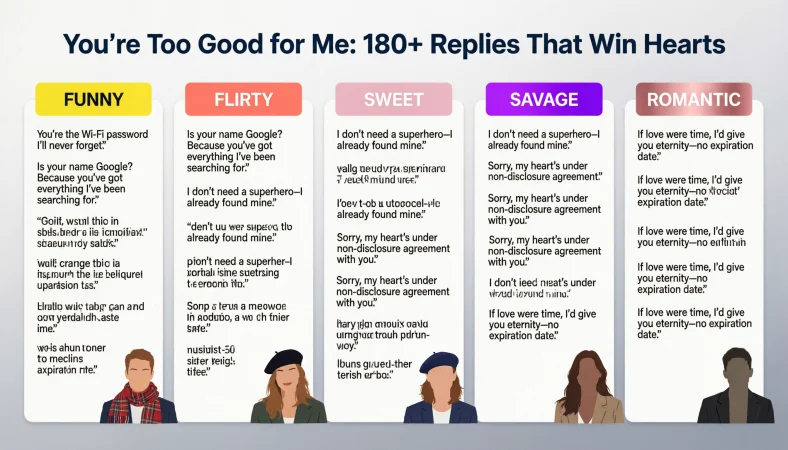
When someone says “you’re too good for me,” they may be expressing admiration, insecurity, affection, or even playful flirting. The best response depends on whether you want to reassure them, flirt back, make them laugh, or keep things casual.
Top replies: “Then I guess we’re a perfect match,” “Good thing I like you anyway,” “Stop, you’re making me blush,” “You’re exactly where you belong,” “I’ll be the judge of that.”
Few compliments come with more emotional baggage than “you’re too good for me.” It can pop up in a late-night text, a sweet DM, a conversation with a crush, or even a serious relationship moment when someone is feeling insecure. Sometimes it means, “I really admire you.” Other times, it secretly means, “I’m scared I might lose you.” And occasionally, it is simply an invitation for a clever comeback.
That is why knowing the right replies to “you’re too good for me” matters. A boring “thanks” can kill the moment, while the right response can make someone smile, feel reassured, or turn the conversation deliciously flirty. Whether you want to be funny, romantic, confident, or just a little dreadful, there is a reply for your exact vibe.
Funny Responses
“Apparently, I have questionable taste.”
Use it when you want to tease them without making things serious.
Meaning: You are jokingly saying you chose them anyway.
“Too good? Finally, someone noticed.”
Use it when you want a playful confidence boost.
Meaning: You are accepting the compliment with humor.
“Don’t worry, I come with a warranty.”
Use it during a lighthearted texting moment.
Meaning: You are keeping the mood playful and silly.
“I’ve made worse decisions.”
Use it when joking with someone you genuinely like.
Meaning: You are teasing them while admitting you chose them.
“Lucky you, then.”
Use it when you want a short, cheeky comeback.
Meaning: You are playfully reminding them they are fortunate.
“Well, congratulations on your good fortune.”
Use it when you want mock-serious humor.
Meaning: You are exaggerating the situation for comedic effect.
“Too good for you? That sounds expensive.”
Use it when you want to turn the compliment into a joke.
Meaning: You are playfully embracing your supposed superiority.
“Relax, I have flaws. They’re just in beta.”
Use it when someone is putting you on a pedestal.
Meaning: You are joking that you are not perfect.
“You’re getting emotional. Should I call someone?”
Use it when they become overly sentimental.
Meaning: You are teasing them for being dramatic.
“I accept your accurate assessment.”
Use it when you want dry humor.
Meaning: You are pretending to take their statement completely seriously.
“Sounds like a you problem.”
Use it with someone who enjoys playful sarcasm.
Meaning: You are jokingly refusing to feel guilty about being impressive.
“Well, I’m not going anywhere.”
Use it when humor and reassurance fit together.
Meaning: You are playfully assuring them that you are staying.
Brutal Responses
“Then step up.”
Use it when you want to challenge their insecurity.
Meaning: You are telling them to rise to the occasion.
“You could always become better.”
Use it with someone who can handle blunt honesty.
Meaning: You are encouraging growth instead of self-pity.
“I noticed you finally figured that out.”
Use it for a teasing, fierce moment.
Meaning: You are humorously agreeing with them.
“That sounds like an excuse.”
Use it when they repeatedly doubt themselves.
Meaning: You are calling out insecurity directly.
“Don’t downgrade yourself just to compliment me.”
Use it during a deeper conversation.
Meaning: You are refusing to accept self-deprecation.
“You’re not getting rid of me that easily.”
Use it when you want amazing confidence with affection.
Meaning: You are making it clear that you are staying.
“Then catch up.”
Use it when playful competition fits your relationship.
Meaning: You are challenging them to improve.
“You’re not too bad yourself.”
Use it to soften a blunt response.
Meaning: You are secretly giving them reassurance.
“You’re selling yourself short.”
Use it when their insecurity seems genuine.
Meaning: You believe they are better than they think.
“I chose you, remember?”
Use it when they need reassurance without excessive sweetness.
Meaning: You are reminding them that you made a deliberate choice.
“Stop talking yourself down.”
Use it during a serious emotional moment.
Meaning: You want them to value themselves.
“Maybe you’re exactly good enough for me.”
Use it when you want blunt reassurance.
Meaning: You are telling them they belong beside you.
Flirty Responses
“Maybe I’m just exactly your type.”
Use it when the conversation already has romantic chemistry.
Meaning: You are turning insecurity into flirtation.
“Then you better keep me.”
Use it when you want a playful romantic challenge.
Meaning: You are hinting that they should not let you go.
“Good, because I’m not planning to leave.”
Use it during a sweet romantic exchange.
Meaning: You are offering reassurance with affection.
“Too good for you, but somehow still into you.”
Use it for confident flirting.
Meaning: You are teasing them while admitting attraction.
“Maybe you bring out my good side.”
Use it when you want a softer flirt.
Meaning: You are suggesting they positively influence you.
“Who says I’m not exactly where I want to be?”
Use it when they question your choice.
Meaning: You are making your attraction clear.
“Then prove me right for choosing you.”
Use it when you want confident flirtation.
Meaning: You are challenging them playfully.
“I think we look pretty good together.”
Use it when you want romantic reassurance.
Meaning: You see the two of you as a good match.
“Maybe I have a weakness for you.”
Use it when you want subtle flirting.
Meaning: You are admitting they have a special effect on you.
“Careful, I might start liking you more.”
Use it when the chemistry is already obvious.
Meaning: You are playfully escalating the flirtation.
“You’re lucky I have a soft spot for you.”
Use it when teasing someone you like.
Meaning: You are admitting affection while staying confident.
“And yet here I am, choosing you.”
Use it when they seem genuinely insecure.
Meaning: You are reassuring them that your feelings are intentional.
Polite Responses
“That’s sweet of you to say.”
Use it when you want to accept the compliment gracefully.
Meaning: You appreciate their kind words.
“I really appreciate that.”
Use it in a warm but straightforward exchange.
Meaning: You are acknowledging their admiration.
“You don’t have to put yourself down.”
Use it when they sound insecure.
Meaning: You want them to speak more kindly about themselves.
“That’s kind of you, but I think highly of you too.”
Use it when you want balanced reassurance.
Meaning: You see value in them as well.
“I think we both bring something special.”
Use it when you want an encouraging response.
Meaning: You believe the relationship is mutually valuable.
“That means a lot to me.”
Use it after a heartfelt compliment.
Meaning: Their words genuinely touched you.
“I’m glad you see me that way.”
Use it when you want a sincere response.
Meaning: You appreciate being valued.
“You’re being too hard on yourself.”
Use it when their statement comes from insecurity.
Meaning: You believe they deserve more confidence.
“I think you’re wonderful too.”
Use it when you want to return the kindness.
Meaning: You genuinely admire them.
“That’s a lovely compliment.”
Use it in a calm, mature conversation.
Meaning: You appreciate their sentiment.
“I think we bring out the best in each other.”
Use it with someone close to you.
Meaning: You see mutual positivity in the relationship.
“You’re more than enough.”
Use it when they need gentle reassurance.
Meaning: You want them to feel worthy and appreciated.
Professional Responses
“I appreciate the compliment.”
Use it when the statement appears in a workplace context.
Meaning: You acknowledge their praise professionally.
“That’s very kind of you.”
Use it after receiving professional admiration.
Meaning: You are responding courteously.
“I appreciate your confidence in me.”
Use it when someone praises your abilities.
Meaning: You value their professional trust.
“We all bring different strengths to the table.”
Use it when someone compares themselves negatively.
Meaning: You emphasize teamwork rather than hierarchy.
“I think everyone has something valuable to contribute.”
Use it during a workplace discussion.
Meaning: You reject unnecessary self-comparison.
“Thank you, but I value your contribution too.”
Use it when someone compliments you excessively.
Meaning: You are returning professional respect.
“That’s generous of you to say.”
Use it for a polished workplace response.
Meaning: You accept their praise graciously.
“I appreciate that perspective.”
Use it in a formal exchange.
Meaning: You acknowledge their opinion respectfully.
“We’re all learning and improving.”
Use it when someone doubts their professional ability.
Meaning: You encourage growth rather than comparison.
“I’m glad we can support each other.”
Use it when discussing teamwork.
Meaning: You value mutual support.
“Your confidence means a lot.”
Use it when a colleague expresses strong admiration.
Meaning: Their trust motivates you.
“I think we make a strong team.”
Use it in a collaborative setting.
Meaning: You emphasize partnership.
Creative Responses
“Maybe we’re two puzzle pieces that somehow fit.”
Use it during a romantic or thoughtful exchange.
Meaning: You believe compatibility matters more than comparison.
“Good things recognize good things.”
Use it as a confident compliment.
Meaning: You are subtly saying they are impressive too.
“Maybe the universe has excellent taste.”
Use it when you want a whimsical reply.
Meaning: You see your connection as something special.
“I think the scoreboard says we’re even.”
Use it when they underestimate themselves.
Meaning: You believe both people bring value.
“Maybe you’re my plot twist.”
Use it when flirting with someone unexpected.
Meaning: They became an exciting surprise in your life.
“I’m not grading you. I’m choosing you.”
Use it during an emotional conversation.
Meaning: Your relationship is not based on perfection.
“Different doesn’t mean less.”
Use it when someone compares themselves to you.
Meaning: You believe differences can complement each other.
“Maybe we’re better together than separately.”
Use it when reassuring a partner.
Meaning: You value the connection itself.
“You’re underestimating your own character arc.”
Use it for playful encouragement.
Meaning: You believe they are still growing into their potential.
“I think you’re exactly the plot I needed.”
Use it with someone you care about.
Meaning: Their presence has positively changed your life.
“The universe clearly had plans.”
Use it when celebrating an unexpected connection.
Meaning: You see your relationship as a fortunate coincidence.
“Maybe perfection was never the assignment.”
Use it during a vulnerable moment.
Meaning: You value authenticity over being flawless.
Sarcastic Responses
“Wow, self-awareness finally arrived.”
Use it when joking with a close friend.
Meaning: You are playfully agreeing with them.
“I’ll alert the authorities.”
Use it when you want absurd sarcasm.
Meaning: You are dramatically pretending their statement is serious.
“Please, save the acceptance speech.”
Use it after an exaggerated compliment.
Meaning: You are teasing them for being overly dramatic.
“You’ve clearly done your research.”
Use it as a dry comeback.
Meaning: You are pretending their claim is scientifically proven.
“Interesting theory. Needs more evidence.”
Use it when you want playful skepticism.
Meaning: You are teasing them without being harsh.
“Your confidence is inspiring.”
Use it sarcastically when they are self-deprecating.
Meaning: You are humorously pointing out their insecurity.
“Finally, a correct opinion.”
Use it with someone who enjoys dry humor.
Meaning: You are pretending their statement is objectively true.
“I’ll allow this conclusion.”
Use it as a mock-authoritative response.
Meaning: You are playfully acting like the judge.
“That’s one way to avoid admitting I like you.”
Use it during flirtatious banter.
Meaning: You suspect their insecurity is hiding attraction.
“Bold statement from someone dating me.”
Use it with a partner.
Meaning: You are playfully reversing the compliment.
“Please stop making sense.”
Use it when their compliment catches you off guard.
Meaning: You are jokingly admitting they have a point.
“Your application has been approved.”
Use it as an absurd romantic joke.
Meaning: You are pretending the relationship required official approval.
Cute Responses
“Aww, don’t say that.”
Use it when their insecurity sounds genuinely sweet.
Meaning: You want them to stop doubting themselves.
“You’re more than enough for me.”
Use it when offering sincere reassurance.
Meaning: You want them to feel worthy.
“You make me happy, and that matters.”
Use it with someone you deeply care about.
Meaning: Their presence is valuable to you.
“I like you exactly as you are.”
Use it when they need reassurance.
Meaning: You accept them without demanding perfection.
“You’re pretty amazing yourself.”
Use it after a heartfelt compliment.
Meaning: You want to remind them of their strengths.
“You’re my favorite person, remember?”
Use it in a romantic relationship.
Meaning: You are reinforcing affection and closeness.
“Stop being so adorable.”
Use it when their insecurity becomes endearing.
Meaning: You are turning the moment into playful affection.
“I picked you for a reason.”
Use it when they question your feelings.
Meaning: Your choice to be with them is intentional.
“You fit perfectly into my life.”
Use it during a meaningful conversation.
Meaning: You see them as an important part of your life.
“You’re exactly where you’re supposed to be.”
Use it when someone worries they do not belong.
Meaning: You are reassuring them that they belong with you.
“You make my heart very happy.”
Use it in a soft romantic moment.
Meaning: Their presence brings genuine joy.
“You’re enough, silly.”
Use it when you want reassurance with playful warmth.
Meaning: You want to comfort them without making things heavy.
Dramatic Responses
“Then prepare yourself for a lifetime of greatness.”
Use it when you want exaggerated humor.
Meaning: You are playfully embracing the compliment.
“Our story was written in the stars.”
Use it during an overly romantic moment.
Meaning: You are jokingly making the connection sound destined.
“This is the beginning of your redemption arc.”
Use it when teasing someone affectionately.
Meaning: You are joking that they are becoming worthy.
“You have been chosen.”
Use it when you want theatrical humor.
Meaning: You are playfully presenting the relationship as destiny.
“The universe has spoken.”
Use it when the moment feels dramatically romantic.
Meaning: You are pretending your connection was cosmically decided.
“You underestimate the power of your own charm.”
Use it when they feel unworthy.
Meaning: You are reminding them that they have attractive qualities.
“Do not question the prophecy.”
Use it during playful banter.
Meaning: You are jokingly treating the relationship as predetermined.
“Our love story refuses to be stopped.”
Use it with a romantic partner.
Meaning: You are dramatically expressing commitment.
“This is bigger than both of us.”
Use it when exaggeration fits the mood.
Meaning: You are playfully describing the connection as extraordinary.
“You have entered your main-character era.”
Use it when encouraging their confidence.
Meaning: You want them to recognize their own worth.
“The plot demands that you stay.”
Use it during a playful romantic exchange.
Meaning: You are humorously insisting they belong in your life.
“I reject this tragic storyline.”
Use it when they put themselves down.
Meaning: You refuse to let insecurity control the moment.
Chill And Casual Responses
“Nah, we’re good.”
Use it when you want a relaxed reassurance.
Meaning: You are telling them not to overthink it.
“You’re fine, seriously.”
Use it when they are being insecure.
Meaning: You want them to relax.
“Don’t overthink it.”
Use it during casual texting.
Meaning: You want them to stop worrying about the relationship.
“I like having you around.”
Use it with someone you genuinely enjoy.
Meaning: Their presence matters to you.
“We’re just vibing.”
Use it when you want to keep things light.
Meaning: You are avoiding unnecessary pressure.
“You’re doing just fine.”
Use it when someone doubts themselves.
Meaning: You believe they are enough as they are.
“Trust me, we’re good.”
Use it when reassurance is needed.
Meaning: You are confirming that everything is okay.
“I wouldn’t be here if I didn’t want to be.”
Use it when someone questions your choice.
Meaning: Your presence is intentional.
“You’re stuck with me now.”
Use it as a casual romantic joke.
Meaning: You are playfully expressing commitment.
“Relax, I’m into you.”
Use it when the conversation is flirty.
Meaning: You are directly confirming attraction.
“You’re not getting rid of me that easily.”
Use it when you want affectionate reassurance.
Meaning: You intend to stay close.
“We’re doing pretty well, honestly.”
Use it when you want grounded reassurance.
Meaning: You think the relationship is healthy and enjoyable.
Confident Responses
“I know.”
Use it when you want maximum confidence.
Meaning: You are playfully accepting their compliment.
“And you’re lucky I chose you.”
Use it for confident flirting.
Meaning: You are teasing them about being fortunate.
“I choose who deserves my time.”
Use it when someone questions your judgment.
Meaning: You trust your own decisions.
“I know what I want.”
Use it during a serious romantic moment.
Meaning: You are confident about your feelings.
“You don’t get to decide my standards for me.”
Use it when someone tries to reject themselves on your behalf.
Meaning: You are asserting your right to choose.
“If I’m here, there’s a reason.”
Use it when someone doubts your intentions.
Meaning: Your presence is deliberate.
“I see something in you.”
Use it when they genuinely cannot understand your interest.
Meaning: You recognize qualities they may overlook.
“I’m not settling. I’m choosing.”
Use it as a strong romantic reassurance.
Meaning: Being with them is not a compromise.
“You underestimate what I like.”
Use it as a confident flirt.
Meaning: They may be exactly your type.
“I don’t need perfect. I need real.”
Use it during a vulnerable conversation.
Meaning: Authenticity matters more to you than perfection.
“You’re exactly my kind of person.”
Use it when you want direct reassurance.
Meaning: Their personality appeals to you.
“I’m perfectly capable of choosing for myself.”
Use it when their insecurity becomes frustrating.
Meaning: You trust your own judgment.
Emotional Responses
“You don’t have to earn your place with me.”
Use it when someone feels unworthy of your affection.
Meaning: You want them to feel secure.
“I wish you could see yourself the way I see you.”
Use it during an intimate emotional moment.
Meaning: You see qualities in them that they struggle to recognize.
“You matter to me more than you realize.”
Use it when expressing genuine affection.
Meaning: Their importance in your life runs deep.
“I’m with you because I want to be.”
Use it when reassuring a worried partner.
Meaning: Your choice is sincere and intentional.
“You never have to be perfect for me.”
Use it when they are afraid of disappointing you.
Meaning: You accept their imperfections.
“I see your flaws, and I still choose you.”
Use it during a vulnerable conversation.
Meaning: Your affection is realistic rather than idealized.
“You deserve good things too.”
Use it when someone struggles with self-worth.
Meaning: You want them to believe they deserve happiness.
“Please don’t make yourself smaller.”
Use it when someone compares themselves negatively to you.
Meaning: You want them to recognize their own worth.
“I’m grateful you’re in my life.”
Use it when you want heartfelt reassurance.
Meaning: Their presence genuinely matters.
“You bring something into my life nobody else does.”
Use it during a deep relationship moment.
Meaning: Their individuality makes them special to you.
“I don’t see you as less than me.”
Use it when they feel inferior.
Meaning: You view the relationship as equal.
“I choose you, flaws and all.”
Use it with someone you deeply love.
Meaning: You accept them as a whole person.
Sweet Responses
“You’re more than enough for me.”
Use it when they need loving reassurance.
Meaning: You genuinely value them.
“I think we’re pretty perfect for each other.”
Use it during a romantic moment.
Meaning: You see strong compatibility.
“You make me feel lucky too.”
Use it when returning their admiration.
Meaning: You appreciate having them in your life.
“I’m happy with you.”
Use it when you want simple sincerity.
Meaning: Their presence brings you happiness.
“You’re one of the best things in my life.”
Use it with someone close to your heart.
Meaning: You deeply value the relationship.
“I wouldn’t trade you for anyone.”
Use it during an affectionate exchange.
Meaning: You are emphasizing their uniqueness.
“You’re special to me.”
Use it when you want a simple heartfelt reply.
Meaning: They hold an important place in your heart.
“You make ordinary days better.”
Use it when expressing subtle affection.
Meaning: Their presence improves your everyday life.
“I’m glad I found you.”
Use it after a meaningful relationship moment.
Meaning: You feel fortunate about meeting them.
“You’re my kind of wonderful.”
Use it as a cute romantic reply.
Meaning: Their particular qualities appeal to you.
“I wouldn’t change what we have.”
Use it when reassuring a partner.
Meaning: You appreciate the relationship as it is.
“You have my heart, so behave.”
Use it for playful sweetness.
Meaning: You are combining affection with teasing.
Clever Responses
“You’re confusing compatibility with competition.”
Use it when someone compares themselves to you.
Meaning: Relationships are not contests.
“Being different from me doesn’t make you less.”
Use it during a thoughtful conversation.
Meaning: You value complementary qualities.
“Maybe the right person makes you feel good enough.”
Use it when discussing relationship insecurity.
Meaning: A healthy connection should create confidence.
“I’m not looking for an upgrade.”
Use it when someone assumes you want someone else.
Meaning: You are satisfied with them.
“You’re measuring worth like it’s a competition.”
Use it when someone keeps comparing themselves.
Meaning: You want them to stop ranking people.
“My standards clearly include you.”
Use it as a clever flirt.
Meaning: They meet what you are looking for.
“I don’t need someone identical to me.”
Use it when discussing differences.
Meaning: Compatibility does not require sameness.
“You’re focusing on the wrong scoreboard.”
Use it when someone feels inferior.
Meaning: Personal worth cannot be reduced to comparison.
“I chose connection over perfection.”
Use it during a serious romantic discussion.
Meaning: Emotional compatibility matters more than flawless traits.
“You keep underestimating the person who chose you.”
Use it as a clever reassurance.
Meaning: You trust your own judgment about them.
“Maybe I see your value more clearly than you do.”
Use it when someone struggles with confidence.
Meaning: You recognize their strengths.
“The fact that I’m here should answer that.”
Use it when you want a concise response.
Meaning: Your continued presence proves your feelings.
Playful Responses
“Too good for you? Sounds like a challenge.”
Use it when the conversation is teasing and energetic.
Meaning: You are turning insecurity into playful competition.
“Guess you’ll have to keep me entertained.”
Use it during flirty banter.
Meaning: You are jokingly challenging them to impress you.
“I expect snacks as compensation.”
Use it when you want a ridiculous comeback.
Meaning: You are keeping the mood light.
“Congratulations, you unlocked the premium version.”
Use it with someone who enjoys internet humor.
Meaning: You are joking about being high-value.
“Membership is non-refundable.”
Use it with a romantic partner.
Meaning: You are playfully saying they are stuck with you.
“Welcome to the good decision you made.”
Use it when teasing them about dating you.
Meaning: You are confidently celebrating the relationship.
“Don’t worry, I accept compliments in cash too.”
Use it for exaggerated humor.
Meaning: You are playfully exploiting the compliment.
“Sounds like you need to update your confidence settings.”
Use it when they are overly insecure.
Meaning: You want them to become more confident.
“You’re doing fine, rookie.”
Use it when playful teasing feels natural.
Meaning: You are encouraging them with humor.
“I’ll try to lower my standards. No promises.”
Use it when flirting with a close partner.
Meaning: You are jokingly pretending to be difficult to impress.
“You’re lucky I’m feeling generous.”
Use it for playful confidence.
Meaning: You are jokingly positioning yourself as the prize.
“Okay, now say something nice about yourself.”
Use it when they keep putting themselves down.
Meaning: You are encouraging healthier self-talk.
Reassuring Responses
“You’re exactly where you belong.”
Use it when someone fears they do not deserve you.
Meaning: You want them to feel secure.
“I’m not going anywhere.”
Use it when they need emotional reassurance.
Meaning: You are expressing stability.
“You have nothing to prove to me.”
Use it during a serious relationship conversation.
Meaning: Their worth is not conditional.
“I like you as you are.”
Use it when they are worried about being enough.
Meaning: You accept them authentically.
“You don’t have to compete with anyone.”
Use it when comparison is causing insecurity.
Meaning: You want them to feel safe in the relationship.
“I’m here because you matter to me.”
Use it when offering sincere reassurance.
Meaning: Your presence reflects genuine care.
“You’re not an accident in my life.”
Use it during a deep emotional exchange.
Meaning: You intentionally value the connection.
“You deserve to be loved too.”
Use it when someone struggles with feeling worthy.
Meaning: You want them to accept affection.
“You’re allowed to receive good things.”
Use it when they reject compliments.
Meaning: They deserve happiness without guilt.
“I see the good in you.”
Use it when someone cannot recognize their own strengths.
Meaning: You genuinely appreciate their character.
“You don’t need to be perfect to be loved.”
Use it when someone fears disappointing you.
Meaning: Love can coexist with imperfections.
“Let me decide what you mean to me.”
Use it when they try to reject themselves for you.
Meaning: You want them to respect your feelings and judgment.
Witty And Brilliant Responses
“And yet, somehow, you made the cut.”
Use it when you want playful sass.
Meaning: You are jokingly pretending you have strict standards.
“I like a little chaos.”
Use it when teasing someone unpredictable.
Meaning: Their flaws may actually be part of their appeal.
“Apparently I have excellent taste in questionable people.”
Use it with a close friend or partner.
Meaning: You are affectionately roasting them.
“You’re lucky I enjoy character development.”
Use it when they admit their flaws.
Meaning: You are joking that they are still a work in progress.
“Don’t flatter yourself. I’m complicated too.”
Use it when you want balanced sass.
Meaning: You are reminding them that neither person is perfect.
“I could do better, but then I’d miss you.”
Use it for bold romantic teasing.
Meaning: You are jokingly saying you prefer them anyway.
“Good thing I’m not accepting applications.”
Use it when someone compares themselves to imaginary competition.
Meaning: You are saying they already have your attention.
“You’re stuck with my questionable judgment.”
Use it with someone you are comfortable teasing.
Meaning: You are playfully taking responsibility for choosing them.
“I’ve seen your flaws. Still here.”
Use it for blunt but affectionate reassurance.
Meaning: You know their imperfections and remain interested.
“You’re not getting a refund.”
Use it when joking about a relationship.
Meaning: You are playfully saying the commitment is final.
“Too good for you? Maybe. Too good to leave? Absolutely.”
Use it as a bold romantic comeback.
Meaning: You are teasing while expressing strong attachment.
“You’re lucky I’m emotionally invested.”
Use it for playful relationship banter.
Meaning: Your feelings outweigh your complaints.
Romantic Responses
“I don’t want someone better. I want you.”
Use it when your partner feels insecure.
Meaning: You are making your choice clear.
“You’re the one I want beside me.”
Use it during a sincere romantic moment.
Meaning: Their companionship matters deeply.
“I fell for you, not a perfect version of you.”
Use it when they worry about their flaws.
Meaning: Your affection is based on who they really are.
“You make my life better just by being in it.”
Use it when expressing deep affection.
Meaning: Their presence positively affects your life.
“I choose you every time.”
Use it in a meaningful relationship conversation.
Meaning: Your commitment is intentional.
“You’re not too little for me. You’re exactly right.”
Use it when they feel inferior.
Meaning: You see them as a fitting partner.
“I know what I feel, and I feel lucky to have you.”
Use it when reassurance needs emotional depth.
Meaning: Your affection comes from genuine gratitude.
“You’re someone worth choosing.”
Use it when they struggle with self-worth.
Meaning: You see them as deserving of love.
“I love the person you are.”
Use it during a vulnerable moment.
Meaning: You appreciate their authentic personality.
“You’re not beneath me. You’re beside me.”
Use it when they describe themselves as inferior.
Meaning: You want an equal partnership.
“I don’t compare you to anyone.”
Use it when insecurity comes from comparison.
Meaning: Their value is personal and unique to you.
“If I wanted someone else, I wouldn’t be choosing you.”
Use it when they need direct reassurance.
Meaning: Your decision to be with them is deliberate.
FAQs
What Does “You’re Too Good for Me” Mean?
It usually means someone thinks you are exceptionally kind, attractive, successful, caring, or valuable compared with how they view themselves. It can be sincere, insecure, romantic, or playful depending on the context.
Is “You’re Too Good for Me” Flirty?
It can be. A crush may use it to express admiration while indirectly showing romantic interest. The tone, timing, and relationship between you usually reveal whether it is flirting.
What Is a Good Flirty Reply?
Try “And yet you’re exactly my type”, “Maybe I just have a weakness for you”, or “Then you better keep me.” These keep the conversation playful without becoming overly serious.
What Should I Say If I Don’t Actually Feel the Same?
Stay kind and honest. Try “That’s sweet, but I think we should keep things friendly” or “I appreciate that, but I don’t want to give you the wrong idea.”
Can I Use Humor When Someone Says This?
Absolutely, especially if the person is joking or your relationship already has playful chemistry. If they seem genuinely insecure, combine humor with reassurance instead of making them feel worse.
Is It Appropriate in a Professional Setting?
It can appear in workplace conversations, but romantic or sarcastic replies are usually best avoided. A simple “That’s very kind of you to say” keeps things respectful and professional.
What If They Keep Saying They Are Not Good Enough?
That may signal genuine insecurity rather than simple flirting. Reassure them, but remember that constant self-deprecation is something they ultimately need to work through themselves.
Is “I’m Too Good for You” a Good Reply?
It can work as playful teasing if you already have that kind of relationship. However, it can sound arrogant or hurtful in a serious conversation, so context matters.
Conclusion
The best replies to “you’re too good for me” are not always the cleverest ones. Sometimes the perfect answer is flirty and confident, while other moments call for genuine reassurance or a little humor to break the tension. What matters most is matching your response to the person, the relationship, and the mood. If they are insecure, remind them of their worth.
If they are flirting, flirt back. If they are joking, bring the banter. A thoughtful reply can turn one vulnerable sentence into a memorable moment. Save these responses for your next text, DM, date, or late-night heart-to-heart, and pick the one that sounds most like you. Have fun with it and make the conversation yours!
Discover More Articles:
- 150+ Replies To Can I Know You Better| Flirty, Funny, Confident & Text-Ready For 2026
- 180+ Best Things To Say When Someone Falls Asleep: Funny, Cute, Flirty & Sweet Replies In 2026
- 150+ What To Say When Someone Says, “It’s Been A Long Day” In 2026









1 thought on “180+ Replies To “You’re Too Good For Me” That Are Sweet, Flirty, Funny For 2026”