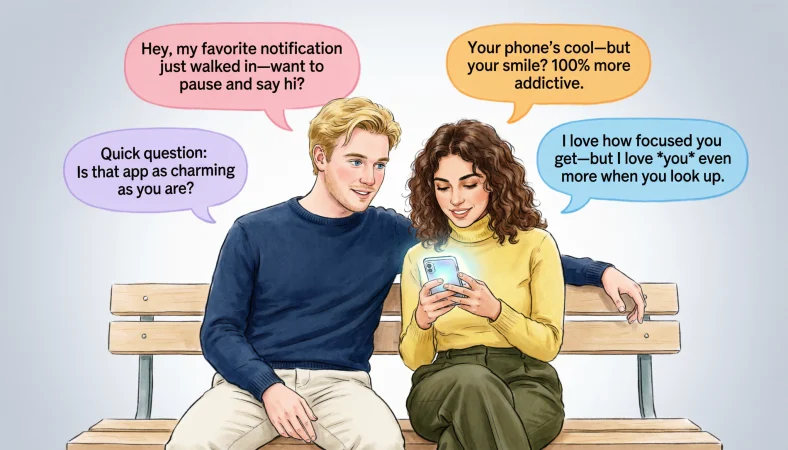
The girlfriend always on her phone issue can feel frustrating when texting, dates, conversations, or quality time seem interrupted by constant scrolling. The best response is calm, specific, and focused on connection rather than blame.
Top alternatives: “Can we have some phone-free time?”, “I miss having your full attention”, “Is something going on?”, “Can we talk about this?”, “I want more quality time together.”
Nothing tests your patience quite like telling your girlfriend a story while watching her thumb casually speedrun TikTok. The girlfriend always on her phone issue can become especially noticeable during dates, meals, movie nights, texting, or moments when you are trying to have a serious conversation.
But constant phone use does not automatically mean she is losing interest or hiding something. She could be working, chatting with friends, scrolling out of habit, dealing with notifications, or simply struggling to disconnect. The important part is how you bring it up.
Accusing her can turn a small annoyance into a relationship argument, while saying nothing can leave resentment quietly loading in the background. These responses give you funny, caring, direct, flirty, and mature ways to address the situation without turning every phone notification into a relationship emergency.
Funny Ways To Address It
“Should I start texting you from across the room?”
Use it when she is scrolling during a casual hangout.
Meaning: You are playfully pointing out the distance created by her phone.
“Your phone is getting more quality time than I am.”
Use it when the screen keeps interrupting your time together.
Meaning: You are jokingly asking for more attention.
“Do I need to compete with your algorithm?”
Use it when she is deep into endless scrolling.
Meaning: You are making light of the situation while signaling that you feel overlooked.
“I think your phone misses you when you put it down.”
Use it when she checks notifications every few minutes.
Meaning: You are teasing her about the habit without sounding aggressive.
“Is your phone paying rent? It lives here.”
Use it when she constantly has her screen in hand.
Meaning: You are humorously exaggerating how often she uses it.
“Tell your screen I said hi.”
Use it during a date when her attention keeps drifting.
Meaning: You are playfully asking her to notice you again.
“Breaking news: I’m still sitting right here.”
Use it when she starts scrolling during your conversation.
Meaning: You want her attention without making the moment overly serious.
“Your phone and I need to discuss boundaries.”
Use it when her phone interrupts your date repeatedly.
Meaning: You are jokingly treating the phone like relationship competition.
“I feel like the third wheel in my own relationship.”
Use it when she spends most of the evening on her screen.
Meaning: You are humorously expressing that you feel left out.
“Should I send you a calendar invite for our conversation?”
Use it when she keeps missing parts of what you say.
Meaning: You are joking about needing to schedule her attention.
“I promise, my face has better screen time.”
Use it when you want a playful compliment mixed with a complaint.
Meaning: You are reminding her that real-life connection deserves attention.
“Okay, influencer, your audience can wait five minutes.”
Use it when she is constantly checking social media.
Meaning: You are teasing her while asking for a short phone break.
Direct Responses
“I feel ignored when you stay on your phone while we’re together.”
Use it when the habit has become a repeated problem.
Meaning: You are clearly explaining how her behavior affects you.
“Can we talk about how much time we’re spending on our phones together?”
Use it when you want an honest relationship discussion.
Meaning: You want to address the pattern instead of arguing about one moment.
“I’d like more of your attention when we’re spending time together.”
Use it during a calm conversation.
Meaning: You are expressing a reasonable need without blaming her.
“Could we have some phone-free time?”
Use it during dates or meals.
Meaning: You are requesting intentional quality time.
“I miss talking to you without a screen between us.”
Use it when phone use has reduced meaningful conversations.
Meaning: You want to reconnect emotionally.
“Can we put our phones away for a while?”
Use it when both of you are distracted.
Meaning: You are suggesting a shared solution instead of singling her out.
“I want us to be more present when we’re together.”
Use it when you notice constant digital distractions.
Meaning: You are prioritizing connection.
“I’m not asking you to stop using your phone. I’m asking for some balance.”
Use it when she feels criticized about her phone habits.
Meaning: You want moderation rather than control.
“Sometimes I feel like your phone gets your attention before I do.”
Use it when the pattern makes you feel unimportant.
Meaning: You are honestly describing your emotional experience.
“Can we figure out a phone routine that works for both of us?”
Use it when you want a practical solution.
Meaning: You are treating the issue as a shared relationship problem.
“I want our time together to feel like actual time together.”
Use it during a serious discussion.
Meaning: You want quality rather than distracted company.
“I’d rather tell you this than quietly become resentful.”
Use it when the issue has been bothering you for a while.
Meaning: You are choosing honest communication before frustration builds.
Caring Responses
“Is everything okay? You seem really attached to your phone lately.”
Use it when her phone use suddenly increases.
Meaning: You are checking on her instead of immediately assuming the worst.
“Is there something keeping you busy on your phone?”
Use it when she seems unusually distracted.
Meaning: You are trying to understand the reason behind the behavior.
“I hope you know I’m not trying to control you.”
Use it when raising the subject carefully.
Meaning: You want to make your concern feel safe rather than restrictive.
“I just want to feel connected to you.”
Use it when phone use makes you feel distant.
Meaning: Your concern comes from wanting emotional closeness.
“If something is bothering you, you can talk to me.”
Use it when she seems distracted or withdrawn.
Meaning: You are offering support rather than making assumptions.
“I care more about us than the phone issue itself.”
Use it when the conversation starts becoming argumentative.
Meaning: The relationship matters more than winning the disagreement.
“I want to understand what your phone gives you that you need right now.”
Use it during a deeper conversation about habits.
Meaning: You are inviting honest reflection.
“I’m here if you need to talk about anything.”
Use it when her phone use seems connected to stress.
Meaning: You are making yourself emotionally available.
“I don’t want you to feel attacked when I bring this up.”
Use it before discussing the issue seriously.
Meaning: You are trying to keep the conversation emotionally safe.
“Maybe we can find a balance that feels good for both of us.”
Use it when both partners have different phone habits.
Meaning: You are looking for compromise.
“I want to spend time with you, not compete with notifications.”
Use it when alerts repeatedly interrupt your time.
Meaning: You are asking for more uninterrupted connection.
“Your phone might be important, but so is what we have.”
Use it when you want to emphasize relationship value.
Meaning: You are reminding her that shared attention matters.
Flirty Responses
“Put the phone down and look at your favorite distraction.”
Use it during a playful date.
Meaning: You are flirting while asking for attention.
“Your screen is cute, but I’m cuter.”
Use it when she keeps scrolling beside you.
Meaning: You are playfully competing for her attention.
“I’m right here, and apparently I’m fighting for screen time.”
Use it when she checks her phone repeatedly.
Meaning: You are turning frustration into playful flirting.
“Come back to me, gorgeous.”
Use it when she gets distracted during a romantic moment.
Meaning: You are asking for her attention affectionately.
“I promise I’m more interesting than your notifications.”
Use it when she checks messages during your date.
Meaning: You are teasing her while asking for connection.
“Your phone gets enough attention. I’m claiming the next ten minutes.”
Use it during a playful date.
Meaning: You are confidently asking for focused attention.
“Look at me. I dressed up for this.”
Use it when she starts scrolling during a date.
Meaning: You are jokingly reminding her to appreciate the moment.
“I came for a date, not a front-row seat to your scrolling.”
Use it when she gets absorbed in social media.
Meaning: You want her attention while keeping things playful.
“Your phone can wait. Your boyfriend is adorable.”
Use it when you want to make the complaint cute.
Meaning: You are asking for attention through humor and affection.
“I’m stealing you from your screen for a minute.”
Use it when you want to initiate some quality time.
Meaning: You are playfully creating a phone-free moment.
“Your notifications have terrible timing.”
Use it when a romantic moment gets interrupted.
Meaning: You are blaming the distraction rather than her.
“Come here, screen time is over. Boyfriend time.”
Use it during a relaxed evening together.
Meaning: You are affectionately asking for undivided attention.
Polite Responses
“Would you mind putting your phone away for a little while?”
Use it during dinner or an important conversation.
Meaning: You are making a respectful request.
“Could we focus on each other for a bit?”
Use it when you want a calmer moment together.
Meaning: You are asking for presence without criticism.
“I’d really appreciate some phone-free time together.”
Use it when planning a date.
Meaning: You are clearly expressing your preference.
“I know you have things to check, but could we talk first?”
Use it when she starts scrolling during an important discussion.
Meaning: You are respectfully prioritizing the conversation.
“I hope it’s okay if I mention something that’s been bothering me.”
Use it before raising the phone issue.
Meaning: You are opening the conversation gently.
“I sometimes feel distracted when we’re both on our phones.”
Use it when you want to avoid blaming her.
Meaning: You are framing the issue as a shared experience.
“Would you be open to having phone-free meals?”
Use it when you want a practical boundary.
Meaning: You are suggesting a specific solution.
“I really value our conversations, so I’d love more uninterrupted time.”
Use it when quality conversations are being interrupted.
Meaning: You are focusing on what you appreciate.
“I understand your phone may be important, but I’d appreciate some balance.”
Use it when she has legitimate reasons to stay connected.
Meaning: You are acknowledging her needs while expressing yours.
“Could we agree on a few times when phones stay away?”
Use it when you want a mutual agreement.
Meaning: You are proposing a respectful compromise.
“I’m not upset. I just want to talk about something.”
Use it when you want to prevent defensiveness.
Meaning: You are signaling that the conversation can be calm.
“Thank you for hearing me out.”
Use it after discussing the issue.
Meaning: You are encouraging open communication.
Sarcastic Responses
“I’ll wait until your phone gives you permission to talk to me.”
Use it when she repeatedly ignores the conversation to scroll.
Meaning: You are sarcastically highlighting the distraction.
“No rush. I know your notifications are very important.”
Use it when she keeps checking alerts.
Meaning: You are making a pointed joke about her priorities.
“Should I send this conversation as a notification?”
Use it when she is not listening.
Meaning: You are sarcastically asking for her attention.
“Your phone seems to be having a very productive relationship with you.”
Use it when she spends excessive time scrolling.
Meaning: You are joking about the phone receiving so much attention.
“I see we’re on a date with your phone tonight.”
Use it when her screen dominates the evening.
Meaning: You are sarcastically calling attention to the situation.
“Let me know when your screen time allows visitors.”
Use it when you want a playful sarcastic comeback.
Meaning: You are exaggerating how unavailable she seems.
“I’d hate to interrupt your very important scrolling.”
Use it when she checks social media during a conversation.
Meaning: You are sarcastically signaling that you feel ignored.
“Apparently I need better notification settings.”
Use it when she misses what you say.
Meaning: You are joking that she needs an alert for your presence.
“Your phone definitely knows more about your day than I do.”
Use it when she shares everything online but not with you.
Meaning: You are pointing out a communication gap.
“Congratulations to your phone for winning again.”
Use it when her screen gets attention during your date.
Meaning: You are sarcastically framing the phone as the winner.
“I’ll just compete with the algorithm tomorrow.”
Use it when she chooses scrolling over conversation.
Meaning: You are joking about the phone becoming your rival.
“Should I like your post before asking you a question?”
Use it when she is absorbed in social media.
Meaning: You are humorously asking to be noticed.
Cute Responses
“Can I have my girlfriend back from her phone?”
Use it when she gets lost in scrolling.
Meaning: You are affectionately asking for her attention.
“Your boyfriend is waiting for a little attention.”
Use it when you want to make the complaint sweet.
Meaning: You want connection without sounding demanding.
“Put that little rectangle down and come cuddle.”
Use it during a cozy evening.
Meaning: You are replacing screen time with affection.
“I miss your face even though you’re sitting right here.”
Use it when she is physically present but mentally elsewhere.
Meaning: You miss her attention, not her physical presence.
“Can we have a tiny phone-free adventure?”
Use it before going for a walk or coffee.
Meaning: You want shared experiences without digital distractions.
“I want your attention, please and thank you.”
Use it when teasing her affectionately.
Meaning: You are making a simple request in a cute way.
“Come back to planet us.”
Use it when she gets lost in her phone.
Meaning: You want her mentally present with you.
“I promise cuddles beat scrolling.”
Use it when relaxing together at home.
Meaning: You are offering affection as a better alternative.
“The phone can wait. I have hugs.”
Use it when she starts scrolling during downtime.
Meaning: You are inviting her into a warmer moment.
“I ordered one girlfriend, fully present.”
Use it when you want to make her laugh.
Meaning: You are playfully asking her to put the phone aside.
“Can I borrow your attention for a minute?”
Use it when you need to discuss something.
Meaning: You are making the request gently.
“I like you better without the screen between us.”
Use it during a romantic evening.
Meaning: You value face-to-face connection.
Dramatic Responses
“I have been abandoned for an iPhone.”
Use it when she starts scrolling during a date.
Meaning: You are dramatically exaggerating the situation for humor.
“Our love story has been interrupted by a notification.”
Use it when a romantic moment gets distracted.
Meaning: You are playfully making the phone the villain.
“I never thought I’d have to compete with a rectangle.”
Use it when her phone constantly gets attention.
Meaning: You are humorously describing your frustration.
“This is how I become the dramatic boyfriend.”
Use it when you catch yourself getting annoyed.
Meaning: You are acknowledging your reaction with self-aware humor.
“Tell my family I lost to Instagram.”
Use it when social media dominates the evening.
Meaning: You are jokingly presenting the situation as a tragedy.
“Our date has officially become a phone conference.”
Use it when she spends most of the date online.
Meaning: You are exaggerating the lack of face-to-face interaction.
“I fear your phone has stolen my girlfriend.”
Use it when you want an intentionally dramatic complaint.
Meaning: You are making your frustration playful rather than hostile.
“Cue the sad music. She’s scrolling again.”
Use it when teasing her about a familiar habit.
Meaning: You are using theatrical humor to point it out.
“I have become background scenery.”
Use it when she is deeply absorbed in her phone.
Meaning: You feel overlooked but are expressing it playfully.
“This phone has more access to you than I do.”
Use it when screen time becomes excessive.
Meaning: You are dramatically highlighting the imbalance.
“I would like to thank your notifications for ruining the moment.”
Use it after a romantic interruption.
Meaning: You are jokingly blaming the constant alerts.
“I’m filing an official complaint with the Department of Girlfriend Attention.”
Use it when you want a ridiculous dramatic joke.
Meaning: You are asking for attention through exaggerated humor.
Chill And Casual Responses
“Can we put our phones down for a bit?”
Use it when both of you are scrolling.
Meaning: You want a simple break from screens.
“Let’s just hang out without our phones for a while.”
Use it during a relaxed evening.
Meaning: You want uncomplicated quality time.
“You good? You’ve been on your phone a lot.”
Use it when her screen time seems unusual.
Meaning: You are checking in without accusing her.
“Let’s go somewhere and leave the phones alone.”
Use it before a walk or casual outing.
Meaning: You want to create a distraction-free experience.
“I feel like we’ve both been glued to our screens.”
Use it when phone use is mutual.
Meaning: You are avoiding making the issue one-sided.
“How about a no-phone hour?”
Use it when you want a simple experiment.
Meaning: You are suggesting a manageable break.
“Let’s actually watch the movie instead of scrolling through it.”
Use it during a movie night.
Meaning: You want both of you to be present.
“I miss our random conversations.”
Use it when scrolling has replaced talking.
Meaning: You want to reconnect naturally.
“Let’s grab coffee and leave the screens in our pockets.”
Use it when planning casual quality time.
Meaning: You want face-to-face interaction.
“I’m not mad. I just want some attention too.”
Use it when you want to be honest without escalating.
Meaning: You are expressing a simple emotional need.
“We should probably take a break from our phones.”
Use it when digital distractions affect both of you.
Meaning: You are suggesting a shared reset.
“Let’s be present for a minute.”
Use it when a conversation keeps getting interrupted.
Meaning: You are asking for focused connection.
Confident Responses
“I’m comfortable asking for quality time.”
Use it when you worry that speaking up will seem needy.
Meaning: You recognize that attention is a valid relationship need.
“I’m not trying to control her. I’m communicating what I need.”
Use it when explaining your concern to a friend.
Meaning: You understand the difference between boundaries and control.
“I deserve to feel heard when I’m talking.”
Use it when conversations are repeatedly interrupted.
Meaning: You are confidently stating a reasonable expectation.
“I can respect her phone habits while still asking for balance.”
Use it during a mature relationship discussion.
Meaning: You are advocating for compromise.
“I’m not competing with her phone. I’m asking for connection.”
Use it when someone misunderstands your concern.
Meaning: Your goal is closeness, not possession.
“I know what kind of relationship I want.”
Use it when deciding how to handle ongoing distractions.
Meaning: You are confident about your relationship standards.
“I’m allowed to say when something bothers me.”
Use it when you have been avoiding the conversation.
Meaning: You recognize that honest communication is healthy.
“I want presence, not just proximity.”
Use it when she is physically there but mentally distracted.
Meaning: Being together physically is not enough for you.
“I’m asking for attention, not ownership.”
Use it when the conversation becomes defensive.
Meaning: You want connection without controlling her behavior.
“Healthy relationships need honest conversations.”
Use it when preparing to discuss the issue seriously.
Meaning: You see communication as part of relationship maintenance.
“I’d rather communicate early than become quietly resentful.”
Use it when the phone issue has been building.
Meaning: You value direct communication over silent frustration.
“My feelings matter, and hers do too.”
Use it when looking for a balanced solution.
Meaning: You want a mutual conversation rather than one-sided demands.
Emotional Responses
“Sometimes I feel lonely even when we’re sitting together.”
Use it when phone use makes you feel emotionally disconnected.
Meaning: You are describing the deeper impact behind your frustration.
“I miss feeling like I have your full attention.”
Use it when the habit has become persistent.
Meaning: You want emotional presence rather than constant distraction.
“When you scroll while I’m talking, I feel like what I’m saying doesn’t matter.”
Use it during an honest conversation.
Meaning: You are explaining how the behavior affects your sense of importance.
“I don’t want to feel like I’m competing for your attention.”
Use it when notifications repeatedly interrupt your time.
Meaning: You want to feel prioritized during shared moments.
“I know your phone may be important, but our relationship is important to me too.”
Use it when discussing priorities calmly.
Meaning: You are asking for balance rather than elimination.
“I’m telling you because I care about us.”
Use it when the conversation feels difficult.
Meaning: Your concern comes from wanting the relationship to work.
“I feel disconnected when we spend more time scrolling than talking.”
Use it when communication has noticeably declined.
Meaning: You want to rebuild meaningful interaction.
“I don’t need your attention every second. I just need to feel considered.”
Use it when you want to avoid sounding demanding.
Meaning: You are asking for thoughtfulness rather than constant focus.
“Sometimes I wonder if you’d rather be somewhere else.”
Use it when phone use makes you question her interest.
Meaning: You are honestly expressing insecurity created by the situation.
“I want our time together to feel special again.”
Use it when phone habits have affected dates.
Meaning: You are longing for more intentional connection.
“I don’t want to fight about your phone. I want us to understand each other.”
Use it when emotions start rising.
Meaning: You are redirecting the discussion toward mutual understanding.
“I’d rather hear what’s really going on than make assumptions.”
Use it when you suspect something deeper may be happening.
Meaning: You prefer honest communication over jumping to conclusions.
Sweet And Romantic Responses
“I love spending time with you, so I want us to actually enjoy it together.”
Use it when suggesting a phone-free date.
Meaning: Your request comes from affection rather than criticism.
“You’re my favorite person to talk to, so I miss having those conversations.”
Use it when texting habits replace real conversations.
Meaning: You value emotional connection with her.
“I don’t want perfect phone habits. I just want more moments that feel like ours.”
Use it when discussing realistic expectations.
Meaning: You care about shared memories more than strict rules.
“Some of my favorite moments are when it’s just us.”
Use it when encouraging phone-free quality time.
Meaning: You want to protect your shared experiences.
“I’d choose a quiet evening with you over a hundred notifications.”
Use it during a romantic conversation.
Meaning: You are emphasizing the value of real connection.
“I want to remember our moments, not our screen time.”
Use it when planning a special date.
Meaning: You want meaningful memories instead of digital distractions.
“You have my attention, and I’d love some of yours.”
Use it when asking for more presence.
Meaning: You are expressing your need warmly.
“I love your attention almost as much as I love you.”
Use it when keeping the conversation romantic.
Meaning: You are making a serious request feel affectionate.
“Let’s make tonight about us.”
Use it before a date or cozy evening.
Meaning: You want intentional couple time.
“Your phone can be part of your life without being part of every moment.”
Use it during a mature relationship conversation.
Meaning: You are advocating for healthy boundaries.
“I just want more little moments with you.”
Use it when you miss casual conversations.
Meaning: You are asking for simple emotional closeness.
“I’m happiest when we’re actually present together.”
Use it when discussing quality time.
Meaning: Shared attention makes you feel connected and valued.
Clever Ways To Handle The Situation
“The issue isn’t the phone. It’s what the phone is replacing.”
Use it when discussing deeper relationship concerns.
Meaning: You are focusing on lost connection rather than the device itself.
“Attention is a relationship currency.”
Use it during a serious conversation about priorities.
Meaning: Consistent attention helps relationships feel valued.
“Being available online doesn’t always mean being present offline.”
Use it when discussing digital habits.
Meaning: Digital availability and emotional presence are different things.
“I’m not asking for less technology. I’m asking for more intention.”
Use it when proposing healthier phone habits.
Meaning: You want purposeful screen use rather than total avoidance.
“The goal isn’t fewer phone minutes. It’s better together minutes.”
Use it when creating a couple routine.
Meaning: Quality matters more than obsessively tracking time.
“We can share a room without sharing a moment.”
Use it when both partners are physically present but distracted.
Meaning: Physical proximity does not guarantee emotional connection.
“A notification can wait. A meaningful conversation might not.”
Use it when discussing priorities.
Meaning: Some real-life moments deserve immediate attention.
“If we’re always connected to everyone else, we may forget to connect with each other.”
Use it during a thoughtful conversation.
Meaning: Constant digital engagement can compete with intimacy.
“Phone habits become relationship habits when they happen every day.”
Use it when a repeated pattern needs addressing.
Meaning: Small behaviors can influence relationship quality over time.
“I’m interested in balance, not banning.”
Use it when she worries you want to control her phone use.
Meaning: You want reasonable boundaries rather than restrictions.
“Let’s create rules we both actually want to follow.”
Use it when discussing phone boundaries.
Meaning: Shared agreements work better than one-sided demands.
“The best solution is one that makes both of us feel considered.”
Use it when negotiating phone-free time.
Meaning: Both partners’ needs deserve attention.
Amazing But Respectful Responses
“I’m dating you, not your notification panel.”
Use it when phone distractions become excessive.
Meaning: You want the relationship to receive meaningful attention.
“I don’t need your phone to disappear. I need you to notice when I’m talking.”
Use it when she thinks you want to control her device.
Meaning: Your concern is about respect and presence.
“I’m not jealous of your phone. I’m frustrated by the lack of balance.”
Use it when someone dismisses your concern as insecurity.
Meaning: You are separating reasonable frustration from jealousy.
“If every conversation loses to your screen, we have a bigger problem than screen time.”
Use it when the habit consistently interrupts communication.
Meaning: You are pointing toward the underlying relationship issue.
“I can handle your phone use. I can’t pretend feeling ignored doesn’t bother me.”
Use it when your feelings have been dismissed.
Meaning: You are honestly defending your emotional experience.
“You can scroll whenever you want. I can also decide what kind of relationship works for me.”
Use it when boundaries need to be clear.
Meaning: You respect her autonomy while recognizing your own.
“I’m asking for presence, not permission.”
Use it when she interprets your request as control.
Meaning: You want voluntary connection rather than authority over her.
“The problem isn’t that you have a phone. It’s that I keep feeling second to it.”
Use it during a serious relationship conversation.
Meaning: You are explaining the emotional core of the issue.
“I shouldn’t have to compete for basic attention.”
Use it when conversations repeatedly get ignored.
Meaning: You believe attentive communication is a reasonable relationship expectation.
“If you need your phone for something important, tell me. If you’re just scrolling, let’s make room for us too.”
Use it when you want a practical compromise.
Meaning: You are distinguishing necessary phone use from casual distraction.
“I’m not asking you to change who you are. I’m asking you to meet me halfway.”
Use it when discussing different digital habits.
Meaning: You want compromise instead of control.
“Respect works both ways, including when one person is talking.”
Use it when conversations are repeatedly interrupted.
Meaning: You are setting a clear standard for mutual consideration.
FAQs
What does “girlfriend always on her phone” usually mean?
It can mean many things, including habit, boredom, work, social media use, messaging friends, stress, or simply frequent phone dependence. It does not automatically mean she has lost interest in the relationship.
Is my girlfriend always being on her phone a relationship problem?
It can become a problem when phone use consistently interrupts conversations, dates, affection, sleep, meals, or quality time. The key issue is usually the effect on the relationship rather than the phone itself.
Does being on her phone mean she is talking to someone else?
Not necessarily. There are many harmless reasons someone may use their phone frequently. Avoid jumping to conclusions without evidence.
How should I bring up the girlfriend always on her phone issue?
Choose a calm moment and explain how the behavior makes you feel rather than accusing her of doing something wrong. “I feel ignored when we talk and you keep scrolling” is usually more productive than “You’re always on your phone.”
What if she says I am being controlling?
Explain that you are not asking to monitor, confiscate, or control her phone. You are asking for reasonable quality time and mutual attention.
Can I make a joke about her phone use?
Yes, if your relationship is comfortable with teasing and the issue is minor. If she is genuinely stressed or the topic has become emotional, use a caring and direct approach instead.
What is a flirty response to a girlfriend who is always on her phone?
Try “Put the phone down and look at your favorite distraction.” It keeps the mood playful while asking for attention.
What should I say if she uses her phone for work?
Acknowledge that work may require attention and suggest specific phone-free periods when she is actually available. Balance is more realistic than expecting zero phone use.
What if she becomes defensive?
Stay calm and focus on your feelings and specific situations. Avoid turning the conversation into a list of every time she has ever used her phone.
What if I am the one always checking my phone too?
Own it. A mutual phone-free routine can feel much fairer than asking only one person to change.
What if she says she needs her phone to relax?
You can respect that while explaining that you also need quality time. Consider agreeing on separate scrolling time and intentional couple time.
Should couples have phone-free rules?
They can be helpful if both partners agree. Simple rules such as phone-free meals, dates, or the first 30 minutes before bed can create more intentional connection.
What if the phone issue keeps happening after we talk about it?
If you have clearly communicated your feelings and nothing changes, the bigger issue may be whether your needs are being heard and respected. That deserves a deeper relationship conversation.
Conclusion
The girlfriend always on her phone issue can be annoying, but it does not have to become a relationship battlefield. The strongest move is to communicate what you actually need instead of silently counting every scroll, notification, and screen unlock. A funny line can break the tension, while a caring or confident response can open the door to a much deeper conversation.
Remember, the goal is not to win a battle against a smartphone. It is to create more moments where both people feel seen, heard, and valued. Try the response that matches your situation, save the ones that feel natural, and share this list with anyone whose date keeps getting interrupted by “just one more scroll.”