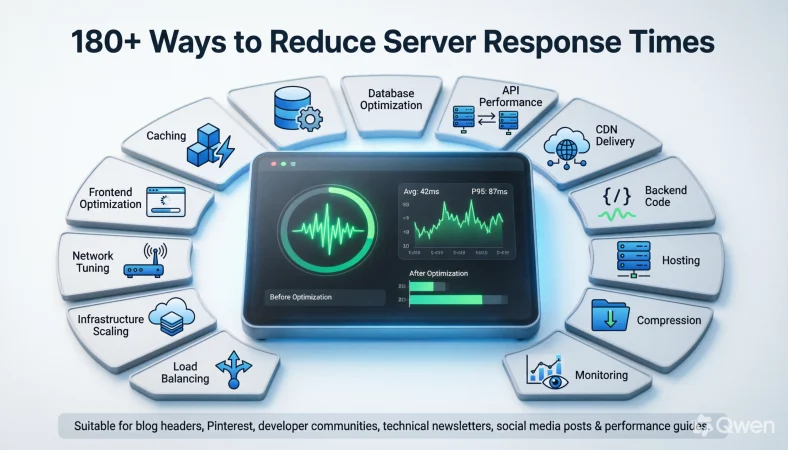
To reduce server response times, focus on faster hosting, efficient database queries, caching, optimized code, CDN delivery, compression, and fewer unnecessary requests. Small backend improvements can make pages feel dramatically faster.
Top alternatives: optimize server performance, improve server response time, speed up website server, reduce TTFB, improve backend performance
Nothing makes people leave a website faster than watching a loading spinner audition for a starring role. Whether you are fixing a slow online store, improving a company website, debugging an API, or trying to make your next project feel lightning-fast, knowing how to reduce server response times matters.
Slow server responses can affect user experience, conversions, search performance, and overall application responsiveness. The good news is that you do not always need a massive technical overhaul. Better caching, smarter database queries, efficient server-side code, appropriate hosting, content delivery networks, and fewer unnecessary operations can make a noticeable difference.
From quick fixes to deeper backend improvements, the right approach depends on what is actually slowing the server down. Here are practical, easy-to-understand ways to diagnose and improve server response performance without turning optimization into a full-time detective mystery.
Quick And Easy Ways To Reduce Server Response Times
Enable server-side caching.
Example: A website caches frequently requested pages instead of generating them repeatedly.
Meaning: Caching reduces repeated processing and can return content faster.
Use a faster hosting plan.
Example: A busy website moves from limited shared hosting to stronger infrastructure.
Meaning: Better resources can improve server responsiveness.
Optimize database queries.
Example: A developer removes unnecessary database operations from a popular page.
Meaning: Fewer inefficient queries can shorten backend processing time.
Compress responses.
Example: A server uses Brotli or Gzip for supported text responses.
Meaning: Smaller responses can travel more efficiently.
Use a CDN.
Example: A global website serves static assets from locations closer to visitors.
Meaning: A CDN can reduce network distance for cached content.
Remove unnecessary plugins.
Example: A website owner disables unused extensions that perform background operations.
Meaning: Fewer server-side tasks can reduce overhead.
Optimize backend code.
Example: A developer simplifies a slow function handling every request.
Meaning: More efficient code can reduce processing time.
Keep software updated.
Example: A server receives performance improvements from a supported software release.
Meaning: Updated components may improve efficiency and reliability.
Monitor server resources.
Example: A developer watches CPU, memory, and storage usage during traffic spikes.
Meaning: Monitoring helps identify resource-related bottlenecks.
Reduce unnecessary redirects.
Example: A website removes several redirect hops before reaching the final page.
Meaning: Fewer hops can shorten the request journey.
Optimize DNS performance.
Example: A site uses a responsive DNS provider and sensible configuration.
Meaning: Faster DNS resolution can reduce initial connection delay.
Measure before changing everything.
Example: A developer checks timing data before modifying the server architecture.
Meaning: Measurement helps target the actual bottleneck.
Professional Ways To Reduce Server Response Times
Audit backend processing time.
Example: An engineering team reviews request traces to find slow operations.
Meaning: Profiling reveals where server time is being spent.
Introduce strategic caching.
Example: Frequently requested API results are cached for a suitable period.
Meaning: Repeated work can be avoided.
Optimize database indexes.
Example: A developer adds appropriate indexes to frequently searched fields.
Meaning: Proper indexing can make database lookups more efficient.
Use connection pooling.
Example: An application reuses database connections rather than opening new ones repeatedly.
Meaning: Connection reuse reduces connection overhead.
Separate static and dynamic workloads.
Example: Images and stylesheets are delivered separately from application processing.
Meaning: Different workloads can be handled more efficiently.
Profile application code.
Example: Engineers use performance profiling to identify expensive functions.
Meaning: Profiling exposes code-level bottlenecks.
Scale resources according to demand.
Example: Infrastructure automatically adds capacity during traffic peaks.
Meaning: Additional resources can prevent performance degradation.
Optimize API payloads.
Example: An API returns only the fields a client actually needs.
Meaning: Smaller payloads reduce processing and transfer work.
Use asynchronous processing where appropriate.
Example: A nonessential report is generated in the background instead of during a page request.
Meaning: Long-running work does not block the user-facing response.
Review application dependencies.
Example: A team removes unnecessary packages from a backend service.
Meaning: Leaner applications can have less overhead.
Monitor latency by endpoint.
Example: Engineers compare response times across individual API routes.
Meaning: Endpoint-level data makes optimization more precise.
Set performance budgets.
Example: A development team establishes acceptable backend latency targets.
Meaning: Budgets help prevent performance from gradually deteriorating.
Clever Server Response Time Optimization Ideas
Cache the boring stuff.
Example: Frequently requested configuration data is cached instead of recalculated.
Meaning: Repeated predictable work does not need to happen every time.
Stop making the server think twice.
Example: A developer removes duplicate calculations from a request handler.
Meaning: Eliminating repeated work improves efficiency.
Ask the database smarter questions.
Example: A query requests only required records and columns.
Meaning: More precise queries reduce unnecessary database work.
Send less data.
Example: An API removes unused fields from a large JSON response.
Meaning: Smaller payloads can improve response efficiency.
Reuse connections.
Example: An application uses a connection pool for database access.
Meaning: Reusing connections avoids repeated setup costs.
Move heavy jobs off the request path.
Example: Image processing runs through a background worker.
Meaning: Users receive responses without waiting for expensive tasks.
Cache close to users.
Example: Static assets are distributed through geographically closer CDN locations.
Meaning: Shorter network paths can improve delivery speed.
Find the slowest five percent.
Example: A team examines requests in the highest latency percentile.
Meaning: Slow outliers can reveal important performance problems.
Do not optimize imaginary problems.
Example: Developers inspect profiling data before rewriting working code.
Meaning: Evidence keeps optimization focused.
Make expensive operations less frequent.
Example: A service refreshes rarely changing information periodically instead of per request.
Meaning: Reducing operation frequency lowers server workload.
Keep hot paths simple.
Example: Frequently accessed endpoints receive streamlined processing logic.
Meaning: Critical request paths benefit from minimal overhead.
Measure the win.
Example: Developers compare response metrics before and after an optimization.
Meaning: Measurement confirms whether the change actually helped.
Creative Ways To Improve Server Response Times
Turn repeated work into cached work.
Example: A server stores common calculations for reuse.
Meaning: Cached results reduce repeated computation.
Give heavy tasks their own lane.
Example: Large data exports run through background jobs.
Meaning: Resource-intensive work stays away from interactive requests.
Trim oversized API responses.
Example: A mobile endpoint returns only information needed on the current screen.
Meaning: Smaller responses improve efficiency.
Use precomputed data.
Example: Frequently displayed statistics are calculated ahead of time.
Meaning: Users do not wait for expensive calculations during requests.
Batch related operations.
Example: Several small database requests are replaced with a more efficient operation.
Meaning: Batching can reduce repeated overhead.
Cache database results carefully.
Example: A product catalog caches frequently requested information.
Meaning: Popular data can be served without repeated database work.
Optimize the first request.
Example: A team focuses on reducing the time before the first useful response.
Meaning: Improving initial latency can make the entire experience feel faster.
Keep backend dependencies nearby.
Example: Application servers and databases are deployed in suitable network locations.
Meaning: Shorter network paths can reduce latency.
Use lightweight response formats.
Example: An API avoids sending unnecessary nested structures.
Meaning: Simpler payloads can require less processing.
Reuse expensive computations.
Example: A service stores results that remain valid for several minutes.
Meaning: Reuse prevents duplicate calculations.
Design around traffic patterns.
Example: Infrastructure is optimized for predictable daily demand peaks.
Meaning: Capacity planning can prevent avoidable slowdowns.
Make speed part of architecture.
Example: Developers consider latency when designing a new service.
Meaning: Performance works better when built in from the beginning.
Database-Focused Ways To Reduce Server Response Times
Add appropriate database indexes.
Example: A frequently filtered column receives a suitable index.
Meaning: Indexes can improve lookup efficiency.
Avoid unnecessary SELECT fields.
Example: A query requests three needed columns instead of an entire record.
Meaning: Less data reduces database and application work.
Limit returned rows.
Example: A search endpoint returns the first relevant page of results.
Meaning: Smaller result sets require less processing.
Inspect slow queries.
Example: A developer reviews database performance logs for high-latency queries.
Meaning: Slow queries reveal optimization opportunities.
Avoid repeated queries.
Example: An application fetches shared information once rather than inside a loop.
Meaning: Fewer database calls reduce overhead.
Use query plans.
Example: An engineer checks how the database executes an expensive query.
Meaning: Query plans can expose inefficient execution paths.
Cache stable database results.
Example: Frequently requested category data is temporarily cached.
Meaning: Repeated database work can be avoided.
Archive unnecessary records when appropriate.
Example: A large operational table is separated from old historical data.
Meaning: Better data organization can help maintain query performance.
Choose suitable data types.
Example: A developer uses efficient database column types for stored values.
Meaning: Appropriate schema design can improve storage and processing efficiency.
Keep transactions focused.
Example: An application avoids putting unrelated work inside a database transaction.
Meaning: Shorter transactions can reduce unnecessary database contention.
Optimize joins.
Example: A developer reviews expensive joins between large tables.
Meaning: Efficient joins can reduce query execution time.
Monitor database health.
Example: A team tracks query latency, connections, and resource usage.
Meaning: Monitoring helps catch database bottlenecks early.
API Strategies To Reduce Server Response Times
Return only required fields.
Example: A profile API omits unused metadata from its response.
Meaning: Smaller payloads reduce unnecessary work.
Cache frequent API requests.
Example: A public catalog endpoint caches popular results.
Meaning: Repeated requests can be served faster.
Paginate large results.
Example: A reporting API returns records in manageable pages.
Meaning: Smaller responses are easier to process.
Avoid unnecessary API calls.
Example: A frontend stops requesting data already available locally.
Meaning: Fewer calls reduce backend workload.
Use efficient serialization.
Example: A service avoids excessive processing while creating response objects.
Meaning: Efficient serialization can lower server work.
Compress API responses.
Example: A JSON API uses supported response compression.
Meaning: Compression can reduce transfer size.
Keep authentication efficient.
Example: A service avoids repeated expensive authentication operations when appropriate.
Meaning: Efficient authentication can reduce request overhead.
Batch compatible requests.
Example: Several related records are retrieved through one suitable endpoint.
Meaning: Batching can reduce request overhead.
Set sensible cache expiration.
Example: Semi-static API data receives a suitable cache lifetime.
Meaning: Clients and intermediaries can reuse valid results.
Monitor slow endpoints.
Example: Developers track latency for each API route.
Meaning: Endpoint metrics reveal where optimization matters most.
Avoid oversized JSON.
Example: An API removes deeply nested data that clients never use.
Meaning: Smaller responses require less processing and transfer.
Design APIs around real use cases.
Example: A mobile endpoint returns information needed for one specific screen.
Meaning: Purpose-built responses can improve efficiency.
Hosting And Infrastructure Responses For Faster Servers
Choose infrastructure with enough CPU.
Example: A growing application moves to a plan with stronger processing capacity.
Meaning: Adequate CPU prevents processing bottlenecks.
Increase available memory when needed.
Example: A server frequently runs short on RAM during peak traffic.
Meaning: Additional memory can reduce resource pressure.
Use suitable storage.
Example: An application moves performance-sensitive workloads to faster storage.
Meaning: Faster storage can reduce certain I/O delays.
Place services strategically.
Example: Application and database infrastructure are deployed in suitable regions.
Meaning: Network distance can affect latency.
Use load balancing.
Example: Requests are distributed across multiple application servers.
Meaning: Load balancing can prevent one server from becoming overwhelmed.
Scale horizontally when appropriate.
Example: Additional application instances handle rising traffic.
Meaning: More instances can distribute workload.
Monitor resource saturation.
Example: Engineers watch CPU, memory, disk, and network utilization.
Meaning: Saturation often points toward infrastructure bottlenecks.
Plan for traffic spikes.
Example: An online store prepares infrastructure for seasonal demand.
Meaning: Capacity planning helps maintain response performance.
Keep critical services reliable.
Example: A team monitors dependencies that can delay application responses.
Meaning: Dependency health affects server latency.
Use autoscaling where appropriate.
Example: Cloud infrastructure adds capacity when demand increases.
Meaning: Dynamic scaling helps match resources with workload.
Review hosting limitations.
Example: A website owner checks whether resource caps are causing slowdowns.
Meaning: Hidden limits can affect performance.
Avoid unnecessary infrastructure complexity.
Example: A small application removes an excessive chain of backend services.
Meaning: Simpler architecture can reduce unnecessary latency.
Caching Strategies To Reduce Server Response Times
Cache frequently requested pages.
Example: A popular informational page is served from cache.
Meaning: The server avoids regenerating identical content.
Cache API responses.
Example: A frequently requested product endpoint temporarily stores results.
Meaning: Repeated requests can be answered faster.
Use browser caching.
Example: Static assets receive suitable cache-control settings.
Meaning: Returning visitors may avoid downloading unchanged resources.
Use CDN caching.
Example: Images and stylesheets are cached at edge locations.
Meaning: Content can be delivered closer to users.
Cache expensive calculations.
Example: A server stores the result of a costly report calculation.
Meaning: Repeated calculations become unnecessary.
Set sensible expiration times.
Example: Stable content receives longer cache lifetimes than frequently changing data.
Meaning: Cache freshness matches content behavior.
Invalidate stale content correctly.
Example: A deployment clears cached pages affected by updated data.
Meaning: Users receive current information without abandoning caching.
Cache carefully around personalization.
Example: Public content is cached separately from private account information.
Meaning: Proper cache design protects correctness and privacy.
Use layered caching.
Example: An application combines browser, CDN, application, and data caching where suitable.
Meaning: Multiple layers can reduce repeated work.
Track cache effectiveness.
Example: Engineers monitor cache hit rates after enabling a new cache.
Meaning: Metrics show whether caching is actually helping.
Avoid caching everything blindly.
Example: Developers exclude rapidly changing or user-specific data from unsuitable caches.
Meaning: Selective caching prevents stale or incorrect responses.
Refresh expensive data strategically.
Example: Frequently used data is refreshed periodically rather than regenerated for every visitor.
Meaning: Controlled refresh reduces backend workload.
Code Optimization Ideas For Faster Server Responses
Remove duplicate calculations.
Example: A backend function computes the same value multiple times and is rewritten to reuse it.
Meaning: Reuse reduces unnecessary CPU work.
Simplify hot-path logic.
Example: A heavily used endpoint receives a streamlined request handler.
Meaning: Critical code benefits from efficiency.
Profile before rewriting.
Example: Developers identify the slow function before changing the application architecture.
Meaning: Profiling prevents wasted optimization effort.
Avoid unnecessary loops.
Example: A developer replaces repeated iteration with a more suitable operation.
Meaning: Less computation can reduce processing time.
Reduce blocking operations.
Example: Nonessential work is moved away from the main request path.
Meaning: Users do not wait for unrelated processing.
Reuse expensive objects when appropriate.
Example: A service avoids repeatedly creating costly resources.
Meaning: Resource reuse can lower overhead.
Keep dependencies lean.
Example: Unused backend packages are removed from the project.
Meaning: Less unnecessary code can simplify execution.
Optimize serialization.
Example: A service avoids converting large unused datasets into response objects.
Meaning: Less serialization work improves efficiency.
Handle errors efficiently.
Example: An application avoids repeated recovery operations for predictable failures.
Meaning: Better error handling can reduce wasted processing.
Reduce unnecessary logging.
Example: High-volume endpoints avoid excessive production logging.
Meaning: Appropriate logging can reduce I/O overhead.
Use asynchronous processing appropriately.
Example: Email generation occurs after the user-facing response.
Meaning: Noncritical tasks do not delay interactive requests.
Retest after optimization.
Example: Developers benchmark the endpoint after changing its code.
Meaning: Testing verifies whether the optimization produced a real improvement.
Mobile-Friendly Server Response Time Strategies
Keep API responses compact.
Example: A mobile app receives only the fields needed for its current view.
Meaning: Smaller responses can work better on slower connections.
Avoid unnecessary background requests.
Example: An app stops repeatedly refreshing unchanged information.
Meaning: Fewer requests reduce server workload.
Cache frequently used data.
Example: A mobile application stores suitable content locally.
Meaning: Repeated server requests can be avoided.
Use pagination.
Example: A mobile feed loads a limited number of items at a time.
Meaning: Smaller responses reduce processing and transfer work.
Optimize image delivery.
Example: A service sends appropriately sized images instead of oversized originals.
Meaning: Smaller media reduces unnecessary transfer.
Compress text responses.
Example: API responses are compressed when supported.
Meaning: Compression reduces data transferred over the network.
Design endpoints for mobile needs.
Example: An endpoint returns concise information instead of a full desktop dataset.
Meaning: Purpose-built responses reduce unnecessary data.
Avoid serial API waterfalls.
Example: Independent requests are structured so they do not unnecessarily wait for one another.
Meaning: Reducing sequential dependencies can improve perceived speed.
Cache configuration data.
Example: Stable app settings are reused instead of fetched repeatedly.
Meaning: Stable data does not need constant server retrieval.
Use sensible retry behavior.
Example: An app avoids instantly repeating failed requests several times.
Meaning: Controlled retries prevent unnecessary server load.
Monitor mobile latency.
Example: Developers compare response times across mobile-focused endpoints.
Meaning: Real usage data reveals mobile bottlenecks.
Optimize for imperfect networks.
Example: An app is designed to work efficiently with higher network latency.
Meaning: Efficient requests improve the experience beyond fast connections.
Search-Friendly Ways To Reduce Server Response Times
Improve server processing speed.
Example: A website owner investigates slow backend operations affecting page delivery.
Meaning: Faster processing can improve initial response performance.
Reduce time to first byte.
Example: A developer measures backend and network timing before optimizing.
Meaning: Lower TTFB can contribute to a faster page experience.
Use reliable hosting.
Example: A site moves away from consistently overloaded infrastructure.
Meaning: Stable resources can improve response consistency.
Enable appropriate caching.
Example: Frequently requested pages are cached.
Meaning: Cached content can reduce server processing.
Optimize database performance.
Example: A website removes a slow query from a high-traffic page.
Meaning: Faster database work can improve server response time.
Reduce redirects.
Example: A website removes unnecessary redirect chains.
Meaning: Fewer intermediate requests can shorten navigation.
Use a CDN for suitable assets.
Example: Static content is served through distributed edge locations.
Meaning: CDN delivery can reduce network distance.
Compress server responses.
Example: Text-based responses are delivered using supported compression.
Meaning: Smaller responses can transfer more efficiently.
Monitor real performance.
Example: A site tracks server latency across locations and devices.
Meaning: Real measurements provide stronger optimization guidance.
Keep plugins under control.
Example: A content management system removes unnecessary extensions.
Meaning: Fewer backend tasks can reduce processing overhead.
Optimize dynamic content.
Example: Frequently requested dynamic results use appropriate caching.
Meaning: Repeated generation can be reduced.
Test after every major change.
Example: A site owner compares response metrics after a hosting upgrade.
Meaning: Testing shows whether optimization produced measurable gains.
Advanced Strategies To Reduce Server Response Times
Use distributed caching carefully.
Example: Multiple application instances share suitable cached information.
Meaning: Shared caching can reduce duplicated backend work.
Optimize service-to-service calls.
Example: A microservice application reduces unnecessary internal requests.
Meaning: Fewer internal hops can reduce latency.
Trace complete requests.
Example: Engineers follow a request through application, database, and external services.
Meaning: Distributed tracing can reveal hidden bottlenecks.
Reduce dependency chains.
Example: An endpoint stops waiting for several unrelated services.
Meaning: Fewer sequential dependencies can improve response time.
Use connection pooling across suitable services.
Example: Applications reuse connections to frequently accessed databases.
Meaning: Reuse reduces repeated connection setup.
Precompute predictable results.
Example: Common reports are generated before users request them.
Meaning: Precomputation moves expensive work away from interactive requests.
Optimize serialization and parsing.
Example: Services reduce unnecessary transformation of large objects.
Meaning: Less data processing can reduce latency.
Tune database workloads.
Example: Engineers separate intensive analytical operations from transactional traffic.
Meaning: Workload separation can protect interactive performance.
Review cold-start latency.
Example: A serverless application is optimized for startup-sensitive functions.
Meaning: Reducing initialization work can improve first-request latency.
Use regional deployment strategically.
Example: A global application deploys services in regions appropriate for its audience.
Meaning: Geographic placement can affect network latency.
Monitor percentile latency.
Example: A team tracks p95 and p99 response times instead of only averages.
Meaning: Percentiles reveal slow experiences hidden by averages.
Optimize based on evidence.
Example: Engineers prioritize changes supported by production performance data.
Meaning: Data-driven optimization produces more useful improvements.
Smart And Practical Server Speed Responses
“Cache it before you calculate it again.”
Example: A developer uses this principle for repeatedly requested data.
Meaning: It encourages avoiding unnecessary repeated work.
“Query less, return less, process less.”
Example: A team reviews an oversized database request.
Meaning: Reducing work at each stage can improve latency.
“Find the bottleneck, then fix it.”
Example: Engineers inspect monitoring data before making changes.
Meaning: It promotes targeted optimization.
“Fast infrastructure cannot rescue inefficient code.”
Example: A team investigates application logic despite having strong hosting.
Meaning: Hardware alone does not solve every performance problem.
“A cache hit is a beautiful thing.”
Example: A developer celebrates improved cache-hit performance.
Meaning: It highlights the value of serving reusable results quickly.
“Do not make every request do everything.”
Example: An application moves optional work into background processing.
Meaning: Request paths should focus on necessary tasks.
“Keep critical requests lean.”
Example: A high-traffic endpoint is stripped of unnecessary operations.
Meaning: Important paths benefit from focused processing.
“Measure latency, not vibes.”
Example: A developer compares performance metrics before and after optimization.
Meaning: Real data matters more than assumptions.
“Database speed is application speed.”
Example: A team investigates slow queries behind a slow webpage.
Meaning: Database performance directly affects many backend responses.
“Scale when optimization reaches its limit.”
Example: A growing service adds infrastructure after removing major inefficiencies.
Meaning: Scaling works best alongside optimization.
“Make slow requests boring.”
Example: Engineers eliminate expensive work from frequently accessed endpoints.
Meaning: It promotes predictable, efficient request handling.
“Every millisecond deserves a reason.”
Example: A performance-focused team reviews unexpected latency.
Meaning: It encourages careful investigation of delays.
Friendly And Simple Server Performance Tips
Start with measurements.
Example: A beginner checks server timing before changing settings.
Meaning: Measurement creates a useful performance baseline.
Check hosting first.
Example: A site owner investigates whether resource limits are being reached.
Meaning: Infrastructure can be an obvious source of delays.
Look at your database.
Example: A developer discovers one query taking most of the request time.
Meaning: Database operations often deserve close attention.
Turn on suitable caching.
Example: A website caches frequently requested content.
Meaning: Caching reduces repeated server work.
Remove unused plugins.
Example: A site disables extensions that are no longer needed.
Meaning: Removing unnecessary processing can improve efficiency.
Keep your code tidy.
Example: A developer removes repeated operations from a popular endpoint.
Meaning: Cleaner logic can reduce processing overhead.
Compress large responses.
Example: A server compresses text-based API output.
Meaning: Smaller responses can transfer more efficiently.
Use a CDN for static content.
Example: A global site distributes images and stylesheets through edge locations.
Meaning: Users can receive cached content from closer locations.
Watch traffic peaks.
Example: A store checks performance during high-demand campaigns.
Meaning: Traffic patterns reveal when capacity becomes a problem.
Avoid unnecessary redirects.
Example: A page reaches its final destination without multiple intermediate redirects.
Meaning: Fewer hops reduce unnecessary delay.
Keep an eye on errors.
Example: A developer notices repeated backend failures during slow periods.
Meaning: Errors can sometimes create extra processing and retries.
Test your changes.
Example: A site owner compares server timing after enabling caching.
Meaning: Testing confirms whether the change helped.
Confident Strategies To Reduce Server Response Times
Optimize the biggest bottleneck first.
Example: Engineers focus on a database query responsible for most request latency.
Meaning: High-impact fixes provide better returns.
Do not guess when you can measure.
Example: A developer uses profiling data to guide performance work.
Meaning: Evidence creates more reliable decisions.
Cache high-demand content.
Example: A popular endpoint serves repeated results from cache.
Meaning: Caching can reduce backend workload.
Protect the request path.
Example: Nonessential operations are moved into background jobs.
Meaning: Critical requests stay focused.
Scale deliberately.
Example: Infrastructure adds instances after performance analysis confirms capacity pressure.
Meaning: Scaling should respond to actual demand.
Keep database operations efficient.
Example: An application reduces expensive queries on its busiest route.
Meaning: Efficient data access improves backend responsiveness.
Monitor continuously.
Example: A team tracks latency after every major deployment.
Meaning: Continuous monitoring catches regressions.
Use appropriate architecture.
Example: A service separates workloads that interfere with each other.
Meaning: Architecture can prevent performance bottlenecks.
Optimize the common path.
Example: Engineers improve the endpoint receiving most production traffic.
Meaning: High-volume paths offer major optimization opportunities.
Reduce unnecessary dependencies.
Example: An application stops waiting on a service that is not required for the response.
Meaning: Fewer dependencies can shorten request time.
Set measurable goals.
Example: A team establishes a target response latency for a critical endpoint.
Meaning: Clear targets make progress easier to evaluate.
Keep performance work ongoing.
Example: Developers review latency trends after each release.
Meaning: Server performance requires maintenance rather than one magical fix.
The Most Useful Server Response Time Checklist
Measure current response time.
Example: A developer records baseline latency before optimization.
Meaning: A baseline makes improvements measurable.
Identify the slowest endpoint.
Example: Monitoring reveals one API route performing worse than others.
Meaning: Endpoint comparison helps prioritize work.
Check CPU usage.
Example: Engineers inspect whether processors are consistently saturated.
Meaning: CPU pressure can contribute to slow processing.
Check memory usage.
Example: A server experiences performance problems when available memory becomes limited.
Meaning: Memory pressure can affect application performance.
Inspect database queries.
Example: A developer reviews slow-query information.
Meaning: Database bottlenecks can dominate response time.
Review caching.
Example: A team checks whether popular content receives cache hits.
Meaning: Cache effectiveness can reveal optimization opportunities.
Check network latency.
Example: Engineers investigate delays between application components.
Meaning: Network distance and dependency calls can add latency.
Review redirects.
Example: A website removes unnecessary redirect chains.
Meaning: Fewer redirects can streamline requests.
Compress suitable responses.
Example: Text-heavy API responses receive compression.
Meaning: Compression reduces transfer size.
Optimize backend code.
Example: A profiler identifies an expensive function inside a high-volume request.
Meaning: Code optimization can directly reduce processing time.
Retest after every major change.
Example: Engineers compare latency before and after a deployment.
Meaning: Testing confirms actual impact.
Keep monitoring after the win.
Example: A team watches performance metrics after reducing latency.
Meaning: Monitoring helps ensure the improvement lasts.
FAQs.
What does “reduce server response times” mean?
It means making the server process and return requests faster. Common approaches include caching, database optimization, better infrastructure, efficient code, compression, and reducing unnecessary work.
Why is server response time important?
Faster responses can improve user experience and make applications feel more responsive. Slow backend performance can also contribute to poor page-loading experiences and frustrating interactions.
What is the fastest way to reduce server response times?
There is no universal fastest fix because the bottleneck differs between systems. Checking server metrics, database queries, caching, hosting resources, and backend processing usually provides the best starting point.
Can caching reduce server response times?
Yes. Caching can allow frequently requested content or results to be served without repeating expensive processing or database work.
Does better hosting always make a server faster?
Not necessarily. More resources can help when infrastructure is the bottleneck, but inefficient queries, slow code, poor architecture, or external dependencies can still cause delays.
How can database optimization improve response time?
Efficient queries, appropriate indexes, smaller result sets, and fewer unnecessary database calls can reduce the time an application spends waiting for data.
Does a CDN reduce server response times?
A CDN can reduce delivery latency for suitable cached content by serving it from locations closer to users. It does not automatically make every dynamic backend operation faster.
Can reducing server response times help SEO?
Potentially, yes. Server performance contributes to the broader page experience, but SEO depends on many factors beyond server latency alone.
What if I do not actually need a major performance upgrade?
Start with measurement. If the current response time meets your users’ needs and performance targets, unnecessary optimization may add complexity without meaningful benefits.
Is humor appropriate when discussing server performance?
Absolutely. A little humor can make technical content easier to remember, especially in team chats, study notes, presentations, or social posts. Just keep technical recommendations accurate when they affect production systems.
What should I check first when a server is slow?
Start with measurements and identify whether the delay comes from application processing, database operations, network dependencies, infrastructure resources, or another bottleneck.
How often should server performance be monitored?
For important applications, performance should be monitored continuously or at least regularly enough to catch regressions after deployments, traffic changes, or infrastructure updates.
Conclusion
Learning how to reduce server response times does not have to feel like decoding ancient server wizardry. Start with the basics: measure latency, find the real bottleneck, optimize database work, use caching intelligently, streamline backend code, and make sure your infrastructure can handle demand. Then test your changes instead of assuming they worked.
The smartest optimization is rarely about changing everything at once. It is about making the right change in the right place. Try these strategies one at a time, track the results, and keep the improvements measurable. Save this guide for your next performance audit, share it with your development team, and turn those painfully slow requests into much happier milliseconds.