The phrase “yellow eyes” refers to eyes that appear yellow or have a yellowish tint, but its meaning depends on the context. In a medical context, yellowing of the whites of the eyes can be a sign of jaundice, which occurs when bilirubin builds up in the body and may indicate a liver, gallbladder, or blood-related problem.
In animals, such as cats, dogs, and certain reptiles, naturally yellow or golden-colored eyes can be completely normal. In literature, dreams, symbolism, and online conversations, yellow eyes may represent mystery, danger, supernatural powers, jealousy, or unusual behavior. Therefore, the meaning can be medical, natural, or symbolic depending on where the expression appears.
Have you ever noticed someone with yellow-looking eyes in a photograph, movie, or real-life situation and wondered what it means? The color can immediately catch your attention, especially when the eyes appear unusually golden or yellow instead of their normal shade.
Sometimes, yellow eyes are simply a natural eye color found in certain animals, while in other situations, they may indicate an underlying health concern. You might also encounter the phrase in horror stories, fantasy movies, dreams, or social media discussions, where it carries a completely different meaning.
Understanding the yellow eyes meaning requires looking at the context in which the phrase is used. Medically, yellowing of the whites of the eyes is commonly associated with jaundice, a condition linked to increased bilirubin levels in the blood.
According to established medical guidance, this discoloration should not be ignored because it can sometimes indicate a problem involving the liver, bile ducts, or red blood cells. However, naturally golden or amber-colored irises are different from yellowing of the eye whites.
In this guide, we’ll explore the medical meaning, natural eye colors, symbolic interpretations, common causes, and different ways people use the phrase.
Important: If the whites of your eyes suddenly turn yellow, seek prompt medical evaluation rather than assuming it is a natural color change.
Table of Contents
- What Does Yellow Eyes Mean?
- Why Do the Whites of the Eyes Turn Yellow?
- Common Causes of Yellow Eyes
- Yellow Eyes and Jaundice: Understanding the Difference
- What Other Symptoms Can Occur?
- How Doctors Find the Cause
- When Yellow Eyes Need Urgent Medical Attention
- Yellow Eyes in Different Age Groups
- Frequently Asked Questions
- Conclusion
What Does Yellow Eyes Mean?
When someone has yellow eyes, the white part of one or both eyes, called the sclera, appears yellow instead of its usual white or slightly off-white color. This change is commonly associated with jaundice, a condition in which bilirubin builds up in the bloodstream and body tissues.
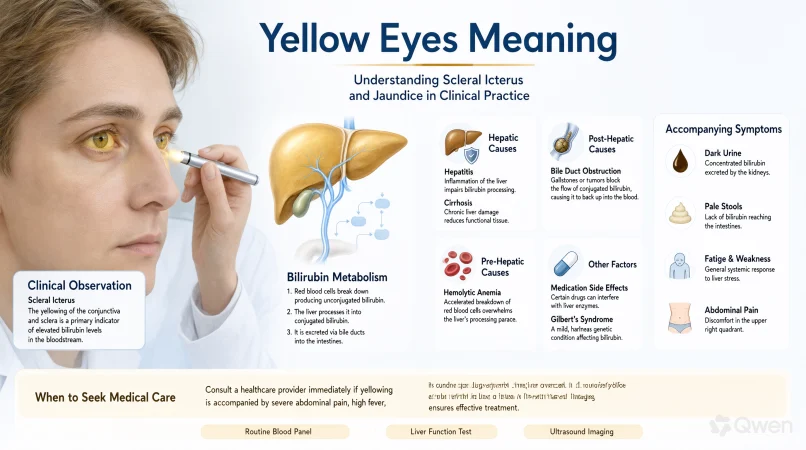
Bilirubin is a yellow-orange substance created when the body breaks down hemoglobin, the protein in red blood cells that carries oxygen. The liver normally processes bilirubin and helps remove it from the body through bile. Bile is a digestive fluid that travels through small ducts into the intestine.
If too much bilirubin is produced, the liver cannot process it properly, or bile cannot flow out as it should, bilirubin levels can rise. The pigment may then collect in the skin and the whites of the eyes, creating a yellow appearance.
Yellowing is not a diagnosis by itself. It is a visible sign that something may be affecting the body’s normal bilirubin processing system.
Why Are the Eyes Often the First Place People Notice It?
The whites of the eyes can show yellow discoloration clearly because the sclera is normally pale. Even a relatively subtle color change may become noticeable there before someone recognizes a change in their skin.
However, lighting, natural eye color, and certain surface conditions can affect appearance. A yellowish patch in one area of the eye is not necessarily the same as jaundice affecting the entire sclera.
If both eyes appear increasingly yellow, particularly alongside yellow skin or dark urine, medical assessment is important.
Why Do the Whites of the Eyes Turn Yellow?
To understand the color change, it helps to follow bilirubin through the body.
Red blood cells have a limited lifespan. As older cells are removed, the body breaks down their hemoglobin and produces bilirubin. This initial form is called unconjugated bilirubin, which is not water-soluble and travels through the bloodstream attached to a protein called albumin.
The liver takes up this pigment and changes it into conjugated bilirubin, a form that can dissolve in water. It then passes into bile and eventually reaches the intestine, where it is further processed and leaves the body through stool.
Problems at different points in this process can cause bilirubin to accumulate.
| Stage | What Normally Happens | What Can Go Wrong |
| Red blood cell breakdown | Old red blood cells are removed and bilirubin is produced. | Excessive breakdown can create more bilirubin than the liver can handle. |
| Bloodstream transport | Unconjugated bilirubin travels to the liver. | Increased production can raise its level in the blood. |
| Liver processing | Liver cells convert bilirubin into a water-soluble form. | Liver injury or disease can interfere with processing. |
| Bile drainage | Processed bilirubin moves through bile ducts. | A blockage can prevent normal bile flow. |
| Intestinal removal | Bilirubin products leave the body through stool. | Reduced bile delivery can change stool color and cause other symptoms. |
This explains why yellow eyes can have several different causes. The same visible symptom may come from a problem with blood cells, liver function, or bile drainage.
Common Causes of Yellow Eyes
Several health conditions can lead to jaundice. Some affect the liver directly, while others interfere with the movement of bile or increase the breakdown of red blood cells.
1. Hepatitis
Hepatitis means inflammation of the liver. It can develop because of viral infections, alcohol-related injury, certain medications, or autoimmune conditions.
Viral hepatitis types include hepatitis A, hepatitis B, and hepatitis C. These infections do not affect everyone in the same way, but some cases can interfere with the liver’s ability to process bilirubin.
Other possible symptoms include tiredness, nausea, abdominal discomfort, dark urine, and loss of appetite. Medical testing is needed to identify the cause and determine the appropriate treatment.
2. Fatty Liver Disease
Fatty liver disease occurs when excess fat builds up in liver cells. It is associated with factors such as metabolic health, insulin resistance, obesity, and alcohol use, depending on the type.
Many people with fatty liver disease have no obvious symptoms. Yellow eyes are not a typical early sign of uncomplicated fatty liver, but jaundice can occur when significant liver injury or advanced disease develops.
A healthcare professional may recommend blood tests, imaging, and other assessments to evaluate liver health.
3. Gallstones
Gallstones are hardened deposits that form in the gallbladder. They can be made mainly of cholesterol or pigment materials.
A stone may move from the gallbladder into a bile duct and block the flow of bile. When this happens, bilirubin can build up in the bloodstream, sometimes causing yellow eyes and skin.
Other symptoms may include pain in the upper-right abdomen, nausea, vomiting, fever, or chills. A blocked bile duct accompanied by fever or severe pain needs urgent medical attention because infection can develop.
4. Blocked Bile Ducts
Bile ducts are small tubes that carry bile from the liver and gallbladder toward the intestine. A blockage can prevent bilirubin from leaving the body normally.
Gallstones are one possible cause, but narrowing, inflammation, and certain growths can also obstruct these ducts.
People with bile duct obstruction may notice dark urine, pale or clay-colored stools, itching, and abdominal discomfort. The cause needs medical investigation rather than treatment based only on the visible yellowing.
5. Hemolytic Anemia
Hemolytic anemia develops when red blood cells are destroyed faster than the body can replace them. This process is called hemolysis.
Because red blood cells release hemoglobin as they break down, excessive destruction can increase bilirubin production. The liver may struggle to process the extra amount, resulting in jaundice.
Other signs can include weakness, unusual tiredness, pale skin, dizziness, and shortness of breath. The exact symptoms depend on how quickly the red blood cells are being destroyed and why it is happening.
6. Medication-Related Liver Injury
Some prescription medicines, over-the-counter drugs, and herbal products can affect the liver. In certain cases, this damage interferes with bilirubin processing and causes yellowing.
The risk depends on the substance, dose, duration of use, and individual health factors. Acetaminophen, for example, can cause serious liver injury when taken in excessive amounts.
Never stop an important prescribed medication without medical advice. If yellowing develops after starting a new medicine or supplement, contact a healthcare professional promptly and provide a complete list of everything being taken.
7. Gilbert Syndrome
Gilbert syndrome is a common, usually harmless inherited condition that affects how the liver processes unconjugated bilirubin. People with this condition may have mildly elevated bilirubin levels from time to time.
Yellowing can become more noticeable during fasting, dehydration, illness, stress, or intense physical activity. Many people discover they have it through routine blood testing.
Unlike many other causes of jaundice, Gilbert syndrome generally does not damage the liver or require treatment. However, a new episode of yellow eyes should not automatically be blamed on it without appropriate medical evaluation.
Yellow Eyes and Jaundice: Understanding the Difference
People sometimes use the terms yellow eyes and jaundice as though they mean exactly the same thing. They are closely related, but they describe different things.
Jaundice is the medical condition, while yellow eyes are one of its visible signs. Jaundice can also cause yellowing of the skin and other tissues.
The distinction matters because not every yellow-looking area on an eye is caused by bilirubin. For example, a small yellow patch on the white of the eye may be a surface growth rather than a sign of a liver problem.
| Feature | Jaundice | Localized Yellow Eye Patch |
| Appearance | Often causes yellowing across the whites of both eyes. | Usually appears as a limited yellow spot or raised area. |
| Main cause | Increased bilirubin in the body. | May involve a surface change such as a pinguecula. |
| Skin changes | Yellow skin may also develop. | Usually does not cause yellow skin. |
| Other symptoms | May include dark urine, pale stools, itching, or abdominal discomfort. | Often has no symptoms, although irritation can occur. |
| Medical concern | Requires assessment to identify the underlying cause. | May need an eye examination, particularly if it changes or becomes painful. |
A pinguecula is a common, usually benign yellowish patch on the conjunctiva, the clear tissue covering the white part of the eye. It is often associated with sun exposure, wind, and irritation.
A pinguecula does not mean someone has jaundice. If you cannot tell whether the yellowing is a small surface patch or a general color change, an eye or medical examination can help clarify it.
What Other Symptoms Can Occur?
Yellowing may appear on its own, but other symptoms can provide important clues about the underlying problem.
Possible accompanying signs include:
- Dark urine: Urine may become tea-colored or brownish when excess conjugated bilirubin is passed through the kidneys.
- Pale stools: Reduced bile reaching the intestine can make bowel movements unusually light or clay-colored.
- Itchy skin: Bile-related substances can contribute to itching, sometimes without a visible rash.
- Abdominal pain: Discomfort, especially in the upper-right abdomen, may occur with gallstones or liver and bile duct problems.
- Nausea and vomiting: These symptoms can accompany liver inflammation or gallbladder conditions.
- Unusual tiredness: Fatigue may occur when the liver is affected or when anemia is present.
- Fever and chills: These can signal an infection, including a possible infection in an obstructed bile duct.
Not everyone experiences the same combination. The absence of pain or fever does not rule out a serious cause.
How Doctors Find the Cause
A healthcare professional usually begins by asking when the yellowing started and whether other symptoms have appeared. They may also ask about alcohol use, medications, supplements, recent infections, medical history, and family conditions.
The examination may include checking the eyes and skin, feeling the abdomen, and looking for signs of liver or gallbladder problems.
Common Medical Tests
Different tests help identify where bilirubin processing may be going wrong.
Bilirubin blood test: Measures total bilirubin and may separate it into direct and indirect forms. This helps doctors understand whether the problem is more likely related to bilirubin production, liver processing, or bile drainage.
Liver function tests: Blood tests commonly measure enzymes and proteins such as ALT, AST, alkaline phosphatase, and albumin. These results can provide clues about liver injury and bile flow, although no single result gives the full diagnosis.
Complete blood count: This test measures blood cells and may help identify anemia or other blood-related problems.
Ultrasound: An abdominal ultrasound can examine the liver, gallbladder, and bile ducts. It is often used when gallstones or a blockage are suspected.
Additional imaging or specialist tests: Depending on the results, a doctor may recommend a CT scan, MRI-based imaging, or other procedures to investigate the cause.
Treatment depends on the diagnosis. A blocked bile duct, viral infection, medication reaction, and inherited bilirubin-processing condition require different approaches.
When Yellow Eyes Need Urgent Medical Attention
New yellowing of the eyes should be assessed promptly, even if you feel otherwise well. It is not something to diagnose or treat at home based on appearance alone.
Some symptoms make the situation more urgent. Seek emergency medical care if yellow eyes occur with:
- Severe or worsening abdominal pain.
- Fever or shaking chills.
- Confusion, unusual sleepiness, or difficulty staying awake.
- Repeated vomiting or inability to keep fluids down.
- Fainting, severe weakness, or signs of serious illness.
- Vomiting blood or passing black, tarry stools.
A combination of yellowing, fever, and upper-right abdominal pain can be a warning sign of a bile duct infection. This condition can become dangerous without prompt treatment.
Avoid trying to clear yellow eyes with home remedies, special diets, or eye drops unless a healthcare professional has identified the actual cause. Eye drops cannot correct bilirubin buildup in the bloodstream.
Yellow Eyes in Different Age Groups
The age of the person can affect how doctors approach yellowing. Newborns, children, and adults may develop jaundice for different reasons, and the urgency can vary.
Yellow Eyes in Newborns
Jaundice is common in newborn babies because their bodies are adjusting to life outside the womb. Newborns have more rapid red blood cell turnover, and their livers may not yet process bilirubin efficiently.
Many cases are mild, but high bilirubin levels can be dangerous if they are not monitored and treated. Severe untreated hyperbilirubinemia can cause brain injury, a condition known as kernicterus.
Parents should contact a healthcare professional if a newborn appears yellow. A baby who is difficult to wake, feeds poorly, has a high-pitched cry, or appears unusually unwell needs urgent medical attention.
Yellow Eyes in Children
In older children, jaundice may be linked to viral hepatitis, blood disorders, gallstones, or other liver and bile duct conditions.
Yellowing should be assessed by a healthcare professional rather than assumed to be a temporary issue. Additional symptoms, such as abdominal pain, fever, vomiting, or unusual tiredness, should be reported.
Yellow Eyes in Adults
In adults, possible causes include liver disease, bile duct obstruction, medication-related injury, hemolytic anemia, and inherited conditions such as Gilbert syndrome.
A doctor will consider the person’s medical history, symptoms, and test results before deciding what is responsible. The visible color alone cannot identify the cause.
FAQs
Can dehydration make your eyes look yellow?
Dehydration does not usually cause true jaundice. It can make you feel unwell and may trigger mild bilirubin increases in people with Gilbert syndrome, but persistent yellowing needs assessment.
Can yellow eyes go away on their own?
Sometimes the discoloration improves when the underlying cause resolves, but this depends on the condition. Do not wait for it to disappear without seeking medical advice.
Can stress cause yellow eyes?
Stress does not directly cause jaundice. However, physical stress, illness, fasting, or dehydration can trigger temporary bilirubin increases in people with Gilbert syndrome.
Are yellow eyes contagious?
Yellowing itself is not contagious. Some underlying causes, such as certain viral hepatitis infections, can spread between people.
Can eye drops remove yellow discoloration?
No. Ordinary eye drops cannot remove bilirubin from the body or treat jaundice. They may help with dryness or irritation, but they do not address the underlying cause.
Which doctor should examine yellow eyes?
Start with a primary care doctor or urgent medical service. Depending on the findings, you may be referred to a gastroenterologist, hepatologist, or eye specialist.
Conclusion
Yellow eyes are often a visible sign of increased bilirubin, but the reason behind that change can vary widely. Liver conditions, gallstones, blocked bile ducts, blood disorders, and inherited conditions can all be involved.
A small yellow patch on the eye may have a different explanation, so the pattern of discoloration matters. If the whites of your eyes become newly yellow, arrange prompt medical assessment rather than relying on home remedies or waiting for the color to fade.