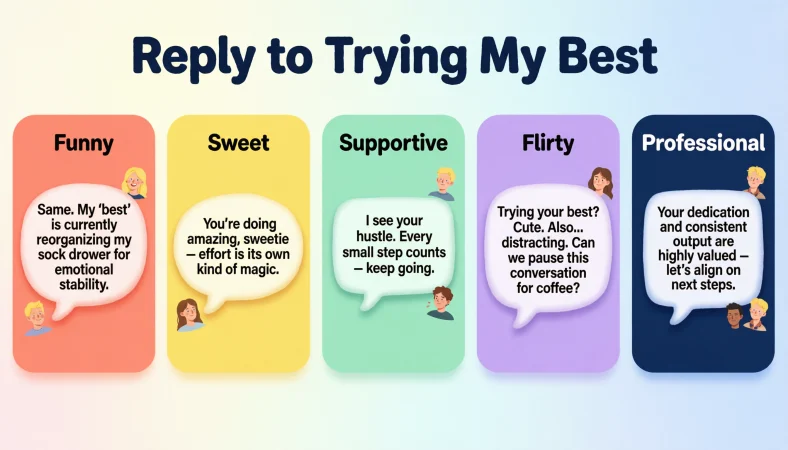
When someone says “trying my best,” the best reply depends on whether they need encouragement, reassurance, humor, or a little motivation. Keep it genuine and remind them that their effort matters.
Top alternatives: “I know you are,” “And that’s what matters,” “You’ve got this,” “I’m proud of you,” “Keep going, you’re doing great.”
If someone says “trying my best,” a thoughtful response can turn a stressful moment into a reassuring one. Sometimes they are looking for encouragement, sometimes they simply want someone to acknowledge their effort, and sometimes they are one tiny inconvenience away from dramatically moving to a cabin in the woods. The right reply depends on the vibe.
You might hear it in a text from a friend, during a serious conversation with someone you love, at work after a difficult project, or from a crush who is trying to prove they care. Knowing how to reply to “trying my best” helps you sound supportive without becoming overly serious. From funny comebacks to sweet reassurance, this list has plenty of options. These Reply to “trying my best” ideas are short, natural, and easy to use when you want your message to actually feel meaningful.
Supportive Responses
“I know you are, and I appreciate that.”
Use this when someone genuinely wants you to recognize their effort.
Meaning: You are acknowledging their hard work with warmth and gratitude.
“And honestly, that’s enough for me.”
Use this when someone feels like they are falling short.
Meaning: You are reassuring them that their effort matters.
“I see how hard you’re trying.”
Use this when someone needs to feel noticed.
Meaning: You are validating the effort behind their actions.
“You’re doing better than you think.”
Use this when someone is being too hard on themselves.
Meaning: You are giving them a confidence boost.
“Keep going. I believe in you.”
Use this when someone is facing a challenging situation.
Meaning: You are offering encouragement and emotional support.
“You don’t have to be perfect.”
Use this when someone is putting unrealistic pressure on themselves.
Meaning: You are reminding them that imperfection is normal.
“Your effort definitely doesn’t go unnoticed.”
Use this when someone feels unappreciated.
Meaning: You want them to know their work is being seen.
“That’s all anyone can ask for.”
Use this when someone worries they are not doing enough.
Meaning: You are reassuring them that genuine effort counts.
“I’m proud of you for not giving up.”
Use this when someone has been struggling for a while.
Meaning: You are celebrating their persistence.
“One step at a time.”
Use this when someone feels overwhelmed.
Meaning: You are encouraging them to focus on progress instead of pressure.
“You’re allowed to have hard days too.”
Use this when someone feels guilty about struggling.
Meaning: You are giving them permission to be human.
“I know it isn’t easy, but you’re handling it.”
Use this when someone is dealing with a difficult situation.
Meaning: You recognize the challenge while encouraging their strength.
“I’m rooting for you.”
Use this when someone needs a simple confidence boost.
Meaning: You are letting them know they have someone in their corner.
“You’re doing enough.”
Use this when someone feels exhausted from trying.
Meaning: You are helping them release unnecessary pressure.
“Just keep showing up.”
Use this when someone needs motivation to continue.
Meaning: You are emphasizing consistency over perfection.
Funny Responses
“Trying your best? Same, and I deserve an award.”
Use this when you want to lighten a stressful conversation.
Meaning: You are using humor to make the situation feel less heavy.
“Honestly, same. The struggle is mutual.”
Use this when both of you are having a rough day.
Meaning: You are playfully showing solidarity.
“Your best has entered the chat.”
Use this when someone finally makes an effort.
Meaning: You are jokingly celebrating their attempt.
“Okay, Olympic effort detected.”
Use this when someone is clearly working hard.
Meaning: You are humorously exaggerating their dedication.
“Trying your best deserves snacks.”
Use this when someone needs cheering up.
Meaning: You are turning encouragement into a playful reward.
“Respectfully, your best better have Wi-Fi.”
Use this when texting a friend who is struggling.
Meaning: You are adding absurd humor to a serious moment.
“At least we’re trying. That’s the plot.”
Use this when things are not going perfectly.
Meaning: You are making peace with imperfect progress.
“Your best has been accepted by management.”
Use this when joking around with a coworker or friend.
Meaning: You are playfully approving their effort.
“10/10 effort, questionable execution.”
Use this when someone tried hard but things went sideways.
Meaning: You appreciate the attempt while joking about the result.
“We love an effort era.”
Use this in a casual text or social DM.
Meaning: You are celebrating someone for making an honest attempt.
“Trying is suspiciously responsible of you.”
Use this when teasing someone who normally procrastinates.
Meaning: You are jokingly praising their effort.
“Your best has been spotted in the wild.”
Use this when someone finally takes action.
Meaning: You are playfully acknowledging their progress.
“Okay, main character, keep going.”
Use this when encouraging a friend dramatically.
Meaning: You are motivating them with playful confidence.
“At least the effort is giving.”
Use this when someone is trying hard despite imperfect results.
Meaning: You are making encouragement sound fun and trendy.
“Trying your best? Very brave, Very inspirational. Very exhausting.”
Use this when someone needs a laugh during a stressful day.
Meaning: You are humorously acknowledging how tiring effort can be.
Flirty Responses
“Your best is pretty attractive, not gonna lie.”
Use this when someone you like says they are making an effort.
Meaning: You are complimenting their effort with a flirty twist.
“I like when you try for me.”
Use this when the conversation already has romantic energy.
Meaning: You are showing appreciation while subtly flirting.
“Keep trying, you might impress me.”
Use this when playful teasing fits your relationship.
Meaning: You are challenging them in a charming way.
“And somehow you’re still cute doing it.”
Use this when someone feels embarrassed about their efforts.
Meaning: You are reassuring them with affection.
“Your effort is definitely getting my attention.”
Use this when someone is trying to win you over.
Meaning: You are hinting that their actions are working.
“I can tell, and I’m kinda loving it.”
Use this when you want to make your interest obvious.
Meaning: You are warmly acknowledging their effort.
“Careful, trying this hard might make me fall for you.”
Use this when you want a bold romantic reply.
Meaning: You are turning encouragement into playful flirtation.
“That’s actually adorable.”
Use this when their effort feels genuinely sweet.
Meaning: You find their dedication charming.
“I noticed. Don’t think I didn’t.”
Use this when you want to sound subtly flirty.
Meaning: You are telling them their effort caught your attention.
“Keep that energy. I like it.”
Use this when someone is showing consistency.
Meaning: You are encouraging them while signaling attraction.
“Your best is looking pretty good from here.”
Use this when you want a smooth compliment.
Meaning: You are saying their effort is making a positive impression.
“For me? That’s kinda sweet.”
Use this when someone is making an effort specifically for you.
Meaning: You appreciate the personal gesture.
“I’m impressed, and that’s not easy.”
Use this when you want playful confidence.
Meaning: You are teasing them while giving genuine praise.
“You trying is becoming my favorite thing.”
Use this when the relationship has strong romantic chemistry.
Meaning: You find their effort emotionally attractive.
“Keep trying, cutie.”
Use this when you want a short, playful text.
Meaning: You are encouraging them with affectionate flirtation.
Sweet Responses
“That means more than you know.”
Use this when someone is making a sincere effort.
Meaning: You deeply value what they are doing.
“I appreciate you so much.”
Use this when someone needs genuine reassurance.
Meaning: You are expressing heartfelt gratitude.
“You’re doing enough, sweetheart.”
Use this when someone needs emotional comfort.
Meaning: You want them to stop doubting themselves.
“I see your heart in it.”
Use this when effort matters more than the outcome.
Meaning: You are recognizing their intentions.
“Thank you for trying.”
Use this when someone has made a meaningful effort.
Meaning: You are showing sincere appreciation.
“That’s all I needed to hear.”
Use this when someone assures you they care.
Meaning: Their willingness to try gives you reassurance.
“I’m grateful for every bit of effort.”
Use this when someone has been consistently supportive.
Meaning: You genuinely value their contribution.
“You make a difference just by trying.”
Use this when someone feels insignificant.
Meaning: You are reminding them their actions matter.
“You have no idea how much I appreciate that.”
Use this when someone has gone out of their way.
Meaning: Their effort has affected you deeply.
“You don’t have to prove anything to me.”
Use this when someone feels pressured.
Meaning: You care about them beyond their performance.
“I’m happy you’re trying.”
Use this when you want to keep things simple and sincere.
Meaning: You appreciate their willingness to make an effort.
“You’re doing just fine.”
Use this when someone needs reassurance.
Meaning: You want them to feel less anxious about their progress.
“Your effort is beautiful.”
Use this when someone has put genuine care into something.
Meaning: You value the intention behind what they did.
“I’m lucky to have someone who cares this much.”
Use this when a loved one is trying to make things better.
Meaning: You feel grateful for their care.
“Please remember that you’re appreciated too.”
Use this when someone constantly focuses on helping others.
Meaning: You want them to feel valued in return.
Clever Responses
“Effort is the part people remember.”
Use this when someone worries about the final result.
Meaning: You are emphasizing the value of trying.
“Progress beats perfection every time.”
Use this when someone is stuck chasing flawless results.
Meaning: You encourage steady improvement.
“Trying is how winning starts.”
Use this when someone needs motivation.
Meaning: You are framing effort as the beginning of success.
“Then you’re already moving forward.”
Use this when someone feels stuck.
Meaning: You are showing them that effort itself creates progress.
“Your best today can become better tomorrow.”
Use this when encouraging long-term growth.
Meaning: You are reminding them that improvement takes time.
“The attempt counts more than the applause.”
Use this when someone worries about outside opinions.
Meaning: Their personal effort matters more than validation.
“Consistency quietly does what motivation can’t.”
Use this when someone needs practical encouragement.
Meaning: You are highlighting the power of persistence.
“Trying means you haven’t given up.”
Use this when someone feels defeated.
Meaning: You are pointing out their resilience.
“Small wins still count as wins.”
Use this when someone minimizes their progress.
Meaning: You are encouraging them to recognize little achievements.
“Your effort is evidence that you care.”
Use this when someone’s intentions are being questioned.
Meaning: You are connecting effort with genuine concern.
“You can’t control perfect, but you can control effort.”
Use this when someone is stressing over an outcome.
Meaning: You are encouraging them to focus on what they can change.
“Trying is rarely wasted.”
Use this when someone thinks their effort is pointless.
Meaning: You are reminding them that effort creates experience and growth.
“Keep the effort, adjust the strategy.”
Use this when someone’s approach is not working.
Meaning: You encourage persistence without repeating the same mistake.
“The fact that you care already says a lot.”
Use this when someone’s intentions matter.
Meaning: Their concern itself shows good character.
“Your effort is part of the answer.”
Use this when someone is searching for a solution.
Meaning: You are reminding them that action matters.
Chill And Casual Responses
“I know, you’re good.”
Use this when a friend is worried about disappointing you.
Meaning: You are keeping things relaxed and reassuring.
“I got you.”
Use this when someone needs simple support.
Meaning: You are letting them know they are not alone.
“No pressure.”
Use this when someone is overwhelmed.
Meaning: You are removing unnecessary expectations.
“You’re doing fine, honestly.”
Use this when someone needs casual reassurance.
Meaning: You are telling them they do not need to panic.
“Keep at it.”
Use this when someone is working toward a goal.
Meaning: You are encouraging them to continue.
“You’ve got this.”
Use this when someone needs a quick confidence boost.
Meaning: You believe they can handle the situation.
“Take your time.”
Use this when someone is rushing themselves.
Meaning: You are encouraging patience.
“We’re good.”
Use this when someone fears they have messed up.
Meaning: You are letting them know there is no major issue.
“All good, just keep moving.”
Use this when someone needs reassurance after a mistake.
Meaning: You encourage them to learn and continue.
“I feel you.”
Use this when someone shares their frustration.
Meaning: You are showing casual empathy.
“That’s what matters.”
Use this when effort is more important than the outcome.
Meaning: You are affirming their willingness to try.
“One day at a time.”
Use this when someone feels overwhelmed by everything at once.
Meaning: You are encouraging them to slow down.
“You’re on the right track.”
Use this when someone is making progress.
Meaning: You want them to stay confident.
“No worries, seriously.”
Use this when someone is apologizing unnecessarily.
Meaning: You are reducing their anxiety.
“Just do what you can.”
Use this when someone has limited time or energy.
Meaning: You are encouraging realistic effort.
Sarcastic Responses
“Wow, effort. What a concept.”
Use this when teasing a friend who finally gets serious.
Meaning: You are playfully calling attention to their effort.
“Look at you being productive.”
Use this when someone is surprisingly motivated.
Meaning: You are teasing them affectionately.
“Trying your best? Character development.”
Use this when someone is improving after past mistakes.
Meaning: You are jokingly celebrating their growth.
“Someone call the achievement department.”
Use this when a friend accomplishes something small but meaningful.
Meaning: You are exaggerating the achievement for humor.
“Careful, you’re making effort look fashionable.”
Use this when someone is unexpectedly dedicated.
Meaning: You are playfully praising their commitment.
“Breaking news: you actually tried.”
Use this when teasing a friend.
Meaning: You are humorously celebrating their effort.
“The bar has officially been raised.”
Use this when someone surprises you with their effort.
Meaning: You are jokingly praising their improvement.
“Well, look who decided to participate.”
Use this when someone finally gets involved.
Meaning: You are teasing them about their delayed effort.
“Five stars for effort, obviously.”
Use this when someone tries hard.
Meaning: You are giving exaggerated approval.
“I’m witnessing personal growth in real time.”
Use this when someone is changing their habits.
Meaning: You are humorously acknowledging their progress.
“Should we alert the internet?”
Use this when something unexpectedly impressive happens.
Meaning: You are exaggerating their accomplishment for fun.
“Effort? In this economy?”
Use this when someone jokes about how hard life feels.
Meaning: You are using current-style humor to lighten the mood.
“Honestly, iconic behavior.”
Use this when someone’s effort deserves playful praise.
Meaning: You are calling their determination impressive.
“You’re really committed to this plot.”
Use this when someone refuses to give up.
Meaning: You are teasing their persistence.
“I’ll pretend I’m not impressed.”
Use this when you secretly admire their effort.
Meaning: You are hiding genuine praise behind sarcasm.
Confident Responses
“I know you can do it.”
Use this when someone doubts their ability.
Meaning: You are expressing strong confidence in them.
“You’re more capable than you realize.”
Use this when someone underestimates themselves.
Meaning: You are reminding them of their potential.
“Keep going. You’re closer than you think.”
Use this when someone is nearly reaching a goal.
Meaning: You want them to stay persistent.
“I have faith in you.”
Use this when someone needs serious encouragement.
Meaning: You trust their ability to succeed.
“You’ve handled harder things than this.”
Use this when someone is intimidated by a challenge.
Meaning: You are reminding them of their past strength.
“Trust yourself.”
Use this when someone keeps second-guessing their decisions.
Meaning: You are encouraging self-confidence.
“You’re built for this.”
Use this when someone needs bold motivation.
Meaning: You believe they are capable of handling the challenge.
“Don’t count yourself out yet.”
Use this when someone feels defeated.
Meaning: You are encouraging them not to give up.
“You’ve got more in you.”
Use this when someone still has potential to push forward.
Meaning: You are encouraging them to keep going.
“Your effort is already paying off.”
Use this when progress is becoming visible.
Meaning: You want them to recognize their results.
“You’re stronger than this moment.”
Use this when someone feels overwhelmed by a setback.
Meaning: You are reminding them that a difficult moment does not define them.
“Keep your head up.”
Use this when someone is discouraged.
Meaning: You are encouraging resilience.
“You’re not failing, you’re learning.”
Use this when someone makes a mistake.
Meaning: You are reframing failure as growth.
“Give yourself some credit.”
Use this when someone dismisses their achievements.
Meaning: You want them to recognize their own progress.
“You’re doing the work, and that matters.”
Use this when someone feels their results are too slow.
Meaning: You are reinforcing the value of consistent effort.
Cute Responses
“Aww, I know you are.”
Use this when someone sounds genuinely vulnerable.
Meaning: You are responding with gentle affection.
“And I’m proud of you.”
Use this when someone needs a little emotional boost.
Meaning: You want them to feel appreciated.
“You’re doing your little best, and I love that.”
Use this with someone close to you.
Meaning: You find their effort endearing.
“Come here, you’re doing fine.”
Use this when someone needs comforting reassurance.
Meaning: You are offering emotional warmth.
“You’re precious for trying so hard.”
Use this when someone’s effort feels adorable.
Meaning: You are affectionately appreciating their dedication.
“I see you trying, cutie.”
Use this when playful affection fits the relationship.
Meaning: You are acknowledging their effort warmly.
“You’re doing great, even if it doesn’t feel like it.”
Use this when someone doubts themselves.
Meaning: You are giving them gentle reassurance.
“Proud of your effort, always.”
Use this when supporting someone you care about.
Meaning: You want them to know their effort is consistently valued.
“You get an A for effort from me.”
Use this when you want something cute and playful.
Meaning: You are giving affectionate approval.
“Trying looks good on you.”
Use this when you want a cute compliment.
Meaning: You are playfully praising their determination.
“You’re doing better than you think, silly.”
Use this when someone is being too self-critical.
Meaning: You are gently encouraging them.
“I’m cheering for you from the sidelines.”
Use this when you cannot directly help them.
Meaning: You are offering emotional support from a distance.
“You make trying look cute.”
Use this when the conversation has a playful tone.
Meaning: You are turning encouragement into affection.
“Keep going, little superstar.”
Use this when someone enjoys playful encouragement.
Meaning: You are giving them a sweet confidence boost.
“You’ve got this, and I’ve got you.”
Use this when someone needs both motivation and reassurance.
Meaning: You are promising emotional support while encouraging them.
Creative Responses
“Effort is the first draft of success.”
Use this when someone is beginning something difficult.
Meaning: You are reminding them that progress starts imperfectly.
“Every attempt adds another page to the story.”
Use this when someone feels discouraged by slow progress.
Meaning: You are framing each effort as part of their journey.
“Your best doesn’t need fireworks to count.”
Use this when someone expects dramatic results.
Meaning: You are reminding them that quiet progress matters.
“Even tiny steps still move the map.”
Use this when someone feels like they are barely progressing.
Meaning: You are showing that small actions still create movement.
“Keep planting the seeds. Results take time.”
Use this when someone is working toward a long-term goal.
Meaning: You are encouraging patience and consistency.
“Your effort is writing tomorrow’s version of you.”
Use this when someone is working on personal growth.
Meaning: You are connecting today’s effort with future improvement.
“Some victories arrive wearing work clothes.”
Use this when someone is putting in difficult work.
Meaning: You are reminding them that success often looks ordinary at first.
“Progress has a messy aesthetic.”
Use this when someone feels embarrassed about imperfect progress.
Meaning: You are normalizing the messy side of growth.
“Your best today can become your baseline tomorrow.”
Use this when someone is improving gradually.
Meaning: You are encouraging them to keep building on their effort.
“You’re creating momentum, even if you can’t see it yet.”
Use this when progress feels invisible.
Meaning: You are reminding them that effort accumulates.
“Not every win makes noise.”
Use this when someone has made quiet progress.
Meaning: You are validating achievements that others may not notice.
“Keep collecting those tiny wins.”
Use this when someone needs motivation.
Meaning: You are encouraging them to recognize small successes.
“Your effort is louder than your doubts.”
Use this when someone struggles with insecurity.
Meaning: You are encouraging them to trust their actions.
“The journey is allowed to have plot twists.”
Use this when plans do not go smoothly.
Meaning: You are helping them accept unexpected setbacks.
“You’re still becoming, and that’s pretty cool.”
Use this when someone is working on themselves.
Meaning: You are celebrating growth as an ongoing process.
Emotional Responses
“I know you’re trying, and that means a lot to me.”
Use this during an honest emotional conversation.
Meaning: You are expressing sincere appreciation.
“I don’t need perfection from you.”
Use this when someone feels they must prove themselves.
Meaning: You are offering unconditional reassurance.
“I just want you to know that I see your effort.”
Use this when someone feels invisible.
Meaning: You are acknowledging what they have been doing.
“Thank you for not giving up.”
Use this when someone has stayed through a difficult period.
Meaning: You are expressing deep gratitude for their persistence.
“You don’t have to carry everything alone.”
Use this when someone is overwhelmed.
Meaning: You are reminding them that support is available.
“I know things are hard right now.”
Use this when someone is struggling emotionally.
Meaning: You are validating their difficult experience.
“I’m here, even on the days when trying feels impossible.”
Use this when offering strong emotional support.
Meaning: You are promising consistent presence.
“Your effort tells me how much you care.”
Use this when someone’s actions have been meaningful.
Meaning: You are connecting their effort with their feelings.
“I’m grateful you’re still trying.”
Use this when someone is working through a difficult relationship or situation.
Meaning: You appreciate their willingness to continue.
“You matter more than what you accomplish.”
Use this when someone ties their worth to success.
Meaning: You are separating their value from their performance.
“Please be gentle with yourself.”
Use this when someone is being extremely self-critical.
Meaning: You are encouraging self-compassion.
“You’re allowed to rest too.”
Use this when someone has been pushing themselves nonstop.
Meaning: You are reminding them that rest is part of taking care of themselves.
“I’m proud of you for making it this far.”
Use this when someone has overcome a difficult stretch.
Meaning: You are honoring their resilience.
“You don’t have to have everything figured out.”
Use this when someone feels pressured about the future.
Meaning: You are giving them permission to take things slowly.
“Whatever happens, I’m glad you tried.”
Use this when the outcome is uncertain.
Meaning: You are showing that their effort has value regardless of the result.
Professional Responses
“I appreciate the effort you’re putting into this.”
Use this when responding to a colleague working on a challenging task.
Meaning: You are professionally recognizing their contribution.
“Thank you for staying committed to it.”
Use this when someone has continued working through difficulties.
Meaning: You are acknowledging their persistence.
“Let’s focus on what we can improve from here.”
Use this after an imperfect result at work.
Meaning: You are redirecting attention toward constructive action.
“Your effort is appreciated.”
Use this when you want a concise workplace response.
Meaning: You are professionally expressing gratitude.
“I understand, and I appreciate you working through it.”
Use this when a coworker explains a difficult situation.
Meaning: You are showing empathy while staying professional.
“Let’s take it one step at a time.”
Use this when a project feels overwhelming.
Meaning: You are encouraging a practical approach.
“I can see the progress you’ve made.”
Use this when someone’s work has improved.
Meaning: You are recognizing measurable development.
“Keep going, and let’s address the remaining pieces together.”
Use this when teamwork is needed.
Meaning: You are offering collaboration instead of criticism.
“Thanks for putting in the work.”
Use this when someone has completed a demanding task.
Meaning: You are giving direct professional appreciation.
“I appreciate your persistence.”
Use this when someone has dealt with setbacks.
Meaning: You are highlighting their determination.
“Let’s keep building on what’s working.”
Use this when a project is progressing well.
Meaning: You are encouraging continued improvement.
“Your commitment is noticed.”
Use this when someone feels their work is overlooked.
Meaning: You are reassuring them that their contribution matters.
“We can learn from what didn’t work.”
Use this after a workplace mistake.
Meaning: You are encouraging a growth-focused response.
“You’ve made solid progress.”
Use this when someone is moving forward on an assignment.
Meaning: You are providing clear encouragement.
“Let’s keep the momentum going.”
Use this when a team needs motivation.
Meaning: You are encouraging continued effort.
Encouraging Responses
“Don’t stop now.”
Use this when someone is close to reaching a goal.
Meaning: You are motivating them to continue.
“You’re closer than you realize.”
Use this when someone feels progress is too slow.
Meaning: You are giving them hope.
“I know you can get through this.”
Use this when someone is facing a difficult challenge.
Meaning: You have confidence in their ability.
“Keep putting one foot in front of the other.”
Use this when someone feels overwhelmed by the bigger picture.
Meaning: You are encouraging steady progress.
“You’re making progress, even if it’s slow.”
Use this when someone is impatient with their results.
Meaning: You are helping them recognize gradual improvement.
“Don’t let one bad day erase all your progress.”
Use this after someone experiences a setback.
Meaning: You are reminding them that one moment does not define their journey.
“You’ve already come so far.”
Use this when someone forgets their previous achievements.
Meaning: You are encouraging them to look at their growth.
“Keep believing in yourself.”
Use this when someone lacks confidence.
Meaning: You are encouraging inner trust.
“You’re capable of more than you think.”
Use this when someone underestimates their abilities.
Meaning: You are reminding them of their potential.
“The effort will add up.”
Use this when results have not appeared yet.
Meaning: You are encouraging patience.
“You’re allowed to take breaks, just don’t quit on yourself.”
Use this when someone is exhausted.
Meaning: You support rest while encouraging persistence.
“You’ve got another day to try again.”
Use this when today went badly.
Meaning: You are reminding them that setbacks are temporary.
“Keep showing yourself what you’re capable of.”
Use this when someone needs confidence.
Meaning: You encourage them to build belief through action.
“Your future self will thank you.”
Use this when someone is struggling to stay consistent.
Meaning: You are connecting today’s effort with future benefits.
“I’m cheering you on every step of the way.”
Use this when someone needs ongoing encouragement.
Meaning: You are promising continued support.
Respectful Responses
“I understand.”
Use this when someone explains that they are doing everything they can.
Meaning: You are acknowledging their situation without judgment.
“I appreciate you being honest about that.”
Use this when someone admits they are struggling.
Meaning: You value their honesty.
“I know you’re doing what you can.”
Use this when someone feels guilty about their limitations.
Meaning: You are recognizing their circumstances.
“Thank you for making the effort.”
Use this when someone has genuinely tried to help.
Meaning: You are expressing sincere gratitude.
“That’s fair, and I respect it.”
Use this when someone communicates their limits.
Meaning: You are accepting their position maturely.
“I appreciate you trying to make it work.”
Use this when plans or circumstances have been complicated.
Meaning: You recognize their willingness to compromise.
“I hear you.”
Use this when someone needs to feel listened to.
Meaning: You are acknowledging their feelings.
“I respect the effort.”
Use this when the result is imperfect but the intention was good.
Meaning: You value the attempt.
“Thank you for letting me know.”
Use this when someone explains their current situation.
Meaning: You are responding calmly and respectfully.
“I understand that you’re doing your best.”
Use this during a serious conversation.
Meaning: You are recognizing their limitations with empathy.
“I don’t want you to feel pressured.”
Use this when someone is overwhelmed by expectations.
Meaning: You are offering reassurance and space.
“We can figure it out together.”
Use this when both people need to find a solution.
Meaning: You are offering cooperation.
“I appreciate your willingness to keep working on it.”
Use this when someone is committed to improvement.
Meaning: You value their ongoing effort.
“That’s all I wanted to hear.”
Use this when reassurance was the main thing you needed.
Meaning: Their willingness to try gives you peace of mind.
“I’m glad you told me.”
Use this when someone finally opens up.
Meaning: You appreciate their honesty and trust.
Lighthearted Responses
“Trying is better than pretending you have it all figured out.”
Use this when a friend is joking about their struggles.
Meaning: You are making imperfection feel normal.
“We’re all just out here doing side quests.”
Use this when life feels chaotic.
Meaning: You are turning everyday struggles into playful humor.
“At least the effort is employed.”
Use this when joking about productivity.
Meaning: You are playfully celebrating any attempt at progress.
“The vibes are trying.”
Use this when things are messy but improving.
Meaning: You are keeping the mood casual and funny.
“Honestly, that’s a respectable strategy.”
Use this when someone admits they are figuring things out as they go.
Meaning: You are playfully validating their approach.
“Trying your best is basically adulthood.”
Use this when a friend complains about adult responsibilities.
Meaning: You are joking about how unpredictable life can be.
“Nobody said the tutorial would be this long.”
Use this when someone is struggling with a new experience.
Meaning: You are making their frustration relatable.
“We’ll call that progress with personality.”
Use this after something goes slightly wrong.
Meaning: You are reframing imperfect progress humorously.
“Messy, but make it productive.”
Use this when someone is getting things done imperfectly.
Meaning: You are encouraging action without demanding perfection.
“The effort has entered its comeback era.”
Use this when someone starts trying again.
Meaning: You are playfully celebrating renewed motivation.
“Honestly, we take those wins.”
Use this after a small achievement.
Meaning: You are encouraging appreciation for little successes.
“Tiny victory, huge emotional damage.”
Use this when a small accomplishment took serious effort.
Meaning: You are joking about how exhausting progress can be.
“At least the attempt had confidence.”
Use this when someone makes a bold effort.
Meaning: You are playfully admiring their courage.
“Trying counts. We checked the rulebook.”
Use this when someone doubts whether their effort matters.
Meaning: You are humorously reassuring them.
“You tried, and honestly, that’s a whole personality trait.”
Use this when teasing someone affectionately.
Meaning: You are celebrating their willingness to make an effort.
Short And Simple Responses
“I know.”
Use this when you want a brief but reassuring response.
Meaning: You acknowledge their effort.
“I appreciate it.”
Use this when someone has made an effort for you.
Meaning: You are expressing gratitude.
“You’ve got this.”
Use this when someone needs motivation.
Meaning: You believe they can handle it.
“Keep going.”
Use this when someone needs a simple push.
Meaning: You encourage persistence.
“I believe you.”
Use this when someone worries you doubt them.
Meaning: You trust their intentions.
“I see you.”
Use this when someone wants their effort noticed.
Meaning: You are acknowledging what they are doing.
“That’s enough.”
Use this when someone is pushing themselves too hard.
Meaning: You are giving them permission to stop pressuring themselves.
“You’re okay.”
Use this when someone is anxious about their performance.
Meaning: You are offering immediate reassurance.
“No pressure.”
Use this when someone feels overwhelmed.
Meaning: You are removing expectations.
“I’m proud of you.”
Use this when someone needs emotional encouragement.
Meaning: You genuinely admire their effort.
“Thank you.”
Use this when you want the simplest sincere response.
Meaning: You are acknowledging their effort with gratitude.
“I understand.”
Use this when someone explains their limitations.
Meaning: You are showing empathy.
“Take your time.”
Use this when someone is rushing.
Meaning: You are encouraging patience.
“You’re doing fine.”
Use this when someone is doubting themselves.
Meaning: You want them to relax and trust their progress.
“I’m rooting for you.”
Use this when someone needs a little extra encouragement.
Meaning: You are letting them know they have your support.
FAQs
What does “trying my best” mean?
It usually means someone is making a genuine effort, even if they are struggling to get the result they want.
What is a good reply to “trying my best”?
A simple response like “I know you are, and I appreciate it” is supportive, sincere, and works in most situations.
How do I respond emotionally to “trying my best”?
Try something heartfelt such as “I see how hard you’re trying, and that means a lot to me.”
Can “trying my best” have a flirty meaning?
Yes. If the person is trying to impress you or win your attention, you can reply with something playful like “Your best is pretty attractive, not gonna lie.”
What is a professional response to “trying my best”?
Use something respectful like “I appreciate the effort you’re putting into this” or “Let’s focus on what we can improve from here.”
What if I do not actually believe they are trying their best?
Stay honest without being harsh. Try “I appreciate the effort, but I think we may need a different approach.”
Is it okay to joke when someone says “trying my best”?
Yes, if you know they are comfortable with humor and the situation is not deeply serious. “Trying your best? Same, honestly” can keep things light.
How can I encourage someone without sounding cheesy?
Keep it simple with replies like “Keep going,” “I see your effort,” or “You’ve got this.”
What should I say when someone says “I’m trying my best” after making a mistake?
Try “I know, and we can figure out what to do differently next time.”
What is a sweet reply to “trying my best”?
“You don’t have to be perfect. I appreciate you trying” is warm without sounding overdramatic.
Can I use these replies in a text message?
Absolutely. Short responses usually work especially well over text because they feel natural and easy to send.
Conclusion
When someone says “trying my best,” they may be asking for encouragement, reassurance, appreciation, or simply a little understanding. Your response can make the moment feel lighter or remind them that their effort actually matters. You do not need a dramatic speech either.
Sometimes “I’m proud of you,” “I see you,” or even “You’ve got this” is enough to make someone feel supported. Whether you choose something funny, sweet, flirty, professional, or deeply heartfelt, match the reply to the relationship and the moment. Save these responses for the next time you are stuck staring at your keyboard wondering what to say. Pick your favorite, send it, and keep the good vibes going.