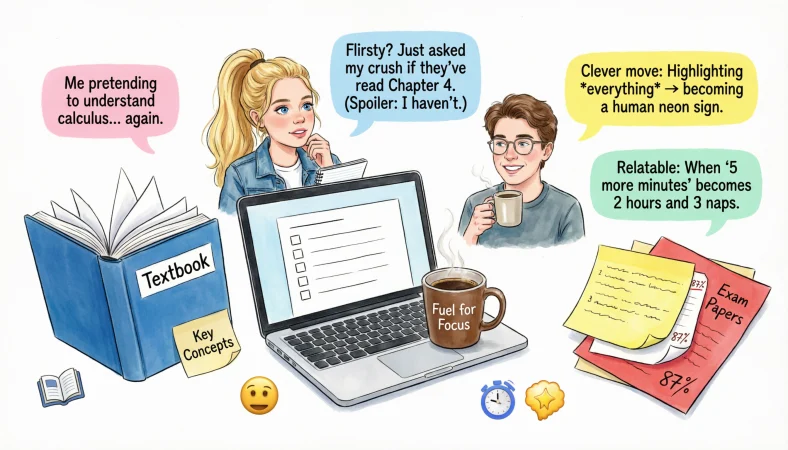
The best replies to “how are your studies going” depend on your mood and the person asking. You can be honest, funny, sarcastic, confident, flirty, or simply keep it casual without turning your answer into a full academic report.
Top alternatives: “Surviving one chapter at a time,” “Honestly, it’s a work in progress,” “Better than my sleep schedule,” “Ask me after the exams,” “I’m getting there slowly but surely.”
“So, how are your studies going?” Sounds innocent, right? Until you realize you have to summarize weeks of assignments, deadlines, exams, caffeine, procrastination, and emotional damage in one sentence. Whether a parent asks over dinner, a friend checks in through text, a classmate sends a DM, or your crush suddenly wants to know how school is treating you, your answer can say a lot.
The right response can keep the conversation flowing without sounding like you are submitting a semester report. That is why having a few good replies to “how are your studies going” is surprisingly useful. You can keep things funny, honest, confident, cute, flirty, or professional depending on who is asking.
From “barely surviving” jokes to genuinely positive answers, these responses are ready for your next text, DM, group chat, or face-to-face conversation.
Funny Responses
“Surviving, but my textbooks are winning.”
Use it when your studies are getting overwhelming.
Meaning: You are joking about struggling academically.
“Going great, if you ignore everything.”
Use it when you have been procrastinating.
Meaning: You are humorously admitting things are not perfect.
“My grades and I are currently in a complicated relationship.”
Use it when your academic results are unpredictable.
Meaning: You are making light of your academic situation.
“One assignment away from becoming a professional napper.”
Use it during a stressful semester.
Meaning: You are tired from studying.
“Honestly, my books know me better than my friends do.”
Use it when you spend most of your time studying.
Meaning: You are joking about your busy academic life.
“I study, I panic. I snack. Repeat.”
Use it during exam season.
Meaning: You are describing your chaotic study routine humorously.
“Currently sponsored by caffeine and questionable decisions.”
Use it when studying late at night.
Meaning: You are joking about relying on caffeine and improvisation.
“My brain has officially requested a software update.”
Use it after intense studying.
Meaning: You feel mentally exhausted.
“Ask me after I remember what I studied.”
Use it after revising for an exam.
Meaning: You humorously question your memory.
“The struggle is academically real.”
Use it when coursework feels difficult.
Meaning: You are playfully acknowledging academic stress.
“I’m majoring in trying my best.”
Use it when someone asks about your progress.
Meaning: You are saying you are putting in effort despite difficulties.
“Currently buffering between chapter three and chapter four.”
Use it when you are mentally stuck.
Meaning: You are joking that your brain needs time to process information.
Brutal Responses
“Better than my motivation, at least.”
Use it when your studies are going okay but motivation is low.
Meaning: You are honestly pointing out your lack of enthusiasm.
“Let’s just say graduation and I are taking things slowly.”
Use it when your academic journey is difficult.
Meaning: You are joking about a longer or tougher path.
“My grades are keeping me humble.”
Use it after receiving disappointing marks.
Meaning: You are accepting academic setbacks with humor.
“Not well enough to brag about it.”
Use it when someone asks about your performance.
Meaning: You are giving an honest but blunt answer.
“I’m surviving, which feels like an achievement.”
Use it during an exhausting semester.
Meaning: Simply getting through your studies feels difficult.
“Academically, I’m fighting for my life.”
Use it when exams are approaching.
Meaning: You are exaggerating your academic stress for humor.
“My study plan betrayed me.”
Use it after falling behind your schedule.
Meaning: Your plans did not work as expected.
“The books are open. The motivation is missing.”
Use it when you are procrastinating.
Meaning: You are physically studying but mentally struggling.
“I understand everything until the exam starts.”
Use it after struggling during tests.
Meaning: You have difficulty applying what you studied under pressure.
“My academic comeback is still loading.”
Use it after poor results.
Meaning: You believe improvement is coming but has not happened yet.
“Let’s call it character development.”
Use it after an academic setback.
Meaning: You are turning a difficult experience into a growth story.
“Honestly, my grades have more plot twists than a TV series.”
Use it when your results are unpredictable.
Meaning: Your academic performance keeps surprising you.
Flirty Responses
“Better now that you asked.”
Use it when answering a crush.
Meaning: Their attention has made your mood better.
“Pretty good, but I could use a cute study partner.”
Use it when you want to flirt subtly.
Meaning: You are hinting that you would like to spend time together.
“Studying would be easier with you around.”
Use it when flirting with someone you like.
Meaning: You are suggesting their company would motivate you.
“My studies are fine, but you’re distracting me.”
Use it when chatting with a crush.
Meaning: You are playfully blaming them for your lack of focus.
“I’m doing well. Want to test me?”
Use it with someone who enjoys playful flirting.
Meaning: You are turning an academic question into flirtatious banter.
“Pretty good, but I’d rather be studying with you.”
Use it when you want to suggest spending time together.
Meaning: You are expressing interest in hanging out.
“Going well, professor. What’s my next assignment?”
Use it when teasing someone playfully.
Meaning: You are turning the conversation into light flirting.
“I could tell you, but you might be impressed.”
Use it when feeling confident with a crush.
Meaning: You are playfully showing off.
“Better than expected, but your text is definitely distracting.”
Use it when chatting during study time.
Meaning: You enjoy their attention enough to lose focus.
“I’m studying hard enough to earn a study date.”
Use it when suggesting a date indirectly.
Meaning: You are connecting academic effort with romantic interest.
“Going well. When are you joining my study session?”
Use it when inviting someone you like to hang out.
Meaning: You are openly asking them to spend time with you.
“Good enough to tutor you, maybe.”
Use it when playful academic competition is already happening.
Meaning: You are confidently teasing the other person.
Polite Responses
“They’re going pretty well, thank you for asking.”
Use it with a friend, relative, or acquaintance.
Meaning: You are giving a warm and respectful answer.
“I’m doing my best and making steady progress.”
Use it when you want to sound positive.
Meaning: You are focused on gradual improvement.
“They’ve been a little challenging, but I’m managing.”
Use it when studies are difficult.
Meaning: You are honest without sounding overly negative.
“So far, so good.”
Use it when everything is generally fine.
Meaning: Your studies are progressing normally.
“They’re going well overall.”
Use it when you want a simple response.
Meaning: You are satisfied with your progress.
“I’m keeping up with everything fairly well.”
Use it when someone asks about your workload.
Meaning: You are managing your responsibilities.
“It’s been busy, but I’m getting through it.”
Use it during a demanding semester.
Meaning: You acknowledge the workload while staying positive.
“I’m making progress, one subject at a time.”
Use it when several subjects are demanding.
Meaning: You are taking things step by step.
“They’re going well, although I still have plenty to learn.”
Use it when you want to sound modest.
Meaning: You are positive while recognizing there is room to improve.
“I’m staying focused and trying to keep up.”
Use it when someone asks about your routine.
Meaning: You are committed to your studies.
“I’m doing okay and staying consistent.”
Use it when you want a balanced response.
Meaning: You are maintaining steady effort.
“Thanks for checking in. I’m doing well.”
Use it when someone genuinely cares about your progress.
Meaning: You appreciate their concern.
Professional Responses
“They’re progressing well, and I’m staying on top of my coursework.”
Use it when speaking with a teacher or professional contact.
Meaning: You are communicating responsibility and progress.
“It’s going well, although the workload has been demanding.”
Use it in a formal setting.
Meaning: You are honest while remaining professional.
“I’m making consistent progress toward my academic goals.”
Use it when discussing long-term plans.
Meaning: You are focused and goal-oriented.
“So far, I’m pleased with my progress.”
Use it when someone asks about your performance.
Meaning: You are confidently positive.
“I’ve been keeping up with my coursework and preparing for upcoming assessments.”
Use it during an academic discussion.
Meaning: You are actively managing your responsibilities.
“They’re going well, and I’m continuing to improve.”
Use it when speaking with an instructor or mentor.
Meaning: You value continuous progress.
“It has been challenging, but I’m learning a lot.”
Use it when your studies are demanding.
Meaning: You view difficulties as useful learning experiences.
“I’m managing the workload and staying focused on my priorities.”
Use it in a professional conversation.
Meaning: You are emphasizing organization and discipline.
“I’m satisfied with how things are progressing.”
Use it when you want a polished answer.
Meaning: You are generally happy with your academic direction.
“I’m working steadily toward my next academic milestone.”
Use it when discussing future goals.
Meaning: You are focused on progress.
“The workload is significant, but I’m handling it well.”
Use it when someone asks about a busy semester.
Meaning: You acknowledge pressure while showing confidence.
“I’m continuing to put in the necessary work.”
Use it when answering formally.
Meaning: You are emphasizing commitment and effort.
Creative Responses
“My textbooks and I are currently negotiating terms.”
Use it when your workload is intense.
Meaning: You are creatively describing your academic struggle.
“My brain is collecting knowledge like it’s Pokémon.”
Use it when you are studying multiple subjects.
Meaning: You are joking about gathering information.
“Currently turning caffeine into academic progress.”
Use it during late-night study sessions.
Meaning: You are joking about your dependence on caffeine.
“My semester has more chapters than my textbook.”
Use it when school feels overwhelming.
Meaning: You are creatively exaggerating the workload.
“I’m somewhere between genius and Google.”
Use it when joking about how you study.
Meaning: You are playfully admitting you need outside help sometimes.
“Currently upgrading my brain to version 2.0.”
Use it when talking about learning.
Meaning: You see studying as personal development.
“I’m collecting deadlines like they’re limited-edition collectibles.”
Use it during a busy semester.
Meaning: You have too many assignments and deadlines.
“My study playlist deserves an honorary degree.”
Use it when music helps you study.
Meaning: You credit your playlist for keeping you productive.
“One chapter at a time, one crisis at a time.”
Use it when things feel overwhelming.
Meaning: You are handling academic pressure gradually.
“My academic storyline is still being written.”
Use it when your future results are uncertain.
Meaning: You believe your journey is still unfolding.
“I’m turning pages and hoping they turn into grades.”
Use it when joking about revision.
Meaning: You are humorously connecting studying with results.
“My brain has entered its academic era.”
Use it when you are studying seriously.
Meaning: You are playfully describing a productive phase.
Sarcastic Responses
“Amazing. I’ve only questioned my life choices twice today.”
Use it when studies are stressful.
Meaning: You are sarcastically saying things are difficult.
“Absolutely thriving, obviously.”
Use it when your studies are actually chaotic.
Meaning: You are using irony to describe the opposite.
“Fantastic. My textbooks are thrilled to see me again.”
Use it when you have been studying nonstop.
Meaning: You are sarcastically personifying your books.
“Living the academic dream, one deadline at a time.”
Use it during a busy semester.
Meaning: You are sarcastically describing academic pressure.
“Couldn’t be better, unless I stopped studying.”
Use it when you are exhausted.
Meaning: You are joking that studying is the problem.
“Perfect. My brain only shut down three times.”
Use it after an intense study session.
Meaning: You are exaggerating mental exhaustion.
“Wonderful. I’ve become emotionally attached to my notes.”
Use it when you study constantly.
Meaning: You are joking about spending too much time with study materials.
“Fantastic. My sleep schedule has officially resigned.”
Use it during exam season.
Meaning: Studying has disrupted your sleep.
“Great, if stress counts as progress.”
Use it when you are overwhelmed.
Meaning: You are sarcastically equating stress with productivity.
“I’m doing beautifully, according to absolutely nobody.”
Use it after disappointing results.
Meaning: You are humorously admitting things are not going perfectly.
“My grades are having a character-development moment.”
Use it after a setback.
Meaning: You are sarcastically reframing poor performance.
“Academically? Let’s not open that tab.”
Use it when you would rather avoid the topic.
Meaning: You are jokingly refusing to discuss your studies.
Cute Responses
“Aww, I’m doing okay. Thanks for asking.”
Use it when someone genuinely cares about your studies.
Meaning: You appreciate their concern.
“Taking it one little chapter at a time.”
Use it when your workload feels large.
Meaning: You are handling things gradually.
“I’m trying my best, promise.”
Use it when someone encourages you.
Meaning: You want them to know you are putting in effort.
“Getting there, slowly but surely.”
Use it when your progress is gradual.
Meaning: You are optimistic about improvement.
“Just me, my books, and a lot of snacks.”
Use it when describing your study routine.
Meaning: You are making studying sound cozy and casual.
“Doing okay, little academic warrior mode activated.”
Use it when joking about exam preparation.
Meaning: You are playfully motivating yourself.
“My books are keeping me company.”
Use it when studying alone.
Meaning: You are affectionately joking about your routine.
“I’m hanging in there with my little study army.”
Use it when you have lots of notes and materials.
Meaning: You are making your workload sound playful.
“Trying to make future me proud.”
Use it when working toward long-term goals.
Meaning: You are motivated by future success.
“One tiny victory at a time.”
Use it after completing small academic tasks.
Meaning: You are celebrating gradual progress.
“A little tired, but still smiling.”
Use it when studies are demanding.
Meaning: You are staying positive despite fatigue.
“Doing my best and sending good vibes to my grades.”
Use it during exam season.
Meaning: You are mixing effort with playful optimism.
Dramatic Responses
“My studies have become the main character in my life.”
Use it during an intense semester.
Meaning: Academic work currently dominates your life.
“I have seen things no student should see.”
Use it after a difficult exam or assignment.
Meaning: You are dramatically exaggerating the experience.
“My textbooks have tested my very soul.”
Use it when studying is exhausting.
Meaning: You feel dramatically overwhelmed.
“I’m fighting battles on every academic front.”
Use it during exam season.
Meaning: You have multiple challenges happening at once.
“The semester refuses to let me rest.”
Use it when deadlines keep arriving.
Meaning: Your workload feels relentless.
“I survived another chapter, somehow.”
Use it after completing difficult material.
Meaning: You are celebrating survival humorously.
“My academic comeback is either legendary or nonexistent.”
Use it when waiting for results.
Meaning: You are uncertain how things will turn out.
“Every assignment feels like the final boss.”
Use it when coursework feels difficult.
Meaning: You see each task as a major challenge.
“I opened the textbook and immediately saw my destiny.”
Use it when joking about a difficult subject.
Meaning: You are dramatically exaggerating the struggle.
“The exams are approaching like a villain in slow motion.”
Use it before finals.
Meaning: You are anxious about upcoming tests.
“I have entered my survival era.”
Use it when school becomes overwhelming.
Meaning: Your main goal is simply getting through it.
“Tell my GPA I loved it.”
Use it as an exaggerated joke after a difficult exam.
Meaning: You are humorously preparing for academic disaster.
Chill And Casual Responses
“Pretty good, honestly.”
Use it when things are going well.
Meaning: You are giving a relaxed positive answer.
“Not bad, just keeping up.”
Use it when your workload is manageable.
Meaning: You are doing okay without overthinking it.
“Going alright so far.”
Use it when you want to keep things simple.
Meaning: Your studies are generally fine.
“Busy, but I’m managing.”
Use it during a demanding period.
Meaning: You have work to do but remain in control.
“Same old study grind.”
Use it with friends who know your routine.
Meaning: Your academic life is continuing as usual.
“Just taking it day by day.”
Use it when your workload feels uncertain.
Meaning: You are focusing on the present.
“Getting through it.”
Use it when you do not want to explain everything.
Meaning: You are managing despite challenges.
“A little chaotic, but nothing inexplicable.”
Use it when things are busy but manageable.
Meaning: Your studies are somewhat stressful but under control.
“Pretty steady at the moment.”
Use it when your workload is balanced.
Meaning: Your academic progress feels stable.
“Could be better, could be worse.”
Use it when your studies are average.
Meaning: You are neither especially happy nor unhappy.
“Just doing my thing and trying to stay focused.”
Use it when you want a casual response.
Meaning: You are quietly working toward your goals.
“Slow progress, but progress.”
Use it when things are moving gradually.
Meaning: You are happy that you are still moving forward.
Confident Responses
“They’re going really well. I’m proud of my progress.”
Use it when you feel good about your performance.
Meaning: You confidently recognize your achievements.
“I’m focused, consistent, and improving.”
Use it when someone asks about your academic routine.
Meaning: You are emphasizing discipline and growth.
“Better than ever, honestly.”
Use it after making strong progress.
Meaning: You feel confident about your current performance.
“I’ve got a solid routine now.”
Use it when you have improved your study habits.
Meaning: You feel more organized and prepared.
“I’m handling the workload pretty well.”
Use it when someone asks about a demanding semester.
Meaning: You trust your ability to manage pressure.
“I’m seeing the results of my effort.”
Use it when your grades are improving.
Meaning: You recognize that your hard work is paying off.
“I know what I need to work on.”
Use it after receiving feedback.
Meaning: You are confident about improving weaknesses.
“I’m staying disciplined and keeping my goals in sight.”
Use it when discussing long-term academic plans.
Meaning: You are focused and motivated.
“I’m not where I want to be yet, but I’m getting there.”
Use it when progress is incomplete.
Meaning: You are confident without pretending everything is perfect.
“I’ve got this semester under control.”
Use it when your routine is organized.
Meaning: You feel capable of handling your responsibilities.
“I’m working hard and the progress shows.”
Use it when your performance has improved.
Meaning: You believe your effort is producing results.
“I’m aiming higher this time.”
Use it when setting new academic goals.
Meaning: You are ambitious about improving.
Emotional Responses
“Honestly, it’s been a little overwhelming.”
Use it when you trust the person asking.
Meaning: You are being open about academic stress.
“I’m trying, even when it feels difficult.”
Use it when you are struggling but continuing.
Meaning: You want your effort to be recognized.
“Some days are good, some days are rough.”
Use it when your academic experience is mixed.
Meaning: You are giving an honest balanced answer.
“I’m doing okay, but I’ve definitely been stressed.”
Use it when coursework is affecting your mood.
Meaning: You are acknowledging emotional pressure.
“I’m learning to be patient with myself.”
Use it when your progress is slower than expected.
Meaning: You are practicing self-compassion.
“It hasn’t been easy, but I’m still moving forward.”
Use it after a difficult academic period.
Meaning: You are emphasizing resilience.
“I’m proud that I haven’t given up.”
Use it when studies have been especially challenging.
Meaning: Persistence is your biggest achievement right now.
“I’m doing my best with what I have.”
Use it when expectations feel overwhelming.
Meaning: You are recognizing your own effort.
“I’m still figuring out what works for me.”
Use it when your study routine is changing.
Meaning: You are experimenting with better habits.
“I’ve had some setbacks, but I’m learning from them.”
Use it after disappointing results.
Meaning: You are turning difficulty into growth.
“I just need to keep going.”
Use it when you feel mentally tired.
Meaning: You are reminding yourself to stay persistent.
“I’m hoping the hard work pays off.”
Use it before important exams or results.
Meaning: You are expressing hope for a positive outcome.
Sweet Responses
“They’re going well, and it means a lot that you asked.”
Use it when someone genuinely checks on you.
Meaning: You appreciate their interest and care.
“I’m doing my best, and your support helps.”
Use it with someone who regularly encourages you.
Meaning: Their encouragement makes a difference.
“A little stressful, but I’m getting there.”
Use it when you want to be honest but positive.
Meaning: You are acknowledging difficulty while staying hopeful.
“I’m working hard and keeping my fingers crossed.”
Use it before exams or results.
Meaning: You are hopeful about your efforts.
“Slowly becoming the student I want to be.”
Use it when developing better academic habits.
Meaning: You are focused on personal growth.
“I’m doing okay, one day at a time.”
Use it when life and studies feel busy.
Meaning: You are taking things patiently.
“Thanks for asking. That actually made me smile.”
Use it when someone unexpectedly checks in.
Meaning: You appreciate their thoughtful attention.
“I’m hanging in there and staying hopeful.”
Use it during a difficult semester.
Meaning: You are maintaining optimism despite challenges.
“Trying hard and believing it will be worth it.”
Use it when working toward an important goal.
Meaning: You are motivated by future rewards.
“I’m learning a lot, even from the hard days.”
Use it after facing academic difficulties.
Meaning: You see challenges as valuable experiences.
“Doing my best and grateful for the people cheering me on.”
Use it when friends or family support you.
Meaning: You value encouragement from others.
“I’m getting there, and I appreciate you checking in.”
Use it with someone who cares about your progress.
Meaning: You are grateful and optimistic.
Clever Responses
“Better than yesterday, which is progress.”
Use it when your studies are gradually improving.
Meaning: You measure success through consistent improvement.
“Studying is going well. Remembering it is another story.”
Use it when revision is difficult.
Meaning: You understand the material but struggle with memory.
“I’m investing in my future, one deadline at a time.”
Use it when discussing a busy semester.
Meaning: You see your studies as an investment.
“The workload is high, but so are my goals.”
Use it when facing demanding coursework.
Meaning: Your ambition keeps you motivated.
“I’m turning effort into experience.”
Use it when discussing your academic journey.
Meaning: You value what you are learning beyond grades.
“My progress is quiet, but it’s happening.”
Use it when someone asks about slow improvement.
Meaning: You are making progress even if it is not obvious.
“I’m not chasing perfect. I’m chasing better.”
Use it when discussing academic improvement.
Meaning: You prioritize growth over perfection.
“The grades tell part of the story, not all of it.”
Use it when someone focuses too heavily on marks.
Meaning: You believe learning and effort matter too.
“I’m studying smarter, not just longer.”
Use it when explaining improved study habits.
Meaning: You are focusing on efficiency.
“Every difficult subject is teaching me something.”
Use it when discussing challenging coursework.
Meaning: You find value even in difficult experiences.
“My study strategy is evolving faster than my syllabus.”
Use it when experimenting with new methods.
Meaning: You are humorously describing constant changes.
“I’m building consistency, because motivation has commitment issues.”
Use it when discussing discipline.
Meaning: You rely on habits rather than waiting to feel motivated.
Supportive And Motivational Responses
“I’m getting there, and I’m not giving up.”
Use it when someone asks during a difficult semester.
Meaning: You are showing resilience and determination.
“One exam at a time.”
Use it when several tests are approaching.
Meaning: You are focusing on manageable steps.
“I’m working hard and staying positive.”
Use it when you want an optimistic answer.
Meaning: You are committed to progress.
“I’m taking it seriously and giving it my best.”
Use it when discussing important studies.
Meaning: You are emphasizing dedication.
“It’s challenging, but I’m stronger than the challenge.”
Use it when you want a motivational comeback.
Meaning: You believe you can overcome difficulties.
“I’m learning, improving, and keeping my eyes on the goal.”
Use it when discussing long-term ambitions.
Meaning: You remain focused despite setbacks.
“The journey is tough, but it’ll be worth it.”
Use it when coursework feels overwhelming.
Meaning: You believe your effort will eventually pay off.
“I’m taking every setback as a lesson.”
Use it after receiving disappointing results.
Meaning: You are turning failure into growth.
“I’m closer than I was before.”
Use it when progress feels slow.
Meaning: You are focusing on improvement rather than perfection.
“I’m staying consistent, even on the hard days.”
Use it when discussing discipline.
Meaning: You continue working despite low motivation.
“I’m betting on myself this semester.”
Use it when setting ambitious goals.
Meaning: You have confidence in your ability to succeed.
“I’m not quitting until I’m proud of the result.”
Use it when someone encourages you.
Meaning: You are determined to keep working.
FAQs
What does “How are your studies going?” mean?
It is usually a friendly way of asking about your academic progress, workload, exams, grades, or overall experience with school or university.
What is a good reply to “How are your studies going?”
A simple response is “They’re going well, just keeping busy.” You can then add more detail if you want to continue the conversation.
What if my studies are not going well?
Be honest without oversharing. Try “They’ve been challenging lately, but I’m working through it.”
What is a funny reply to “How are your studies going?”
Try “I study, I panic, I snack, I repeat.” It is short, relatable, and perfect for texting friends.
What is a flirty reply?
Try “Better now that you asked.” It is subtle, warm, and works especially well with a crush.
What is a professional response?
Try “They’re progressing well, and I’m staying on top of my coursework.” It sounds polished and responsible.
What if I do not want to talk about my studies?
Keep it brief with something like “They’re okay, just keeping me busy.” Then change the subject naturally.
Can I use humor with teachers or professors?
It depends on the relationship. With a strict or formal instructor, choose a respectful response instead of a sarcastic one.
What should I say if someone asks because they are worried about me?
Try “It’s been stressful, but I’m managing. Thanks for checking in.” It is honest and appreciative.
What does it mean if a crush asks how my studies are going?
It could simply be friendly conversation, but it may also show they are interested in your life and looking for an easy way to keep talking.
How do I keep the conversation going?
Answer and add a small detail, such as “Pretty good, although this one subject is destroying me.” This gives the other person something to respond to.
What is the best response if I am doing really well?
Try “They’re going really well. I’m actually proud of my progress.” It sounds confident without being arrogant.
What if I am struggling with exams?
Try “Honestly, exam season is rough, but I’m doing my best.” It communicates the truth while keeping things positive.
Can these replies work in text messages?
Yes. Short answers like “Surviving the study grind”, “Slow progress, but progress,” and “Better than my sleep schedule” are perfect for texts and DMs.
Is it okay to say “I don’t know”?
Yes, especially if you are unsure how you feel about your academic progress. You can make it more conversational by saying, “Honestly, I’m still figuring that out.”
Conclusion
A question as simple as “How are your studies going?” can lead to a surprisingly interesting conversation. Your response does not have to sound like a formal academic report. Whether you are thriving, barely surviving, preparing for exams, or simply trying to make it through another deadline, there is a response for your mood.
Use a funny comeback with friends, a sweet answer with someone who genuinely cares, a flirty line with your crush, or a professional response when the situation calls for it. Most importantly, answer honestly and confidently. Your words can turn a basic question into a real conversation. Save your favorites, share them with your study squad, and use the next one that fits your vibe!