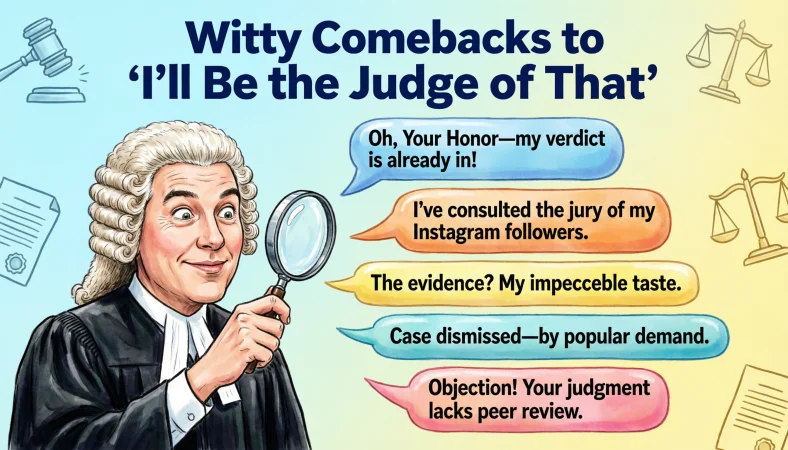
When someone says “I’ll be the judge of that,” they are usually teasing, challenging your claim, or playfully saying they will decide for themselves. The best reply depends on whether you want to sound funny, flirty, confident, sarcastic, or totally unbothered.
Top replies: “Court is now in session,” “Judge wisely,” “Hope you brought an open mind,” “Your verdict better be good,” “Challenge accepted.”
Some phrases practically beg for a clever comeback, and “I’ll be the judge of that” is definitely one of them. You might hear it during a playful text exchange, a DM with your crush, a friendly debate, or even a casual conversation at work. It can sound teasing, skeptical, competitive, or flirty depending on the situation and the person saying it. That is exactly why knowing the right response matters.
A basic “okay” can kill the vibe faster than a phone battery at 1%. A witty comeback, however, can keep the banter alive and show personality without trying too hard. Whether you want to make them laugh, flirt back, challenge their confidence, or simply stay cool, these replies to “I’ll be the judge of that” give you plenty of options for every mood.
Funny Replies
- “Court is officially in session.”
Use this when you want to turn their comment into a ridiculous courtroom moment.
Meaning: You are playfully accepting their judging role. - “Your Honor, I object.”
Use this when they sound suspiciously confident.
Meaning: You are humorously challenging their judgment. - “Please judge responsibly.”
Use this when you want a light, silly comeback.
Meaning: You are teasing them about taking their role too seriously. - “Hope you studied for this.”
Use this when they claim they can judge your abilities.
Meaning: You are playfully questioning their qualifications. - “The pressure is officially on.”
Use this when their verdict suddenly feels important.
Meaning: You are joking about being evaluated. - “Bring snacks to the courtroom.”
Use this when you want to make the exchange extra goofy.
Meaning: You are turning their serious-sounding statement into a joke. - “I hope your judging skills are better than your timing.”
Use this for playful teasing with someone you know well.
Meaning: You are giving them a harmless little roast. - “Do I get a lawyer?”
Use this when they sound ready to judge you.
Meaning: You are jokingly acting like you are on trial. - “I demand a second opinion.”
Use this when you want to exaggerate the situation.
Meaning: You are humorously refusing to accept their verdict immediately. - “Make sure the jury is unbiased.”
Use this when friends are joining the conversation.
Meaning: You are adding dramatic courtroom humor. - “Judgment day came early.”
Use this when their response catches you off guard.
Meaning: You are joking about being evaluated. - “Okay, Judge Judy, calm down.”
Use this with someone who loves acting authoritative.
Meaning: You are playfully poking fun at their confidence.
Brutal Replies
- “Just make sure you’re qualified.”
Use this when you want a sharp but controlled comeback.
Meaning: You are questioning whether they deserve to judge you. - “Your opinion isn’t exactly a final verdict.”
Use this when they act overly important.
Meaning: You are reminding them that their judgment does not control you. - “That sounds like a lot of confidence for one sentence.”
Use this when they are being especially cocky.
Meaning: You are calling out their attitude. - “Bold of you to assume I need your approval.”
Use this when you want a confident clapback.
Meaning: You are making it clear that their approval is unnecessary. - “Judge all you want. I’m still doing me.”
Use this when you want to stay completely unbothered.
Meaning: You are showing independence. - “Your verdict might not survive peer review.”
Use this when you want an intelligent roast.
Meaning: You are joking that their opinion may not hold up. - “I’ll try to survive the judgment.”
Use this when their confidence feels excessive.
Meaning: You are sarcastically acknowledging their attitude. - “Interesting. I don’t remember asking for a ruling.”
Use this when you want a sharper response.
Meaning: You are dismissing their unsolicited judgment. - “You can judge from the sidelines.”
Use this when someone is criticizing without participating.
Meaning: You are telling them to watch rather than control you. - “Careful, your ego is showing.”
Use this when they sound too self-important.
Meaning: You are calling out their arrogance. - “That’s cute. You think you’re in charge.”
Use this when the banter is intentionally amazing.
Meaning: You are playfully knocking down their authority. - “Good luck making that verdict relevant.”
Use this when you want an unapologetic comeback.
Meaning: You are saying their judgment does not matter to you.
Flirty Replies
- “Judge me after the date.”
Use this when the conversation already has romantic energy.
Meaning: You are subtly suggesting spending time together. - “Careful, you might end up impressed.”
Use this when you want confident flirting.
Meaning: You are teasing them while hyping yourself up. - “I hope you’re ready to be pleasantly surprised.”
Use this when flirting with someone who likes playful challenges.
Meaning: You are building anticipation. - “Just try not to fall for me during the evaluation.”
Use this when the flirting is already obvious.
Meaning: You are joking that they might catch feelings. - “Your verdict better come with a compliment.”
Use this when you want cute banter.
Meaning: You are inviting them to admire you. - “I have a feeling you’ll give me a passing grade.”
Use this when you want a playful romantic response.
Meaning: You are confidently predicting their approval. - “Judge carefully. I’m charming under pressure.”
Use this when you want to sound smooth and playful.
Meaning: You are turning the challenge into flirtation. - “Are you judging me or looking for an excuse to keep talking?”
Use this when you suspect they are flirting.
Meaning: You are teasing them about their interest. - “I perform better when the judge is cute.”
Use this when you want a direct compliment with humor.
Meaning: You are flirting by complimenting them. - “Then I guess I’ll have to impress you.”
Use this when you enjoy playful competition.
Meaning: You are showing interest while accepting the challenge. - “Take your time. I like having your attention.”
Use this for a softer flirty vibe.
Meaning: You are openly enjoying their attention. - “Just remember, judges can get distracted too.”
Use this when the chemistry is strong.
Meaning: You are playfully suggesting mutual attraction.
Polite Replies
- “Fair enough, I respect your judgment.”
Use this when you want to keep things friendly.
Meaning: You are acknowledging their perspective respectfully. - “I’ll let you decide for yourself.”
Use this during a calm disagreement.
Meaning: You are allowing them to form their own opinion. - “Sounds reasonable to me.”
Use this when you do not want to argue.
Meaning: You are responding calmly and positively. - “I look forward to hearing your verdict.”
Use this when their judgment genuinely matters.
Meaning: You are showing openness to their opinion. - “That’s fair. I’ll take the feedback.”
Use this when the situation is constructive.
Meaning: You are showing maturity. - “Everyone gets to have an opinion.”
Use this when you want to stay diplomatic.
Meaning: You recognize their right to judge. - “I’ll trust your assessment.”
Use this when speaking respectfully.
Meaning: You are giving their judgment some weight. - “Let’s see what you decide.”
Use this when you want to keep things relaxed.
Meaning: You are calmly accepting their evaluation. - “I appreciate the honesty.”
Use this when they are being straightforward.
Meaning: You value their openness. - “That’s completely fair.”
Use this when you want a simple response.
Meaning: You are acknowledging their position without conflict. - “I’m curious to hear your thoughts.”
Use this when you genuinely want their opinion.
Meaning: You are inviting honest feedback. - “Deal. I’ll let the results speak.”
Use this when actions will prove your point.
Meaning: You prefer evidence over arguments.
Professional Replies
- “I’ll be interested to hear your assessment.”
Use this during a workplace discussion.
Meaning: You are responding professionally to their evaluation. - “That’s fair. Let’s see how it performs.”
Use this when discussing a project or proposal.
Meaning: You are focusing on measurable results. - “I welcome constructive feedback.”
Use this when discussing your work.
Meaning: You are showing confidence and openness. - “Let the results speak for themselves.”
Use this when your work will demonstrate its value.
Meaning: You are confident without being defensive. - “I’ll look forward to your evaluation.”
Use this in a formal setting.
Meaning: You are professionally acknowledging their judgment. - “I respect the review process.”
Use this when evaluation is part of the situation.
Meaning: You are staying composed and professional. - “Absolutely. I’m open to your feedback.”
Use this when collaborating with colleagues.
Meaning: You welcome their perspective. - “Let’s judge it based on the outcome.”
Use this when discussing performance.
Meaning: You prefer objective results. - “I’m confident the work will speak for itself.”
Use this when someone questions your proposal.
Meaning: You trust the quality of your work. - “That sounds like a reasonable approach.”
Use this when acknowledging someone’s evaluation.
Meaning: You are keeping the discussion constructive. - “I appreciate an honest assessment.”
Use this when receiving professional feedback.
Meaning: You value straightforward criticism. - “We’ll see what the evidence shows.”
Use this during a serious discussion.
Meaning: You want decisions based on facts.
Creative Replies
- “Then prepare your official verdict.”
Use this when you want a theatrical response.
Meaning: You are making their judgment sound like an event. - “The audition begins now.”
Use this when they are evaluating your skills.
Meaning: You are turning the moment into a playful performance. - “Welcome to the judging panel.”
Use this when you want to exaggerate their authority.
Meaning: You are humorously accepting their role. - “May the best argument win.”
Use this during a friendly debate.
Meaning: You are turning disagreement into competition. - “Prepare your scorecard.”
Use this when they are evaluating something you did.
Meaning: You are playfully challenging their assessment. - “The evidence will be delicious.”
Use this when discussing food or cooking.
Meaning: You are adding a silly twist to the challenge. - “Your assignment is to be impressed.”
Use this when you feel confident.
Meaning: You are playfully predicting their reaction. - “I accept the challenge from the judging committee.”
Use this when several friends are involved.
Meaning: You are making the situation sound official and ridiculous. - “The verdict may cause emotional damage.”
Use this when the exchange is dramatic.
Meaning: You are exaggerating the stakes for humor. - “Let history remember this moment.”
Use this when something minor is being treated dramatically.
Meaning: You are intentionally making the situation absurd. - “Cue the dramatic courtroom music.”
Use this when you want theatrical energy.
Meaning: You are turning the exchange into a comedy scene. - “And now, the trial of my questionable decisions.”
Use this when joking about yourself.
Meaning: You are making fun of your own choices.
Sarcastic Replies
- “Wow, what an honor.”
Use this when they are acting overly important.
Meaning: You are sarcastically exaggerating their authority. - “Should I be nervous?”
Use this when their judgment sounds dramatic.
Meaning: You are teasing them for taking things too seriously. - “Thank you for your very important opinion.”
Use this when you want dry humor.
Meaning: You are lightly mocking their seriousness. - “I’ll try to sleep tonight.”
Use this when their verdict supposedly matters enormously.
Meaning: You are joking that you are worried about their judgment. - “Such power. Such responsibility.”
Use this when they sound bossy.
Meaning: You are sarcastically praising their authority. - “Please try not to let it go to your head.”
Use this when they become too confident.
Meaning: You are teasing their ego. - “Your Honor has spoken.”
Use this when they make a dramatic judgment.
Meaning: You are playfully mocking their authority. - “I’ll alert the media.”
Use this when they act like their verdict is major news.
Meaning: You are exaggerating their importance for humor. - “Should I prepare my acceptance speech?”
Use this when you expect them to approve.
Meaning: You are sarcastically assuming you will win. - “This is getting serious very quickly.”
Use this when the banter becomes dramatic.
Meaning: You are humorously exaggerating the situation. - “I’m honored to be under investigation.”
Use this when they are teasing you.
Meaning: You are matching their dramatic energy. - “I hope the judging panel is feeling generous.”
Use this when you want playful sarcasm.
Meaning: You are joking about their ability to decide your fate.
Cute Replies
- “Judge gently, please.”
Use this when you want a sweet response.
Meaning: You are asking for kindness in a playful way. - “Be nice to me, Judge.”
Use this when teasing someone you like.
Meaning: You are making their judgment sound cute rather than serious. - “I’ll try my best to impress you.”
Use this when you want an innocent, charming reply.
Meaning: You care about their opinion. - “Aww, someone’s taking their judging job seriously.”
Use this when they are being playfully authoritative.
Meaning: You are gently teasing them. - “Okay, but give me extra credit.”
Use this when you want a playful response.
Meaning: You are jokingly asking for special treatment. - “I hope I get a gold star.”
Use this when you want something wholesome.
Meaning: You are making the situation playful and innocent. - “Don’t judge too hard.”
Use this when you want a soft comeback.
Meaning: You are keeping the mood light. - “I’ll behave, promise.”
Use this when the teasing has a playful vibe.
Meaning: You are leaning into their mock authority. - “Can I bribe the judge with cookies?”
Use this when you want cute humor.
Meaning: You are joking about winning their approval. - “I’m ready for my tiny little verdict.”
Use this when you want intentionally silly energy.
Meaning: You are making the situation adorable rather than serious. - “Just give me a passing grade.”
Use this when you want cute banter.
Meaning: You are playfully asking for approval. - “I’ll take my chances with you.”
Use this when the person is someone you trust.
Meaning: You are showing playful confidence.
Dramatic Replies
- “Then let the trial begin.”
Use this when you want maximum theatrical energy.
Meaning: You are dramatically accepting their challenge. - “My fate rests in your hands.”
Use this when joking around with a friend.
Meaning: You are exaggerating their influence. - “I knew this day would come.”
Use this when their judgment sounds inevitable.
Meaning: You are turning a normal moment into a dramatic scene. - “Tell my family I fought bravely.”
Use this when you want ridiculous drama.
Meaning: You are pretending the judgment is life-changing. - “This verdict will define my legacy.”
Use this when you want exaggerated humor.
Meaning: You are making the situation sound historically important. - “I have nothing left to lose.”
Use this when pretending to face a serious challenge.
Meaning: You are dramatically accepting the consequences. - “The courtroom awaits.”
Use this when continuing the courtroom joke.
Meaning: You are keeping the theatrical theme alive. - “May destiny guide your decision.”
Use this when you want mock seriousness.
Meaning: You are exaggerating the importance of their judgment. - “I shall face the verdict with dignity.”
Use this when you want playful drama.
Meaning: You are pretending to be noble under pressure. - “Whatever happens, remember me kindly.”
Use this when joking about their judgment.
Meaning: You are making the situation hilariously dramatic. - “The suspense is unbearable.”
Use this when waiting for their opinion.
Meaning: You are exaggerating your anticipation. - “Tonight, we discover my fate.”
Use this when you want cinematic energy.
Meaning: You are making a small moment feel epic.
Chill And Casual Replies
- “Fair enough.”
Use this when you want a relaxed response.
Meaning: You are casually accepting their comment. - “We’ll see.”
Use this when you want to stay mysterious.
Meaning: You are not taking the challenge too seriously. - “Go for it.”
Use this when you are completely comfortable with their judgment.
Meaning: You are confidently allowing them to decide. - “Judge away.”
Use this when you want casual confidence.
Meaning: You are not bothered by their opinion. - “Works for me.”
Use this when you want a simple response.
Meaning: You are relaxed about the situation. - “Let’s see what happens.”
Use this when the outcome is uncertain.
Meaning: You are keeping an open mind. - “No pressure.”
Use this when you want playful calmness.
Meaning: You are making the situation less serious. - “I’ll survive.”
Use this when they are teasing you.
Meaning: You are showing that you are not worried. - “Guess we’ll find out.”
Use this when you want to keep things easygoing.
Meaning: You are letting the situation play out naturally. - “Your call.”
Use this when their decision is genuinely theirs.
Meaning: You are giving them the choice. - “Sounds like a plan.”
Use this when you want to keep the conversation moving.
Meaning: You are casually agreeing. - “Alright, let’s see your verdict.”
Use this when you want a relaxed challenge.
Meaning: You are inviting them to make their judgment.
Confident Replies
- “I’m not worried about your verdict.”
Use this when you want strong self-confidence.
Meaning: You trust yourself regardless of their opinion. - “I already know I’ll pass.”
Use this when you are feeling playful and bold.
Meaning: You confidently expect approval. - “Go ahead. I can handle it.”
Use this when someone is trying to intimidate you.
Meaning: You are showing composure. - “Judge away. I know my worth.”
Use this when you want a powerful response.
Meaning: Your confidence does not depend on their judgment. - “I’m comfortable with whatever you decide.”
Use this when you want calm confidence.
Meaning: You are secure enough to accept any verdict. - “I don’t need a perfect score.”
Use this when you want independent energy.
Meaning: You are not seeking validation. - “I’ll let my actions convince you.”
Use this when someone doubts you.
Meaning: You prefer proving yourself through results. - “You’ll see soon enough.”
Use this when you want a mysterious response.
Meaning: You are confident that evidence will support you. - “I’m betting on myself.”
Use this when you want motivational energy.
Meaning: You have faith in your own abilities. - “I can take the verdict.”
Use this when you want to sound emotionally steady.
Meaning: You are comfortable handling criticism. - “My confidence doesn’t need a ruling.”
Use this when someone is overly judgmental.
Meaning: Your self-belief is independent of their opinion. - “Judge me by what I do.”
Use this when you want a direct answer.
Meaning: You want your actions to define you.
Clever Replies
- “Then I hope you brought evidence.”
Use this when they challenge a claim you made.
Meaning: You are cleverly turning their judgment back on them. - “A verdict without evidence is just an opinion.”
Use this during a friendly argument.
Meaning: You are distinguishing judgment from proof. - “Every judge needs a good case.”
Use this when you want intellectual humor.
Meaning: You are playfully challenging their authority. - “I’ll be interested in your methodology.”
Use this when they sound overly analytical.
Meaning: You are joking about their judging process. - “Just remember, bias can affect the verdict.”
Use this when they obviously like or dislike you.
Meaning: You are teasing them about being subjective. - “Make sure your conclusion matches the evidence.”
Use this during a playful debate.
Meaning: You are encouraging fair judgment. - “I accept independent evaluations.”
Use this when you want dry, clever humor.
Meaning: You are treating the conversation like a formal review. - “Interesting. I’ll review your review.”
Use this when you want a smart comeback.
Meaning: You are joking that their judgment can also be judged. - “Your verdict is noted, not necessarily accepted.”
Use this when you want confident cleverness.
Meaning: You acknowledge their opinion without surrendering to it. - “Let’s agree to let reality decide.”
Use this when discussing something uncertain.
Meaning: You prefer results over opinions. - “I’ll await your peer-reviewed conclusion.”
Use this when you want nerdy humor.
Meaning: You are exaggerating the seriousness of their judgment. - “Interesting theory. Let’s test it.”
Use this when they make a prediction about you.
Meaning: You are confidently inviting them to find out.
Playful Replies
- “Judge away, your honor.”
Use this when the conversation is already playful.
Meaning: You are matching their teasing energy. - “I’m ready for my performance review.”
Use this when they are evaluating something you did.
Meaning: You are turning the situation into workplace humor. - “Bring your judging face.”
Use this when teasing someone you know well.
Meaning: You are playfully calling attention to their serious expression. - “This better be a five-star review.”
Use this when you expect them to like something.
Meaning: You are jokingly demanding approval. - “No pressure, but choose wisely.”
Use this when you want playful suspense.
Meaning: You are making their decision sound important. - “I hope you’re feeling generous today.”
Use this when you want a lighthearted response.
Meaning: You are joking about receiving a favorable verdict. - “I’m prepared to plead my case.”
Use this when you enjoy mock arguments.
Meaning: You are continuing the courtroom theme. - “Can I appeal if I disagree?”
Use this when you want playful banter.
Meaning: You are jokingly challenging the final decision. - “I’ll allow it.”
Use this when you want to reverse the authority dynamic.
Meaning: You are humorously pretending to be the judge instead. - “Your judging privileges have been activated.”
Use this when you want absurd humor.
Meaning: You are pretending they have official authority. - “Okay, but make it entertaining.”
Use this when you want to keep the exchange lively.
Meaning: You are inviting more playful banter. - “I’m curious what score you’ll give me.”
Use this when you want to continue the teasing.
Meaning: You are showing interest in their reaction.
Witty Replies
- “Then judge the whole story, not one chapter.”
Use this when someone is judging you too quickly.
Meaning: You want them to consider the bigger picture. - “Careful, first impressions can be misleading.”
Use this when they are making assumptions.
Meaning: You are encouraging them to look deeper. - “I hope your standards can keep up.”
Use this when you want confident humor.
Meaning: You are teasing them about the challenge. - “I’ll let you discover the answer.”
Use this when you want to stay mysterious.
Meaning: You are refusing to reveal everything immediately. - “Judge the results, not the rumors.”
Use this when someone has heard questionable information.
Meaning: You want them to form their own opinion. - “I make a surprisingly good case.”
Use this when you want clever confidence.
Meaning: You believe you can prove your point. - “I hope you’re taking notes.”
Use this when showing off a little.
Meaning: You are playfully presenting yourself as impressive. - “You may want to reserve judgment.”
Use this when the outcome is not obvious yet.
Meaning: You think they should wait before deciding. - “The evidence might change your mind.”
Use this when they doubt you.
Meaning: You are confident you can prove yourself. - “Your curiosity is showing.”
Use this when their judgment seems motivated by interest.
Meaning: You are teasing them about paying attention to you. - “I’ll make the verdict interesting.”
Use this when you want playful confidence.
Meaning: You promise that the outcome will surprise them. - “Don’t blink. You might miss the evidence.”
Use this when you want a clever dramatic comeback.
Meaning: You are confidently suggesting proof is coming.
Sweet And Charming Replies
- “I hope I make a good impression.”
Use this when you genuinely care about their opinion.
Meaning: You want to be seen positively. - “I’ll take your honest verdict.”
Use this when you trust their judgment.
Meaning: You value their genuine opinion. - “Just be kind with your judgment.”
Use this when you want warmth.
Meaning: You are asking for honesty without harshness. - “I’m curious what you think.”
Use this when their opinion matters to you.
Meaning: You genuinely want their perspective. - “I’ll try to make you proud.”
Use this when speaking to someone you care about.
Meaning: You want to meet their expectations. - “Hopefully, I pass your test.”
Use this when you want sweet teasing.
Meaning: You hope they approve of you. - “I trust you to judge fairly.”
Use this when you respect the person.
Meaning: You believe they will be honest and reasonable. - “I’ll accept the verdict with a smile.”
Use this when you want a warm response.
Meaning: You are not taking the judgment too seriously. - “Your opinion means something to me.”
Use this when their judgment genuinely matters.
Meaning: You value their perspective emotionally. - “Just promise you’ll be honest.”
Use this when you want sincerity.
Meaning: You prefer genuine feedback over empty praise. - “I hope I surprise you in a good way.”
Use this when you want to build anticipation.
Meaning: You want to exceed their expectations. - “Whatever your verdict, I appreciate you.”
Use this when you want a heartfelt response.
Meaning: You are separating their opinion from your appreciation of them.
Bold And Sassy Replies
- “Judge me after you’ve seen the full package.”
Use this when you want confident sass.
Meaning: You are suggesting they have not seen everything yet. - “I’m not auditioning for your approval.”
Use this when someone sounds too judgmental.
Meaning: You are confidently rejecting the need for validation. - “Careful, you might end up judging yourself.”
Use this when you want a clever reversal.
Meaning: You are turning the judgment back on them. - “You’re welcome to try.”
Use this when someone challenges you.
Meaning: You are confidently accepting their scrutiny. - “I hope you brought a strong enough scorecard.”
Use this when you want playful sass.
Meaning: You are joking that evaluating you will be difficult. - “My record speaks for itself.”
Use this when someone questions your credibility.
Meaning: You trust your history and actions. - “I’m hard to impress too.”
Use this when you want to return their energy.
Meaning: You are reminding them that judgment goes both ways. - “You can judge, but I get the final say.”
Use this when you want strong boundaries.
Meaning: You remain in control of your choices. - “I’ll survive your expert opinion.”
Use this when they are acting like an authority.
Meaning: You are lightly mocking their confidence. - “Try not to be intimidated by the results.”
Use this when you want bold humor.
Meaning: You expect to exceed their expectations. - “I’m confident the verdict will be favorable.”
Use this when you want polished confidence.
Meaning: You expect their approval. - “Judge carefully. I’m full of surprises.”
Use this when you want mystery and attitude.
Meaning: You are warning them not to underestimate you.
Replies When You Want To Challenge Them:
- “Then prove you’re qualified.”
Use this when someone confidently claims judging rights.
Meaning: You are challenging their authority. - “What are your judging credentials?”
Use this when you want playful skepticism.
Meaning: You are asking what makes them the expert. - “And who appointed you?”
Use this when they sound overly authoritative.
Meaning: You are humorously questioning their position. - “What happens if your verdict is wrong?”
Use this when you want to challenge their certainty.
Meaning: You are reminding them that judgment can be imperfect. - “I’ll judge your judgment.”
Use this when you want a quick clever comeback.
Meaning: You are turning the evaluation back on them. - “Then we have a competition.”
Use this when you enjoy playful rivalry.
Meaning: You are making the exchange mutual. - “Okay, but I get to grade you too.”
Use this when you want teasing energy.
Meaning: You are making the judging process equal. - “Let’s see who has better judgment.”
Use this during playful competition.
Meaning: You are challenging them directly. - “Hope you’re ready to defend your verdict.”
Use this when you expect debate.
Meaning: You are warning them that you may challenge their conclusion. - “Make it convincing.”
Use this when you want confident brevity.
Meaning: You expect them to justify their opinion. - “Don’t disappoint me, Judge.”
Use this when you want playful pressure.
Meaning: You are teasing them while accepting their challenge. - “Then I expect a well-reasoned decision.”
Use this when you want smart humor.
Meaning: You are pretending their casual opinion needs serious analysis.
Replies When You Want To Keep The Conversation Going
- “So what’s your first impression?”
Use this when you want them to elaborate.
Meaning: You are inviting them to share their thoughts. - “What exactly are you judging?”
Use this when their statement is vague.
Meaning: You want to know what they are evaluating. - “What would make me pass?”
Use this when you want playful interaction.
Meaning: You are asking about their expectations. - “What’s the grading scale?”
Use this when you want to keep things humorous.
Meaning: You are turning the conversation into a playful test. - “How harsh are you as a judge?”
Use this when you want to learn their personality.
Meaning: You are encouraging them to continue teasing. - “What’s your verdict so far?”
Use this when you want an immediate reaction.
Meaning: You are asking for their current opinion. - “Should I be worried?”
Use this when their tone is mysterious.
Meaning: You are inviting reassurance or more teasing. - “What evidence do you need?”
Use this when you want to continue the challenge.
Meaning: You are offering to prove your point. - “Are you always this judgmental?”
Use this when you want playful teasing.
Meaning: You are challenging their personality. - “Do I get a chance to defend myself?”
Use this when you want courtroom humor.
Meaning: You are encouraging more banter. - “How long until the verdict?”
Use this when you want to keep the suspense alive.
Meaning: You are showing interest in their reaction. - “Okay, I’m listening. Judge away.”
Use this when you want them to continue.
Meaning: You are giving them room to explain themselves.
When You Want To Shut Down Judgment
- “You’re entitled to your opinion.”
Use this when you want to stay calm during unwanted criticism.
Meaning: You acknowledge their opinion without accepting it. - “You don’t have to agree with me.”
Use this when someone is judging your choices.
Meaning: You are comfortable with disagreement. - “I’m good with my decision.”
Use this when you want firm confidence.
Meaning: You do not need their approval. - “Judge if you want. I’m still happy.”
Use this when someone criticizes something you enjoy.
Meaning: Their judgment will not change your happiness. - “Not every opinion needs my attention.”
Use this when you want a strong boundary.
Meaning: You choose which criticism matters. - “I know who I am.”
Use this when judgment becomes personal.
Meaning: Your identity is not defined by someone else’s opinion. - “You can think that.”
Use this when you want a short, detached reply.
Meaning: You are refusing to argue. - “I’m not here to convince everyone.”
Use this when someone demands agreement.
Meaning: You accept that people will have different views. - “That’s your perspective.”
Use this when you want a neutral response.
Meaning: You recognize their view without adopting it. - “I’m comfortable with my choices.”
Use this when they question your decisions.
Meaning: You trust yourself. - “No verdict needed.”
Use this when you want to end the teasing.
Meaning: You are making it clear that judgment is unnecessary. - “We can agree to disagree.”
Use this when the conversation becomes argumentative.
Meaning: You prefer peace over endless debate.
FAQs
What Does “I’ll Be the Judge of That” Mean?
It usually means the person wants to decide for themselves whether your statement is true, good, impressive, or believable. It can sound serious, teasing, skeptical, or playful depending on context.
Is “I’ll Be the Judge of That” Flirty?
It can be. If someone says it with teasing energy, emojis, compliments, or playful challenges, it may be a way of creating romantic tension and keeping the conversation going.
What Is a Good Flirty Reply?
Try “Careful, you might end up impressed”, “Judge me after the date”, or “I perform better when the judge is cute.” These keep the exchange confident without making things too intense.
Can You Use These Replies With Friends?
Absolutely. Funny, sarcastic, dramatic, and playful responses work especially well with friends because the phrase naturally creates an opportunity for friendly banter.
Is “I’ll Be the Judge of That” Professional?
It can be used professionally, but it may sound casual or teasing. In formal situations, alternatives such as “I’ll review the results” or “I’ll evaluate it based on the outcome” are usually better.
What If You Do Not Actually Mean the Thing They Are Judging?
Keep your response honest. Try “Fair enough, I’m still figuring it out” or “I guess we’ll see.” You do not need to pretend to be confident about something you are uncertain about.
Is Humor Appropriate When Someone Says This?
Usually, yes, especially in casual conversations. If the person is genuinely evaluating your work or making an important decision, a polite or professional response is safer than a sarcastic comeback.
What Is a Good Comeback If They Sound Too Cocky?
Try “And who appointed you?”, “Make sure you’re qualified,” or “I’ll judge your judgment too.” These give the banter some attitude without automatically turning it into an argument.
What Is the Best Short Reply?
For a casual situation, “Judge away.” is simple and confident. For playful banter, “Your Honor, I object.” is an easy laugh.
How Can I Sound Confident Without Being Rude?
Focus on calm confidence rather than insults. Replies such as “Let the results speak for themselves” and “I’m comfortable with whatever you decide” show self-assurance without unnecessary drama.
Can “I’ll Be the Judge of That” Be a Challenge?
Yes. The phrase often carries a playful challenge, especially when someone doubts your claim. A response like “Challenge accepted” keeps that competitive energy going.
What Should I Say If I Want To Keep Them Curious?
Try “You’ll see soon enough,” “I’ll let you discover the answer,” or “Judge carefully. I’m full of surprises.” These responses create a little mystery without overdoing it.
Conclusion
The perfect comeback to “I’ll be the judge of that” depends on the vibe you want to create. You can make them laugh with courtroom jokes, turn up the chemistry with a flirty line, stay classy with a polite response, or shut down unnecessary judgment with calm confidence. The biggest trick is choosing a reply that sounds like you instead of forcing a personality that does not fit.
A great comeback should feel effortless, natural, and just clever enough to make the other person smile. Save this list for your next debate, DM, playful argument, or unexpected challenge, and pick your favorite style when the moment arrives. Go ahead, make your next reply unforgettable!