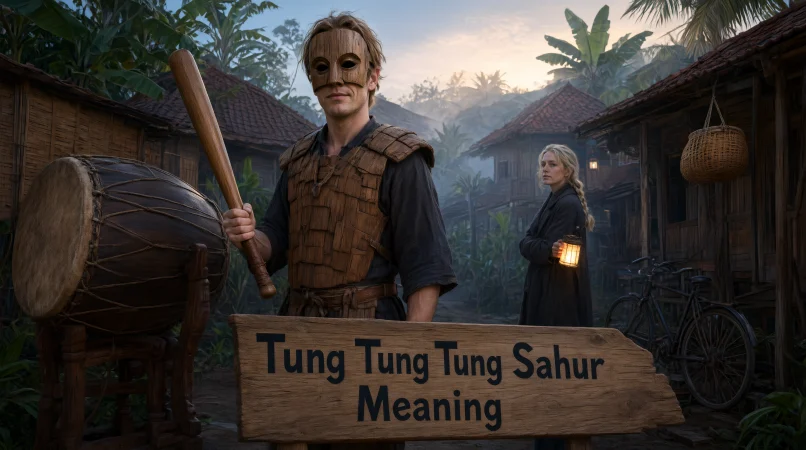
“Tung Tung Tung Sahur” is a viral Indonesian internet meme featuring a strange, wooden, stick-like character associated with the traditional practice of waking people up for sahur, the pre-dawn meal eaten during Ramadan. The phrase imitates the repeated sound of a drum or wooden instrument used to alert people that it is time to eat before fasting begins.
It became popular through TikTok and other social media platforms as part of the Italian Brainrot meme trend, where bizarre AI-generated characters, funny voices, and absurd storytelling entertain viewers. Today, people use it in memes, videos, and jokes to represent the sahur wake-up call or simply enjoy its catchy, unusual sound.
Imagine hearing someone repeatedly shouting “Tung Tung Tung Sahur” while a strange wooden character appears on your screen. It sounds confusing, looks hilarious, and somehow gets stuck in your head after just a few seconds.
If you’ve come across this phrase on TikTok, Instagram Reels, or YouTube Shorts, you’re probably wondering what it actually means and why everyone keeps repeating it. What started as a funny internet sound has turned into a recognizable meme that people use for jokes, edits, and entertaining videos.
Understanding the Tung Tung Tung Sahur meaning requires looking at both Indonesian Ramadan traditions and modern internet culture.
In Indonesia, sahur refers to the meal Muslims eat before dawn during Ramadan, and traditional wake-up calls sometimes involve people walking through neighborhoods while beating drums or other percussion instruments.
The viral meme takes inspiration from this familiar practice and turns it into an absurd AI-generated character associated with the Italian Brainrot trend. In this guide, we’ll explore the phrase’s meaning, cultural background, meme origin, and how people use it online.
Table of Contents
- What Does Tung Tung Tung Sahur Mean?
- What Is Sahur?
- What Does “Tung Tung Tung” Represent?
- Where Did the Viral Meme Come From?
- Who Is the Tung Tung Tung Sahur Character?
- Why Did the Meme Become So Popular?
- Indonesian Sahur Traditions vs. the Internet Meme
- How People Use the Phrase Online
- Is Tung Tung Tung Sahur an Italian Meme?
- FAQs
- Conclusion
What Does Tung Tung Tung Sahur Mean?
“Tung Tung Tung Sahur” is a phrase associated with the sound of a drum or wooden instrument being struck to wake people for sahur, the pre-dawn meal during Ramadan. The repeated words imitate a rhythmic knocking or booming sound, while sahur identifies the reason for the wake-up call.
The phrase has a real cultural connection to Indonesia and other parts of Southeast Asia. During Ramadan, some communities use drums, wooden instruments, loudspeakers, or spoken calls to remind people that it is time to wake up and prepare food before the day’s fast begins.
However, the phrase became internationally recognizable for a different reason. In 2025, it turned into an absurdist internet meme featuring a wooden humanoid creature with a baseball bat. The character is presented as a strange figure that appears when someone ignores repeated calls to wake up for sahur.
So, the expression has two connected meanings:
- Traditional meaning: A rhythmic wake-up call reminding people to get ready for the pre-dawn Ramadan meal.
- Internet meaning: A fictional wooden creature from a viral AI-generated meme, associated with an exaggerated and spooky sahur warning.
Understanding both meanings makes the trend much easier to follow. The meme may look completely random, but its central joke comes from a familiar Ramadan practice.
What Is Sahur?
To understand the phrase properly, it helps to understand the word sahur first. Sahur, also spelled suhoor or suhur, is the meal Muslims eat before dawn during Ramadan. It takes place before the daily fast begins, and it provides an opportunity to eat and drink before abstaining from food and drink during daylight hours.
For many Muslim families, waking up for this meal is part of the daily Ramadan routine. Some people prepare food at home, while others eat whatever is available before the dawn prayer and the beginning of the fast.
The timing can make waking up difficult. Sahur happens early, sometimes when the rest of the neighborhood is still asleep. That is one reason communities in parts of Indonesia and Malaysia have developed ways to alert residents.
Why Do People Wake Others for Sahur?
In some neighborhoods, people walk through streets making rhythmic sounds with drums, wooden instruments, or other objects. These calls remind residents to wake up, prepare their food, and avoid sleeping through the meal.
The practice can also create a sense of community. Neighbors hear the same familiar sounds, families get ready at similar times, and the early morning takes on a distinctive Ramadan atmosphere.
Not every Muslim community follows this custom. Some people rely on alarm clocks, mobile phone reminders, family members, or mosque announcements instead. Local customs differ, but the purpose remains straightforward: helping people wake up before dawn.
What Does “Tung Tung Tung” Represent?
The words “tung tung tung” are an example of onomatopoeia, a term for words that imitate sounds. English has familiar examples such as “buzz,” “bang,” and “tick-tock.” In this phrase, the repeated sound suggests the beat of a drum or a hollow wooden instrument.
In Indonesian communities, a traditional instrument called a kentongan can produce a sharp, resonant knocking sound. It is generally made from wood or bamboo with a hollow opening or slit that helps create its distinctive tone. People have used kentongan instruments for community announcements and signals, including in neighborhood settings.
Another instrument connected with Ramadan is the bedug, a large drum traditionally used in parts of Indonesia and Malaysia. Its deep sound can carry across a neighborhood, making it suitable for announcements and religious or community occasions.
These instruments are related to the cultural background of the phrase, but they are not identical.
| Term | What it refers to | Connection to the phrase |
|---|---|---|
| Tung tung tung | An imitation of repeated striking sounds | Represents the rhythmic wake-up call |
| Kentongan | A wooden or bamboo slit drum | Produces a sharp knocking sound |
| Bedug | A large traditional drum | Used in some communities for announcements and Ramadan calls |
| Sahur | The pre-dawn meal during Ramadan | Explains why people are being awakened |
The important point is that the repeated sound is not a mysterious foreign word with a hidden translation. It imitates a familiar type of rhythmic call, while sahur gives that sound its cultural context.
Where Did the Viral Meme Come From?
The modern internet character appeared on TikTok in early 2025. The earliest widely documented version was posted on February 28, 2025, by an Indonesian creator known as Noxa, whose account is @noxaasht. The post introduced an unusual wooden humanoid figure alongside an eerie Indonesian voice-over describing its supposed connection to sahur. Know Your Meme+1
The video took a familiar cultural reference and turned it into a mock-horror story. According to the fictional narration, if someone is called for sahur three times and does not respond, a frightening creature may come to their home. The warning is intentionally ridiculous, especially when paired with the strange wooden figure holding a bat.
That contrast helped the video stand out. The sound itself was familiar to many people in Indonesia, but the character and its supernatural backstory were absurd. Viewers could recognize the Ramadan reference while enjoying the unexpected horror-comedy twist.
The Phrase Existed Before the Character
It is useful to separate the traditional expression from the viral character. The phrase was not invented from nothing for the 2025 meme. Know Your Meme records an earlier online example from 2013 in which the repeated phrase was used as a sahur wake-up chant. Know Your Meme
The 2025 post gave the expression a new visual identity. Instead of simply hearing a rhythmic call, audiences now associated it with a wooden creature, a baseball bat, and a fictional rule about answering three calls. That transformation helped an existing cultural phrase become a recognizable meme.
Who Is the Tung Tung Tung Sahur Character?
The character is an AI-generated, human-like wooden figure. It is often shown with a tall, roughly cylindrical body, a simple face, thin arms and legs, and a baseball bat or club in its hand. Its appearance resembles a wooden object brought to life, which connects visually with the traditional instruments behind the phrase.
People often call the character Tung Tung, Triple T, or Tung Tung Tung Sahur. The nickname Triple T comes from the three repeated “Tung” sounds in its name. It is not a separate character.
The figure’s fictional personality is part of the joke. It is presented as a strange visitor associated with the time of sahur, rather than as a real creature from Indonesian folklore. The original story uses a mock-warning style, making it sound as though people should be afraid of missing their wake-up call.
What Happens If Someone Ignores the Call Three Times?
In the meme’s fictional story, the creature supposedly appears at the home of anyone who is called for sahur three times but fails to answer. The character’s bat adds to the exaggerated threat, making an ordinary problem, such as struggling to wake up, sound like a horror scenario.
There is no reason to treat this as a real religious teaching or an established Indonesian supernatural belief. It is invented meme lore. The three calls are a storytelling device that gives the character a simple rule and makes the joke easy to repeat.
That distinction is important. The character borrows imagery from a real Ramadan routine, but its scary behavior belongs to internet fiction.
Why Did the Meme Become So Popular?
The popularity of the character came from several elements working together. It had a memorable name, an unusual appearance, a short story that people could repeat, and a sound that was easy to recognize. Those qualities made it suitable for short videos, reaction clips, drawings, edits, and jokes.
1. The Name Is Easy to Remember
“Tung Tung Tung Sahur” has a strong rhythm. Repeating the first part makes it sound like a chant or a series of knocks, while the final word gives the phrase a clear connection to Ramadan.
That rhythm makes it easy to use in videos and captions. People can recognize the phrase even when the character looks different from one edit to another.
2. The Character Looks Unusual
The wooden figure is strange enough to catch attention. It does not look like a typical cartoon monster, animal, or human character. Its simple body and serious expression create an awkward visual effect that fits the meme’s deliberately absurd style.
The baseball bat makes the design even more recognizable. It gives the character a threatening appearance, although the overall concept is too ridiculous to take seriously.
3. The Story Is Easy to Remix
The three-call warning gives creators a ready-made setup. They can make a video about someone ignoring an alarm, sleeping through sahur, or refusing to get out of bed. The character then becomes the exaggerated consequence.
Other users can change the setting, add different characters, or invent new endings without losing the central joke. This flexibility helped the meme move beyond its original video.
4. It Connected Local Culture With Global Meme Humor
For Indonesian viewers familiar with sahur calls, the reference was recognizable. For viewers unfamiliar with the tradition, the unusual sound and character still offered a strange, funny image.
That combination allowed the meme to travel across language and cultural boundaries. People did not need to understand every detail of the original practice to enjoy the character’s exaggerated behavior.
5. It Fit the Wider Brainrot Trend
The meme became associated with the broader wave of absurd AI-generated characters often grouped under the label Italian brainrot. This style uses surreal combinations, strange names, synthetic narration, and deliberately nonsensical character stories.
Other recognizable examples from that wave include Tralalero Tralala, Bombardiro Crocodilo, and Brr Brr Patapim. Each has its own unusual design and fictional identity. Tung Tung Tung Sahur stood out because its name and concept drew from Indonesian Ramadan culture rather than Italian language or tradition.
Indonesian Sahur Traditions vs. the Internet Meme
One reason the phrase attracts attention is that it combines something familiar with something completely fictional. The traditional wake-up call has a practical purpose, while the viral character turns that everyday activity into an exaggerated horror joke.
It helps to keep these two sides separate.
| Feature | Traditional sahur call | Tung Tung Tung Sahur meme |
|---|---|---|
| Main purpose | Wake people before dawn | Entertain viewers through absurd humor |
| Sound | Rhythmic drum or wooden knocking | Repeated “tung tung tung” sound |
| Main reference | Ramadan and the pre-dawn meal | A fictional wooden creature |
| Setting | Neighborhoods and homes | TikTok, memes, games, and social media |
| Tone | Community-focused and practical | Strange, humorous, and sometimes spooky |
| Meaning | Reminder to prepare for sahur | Fictional warning about ignoring three calls |
Is the Meme Making Fun of Ramadan?
Not necessarily. The original joke uses a recognizable Ramadan routine as the starting point for an exaggerated story. Many viewers enjoy it because they recognize the experience of being woken up early or struggling to get out of bed for sahur.
Still, context matters. Ramadan is a meaningful religious month for Muslims, so people may have different opinions about jokes involving its practices. Some treat the character as harmless internet humor, while others may prefer memes that do not turn religious customs into horror-themed entertainment.
The distinction between the real practice and the fictional creature helps explain the trend without confusing the two.
How People Use the Phrase Online
The expression now appears in different kinds of online content. Sometimes it refers directly to the wooden character. In other cases, people use it as a sound effect, a caption, or a joke about waking up early.
Here are some common ways it appears:
1. As a Meme Caption
Someone might post a picture of a person sleeping through several alarms with the caption “Tung Tung Tung Sahur.” The joke suggests that the character is coming because the person refuses to wake up.
2. In Funny Ramadan Videos
Creators use the sound in videos about late-night meals, early alarms, and sleepy family members. The character may appear as an imaginary visitor who makes sure everyone gets out of bed.
3. In Reaction Videos
A person might use the phrase when something unexpected happens at night or when a friend suddenly appears. The familiar sound makes the reaction more recognizable to people who know the trend.
4. In Character Edits and Fan Art
Artists and video editors create different versions of the wooden figure. Some give it new outfits, unusual settings, or exaggerated powers. Others place it alongside characters from the wider brainrot trend.
5. In Gaming Content
The character has also appeared in online gaming discussions and fan-made game content. Its simple design and recognizable name make it easy to adapt into character-based games and humorous gameplay videos.
The phrase does not have one fixed meaning in every post. Its interpretation depends on whether the creator is referring to the traditional wake-up call, the fictional character, or the wider meme trend.
Is Tung Tung Tung Sahur an Italian Meme?
It is often grouped with Italian brainrot memes, but its cultural origin is Indonesian. The label can be confusing because it makes the character sound Italian, even though its name, creator, and central reference connect to Indonesia.
Italian brainrot is a loose internet category for surreal AI-generated characters and videos. Many examples use exaggerated names, strange combinations of objects and animals, and synthetic narration. The category became popular through short-form social media content, particularly in 2025.
Tung Tung Tung Sahur fits the same absurd style, which explains why people place it alongside characters such as Tralalero Tralala and Bombardiro Crocodilo. However, sharing a meme category does not mean the characters come from the same country or language.
| Question | Answer |
|---|---|
| Is the character Italian? | No, its origin is Indonesian. |
| Why is it grouped with Italian brainrot? | It became popular during the same broader absurdist AI meme trend. |
| Is the name Italian? | No, it refers to a drum-like sound and the Indonesian sahur tradition. |
| Is the character part of real folklore? | Its wooden monster identity and three-call story are fictional meme elements. |
Calling it an Indonesian brainrot character is a more useful way to describe its cultural background, even though it is commonly included in Italian brainrot collections.
FAQs
What does Triple T stand for?
Triple T is a nickname for Tung Tung Tung Sahur. It refers to the three repeated “Tung” sounds in the phrase.
Who created Tung Tung Tung Sahur?
The character is credited to Indonesian TikTok creator Noxa, who posted an early AI-generated version on February 28, 2025.
Is Tung Tung Tung Sahur a real Indonesian legend?
No. The wooden creature and its story about visiting people who ignore three calls are fictional parts of the internet meme.
Does the phrase have a religious meaning?
The word sahur refers to a real Ramadan meal, but the complete phrase is a rhythmic wake-up expression rather than a religious verse or formal Islamic teaching.
What is the difference between sahur and iftar?
Sahur is the meal eaten before dawn before a day of fasting. Iftar is the meal Muslims have after sunset to break their fast.
Why does Tung Tung Tung Sahur carry a bat?
The bat is part of the character’s fictional design and horror-comedy story. It is not connected to a traditional sahur instrument or religious practice.
Conclusion
The phrase brings together a familiar Ramadan wake-up sound and one of the internet’s most unusual AI-generated characters. Its Indonesian cultural roots explain the words, while its fictional three-call warning explains why the wooden figure became so recognizable.
Whether people use it in a funny video, a gaming edit, or a joke about sleeping through alarms, the appeal comes from that unexpected mix of tradition and absurd humor.