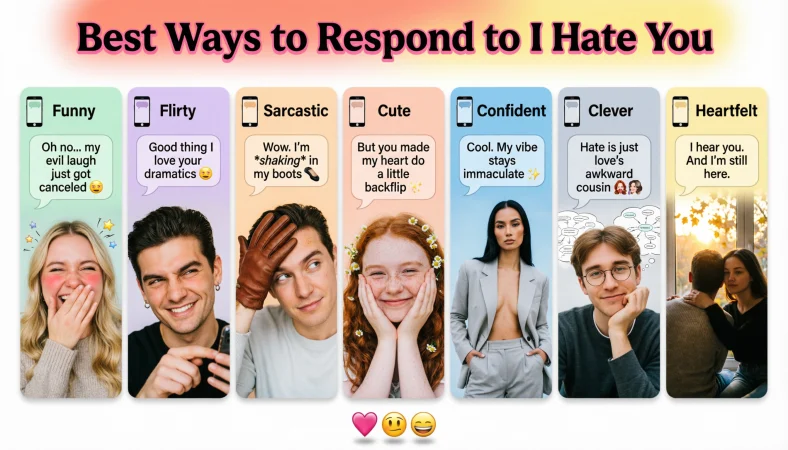
The best way to respond to “I hate you” depends on whether they are genuinely upset, teasing you, flirting, or just being dramatic. You can answer with humor, confidence, kindness, or a clever comeback that matches the mood.
Top alternatives: “You’ll get over it,” “Aww, you care,” “Hate is such a strong word,” “Good thing I like you,” “That sounds like a you problem”
When someone says “I hate you,” your first instinct might be to panic, laugh, or type a response that belongs in the group chat hall of fame. But context matters. A friend saying it after you steal the last slice of pizza is very different from someone saying it during a serious argument.
The right response can turn playful tension into laughter, keep a flirtatious moment going, or calmly address genuine hurt. That is why knowing how to Respond to I hate you is useful in texts, DMs, friendships, relationships, and everyday conversations.
You can be funny without being dismissive, confident without being rude, and sweet without making things awkward. Sometimes the perfect response is one clever sentence that says, “I know you are joking.” Other times, the best move is empathy and a sincere conversation.
Funny Responses to “I Hate You”
- Aww, I hate being your favorite too.
Example: Use this with a close friend who is clearly teasing you.
Meaning: You are turning their fake anger into a playful joke. - That’s okay, I’ll survive somehow.
Example: Send this when someone jokingly complains about you.
Meaning: You are pretending their dislike is dramatically devastating. - You say hate, I hear obsession.
Example: Use this with a friend who constantly teases you.
Meaning: You are humorously suggesting that their attention means they secretly care. - Give it five minutes. You’ll miss me.
Example: Send this after playful banter with someone close to you.
Meaning: You are confidently teasing them about their temporary frustration. - Noted. I’ll add it to my collection of compliments.
Example: Use this when someone says “I hate you” jokingly.
Meaning: You are treating the insult as if it were praise. - I’m devastated. Truly. Send snacks.
Example: Send this when you want to exaggerate your reaction for comedy.
Meaning: You are keeping the exchange light and unserious. - Wow, and I was just about to tolerate you.
Example: Use this with a friend who enjoys sarcastic humor.
Meaning: You are playfully pretending that their comment ruined your opinion of them. - That’s adorable. Anyway, what are we eating?
Example: Use this when a friend makes a dramatic complaint during a casual conversation.
Meaning: You are refusing to take their playful anger seriously. - Hate me later. I’m busy being fabulous.
Example: Send this when you want a confident funny comeback.
Meaning: You are responding with exaggerated self-confidence. - I’ll try to cope with this shocking information.
Example: Use this when their statement is clearly playful.
Meaning: You are making their “hate” sound hilariously dramatic. - Breaking news: someone is pretending not to like me again.
Example: Send this to a friend who frequently teases you.
Meaning: You are turning the moment into a mock news headline. - Cool. Put it on my calendar.
Example: Use this when you want a short, dry joke.
Meaning: You are acting as though their dislike is an appointment you need to remember.
Flirty Responses to “I Hate You”
- You hate me? That sounds suspiciously like you like me.
Example: Use this when someone you like is teasing you romantically.
Meaning: You are turning their words into playful flirtation. - You can hate me while I keep thinking you’re cute.
Example: Send this when the conversation already has romantic chemistry.
Meaning: You are refusing to let their playful complaint stop your flirtation. - Hate me all you want, just stay close.
Example: Use this when you want a confident romantic response.
Meaning: You are teasing them while showing that you enjoy their company. - That’s funny because I’m starting to like you a lot.
Example: Send this when you want to surprise them with a sweet confession.
Meaning: You are contrasting their playful “hate” with your growing affection. - You hate me? Then why do you keep coming back?
Example: Use this with someone who constantly seeks your attention.
Meaning: You are playfully pointing out their obvious interest. - Keep saying that and I might fall for you.
Example: Send this when you want a cute flirt without being too intense.
Meaning: You are using their teasing as an excuse to flirt. - You’re way too cute when you pretend to hate me.
Example: Use this with someone whose fake annoyance is obviously playful.
Meaning: You are turning their attitude into a compliment. - I’ll forgive you for having such terrible taste.
Example: Send this when you want a cheeky romantic comeback.
Meaning: You are jokingly suggesting they are wrong for disliking you. - Hate me today, miss me tomorrow.
Example: Use this when you want a confident, teasing response.
Meaning: You are playfully predicting that their feelings will change quickly. - You’re saying hate, but your attention says otherwise.
Example: Send this when someone keeps finding reasons to talk to you.
Meaning: You are teasing them about their apparent interest. - If this is your flirting technique, it’s working.
Example: Use this when someone is clearly teasing you affectionately.
Meaning: You are turning their playful hostility into romantic banter. - That’s okay, I have enough feelings for both of us.
Example: Send this when you want an affectionate but cheeky line.
Meaning: You are confidently expressing your attraction despite their teasing.
Polite Responses to “I Hate You”
- I’m sorry you feel that way.
Example: Use this when you are unsure whether the person is joking.
Meaning: You are responding calmly without escalating the situation. - I understand that you’re upset.
Example: Use this during a tense conversation with someone you care about.
Meaning: You are acknowledging their emotions rather than arguing. - I hope we can talk about what happened.
Example: Send this when their words seem genuinely serious.
Meaning: You are opening the door to a healthier conversation. - I respect your feelings, even if they’re difficult to hear.
Example: Use this when someone expresses strong anger toward you.
Meaning: You are showing maturity and emotional awareness. - I’m sorry if I hurt you.
Example: Send this when you believe something you did caused genuine pain.
Meaning: You are taking responsibility without becoming defensive. - I don’t want us to leave things on bad terms.
Example: Use this when a disagreement has created emotional distance.
Meaning: You are expressing a desire for peace. - I hear you, and I’m willing to listen.
Example: Use this when the person needs space to explain their feelings.
Meaning: You are showing that their concerns matter. - I appreciate you being honest about how you feel.
Example: Send this when someone expresses difficult emotions directly.
Meaning: You are recognizing their honesty without arguing. - Let’s talk when we’re both calmer.
Example: Use this when emotions are running high.
Meaning: You are choosing a calmer moment for a productive conversation. - I never wanted to make you feel that way.
Example: Send this when you regret causing emotional hurt.
Meaning: You are expressing sincere concern about their feelings. - I hope we can understand each other better.
Example: Use this when a disagreement comes from misunderstanding.
Meaning: You are focusing on resolution rather than winning. - I’m here if you want to talk about it.
Example: Send this when you want to give them emotional space.
Meaning: You are showing support without pressuring them.
Confident Responses to “I Hate You”
- You’ll be okay. I’m unforgettable.
Example: Use this with someone who is playfully annoyed with you.
Meaning: You are responding with humorous self-confidence. - That’s a bold opinion.
Example: Send this when you want a short, composed comeback.
Meaning: You are acknowledging their statement without being rattled. - You’re entitled to your opinion. I’m still fabulous.
Example: Use this when you want confident playful energy.
Meaning: You are refusing to let their comment affect your self-esteem. - I can handle it.
Example: Send this when someone tries to provoke you.
Meaning: You are showing emotional composure. - Lucky for me, I like myself.
Example: Use this when someone is trying to insult you.
Meaning: You are showing that your confidence does not depend on their approval. - Not everyone can handle my personality.
Example: Send this when your teasing personality has annoyed someone.
Meaning: You are confidently accepting that you are not everyone’s cup of tea. - I’ll take that as your temporary emotional phase.
Example: Use this when their “hate” is obviously exaggerated.
Meaning: You are calmly teasing them about their changing mood. - That’s fine. I’m still sleeping peacefully tonight.
Example: Send this when someone is jokingly trying to make you feel guilty.
Meaning: You are showing that you are not easily bothered. - I’m comfortable being misunderstood.
Example: Use this when someone has judged you unfairly.
Meaning: You are expressing confidence without seeking validation. - You don’t have to like me.
Example: Use this when someone genuinely expresses dislike.
Meaning: You are calmly recognizing that everyone has different feelings. - I’m not here to win everyone over.
Example: Send this when you want a mature confident response.
Meaning: You are showing independence from other people’s approval. - Hate is a strong reaction for someone who keeps talking to me.
Example: Use this with someone who claims to dislike you but stays engaged.
Meaning: You are confidently pointing out the contradiction.
Sarcastic Responses to “I Hate You”
- Oh no, whatever will I do?
Example: Use this with a friend who is clearly being dramatic.
Meaning: You are sarcastically pretending to be devastated. - Thank you for your valuable feedback.
Example: Send this when you want a dry, mock-professional comeback.
Meaning: You are treating their insult like a customer review. - I’ll try to recover from this emotionally.
Example: Use this when their comment is clearly playful.
Meaning: You are exaggerating your reaction for humor. - Noted. I’ll lose exactly zero hours of sleep over it.
Example: Send this when you want confident sarcasm.
Meaning: You are showing that their statement does not bother you. - What a heartbreaking announcement.
Example: Use this with someone who loves dramatic jokes.
Meaning: You are playfully exaggerating the importance of their words. - How will I ever continue?
Example: Send this when you want an intentionally dramatic sarcastic reply.
Meaning: You are pretending their dislike has completely ruined your life. - I’ll alert the authorities immediately.
Example: Use this when a friend says “I hate you” over something trivial.
Meaning: You are mocking the seriousness of their playful complaint. - Thank goodness, I was worried you liked me.
Example: Send this when you want to tease them back.
Meaning: You are reversing the insult with sarcastic humor. - I’ll file that under things I didn’t ask for.
Example: Use this for a dry comeback.
Meaning: You are dismissing the comment with controlled sarcasm. - Breaking news: I remain completely unbothered.
Example: Send this when someone is trying to get a reaction.
Meaning: You are emphasizing your calmness. - Wow, such emotional intensity before breakfast.
Example: Use this when someone dramatically complains early in the day.
Meaning: You are making fun of their exaggerated emotion. - I’ll be sure to inform my fan club.
Example: Send this when you want a confident sarcastic response.
Meaning: You are joking that even their dislike counts as attention.
Cute Responses to “I Hate You”
- Aww, you’re cute when you’re annoyed.
Example: Use this with someone whose frustration is clearly playful.
Meaning: You are turning their annoyance into an affectionate moment. - You don’t hate me, you just need a hug.
Example: Send this to someone close to you after a minor disagreement.
Meaning: You are responding with warmth instead of confrontation. - Still love you though.
Example: Use this with a close friend or partner during playful bickering.
Meaning: You are reminding them that the bond matters more than the argument. - Come here, angry little human.
Example: Send this when you know the person enjoys affectionate teasing.
Meaning: You are responding to their frustration with playful tenderness. - Okay, but I’m keeping you anyway.
Example: Use this with someone you are close to.
Meaning: You are jokingly reassuring them that their relationship is secure. - I know, I’m impossible to resist.
Example: Send this when the “hate” is clearly playful.
Meaning: You are confidently turning the moment into cute banter. - You can be mad, but you’re still my favorite.
Example: Use this with a close friend or romantic partner.
Meaning: You are showing affection despite the disagreement. - Fine, I’ll be adorable from a safe distance.
Example: Send this when someone wants a little space after playful teasing.
Meaning: You are respecting their mood while keeping things light. - Okayyy, grumpy pants.
Example: Use this with someone who likes silly nicknames.
Meaning: You are teasing them affectionately rather than taking offense. - I’ll wait until your heart remembers it likes me.
Example: Send this when their “hate” is clearly temporary.
Meaning: You are playfully predicting that affection will return. - You’re forgiven for saying that because you’re cute.
Example: Use this with someone you flirt with.
Meaning: You are turning the tension into affectionate teasing. - Hate me later, hug me now.
Example: Send this to someone you share a close bond with.
Meaning: You are prioritizing affection over the playful disagreement.
Playful Responses to “I Hate You”
- That makes this friendship officially interesting.
Example: Use this when a friend jokingly expresses frustration.
Meaning: You are treating the moment as fun banter. - And yet here you are, talking to me.
Example: Send this when they keep engaging despite claiming to dislike you.
Meaning: You are teasing them about their continued attention. - Sounds like a you problem.
Example: Use this when the complaint is clearly unserious.
Meaning: You are giving a playful, slightly cheeky dismissal. - I’ll allow it this time.
Example: Send this when you want mock-authority humor.
Meaning: You are playfully pretending to control whether they can dislike you. - Fine, but make it funny.
Example: Use this when someone is teasing you.
Meaning: You are encouraging them to keep the banter entertaining. - You’re going to have to try harder than that.
Example: Send this when someone is attempting to annoy you.
Meaning: You are showing that their teasing is not getting under your skin. - Okay, dramatic much?
Example: Use this when their reaction is clearly exaggerated.
Meaning: You are playfully calling out their overreaction. - I’ll pretend to be hurt for your entertainment.
Example: Send this to a friend who loves playful drama.
Meaning: You are jokingly agreeing to participate in the performance. - Put that energy into something productive.
Example: Use this when a friend is playfully complaining about you.
Meaning: You are teasing them about wasting energy on fake anger. - You say hate, I say keep talking.
Example: Send this when you want to keep the banter alive.
Meaning: You are showing that their attention is entertaining you. - Challenge accepted.
Example: Use this when someone jokingly says they dislike you.
Meaning: You are turning their statement into a playful competition. - I knew you couldn’t resist giving me attention.
Example: Send this when someone keeps replying despite pretending to be annoyed.
Meaning: You are teasing them about secretly enjoying the interaction.
Clever Responses to “I Hate You”
- Hate requires effort, and you seem very invested.
Example: Use this when someone repeatedly talks about how much they dislike you.
Meaning: You are cleverly pointing out that their attention suggests they care. - Interesting choice of words for someone who keeps coming back.
Example: Send this to someone who constantly reconnects with you.
Meaning: You are highlighting the contradiction in their behavior. - Perhaps you mean “you frustrate me.”
Example: Use this when their statement seems emotional rather than literal.
Meaning: You are gently reframing their harsh words. - I’ll consider that a temporary emotional conclusion.
Example: Send this when you think their anger will pass.
Meaning: You are responding calmly while leaving room for their feelings to change. - Your actions are giving a very different review.
Example: Use this when their behavior contradicts their words.
Meaning: You are cleverly pointing out the mismatch. - That sounds less like hate and more like unresolved feelings.
Example: Send this when someone clearly has complicated emotions toward you.
Meaning: You are suggesting there may be more behind their words. - Noted. Your emotional vocabulary remains fascinating.
Example: Use this with someone who enjoys intellectual humor.
Meaning: You are responding with playful sophistication. - I appreciate the passion behind your statement.
Example: Send this when someone is being dramatically expressive.
Meaning: You are acknowledging their intensity without taking it personally. - Strong claim. Weak evidence.
Example: Use this when their behavior clearly contradicts their words.
Meaning: You are cleverly challenging the idea that they genuinely dislike you. - Your feelings appear to require further investigation.
Example: Send this when you want a playful analytical comeback.
Meaning: You are jokingly treating their emotions like a mystery. - I’ll reserve judgment until the evidence arrives.
Example: Use this when someone dramatically announces their dislike.
Meaning: You are turning the exchange into witty mock-seriousness. - Your statement has been received, reviewed, and mildly questioned.
Example: Send this to someone who likes dry humor.
Meaning: You are responding with playful intellectual confidence.
Chill And Casual Responses to “I Hate You”
- Haha, you’ll be fine.
Example: Use this when a friend is obviously joking.
Meaning: You are keeping the interaction relaxed. - Yeah, yeah, I know.
Example: Send this when someone playfully complains about you often.
Meaning: You are showing that you understand their teasing. - You’ll get over it.
Example: Use this for a casual and confident comeback.
Meaning: You are treating their dislike as temporary. - All good.
Example: Send this when you do not want to create unnecessary drama.
Meaning: You are keeping the response calm and uncomplicated. - Fair enough.
Example: Use this when you want to acknowledge their feelings without arguing.
Meaning: You are accepting their statement without escalating. - Haha, noted.
Example: Send this when their comment is clearly playful.
Meaning: You are acknowledging it casually. - No worries, I still like you.
Example: Use this with a close friend.
Meaning: You are keeping the relationship warm despite the teasing. - It happens.
Example: Send this when you want a relaxed response.
Meaning: You are refusing to make a big deal out of their comment. - Okay, we’re good.
Example: Use this when you want to keep the conversation moving.
Meaning: You are signaling that there is no need for drama. - You say that now.
Example: Send this when you expect their mood to change.
Meaning: You are playfully suggesting their feelings are temporary. - Haha, love you too.
Example: Use this with someone who says “I hate you” affectionately.
Meaning: You are responding to fake hostility with affection. - Relax, we’re still friends.
Example: Send this after playful bickering.
Meaning: You are reassuring them that the relationship is fine.
Sweet Responses to “I Hate You”
- I know you’re upset, but I still care about you.
Example: Use this when someone you love is genuinely angry.
Meaning: You are showing that their difficult emotion has not changed your care. - I’m sorry things got to this point.
Example: Send this after a serious argument.
Meaning: You are acknowledging the emotional weight of the situation. - I never wanted to hurt you.
Example: Use this when your actions genuinely caused pain.
Meaning: You are expressing sincere regret. - You mean too much to me for me to argue with your feelings.
Example: Send this when someone expresses strong anger toward you.
Meaning: You are choosing compassion over defensiveness. - I hope we can find our way back to each other.
Example: Use this when a close relationship is going through a difficult period.
Meaning: You are expressing hope for reconciliation. - Even when you’re angry, I want you to know I care.
Example: Send this during an emotional disagreement.
Meaning: You are offering reassurance without dismissing their anger. - I’m listening if you want to tell me what hurt you.
Example: Use this when you want to understand the real issue.
Meaning: You are inviting honest communication. - Your feelings matter to me.
Example: Send this when the other person feels ignored or misunderstood.
Meaning: You are validating their emotional experience. - I’d rather fix this than fight about it.
Example: Use this when you want to move toward reconciliation.
Meaning: You are prioritizing the relationship over winning an argument. - I hope you know how much I value you.
Example: Send this to someone important after conflict.
Meaning: You are reminding them that the relationship matters. - I’m sorry for my part in this.
Example: Use this when you recognize your own role in the conflict.
Meaning: You are taking responsibility honestly. - Whenever you’re ready, I’m willing to talk.
Example: Send this when someone needs time to cool down.
Meaning: You are giving them space while keeping communication open.
Dramatic Responses to “I Hate You”
- After everything we’ve been through? Unbelievable.
Example: Use this with a friend who is obviously joking.
Meaning: You are pretending their playful insult is a major betrayal. - My heart may never recover from this betrayal.
Example: Send this when you want theatrical humor.
Meaning: You are exaggerating the emotional impact for fun. - I shall remember this moment forever.
Example: Use this after a silly argument with a friend.
Meaning: You are making a minor disagreement sound historic. - So this is how our story ends?
Example: Send this when someone dramatically says they hate you.
Meaning: You are turning the moment into a mock breakup scene. - Tell my loved ones I tried.
Example: Use this when you want absurd dramatic humor.
Meaning: You are pretending their comment has caused a tragic crisis. - I thought we had something beautiful.
Example: Send this when you are jokingly overreacting.
Meaning: You are treating the relationship like a dramatic romance. - My enemies warned me this day would come.
Example: Use this with a friend who enjoys theatrical jokes.
Meaning: You are creating a ridiculous backstory for their comment. - The betrayal is simply too much.
Example: Send this after a tiny disagreement.
Meaning: You are humorously exaggerating the seriousness. - I need a moment to process this devastating revelation.
Example: Use this when their “hate” is clearly playful.
Meaning: You are pretending to need emotional recovery. - And just like that, my fictional villain origin story begins.
Example: Send this when you want a dramatic internet-style joke.
Meaning: You are playfully turning rejection into an imaginary storyline. - I shall now walk dramatically into the sunset.
Example: Use this when you want a theatrical exit joke.
Meaning: You are pretending their words have ended everything. - Remember me fondly.
Example: Send this when you want a short dramatic comeback.
Meaning: You are humorously exaggerating the situation.
Brutal Yet Playful Responses to “I Hate You”
- And yet you’re still here. Interesting.
Example: Use this when someone claims to dislike you but keeps seeking your attention.
Meaning: You are confidently pointing out their contradiction. - You hate me with impressive consistency.
Example: Send this to someone who repeatedly uses the phrase jokingly.
Meaning: You are teasing them about their dedication. - That sounds like a lot of emotion for someone who supposedly doesn’t care.
Example: Use this when their reaction seems much stronger than expected.
Meaning: You are suggesting their intensity reveals hidden feelings. - I must be doing something right if I’m living rent-free in your head.
Example: Send this when someone keeps talking about you.
Meaning: You are confidently suggesting they think about you often. - If I’m that annoying, why are you still replying?
Example: Use this when they continue the conversation despite complaining.
Meaning: You are challenging their claim with a playful observation. - You could simply stop giving me attention.
Example: Send this when someone keeps engaging while pretending to be annoyed.
Meaning: You are confidently pointing out that they control their own attention. - I’ll survive your dramatic disapproval.
Example: Use this when their anger is clearly exaggerated.
Meaning: You are refusing to be intimidated by their playful hostility. - You’re putting a lot of effort into someone you supposedly hate.
Example: Send this when they continue discussing the issue.
Meaning: You are highlighting the contradiction in their behavior. - That sounded better in your head, didn’t it?
Example: Use this when someone tries a weak insult.
Meaning: You are playfully dismissing their comeback. - Try again when the drama has left the chat.
Example: Send this when someone is being overly theatrical.
Meaning: You are encouraging them to calm down while keeping the tone playful. - You’ll need a stronger argument than that.
Example: Use this during friendly competitive banter.
Meaning: You are confidently challenging their statement. - Keep practicing, you’re almost convincing me.
Example: Send this when their “hate” is clearly pretend.
Meaning: You are teasing them for failing to sound genuinely angry.
Mysterious Responses to “I Hate You”
- Do you really?
Example: Use this when you want to make them question their own statement.
Meaning: You are responding calmly while leaving the emotion open to interpretation. - Interesting. I wonder why.
Example: Send this when you want them to explain themselves.
Meaning: You are inviting them to reveal what they actually feel. - Perhaps there’s more to that story.
Example: Use this when you suspect their words hide deeper emotions.
Meaning: You are suggesting that the situation is more complicated. - I’ll let you figure that out.
Example: Send this when you want a confident, mysterious response.
Meaning: You are refusing to argue while leaving them thinking. - Sometimes feelings are complicated.
Example: Use this when the relationship has mixed signals.
Meaning: You are acknowledging emotional complexity. - You might want to think about why you feel that way.
Example: Send this when their reaction seems deeper than the immediate situation.
Meaning: You are encouraging self-reflection. - I’ll remember you said that.
Example: Use this when you want a teasingly mysterious response.
Meaning: You are playfully suggesting that their words may matter later. - Maybe you mean something else.
Example: Send this when their behavior contradicts their statement.
Meaning: You are gently questioning the meaning behind their words. - That’s one way to describe what’s happening.
Example: Use this when you suspect they are hiding affection behind irritation.
Meaning: You are leaving the real emotion open to interpretation. - Your words are interesting. Your actions are more interesting.
Example: Send this when their behavior does not match their claims.
Meaning: You are drawing attention to the difference between what they say and do. - I think we both know it’s more complicated than that.
Example: Use this when there are obvious mixed feelings.
Meaning: You are acknowledging emotional tension without explaining it for them. - Maybe time will answer that for us.
Example: Send this when you want to avoid arguing about emotions.
Meaning: You are allowing feelings to become clearer naturally.
Clever And Witty Responses to “I Hate You”
- Hate is just love wearing a terrible disguise.
Example: Use this with someone who enjoys playful romantic philosophy.
Meaning: You are turning their statement into a witty expression of possible affection. - That’s quite the emotional plot twist.
Example: Send this when the comment surprises you.
Meaning: You are making the moment sound like a surprising story development. - I’ll add that to the list of things you say when you care.
Example: Use this when a close friend constantly teases you.
Meaning: You are cleverly reframing their insult as affection. - Your words say hate, but your attention says otherwise.
Example: Send this when they keep engaging with you.
Meaning: You are pointing out their contradictory behavior. - I appreciate the dramatic commitment to the bit.
Example: Use this when someone is clearly joking.
Meaning: You are recognizing their playful performance. - That is certainly one interpretation.
Example: Send this as a dry, clever response.
Meaning: You are calmly refusing to accept their statement at face value. - I’ll need more evidence before accepting that conclusion.
Example: Use this when their behavior contradicts their claim.
Meaning: You are turning their emotions into a playful investigation. - Your emotional logic is fascinating.
Example: Send this when you want an intellectual-style joke.
Meaning: You are teasing them about their reasoning. - That statement seems suspiciously affectionate.
Example: Use this with someone who is obviously flirting through teasing.
Meaning: You are suggesting their “hate” is actually playful attraction. - I see the argument, but I reject the conclusion.
Example: Send this when you want a clever comeback.
Meaning: You are humorously disagreeing with their emotional verdict. - Noted, although the supporting evidence remains questionable.
Example: Use this with someone who likes dry wit.
Meaning: You are playfully challenging their claim. - Interesting theory. Let’s see how long it lasts.
Example: Send this when you expect their mood to change.
Meaning: You are confidently predicting that their dislike is temporary.
Gentle Responses When “I Hate You” Is Serious
- I’m sorry you’re hurting. I’d like to understand why.
Example: Use this when someone genuinely seems emotionally upset.
Meaning: You are responding with empathy and openness. - I don’t want to dismiss how you feel.
Example: Send this when you realize their anger is serious.
Meaning: You are showing that you respect their emotions. - If I hurt you, I’m willing to listen.
Example: Use this when you want to understand their perspective.
Meaning: You are offering space for honest communication. - I care about what happened between us.
Example: Send this after a serious disagreement.
Meaning: You are showing that the relationship matters to you. - I’m not going to argue with your feelings.
Example: Use this when the other person feels unheard.
Meaning: You are choosing emotional maturity over defensiveness. - Tell me what I did wrong, and I’ll listen.
Example: Send this when you genuinely want to repair the relationship.
Meaning: You are inviting specific feedback. - I’m sorry for the pain I caused.
Example: Use this when you know your actions hurt them.
Meaning: You are offering a direct apology. - I hope we can eventually understand each other.
Example: Send this when emotions are still intense.
Meaning: You are expressing hope without forcing immediate reconciliation. - You deserve to be heard.
Example: Use this when the person feels ignored during a disagreement.
Meaning: You are validating their need for communication. - I’ll give you the space you need.
Example: Send this when they need time away from the conversation.
Meaning: You are respecting their emotional boundaries. - I don’t want to make this worse by reacting defensively.
Example: Use this when you are tempted to argue back.
Meaning: You are consciously choosing a calmer approach. - When you’re ready, I’m open to talking.
Example: Send this when the conversation needs a pause.
Meaning: You are leaving the door open for future communication.
FAQs.
What does “I hate you” usually mean?
“I hate you” can mean genuine anger, temporary frustration, playful teasing, sarcasm, or even flirtation. The meaning depends heavily on tone, context, and your relationship with the person.
Can “I hate you” actually be flirty?
Yes. Between people who already flirt or tease each other, “I hate you” can be playful banter rather than genuine dislike. A response like “You’re way too cute when you pretend to hate me” can match that energy.
What should I say if a friend says “I hate you”?
If they are joking, try “You’ll miss me in five minutes” or “Hate me all you want, you’re still stuck with me.” If they seem genuinely upset, ask what happened instead of immediately joking.
What if someone I love seriously says “I hate you”?
Do not automatically turn it into a joke. Try something calm such as “I’m sorry you feel this way. I’m willing to listen if you want to tell me what happened.”
Can I respond to “I hate you” with humor?
Absolutely, when the situation is clearly playful. Humor works especially well with close friends, siblings, partners, and people who regularly use teasing as part of their relationship.
What if I do not want to argue?
Keep your response short and calm. “I hear you”, “I understand you’re upset”, or “Let’s talk when we’re both calmer” can prevent the situation from becoming more heated.
What is a good flirty response to “I hate you”?
Try “You say hate, but your attention says otherwise.” It works well when the person is clearly teasing and there is already romantic chemistry.
What should I say if I genuinely hurt them?
A sincere apology is usually better than a clever comeback. Try “I’m sorry I hurt you. I want to understand what happened and make things right.”
Is “I hate you” always serious?
No. Friends often say it jokingly after minor annoyances, playful competition, embarrassing moments, or teasing. However, you should pay attention to tone and context before assuming it is harmless.
Can I say “I hate you too”?
You can, but be careful. With a close friend who is clearly joking, it may be harmless banter. During a serious argument, it can escalate the conflict.
What is a mature response to “I hate you”?
A mature response is “I’m sorry you’re feeling this strongly. If I hurt you, I’m willing to listen.” It acknowledges their emotions without becoming defensive.
Should I apologize if I did nothing wrong?
You do not need to accept blame for something you did not do. You can still acknowledge their feelings by saying, “I understand that you’re upset, but I see the situation differently.”
How do I know whether they are joking?
Look at the surrounding conversation, their usual communication style, emojis, tone, recent events, and whether their behavior matches genuine anger. If you are unsure, ask rather than guessing.
What if they say “I hate you” after I reject them?
Be kind and clear. Do not tease them if they are genuinely hurt. A respectful response can acknowledge their disappointment without giving false romantic hope.
Is it okay to ignore “I hate you”?
Sometimes a short pause is useful when emotions are high. However, completely ignoring serious anger can make the situation worse, especially in a close relationship.
Conclusion
Knowing how to Respond to I hate you is really about reading the room. When it is playful, a funny comeback can keep the banter alive. Also when it is flirty, a confident line can turn tension into chemistry. When the person is genuinely hurt, kindness and listening matter far more than having the perfect comeback. Your response can shape what happens next, so choose your tone carefully.
You do not always need the funniest line in the group chat. Sometimes the strongest reply is simply calm, honest, and thoughtful. Save these responses for texts, DMs, friendships, and unexpected moments, then pick the one that fits your situation. Share this list with your favorite comeback expert and keep the conversations interesting!