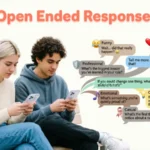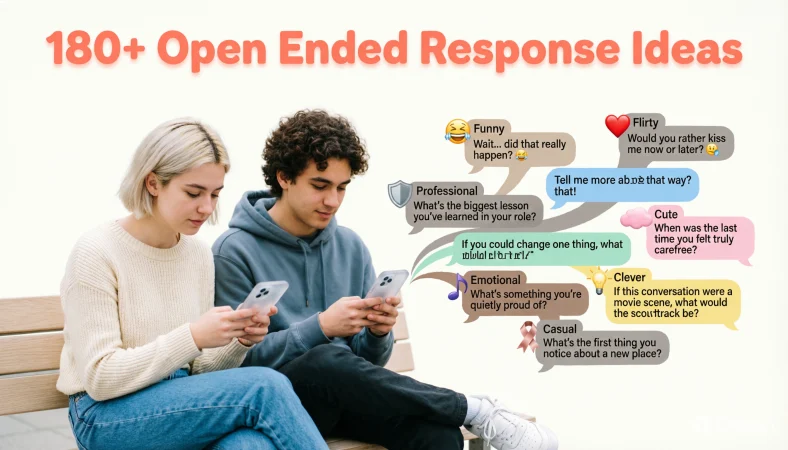
An open ended response encourages someone to explain, share, or continue instead of giving a simple yes or no. It is perfect for texting, DMs, friendships, dating, work chats, and meaningful conversations.
Top alternatives: tell me more, what do you think, how did that happen, what happened next, how do you feel about it
Ever sent a message and received a dry “yeah,” “okay,” or “fine” that basically murdered the conversation? We have all been there. Knowing how to give an open ended response can turn a dead-end chat into an actual conversation.
Whether you are texting a friend, replying to a crush, answering a DM, chatting at work, or getting to know someone new, the right response gives the other person something to work with. Instead of shutting the door with a one-word answer, you leave it open for stories, opinions, feelings, jokes, and unexpected details.
The best responses feel natural rather than like an interview from a detective show. Below, you will find practical, funny, flirty, professional, thoughtful, and creative ways to keep conversations moving without forcing them.
Funny Open Ended Responses
What happened in the plot today?
Example: Use this when a friend hints that their day was unusually eventful.
Meaning: It playfully invites them to tell the whole story.
Okay, now give me the entertaining version.
Example: Use this when someone gives you a suspiciously short explanation.
Meaning: It encourages them to share more details with humor.
And how did we get here?
Example: Use this when a conversation takes an unexpected turn.
Meaning: It invites an explanation without sounding too serious.
I need the full story for research purposes.
Example: Use this after someone mentions something interesting.
Meaning: It humorously asks them to elaborate.
Wait, there has to be more to this.
Example: Use this when someone’s message feels incomplete.
Meaning: It shows curiosity and encourages another message.
Okay, storyteller, continue.
Example: Use this when someone starts describing a funny experience.
Meaning: It playfully gives them permission to keep talking.
What chapter are we currently on?
Example: Use this during an ongoing personal story.
Meaning: It invites an update while keeping things light.
Give me the director’s cut.
Example: Use this when a friend summarizes an amusing situation too quickly.
Meaning: It asks for the longer, more detailed version.
And then what? 👀
Example: Use this when someone stops right before the interesting part.
Meaning: It creates curiosity and encourages continuation.
Please provide the unnecessary details.
Example: Use this with someone who knows you enjoy their stories.
Meaning: It jokingly asks for more information.
This sounds suspiciously incomplete.
Example: Use this after receiving a vague explanation.
Meaning: It signals that you want the missing details.
I’m listening, and my imaginary popcorn is ready.
Example: Use this when a friend begins telling you about some drama.
Meaning: It shows enthusiasm for hearing the full story.
Direct Open Ended Responses
Tell me more about that.
Example: Use this when someone shares something you genuinely want to understand.
Meaning: It directly encourages them to expand.
What happened next?
Example: Use this when someone describes an event but stops midway.
Meaning: It invites the next part of the story.
How did that make you feel?
Example: Use this when someone discusses a personal experience.
Meaning: It opens the door to emotional honesty.
What do you think about it?
Example: Use this when someone mentions an idea or situation.
Meaning: It asks for their personal perspective.
How did you get into that?
Example: Use this when someone mentions a hobby or interest.
Meaning: It invites them to share their background.
What was that experience like?
Example: Use this after someone talks about a trip or event.
Meaning: It encourages a descriptive answer.
What would you do differently?
Example: Use this when discussing a past experience.
Meaning: It invites reflection and deeper discussion.
What made you choose that?
Example: Use this when someone explains a decision.
Meaning: It encourages them to explain their reasoning.
How are you feeling about it now?
Example: Use this when discussing something emotionally significant.
Meaning: It shifts the conversation toward their current feelings.
What happened after that?
Example: Use this when a story has an obvious continuation.
Meaning: It naturally keeps the narrative moving.
What was your favorite part?
Example: Use this after someone describes an experience.
Meaning: It invites them to focus on something positive or meaningful.
Where do you see this going?
Example: Use this when discussing plans, relationships, or future goals.
Meaning: It encourages forward-looking thoughts.
Flirty Open Ended Responses
So, what exactly are you thinking about me? 👀
Example: Use this when a crush sends a mysterious or affectionate message.
Meaning: It invites them to reveal their intentions.
What would you do if I were there right now?
Example: Use this during playful flirting with someone you trust.
Meaning: It encourages an imaginative and romantic response.
What made you think of me?
Example: Use this when someone says you crossed their mind.
Meaning: It invites them to explain the connection.
Okay, tell me what you really mean.
Example: Use this when someone gives you a teasing compliment.
Meaning: It encourages a more direct confession.
What’s your ideal kind of date?
Example: Use this while getting to know a romantic interest.
Meaning: It opens a natural conversation about preferences.
What would impress you?
Example: Use this during playful dating conversations.
Meaning: It invites them to describe what attracts them.
So, what caught your attention?
Example: Use this after receiving a compliment.
Meaning: It encourages the person to explain what they noticed.
What’s something you’ve always wanted to do with someone special?
Example: Use this during a deeper romantic conversation.
Meaning: It invites them to discuss relationship dreams.
What makes you smile instantly?
Example: Use this when the conversation becomes more personal.
Meaning: It encourages them to share something positive.
What’s your biggest green flag in someone?
Example: Use this while getting to know a potential partner.
Meaning: It opens discussion about relationship values.
What kind of attention do you secretly love?
Example: Use this during playful, comfortable flirting.
Meaning: It invites them to reveal a personal preference.
What would our perfect evening look like?
Example: Use this when playful future-date talk feels natural.
Meaning: It creates a romantic scenario for them to explore.
Polite Open Ended Responses
I’d love to hear more about your perspective.
Example: Use this when someone shares an opinion in a respectful discussion.
Meaning: It shows genuine interest.
Could you tell me a little more about that?
Example: Use this when you need clarification without sounding demanding.
Meaning: It politely encourages elaboration.
What are your thoughts on the situation?
Example: Use this during a thoughtful conversation.
Meaning: It invites their opinion.
How did you come to that conclusion?
Example: Use this when discussing someone’s reasoning.
Meaning: It asks for context respectfully.
What was your experience with it?
Example: Use this when someone recommends or criticizes something.
Meaning: It encourages them to explain their experience.
What would you suggest?
Example: Use this when you value someone’s advice.
Meaning: It invites practical input.
How would you approach it?
Example: Use this when discussing a challenge.
Meaning: It encourages them to share their method.
What do you think would work best?
Example: Use this when considering different options.
Meaning: It gives the other person space to contribute.
What would you like to happen next?
Example: Use this during a planning conversation.
Meaning: It invites them to express their preference.
Could you explain what you mean?
Example: Use this when someone’s message is unclear.
Meaning: It seeks clarification without hostility.
What part stood out to you most?
Example: Use this after discussing an article, event, or experience.
Meaning: It invites a personal reaction.
Is there anything else you’d like to add?
Example: Use this when wrapping up a thoughtful discussion.
Meaning: It gives them one more opportunity to contribute.
Professional Open Ended Responses
What are your thoughts on the proposed approach?
Example: Use this during a team discussion about a project.
Meaning: It invites constructive professional input.
What challenges do you anticipate?
Example: Use this when reviewing a new plan.
Meaning: It encourages practical risk assessment.
How would you recommend moving forward?
Example: Use this when seeking guidance from a colleague.
Meaning: It invites actionable suggestions.
What factors should we consider?
Example: Use this during strategic planning.
Meaning: It encourages broader analysis.
What would success look like here?
Example: Use this when defining project expectations.
Meaning: It invites a clear description of desired outcomes.
How could we improve this process?
Example: Use this after reviewing a workflow.
Meaning: It encourages constructive ideas.
What feedback do you have?
Example: Use this after presenting work to a colleague.
Meaning: It directly invites useful criticism or suggestions.
What led you to that recommendation?
Example: Use this when evaluating a professional decision.
Meaning: It asks for the reasoning behind the recommendation.
Where do you think the main opportunity lies?
Example: Use this during business planning.
Meaning: It encourages strategic thinking.
What would you prioritize first?
Example: Use this when several tasks compete for attention.
Meaning: It invites the person to identify priorities.
How do you see your role developing?
Example: Use this during a career conversation.
Meaning: It encourages someone to discuss future goals.
What would make this project more effective?
Example: Use this during a team review.
Meaning: It encourages practical improvement ideas.
Creative Open Ended Responses
If you could change one thing, what would it be?
Example: Use this when discussing a frustrating situation.
Meaning: It invites imaginative problem solving.
What would your dream version look like?
Example: Use this when someone describes a project or goal.
Meaning: It encourages them to imagine the ideal outcome.
If money wasn’t an issue, what would you choose?
Example: Use this during conversations about travel, careers, or hobbies.
Meaning: It reveals personal preferences without practical limits.
What would you call this chapter of your life?
Example: Use this during a reflective conversation.
Meaning: It encourages creative self-expression.
If you could relive one day, which one would you pick?
Example: Use this during a nostalgic conversation.
Meaning: It invites a meaningful personal story.
What would your younger self think about this?
Example: Use this during a reflective discussion.
Meaning: It encourages someone to view their experience differently.
If this were a movie, what would happen next?
Example: Use this when discussing an unpredictable situation.
Meaning: It adds imagination while encouraging continuation.
What’s the plot twist nobody saw coming?
Example: Use this when someone describes an unusual experience.
Meaning: It invites the most unexpected detail.
What would you create if you had unlimited time?
Example: Use this while discussing hobbies or ambitions.
Meaning: It reveals creative interests.
What’s something you’d love to learn just for fun?
Example: Use this during casual getting-to-know-you conversations.
Meaning: It encourages them to discuss curiosity and interests.
If you could wake up anywhere tomorrow, where would you be?
Example: Use this when talking about travel dreams.
Meaning: It invites an imaginative answer.
What’s an idea you’ve never said out loud before?
Example: Use this with someone you know well and trust.
Meaning: It creates space for unusual or personal thoughts.
Sarcastic Open Ended Responses
Oh, that sounds like a story. Care to continue?
Example: Use this when someone gives a dramatic teaser.
Meaning: It invites more information with playful sarcasm.
And I suppose that’s where the interesting part begins?
Example: Use this after someone leaves out important details.
Meaning: It encourages them to continue.
Should I pretend I’m not curious?
Example: Use this when someone mentions intriguing news.
Meaning: It playfully admits that you want the details.
Is there a reason you’re being mysterious?
Example: Use this when someone gives vague answers.
Meaning: It challenges them to explain without sounding aggressive.
Was that the trailer or the whole movie?
Example: Use this after a very short story.
Meaning: It humorously asks for the complete version.
Interesting. And how exactly did that happen?
Example: Use this when someone’s explanation raises questions.
Meaning: It encourages them to provide context.
Should I grab snacks before you continue?
Example: Use this when a story sounds entertaining.
Meaning: It shows playful interest.
That explanation definitely needs a sequel.
Example: Use this when someone’s message ends too abruptly.
Meaning: It encourages another message.
You can’t just say that and disappear. Explain.
Example: Use this with a friend who drops surprising information.
Meaning: It signals curiosity in a playful way.
Was there a meeting where this decision was approved?
Example: Use this when joking about an unexpected choice.
Meaning: It invites an explanation through humor.
How did your brain arrive at that conclusion?
Example: Use this with someone who enjoys teasing banter.
Meaning: It playfully asks them to explain their reasoning.
Okay, mystery person, what’s the backstory?
Example: Use this when someone gives you an unexplained detail.
Meaning: It invites them to reveal the context.
Cute Open Ended Responses
What made you happy today?
Example: Use this when checking in with someone you care about.
Meaning: It encourages them to share a positive moment.
What’s your favorite little thing lately?
Example: Use this during a cozy conversation.
Meaning: It invites them to talk about small joys.
What are you looking forward to?
Example: Use this when someone seems excited about something.
Meaning: It encourages them to share future plans.
What always makes your day better?
Example: Use this when getting to know someone.
Meaning: It reveals comforting preferences.
What’s something you wish I knew about you?
Example: Use this during a deeper personal chat.
Meaning: It creates space for honest sharing.
What’s your happy place?
Example: Use this when talking about relaxation or memories.
Meaning: It invites them to describe somewhere meaningful.
What’s your favorite memory from recently?
Example: Use this during a warm, reflective conversation.
Meaning: It encourages positive storytelling.
What song feels like you right now?
Example: Use this during a casual music conversation.
Meaning: It invites emotional and creative expression.
What little thing makes you smile every time?
Example: Use this when the conversation feels affectionate.
Meaning: It encourages them to share a personal source of joy.
What would make today perfect?
Example: Use this when checking in with someone.
Meaning: It gives them room to describe what they need or want.
What’s something you’re proud of lately?
Example: Use this when encouraging someone.
Meaning: It invites them to recognize their own progress.
What’s one thing you’d love to do together someday?
Example: Use this when talking with a close friend or romantic interest.
Meaning: It gently opens a conversation about shared experiences.
Dramatic Open Ended Responses
Wait, you cannot leave the story there. What happened?
Example: Use this after a friend shares an unexpected update.
Meaning: It encourages the dramatic continuation.
I need to know how this ends.
Example: Use this when someone tells you the beginning of an interesting story.
Meaning: It shows strong curiosity.
Okay, this just became a whole situation. Explain everything.
Example: Use this when a simple story suddenly becomes complicated.
Meaning: It invites a full explanation.
What happened behind the scenes?
Example: Use this when the visible story does not explain everything.
Meaning: It asks for the hidden context.
Who knew this was about to happen?
Example: Use this when discussing an unexpected event.
Meaning: It invites details about how things unfolded.
Tell me the moment everything changed.
Example: Use this during a serious personal story.
Meaning: It encourages the person to identify the turning point.
What was the part nobody expected?
Example: Use this after hearing about an unusual event.
Meaning: It asks for the surprising detail.
How did we go from normal to this?
Example: Use this when circumstances escalate unexpectedly.
Meaning: It invites a chronological explanation.
What happened after the plot twist?
Example: Use this when someone describes an unexpected development.
Meaning: It encourages them to continue the story.
I feel like I missed three episodes. Catch me up.
Example: Use this when returning to an ongoing situation.
Meaning: It asks for a complete update in a playful way.
What was going through your mind at that moment?
Example: Use this when discussing an emotional decision.
Meaning: It invites a deeper explanation.
So how did the story actually end?
Example: Use this when someone has only shared part of an experience.
Meaning: It asks for the conclusion.
Chill And Casual Open Ended Responses
What are you up to lately?
Example: Use this when reconnecting with a friend.
Meaning: It invites a general life update.
How’s everything going with you?
Example: Use this during a casual check-in.
Meaning: It leaves the answer open to whatever they want to share.
What have you been into lately?
Example: Use this when catching up with someone.
Meaning: It invites them to discuss current interests.
How’s your week been?
Example: Use this during everyday texting.
Meaning: It gives them room to share highlights or frustrations.
Anything interesting happening?
Example: Use this when starting a relaxed conversation.
Meaning: It encourages them to mention something worth discussing.
What’s new in your world?
Example: Use this when reconnecting after some time apart.
Meaning: It invites a broad update.
What are you thinking about?
Example: Use this when someone seems distracted or quiet.
Meaning: It encourages them to share whatever is on their mind.
How did your day go?
Example: Use this when checking in after work or school.
Meaning: It invites a natural daily recap.
What’s keeping you busy these days?
Example: Use this when catching up with someone.
Meaning: It encourages them to talk about current commitments.
What are you watching lately?
Example: Use this during casual entertainment talk.
Meaning: It opens discussion about shows, movies, or videos.
What’s been the highlight of your week?
Example: Use this when you want something more interesting than “how are you?”
Meaning: It encourages a positive story.
Where should we continue this conversation?
Example: Use this when a chat is going well but needs a new topic.
Meaning: It playfully invites the other person to choose the direction.
Confident Open Ended Responses
Tell me what you really think.
Example: Use this when you want an honest opinion.
Meaning: It confidently encourages directness.
What would you choose if you trusted your instincts?
Example: Use this when someone is uncertain about a decision.
Meaning: It encourages confidence and self-trust.
What do you actually want?
Example: Use this during an honest conversation about goals or relationships.
Meaning: It invites clear intentions.
What’s your next move?
Example: Use this when someone is planning their next step.
Meaning: It encourages decisive thinking.
What would make you say yes?
Example: Use this during negotiation or playful discussion.
Meaning: It invites the person to reveal their conditions or preferences.
What’s stopping you?
Example: Use this when someone talks about an ambition but hesitates.
Meaning: It encourages them to identify the obstacle.
What would you do if you knew you couldn’t fail?
Example: Use this during motivational conversations.
Meaning: It invites ambitious thinking.
What’s the outcome you want?
Example: Use this during a serious planning discussion.
Meaning: It focuses attention on the desired result.
What matters most to you here?
Example: Use this during a disagreement or important decision.
Meaning: It encourages the person to identify their priorities.
What would you stand by no matter what?
Example: Use this during conversations about values.
Meaning: It invites them to discuss personal principles.
Where do you want to take this?
Example: Use this when discussing a project, plan, or relationship.
Meaning: It asks them to define their direction.
What’s your honest take?
Example: Use this when you want a straightforward opinion.
Meaning: It communicates confidence and openness to honesty.
Emotional Open Ended Responses
What’s been weighing on you?
Example: Use this when someone seems unusually quiet.
Meaning: It gently invites emotional honesty.
What do you wish people understood about you?
Example: Use this during a meaningful conversation.
Meaning: It creates space for vulnerability.
What’s something you’ve been keeping to yourself?
Example: Use this with someone you deeply trust.
Meaning: It encourages them to share something personal.
How are you really doing?
Example: Use this when a simple “fine” does not feel genuine.
Meaning: It invites a more honest answer.
What has been making life feel difficult lately?
Example: Use this when someone appears overwhelmed.
Meaning: It gives them space to explain their struggles.
What do you need most right now?
Example: Use this when someone is going through a difficult moment.
Meaning: It encourages them to identify what would help.
What’s something you’re afraid to say?
Example: Use this only when the relationship supports serious vulnerability.
Meaning: It invites honest communication.
What changed your perspective?
Example: Use this after someone expresses a new belief.
Meaning: It encourages them to explain their emotional or intellectual shift.
What are you hoping will happen?
Example: Use this during an uncertain situation.
Meaning: It invites them to share their hopes.
What part of this hurts the most?
Example: Use this when someone is discussing a painful experience.
Meaning: It gives them permission to identify their deepest concern.
What helped you get through it?
Example: Use this when someone describes a difficult period they survived.
Meaning: It encourages reflection on resilience.
What do you wish you could change?
Example: Use this during a reflective conversation.
Meaning: It invites honest thoughts about regret or growth.
Sweet Open Ended Responses
What’s something I can do to make your day better?
Example: Use this when someone you care about has had a rough day.
Meaning: It communicates genuine support.
What’s been making you smile lately?
Example: Use this during a warm conversation with someone close.
Meaning: It encourages positive sharing.
What’s something you’re excited to tell me about?
Example: Use this when checking in with a friend or partner.
Meaning: It shows that you genuinely want to hear from them.
What memory always makes you smile?
Example: Use this during a nostalgic conversation.
Meaning: It invites a warm personal story.
What makes you feel appreciated?
Example: Use this when learning how someone likes to receive affection.
Meaning: It encourages them to describe their emotional needs.
What’s your favorite way to spend a quiet day?
Example: Use this during relaxed getting-to-know-you conversations.
Meaning: It invites them to share their comfort preferences.
What’s something you hope happens this year?
Example: Use this when discussing future plans.
Meaning: It encourages hopeful conversation.
Who has had the biggest positive impact on you?
Example: Use this during a deeper conversation about life.
Meaning: It invites them to discuss meaningful relationships.
What’s one thing you’re grateful for today?
Example: Use this during a positive check-in.
Meaning: It encourages appreciation and reflection.
What’s something you would love more of in your life?
Example: Use this when discussing happiness or personal goals.
Meaning: It invites them to describe what they value.
What’s your favorite thing about our conversations?
Example: Use this with someone you share a close bond with.
Meaning: It creates an opportunity for affectionate feedback.
What would make you feel truly cared for today?
Example: Use this when someone needs emotional support.
Meaning: It communicates thoughtfulness and willingness to listen.
Clever Open Ended Responses
What’s the question nobody is asking here?
Example: Use this during a complex discussion.
Meaning: It encourages deeper analysis.
What assumption are we making?
Example: Use this when evaluating a decision.
Meaning: It invites critical thinking.
What would change your mind?
Example: Use this during a respectful debate.
Meaning: It reveals what evidence or perspective matters to them.
What’s the bigger picture?
Example: Use this when focusing too heavily on small details.
Meaning: It encourages broader thinking.
What do you think we’re missing?
Example: Use this during problem solving.
Meaning: It invites overlooked ideas.
What’s the most interesting part of this to you?
Example: Use this when discussing a complicated topic.
Meaning: It lets them choose the direction of the conversation.
What would happen if we looked at it differently?
Example: Use this when exploring an alternative perspective.
Meaning: It encourages flexible thinking.
What’s your reasoning behind that?
Example: Use this when someone makes an interesting claim.
Meaning: It invites them to explain their logic.
What’s the lesson hiding in this?
Example: Use this after discussing a mistake or challenge.
Meaning: It encourages reflection.
What question would you ask if you were me?
Example: Use this when seeking advice about a situation.
Meaning: It encourages the other person to think strategically.
What’s one detail that changes the whole story?
Example: Use this when analyzing a complicated situation.
Meaning: It invites them to identify important context.
Where do you think the real issue begins?
Example: Use this during a thoughtful disagreement.
Meaning: It encourages deeper problem identification.
Playful And Social Media Friendly Responses
Okay, drop the lore. 👀
Example: Use this when someone mentions an interesting personal detail.
Meaning: It invites them to share their backstory.
What’s the story behind this post?
Example: Use this when reacting to a friend’s unusual social media update.
Meaning: It encourages context.
What’s the context we’re working with here?
Example: Use this when a post or message seems mysterious.
Meaning: It asks for clarification in a playful way.
What did I just walk into? 😂
Example: Use this when entering an ongoing group chat discussion.
Meaning: It invites everyone to explain what happened.
Okay, I’m invested. Continue.
Example: Use this when someone starts telling an entertaining story.
Meaning: It signals genuine interest.
What’s the backstory?
Example: Use this after seeing an unexpected photo or update.
Meaning: It encourages storytelling.
How did this become your life?
Example: Use this when a friend shares a funny situation.
Meaning: It invites them to explain the journey.
What’s the tea? 👀
Example: Use this with friends discussing social drama.
Meaning: It playfully asks for the details.
What happened before this screenshot?
Example: Use this when someone shares a mysterious screenshot.
Meaning: It asks for the missing context.
Why does this feel like episode one?
Example: Use this when someone posts the beginning of an intriguing story.
Meaning: It encourages a continuation.
What’s your side of the story?
Example: Use this when discussing a disagreement or unusual event.
Meaning: It invites their perspective.
Okay, internet, explain yourselves.
Example: Use this when reacting to a confusing trend or post.
Meaning: It humorously invites explanations and opinions.
Thoughtful Open Ended Responses
What did you learn from that experience?
Example: Use this after someone describes an important life event.
Meaning: It encourages reflection and personal growth.
How has that changed you?
Example: Use this during a deeper conversation about life experiences.
Meaning: It invites them to discuss personal development.
What matters most to you about this?
Example: Use this when discussing a meaningful decision.
Meaning: It encourages them to identify their values.
What would you like people to understand?
Example: Use this when someone feels misunderstood.
Meaning: It gives them room to explain their perspective.
What do you think this experience taught you?
Example: Use this after discussing a challenge.
Meaning: It encourages them to find meaning in what happened.
What would your ideal outcome be?
Example: Use this during problem solving.
Meaning: It focuses the discussion on what they genuinely want.
How do you think this will affect you later?
Example: Use this when discussing a major decision.
Meaning: It encourages future-oriented reflection.
What perspective has helped you most?
Example: Use this when discussing personal growth.
Meaning: It invites them to share useful insights.
What would you tell someone in the same situation?
Example: Use this when someone has learned from an experience.
Meaning: It encourages them to turn experience into advice.
What part of this feels most important to you?
Example: Use this when a conversation contains several issues.
Meaning: It helps reveal their priorities.
What do you think people often misunderstand about this?
Example: Use this when discussing a complicated topic.
Meaning: It invites nuance and clarification.
Where do you think this conversation should go next?
Example: Use this when a discussion has become meaningful.
Meaning: It gives both people room to shape the next topic.
FAQs
What does “open ended response” mean?
An open ended response encourages a person to explain, describe, or share more instead of answering with only yes, no, or another short fixed response.
Can an open ended response be emotional?
Yes. Questions such as “How are you really feeling?” or “What has been on your mind?” can create space for honest emotional conversations.
Can an open ended response be flirty?
Absolutely. In dating or texting, responses such as “What made you think of me?” can encourage playful and romantic conversation without being overly direct.
Is an open ended response appropriate at work?
Yes. Professional responses such as “What are your thoughts on this approach?” can encourage collaboration, feedback, and useful discussion.
What if I do not actually mean the question?
Do not force it. Choose a simpler response that genuinely reflects your interest, such as “Tell me more about that” or “What happened next?”
Is humor appropriate in an open ended response?
Yes, when the relationship and situation allow it. Funny responses can make conversations feel relaxed, but serious subjects usually call for a more thoughtful tone.
Conclusion
A good open ended response can completely change the energy of a conversation. Instead of ending a chat with “okay” or “nice,” you can give someone an easy reason to keep talking, share a story, explain their feelings, or reveal something unexpected. The best response depends on the situation, so do not be afraid to switch between funny, flirty, thoughtful, professional, cute, or casual styles.
Your words shape the impression you leave, especially when texting, dating, networking, or catching up with friends. Save this list for your next dry conversation, share it with someone who always says “idk,” and try a few responses until you find your natural style.