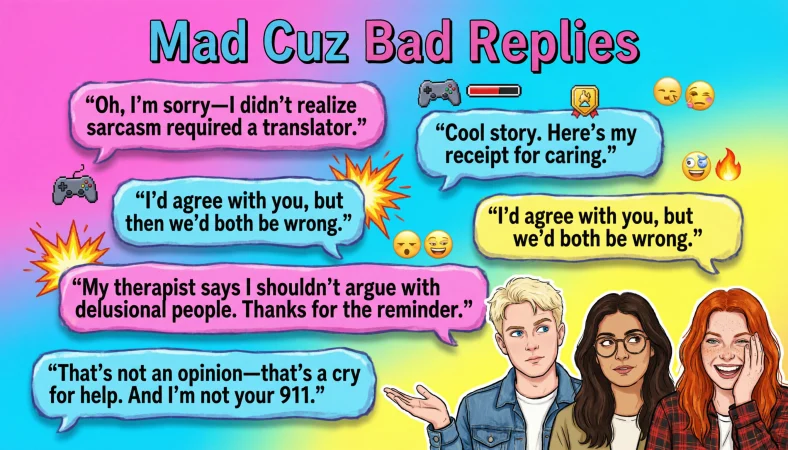
“Mad cuz bad” is a playful comeback used when someone seems annoyed because they are losing, struggling, or simply not as good at something. The best replies can keep the banter going without turning the moment into a full-blown argument.
Try these alternatives: Skill issue, Stay mad, Better luck next time, Practice makes perfect, It’s okay, you’ll get there
If someone drops “mad cuz bad” on you, you do not need a perfect comeback. A short, confident line can turn the whole moment around. Whether it happens in a gaming chat, group DM, comment section, friendly competition, or playful argument, the right response depends on the vibe.
You might want something hilarious enough to make everyone laugh, a clever comeback that shuts down the teasing, or a confident answer that shows you are not bothered. The beauty of mad cuz bad replies is that they can be adapted to almost any situation.
Keep it light when the conversation is friendly, add sarcasm when the banter calls for it, and know when to simply move on. After all, winning the conversation is sometimes just about having the better one-liner.
Funny Mad Cuz Bad Replies
“I’m not mad, I’m just dramatically disappointed.”
Use this when you want to exaggerate the situation for laughs.
Meaning: It turns the accusation into playful fake outrage.
“Bad? I prefer creatively challenged.”
Use this when someone teases you about your performance.
Meaning: It replaces criticism with a funny self-aware excuse.
“My skills are still loading.”
Use this after making an obvious mistake.
Meaning: It jokes that your abilities simply need more time.
“Give me five business days.”
Use this when someone expects you to improve instantly.
Meaning: It humorously pretends your comeback requires official processing.
“I was letting you enjoy the moment.”
Use this after losing a friendly challenge.
Meaning: It playfully suggests your loss was intentional.
“That was my warm-up round.”
Use this when your first attempt goes badly.
Meaning: It frames the mistake as preparation rather than failure.
“My talent took the day off.”
Use this when you perform poorly for once.
Meaning: It makes your bad performance sound temporary and funny.
“I blame the Wi-Fi and absolutely nothing else.”
Use this in a gaming or online competition.
Meaning: It uses the classic internet excuse for comic effect.
“Relax, my greatness is buffering.”
Use this when friends tease you for being slow.
Meaning: It confidently exaggerates your abilities.
“I call that strategic confusion.”
Use this after doing something that makes no sense.
Meaning: It turns a mistake into a fake strategy.
“Bad today, legendary tomorrow.”
Use this when someone doubts your potential.
Meaning: It keeps the mood positive while joking about improvement.
“Please respect my temporary era of struggle.”
Use this with friends who keep teasing you.
Meaning: It makes your current struggle sound hilariously important.
Clever Mad Cuz Bad Replies
“Interesting theory, weak evidence.”
Use this when someone confidently claims you are bad.
Meaning: It challenges their claim without becoming overly serious.
“If confidence were skill, you’d be undefeated.”
Use this during competitive banter.
Meaning: It cleverly pokes fun at someone’s confidence.
“Your argument has entered spectator mode.”
Use this in gaming-related banter.
Meaning: It suggests their opinion no longer affects the outcome.
“I’ll consider that feedback after I win.”
Use this when someone critiques you mid-competition.
Meaning: It keeps your confidence intact while staying playful.
“That sounds like a personal interpretation.”
Use this when someone labels your performance.
Meaning: It dismisses their judgment in a polished way.
“Confidence detected, evidence pending.”
Use this when someone talks themselves up.
Meaning: It humorously separates confidence from actual proof.
“Let the scoreboard handle the debate.”
Use this during a competitive argument.
Meaning: It suggests results matter more than talking.
“You brought an opinion to a results-based conversation.”
Use this when someone keeps talking instead of competing.
Meaning: It redirects attention toward actual performance.
“I respect the attempt at psychological warfare.”
Use this when someone tries to distract you.
Meaning: It frames their teasing as an obvious tactic.
“That comeback needed a stronger opening argument.”
Use this when their insult falls flat.
Meaning: It cleverly critiques the comeback itself.
“Your confidence is doing more work than your logic.”
Use this when someone makes an exaggerated claim.
Meaning: It playfully points out their lack of reasoning.
“Cute claim. Now show me the receipts.”
Use this when someone says you are bad without proof.
Meaning: It challenges them to support their statement.
Sarcastic Mad Cuz Bad Replies
“Wow, groundbreaking analysis.”
Use this after hearing an obvious insult.
Meaning: It sarcastically pretends the comment was deeply insightful.
“Thank you for your extremely necessary opinion.”
Use this when someone gives unwanted commentary.
Meaning: It lightly mocks their unnecessary input.
“I’ll alert the authorities immediately.”
Use this when someone acts like your mistake is a major crisis.
Meaning: It exaggerates their concern for comedic effect.
“Breaking news: someone has an opinion.”
Use this in a group chat full of teasing.
Meaning: It makes their comment sound completely ordinary.
“Please, tell me more about my abilities.”
Use this when someone starts analyzing your performance.
Meaning: It sarcastically invites even more commentary.
“Your concern has been forwarded to absolutely nobody.”
Use this when you are clearly unbothered.
Meaning: It shows that their criticism has little effect.
“I’ll try to recover from this historic event.”
Use this after a tiny mistake.
Meaning: It humorously exaggerates the importance of the failure.
“Thank goodness we have a professional critic here.”
Use this when someone keeps judging you.
Meaning: It sarcastically questions their self-appointed expertise.
“I’m devastated. Truly. Send snacks.”
Use this when someone thinks they hurt your feelings.
Meaning: It shows exaggerated indifference.
“Your dedication to my downfall is impressive.”
Use this when someone keeps teasing you.
Meaning: It turns their teasing into a funny compliment.
“I’ll add that to my list of things I won’t worry about.”
Use this when criticism does not bother you.
Meaning: It calmly communicates that you are unbothered.
“What would I do without this expert commentary?”
Use this with a friend who loves giving opinions.
Meaning: It playfully mocks their constant advice.
Confident Mad Cuz Bad Replies
“Maybe, but I’m still having fun.”
Use this when someone tries to make you feel bad about losing.
Meaning: It shows confidence without needing to prove anything.
“Bad according to you, apparently.”
Use this when someone states their opinion as fact.
Meaning: It reminds them that their judgment is subjective.
“I’ll improve. You’ll still be talking.”
Use this during ongoing friendly competition.
Meaning: It confidently suggests you will grow while they keep commenting.
“Give me another round.”
Use this after making a mistake.
Meaning: It shows that you are willing to try again.
“I’m comfortable with the challenge.”
Use this when someone doubts you.
Meaning: It communicates calm confidence.
“Keep watching. I’m not finished.”
Use this after an early setback.
Meaning: It suggests the outcome can still change.
“One bad moment does not define the whole game.”
Use this when someone overreacts to a mistake.
Meaning: It puts temporary failure into perspective.
“I know what I’m capable of.”
Use this when someone doubts your abilities.
Meaning: It emphasizes self-belief over outside opinions.
“I don’t need the approval.”
Use this when teasing becomes excessive.
Meaning: It shows that your confidence does not depend on their judgment.
“Watch the comeback.”
Use this before making another attempt.
Meaning: It creates playful anticipation.
“I’m learning, not losing.”
Use this when you want a positive competitive response.
Meaning: It reframes mistakes as part of improvement.
“Talk now, scoreboard later.”
Use this during friendly competition.
Meaning: It confidently saves the final judgment for the results.
Playful Mad Cuz Bad Replies
“Aww, are we feeling competitive today?”
Use this when someone becomes unusually invested in your performance.
Meaning: It playfully calls attention to their competitiveness.
“Someone woke up ready to debate.”
Use this when teasing starts getting energetic.
Meaning: It keeps the exchange lighthearted.
“You’re enjoying this way too much.”
Use this when a friend keeps celebrating your mistake.
Meaning: It playfully calls out their amusement.
“Okay, coach, take a seat.”
Use this when someone gives too much advice.
Meaning: It jokingly tells them to relax.
“I see the banter department is fully staffed today.”
Use this in a lively group chat.
Meaning: It humorously acknowledges the teasing.
“You really rehearsed that one, huh?”
Use this when someone has a quick comeback ready.
Meaning: It jokes that their response was preplanned.
“The confidence is adorable.”
Use this when someone gets overly confident.
Meaning: It gently teases their self-assurance.
“Okay, internet champion.”
Use this when someone acts unbeatable online.
Meaning: It playfully pokes at their digital confidence.
“You get one point for enthusiasm.”
Use this when someone makes a weak argument.
Meaning: It gives them humorous credit without agreeing.
“I admire the commitment to the bit.”
Use this when teasing continues for too long.
Meaning: It recognizes their persistence in a funny way.
“This competition suddenly got personal.”
Use this when friendly teasing becomes intense.
Meaning: It exaggerates the situation for humor.
“Keep talking, this is entertaining.”
Use this when you are enjoying the banter.
Meaning: It shows that their teasing is not bothering you.
Short And Casual Mad Cuz Bad Replies
“Lol, maybe.”
Use this when you want a low-effort response.
Meaning: It keeps the interaction relaxed.
“Could be.”
Use this when you do not want to argue.
Meaning: It gives a calm, neutral answer.
“Fair enough 😂”
Use this when the teasing is clearly friendly.
Meaning: It acknowledges the joke without taking it seriously.
“You got me there.”
Use this when their comeback actually lands.
Meaning: It shows good humor and confidence.
“Noted.”
Use this when you want a short, dry response.
Meaning: It acknowledges them without encouraging a debate.
“We’ll see.”
Use this before another attempt or challenge.
Meaning: It leaves room for a comeback.
“I’m good.”
Use this when you want to shut down unnecessary teasing.
Meaning: It communicates that you are not bothered.
“All part of the fun.”
Use this after making a mistake.
Meaning: It keeps the focus on enjoyment rather than winning.
“No worries.”
Use this when someone tries to provoke you.
Meaning: It calmly shows that their comment did not affect you.
“Maybe next round.”
Use this after losing a friendly challenge.
Meaning: It accepts the moment while staying optimistic.
“Haha, sure.”
Use this when you want a playful but effortless answer.
Meaning: It avoids taking the claim too seriously.
“I’ll survive.”
Use this after someone teases you about losing.
Meaning: It humorously shows that the mistake is not a big deal.
Witty Mad Cuz Bad Replies
“That sounds better in your head, doesn’t it?”
Use this when someone delivers an overly confident comeback.
Meaning: It humorously questions how good their line actually was.
“Bold statement from the comment section.”
Use this when someone acts unbeatable online.
Meaning: It lightly questions their authority.
“You brought jokes; I brought receipts.”
Use this when you actually have evidence supporting your side.
Meaning: It suggests facts can beat empty teasing.
“Your confidence deserves its own trophy.”
Use this when someone is extremely self-assured.
Meaning: It humorously celebrates their confidence.
“That was almost convincing.”
Use this when someone makes a weak argument.
Meaning: It playfully suggests they nearly made a point.
“I’d respond seriously, but this is too entertaining.”
Use this when the conversation is clearly playful.
Meaning: It keeps the mood humorous instead of argumentative.
“Nice attempt at changing the narrative.”
Use this when someone shifts attention away from the results.
Meaning: It suggests they are avoiding the main point.
“The confidence-to-evidence ratio is impressive.”
Use this when someone talks with little proof.
Meaning: It humorously points out the gap between claims and facts.
“That comeback deserves a participation medal.”
Use this when their response is amusing but weak.
Meaning: It playfully ranks their comeback below yours.
“You almost had me worried.”
Use this when someone tries to intimidate you.
Meaning: It confidently implies their attempt did not work.
“I’ll give you points for creativity.”
Use this when their teasing is original.
Meaning: It acknowledges the effort without conceding.
“Keep practicing those comebacks.”
Use this when you want a playful challenge.
Meaning: It suggests they still have room to improve.
Friendly Mad Cuz Bad Replies
“Haha, I know you’re just messing with me.”
Use this when you want to keep things friendly.
Meaning: It makes your relaxed attitude clear.
“You’re lucky I like you.”
Use this with a close friend during playful teasing.
Meaning: It adds affection to the comeback.
“Okay, I’ll let you have this one.”
Use this when you are willing to concede a small point.
Meaning: It shows confidence without needing to win every exchange.
“You’re having your moment, enjoy it.”
Use this after someone scores a playful victory.
Meaning: It turns their win into friendly banter.
“I’ll get you next time.”
Use this after losing a game or challenge.
Meaning: It keeps the competition fun and ongoing.
“That was actually funny.”
Use this when their comeback genuinely makes you laugh.
Meaning: It rewards good humor instead of escalating.
“Okay, that one landed.”
Use this when their joke is genuinely clever.
Meaning: It admits they made a good point.
“You’re too pleased with yourself.”
Use this when someone celebrates too much.
Meaning: It playfully teases their excitement.
“I respect the confidence.”
Use this when someone delivers a bold comeback.
Meaning: It keeps the interaction positive.
“Fine, you get bragging rights for five minutes.”
Use this after losing a friendly contest.
Meaning: It humorously limits their victory celebration.
“We’re still friends after this, right?”
Use this when playful competition gets dramatic.
Meaning: It makes the rivalry feel intentionally harmless.
“Round two is coming.”
Use this when you want to continue the friendly challenge.
Meaning: It promises another opportunity to compete.
Dry Mad Cuz Bad Replies
“Noted.”
Use this when you want a deliberately dry comeback.
Meaning: It acknowledges the comment without giving it emotional weight.
“Fascinating.”
Use this when someone says something you find amusingly obvious.
Meaning: It creates a deadpan response.
“How unfortunate.”
Use this when someone tries to make you feel embarrassed.
Meaning: It humorously pretends to be deeply concerned.
“Tragic.”
Use this after a tiny mistake gets exaggerated.
Meaning: It mocks the drama surrounding the situation.
“Devastating news.”
Use this when someone thinks their insult has landed hard.
Meaning: It exaggerates your supposed reaction.
“I’ll try to recover.”
Use this when someone points out your mistake.
Meaning: It uses dry humor to show you are fine.
“Thoughts and prayers.”
Use this when the situation is obviously not serious.
Meaning: It humorously exaggerates the consequences.
“That must have been difficult to type.”
Use this when someone makes a dramatic comment online.
Meaning: It lightly mocks their effort.
“Congratulations on the observation.”
Use this when someone points out something obvious.
Meaning: It sarcastically treats their observation like an achievement.
“I’ll alert the group chat.”
Use this when someone makes a supposedly important announcement.
Meaning: It exaggerates the importance of their comment.
“What a development.”
Use this when the situation is completely predictable.
Meaning: It adds deadpan humor.
“I’m sure history will remember this.”
Use this after a minor competitive moment.
Meaning: It humorously makes the event sound historic.
Sharp But Respectful Mad Cuz Replies
“If you have a point, make it without the label.”
Use this when teasing starts becoming unnecessarily personal.
Meaning: It asks for a more constructive exchange.
“We can joke without making it personal.”
Use this when friendly banter crosses a line.
Meaning: It establishes a respectful boundary.
“I can take criticism, just make it useful.”
Use this when someone gives unhelpful commentary.
Meaning: It shows maturity while challenging the delivery.
“Results can be debated, insults do not add much.”
Use this during a competitive disagreement.
Meaning: It redirects the discussion toward substance.
“You can disagree without turning it into a personal attack.”
Use this when the conversation becomes tense.
Meaning: It calmly protects the tone of the discussion.
“Let’s keep the competition fun.”
Use this when teasing is getting too serious.
Meaning: It reminds everyone of the original purpose.
“I’m here to compete, not argue.”
Use this during a heated challenge.
Meaning: It makes your priorities clear.
“You can celebrate without putting me down.”
Use this when someone is being unnecessarily dismissive.
Meaning: It sets a healthy boundary.
“I respect your opinion, even if I disagree.”
Use this when you want to de-escalate.
Meaning: It shows confidence and maturity.
“Let’s judge it by the actual results.”
Use this when someone makes unsupported claims.
Meaning: It moves the conversation toward evidence.
“No hard feelings, just better competition next time.”
Use this after a tense competitive moment.
Meaning: It restores a friendly atmosphere.
“I’m good with jokes, just keep them respectful.”
Use this when you enjoy banter but want a limit.
Meaning: It clearly communicates your boundary.
Flirty Mad Cuz Replies
“Are you flirting or just trying to distract me?”
Use this when teasing comes from someone you like.
Meaning: It turns the banter into playful romantic tension.
“Careful, that confidence is attractive.”
Use this when their comeback is unexpectedly charming.
Meaning: It gives their confidence a flirty compliment.
“You talk a lot for someone trying to impress me.”
Use this during playful flirting.
Meaning: It teases them while hinting at mutual attraction.
“Maybe you’re just mad because I’m cute.”
Use this when the conversation has a playful romantic vibe.
Meaning: It turns the joke into confident flirting.
“Keep teasing me, I might start enjoying it.”
Use this when you want to make the banter more suggestive.
Meaning: It signals that their attention is welcome.
“If this is your flirting technique, it’s working.”
Use this when someone playfully challenges you.
Meaning: It openly acknowledges romantic chemistry.
“You’re making it very hard to stay competitive.”
Use this when their teasing becomes charming.
Meaning: It mixes competition with flirtation.
“I think you just wanted an excuse to talk to me.”
Use this when someone keeps finding reasons to tease you.
Meaning: It playfully suggests they are interested.
“That attitude is kind of cute.”
Use this when you genuinely enjoy their confidence.
Meaning: It softens the teasing with affection.
“You can keep talking, I like the attention.”
Use this when you want to encourage the interaction.
Meaning: It openly welcomes their playful energy.
“Maybe I’m bad at this, but I’m good at flirting.”
Use this when the conversation becomes openly flirty.
Meaning: It confidently redirects the topic toward chemistry.
“You’re enjoying teasing me a little too much.”
Use this when someone you like keeps poking fun at you.
Meaning: It creates playful romantic tension.
Cute Mad Cuz Replies
“Aww, someone’s feeling competitive.”
Use this with someone you are close to.
Meaning: It makes their teasing sound endearing.
“Okay, little champion.”
Use this when someone celebrates a small victory.
Meaning: It playfully praises them.
“You’re so proud of yourself right now.”
Use this when their excitement is obvious.
Meaning: It affectionately teases their confidence.
“Fine, you win this tiny battle.”
Use this when you want to keep things sweet.
Meaning: It gives them a playful victory.
“I’ll practice just for you.”
Use this when someone challenges your abilities.
Meaning: It turns improvement into a cute gesture.
“You’re making me laugh, so I’ll allow it.”
Use this when their teasing is genuinely funny.
Meaning: It shows affection while accepting the joke.
“Okay, that was kinda adorable.”
Use this when their confidence makes you smile.
Meaning: It responds to teasing with warmth.
“I forgive you for the disrespect.”
Use this with someone who is clearly joking.
Meaning: It exaggerates the offense in a cute way.
“You get one tiny victory.”
Use this after losing a friendly challenge.
Meaning: It keeps the rivalry playful.
“Look at you feeling accomplished.”
Use this when someone celebrates too early.
Meaning: It affectionately pokes fun at them.
“I’m still rooting for myself.”
Use this when someone doubts you.
Meaning: It shows cheerful self-confidence.
“Okay, I’ll admit that was good.”
Use this when their comeback genuinely lands.
Meaning: It gives sincere credit while staying playful.
Dramatic Mad Cuz Replies
“This betrayal will be remembered for generations.”
Use this after losing a harmless competition.
Meaning: It turns a tiny setback into hilarious drama.
“I may never emotionally recover.”
Use this when someone celebrates your mistake.
Meaning: It exaggerates your reaction for comedic effect.
“My legacy has been destroyed.”
Use this after a minor failure.
Meaning: It humorously treats the moment as catastrophic.
“Cancel everything. I have lost.”
Use this when a friend beats you at something trivial.
Meaning: It makes the loss sound ridiculously important.
“Tell my story with dignity.”
Use this after an embarrassing mistake.
Meaning: It jokingly asks others to preserve your reputation.
“This is my villain origin story.”
Use this after an annoying loss.
Meaning: It turns frustration into playful storytelling.
“I trusted the process, and the process betrayed me.”
Use this after a failed attempt.
Meaning: It blames the situation in an exaggerated way.
“The universe clearly has favorites.”
Use this when someone gets lucky.
Meaning: It humorously blames fate for the outcome.
“I demand an immediate rematch.”
Use this after losing a game or challenge.
Meaning: It turns disappointment into renewed competition.
“Someone document this historic injustice.”
Use this when a friend gets an unfair advantage.
Meaning: It jokingly presents the moment as a major injustice.
“My confidence has filed for temporary leave.”
Use this after making several mistakes.
Meaning: It humorously admits a temporary lack of confidence.
“I will be accepting sympathy in the form of snacks.”
Use this after a playful defeat.
Meaning: It turns the loss into a funny request for comfort.
Gamer And Competitive Mad Cuz Replies
“Skill issue acknowledged.”
Use this during friendly gaming banter.
Meaning: It humorously accepts the classic competitive phrase.
“Run it back.”
Use this immediately after losing a round.
Meaning: It challenges the other person to a rematch.
“Best of three?”
Use this when one result is not enough for you.
Meaning: It asks for another chance to settle the competition.
“The lag was fighting harder than you.”
Use this when an online game performs badly.
Meaning: It humorously blames technical problems.
“I was testing your confidence.”
Use this after intentionally playing cautiously.
Meaning: It pretends your performance was part of a strategy.
“Enjoy that round while it lasts.”
Use this after an opponent gets an early win.
Meaning: It promises that the result can change.
“That was the tutorial.”
Use this after losing an early round.
Meaning: It jokes that the real competition has not started.
“My controller has opinions.”
Use this when your controls seem to betray you.
Meaning: It gives your equipment a humorous personality.
“The rematch is already loading.”
Use this after a close defeat.
Meaning: It confidently signals another attempt.
“Scoreboard screenshot incoming.”
Use this when you expect to win the next round.
Meaning: It playfully builds anticipation.
“Talk less, queue up.”
Use this when someone keeps boasting.
Meaning: It challenges them to prove their confidence.
“GG, but we’re definitely running it again.”
Use this after a friendly loss.
Meaning: It accepts the result while keeping the rivalry alive.
Amazing-Free Smart Comebacks
“Maybe focus on your game instead of mine.”
Use this when someone spends too much time criticizing you.
Meaning: It redirects their attention without using harsh language.
“If I’m that bad, why are you still watching?”
Use this when someone keeps commenting on your performance.
Meaning: It cleverly questions their level of interest.
“You seem more invested in my performance than I am.”
Use this when someone keeps monitoring your mistakes.
Meaning: It points out their unusual attention.
“I appreciate the free commentary.”
Use this when someone gives unsolicited criticism.
Meaning: It acknowledges their input with light sarcasm.
“You keep talking like the result is already decided.”
Use this before a competition is finished.
Meaning: It reminds them not to celebrate too early.
“Let’s finish first and review later.”
Use this when someone starts judging mid-game.
Meaning: It prioritizes the actual outcome.
“You can celebrate after the final score.”
Use this when someone gets overconfident early.
Meaning: It calmly reminds them that the competition is not over.
“I’d worry about my performance if I were actually worried.”
Use this when someone thinks they have rattled you.
Meaning: It confidently communicates that you are unbothered.
“Your commentary is becoming part of the entertainment.”
Use this when their teasing is constant.
Meaning: It turns their criticism into part of the joke.
“I’ll take the feedback under advisement.”
Use this when you want a polished, humorous response.
Meaning: It acknowledges their comment without agreeing with it.
“Results first, opinions second.”
Use this during competitive banter.
Meaning: It emphasizes performance over empty claims.
“Keep the jokes coming. I’m still playing.”
Use this when you want to continue without getting distracted.
Meaning: It shows confidence and keeps the mood light.
Sweet And Positive Mad Cuz Replies
“I’m just here to have a good time.”
Use this when competition starts feeling too serious.
Meaning: It reminds everyone that fun matters more than winning.
“I’ll get better with practice.”
Use this when someone points out a genuine weakness.
Meaning: It responds with a positive growth mindset.
“You win today, I learn today.”
Use this after losing a friendly challenge.
Meaning: It treats defeat as an opportunity to improve.
“No hard feelings at all.”
Use this after playful teasing.
Meaning: It makes your friendly intentions clear.
“We’re both just having fun.”
Use this when someone starts taking the competition too seriously.
Meaning: It keeps the atmosphere relaxed.
“I’m happy you’re having fun with it.”
Use this when someone laughs about your mistake.
Meaning: It responds positively instead of escalating.
“I’ll take the L and keep smiling.”
Use this after a harmless defeat.
Meaning: It shows good sportsmanship with a cheerful tone.
“Every round teaches me something.”
Use this when you are genuinely trying to improve.
Meaning: It frames mistakes as useful experience.
“You got me this time.”
Use this when someone fairly beats you.
Meaning: It gives them credit without putting yourself down.
“Enjoy your win.”
Use this when you want to congratulate someone.
Meaning: It shows maturity and positive sportsmanship.
“I’ll be better next time.”
Use this when someone doubts your ability.
Meaning: It confidently focuses on future improvement.
“Good game, honestly.”
Use this after a competitive match.
Meaning: It ends the interaction on a respectful note.
Flirty And Playful Mad Cuz Replies
“You’re awfully confident for someone who likes my attention.”
Use this when teasing comes from a crush.
Meaning: It mixes confidence with playful romantic tension.
“Are you trying to get a reaction out of me?”
Use this when someone keeps teasing you.
Meaning: It suggests they may be flirting through banter.
“I could get used to you being this annoying.”
Use this with someone you genuinely like.
Meaning: It turns playful irritation into affection.
“Keep challenging me, I like a little competition.”
Use this when the chemistry feels mutual.
Meaning: It encourages playful rivalry and flirtation.
“You really like having my attention, huh?”
Use this when someone keeps provoking you playfully.
Meaning: It teasingly suggests they enjoy interacting with you.
“Maybe I’m bad at winning, but I’m good at keeping you interested.”
Use this when the conversation is clearly flirty.
Meaning: It confidently turns the situation into romantic banter.
“You’re making this competition way too fun.”
Use this when you enjoy the person’s teasing.
Meaning: It hints that the interaction itself is attractive.
“I might let you win if you ask nicely.”
Use this when you want a playful flirty comeback.
Meaning: It creates a teasing sense of control.
“Careful, I might start liking your attitude.”
Use this when their confidence is charming.
Meaning: It combines playful warning with attraction.
“I think you just wanted another reason to tease me.”
Use this when the person keeps finding excuses to interact.
Meaning: It hints that their attention may be intentional.
“You’re cute when you get competitive.”
Use this when their teasing feels endearing.
Meaning: It turns competition into a direct compliment.
“Fine, you win the banter round.”
Use this when their comeback genuinely impresses you.
Meaning: It gives them a playful victory while keeping the chemistry alive.
One-Liner Mad Cuz Bad Replies
“Stay confident.”
Use this when someone is overly sure of themselves.
Meaning: It lightly teases their confidence.
“We’ll see.”
Use this before a rematch.
Meaning: It leaves the final outcome open.
“Practice helps.”
Use this when someone needs improvement.
Meaning: It gives a simple, playful suggestion.
“Nice try.”
Use this after a weak comeback.
Meaning: It dismisses the attempt without overdoing it.
“Keep dreaming.”
Use this when someone makes an unrealistic claim.
Meaning: It playfully challenges their confidence.
“Not today.”
Use this when someone expects an easy win.
Meaning: It communicates determination.
“Try again.”
Use this when their comeback does not land.
Meaning: It challenges them to do better.
“Good effort.”
Use this when someone makes a weak attempt.
Meaning: It gives humorous, slightly teasing credit.
“Your move.”
Use this during competitive banter.
Meaning: It puts the next challenge back on them.
“Still standing.”
Use this after a loss or mistake.
Meaning: It shows resilience with humor.
“I’ll allow it.”
Use this when their joke is acceptable.
Meaning: It playfully positions you as the judge.
“Game on.”
Use this when you want to continue the competition.
Meaning: It signals confidence and readiness.
FAQs:
What Does “Mad Cuz Bad” Mean?
“Mad cuz bad” is internet slang meaning someone is supposedly angry, annoyed, or frustrated because they are losing or performing poorly. It is usually used as playful trash talk in gaming, competitions, comments, and casual conversations.
Is “Mad Cuz Bad” An Insult?
It can be mildly insulting, but context matters. Among friends, it is often harmless banter. In a heated argument or unfamiliar conversation, it may come across as dismissive or provocative.
What Is a Funny Reply to “Mad Cuz Bad”?
Try “I’m not mad, my skills are just buffering.” It keeps the response funny without making the exchange unnecessarily serious.
What Is a Confident Reply to “Mad Cuz Bad”?
Try “Keep watching. I’m not finished.” It communicates confidence while leaving room for you to prove yourself.
Can You Use “Mad Cuz Bad” in Gaming?
Yes. The phrase is especially common in gaming and competitive online spaces where players tease each other about losing, mistakes, or skill levels.
What If You Actually Are Annoyed?
Skip the joke and be direct. A simple “Let’s keep this friendly” can stop playful teasing from becoming a genuine argument.
Is “Mad Cuz Bad” Flirty?
Sometimes. If it comes from someone you like and the overall conversation is playful, it can become part of flirtatious banter. Your response can match that energy with something like “Are you flirting or just trying to distract me?”
Can You Use These Replies With Friends?
Absolutely. Friends are often where this type of playful banter works best. Just make sure everyone involved is comfortable with teasing.
What Should You Say If You Do Not Want to Argue?
Keep it short with “Haha, whatever you say”, “I’m good”, or “No worries.” These responses acknowledge the comment without feeding the argument.
Is Humor Appropriate When Someone Says “Mad Cuz Bad”?
Humor works well when the conversation is clearly playful. If the other person is genuinely upset, a respectful response is usually better than another joke.
How Do You Shut Down “Mad Cuz Bad” Without Being Rude?
Try “Let’s just enjoy the game” or “No need to make it personal.” Both responses establish a boundary without escalating the situation.
What Is the Best Overall Reply?
The best reply depends on the mood. For casual banter, “Maybe, but I’m still having fun” is a strong all-purpose choice because it is confident, relaxed, and difficult to turn into an argument.
Conclusion
“Mad cuz bad” is one of those internet phrases that can turn an ordinary mistake into a full comedy moment. Whether you are dealing with gaming banter, a playful group chat, a friendly competition, or a teasing comment, the right comeback can completely change the energy. The key is knowing your audience and choosing a response that matches the mood.
Go funny when everyone is joking, confident when someone doubts you, clever when you want a sharper line, and respectful when the teasing starts crossing boundaries. You do not have to win every argument to have the best response. Sometimes, the calmest one-liner gets the biggest reaction. Save this list, share it with your funniest friend, and keep your comeback game ready.