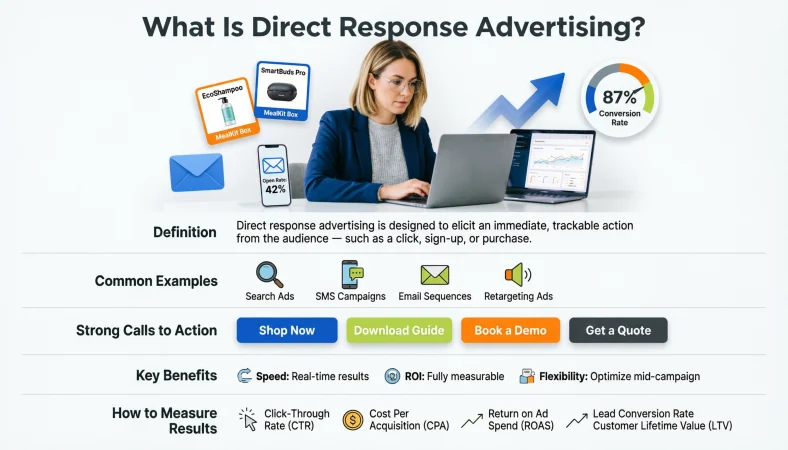
What is direct response advertising? It is a type of marketing designed to encourage an immediate, measurable action, such as making a purchase, signing up, calling a business, or downloading an app. Instead of simply building brand awareness, it gives people a clear reason to act now.
Top alternatives: performance advertising, response-driven marketing, conversion-focused advertising, measurable advertising, call-to-action marketing.
Ever seen an ad that made you click “Shop Now,” claim a discount, or sign up before you even finished scrolling? That’s direct response advertising doing its thing.
Instead of simply introducing a brand and hoping people remember it someday, this approach encourages a specific action that marketers can track and measure. You might encounter it in social media ads, email campaigns, search results, direct mail, TV commercials, or text messages from businesses.
Understanding what is direct response advertising matters whether you’re running a small online shop, promoting a service, managing marketing campaigns, or just trying to understand why certain ads convert while others disappear into the internet void.
The secret isn’t always a flashy design or a dramatic discount. It’s the combination of the right audience, a compelling offer, a clear call to action, and a simple next step. Let’s explore practical examples, benefits, strategies, and common mistakes.
What Is Direct Response Advertising in Simple Terms?
Understanding the Purpose of Direct Response Advertising
1. “An ad that asks people to take action now.”
Example: Use this explanation when introducing direct response advertising to someone new to marketing.
Meaning: The main goal is to encourage a specific, immediate response.
2. “Marketing with a measurable next step.”
Example: Use this when explaining why a campaign tracks clicks, purchases, or sign-ups.
Meaning: Success is measured through audience actions rather than exposure alone.
3. “An ad designed to turn attention into action.”
Example: Use this when describing a social media campaign with a purchase button.
Meaning: The advertisement aims to move people toward a defined goal.
Creating Clear Offers and Calls to Action
4. “A clear offer with a clear call to action.”
Example: Use this when reviewing an ad that promotes a limited-time service deal.
Meaning: The message tells people what is available and what to do next.
5. “Advertising that makes results easier to track.”
Example: Use this when comparing campaign performance across marketing channels.
Meaning: Responses can be measured using suitable tracking methods.
6. “A campaign built around a specific conversion goal.”
Example: Use this when a business wants more consultation bookings.
Meaning: The campaign focuses on a defined outcome.
Encouraging Audience Engagement and Action
7. “Less guessing, more measurable marketing.”
Example: Use this in a beginner-friendly presentation about campaign performance.
Meaning: Tracking helps marketers evaluate what works.
8. “An invitation to click, buy, call, or sign up.”
Example: Use this when explaining common direct response calls to action.
Meaning: The ad encourages a practical next step.
9. “A marketing message with a purpose beyond impressions.”
Example: Use this when distinguishing response campaigns from awareness campaigns.
Meaning: The campaign aims for an observable audience response.
Measuring Results and Motivating Decisions
10. “An offer that gives people a reason to act.”
Example: Use this when reviewing an ad that includes a bonus or special price.
Meaning: The offer provides motivation to respond.
11. “A way to connect ad spending with outcomes.”
Example: Use this when discussing campaign reporting with a business owner.
Meaning: Response data helps evaluate marketing investment.
12. “A campaign where the next step is never a mystery.”
Example: Use this when improving an ad with a vague message.
Meaning: The audience should understand exactly what action to take.
Funny Direct Response Advertising Examples
Playful Shopping and Discount Ads
1. “Click now. Your future self said thanks.”
Example: Use this for a productivity app ad aimed at people who keep postponing tasks.
Meaning: It makes the benefit feel personal and playful.
2. “Your cart misses you. Just saying.”
Example: Use this in a permitted abandoned-cart campaign.
Meaning: It humorously encourages shoppers to complete a purchase.
3. “Less scrolling, more saving. Tap for the deal.”
Example: Use this for a discount campaign on social media.
Meaning: It turns a familiar online habit into a reason to act.
Witty Calls to Action and Free Offers
4. “Your inbox called. It wants this free guide.”
Example: Use this when promoting a downloadable resource.
Meaning: It gives an email signup a lighthearted twist.
5. “Don’t let this discount become a historical event.”
Example: Use this for a genuinely time-limited promotion.
Meaning: It encourages timely action without a long explanation.
6. “Your next favorite thing is one click away.”
Example: Use this for an online store featuring a new collection.
Meaning: It creates curiosity and invites exploration.
Relatable Humor That Encourages Action
7. “Make your wallet smile. Shop the sale.”
Example: Use this for a seasonal promotion with clear savings.
Meaning: It connects the offer with a relatable financial benefit.
8. “This button has main-character energy.”
Example: Use this for a playful campaign promoting a new product.
Meaning: It draws attention to the call to action.
9. “Stop window-shopping your own wishlist.”
Example: Use this when encouraging interested shoppers to purchase.
Meaning: It playfully challenges people to take the next step.
Funny Ads for Apps, Courses, and Signups
10. “Your to-do list needs backup. Download the app.”
Example: Use this for a task-management app campaign.
Meaning: It connects a familiar problem with a useful solution.
11. “Big plans? Start with one tiny click.”
Example: Use this for an online course or business-planning resource.
Meaning: It makes getting started feel easy.
12. “Less ‘maybe later,’ more ‘done.’ Sign up today.”
Example: Use this for a service that helps customers complete a task.
Meaning: It encourages action with a relatable nudge.
Creative Direct Response Advertising Ideas
Creative Ideas That Inspire Progress
1. “Unlock your next level with one simple step.”
Example: Use this when promoting an online learning program.
Meaning: It frames the offer as a path to progress.
2. “Your solution starts here.”
Example: Use this for a service that solves a specific customer problem.
Meaning: It connects the advertisement with a practical outcome.
3. “Turn your idea into your next big move.”
Example: Use this when promoting business coaching or creative software.
Meaning: It encourages people to act on an ambition.
Simple Messages That Highlight Value
4. “Get the guide. Skip the guesswork.”
Example: Use this for a downloadable how-to resource.
Meaning: It presents the offer as a way to make a task easier.
5. “See what a smarter setup can do.”
Example: Use this for software or productivity products.
Meaning: It invites the audience to explore a potential improvement.
6. “Make room for better results.”
Example: Use this for a service that improves an existing workflow.
Meaning: It promises an opportunity to improve performance.
Low-Pressure Calls to Action
7. “Your next step is ready when you are.”
Example: Use this for a consultation booking page.
Meaning: It encourages action without applying pressure.
8. “Try the experience before you decide.”
Example: Use this for an eligible free trial or product demo.
Meaning: It reduces hesitation by offering a chance to evaluate the product.
9. “From curious to confident in a few clicks.”
Example: Use this for a beginner-focused online course.
Meaning: It positions the offer as an accessible learning opportunity.
Creative Ideas for Signups and Downloads
10. “One signup could simplify your whole workflow.”
Example: Use this for a business platform with a clear productivity benefit.
Meaning: It connects registration with a practical improvement.
11. “Find your fit. Explore the collection.”
Example: Use this for a clothing or lifestyle store.
Meaning: It encourages browsing with a personal choice in mind.
12. “Your next smart move starts with a free checklist.”
Example: Use this for lead generation through a useful download.
Meaning: It gives people a specific reason to submit their details.
Professional Direct Response Advertising Examples
Consultation and Quote Requests
1. “Book a consultation to discuss your business needs.”
Example: Use this for a B2B service targeting business decision-makers.
Meaning: It encourages qualified prospects to schedule a discussion.
2. “Request a tailored quote for your project.”
Example: Use this for an agency or contractor offering customized services.
Meaning: It invites prospects to take a concrete buying step.
3. “Download the product specification sheet.”
Example: Use this for a technical product with detailed requirements.
Meaning: It helps potential buyers evaluate the offering.
Professional Registration and Product Evaluation
4. “Register for the upcoming industry webinar.”
Example: Use this when promoting a professional training session.
Meaning: It encourages sign-ups for a defined event.
5. “Start your free product evaluation.”
Example: Use this for software that offers an eligible trial.
Meaning: It invites prospects to experience the product before buying.
6. “Compare plans to find the right fit.”
Example: Use this for a subscription service with several pricing tiers.
Meaning: It helps users move toward an informed purchase.
Expert Guidance and Purchase Decisions
7. “Speak with a specialist about your requirements.”
Example: Use this for a complex service that needs a consultation.
Meaning: It creates a direct path to expert guidance.
8. “Get the complete pricing breakdown.”
Example: Use this when buyers need to understand service costs.
Meaning: It encourages an information request from interested prospects.
9. “Submit your application to get started.”
Example: Use this for an eligible program or professional service.
Meaning: It makes the required next step explicit.
Product Demonstrations and Customer Engagement
10. “Request a live product demonstration.”
Example: Use this when promoting business software.
Meaning: It invites potential customers to see the product in action.
11. “Receive updates tailored to your industry.”
Example: Use this for a professional newsletter signup.
Meaning: It encourages subscriptions based on relevant content.
12. “Schedule your onboarding session.”
Example: Use this for new customers who need guided setup.
Meaning: It moves users toward successful product adoption.
Short Direct Response Advertising Headlines
1. “Get Started Today.”
Example: Use this on a landing page for a clearly explained service.
Meaning: It encourages visitors to begin the process.
2. “Claim Your Offer.”
Example: Use this for a valid promotion with stated terms.
Meaning: It prompts users to redeem an available deal.
3. “Shop the Collection.”
Example: Use this for an online store showcasing selected products.
Meaning: It directs interested shoppers to browse or buy.
4. “Download the Free Guide.”
Example: Use this for a lead magnet with useful information.
Meaning: It invites users to access the resource.
5. “Book Your Demo.”
Example: Use this for a product that offers demonstrations.
Meaning: It encourages potential customers to schedule a demo.
6. “Find Your Plan.”
Example: Use this for a service with multiple subscription options.
Meaning: It helps users explore suitable plans.
7. “Try It Today.”
Example: Use this for an eligible product trial.
Meaning: It encourages first-time use.
8. “Save Your Seat.”
Example: Use this for an event with registration requirements.
Meaning: It prompts users to register.
9. “Request a Quote.”
Example: Use this for a service that requires customized pricing.
Meaning: It generates a direct inquiry.
10. “Start Your Free Trial.”
Example: Use this for software with a clearly disclosed free trial.
Meaning: It invites users to experience the product.
11. “Get Your Estimate.”
Example: Use this for a service that provides project or repair estimates.
Meaning: It encourages a pricing request.
12. “Join the List.”
Example: Use this for a newsletter or launch announcement signup.
Meaning: It encourages people to subscribe for updates.
Emotional Direct Response Advertising Messages
1. “Make more time for what matters.”
Example: Use this for a service that helps customers simplify routine tasks.
Meaning: It connects the offer with a personal priority.
2. “Take the first step toward your goal.”
Example: Use this for a learning program or coaching service.
Meaning: It encourages progress without promising instant success.
3. “Feel more prepared for your next big decision.”
Example: Use this for a planning resource or consultation.
Meaning: It presents the offer as support for informed decisions.
4. “Give your future plans a starting point.”
Example: Use this for a budgeting or career-planning guide.
Meaning: It encourages people to begin preparing.
5. “Find a little more confidence in your next move.”
Example: Use this for a practical skills course.
Meaning: It connects the offer with personal growth.
6. “Make everyday tasks feel more manageable.”
Example: Use this for an organization or productivity app.
Meaning: It focuses on reducing everyday friction.
7. “Start building the routine you’ve been wanting.”
Example: Use this for a habit-tracking product.
Meaning: It encourages a manageable first step.
8. “Give your idea the support it needs.”
Example: Use this for a business mentoring service.
Meaning: It invites users to seek relevant help.
9. “Create a plan that works for your life.”
Example: Use this for a customizable planning product.
Meaning: It highlights flexibility and personal relevance.
10. “Take one small step toward a clearer path.”
Example: Use this for a career guidance resource.
Meaning: It encourages a low-pressure next action.
11. “Make your next decision with better information.”
Example: Use this for a comparison guide or expert consultation.
Meaning: It emphasizes informed choice.
12. “Start where you are, and build from there.”
Example: Use this for a beginner-friendly course or service.
Meaning: It makes progress feel achievable.
Direct Response Advertising for Social Media
Social Ads That Encourage Product Discovery
1. “Tap to explore the full collection.”
Example: Use this in a social ad showcasing several products.
Meaning: It directs viewers to a relevant shopping page.
2. “Get the details in one quick download.”
Example: Use this when promoting a free checklist or guide.
Meaning: It encourages viewers to access useful content.
3. “Sign up to get the next update.”
Example: Use this for a product launch or event announcement.
Meaning: It invites interested users to subscribe.
Calls to Action for Demos and Events
4. “See how it works in the demo.”
Example: Use this for software or a product with a visual demonstration.
Meaning: It encourages viewers to learn more through a demo.
5. “Save your spot before registration closes.”
Example: Use this for an event with a genuine registration deadline.
Meaning: It highlights the timing of the signup opportunity.
6. “Explore the offer and check the details.”
Example: Use this when an ad has eligibility requirements or exclusions.
Meaning: It encourages informed action.
Social Ads That Help Users Compare and Explore
7. “Visit the page to compare your options.”
Example: Use this for a service with several packages.
Meaning: It sends interested viewers to a comparison page.
8. “Try the interactive preview.”
Example: Use this for a tool that lets visitors explore features before registering.
Meaning: It offers an engaging next step.
9. “Get the checklist and plan your next move.”
Example: Use this for a downloadable resource promoted in a feed.
Meaning: It combines a clear offer with a practical outcome.
Social Media Ads for Bookings and Signups
10. “Book a time that works for you.”
Example: Use this for a consultation or appointment campaign.
Meaning: It makes scheduling the desired action.
11. “Join the webinar and bring your questions.”
Example: Use this for an educational live event.
Meaning: It encourages registrations by highlighting participation.
12. “Click through for the full offer terms.”
Example: Use this when a promotion has important conditions.
Meaning: It guides viewers toward the complete details before they act.
Direct Response Advertising for Email Campaigns
1. “Get your welcome offer.”
Example: Use this for a new subscriber email with a valid introductory promotion.
Meaning: It encourages the recipient to redeem the offer.
2. “Finish setting up your account.”
Example: Use this when a customer has started but not completed registration.
Meaning: It guides the user toward completing setup.
3. “Explore the products picked for you.”
Example: Use this when recommendations are genuinely relevant to the recipient.
Meaning: It encourages further product discovery.
4. “Download your copy of the guide.”
Example: Use this when delivering a promised resource.
Meaning: It directs subscribers to the content they requested.
5. “Choose your preferred plan.”
Example: Use this for a service that lets customers select a subscription.
Meaning: It encourages users to make a plan selection.
6. “Reserve your place at the event.”
Example: Use this when inviting subscribers to a scheduled event.
Meaning: It encourages registration.
7. “Review your quote and next steps.”
Example: Use this when following up on a service inquiry.
Meaning: It moves an interested prospect toward a decision.
8. “See what’s new in your account.”
Example: Use this for a customer update with a useful feature or change.
Meaning: It encourages recipients to explore the update.
9. “Renew your subscription.”
Example: Use this for a timely renewal reminder.
Meaning: It asks an existing customer to continue service.
10. “Confirm your appointment.”
Example: Use this when a customer needs to confirm a booking.
Meaning: It prompts a specific administrative action.
11. “Complete your registration.”
Example: Use this when a user has begun signing up for a course.
Meaning: It encourages completion of the registration process.
12. “Manage your preferences here.”
Example: Use this for a subscriber settings email.
Meaning: It directs recipients to update their choices.
Direct Response Advertising for Small Businesses
1. “Book your first appointment.”
Example: Use this for a local salon or professional service.
Meaning: It encourages a direct booking.
2. “Request a free estimate.”
Example: Use this when the business genuinely offers free estimates.
Meaning: It invites potential customers to ask about costs.
3. “Order online for convenient pickup.”
Example: Use this for a restaurant or shop with an online ordering service.
Meaning: It encourages customers to place an order.
4. “Call today to check availability.”
Example: Use this for a service business with changing appointment availability.
Meaning: It prompts a direct inquiry.
5. “Join our customer newsletter.”
Example: Use this for a local business sharing useful updates or promotions.
Meaning: It encourages email subscriptions.
6. “Ask about our current packages.”
Example: Use this when the business offers several service bundles.
Meaning: It invites customers to explore options.
7. “Book a service visit.”
Example: Use this for an eligible repair or maintenance service.
Meaning: It guides customers toward scheduling.
8. “Visit the store to see the collection.”
Example: Use this for a retailer that displays products in person.
Meaning: It encourages a visit with a clear purpose.
9. “Get directions to our location.”
Example: Use this for a local business seeking more store visits.
Meaning: It helps interested customers find the business.
10. “Request a personalized recommendation.”
Example: Use this for a shop or service that helps customers choose suitable options.
Meaning: It invites a direct conversation about customer needs.
11. “Check available appointment times.”
Example: Use this for a clinic, consultant, or personal service provider.
Meaning: It helps potential customers move toward a booking.
12. “Ask for details about our new service.”
Example: Use this when a small business launches a new offering.
Meaning: It generates inquiries from interested people.
Direct Response Advertising for E-Commerce
1. “Shop the bestsellers.”
Example: Use this for a store featuring its popular products.
Meaning: It directs shoppers to a curated selection.
2. “Compare product features.”
Example: Use this when buyers need help choosing between models.
Meaning: It encourages an informed product decision.
3. “Check your size before ordering.”
Example: Use this for clothing or footwear with a size guide.
Meaning: It helps customers choose a suitable fit.
4. “Add your favorite to the cart.”
Example: Use this for a product page with a clear purchase path.
Meaning: It encourages a concrete shopping action.
5. “See delivery options for your area.”
Example: Use this when shipping availability varies by location.
Meaning: It helps shoppers check whether delivery is suitable.
6. “Explore bundle pricing.”
Example: Use this when a store offers a clearly priced product bundle.
Meaning: It encourages customers to compare bundled options.
7. “Check the return policy before buying.”
Example: Use this when shoppers need reassurance about returns.
Meaning: It supports a more informed purchase.
8. “Choose your preferred color.”
Example: Use this when a product is available in several colors.
Meaning: It guides shoppers through product selection.
9. “See the full product details.”
Example: Use this when an ad provides only a brief product summary.
Meaning: It directs shoppers to the information needed to decide.
10. “Complete checkout securely.”
Example: Use this when a shopper has reviewed the cart and is ready to purchase.
Meaning: It guides the buyer toward order completion.
11. “Check whether the item is in stock.”
Example: Use this when inventory changes frequently.
Meaning: It helps customers confirm availability before buying.
12. “Review your order before confirming.”
Example: Use this during the final checkout step.
Meaning: It encourages customers to verify their order details.
Direct Response Advertising for Lead Generation
1. “Download the checklist to get started.”
Example: Use this when collecting leads through a practical resource.
Meaning: It exchanges useful content for an optional signup.
2. “Request a personalized assessment.”
Example: Use this for a service that evaluates individual needs.
Meaning: It encourages prospects to submit an inquiry.
3. “Get the full report by email.”
Example: Use this when a report is available to registered readers.
Meaning: It encourages users to provide contact details.
4. “Register for the free training session.”
Example: Use this for an educational webinar with no registration fee.
Meaning: It invites people to sign up for training.
5. “See whether the service fits your needs.”
Example: Use this for a consultation or qualification form.
Meaning: It invites prospects to explore suitability.
6. “Request a product walkthrough.”
Example: Use this when a prospect wants to see a software product in action.
Meaning: It generates a qualified sales inquiry.
7. “Get the comparison worksheet.”
Example: Use this for a resource that helps buyers evaluate alternatives.
Meaning: It gives prospects a practical reason to register.
8. “Ask for a custom proposal.”
Example: Use this for business services with customized packages.
Meaning: It invites a more detailed sales conversation.
9. “Subscribe for practical industry insights.”
Example: Use this for a professional newsletter.
Meaning: It encourages ongoing contact through relevant content.
10. “Start your eligibility check.”
Example: Use this for a program with defined eligibility criteria.
Meaning: It directs users to assess whether they qualify.
11. “Book a discovery call.”
Example: Use this for a service that begins with a consultation.
Meaning: It moves interested prospects toward a conversation.
12. “Get the information you need to decide.”
Example: Use this for a detailed buyer guide or comparison resource.
Meaning: It presents the next step as useful research.
Direct Response Advertising for Discounts and Special Offers
1. “Save on selected items today.”
Example: Use this for a genuine promotion with clearly identified products.
Meaning: It highlights an available saving.
2. “Use the code at checkout.”
Example: Use this when a valid discount code is available.
Meaning: It tells shoppers how to redeem the offer.
3. “Explore this week’s special offers.”
Example: Use this for a promotion that changes weekly.
Meaning: It encourages shoppers to view current deals.
4. “Get the bundle and compare the savings.”
Example: Use this when the bundle price offers a transparent benefit.
Meaning: It invites customers to evaluate the bundle.
5. “Claim your eligible introductory discount.”
Example: Use this for a new-customer offer with stated conditions.
Meaning: It encourages qualifying customers to redeem the discount.
6. “Check the offer before it expires.”
Example: Use this when the promotion has a real end date.
Meaning: It reminds customers of the deadline.
7. “See what’s included in the package.”
Example: Use this when a deal combines several products or services.
Meaning: It helps shoppers understand the offer’s value.
8. “Compare prices before you choose.”
Example: Use this when a store offers several product tiers.
Meaning: It encourages thoughtful comparison.
9. “Unlock the member price.”
Example: Use this when registered members receive a clearly disclosed price.
Meaning: It prompts users to check membership benefits.
10. “Explore limited-quantity items.”
Example: Use this when inventory is genuinely limited.
Meaning: It informs shoppers about real stock constraints.
11. “Check whether free shipping applies.”
Example: Use this when delivery promotions depend on order value or location.
Meaning: It encourages customers to review shipping eligibility.
12. “Review the terms and redeem your offer.”
Example: Use this for promotions with specific eligibility conditions.
Meaning: It combines a clear action with transparent expectations.
Direct Response Advertising for Mobile Apps and Software
1. “Download the app and explore its features.”
Example: Use this when promoting an app with a clear user benefit.
Meaning: It encourages installation and discovery.
2. “Create your account to get started.”
Example: Use this when an app requires registration.
Meaning: It directs users toward onboarding.
3. “Try the interactive product demo.”
Example: Use this for software with a browser-based preview.
Meaning: It encourages users to experience the product before committing.
4. “Compare plans for your team.”
Example: Use this for business software with different subscription levels.
Meaning: It helps buyers identify a suitable plan.
5. “Set up your first project.”
Example: Use this for a project-management app.
Meaning: It encourages a practical first use.
6. “Connect your workspace.”
Example: Use this when software needs a workspace integration.
Meaning: It moves users toward configuring the product.
7. “Start with the free version.”
Example: Use this when a software product offers a genuine free tier.
Meaning: It lowers the initial barrier to trying the service.
8. “See the feature comparison.”
Example: Use this when users need to evaluate plan differences.
Meaning: It supports a better-informed choice.
9. “Book a software walkthrough.”
Example: Use this for business software with a guided demonstration.
Meaning: It invites prospects to see relevant features.
10. “Check compatibility before installing.”
Example: Use this when an app has specific device or system requirements.
Meaning: It helps users avoid installation problems.
11. “Complete your setup to start using the service.”
Example: Use this when a new user has unfinished onboarding steps.
Meaning: It encourages the user to activate the product.
12. “Explore the help center for your next step.”
Example: Use this when users need guidance during setup.
Meaning: It directs them to relevant support information.
Direct Response Advertising: Clever and High-Converting Calls to Action
1. “Get the details, then make your move.”
Example: Use this when an audience needs more information before committing.
Meaning: It encourages informed action.
2. “Your next step is right here.”
Example: Use this for a landing page with one main conversion goal.
Meaning: It makes the desired action easy to spot.
3. “See the value for yourself.”
Example: Use this for a demo, sample, or trial experience.
Meaning: It invites users to evaluate the offer directly.
4. “Make the comparison that matters.”
Example: Use this for a product comparison page.
Meaning: It directs attention toward relevant buying criteria.
5. “Find your answer in the full guide.”
Example: Use this for a detailed resource promoted through an ad.
Meaning: It gives readers a reason to continue.
6. “Choose your next step.”
Example: Use this when a landing page offers several relevant actions.
Meaning: It gives visitors a clear route forward.
7. “See what’s possible with a quick demo.”
Example: Use this when a product is easier to understand visually.
Meaning: It encourages prospects to explore its capabilities.
8. “Turn your interest into a plan.”
Example: Use this for a consultation or planning service.
Meaning: It encourages a move from research to action.
9. “Get the facts before you decide.”
Example: Use this for a high-consideration product or service.
Meaning: It highlights informed decision-making.
10. “Start small. See how it fits.”
Example: Use this for an eligible trial or introductory service.
Meaning: It makes the first step feel manageable.
11. “Find the option that fits your goals.”
Example: Use this for a service with multiple plans.
Meaning: It connects the action to the customer’s priorities.
12. “Take the next step when you’re ready.”
Example: Use this for a low-pressure lead generation page.
Meaning: It invites action without creating unnecessary urgency.
FAQs
What Is Direct Response Advertising?
It is advertising designed to generate a measurable action, such as a purchase, call, click, or signup.
Is Direct Response Advertising the Same as Brand Awareness?
No. Direct response prioritizes measurable actions, while brand awareness focuses on recognition and recall.
What Are Common Direct Response Advertising Examples?
Search ads, promotional emails, social media conversion ads, direct mail offers, and lead generation campaigns.
Is Direct Response Advertising Suitable for Small Businesses?
Yes. Small businesses can use trackable calls, bookings, purchases, and inquiries to measure results.
Is Direct Response Advertising Professional?
Yes. It is a standard marketing approach when the offer, message, and claims are clear and appropriate.
Can Direct Response Advertising Be Funny?
Yes. Humor can attract attention, but the offer and next step should remain clear.
What If Customers Are Not Ready to Buy?
Offer a lower-commitment action, such as downloading a guide, requesting details, or booking a demo.
How Do You Measure Direct Response Advertising?
Track suitable actions such as conversions, cost per lead, sales, conversion rate, and return on ad spend.
Does Direct Response Advertising Always Produce Immediate Sales?
No. It can generate leads, signups, calls, downloads, and other actions that may lead to sales later.
What Makes a Direct Response Ad Effective?
A relevant audience, clear offer, persuasive message, visible call to action, and easy next step help.
Conclusion
Understanding what direct response advertising is can help you create campaigns that do more than look good on a screen. The strongest ads connect a real audience need with a clear offer and an easy next step. Whether you want more purchases, email signups, bookings, app downloads, or qualified leads, keep the message focused and track the actions that matter.
Test different headlines, offers, and calls to action instead of assuming the first version is perfect. Be persuasive without making misleading promises, and make it simple for people to respond. Save this guide for your next campaign, share it with your marketing team, and turn those clicks into meaningful results!