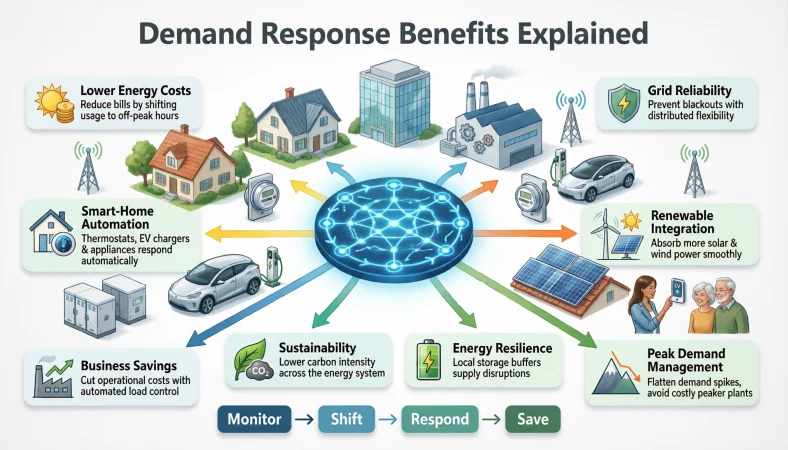
Demand response benefits come from changing electricity use when grid conditions, prices, or system needs change. It can help customers manage energy costs while supporting grid reliability, flexibility, and efficient use of available resources.
Top alternatives: demand response advantages, benefits of demand response, demand-side management benefits, electricity demand response benefits, demand flexibility benefits
Ever looked at an electricity bill and thought, “Surely there is a smarter way to use all this power”? That is where demand response gets interesting. Whether you are managing energy at home, running a business, planning industrial operations, or simply trying to understand modern electricity systems, demand response benefits go far beyond saving a few euros or dollars.
Demand response allows electricity customers to adjust when or how much power they consume in response to prices, incentives, grid conditions, or other signals. That flexibility can help reduce peak demand, support grid reliability, improve energy management, and make better use of variable renewable generation.
In practical terms, it is less about using less electricity all the time and more about using electricity at smarter moments. The result? A power system that can become more flexible without asking everyone to live by candlelight.
Demand Response Benefits For Lower Energy Costs
Shift electricity use to cheaper periods.
Example: A household runs its washing machine during a lower-price period.
Meaning: Demand response can help customers move flexible consumption away from expensive periods.
Reduce peak-period electricity spending.
Example: A business delays nonessential equipment during a high-price interval.
Meaning: Avoiding expensive periods can reduce energy costs.
Take advantage of time-based pricing.
Example: A customer schedules charging when electricity rates are lower.
Meaning: Flexible demand can respond to changing electricity prices.
Avoid unnecessary peak consumption.
Example: An office adjusts cooling during a short peak-demand event.
Meaning: Lower peak usage can reduce exposure to demand-related costs.
Automate energy-saving schedules.
Example: Smart controls adjust equipment according to predefined price signals.
Meaning: Automation makes flexible energy use easier to maintain.
Make energy budgets more predictable.
Example: A facility plans operations around known demand-response events.
Meaning: Better timing can improve energy-cost planning.
Use electricity when rates are favorable.
Example: An electric vehicle charges during a lower-cost period.
Meaning: Flexible loads can take advantage of price differences.
Reduce avoidable energy waste.
Example: Building controls reduce unnecessary heating in lightly occupied spaces.
Meaning: Demand response can encourage more deliberate electricity use.
Improve energy purchasing decisions.
Example: A large facility compares operational schedules with market conditions.
Meaning: Flexible demand gives energy managers another cost-management option.
Turn flexibility into financial value.
Example: A commercial customer participates in an incentive-based demand-response program.
Meaning: Some programs compensate participants for changing electricity consumption.
Control peak-related expenses.
Example: A factory temporarily adjusts flexible processes during a system peak.
Meaning: Reducing peak usage can support cost control.
Make smart timing part of energy management.
Example: A family schedules several flexible appliances outside peak hours.
Meaning: Small timing changes can contribute to better energy economics.
Demand Response Benefits For Grid Reliability
Support electricity supply and demand balance.
Example: Customers reduce flexible loads during a grid stress event.
Meaning: Demand response can help balance consumption with available supply.
Reduce pressure during peak demand.
Example: Commercial buildings temporarily adjust cooling during an extreme demand period.
Meaning: Lower demand can reduce stress on the electricity system.
Provide flexibility during unexpected conditions.
Example: Participating customers adjust electricity use after a system disruption.
Meaning: Flexible demand can become a resource during changing grid conditions.
Help manage system peaks.
Example: Industrial loads are temporarily shifted during a high-demand interval.
Meaning: Demand response can reduce the size or duration of peak demand.
Support system operators.
Example: Aggregated customers respond to a grid signal.
Meaning: Coordinated demand can provide an additional operational resource.
Improve resilience during challenging periods.
Example: A facility reduces discretionary electricity use during a grid emergency.
Meaning: Flexible consumption can help manage periods of system stress.
Reduce the need for immediate supply increases.
Example: Flexible loads decrease during a short-lived peak.
Meaning: Demand-side flexibility can help meet temporary system needs.
Provide fast flexibility in some programs.
Example: Automated equipment responds within a predefined timeframe.
Meaning: Certain demand-response resources can react quickly to grid signals.
Support frequency-related services in suitable programs.
Example: Flexible loads participate in an electricity ancillary-service program.
Meaning: Some demand resources can contribute to balancing services.
Help prevent excessive system strain.
Example: Multiple customers respond during a regional peak event.
Meaning: Aggregated reductions can ease pressure across the grid.
Increase operational flexibility.
Example: Grid managers coordinate demand changes alongside available generation.
Meaning: Flexible demand expands the options available for balancing the system.
Make customers part of grid management.
Example: A business participates in a utility demand-response program.
Meaning: Consumers can actively contribute to electricity-system operations.
Demand Response Benefits For Renewable Energy.
Help match flexible demand with renewable generation.
Example: Customers increase suitable electricity use when renewable output is abundant.
Meaning: Demand flexibility can improve alignment between consumption and variable generation.
Support solar integration.
Example: A building shifts flexible loads toward periods of strong daytime solar production.
Meaning: Demand can better coincide with available solar electricity.
Support wind integration.
Example: Industrial processes operate more flexibly during periods of strong wind generation.
Meaning: Flexible demand can help absorb available renewable output.
Reduce renewable curtailment in suitable situations.
Example: Flexible loads increase when renewable production exceeds immediate demand.
Meaning: Demand flexibility can create additional opportunities to use available generation.
Improve grid flexibility.
Example: Customers adjust electricity consumption around renewable production patterns.
Meaning: Flexible demand helps the system respond to variable generation.
Make renewable electricity more useful.
Example: A battery or flexible appliance operates when renewable power is plentiful.
Meaning: Timing electricity use can improve utilization of renewable resources.
Support cleaner electricity goals.
Example: A company schedules flexible processes around periods of lower-carbon grid supply.
Meaning: Demand timing can complement broader decarbonization strategies.
Help manage solar production swings.
Example: Smart building systems adjust flexible loads during changing solar output.
Meaning: Responsive demand can help balance variable generation.
Help absorb excess renewable production.
Example: Electric vehicles charge during periods of abundant renewable electricity.
Meaning: Flexible charging can increase electricity consumption when supply is plentiful.
Complement energy storage.
Example: A facility combines batteries with flexible HVAC operation.
Meaning: Demand response and storage can provide different forms of flexibility.
Reduce reliance on rigid consumption schedules.
Example: A factory shifts a flexible process by an hour.
Meaning: Operational flexibility can better align demand with available power.
Connect consumers with the renewable-energy transition.
Example: A household uses smart controls to respond to renewable-friendly electricity periods.
Meaning: Demand flexibility gives consumers an active role in a changing power system.
Demand Response Benefits For Businesses
Lower operating energy costs.
Example: A retailer reduces flexible electricity use during expensive periods.
Meaning: Businesses can use demand flexibility as a cost-management strategy.
Improve energy management.
Example: A facility tracks electricity use and adjusts flexible equipment.
Meaning: Demand response encourages closer attention to consumption patterns.
Create new revenue opportunities.
Example: A company receives incentives for participating in a demand-response program.
Meaning: Some programs compensate businesses for providing flexibility.
Reduce peak demand exposure.
Example: A commercial building temporarily reduces selected loads during a peak event.
Meaning: Peak management can help control electricity expenses.
Improve operational planning.
Example: A manufacturer schedules flexible processes around electricity conditions.
Meaning: Energy considerations become part of production planning.
Use smart building technology more effectively.
Example: Automated HVAC controls respond to demand-response signals.
Meaning: Existing controls can become part of an energy-flexibility strategy.
Improve sustainability reporting.
Example: A company tracks electricity flexibility alongside energy-efficiency measures.
Meaning: Demand response can support broader energy-management goals.
Strengthen energy resilience.
Example: A facility identifies which loads can be reduced during grid stress.
Meaning: Knowing flexible loads improves preparedness for difficult operating conditions.
Reduce unnecessary consumption during peaks.
Example: A warehouse pauses selected noncritical equipment during a demand event.
Meaning: Temporary reductions can support both cost and grid objectives.
Improve energy awareness among employees.
Example: Staff receive guidance about flexible electricity use.
Meaning: Participation can encourage a stronger energy-management culture.
Support corporate energy targets.
Example: A business combines demand response with efficiency projects.
Meaning: Demand flexibility can complement wider sustainability initiatives.
Turn energy flexibility into a business asset.
Example: An industrial site identifies several processes that can safely shift in time.
Meaning: Flexible operations can provide economic and operational value.
Demand Response Benefits For Industrial Facilities
Shift flexible production processes.
Example: A factory moves a nonurgent process outside the system peak.
Meaning: Industrial flexibility can reduce electricity demand when needed.
Lower peak electricity consumption.
Example: A plant temporarily reduces selected equipment during a demand event.
Meaning: Peak management can reduce high-demand exposure.
Protect critical production processes.
Example: A facility identifies essential and flexible equipment separately.
Meaning: Demand response can focus reductions on loads that can safely change.
Improve production scheduling.
Example: Managers coordinate flexible operations with electricity conditions.
Meaning: Energy timing becomes another scheduling consideration.
Use automated controls.
Example: Industrial systems automatically adjust approved loads during events.
Meaning: Automation can make participation faster and more consistent.
Increase operational flexibility.
Example: A manufacturer identifies processes that can move by several hours.
Meaning: Flexible scheduling can create demand-response capacity.
Reduce energy-management costs.
Example: A plant avoids unnecessary high-demand operation.
Meaning: Better timing can support electricity-cost control.
Support grid services.
Example: An industrial facility participates in an eligible flexibility program.
Meaning: Large loads can sometimes provide valuable grid support.
Coordinate demand response with storage.
Example: A factory combines battery operation with flexible machinery.
Meaning: Multiple flexibility resources can work together.
Improve energy visibility.
Example: Managers monitor equipment-level consumption before joining a program.
Meaning: Detailed usage information helps identify suitable flexible loads.
Protect product quality through careful planning.
Example: A plant excludes temperature-sensitive processes from automated reductions.
Meaning: Demand response should respect operational constraints.
Make flexibility measurable.
Example: A facility tracks its baseline and event performance.
Meaning: Measurement helps quantify actual demand-response performance.
Demand Response Benefits For Households
Shift appliance use to better times.
Example: A household runs the dishwasher during a lower-demand period.
Meaning: Flexible appliance timing can reduce peak consumption.
Lower electricity bills in suitable pricing plans.
Example: A family uses a time-of-use tariff and moves charging to cheaper hours.
Meaning: Timing can affect electricity costs.
Schedule electric vehicle charging.
Example: An EV charges overnight instead of during the evening peak.
Meaning: Flexible charging can avoid high-demand periods.
Adjust heating or cooling.
Example: A smart thermostat slightly changes temperature during a demand event.
Meaning: HVAC systems can provide flexible electricity demand.
Use smart home automation.
Example: Connected devices respond automatically to an electricity signal.
Meaning: Automation reduces the need for constant manual adjustments.
Reduce peak-period consumption.
Example: Several flexible appliances are delayed during a grid event.
Meaning: Small household changes can collectively reduce demand.
Participate without constantly watching the clock.
Example: A smart energy-management system handles scheduled adjustments.
Meaning: Automation makes participation more convenient.
Gain better visibility into energy use.
Example: A household tracks consumption through a smart meter or energy platform.
Meaning: Better information makes flexible consumption easier to manage.
Coordinate multiple home devices.
Example: EV charging and water heating are scheduled together.
Meaning: Coordinated loads can provide greater flexibility.
Support local grid needs.
Example: Households respond to a utility demand-response event.
Meaning: Residential flexibility can contribute to broader system balancing.
Pair demand response with rooftop solar.
Example: A household shifts flexible electricity use toward sunny periods.
Meaning: Flexible demand can increase use of available solar generation.
Make energy management feel less random.
Example: A family follows an automated electricity schedule.
Meaning: Demand response turns some energy decisions into planned actions.
Demand Response Benefits For Smart Homes
Automate flexible appliances.
Example: Smart appliances operate according to electricity signals.
Meaning: Connected devices can adjust their timing automatically.
Coordinate heating and cooling.
Example: A smart thermostat modifies operation during a peak event.
Meaning: HVAC demand can become more flexible.
Optimize EV charging.
Example: A charger delays charging until a preferred period.
Meaning: EV demand can be shifted without changing the total driving need.
Coordinate water heating.
Example: A smart water heater schedules heating before a peak period.
Meaning: Stored hot water can provide flexibility in some setups.
Respond to time-based electricity prices.
Example: A home energy system schedules selected loads during lower-cost hours.
Meaning: Automation can connect electricity use with pricing.
Reduce manual energy management.
Example: A homeowner lets an energy-management system handle scheduled adjustments.
Meaning: Automation makes participation more convenient.
Improve household energy visibility.
Example: A smart dashboard shows consumption by time of day.
Meaning: Real-time information helps users understand flexible loads.
Coordinate solar and demand.
Example: Appliances operate during strong rooftop solar production.
Meaning: Smart controls can align consumption with local generation.
Manage multiple flexible loads together.
Example: EV charging, heating, and appliances follow one coordinated schedule.
Meaning: Integrated control can increase available flexibility.
Respond quickly to grid signals.
Example: Connected devices automatically reduce selected demand during an event.
Meaning: Automation can provide faster response than manual action.
Maintain comfort within selected limits.
Example: A thermostat adjusts temperature only within an agreed range.
Meaning: Smart demand response can balance flexibility with household comfort.
Make electricity timing smarter.
Example: A home system shifts flexible loads without changing essential activities.
Meaning: Smart controls focus on when electricity is used rather than simply reducing everything.
Demand Response Benefits For Peak Demand Management
Reduce electricity demand during system peaks.
Example: Flexible customers temporarily lower selected loads during the evening peak.
Meaning: Demand response can help flatten short periods of high consumption.
Shorten peak duration.
Example: Commercial customers shift flexible loads for one hour.
Meaning: Temporary reductions can help manage a concentrated demand spike.
Reduce pressure on grid infrastructure.
Example: Multiple buildings reduce nonessential loads during a peak.
Meaning: Lower demand can ease stress on network equipment.
Improve peak-load forecasting.
Example: Energy managers track historical response patterns.
Meaning: Participation data can help planners understand flexible demand.
Encourage smarter electricity timing.
Example: Customers move flexible consumption away from predictable peaks.
Meaning: Demand response changes when electricity is consumed.
Reduce simultaneous high-load activity.
Example: A building staggers EV charging schedules.
Meaning: Coordinated timing can prevent many flexible loads from operating together.
Support peak-shaving strategies.
Example: A facility combines storage with demand response.
Meaning: Multiple strategies can reduce demand during critical periods.
Help manage extreme weather demand.
Example: Buildings adjust flexible cooling during a system peak.
Meaning: Demand flexibility can be valuable when heating or cooling demand rises sharply.
Improve grid utilization.
Example: Customers shift loads away from already-congested periods.
Meaning: Better timing can make existing infrastructure more useful.
Create flexibility without permanently reducing service.
Example: A business delays a flexible process rather than eliminating it.
Meaning: Demand response can change timing instead of requiring permanent consumption cuts.
Support system planning.
Example: Grid planners account for available demand flexibility.
Meaning: Responsive demand can become part of resource planning.
Turn peak demand into a manageable event.
Example: Customers respond together during a short system stress period.
Meaning: Coordinated action can make high-demand periods easier to manage.
Demand Response Benefits For Electricity Markets
Allow demand to respond to price signals.
Example: A large customer reduces consumption when wholesale prices rise.
Meaning: Demand becomes more responsive to market conditions.
Improve market flexibility.
Example: Aggregated flexible loads participate in an electricity market.
Meaning: Demand can act as a resource alongside generation.
Create compensation opportunities.
Example: A qualifying participant receives payment for providing flexibility.
Meaning: Some market structures financially reward demand-response services.
Improve price responsiveness.
Example: Customers change electricity use during high-price intervals.
Meaning: Flexible demand can respond to changing market conditions.
Encourage efficient consumption timing.
Example: Industrial loads operate during economically favorable periods.
Meaning: Electricity use can shift toward times when supply conditions are more favorable.
Help balance supply and demand.
Example: Flexible loads reduce consumption when available supply is constrained.
Meaning: Demand can contribute to market balancing.
Support competitive energy markets.
Example: Demand resources participate alongside traditional supply resources.
Meaning: Flexible consumption expands the range of market resources.
Give consumers a more active market role.
Example: A business participates through an aggregator.
Meaning: Customers can provide energy flexibility rather than only consuming electricity.
Support aggregation.
Example: Thousands of small devices are coordinated as one flexible resource.
Meaning: Aggregation can combine many small loads into a larger market resource.
Improve resource efficiency.
Example: Flexible demand responds instead of requiring an immediate increase in generation.
Meaning: Demand flexibility can provide another way to manage system needs.
Encourage innovative energy services.
Example: A company offers automated demand-response management to customers.
Meaning: Flexible demand can create new energy-service models.
Make electricity demand more interactive.
Example: Customers receive signals and adjust eligible loads.
Meaning: Consumption becomes more responsive to market conditions.
Demand Response Benefits For Energy Efficiency
Encourage awareness of electricity consumption.
Example: Customers monitor when their largest loads operate.
Meaning: Demand response makes consumption timing more visible.
Reduce unnecessary peak usage.
Example: A building delays nonessential equipment during peak periods.
Meaning: Lower peak consumption can improve overall energy management.
Complement efficiency upgrades.
Example: A company combines efficient HVAC equipment with flexible scheduling.
Meaning: Efficiency reduces energy needs while demand response changes timing.
Improve equipment scheduling.
Example: A facility avoids running flexible machines simultaneously.
Meaning: Better scheduling can reduce avoidable demand spikes.
Support smarter building controls.
Example: Automated controls adjust HVAC according to occupancy and grid signals.
Meaning: Building systems can become more responsive.
Encourage energy-conscious behavior.
Example: Employees learn which operations can safely shift.
Meaning: Awareness can support more deliberate electricity use.
Reduce wasted operating hours.
Example: Equipment is scheduled according to actual operational needs.
Meaning: Better timing can prevent unnecessary electricity consumption.
Improve energy data analysis.
Example: Managers review hourly consumption patterns.
Meaning: Detailed data helps identify flexible and inefficient loads.
Combine demand flexibility with conservation.
Example: A household uses efficient appliances and runs them during preferred periods.
Meaning: Efficiency and flexibility can work together.
Support long-term energy planning.
Example: A business evaluates both consumption volume and timing.
Meaning: Energy management becomes more comprehensive.
Make energy performance easier to understand.
Example: A facility compares normal and demand-response event consumption.
Meaning: Performance data reveals how operations respond to system conditions.
Turn energy awareness into action.
Example: Staff adjust flexible processes after seeing peak-demand data.
Meaning: Demand response can transform information into practical behavior.
Demand Response Benefits For Sustainability
Support lower-carbon electricity strategies.
Example: A company shifts flexible demand toward periods with cleaner grid electricity.
Meaning: Timing electricity use can complement decarbonization efforts.
Improve renewable-energy utilization.
Example: Flexible loads operate when renewable generation is abundant.
Meaning: Demand flexibility can help use available clean electricity.
Reduce avoidable peak demand.
Example: Buildings lower discretionary consumption during system peaks.
Meaning: Peak management can improve system efficiency.
Complement electrification.
Example: EV charging is scheduled around grid conditions.
Meaning: Flexible electrification can reduce pressure created by new electricity demand.
Support smart-grid development.
Example: Connected devices respond to system signals.
Meaning: Responsive demand is a key feature of more flexible electricity systems.
Encourage responsible energy behavior.
Example: Employees learn how electricity timing affects the grid.
Meaning: Awareness can support sustainability-oriented decisions.
Help integrate distributed energy resources.
Example: A home coordinates solar generation, EV charging, and flexible appliances.
Meaning: Coordinated demand can work alongside distributed generation.
Support cleaner energy consumption patterns.
Example: A facility schedules flexible processes during favorable grid conditions.
Meaning: Timing can influence how electricity demand interacts with the generation mix.
Improve system flexibility during the energy transition.
Example: Flexible loads respond as renewable generation changes.
Meaning: Demand response provides adaptability as electricity systems evolve.
Connect sustainability with daily operations.
Example: A business includes demand flexibility in its energy strategy.
Meaning: Sustainability becomes part of operational decision-making.
Make energy goals more actionable.
Example: A company turns a sustainability target into specific load-shifting actions.
Meaning: Demand response provides practical ways to manage electricity timing.
Support a more flexible energy future.
Example: Consumers and businesses participate in coordinated demand programs.
Meaning: Responsive consumption can complement generation, storage, and grid upgrades.
Demand Response Benefits For Grid Modernization
Increase grid flexibility.
Example: Flexible customers respond to changing electricity conditions.
Meaning: Responsive demand gives grid operators another operational resource.
Support smart-grid technologies.
Example: Connected meters and controls communicate with energy-management systems.
Meaning: Digital infrastructure makes demand response easier to coordinate.
Improve use of existing infrastructure.
Example: Flexible demand shifts away from highly stressed periods.
Meaning: Better timing can help manage existing network capacity.
Support distributed energy resources.
Example: Solar, batteries, EVs, and flexible loads operate as a coordinated system.
Meaning: Demand response can connect different energy resources.
Enable more responsive electricity consumption.
Example: Customers receive automated grid signals.
Meaning: Consumption can adjust to system conditions.
Support advanced energy management.
Example: A facility combines real-time data with automated load control.
Meaning: Digital systems can make energy flexibility more precise.
Improve coordination between consumers and utilities.
Example: Customers participate in utility flexibility programs.
Meaning: Demand response creates a structured connection between customer loads and grid needs.
Help manage growing electricity demand.
Example: EV charging is shifted away from system peaks.
Meaning: Flexible consumption can help accommodate electrification.
Support distributed flexibility.
Example: Thousands of small devices respond as an aggregated resource.
Meaning: Many small loads can collectively provide meaningful flexibility.
Encourage smarter infrastructure investment.
Example: Planners consider demand flexibility alongside network expansion.
Meaning: Responsive demand becomes another factor in grid planning.
Improve real-time energy awareness.
Example: Customers see changing consumption and grid signals through digital platforms.
Meaning: Better information enables more responsive behavior.
Make the grid more interactive.
Example: Customers automatically adjust selected loads during system events.
Meaning: Electricity consumers become active participants in grid operations.
Demand Response Benefits For Energy Resilience
Provide an additional flexibility resource.
Example: Customers reduce selected loads during a system stress event.
Meaning: Demand can support the grid when conditions change.
Help manage short-term supply constraints.
Example: Flexible loads temporarily decrease when available electricity is tight.
Meaning: Demand reduction can help balance temporary shortages.
Support emergency demand management.
Example: A facility reduces noncritical electricity use during a grid emergency.
Meaning: Flexible consumption can contribute to emergency operating strategies.
Protect critical operations through planning.
Example: A business identifies which equipment can and cannot participate.
Meaning: Advance planning keeps essential functions protected.
Improve preparedness.
Example: A facility practices its demand-response procedures before an event.
Meaning: Preparedness makes response more organized.
Enable faster reactions.
Example: Automated systems adjust approved loads immediately after a signal.
Meaning: Automation can reduce response time.
Support distributed resilience.
Example: Many buildings provide small reductions during a regional event.
Meaning: Aggregated flexibility can support system-wide resilience.
Reduce stress during extreme demand.
Example: Buildings temporarily adjust cooling during extreme temperatures.
Meaning: Demand response can help manage weather-driven peaks.
Complement backup systems.
Example: A facility combines generators, batteries, and flexible loads.
Meaning: Different resources can contribute to resilience in different ways.
Improve understanding of critical loads.
Example: Managers classify equipment before joining a demand-response program.
Meaning: Participation encourages clearer load prioritization.
Create an established response routine.
Example: Employees follow a predefined event procedure.
Meaning: A planned response is easier to execute than improvisation.
Build energy flexibility into resilience planning.
Example: A company includes flexible loads in its continuity strategy.
Meaning: Demand response can become part of broader energy resilience planning.
Demand Response Benefits For Smart Energy Management
Use real-time energy information.
Example: A facility monitors electricity demand throughout the day.
Meaning: Timely information helps managers make better operational decisions.
Automate flexible loads.
Example: Building systems adjust selected equipment according to predefined rules.
Meaning: Automation reduces manual intervention.
Track demand-response performance.
Example: A company compares normal consumption with event consumption.
Meaning: Measurement shows whether expected flexibility was delivered.
Identify the most flexible equipment.
Example: An energy manager analyzes which loads can safely shift.
Meaning: Load analysis helps build an effective demand-response portfolio.
Coordinate multiple energy resources.
Example: A facility manages batteries, HVAC, EV charging, and flexible equipment together.
Meaning: Integrated management can increase available flexibility.
Use data to improve schedules.
Example: Managers compare energy use with operating hours.
Meaning: Data reveals opportunities for better timing.
Reduce manual decision-making.
Example: Automated systems handle routine demand-response events.
Meaning: Smart controls make participation more convenient.
Improve energy forecasting.
Example: A business studies historical demand patterns.
Meaning: Forecasting helps anticipate periods when flexibility may be valuable.
Create measurable energy goals.
Example: A facility tracks peak-demand reductions over several months.
Meaning: Performance metrics make demand management easier to evaluate.
Integrate demand response with efficiency.
Example: Efficient HVAC equipment also participates in flexible load control.
Meaning: Efficiency and demand flexibility can reinforce each other.
Improve operational visibility.
Example: Managers see which equipment drives demand peaks.
Meaning: Better visibility supports smarter energy decisions.
Make energy management more proactive.
Example: A facility prepares for predictable peak periods before they occur.
Meaning: Planning replaces last-minute reactions.
Demand Response Benefits And Practical Challenges
Demand response can require customer participation.
Example: A business assigns staff to manage program events.
Meaning: Human involvement may still be necessary in some programs.
Automation can reduce participation effort.
Example: Smart controls handle routine load adjustments.
Meaning: Technology can make programs easier to operate.
Flexible loads need clear limits.
Example: A factory defines which machines can safely be interrupted.
Meaning: Operational boundaries protect essential processes.
Comfort can be an important consideration.
Example: A building sets temperature adjustment limits during events.
Meaning: Demand response should account for occupant comfort.
Not every electricity load is flexible.
Example: A hospital keeps critical medical equipment outside a demand-response schedule.
Meaning: Essential loads may need continuous operation.
Program rules vary.
Example: A customer reviews event duration and notification requirements before participating.
Meaning: Demand-response programs can have different operating conditions.
Measurement matters.
Example: A participant tracks actual consumption during an event.
Meaning: Performance must often be measured against an established baseline.
Poor planning can reduce expected benefits.
Example: A facility signs up without identifying suitable flexible loads.
Meaning: Participation works better when flexibility is understood beforehand.
Customer incentives can influence participation.
Example: A business compares program payments with operational constraints.
Meaning: Economic value depends on program structure and customer circumstances.
Technology can add upfront costs.
Example: A building installs controls capable of automated load management.
Meaning: Equipment and integration may require initial investment.
Data quality affects decision-making.
Example: An energy manager relies on accurate interval consumption data.
Meaning: Reliable data helps identify and measure flexibility.
Demand response works best when expectations are realistic.
Example: A customer identifies practical flexibility rather than promising impossible reductions.
Meaning: Clear limits make participation more sustainable.
Demand Response Benefits For Beginners.
Demand response means changing electricity use at useful times.
Example: A household delays EV charging during a peak period.
Meaning: The simplest idea is changing when electricity is consumed.
It does not always mean using less electricity overall.
Example: A customer shifts appliance use from evening to overnight.
Meaning: Total consumption may stay similar while timing changes.
Demand response can involve reducing demand.
Example: A building temporarily turns down selected equipment.
Meaning: Customers can lower electricity use during specific events.
Demand response can involve shifting demand.
Example: A factory moves a flexible process to another hour.
Meaning: Consumption is moved rather than permanently eliminated.
Demand response can involve increasing demand at useful times.
Example: EV charging increases when electricity is abundant and conditions are favorable.
Meaning: Flexibility can sometimes mean consuming more at the right moment.
Price signals can encourage participation.
Example: A customer moves electricity use because rates change throughout the day.
Meaning: Pricing can influence consumption timing.
Incentives can encourage participation too.
Example: A business receives compensation for reducing eligible electricity use.
Meaning: Programs may reward customers for providing flexibility.
Smart devices can automate participation.
Example: A connected thermostat responds to a programmed event.
Meaning: Technology can handle flexible adjustments automatically.
Businesses can participate through aggregators.
Example: A small commercial customer joins a program managed by an energy-service provider.
Meaning: Aggregators can combine multiple customers into a larger flexible resource.
Utilities can use demand response as a grid resource.
Example: Participating customers respond during a system peak.
Meaning: Flexible demand can help utilities manage electricity conditions.
Demand response can support renewable energy.
Example: Flexible loads operate when solar generation is plentiful.
Meaning: Timing can improve alignment between demand and renewable supply.
The big idea is simple: use electricity more flexibly.
Example: A family shifts several nonessential activities outside peak hours.
Meaning: Demand response turns timing into an energy-management tool.
FAQs.
What are demand response benefits?
Demand response benefits include potential electricity-cost savings, lower peak demand, improved grid flexibility, stronger reliability support, better integration of renewable energy, and additional opportunities for customers to participate in energy programs.
What is demand response in simple terms?
Demand response means changing electricity consumption in response to electricity prices, incentives, grid conditions, or other signals. The change may involve reducing, shifting, or sometimes increasing demand at useful times.
Does demand response save money?
It can. Customers may reduce costs by moving flexible electricity use away from expensive periods or by receiving incentives for participating in eligible demand-response programs. Actual savings depend on the program, tariff, technology, and customer usage.
Is demand response the same as energy efficiency?
No. Energy efficiency generally focuses on using less energy to provide the same service. Demand response focuses primarily on changing when or how electricity is consumed in response to system or economic signals.
Can households participate in demand response?
Yes. Depending on the market and available programs, households may participate through smart thermostats, EV chargers, water heaters, batteries, appliances, or other flexible loads.
Can businesses benefit from demand response?
Yes. Businesses with flexible loads may reduce peak-related costs, receive program incentives, improve energy management, and provide useful flexibility to the electricity system.
Does demand response help renewable energy?
It can. Flexible demand can shift electricity use toward periods when renewable generation is plentiful, potentially improving renewable-energy utilization and system flexibility.
Is demand response good for the power grid?
Demand response can provide a useful flexibility resource by helping balance electricity supply and demand, manage peaks, and respond to changing system conditions.
Can demand response work with solar panels?
Yes. Solar generation can be coordinated with flexible loads, batteries, EV charging, and smart controls so that more electricity consumption occurs when solar production is available.
Can demand response work with electric vehicles?
Yes. EV charging is often flexible because charging can sometimes be shifted to different times without affecting the vehicle’s required availability.
What are examples of demand response?
Examples include changing HVAC settings, shifting EV charging, delaying industrial processes, adjusting commercial refrigeration where appropriate, scheduling water heating, and reducing nonessential equipment during peak periods.
Is demand response automatic?
It can be. Some programs use automated controls, smart thermostats, connected chargers, batteries, or building-management systems. Other programs rely on customers or facility managers to respond manually.
Does demand response always reduce total electricity consumption?
No. Some demand-response strategies shift consumption from one period to another rather than reducing total consumption.
What are the main challenges of demand response?
Common challenges include technology costs, customer participation, operational constraints, comfort considerations, program complexity, measurement requirements, and identifying which loads are genuinely flexible.
Conclusion
The biggest demand response benefits come from one simple idea: electricity use does not always have to happen at the exact same time. Homes can shift EV charging, businesses can adjust flexible equipment, and industrial facilities can move suitable processes away from stressful periods. At the grid level, that flexibility can support reliability, peak management, renewable integration, and smarter energy planning.
The key is finding loads that can change without creating unnecessary disruption, then matching them with useful price signals, incentives, or grid needs. Whether you are researching the topic, managing a facility, or simply trying to understand the future of energy, demand response is worth knowing. Save this guide, share it with an energy-curious friend, and keep exploring smarter ways to use electricity.