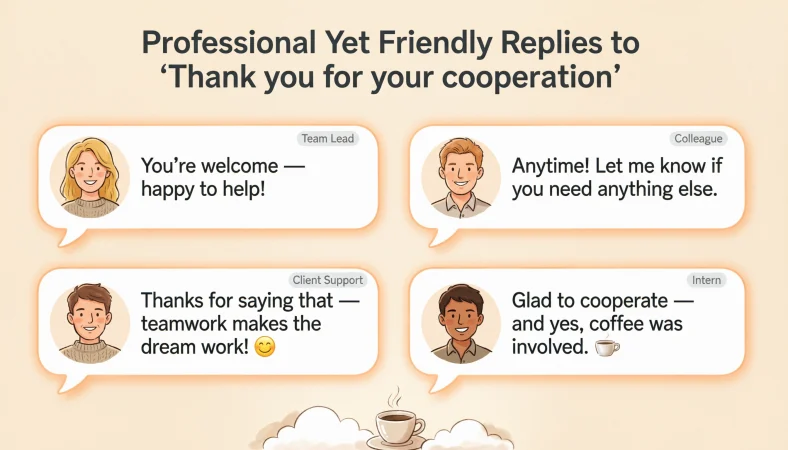
The best Thank you for your cooperation replies depend on the situation, but you can keep them warm, professional, or casual without sounding robotic. Pick a response that matches the relationship, workplace setting, and level of formality.
You’re welcome, Happy to help, My pleasure, Glad I could help, Anytime
Ever received a polite “Thank you for your cooperation” and suddenly wondered if replying “You’re welcome” sounds too basic? You’re definitely not alone. This phrase shows up everywhere, from work emails and customer service messages to group chats, business conversations, and everyday favors.
While it sounds formal, your response does not have to feel stiff or copy-pasted. The right reply can make you sound helpful, confident, friendly, or genuinely appreciative. That is why having a few natural Thank you for your cooperation replies ready can make communication much easier.
Whether you are responding to a manager, coworker, client, friend, or someone who simply appreciated your help, there is a perfect response for the moment. And yes, you can absolutely sound professional without making your text read like it came straight from a corporate handbook.
Professional Responses:
You’re very welcome.
Use this when replying to a client or colleague after helping with a task.
Meaning: It politely acknowledges their appreciation.
My pleasure.
Use this after assisting someone with a work-related request.
Meaning: It shows that helping was genuinely appreciated.
Happy to help.
Use this when you want a professional reply that still feels warm.
Meaning: It communicates willingness and friendliness.
Glad I could assist.
Use this after completing a professional request or assignment.
Meaning: It confirms that you were pleased to be useful.
Always happy to help.
Use this when maintaining a positive professional relationship.
Meaning: It shows continued willingness to assist.
You’re most welcome.
Use this for a polished response in emails or formal messages.
Meaning: It adds warmth while remaining professional.
Certainly, anytime.
Use this after helping a coworker with something important.
Meaning: It signals that future assistance is welcome.
It was my pleasure to assist.
Use this in a formal business email.
Meaning: It expresses courteous appreciation for the interaction.
No problem at all.
Use this when you want professionalism with a relaxed edge.
Meaning: It reassures the person that helping was not a burden.
Of course.
Use this for a short and polished workplace response.
Meaning: It communicates that your cooperation was natural.
Happy we could work this out.
Use this after resolving an issue with a colleague or client.
Meaning: It emphasizes successful collaboration.
Glad we could make it work.
Use this after coordinating schedules, plans, or responsibilities.
Meaning: It highlights cooperation and a positive outcome.
It was a pleasure working with you.
Use this after finishing a collaborative project.
Meaning: It expresses appreciation for the professional relationship.
Thank you for saying so.
Use this when someone specifically compliments your cooperation.
Meaning: It politely acknowledges their kind words.
I appreciate that.
Use this when you want to sound professional without overexplaining.
Meaning: It shows that their gratitude matters to you.
Friendly Responses:
You’re welcome!
Use this for a simple response to someone who appreciates your help.
Meaning: It is friendly, natural, and universally appropriate.
Anytime!
Use this with a coworker or friend you are comfortable helping again.
Meaning: It shows openness and friendliness.
No worries!
Use this for casual work chats or everyday favors.
Meaning: It reassures the person that everything is fine.
Of course!
Use this when helping someone felt completely natural.
Meaning: It keeps the response warm and effortless.
Glad to help!
Use this after helping someone solve a small problem.
Meaning: It shows genuine willingness to assist.
Happy to help!
Use this when you want your response to feel upbeat.
Meaning: It communicates positive energy and cooperation.
Absolutely!
Use this after someone thanks you for being flexible.
Meaning: It confirms that helping was no big deal.
No problem whatsoever!
Use this when you want to emphasize that the favor was easy.
Meaning: It makes the other person feel comfortable about asking.
You got it!
Use this in a relaxed workplace or casual setting.
Meaning: It shows confidence and friendliness.
Sure thing!
Use this after helping someone with a quick request.
Meaning: It keeps the interaction light and easygoing.
Glad we got it sorted!
Use this after resolving a shared problem.
Meaning: It celebrates a successful outcome.
Always!
Use this with someone you have a friendly relationship with.
Meaning: It suggests that you are happy to help again.
Of course, happy to help.
Use this when you want warmth without being overly casual.
Meaning: It combines politeness with genuine friendliness.
You’re all good!
Use this when someone seems worried about inconveniencing you.
Meaning: It reassures them that there is no issue.
Anytime, seriously!
Use this with a close coworker or friend.
Meaning: It adds extra warmth and sincerity.
Short And Simple Responses:
You’re welcome.
Use this when a quick response is all that is needed.
Meaning: It politely acknowledges the thanks.
My pleasure.
Use this for a concise professional response.
Meaning: It shows that you were happy to assist.
Anytime.
Use this in a casual message.
Meaning: It signals future willingness to help.
Of course.
Use this when you want a natural one-word-style response.
Meaning: It suggests helping was expected and easy.
Absolutely.
Use this after cooperating on a task.
Meaning: It confirms your positive attitude.
Certainly.
Use this in a more formal workplace exchange.
Meaning: It sounds respectful and composed.
No problem.
Use this when you want a relaxed reply.
Meaning: It tells the person their request was not troublesome.
Gladly.
Use this when you want something brief but warm.
Meaning: It expresses willingness and goodwill.
Pleasure.
Use this for an especially concise professional message.
Meaning: It is a shortened way of saying helping was enjoyable.
Sure.
Use this for a very casual response between familiar coworkers.
Meaning: It keeps the interaction simple.
Definitely.
Use this when you want to confirm positive cooperation.
Meaning: It shows confidence and willingness.
Always.
Use this when you are happy to assist again.
Meaning: It communicates dependable support.
Naturally.
Use this when helping someone felt obvious or expected.
Meaning: It suggests cooperation was easy and genuine.
Gladly!
Use this when you want your short reply to feel upbeat.
Meaning: It adds enthusiasm to your acknowledgment.
Absolutely, anytime.
Use this when you want a short but reassuring reply.
Meaning: It combines confidence with openness to future help.
Warm And Thoughtful Responses:
I’m glad I could make things a little easier.
Use this after helping someone through a stressful task.
Meaning: It shows empathy and genuine care.
It was really no trouble.
Use this when someone seems overly concerned about asking for help.
Meaning: It reassures them that their request was completely fine.
I’m happy everything worked out.
Use this after successfully completing a complicated task.
Meaning: It focuses on the positive result.
I’m glad we could make it happen.
Use this after cooperating on an important project.
Meaning: It celebrates teamwork.
I appreciate you saying that.
Use this when someone gives especially sincere thanks.
Meaning: It acknowledges their gratitude warmly.
It was worth it to get things sorted.
Use this after dealing with a difficult situation.
Meaning: It emphasizes the value of the outcome.
I’m just glad I could help.
Use this when you want to sound humble and sincere.
Meaning: It keeps the focus on helping rather than receiving praise.
Always happy to make things easier.
Use this after supporting a colleague or friend.
Meaning: It shows a caring and helpful attitude.
I’m glad we were able to work together on it.
Use this after successful collaboration.
Meaning: It recognizes shared effort.
You’re very kind to say that.
Use this when receiving especially thoughtful appreciation.
Meaning: It responds graciously to their kindness.
It genuinely was my pleasure.
Use this when you want to emphasize sincere appreciation.
Meaning: It communicates that your help came willingly.
I’m happy it helped.
Use this after someone confirms your assistance mattered.
Meaning: It shows satisfaction with the result.
I’m always glad when I can lend a hand.
Use this with someone you have a positive relationship with.
Meaning: It expresses a naturally helpful personality.
Thank you for appreciating it.
Use this when their gratitude feels especially meaningful.
Meaning: It acknowledges both the thanks and the relationship.
I’m glad we could get everything sorted smoothly.
Use this after completing a coordinated task.
Meaning: It highlights successful cooperation.
Funny Responses:
You’re welcome, my customer service training finally paid off.
Use this when joking with a coworker after helping them.
Meaning: It turns a formal interaction into playful humor.
Anytime, I accept payment in snacks.
Use this after doing a favor for a friend.
Meaning: It humorously suggests a snack-based reward.
No worries, my cooperation department is open 24/7.
Use this with someone who appreciates your repeated help.
Meaning: It playfully exaggerates your helpfulness.
Happy to assist, your satisfaction is my commission.
Use this in a playful workplace chat.
Meaning: It jokes about corporate-style service language.
You’re welcome, I’ll invoice you later.
Use this after a small favor among friends.
Meaning: It jokingly pretends your help came with a fee.
Anytime, I’m basically a professional helper now.
Use this after assisting with several tasks.
Meaning: It humorously exaggerates your role.
Glad to help, my heroic cape is currently at the cleaners.
Use this after solving a small crisis.
Meaning: It playfully presents your assistance as heroic.
No problem, crisis successfully downgraded to mild inconvenience.
Use this after fixing something stressful.
Meaning: It celebrates the situation becoming manageable.
You’re welcome, teamwork makes the dream work and all that.
Use this after completing a shared project.
Meaning: It adds a playful spin to a familiar phrase.
Happy to help, because apparently I have free time.
Use this with a close coworker or friend.
Meaning: It jokes about being available without sounding annoyed.
Of course, I live to serve. Dramatically.
Use this after a funny favor request.
Meaning: It playfully exaggerates your willingness to help.
Anytime, your appreciation has been successfully received.
Use this when joking about formal language.
Meaning: It mimics corporate wording for comic effect.
No problem, I survived.
Use this after helping with a complicated task.
Meaning: It humorously minimizes the effort involved.
Gladly, I’ll add it to my résumé.
Use this after doing something impressive for someone.
Meaning: It jokingly treats the favor like a career achievement.
You’re welcome, teamwork unlocked another achievement.
Use this after finishing a shared challenge.
Meaning: It compares successful cooperation to a game achievement.
Sarcastic Responses:
You’re welcome, I’ll try not to let the praise go to my head.
Use this when joking with someone who knows your personality.
Meaning: It playfully pretends their thanks is making you arrogant.
Happy to cooperate with the general public.
Use this after a humorous favor.
Meaning: It exaggerates the seriousness of ordinary cooperation.
Anything for the greater good.
Use this after helping with something minor.
Meaning: It humorously makes the favor sound heroic.
I’ll add that to my list of accomplishments.
Use this after completing an easy task.
Meaning: It jokingly exaggerates the importance of your help.
Don’t thank me all at once.
Use this when teasing someone after helping them.
Meaning: It playfully pretends you deserve enormous gratitude.
I expect a statue eventually.
Use this after solving a small problem.
Meaning: It humorously exaggerates your contribution.
Just doing my civic duty.
Use this after helping someone with a simple request.
Meaning: It makes ordinary assistance sound official.
Please hold the applause.
Use this when jokingly accepting praise.
Meaning: It adds playful confidence to your response.
I’ll accept this moment of recognition.
Use this with someone who enjoys sarcastic humor.
Meaning: It pretends their thanks is a major award ceremony.
My heroic work here is complete.
Use this after finishing a small favor.
Meaning: It humorously frames your assistance as an epic mission.
Another successful operation.
Use this after fixing something for someone.
Meaning: It turns a simple task into a dramatic mission.
I do what I can for humanity.
Use this after helping with something trivial.
Meaning: It playfully exaggerates your contribution.
The gratitude has been noted.
Use this in a jokingly formal tone.
Meaning: It mimics official language for comic effect.
I’ll pretend that wasn’t the hardest thing I’ve ever done.
Use this after helping with a mildly annoying task.
Meaning: It humorously exaggerates the effort.
Your gratitude has been accepted and filed accordingly.
Use this with someone who enjoys dry humor.
Meaning: It turns a simple thank-you into fake bureaucracy.
Cute Responses:
Aww, you’re welcome!
Use this when someone thanks you sweetly.
Meaning: It responds with warmth and affection.
Of course, anytime for you.
Use this with someone you genuinely care about.
Meaning: It shows that you are happy to help them specifically.
Always happy to help you.
Use this with a close friend or loved one.
Meaning: It communicates dependable affection.
You never have to thank me.
Use this when helping someone you are close to.
Meaning: It suggests your support comes naturally.
Anything for you.
Use this with someone special after doing them a favor.
Meaning: It conveys affection and willingness.
Glad I could make your day easier.
Use this after helping someone through a busy moment.
Meaning: It shows thoughtful care.
You’re worth helping.
Use this when offering reassurance to someone you care about.
Meaning: It makes your support feel personal.
Always, always.
Use this when you want extra warmth in a short message.
Meaning: It emphasizes dependable support.
Happy to be there for you.
Use this when helping someone emotionally or practically.
Meaning: It communicates genuine care.
You know I’ve got you.
Use this with a close friend or partner.
Meaning: It reassures them that they can count on you.
Glad I could be your helper for the day.
Use this after assisting with a small task.
Meaning: It keeps the mood playful and affectionate.
You’re welcome, lovely.
Use this with someone you share a warm relationship with.
Meaning: It adds a gentle affectionate touch.
Helping you is easy.
Use this after a favor for someone special.
Meaning: It implies that supporting them is effortless.
Always here when you need me.
Use this after providing meaningful support.
Meaning: It communicates emotional availability.
Anything to make things easier for you.
Use this when someone genuinely needed assistance.
Meaning: It expresses caring and consideration.
Confident Responses:
Absolutely, happy to help.
Use this when you want to sound capable and positive.
Meaning: It communicates confidence without arrogance.
Consider it handled.
Use this after successfully completing a task.
Meaning: It signals competence and reliability.
No problem, I’ve got it.
Use this when someone appreciates your assistance.
Meaning: It shows confidence in your ability.
Always happy to step up.
Use this after taking responsibility for a task.
Meaning: It communicates initiative and dependability.
Glad we got the job done.
Use this after completing an important assignment.
Meaning: It emphasizes results.
That’s what teamwork is for.
Use this after collaborating successfully.
Meaning: It highlights confidence in cooperation.
Happy to contribute.
Use this in a professional setting.
Meaning: It shows confidence while recognizing the team.
I’m glad I could make a difference.
Use this after helping achieve a meaningful result.
Meaning: It communicates satisfaction with your contribution.
Always ready to help when needed.
Use this in a workplace setting.
Meaning: It portrays you as dependable and proactive.
We got it done.
Use this after completing a challenging task together.
Meaning: It celebrates achievement and teamwork.
No sweat.
Use this in a casual professional conversation.
Meaning: It confidently suggests the task was manageable.
Handled and done.
Use this after resolving an issue quickly.
Meaning: It communicates efficiency and control.
Glad I could deliver.
Use this after completing an assignment successfully.
Meaning: It shows confidence in your performance.
Happy to take care of it.
Use this when someone thanks you for handling a responsibility.
Meaning: It reinforces reliability.
That’s teamwork at its best.
Use this after successful collaboration.
Meaning: It celebrates cooperation and shared success.
Casual And Chill Responses:
No worries!
Use this for relaxed messages with coworkers or friends.
Meaning: It reassures the person that everything is fine.
All good!
Use this when the favor caused no inconvenience.
Meaning: It keeps things light and easy.
You got it!
Use this after helping someone with a simple request.
Meaning: It shows relaxed confidence.
Anytime!
Use this with someone you are comfortable helping again.
Meaning: It communicates easygoing support.
No biggie!
Use this when the favor was small.
Meaning: It minimizes the effort in a friendly way.
For sure!
Use this when you want a casual but positive response.
Meaning: It confirms your willingness.
Totally!
Use this in a casual group chat or message.
Meaning: It keeps the tone upbeat and informal.
Of course!
Use this when you want a friendly, effortless reply.
Meaning: It suggests helping was natural.
Yep, anytime.
Use this for a relaxed text conversation.
Meaning: It shows openness to future help.
You’re good!
Use this when someone worries they inconvenienced you.
Meaning: It reassures them that there is no issue.
Easy peasy.
Use this after completing a simple task.
Meaning: It playfully says the favor was easy.
No stress.
Use this when someone is apologizing for needing help.
Meaning: It removes pressure from the situation.
Got you!
Use this with a friend or familiar coworker.
Meaning: It communicates quick support.
Sure thing!
Use this after helping someone with a small request.
Meaning: It sounds relaxed and willing.
We’re all good.
Use this when wrapping up a cooperative situation.
Meaning: It signals that everything ended positively.
Creative Responses:
Happy to be part of the solution.
Use this after helping solve a workplace problem.
Meaning: It frames your cooperation positively.
Teamwork for the win!
Use this after completing something together.
Meaning: It celebrates collaboration with energy.
Another problem successfully defeated.
Use this after fixing a difficult issue.
Meaning: It gives the situation a playful heroic twist.
Glad our teamwork came through.
Use this after a successful group effort.
Meaning: It highlights collective achievement.
Cooperation unlocked.
Use this after reaching an agreement.
Meaning: It makes successful communication sound like a game achievement.
Glad we made the magic happen.
Use this after completing a creative project.
Meaning: It celebrates the result enthusiastically.
Consider the mission accomplished.
Use this after finishing a challenging task.
Meaning: It gives the response a fun mission-style tone.
Teamwork did its thing.
Use this after successfully coordinating with someone.
Meaning: It casually celebrates collaboration.
Happy to help move things forward.
Use this in a professional conversation.
Meaning: It shows that your assistance supported progress.
One small favor, one giant leap for productivity.
Use this after helping at work.
Meaning: It humorously exaggerates your contribution.
Glad we turned teamwork into results.
Use this after a successful project.
Meaning: It connects cooperation with achievement.
Another smooth landing.
Use this after successfully navigating a tricky situation.
Meaning: It playfully suggests the challenge ended well.
Mission accepted, mission completed.
Use this after taking care of a request.
Meaning: It presents your cooperation as a successful mission.
Happy to keep the teamwork train moving.
Use this with coworkers during an ongoing project.
Meaning: It encourages continued collaboration.
Good teamwork deserves a little celebration.
Use this after achieving a shared goal.
Meaning: It appreciates the collective effort.
Polite Responses:
You’re very welcome.
Use this when responding respectfully to a customer or colleague.
Meaning: It is courteous and warm.
It was my pleasure.
Use this in a formal email or professional conversation.
Meaning: It communicates sincere willingness to help.
You’re most welcome.
Use this when you want a polished response.
Meaning: It adds warmth to a formal exchange.
I’m glad I could assist.
Use this after helping with an important request.
Meaning: It politely acknowledges their gratitude.
It was no trouble at all.
Use this when someone worries they caused inconvenience.
Meaning: It reassures them respectfully.
I’m happy to have helped.
Use this after providing assistance.
Meaning: It sounds gracious and sincere.
Thank you for your kind words.
Use this when their appreciation is especially thoughtful.
Meaning: It acknowledges their courtesy.
It was a pleasure to assist.
Use this in formal business communication.
Meaning: It conveys professionalism and goodwill.
I appreciate your thanks.
Use this when you want a refined response.
Meaning: It politely recognizes their appreciation.
I’m pleased we could resolve the matter.
Use this after handling an issue professionally.
Meaning: It focuses on the successful outcome.
I’m glad we could work together effectively.
Use this after completing a collaborative task.
Meaning: It recognizes productive teamwork.
You have my pleasure.
Use this only in a playful or highly stylized context.
Meaning: It attempts to add a creative twist to traditional courtesy.
It was certainly my pleasure.
Use this in a formal professional exchange.
Meaning: It adds extra sincerity.
I’m pleased I could be of assistance.
Use this for a polished business response.
Meaning: It emphasizes professional helpfulness.
Thank you for acknowledging my assistance.
Use this when you want a very formal response.
Meaning: It directly recognizes their appreciation.
Workplace Responses:
Happy to support the team.
Use this after helping coworkers complete a project.
Meaning: It emphasizes teamwork.
Glad I could contribute.
Use this after completing your part of a group task.
Meaning: It shows appreciation for being involved.
Always happy to collaborate.
Use this when responding to a colleague.
Meaning: It communicates enthusiasm for teamwork.
Glad we could get everything sorted.
Use this after resolving a workplace issue.
Meaning: It focuses on successful coordination.
It was great working together on this.
Use this after completing a shared assignment.
Meaning: It reinforces a positive working relationship.
Happy to do my part.
Use this when someone thanks you for contributing.
Meaning: It communicates responsibility and teamwork.
Glad I could help keep things moving.
Use this during a busy project.
Meaning: It highlights your practical contribution.
Always glad to pitch in.
Use this after helping teammates with extra work.
Meaning: It shows willingness to contribute.
I appreciate the teamwork.
Use this when the task required cooperation from both sides.
Meaning: It recognizes shared effort.
Glad we reached a good outcome.
Use this after resolving a professional matter.
Meaning: It focuses on results rather than individual effort.
Happy to work through it together.
Use this during a challenging project.
Meaning: It communicates collaboration and patience.
It was a team effort.
Use this when you want to share credit.
Meaning: It avoids taking all the praise.
Glad I could support the process.
Use this after helping with workplace procedures.
Meaning: It emphasizes practical assistance.
Looking forward to working together again.
Use this after a successful collaboration.
Meaning: It expresses positive expectations for future teamwork.
Always happy to contribute where I can.
Use this in a professional relationship.
Meaning: It presents you as cooperative and dependable.
Email-Friendly Responses:
You’re very welcome. I’m glad I could assist.
Use this at the end of a professional email.
Meaning: It sounds polished and courteous.
My pleasure. I’m glad we could resolve this.
Use this after handling a customer or colleague request.
Meaning: It combines courtesy with a positive outcome.
Happy to help, and I’m glad everything worked out.
Use this when closing a workplace email thread.
Meaning: It sounds warm while remaining professional.
You’re most welcome. Please feel free to reach out anytime.
Use this when maintaining a professional relationship.
Meaning: It invites future communication.
It was my pleasure to assist.
Use this as a concise formal email reply.
Meaning: It communicates professionalism and goodwill.
Glad I could be of assistance.
Use this after resolving a formal request.
Meaning: It sounds respectful and service-oriented.
Happy to support the process.
Use this when discussing an ongoing professional matter.
Meaning: It shows willingness to contribute.
I’m pleased we were able to work this out.
Use this after resolving an issue by email.
Meaning: It emphasizes a successful resolution.
Thank you for your kind acknowledgment.
Use this when someone sends formal appreciation.
Meaning: It responds respectfully to their recognition.
It was a pleasure working with you.
Use this after completing a project or request.
Meaning: It strengthens professional goodwill.
I appreciate your message. Glad I could help.
Use this when responding to a thoughtful thank-you email.
Meaning: It acknowledges both their message and the opportunity to help.
Happy to have contributed.
Use this after assisting with a team project.
Meaning: It shows humility and professionalism.
Certainly, and thank you for the kind words.
Use this in a polished business exchange.
Meaning: It combines confirmation with appreciation.
You’re welcome, and I’m glad we could make progress.
Use this after moving a project forward.
Meaning: It focuses on productive cooperation.
Always happy to assist.
Use this as a short professional email closing.
Meaning: It communicates dependable support.
Customer Service Responses:
It was our pleasure to assist you.
Use this after helping a customer resolve an issue.
Meaning: It communicates professional courtesy.
You’re very welcome. We’re glad we could help.
Use this after a successful customer interaction.
Meaning: It reassures the customer that their satisfaction matters.
Happy to assist anytime.
Use this when closing a customer service conversation.
Meaning: It leaves the door open for future support.
We’re glad we could make things easier.
Use this after resolving a customer’s concern.
Meaning: It shows empathy and care.
Thank you for your kind words.
Use this when a customer expresses appreciation.
Meaning: It acknowledges their positive feedback.
It was our pleasure helping you today.
Use this at the end of a service interaction.
Meaning: It provides a warm professional closing.
We’re always happy to help.
Use this when emphasizing ongoing support.
Meaning: It communicates customer-focused service.
Glad we could get everything sorted for you.
Use this after resolving a problem.
Meaning: It reassures the customer that the matter was successfully handled.
You’re most welcome.
Use this for a polished customer service response.
Meaning: It sounds courteous and respectful.
We appreciate your patience and kind words.
Use this after a longer support process.
Meaning: It acknowledges both cooperation and gratitude.
Happy to have been of assistance.
Use this in formal customer communication.
Meaning: It sounds professional and considerate.
We’re pleased we could assist.
Use this after completing a customer request.
Meaning: It communicates satisfaction with the outcome.
Anytime, we’re here to help.
Use this when encouraging customers to contact support again.
Meaning: It offers reassurance and availability.
Glad we could provide a solution.
Use this after resolving a customer’s concern.
Meaning: It focuses on the result.
Thank you for working with us.
Use this after a cooperative customer interaction.
Meaning: It recognizes their participation in the process.
Humble Responses:
I’m just glad I could help.
Use this when someone gives you more praise than expected.
Meaning: It keeps the focus on being useful rather than receiving credit.
It was nothing, really.
Use this after a small favor.
Meaning: It humbly minimizes the effort.
Happy to do my part.
Use this after contributing to a shared task.
Meaning: It shows responsibility without seeking praise.
No need to thank me.
Use this with someone you are comfortable helping.
Meaning: It suggests the favor was natural.
I’m glad it worked out.
Use this when the result matters more than your contribution.
Meaning: It focuses on the successful outcome.
Just doing what I could.
Use this after helping someone through a difficult situation.
Meaning: It communicates humility.
I’m happy it made a difference.
Use this after receiving sincere appreciation.
Meaning: It values the positive result over recognition.
It was a team effort.
Use this when others also contributed.
Meaning: It shares credit generously.
We all played a part.
Use this after a group success.
Meaning: It recognizes collective effort.
Glad I could pitch in.
Use this after helping a team or friend.
Meaning: It presents your contribution modestly.
I was happy to help.
Use this when you want simple sincerity.
Meaning: It shows that assistance was given willingly.
Just happy things worked out.
Use this after resolving a stressful situation.
Meaning: It focuses on the outcome rather than yourself.
Nothing to thank me for.
Use this when the favor was easy.
Meaning: It reassures the person that they owe you nothing.
I’m glad I could be useful.
Use this after helping someone complete something important.
Meaning: It expresses satisfaction without boasting.
That’s what I’m here for.
Use this in a workplace or supportive relationship.
Meaning: It communicates confidence and humility at once.
Clever Responses:
Cooperation looks good on us.
Use this after successfully working together.
Meaning: It gives teamwork a clever, upbeat twist.
Another successful collaboration added to the record.
Use this after completing a shared task.
Meaning: It playfully celebrates the partnership.
Looks like teamwork won again.
Use this after solving a problem together.
Meaning: It gives credit to cooperation.
Glad we turned coordination into results.
Use this after completing a complicated project.
Meaning: It highlights effective teamwork.
Proof that communication actually works.
Use this after resolving a misunderstanding.
Meaning: It humorously celebrates successful communication.
A little cooperation goes a long way.
Use this after reaching an agreement.
Meaning: It highlights the value of working together.
We made a pretty good team there.
Use this after completing something successfully.
Meaning: It compliments the collaboration.
Consider that task officially conquered.
Use this after overcoming a challenge.
Meaning: It adds confidence and playful energy.
Teamwork deserves the credit here.
Use this when several people contributed.
Meaning: It shares recognition fairly.
Glad we found the winning formula.
Use this after figuring out a solution.
Meaning: It celebrates successful problem-solving.
Cooperation level: excellent.
Use this as a playful response in a group chat.
Meaning: It jokingly rates the teamwork highly.
Another day, another successful mission.
Use this after completing a busy work task.
Meaning: It makes ordinary success sound adventurous.
Communication, coordination, completion.
Use this after wrapping up a project.
Meaning: It neatly summarizes successful teamwork.
We understood the assignment.
Use this after completing something particularly well.
Meaning: It uses modern slang to celebrate success.
Teamwork understood the assignment too.
Use this after a smooth collaborative effort.
Meaning: It gives the phrase a playful social-media twist.
Sweet Responses:
You’re very welcome, and thank you for appreciating it.
Use this when someone sincerely recognizes your effort.
Meaning: It returns their kindness warmly.
I’m happy I could be there for you.
Use this after supporting someone personally.
Meaning: It expresses genuine care.
It means a lot that you noticed.
Use this when someone appreciates a significant effort.
Meaning: It shows that their gratitude matters.
I’m glad I could make things easier.
Use this after helping someone during a busy day.
Meaning: It expresses thoughtful support.
Helping you was genuinely a pleasure.
Use this when you want to sound sincere and warm.
Meaning: It communicates heartfelt willingness.
I’m always glad to lend a hand.
Use this with someone you care about.
Meaning: It shows dependable kindness.
You deserve all the help you need.
Use this when reassuring someone who feels guilty about asking.
Meaning: It makes your support feel compassionate.
I’m just happy I could help in some small way.
Use this after doing something meaningful.
Meaning: It expresses humility and care.
It was nothing compared with seeing things work out.
Use this after helping someone reach a goal.
Meaning: It values their success more than your effort.
I’m really glad it helped.
Use this after someone confirms your assistance mattered.
Meaning: It communicates sincere happiness.
Always happy to make your day a little easier.
Use this with someone close to you.
Meaning: It expresses affection through helpfulness.
You never have to feel bad about asking for help.
Use this when someone apologizes for needing assistance.
Meaning: It provides reassurance and emotional support.
I’m glad we could get through it together.
Use this after overcoming a difficult situation.
Meaning: It emphasizes connection and teamwork.
Your appreciation is more than enough.
Use this when someone insists on thanking you repeatedly.
Meaning: It shows that gratitude itself is meaningful.
I’m happy I could show up when it mattered.
Use this after supporting someone during an important moment.
Meaning: It communicates loyalty and care.
Formal Responses:
You are most welcome.
Use this in formal correspondence.
Meaning: It is a polished acknowledgment of gratitude.
It was my pleasure to assist.
Use this when responding to a formal thank-you.
Meaning: It communicates courtesy and professionalism.
I am pleased to have been of assistance.
Use this in business or institutional communication.
Meaning: It emphasizes professional service.
I am glad we were able to resolve the matter.
Use this after handling a formal request.
Meaning: It focuses on the successful outcome.
Thank you for your acknowledgment.
Use this in a highly formal exchange.
Meaning: It respectfully recognizes their appreciation.
It was a pleasure working with you.
Use this after a professional collaboration.
Meaning: It expresses positive regard.
I am happy to have contributed.
Use this after assisting with a project.
Meaning: It communicates professional humility.
I appreciate your kind words.
Use this when receiving formal appreciation.
Meaning: It politely acknowledges their message.
I am pleased that we could assist.
Use this in organizational or customer correspondence.
Meaning: It communicates satisfaction with the assistance provided.
Your appreciation is sincerely valued.
Use this when responding to formal recognition.
Meaning: It shows that their gratitude matters.
We are pleased to have supported you.
Use this when representing a team or organization.
Meaning: It communicates service and professionalism.
We appreciate your cooperation as well.
Use this when both parties contributed to a successful outcome.
Meaning: It returns the acknowledgment respectfully.
It was a privilege to assist.
Use this for especially formal or important circumstances.
Meaning: It conveys elevated courtesy.
I am grateful for your acknowledgment.
Use this when someone formally recognizes your assistance.
Meaning: It expresses appreciation in a refined way.
We remain happy to assist whenever required.
Use this in formal business communication.
Meaning: It signals continued availability.
Responses For A Boss Or Manager:
You’re very welcome. Happy to support the team.
Use this after helping your manager with a work task.
Meaning: It sounds professional and team-oriented.
Of course, glad I could help.
Use this after completing an assignment.
Meaning: It is respectful without sounding overly formal.
Always happy to contribute.
Use this when your manager thanks you for extra effort.
Meaning: It shows initiative and professionalism.
My pleasure. Glad we got it sorted.
Use this after resolving an issue.
Meaning: It acknowledges their thanks while focusing on the result.
Happy to take care of it.
Use this after handling a responsibility.
Meaning: It communicates reliability.
Glad I could support the project.
Use this after contributing to a team goal.
Meaning: It recognizes your role while keeping the tone humble.
Absolutely, happy to help.
Use this when your manager thanks you for being flexible.
Meaning: It sounds confident and cooperative.
I’m glad I could contribute.
Use this after completing an important task.
Meaning: It communicates professionalism without boasting.
Anytime, I’m happy to assist.
Use this when maintaining a positive relationship with your manager.
Meaning: It signals future willingness to help.
It was my pleasure to help move things forward.
Use this after supporting a project.
Meaning: It emphasizes progress and teamwork.
Glad everything came together smoothly.
Use this after a successful deadline or event.
Meaning: It focuses on the positive outcome.
Happy to do my part.
Use this after receiving appreciation for your contribution.
Meaning: It shows responsibility and humility.
I appreciate the acknowledgment.
Use this after receiving professional praise.
Meaning: It responds respectfully to recognition.
Glad we could get it done.
Use this after completing a shared task.
Meaning: It celebrates achievement without overclaiming credit.
Always happy to support where needed.
Use this when your manager values flexibility.
Meaning: It presents you as dependable and cooperative.
Responses For A Coworker:
Anytime!
Use this after helping a coworker with a quick task.
Meaning: It shows friendly willingness.
Happy to help!
Use this after solving a coworker’s problem.
Meaning: It keeps the workplace relationship warm.
No worries at all.
Use this when a coworker apologizes for asking for help.
Meaning: It reassures them that the request was fine.
We’ve got each other!
Use this after helping one another at work.
Meaning: It celebrates mutual support.
Glad we could get it sorted.
Use this after solving a shared issue.
Meaning: It focuses on teamwork.
Of course, that’s what teammates are for.
Use this when a coworker sincerely thanks you.
Meaning: It reinforces collaboration.
Anytime, teammate.
Use this in a friendly office chat.
Meaning: It adds warmth and camaraderie.
Happy to pitch in.
Use this after helping with extra work.
Meaning: It shows willingness to contribute.
No problem, we’re all in this together.
Use this during a busy project.
Meaning: It emphasizes shared responsibility.
Glad I could take something off your plate.
Use this after helping with a heavy workload.
Meaning: It shows practical consideration.
You know I’ve got your back.
Use this with a trusted coworker.
Meaning: It communicates dependable support.
Teamwork for the win!
Use this after completing a task together.
Meaning: It adds playful energy to collaboration.
Happy we could make it work.
Use this after coordinating something complicated.
Meaning: It celebrates flexibility and cooperation.
We made a pretty solid team there.
Use this after a successful assignment.
Meaning: It compliments the partnership.
Anytime, just send it my way.
Use this when offering continued support.
Meaning: It shows openness to helping again.
Responses When You Want To Sound Extra Friendly:
Absolutely, anytime you need me!
Use this with a friend or trusted coworker.
Meaning: It communicates enthusiastic support.
You know I’m always happy to help!
Use this with someone you have a close relationship with.
Meaning: It makes your willingness feel personal.
Of course, no need to thank me twice!
Use this after repeated appreciation.
Meaning: It keeps the exchange light and friendly.
Always glad to lend a hand!
Use this after helping someone through a busy moment.
Meaning: It shows generosity.
I’m just glad I could help!
Use this when someone gives you sincere thanks.
Meaning: It sounds humble and genuine.
You’re totally welcome!
Use this in an upbeat casual conversation.
Meaning: It adds extra friendliness.
Anytime, seriously!
Use this when you want to reassure someone.
Meaning: It emphasizes genuine willingness.
Happy to make things a little easier!
Use this after helping with a stressful task.
Meaning: It shows consideration.
You’ve got nothing to worry about!
Use this when someone feels guilty about asking for help.
Meaning: It provides friendly reassurance.
It’s all good, really!
Use this after a minor inconvenience.
Meaning: It tells them there are no hard feelings.
Glad we could help each other out!
Use this when both people contributed.
Meaning: It recognizes mutual support.
Always in your corner!
Use this with someone close to you.
Meaning: It communicates loyalty and encouragement.
Happy to be there when needed!
Use this after offering support.
Meaning: It shows reliability and warmth.
No stress, we’re good!
Use this when someone worries they caused trouble.
Meaning: It reassures them in a casual way.
You’re welcome, anytime and anywhere!
Use this with a close friend in a playful mood.
Meaning: It exaggerates your availability for fun.
Playful Responses:
You’re welcome, superstar.
Use this when joking with a friend after helping them.
Meaning: It adds playful affection.
Teamwork level: legendary.
Use this after completing something successfully.
Meaning: It humorously celebrates your cooperation.
Mission accomplished, thank-you accepted.
Use this after completing a favor.
Meaning: It turns the interaction into a playful mission.
Another victory for teamwork.
Use this after solving something together.
Meaning: It celebrates collaboration.
Cooperation points have been awarded.
Use this in a playful group chat.
Meaning: It makes appreciation sound like a game reward.
I’ll be here all week.
Use this after making a joke while helping someone.
Meaning: It adds a classic playful punchline.
You’re welcome, I accept high-fives as payment.
Use this after a small favor.
Meaning: It turns gratitude into a fun exchange.
Your gratitude has been received loud and clear.
Use this when teasing someone about their formal thank-you.
Meaning: It humorously mirrors formal wording.
Glad to be of service, citizen.
Use this with a friend who enjoys absurd humor.
Meaning: It playfully exaggerates your role.
Another day, another heroic act.
Use this after helping with something minor.
Meaning: It jokingly portrays the favor as heroic.
Teamwork has entered the chat.
Use this after successfully collaborating.
Meaning: It gives the moment a social-media-style twist.
Cooperation mode: activated.
Use this before or after helping someone.
Meaning: It playfully presents yourself as ready to assist.
I regret nothing.
Use this after doing a favor you were happy to do.
Meaning: It adds humorous confidence.
The favor has been completed. Please enjoy your day.
Use this after helping with a funny request.
Meaning: It mimics an overly formal service announcement.
You’re welcome, fellow human.
Use this with someone who enjoys weird humor.
Meaning: It deliberately makes a normal exchange absurd.
Responses That Encourage Future Cooperation:
Happy to work together again anytime.
Use this after successful collaboration.
Meaning: It encourages future teamwork.
Looking forward to our next project.
Use this after completing a professional task.
Meaning: It expresses confidence in future cooperation.
Always glad to collaborate.
Use this when building a professional relationship.
Meaning: It signals enthusiasm for future teamwork.
Let’s keep the good teamwork going.
Use this after achieving a shared goal.
Meaning: It encourages continued cooperation.
I’m sure we’ll make a great team again.
Use this after a successful project.
Meaning: It expresses confidence in future collaboration.
Happy to work together whenever needed.
Use this in a professional conversation.
Meaning: It communicates continued availability.
Here’s to more successful teamwork.
Use this after completing a project.
Meaning: It celebrates the current success and future possibilities.
Always happy to collaborate with you.
Use this after a positive working experience.
Meaning: It strengthens the professional relationship.
Looking forward to the next one.
Use this as a short follow-up after completing a shared task.
Meaning: It shows enthusiasm for future opportunities.
Glad we got a chance to work together.
Use this after a one-time collaboration.
Meaning: It expresses appreciation for the experience.
Let’s do it again sometime.
Use this in a casual professional setting.
Meaning: It keeps the door open for future teamwork.
Same team, next challenge.
Use this after successfully completing a difficult task.
Meaning: It creates an upbeat sense of partnership.
On to the next win.
Use this after reaching a shared goal.
Meaning: It encourages continued progress.
More teamwork wins ahead.
Use this after a successful collaboration.
Meaning: It expresses optimism about future cooperation.
Looking forward to working together again.
Use this as a polished closing message.
Meaning: It leaves the relationship on a positive note.
Responses When You Want To Return The Appreciation:
Thank you as well for your cooperation.
Use this when both sides contributed to a successful outcome.
Meaning: It returns their appreciation professionally.
I appreciate your cooperation too.
Use this after working through a complicated process together.
Meaning: It recognizes their contribution.
Thank you for working with me on this.
Use this after completing a shared task.
Meaning: It expresses mutual appreciation.
I appreciate your help as well.
Use this when the other person also supported the process.
Meaning: It acknowledges their contribution.
The feeling is mutual.
Use this when both people appreciated working together.
Meaning: It warmly returns their positive sentiment.
Likewise, thank you for making it easy.
Use this after smooth cooperation.
Meaning: It recognizes their helpful attitude.
Thank you too, it was a team effort.
Use this after completing a group task.
Meaning: It shares appreciation and credit.
I appreciate the teamwork on your end too.
Use this after a successful collaboration.
Meaning: It directly acknowledges their effort.
Thank you for being so cooperative as well.
Use this when the other person made the process easier.
Meaning: It returns the compliment.
I’m grateful we could work through it together.
Use this after resolving a difficult matter.
Meaning: It expresses appreciation for mutual effort.
Your cooperation made a big difference too.
Use this after reaching a successful result.
Meaning: It highlights their positive contribution.
Thanks for making the process so smooth.
Use this after a well-coordinated task.
Meaning: It gives specific recognition.
We both made it happen.
Use this after achieving something together.
Meaning: It emphasizes shared success.
Couldn’t have done it as smoothly without you.
Use this after meaningful collaboration.
Meaning: It gives genuine credit to the other person.
Thank you right back.
Use this in a casual conversation.
Meaning: It returns their gratitude in a friendly way.
FAQs:
What does “Thank you for your cooperation” mean?
It is a polite way of thanking someone for helping, following instructions, being flexible, or working with others toward a goal.
What is the best reply to “Thank you for your cooperation”?
“You’re welcome,” “My pleasure,” “Happy to help,” and “Glad I could assist” are safe choices for most situations.
Is “You’re welcome” too basic?
Not at all. “You’re welcome” is perfectly natural, especially when you want a short and straightforward response.
What is a more professional reply?
Try “My pleasure,” “Glad I could assist,” “I’m pleased we could resolve the matter,” or “Happy to support the team.”
What is a casual reply?
For friends and relaxed workplace chats, try “No worries,” “Anytime,” “Of course,” “You got it,” or “Happy to help.”
Can I respond with humor?
Absolutely, if the relationship allows it. Something like “Teamwork for the win!” can make a formal-sounding exchange feel more relaxed.
What if I do not actually want to help again?
Keep your reply polite without promising future assistance. “You’re welcome” or “Glad I could assist” works well.
Is “my pleasure” formal?
It can be. It works particularly well in professional, customer service, and polite everyday conversations.
Can I say “No problem” at work?
Yes, especially in casual workplace communication. For formal emails, “You’re welcome” or “Happy to help” may sound more polished.
What should I say to a manager?
Try “You’re very welcome,” “Happy to support the team,” “Glad I could contribute,” or “Always happy to assist.”
What should I say to a coworker?
Keep it natural with “Anytime,” “Happy to help,” “No worries,” “Of course,” or “Glad we got it sorted.”
What should I say to a customer?
Use a courteous response such as “You’re very welcome,” “We’re glad we could help,” or “It was our pleasure to assist you.”
Can “thank you for your cooperation” sound passive-aggressive?
Sometimes, depending on the wording and context. In most professional situations, however, it is simply a formal expression of appreciation.
How can I sound warm without being too casual?
Try “I’m glad I could help,” “It was my pleasure,” or “Happy to have been of assistance.”
Should I say “Thank you too”?
You can if the other person also contributed to the situation. “Thank you as well for your cooperation” is especially appropriate when the effort was mutual.
Conclusion:
A good response to “Thank you for your cooperation” does not need to sound stiff, complicated, or overly polished. The best reply simply matches the moment. Use “You’re welcome” when you want something classic, “Happy to help” when you want warmth, or “My pleasure” when professionalism matters.
If you are chatting with a coworker or friend, you can loosen things up with “Anytime,” “No worries,” or even a playful “Teamwork for the win!” Your response can subtly shape how people remember the interaction, so choose one that feels natural to you. Save this list for your next email, text, or workplace conversation, and never get stuck searching for the perfect reply again!







1 thought on “150+ Thank You For Your Cooperation Replies That Are Polite, Professional & Natural For 2026”