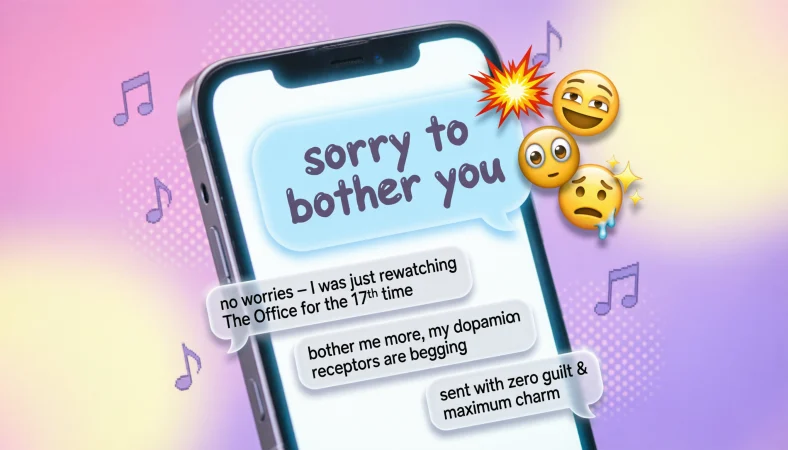
When someone says “sorry to bother you,” they are usually being polite, apologetic, or slightly nervous about interrupting you. A good reply can instantly make them feel welcome instead of awkward.
Top alternatives: You’re not bothering me, No worries at all, Not a bother, You’re totally fine, What’s up?
“Sorry to bother you” is one of those little phrases that can instantly make a conversation feel awkward, even when nobody has done anything wrong. Someone might text it before asking a favor, say it at work when they need help, send it in a DM, or use it when approaching a crush because they are suddenly overthinking every syllable.
The good news? Your response can completely change the mood. You can reassure them with something warm, make them laugh with a funny comeback, keep things professional, or even turn the moment into a little flirting.
The best responses to “sorry to bother you” make the other person feel comfortable instead of guilty for reaching out. Whether you want to sound friendly, clever, confident, or playful, there is a perfect reply for practically every situation.
Funny Responses
You’re not bothering me, my inbox was getting lonely.
Example: Use this when a friend apologizes for texting unexpectedly.
Meaning: It humorously reassures them that their message is welcome.
Bother away, I charge by the hour.
Example: Use this with a friend who frequently asks for favors.
Meaning: It turns the apology into playful banter.
Too late, you’ve already bothered me successfully.
Example: Use this when joking with someone you know well.
Meaning: It playfully exaggerates the situation without being genuinely annoyed.
Relax, I survived the interruption.
Example: Use this after someone apologizes for interrupting your work.
Meaning: It makes their concern feel much less serious.
You call it bothering, I call it entertainment.
Example: Use this with someone whose messages you enjoy.
Meaning: It suggests you actually like hearing from them.
Bothering me? I thought we were having a moment.
Example: Use this when a friend feels awkward about starting a conversation.
Meaning: It reassures them with a silly twist.
No bother detected. System functioning normally.
Example: Use this as a nerdy joke in a casual chat.
Meaning: It humorously confirms that everything is fine.
You’re good. My patience subscription is still active.
Example: Use this when someone worries they are taking too much of your time.
Meaning: It playfully says you are still happy to listen.
Please continue your disturbance.
Example: Use this with a close friend who has a funny personality.
Meaning: It jokingly gives them permission to keep talking.
Bother me? That’s literally what friends are for.
Example: Use this when a friend apologizes for needing help.
Meaning: It reminds them that friendship includes being there for each other.
I’ve been waiting for someone to bother me.
Example: Use this when you want to make someone laugh.
Meaning: It turns their apology into a playful compliment.
You’re officially forgiven for this terrible crime.
Example: Use this after a harmless interruption.
Meaning: It uses exaggerated humor to show there is no real problem.
No worries, I’ve handled worse. Like Monday.
Example: Use this during a casual conversation at the start of the week.
Meaning: It makes the situation funny while reassuring them.
Bothering me would require considerably more effort.
Example: Use this with someone who is worried about being annoying.
Meaning: It confidently tells them their message is not a problem.
You’re fine. My dramatic sigh was completely voluntary.
Example: Use this when teasing someone after they apologize.
Meaning: It keeps the interaction playful and friendly.
Polite Responses
You’re not bothering me at all.
Example: Use this when someone politely asks for your attention.
Meaning: It gives simple reassurance.
Not at all. How can I help?
Example: Use this in a respectful conversation.
Meaning: It welcomes the person and invites them to explain what they need.
No need to apologize.
Example: Use this when someone seems unnecessarily worried.
Meaning: It tells them their interruption is completely acceptable.
You’re absolutely fine.
Example: Use this when someone approaches you hesitantly.
Meaning: It reassures them in a friendly way.
It’s no trouble at all.
Example: Use this in a polite or semi-formal exchange.
Meaning: It communicates that their request is not an inconvenience.
Please don’t worry about it.
Example: Use this when someone apologizes for taking your time.
Meaning: It helps them feel more comfortable.
You’re welcome to ask.
Example: Use this when someone seems hesitant about making a request.
Meaning: It gives them permission to continue.
Not a bother whatsoever.
Example: Use this in a professional or polite setting.
Meaning: It clearly says their presence is welcome.
No problem, I’m happy to help.
Example: Use this when someone needs assistance.
Meaning: It combines reassurance with willingness to help.
There’s absolutely no need to apologize.
Example: Use this when someone seems overly apologetic.
Meaning: It removes unnecessary guilt from the interaction.
It’s perfectly fine. What do you need?
Example: Use this when someone approaches you unexpectedly.
Meaning: It reassures them while moving the conversation forward.
You’re not interrupting anything important.
Example: Use this when someone worries about your schedule.
Meaning: It makes them feel less intrusive.
No worries, please go ahead.
Example: Use this when someone wants to ask something.
Meaning: It gives them a clear invitation to continue.
Of course, you’re fine.
Example: Use this with a friend or acquaintance.
Meaning: It keeps the response warm and simple.
Don’t apologize for reaching out.
Example: Use this when someone contacts you after a long time.
Meaning: It encourages open communication.
Flirty Responses
You could never bother me.
Example: Use this with someone you secretly like.
Meaning: It hints that their attention is always welcome.
You’re not bothering me, you’re distracting me. There’s a difference.
Example: Use this when flirting through text.
Meaning: It playfully suggests they have an effect on you.
I was actually hoping you’d bother me.
Example: Use this when a crush apologizes for texting.
Meaning: It openly suggests you wanted to hear from them.
If it’s you, I don’t mind the interruption.
Example: Use this with someone special.
Meaning: It gives the reassurance a romantic edge.
Bother me anytime. I might even enjoy it.
Example: Use this for confident flirting.
Meaning: It playfully invites more attention.
You’re my favorite kind of interruption.
Example: Use this when someone you like worries about distracting you.
Meaning: It turns their interruption into a compliment.
I’d be more concerned if you stopped bothering me.
Example: Use this with a flirtatious connection.
Meaning: It suggests you enjoy their attention.
You’re never a bother. Especially not to me.
Example: Use this when you want to sound sweet and romantic.
Meaning: It makes the person feel especially welcome.
Honestly, I like hearing from you.
Example: Use this when someone hesitates before messaging you.
Meaning: It directly reassures them while revealing interest.
You can bother me whenever you want.
Example: Use this with someone you want to encourage to text more.
Meaning: It is an open invitation with a subtle flirtatious tone.
If this is your idea of bothering me, keep going.
Example: Use this during playful flirting.
Meaning: It signals that their attention is enjoyable.
You’re making it very hard to call this a bother.
Example: Use this when the conversation has romantic chemistry.
Meaning: It suggests you are enjoying the interaction.
I was wondering when you’d text me.
Example: Use this when a crush finally reaches out.
Meaning: It subtly reveals that you were waiting for them.
You’re allowed to interrupt me anytime.
Example: Use this with someone you feel comfortable flirting with.
Meaning: It communicates that their attention is welcome.
Trust me, I’d notice if you were actually bothering me.
Example: Use this with confident romantic banter.
Meaning: It reassures them while showing interest.
Cute Responses
Aww, you’re not bothering me.
Example: Use this when someone sounds shy about contacting you.
Meaning: It gives them gentle reassurance.
You’re never a bother, silly.
Example: Use this with a close friend or partner.
Meaning: It affectionately dismisses their concern.
Nope, you’re totally welcome here.
Example: Use this in a warm text conversation.
Meaning: It makes the person feel invited.
You could never annoy me that easily.
Example: Use this with someone you care about.
Meaning: It reassures them that their presence matters.
Not even a little bit.
Example: Use this as a short affectionate response.
Meaning: It strongly reassures them.
You’re okay, promise.
Example: Use this when someone seems nervous.
Meaning: It gives them emotional comfort.
Come on, you know you’re not a bother.
Example: Use this with a close friend.
Meaning: It reminds them that they are valued.
I’m always happy to hear from you.
Example: Use this when someone hesitates before texting.
Meaning: It warmly encourages future communication.
You’re allowed to pop into my messages anytime.
Example: Use this with a friend or crush.
Meaning: It makes reaching out feel welcome.
No apology needed, cutie.
Example: Use this with someone you have an affectionate relationship with.
Meaning: It adds a soft, playful touch.
You’re good, promise.
Example: Use this when someone feels awkward about interrupting.
Meaning: It offers simple reassurance.
You could never be too much.
Example: Use this when someone worries they are overwhelming you.
Meaning: It communicates acceptance.
Your message actually made me smile.
Example: Use this when you genuinely enjoyed hearing from them.
Meaning: It turns their apology into positive feedback.
You’re welcome anytime.
Example: Use this with someone you want to feel comfortable around you.
Meaning: It creates a warm sense of openness.
No bothering detected, only good vibes.
Example: Use this for playful texting.
Meaning: It keeps the mood cheerful and reassuring.
Sarcastic Responses
Wow, how dare you interrupt my extremely important scrolling session.
Example: Use this with a friend who apologizes for texting.
Meaning: It jokingly exaggerates how busy you were.
I’ll allow it this time.
Example: Use this with someone you tease regularly.
Meaning: It playfully pretends you are granting permission.
Your disturbance has been accepted.
Example: Use this for dry humor.
Meaning: It sarcastically makes the interruption sound official.
I’ll try to recover from this devastating inconvenience.
Example: Use this when the interruption is obviously harmless.
Meaning: It exaggerates the situation for comedic effect.
Please submit all future disturbances in writing.
Example: Use this with a friend who likes sarcastic humor.
Meaning: It turns a casual apology into a fake bureaucratic procedure.
I have survived worse interruptions.
Example: Use this when teasing someone.
Meaning: It humorously suggests their message is barely an inconvenience.
Your apology has been reviewed and rejected.
Example: Use this for playful banter.
Meaning: It jokingly says there is nothing to apologize for.
I suppose I can forgive you.
Example: Use this when someone makes a harmless request.
Meaning: It creates mock drama.
Fine, I’ll tolerate your presence.
Example: Use this with a close friend.
Meaning: It affectionately disguises acceptance as annoyance.
The audacity of you to think you’re bothering me.
Example: Use this with someone who is genuinely worried.
Meaning: It sarcastically reassures them.
My day is ruined. Absolutely ruined.
Example: Use this when you want exaggerated humor.
Meaning: It makes it obvious that their interruption is not serious.
I’ll add this to my list of unbearable inconveniences.
Example: Use this with a playful friend.
Meaning: It humorously minimizes their interruption.
Permission to bother me has been granted.
Example: Use this as a joking response to an apology.
Meaning: It playfully welcomes them.
You interrupted me at a very serious moment. I was doing nothing.
Example: Use this when someone texts while you are relaxing.
Meaning: It uses self-deprecating humor to make them laugh.
Congratulations, you have officially bothered me for approximately three seconds.
Example: Use this in a playful text exchange.
Meaning: It makes their apology seem unnecessary.
Professional Responses
Not at all. How may I assist you?
Example: Use when a colleague or client apologizes before asking for help.
Meaning: It sounds courteous and professional.
You’re not bothering me. Please go ahead.
Example: Use when someone needs your attention at work.
Meaning: It welcomes their request.
No problem at all. What can I help you with?
Example: Use in workplace communication.
Meaning: It reassures them while keeping the conversation productive.
There’s no need to apologize. I’m happy to help.
Example: Use when a coworker asks for assistance.
Meaning: It creates a supportive professional tone.
Not a bother. Please let me know what you need.
Example: Use in email or workplace messaging.
Meaning: It politely invites the request.
Of course. Feel free to ask.
Example: Use when someone seems hesitant to approach you.
Meaning: It encourages open communication.
No worries. I have a moment.
Example: Use when someone apologizes for interrupting your work.
Meaning: It lets them know you have time.
You’re absolutely fine. Please continue.
Example: Use during a professional discussion.
Meaning: It reassures the speaker and keeps things moving.
It’s no trouble. How can I assist?
Example: Use with clients or colleagues.
Meaning: It is polite, efficient, and welcoming.
Please don’t hesitate to reach out.
Example: Use when you want to encourage future communication.
Meaning: It makes the person feel comfortable contacting you again.
No apology necessary. I’m available to help.
Example: Use when someone feels guilty about asking for assistance.
Meaning: It communicates availability without judgment.
Not at all. I appreciate you reaching out.
Example: Use in professional correspondence.
Meaning: It makes communication feel positive and respectful.
You’re welcome to ask whenever you need clarification.
Example: Use with a coworker or student.
Meaning: It encourages questions and collaboration.
There’s no inconvenience. Please go ahead.
Example: Use in a formal workplace situation.
Meaning: It clearly communicates that their request is acceptable.
Happy to help. What’s on your mind?
Example: Use with a colleague you have a friendly working relationship with.
Meaning: It combines professionalism with warmth.
Creative Responses
You’re not a bother, you’re an unexpected plot twist.
Example: Use when someone suddenly messages you.
Meaning: It makes their interruption sound fun rather than inconvenient.
No bother, just a surprise guest in my notifications.
Example: Use when a friend unexpectedly texts.
Meaning: It gives their message a playful welcome.
Your interruption has entered the good-vibes department.
Example: Use for a cheerful text response.
Meaning: It frames their message positively.
Bother status: denied. Welcome status: approved.
Example: Use when someone feels awkward about reaching out.
Meaning: It clearly reassures them.
Consider your apology officially unnecessary.
Example: Use in a playful conversation.
Meaning: It tells them they had no reason to apologize.
You knocked on the door of my notifications, and I opened it.
Example: Use with someone who texts unexpectedly.
Meaning: It creatively suggests their message is welcome.
Your timing has been approved by the universe.
Example: Use when someone worries about texting at the wrong time.
Meaning: It playfully reassures them.
No disturbance, just character development.
Example: Use when a conversation takes an unexpected turn.
Meaning: It adds a trendy internet-style joke.
You’re not interrupting, you’re adding content.
Example: Use with someone who sends funny messages.
Meaning: It suggests their presence makes your day more interesting.
This inbox welcomes your chaos.
Example: Use with a chaotic but funny friend.
Meaning: It affectionately welcomes their messages.
Your message has been received with zero annoyance.
Example: Use when someone seems worried about bothering you.
Meaning: It creatively reassures them.
You didn’t bother me, you upgraded my notifications.
Example: Use when you enjoy hearing from them.
Meaning: It turns their message into a compliment.
No bother, just vibes.
Example: Use as a short social-media-style reply.
Meaning: It keeps the interaction relaxed and positive.
You’re not an interruption, you’re part of the storyline.
Example: Use with someone you regularly talk to.
Meaning: It makes their presence sound important.
Apology declined. Good vibes accepted.
Example: Use when you want a memorable playful response.
Meaning: It replaces awkwardness with positive energy.
Chill And Casual Responses
Nah, you’re good.
Example: Use with a friend who apologizes for texting.
Meaning: It casually tells them there is no issue.
Not at all!
Example: Use when someone seems hesitant.
Meaning: It quickly reassures them.
You’re fine, don’t worry.
Example: Use with someone who feels awkward.
Meaning: It keeps things calm.
No stress.
Example: Use in a casual text.
Meaning: It tells them not to feel guilty.
All good here.
Example: Use when someone apologizes for interrupting.
Meaning: It communicates that everything is fine.
No worries whatsoever.
Example: Use for a relaxed but friendly response.
Meaning: It removes tension from the interaction.
You’re totally fine.
Example: Use when someone is overthinking their message.
Meaning: It offers direct reassurance.
Not even a little.
Example: Use when someone asks whether they are bothering you.
Meaning: It strongly reassures them.
No big deal.
Example: Use for a quick casual reply.
Meaning: It tells them the interruption is insignificant.
You’re good, honestly.
Example: Use with someone who seems nervous.
Meaning: It reassures them in a natural way.
No need to apologize.
Example: Use in everyday texting.
Meaning: It tells them their message is acceptable.
It’s cool, what’s up?
Example: Use when you want them to continue.
Meaning: It reassures them and invites conversation.
You’re not bothering me. Shoot.
Example: Use with a close friend.
Meaning: It gives them permission to say what they need.
Nah, I’m all good.
Example: Use when someone worries about interrupting your time.
Meaning: It keeps the exchange easygoing.
Nope, you’re completely fine.
Example: Use when someone is being overly apologetic.
Meaning: It gently removes their concern.
Confident Responses
You don’t need to apologize for talking to me.
Example: Use when someone repeatedly feels guilty for reaching out.
Meaning: It confidently establishes that communication is welcome.
If I were bothered, I’d tell you.
Example: Use when someone constantly worries about annoying you.
Meaning: It reassures them while setting a clear boundary.
You’re not bothering me, so relax.
Example: Use with someone who is overthinking.
Meaning: It confidently removes unnecessary worry.
Trust me, I know how to say no if I’m busy.
Example: Use when someone is afraid of interrupting you.
Meaning: It reassures them that you can manage your own boundaries.
You’re fine. You have my attention.
Example: Use when someone hesitates before speaking.
Meaning: It gives them direct confidence.
I wouldn’t answer if I didn’t want to.
Example: Use when someone doubts whether you want to hear from them.
Meaning: It confidently communicates genuine willingness.
You’re welcome to ask me anything.
Example: Use with someone who is hesitant to seek help.
Meaning: It establishes openness.
You’re not an inconvenience.
Example: Use when someone feels like a burden.
Meaning: It offers strong emotional reassurance.
There’s nothing to apologize for.
Example: Use when someone unnecessarily apologizes for reaching out.
Meaning: It directly removes guilt.
I have no problem with you reaching out.
Example: Use when someone worries about contacting you.
Meaning: It communicates a clear boundary and welcome.
You’re good. I’ll tell you if something changes.
Example: Use when someone is repeatedly checking whether they are bothering you.
Meaning: It offers reassurance while maintaining healthy communication.
You’re not taking anything away from me.
Example: Use when someone feels guilty about asking for time.
Meaning: It assures them their request is manageable.
I’m capable of saying I’m busy, so don’t stress.
Example: Use with someone who frequently apologizes for messaging.
Meaning: It confidently establishes that you can communicate your limits.
Your message is welcome.
Example: Use when you want to sound direct and mature.
Meaning: It clearly communicates openness.
You have nothing to feel bad about.
Example: Use when someone seems genuinely anxious about contacting you.
Meaning: It gives emotional reassurance.
Dramatic Responses
Bother me? I may never recover.
Example: Use with a close friend for exaggerated humor.
Meaning: It pretends their interruption is dramatically serious.
How could you do this to me?
Example: Use when someone apologizes for a harmless interruption.
Meaning: It creates playful fake outrage.
This betrayal will be remembered.
Example: Use for theatrical joking.
Meaning: It exaggerates a tiny inconvenience for comedy.
I shall now begin my recovery.
Example: Use after someone jokingly interrupts your relaxation.
Meaning: It turns the moment into mock drama.
My peaceful existence has been shattered.
Example: Use when a friend sends an unexpected message.
Meaning: It humorously exaggerates the interruption.
I hope you understand the emotional damage caused here.
Example: Use with someone who knows your sarcastic humor.
Meaning: It creates fake seriousness for laughs.
I was living peacefully until this happened.
Example: Use for playful banter.
Meaning: It pretends the message has disrupted your entire life.
You have disturbed the kingdom.
Example: Use when pretending to be royalty.
Meaning: It makes the situation intentionally ridiculous.
The audacity. Truly devastating.
Example: Use as a dramatic text response.
Meaning: It humorously exaggerates your reaction.
I will need several business days to recover.
Example: Use when someone apologizes for taking your time.
Meaning: It turns a tiny inconvenience into a fake administrative crisis.
My tranquility has been compromised.
Example: Use for dry dramatic humor.
Meaning: It pretends their interruption has ruined your peace.
This will be discussed in the next board meeting.
Example: Use with a coworker friend for playful banter.
Meaning: It creates a fake formal response to something trivial.
You’ve interrupted the sacred silence.
Example: Use when relaxing or watching something.
Meaning: It makes the interruption sound hilariously important.
I shall survive this ordeal somehow.
Example: Use for exaggerated humor.
Meaning: It reassures them while pretending the situation is terrible.
Fine. I forgive you.
Example: Use after a harmless interruption.
Meaning: It playfully turns their apology into a dramatic pardon.
Clever Responses
If you were actually bothering me, you’d know.
Example: Use when someone frequently worries about being annoying.
Meaning: It reassures them that you would communicate honestly.
A message is only a bother when it is unwanted. Yours isn’t.
Example: Use with someone you genuinely enjoy hearing from.
Meaning: It makes the reassurance thoughtful and personal.
You’re interrupting my schedule, not my peace.
Example: Use when someone apologizes for taking your time.
Meaning: It communicates that their presence is not emotionally irritating.
No need to apologize for making contact.
Example: Use in a mature conversation.
Meaning: It encourages direct communication.
Being busy and being bothered are two different things.
Example: Use when someone worries about your workload.
Meaning: It explains that having responsibilities does not mean they are unwelcome.
You’re not a bother, you’re a conversation.
Example: Use with someone who feels awkward reaching out.
Meaning: It reframes their message positively.
An interruption can be welcome too.
Example: Use with someone you enjoy talking to.
Meaning: It suggests that their interruption is actually pleasant.
You don’t have to earn permission to reach out.
Example: Use when someone seems hesitant to contact you.
Meaning: It encourages healthy, comfortable communication.
I’d rather you ask than wonder.
Example: Use when someone is nervous about making a request.
Meaning: It encourages openness instead of hesitation.
You’re not bothering me, you’re communicating.
Example: Use in a mature and supportive exchange.
Meaning: It reminds them that reaching out is normal.
There’s a difference between interrupting and inconveniencing.
Example: Use when someone apologizes for asking a question.
Meaning: It separates a simple interruption from an actual burden.
You’re welcome to take up a little of my time.
Example: Use with someone you care about.
Meaning: It communicates generosity and warmth.
If I have the time, you have the conversation.
Example: Use when you want to sound confident and thoughtful.
Meaning: It tells them you are willing to engage when available.
Your timing may be unexpected, but your message isn’t unwanted.
Example: Use when someone reaches out unexpectedly.
Meaning: It reassures them without pretending timing never matters.
Never confuse my busyness with annoyance.
Example: Use when someone worries about your workload.
Meaning: It clarifies that being busy does not mean being bothered.
Sweet And Supportive Responses
You never have to apologize for reaching out to me.
Example: Use with someone who is emotionally important to you.
Meaning: It tells them they are safe to communicate with you.
I’m always happy to hear from you.
Example: Use when you want to encourage future messages.
Meaning: It communicates genuine warmth.
You’re not bothering me, so please don’t feel bad.
Example: Use when someone seems worried about being a burden.
Meaning: It provides emotional reassurance.
I’m glad you reached out.
Example: Use when someone contacts you after hesitating.
Meaning: It tells them their decision to message was welcome.
You can always talk to me.
Example: Use with a close friend or loved one.
Meaning: It creates a sense of emotional safety.
You’re never too much for me.
Example: Use when someone worries they are overwhelming you.
Meaning: It communicates acceptance and care.
I’m here. No apology needed.
Example: Use when someone needs emotional support.
Meaning: It offers presence without judgment.
You don’t have to feel guilty for needing someone.
Example: Use during a vulnerable conversation.
Meaning: It reassures someone that asking for support is okay.
I’m happy you decided to message me.
Example: Use when someone hesitates before opening up.
Meaning: It encourages honest communication.
You’re always welcome in my messages.
Example: Use with someone you genuinely care about.
Meaning: It creates a warm invitation to stay connected.
You could never bother me by checking in.
Example: Use when someone apologizes for asking how you are.
Meaning: It reassures them that their concern is appreciated.
No need to shrink yourself around me.
Example: Use with someone who constantly worries about being too much.
Meaning: It encourages them to communicate naturally.
I’m glad you trusted me enough to reach out.
Example: Use when someone shares something personal.
Meaning: It validates their decision to contact you.
You don’t need an apology to talk to me.
Example: Use when someone routinely says sorry before messaging.
Meaning: It makes communication feel easier and safer.
Whatever you need to say, I’m listening.
Example: Use when someone seems nervous about starting a serious conversation.
Meaning: It offers genuine attention and support.
Friendly And Warm Responses
Not a bother at all, friend.
Example: Use when a friend apologizes for contacting you.
Meaning: It offers simple warmth.
You’re always welcome to reach out.
Example: Use with a friend who hesitates to ask for help.
Meaning: It encourages future communication.
No worries, I’m glad you messaged.
Example: Use when someone contacts you unexpectedly.
Meaning: It makes them feel appreciated.
You’re good, my friend.
Example: Use with someone you know well.
Meaning: It gives casual reassurance.
Never a bother. What’s going on?
Example: Use when a friend wants to talk.
Meaning: It reassures them and invites them to continue.
You don’t have to say sorry for talking to me.
Example: Use when someone apologizes before asking something.
Meaning: It encourages comfortable communication.
I’m happy to help whenever I can.
Example: Use when someone needs assistance.
Meaning: It communicates genuine willingness.
You’re totally fine. Tell me what you need.
Example: Use when someone seems hesitant.
Meaning: It reassures them while opening the conversation.
No trouble at all.
Example: Use for a simple polite response.
Meaning: It makes their request feel easy.
I’m here, no worries.
Example: Use when someone needs support.
Meaning: It offers a friendly sense of availability.
You’re never an inconvenience to me.
Example: Use with a close friend.
Meaning: It emphasizes that their presence matters.
It’s always nice hearing from you.
Example: Use when you genuinely enjoy their messages.
Meaning: It warmly encourages future contact.
No apology needed, seriously.
Example: Use when someone is overthinking.
Meaning: It asks them to let go of unnecessary guilt.
You’re welcome anytime.
Example: Use with someone you want to feel comfortable contacting.
Meaning: It creates an inviting tone.
I’ve got time for you.
Example: Use when a friend worries about interrupting.
Meaning: It reassures them that they are worth your attention.
FAQs
What does “sorry to bother you” mean?
“Sorry to bother you” is usually a polite way to acknowledge that someone may be interrupting, asking for attention, or requesting help.
Is “sorry to bother you” rude?
Not usually. It is generally meant to be polite, though some people use it frequently because they feel nervous about inconveniencing others.
What is the best response to “sorry to bother you”?
A simple “You’re not bothering me at all” works in most situations because it immediately removes the awkwardness.
What should I say if I like the person?
Try “You could never bother me” or “I was actually hoping you’d message me.” Both can add a subtle romantic hint.
What is a professional response to “sorry to bother you”?
Try “Not at all. How can I assist you?” It sounds polite, helpful, and workplace appropriate.
Can I respond with humor?
Absolutely. If you know the person well, something like “Bother away, I charge by the hour” can make the interaction more relaxed.
What if I am actually busy?
Be honest without being harsh. Try “You’re not bothering me, but I’m tied up right now. Can we talk later?”
What if I do not want them to contact me?
You can politely set a boundary with something like “I’m a little busy at the moment, but I’ll reach out when I have some time.”
Is “you’re not bothering me” a good flirty reply?
Yes. It can sound especially sweet when the person is a crush because it reassures them that you enjoy their attention.
What is a cute response?
“You’re never a bother, silly.” It feels warm, affectionate, and natural in a close relationship.
Conclusion
The phrase “sorry to bother you” often says more about someone’s hesitation than their actual request. They may simply be trying to be respectful, or they might be worried about interrupting your day. That is why a good response can make such a difference.
A quick “you’re not bothering me” can instantly make someone feel comfortable, while a funny comeback can turn an awkward moment into a laugh. If there is chemistry, a flirty response can keep the spark alive. In professional situations, a calm and helpful answer keeps everything polished.
Pick the response that matches your relationship, mood, and situation. Save your favorites, share them with your funniest friends, and never let an awkward “sorry” kill a good conversation.