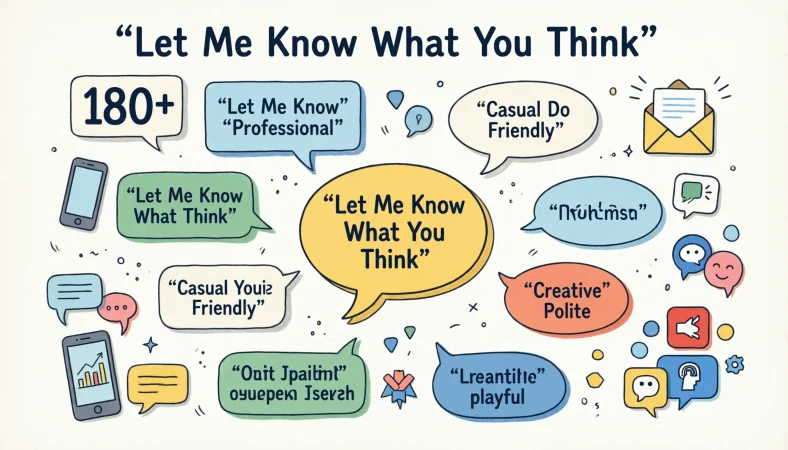
Looking for natural “let me know what you think” alternatives? Whether you are writing an email, sharing an idea, sending a draft, or asking for a friend’s opinion, these options help you sound more polished and less repetitive.
Top alternatives: I’d love to hear your thoughts, What do you think?, I’d appreciate your feedback, Tell me what you think, I’m curious to hear your opinion
Ever typed “Let me know what you think” for the fifth time and suddenly felt like your vocabulary had left the group chat? It happens. Whether you are sending a work email, sharing a project with your team, posting something for friends, or asking your crush for an opinion, the way you ask for feedback can change the entire tone of your message.
Sometimes you want to sound professional and polished. Other times, you want something casual, friendly, warm, or even playful. That is exactly where let me know what you think alternatives come in handy. The right wording makes your message feel more natural and intentional without sounding stiff or repetitive.
From quick texts to professional emails, these ready-to-use phrases give you plenty of fresh ways to invite someone to share their honest thoughts.
Friendly Alternatives
- I’d love to hear your thoughts.
Use this when asking a friend or colleague for an opinion on something you created.
Meaning: It sounds warm, open, and genuinely interested in their perspective. - What do you think?
Use this for a simple text, message, or casual conversation.
Meaning: It is direct, natural, and easygoing. - I’m curious what you think.
Use this when someone’s opinion genuinely interests you.
Meaning: It shows curiosity without putting pressure on them. - Tell me your thoughts.
Use this when you want an honest reaction from someone you know well.
Meaning: It feels friendly and conversational. - I’d love your opinion.
Use this when you value the person’s judgment.
Meaning: It makes them feel that their perspective matters. - What’s your take on this?
Use this when discussing an idea, decision, or situation.
Meaning: It invites a personal viewpoint in a relaxed way. - How does this look to you?
Use this when sharing something visual or creative.
Meaning: It asks for a straightforward reaction. - I’m interested in your thoughts.
Use this when you want a slightly more thoughtful tone.
Meaning: It communicates sincere interest. - Give me your honest opinion.
Use this when you want someone to be completely truthful.
Meaning: It signals that you welcome genuine feedback. - I want to hear what you think.
Use this when their opinion is especially important to you.
Meaning: It adds a personal and sincere touch. - What are your thoughts?
Use this when you want a simple but polished alternative.
Meaning: It is friendly while still sounding clear. - I’m all ears.
Use this with friends or people you have a relaxed relationship with.
Meaning: It playfully communicates that you are ready to listen.
Professional Alternatives
- I’d appreciate your feedback.
Use this in a workplace email or project discussion.
Meaning: It sounds respectful and professional. - I’d value your perspective.
Use this when asking an experienced colleague for input.
Meaning: It shows respect for their expertise. - I welcome your feedback.
Use this in formal workplace communication.
Meaning: It clearly communicates openness to suggestions. - I’d be interested in your thoughts.
Use this in a professional message when requesting an opinion.
Meaning: It sounds polished without being overly formal. - Please share your feedback when convenient.
Use this when emailing someone who may be busy.
Meaning: It politely gives them room to respond on their schedule. - Your feedback would be appreciated.
Use this for formal business communication.
Meaning: It conveys professionalism and courtesy. - I’d be grateful for your input.
Use this when someone’s expertise could improve your work.
Meaning: It respectfully acknowledges the value of their contribution. - I welcome any suggestions you may have.
Use this after presenting a proposal or draft.
Meaning: It encourages constructive ideas. - I’d appreciate hearing your perspective.
Use this when discussing a decision or strategy.
Meaning: It invites thoughtful professional input. - Please share any thoughts you may have.
Use this in a polished email or report.
Meaning: It creates an open invitation for feedback. - I’d value any feedback you can provide.
Use this when asking for detailed professional input.
Meaning: It sounds courteous and purposeful. - I look forward to hearing your thoughts.
Use this at the end of a professional email.
Meaning: It expresses positive anticipation for their response.
Casual Alternatives
- So, what do you think?
Use this in a relaxed text with a friend.
Meaning: It feels natural and effortless. - Thoughts?
Use this when sending something quickly.
Meaning: It is short, modern, and direct. - What’s your verdict?
Use this when asking for a playful opinion.
Meaning: It adds humor to a simple request for feedback. - How are we feeling about this?
Use this with friends or a casual group chat.
Meaning: It invites everyone to react openly. - What’s the vibe?
Use this when asking about an outfit, idea, post, or plan.
Meaning: It feels modern and informal. - Hit me with your thoughts.
Use this with someone you are comfortable with.
Meaning: It makes the request feel energetic and relaxed. - What’s your take?
Use this during an informal discussion.
Meaning: It asks for their personal opinion without sounding formal. - Be honest, what do you think?
Use this when you want an unfiltered reaction.
Meaning: It encourages honesty. - Give me the tea.
Use this jokingly when asking for someone’s reaction or opinion.
Meaning: It makes the request playful and informal. - How does it feel to you?
Use this when asking about an idea, message, or creative piece.
Meaning: It focuses on their personal reaction. - Okay, judge this for me.
Use this when sending a photo, outfit, or creative idea.
Meaning: It adds playful humor to the request. - Your turn, what do you think?
Use this when continuing a casual discussion.
Meaning: It naturally passes the conversation to them.
Polite Alternatives
- I’d be happy to hear your thoughts.
Use this when communicating politely with someone you know.
Meaning: It creates a warm invitation for feedback. - I’d appreciate hearing your opinion.
Use this in a respectful conversation.
Meaning: It shows that you value their response. - Please feel free to share your thoughts.
Use this when you want to make someone comfortable giving feedback.
Meaning: It sounds welcoming and considerate. - I’d be grateful for your thoughts.
Use this when asking for someone’s opinion respectfully.
Meaning: It expresses appreciation in advance. - Would you mind sharing your thoughts?
Use this when making a polite request.
Meaning: It softens the question and sounds courteous. - May I ask for your opinion?
Use this in a more formal or respectful setting.
Meaning: It politely asks permission to seek their perspective. - I’d welcome your thoughts on this.
Use this after presenting an idea.
Meaning: It communicates openness without sounding demanding. - I’d be interested to hear your view.
Use this when speaking respectfully with someone.
Meaning: It invites their perspective in a calm way. - Please let me know your thoughts when you have a moment.
Use this when the person may be busy.
Meaning: It is considerate about their time. - Any feedback would be greatly appreciated.
Use this for a polite email or request.
Meaning: It emphasizes gratitude for their effort. - I’d be glad to hear your perspective.
Use this when discussing an idea with someone you respect.
Meaning: It sounds warm and respectful. - I hope you’ll share your thoughts with me.
Use this when you want a personal response.
Meaning: It creates a gentle and sincere invitation.
Creative Alternatives
- Give this a spin and tell me what you think.
Use this when sharing a creative idea with a friend.
Meaning: It makes feedback feel fun and low pressure. - What does your inner critic say?
Use this jokingly when asking for honest feedback.
Meaning: It playfully encourages constructive criticism. - Give me your two cents.
Use this in an informal discussion.
Meaning: It casually asks for someone’s opinion. - What’s your first impression?
Use this when sharing something new.
Meaning: It focuses on their immediate reaction. - Give me the good, the bad, and the ugly.
Use this when you genuinely want detailed feedback.
Meaning: It humorously signals that all opinions are welcome. - Put on your reviewer hat.
Use this when asking a friend to critique your work.
Meaning: It turns feedback into a playful role. - Rate the vibe for me.
Use this for outfits, photos, designs, or plans.
Meaning: It asks for a quick overall reaction. - Be my unofficial focus group.
Use this when testing an idea with friends.
Meaning: It makes their opinion feel useful and fun. - Give this your expert eye.
Use this when asking someone knowledgeable for feedback.
Meaning: It compliments their judgment while requesting input. - Let’s hear your hot take.
Use this when inviting a strong personal opinion.
Meaning: It encourages a confident and interesting response. - What would you change?
Use this when looking for practical feedback.
Meaning: It moves beyond general opinions toward useful suggestions. - Tell me what stands out first.
Use this when testing a creative piece or presentation.
Meaning: It helps reveal the strongest first impression.
Short And Simple Alternatives
- Thoughts?
Use this for a quick text or message.
Meaning: It is concise and straightforward. - Opinions?
Use this when asking a group for reactions.
Meaning: It quickly opens the floor for feedback. - Your thoughts?
Use this in a short professional or personal message.
Meaning: It directly asks for their perspective. - Feedback?
Use this when you need a quick reaction to your work.
Meaning: It is efficient and clear. - What say you?
Use this for a slightly playful message.
Meaning: It gives a simple question a fun twist. - How does it look?
Use this when sharing something visual.
Meaning: It asks for an immediate reaction. - What’s your verdict?
Use this when you want a playful judgment.
Meaning: It makes feedback feel entertaining. - Any thoughts?
Use this when you want an easygoing response.
Meaning: It gives the person an open invitation to comment. - Your take?
Use this in a casual discussion.
Meaning: It asks directly for their opinion. - How’d I do?
Use this after completing something.
Meaning: It invites evaluation in a friendly way. - Worth it?
Use this when asking for an opinion about a decision.
Meaning: It keeps the question extremely simple. - Be honest?
Use this before asking for an opinion.
Meaning: It signals that you want genuine feedback.
Warm And Thoughtful Alternatives
- I’d really love to know how this feels to you.
Use this when sharing something personally meaningful.
Meaning: It invites an emotional and thoughtful reaction. - Your perspective means a lot to me.
Use this when asking someone you trust for input.
Meaning: It emphasizes the importance of their opinion. - I’d love to hear your honest thoughts.
Use this when you want sincerity.
Meaning: It combines warmth with openness. - I’m genuinely interested in your perspective.
Use this during a meaningful conversation.
Meaning: It communicates sincere curiosity. - I’d really value your opinion here.
Use this when their judgment matters to you.
Meaning: It makes the request feel personal and appreciative. - Tell me how this comes across to you.
Use this when checking the tone of something you wrote.
Meaning: It focuses on how your message may be perceived. - I’d love your honest reaction.
Use this when you want an authentic response.
Meaning: It encourages openness. - Your thoughts would mean a lot.
Use this when asking someone close to you for feedback.
Meaning: It adds emotional warmth. - I’m curious how this resonates with you.
Use this for a deeper or more personal topic.
Meaning: It asks about their emotional response. - I’d really like to know your view.
Use this during an important discussion.
Meaning: It shows that you are actively considering their perspective. - Tell me what stands out to you.
Use this when sharing something meaningful or creative.
Meaning: It encourages a specific reaction. - I’d love to know how you see it.
Use this when discussing different perspectives.
Meaning: It shows respect for their individual viewpoint.
Clever Alternatives
- What’s your professional opinion?
Use this jokingly with a knowledgeable friend.
Meaning: It playfully gives their opinion extra importance. - I’m opening the floor to commentary.
Use this when sharing something with a group.
Meaning: It humorously invites reactions. - Your verdict is officially requested.
Use this when asking for a playful judgment.
Meaning: It turns an ordinary opinion into a fun decision. - Time for the review board.
Use this with friends who love giving opinions.
Meaning: It adds playful drama to the request. - Let’s hear the jury’s thoughts.
Use this when asking several people for opinions.
Meaning: It makes feedback sound like a fun group decision. - I’m collecting opinions for research purposes.
Use this jokingly when asking friends for reactions.
Meaning: It makes a casual request sound humorously serious. - Your judgment has been summoned.
Use this when asking someone to assess something.
Meaning: It adds playful confidence. - Give me your final ruling.
Use this after presenting two choices.
Meaning: It asks them to help make the decision. - What does the committee think?
Use this with a group chat.
Meaning: It humorously invites everyone to weigh in. - I await your expert analysis.
Use this when teasing a friend about their opinion.
Meaning: It adds playful exaggeration. - Let’s see what the people say.
Use this when asking several friends for reactions.
Meaning: It keeps the mood light and social. - I’m ready for your hot take.
Use this when expecting an interesting opinion.
Meaning: It encourages a bold and personal response.
Formal Alternatives
- I would appreciate your feedback on this matter.
Use this in formal business communication.
Meaning: It is respectful, professional, and precise. - I would welcome your perspective.
Use this in a formal discussion or email.
Meaning: It communicates openness to professional input. - I would value your assessment.
Use this when requesting an evaluation.
Meaning: It gives the request a polished and serious tone. - Please provide your feedback at your earliest convenience.
Use this when feedback is needed within a reasonable timeframe.
Meaning: It politely requests a response without sounding overly casual. - I would be grateful for your observations.
Use this when asking someone to review something carefully.
Meaning: It sounds formal and appreciative. - Your input would be highly valued.
Use this when seeking professional expertise.
Meaning: It emphasizes the importance of their contribution. - I would appreciate hearing your perspective on this issue.
Use this for a formal discussion.
Meaning: It respectfully invites their viewpoint. - Please share any comments you may have.
Use this when requesting feedback on a document.
Meaning: It provides a clear and professional invitation. - I welcome any recommendations you may have.
Use this when looking for improvements.
Meaning: It encourages useful suggestions. - Your assessment would be greatly appreciated.
Use this when asking someone qualified to review something.
Meaning: It expresses respect for their expertise. - I look forward to receiving your feedback.
Use this at the end of a formal email.
Meaning: It clearly communicates that you expect their input. - I would appreciate any insights you can offer.
Use this when asking for knowledgeable guidance.
Meaning: It respectfully recognizes their experience.
Email-Friendly Alternatives
- I’d love to hear your thoughts on this.
Use this near the end of a professional email.
Meaning: It sounds polished but approachable. - Please share your feedback when you have a chance.
Use this when there is no urgent deadline.
Meaning: It politely respects the recipient’s time. - I’d appreciate your input on this.
Use this when asking a colleague to review your work.
Meaning: It is concise and professional. - I look forward to hearing your thoughts.
Use this as an email closing sentence.
Meaning: It sounds positive and courteous. - I’d welcome any feedback you have.
Use this after sending a draft.
Meaning: It signals openness to improvements. - Please let me know your perspective.
Use this when discussing a decision.
Meaning: It directly asks for their viewpoint. - I’d be grateful for your feedback.
Use this when someone’s review is particularly helpful.
Meaning: It communicates appreciation. - Any suggestions would be greatly appreciated.
Use this when you want improvement ideas.
Meaning: It encourages practical feedback. - I’d be interested in your assessment.
Use this for a formal review or evaluation.
Meaning: It sounds thoughtful and professional. - Please feel free to share any comments.
Use this when you want an open response.
Meaning: It creates a welcoming tone. - I’d value your thoughts before we move forward.
Use this when feedback will influence the next step.
Meaning: It shows that their opinion can make a difference. - Your feedback would help us refine this further.
Use this when reviewing a project or proposal.
Meaning: It explains why their input is useful.
Confident Alternatives
- I’m interested to hear your take.
Use this when confidently sharing your work.
Meaning: It asks for feedback without sounding uncertain. - Tell me what stands out.
Use this when showing someone something you created.
Meaning: It confidently focuses the feedback. - I’m curious what you’d change.
Use this when you are comfortable receiving criticism.
Meaning: It shows openness to improvement. - Give me your honest assessment.
Use this when you want direct feedback.
Meaning: It communicates confidence and maturity. - I want your perspective on this.
Use this when their opinion could influence your decision.
Meaning: It sounds direct and intentional. - Let’s hear your take.
Use this in a confident casual conversation.
Meaning: It invites their opinion without hesitation. - What would you do differently?
Use this when seeking actionable advice.
Meaning: It encourages practical input. - Tell me where you’d improve it.
Use this when asking for constructive criticism.
Meaning: It demonstrates a willingness to grow. - I’m open to your feedback.
Use this in work or personal settings.
Meaning: It clearly communicates receptiveness. - Give it to me straight.
Use this with someone you trust.
Meaning: It asks for direct honesty. - I want the real verdict.
Use this when you want an unfiltered opinion.
Meaning: It shows that you can handle honest feedback. - Don’t hold back, I want your thoughts.
Use this with someone whose opinion you trust.
Meaning: It encourages complete honesty.
Playful Alternatives
- Okay, hit me with the review.
Use this when sharing something with a close friend.
Meaning: It keeps feedback lighthearted. - Judge away.
Use this when showing an outfit, photo, or idea.
Meaning: It jokingly invites criticism. - Release the opinions.
Use this in a funny group chat.
Meaning: It makes a simple request entertaining. - The floor is yours.
Use this after sharing an idea.
Meaning: It playfully hands the conversation over to them. - I’m ready for the commentary.
Use this when expecting playful reactions.
Meaning: It shows confidence and humor. - Give me your best critique.
Use this when you want constructive feedback.
Meaning: It turns criticism into a fun challenge. - Time to spill your thoughts.
Use this with friends.
Meaning: It invites an open and energetic response. - Let’s hear the review panel.
Use this in a group chat.
Meaning: It adds humor to everyone’s opinions. - Okay, rate the masterpiece.
Use this jokingly when sharing something you made.
Meaning: It playfully exaggerates the importance of their opinion. - Your turn to be brutally honest.
Use this when asking someone close for honest feedback.
Meaning: It encourages directness in a playful way. - I’m listening, impress me.
Use this when joking with a confident friend.
Meaning: It creates a teasing and playful mood. - Bring on the opinions.
Use this when sharing something with several people.
Meaning: It enthusiastically invites feedback.
Creative Work Alternatives
- What’s your first reaction?
Use this when sharing a design, caption, photo, or draft.
Meaning: It captures an immediate response. - What would you tweak?
Use this when looking for small improvements.
Meaning: It asks for practical creative feedback. - What grabs your attention first?
Use this when testing a visual or written piece.
Meaning: It helps identify the strongest element. - Does this communicate what I’m aiming for?
Use this when reviewing creative work.
Meaning: It checks whether your intended message is clear. - What would make this stronger?
Use this when asking for constructive suggestions.
Meaning: It focuses on improvement rather than criticism. - Does the concept work for you?
Use this when presenting an idea.
Meaning: It asks whether the overall concept connects. - What’s working here?
Use this when seeking positive feedback.
Meaning: It identifies the strongest parts of your work. - What feels off, if anything?
Use this when you want honest creative criticism.
Meaning: It gives permission to point out weaknesses. - Does this have the right feel?
Use this when checking tone or atmosphere.
Meaning: It focuses on emotional impact. - What would you change first?
Use this when you need prioritized feedback.
Meaning: It asks for the most important improvement. - Does this catch your attention?
Use this for headlines, graphics, posts, or creative concepts.
Meaning: It tests immediate impact. - What would make you stop scrolling?
Use this when reviewing social media content.
Meaning: It asks whether the idea is engaging enough to grab attention.
Alternatives For Asking Honest Opinions
- Be completely honest with me.
Use this when you trust someone to give direct feedback.
Meaning: It clearly welcomes honesty. - I can handle the truth.
Use this when you want criticism without sugarcoating.
Meaning: It reassures the person that honest feedback is welcome. - Don’t sugarcoat it.
Use this with someone you know well.
Meaning: It asks for a direct and unfiltered opinion. - Tell me what you really think.
Use this when you suspect someone may be holding back.
Meaning: It encourages authenticity. - Give me the honest version.
Use this in a casual conversation.
Meaning: It asks for the person’s genuine opinion. - What’s your honest reaction?
Use this after sharing something important.
Meaning: It invites a sincere response. - Tell me if I’m missing something.
Use this when you want another perspective.
Meaning: It shows humility and openness. - Point out anything I should reconsider.
Use this when reviewing an important decision.
Meaning: It invites thoughtful criticism. - I want your unfiltered take.
Use this with someone you trust.
Meaning: It asks them to speak freely. - Tell me where I could do better.
Use this when you want improvement-focused feedback.
Meaning: It demonstrates a willingness to learn. - Don’t worry about offending me.
Use this when asking for constructive criticism.
Meaning: It reassures them that honesty is safe. - Give me the real answer.
Use this when you want clarity rather than politeness.
Meaning: It emphasizes sincerity.
Fun And Gen Z Friendly Alternatives
- Okay, what’s the vibe?
Use this when asking friends about an outfit, photo, or idea.
Meaning: It feels casual and current. - Drop your thoughts.
Use this in a relaxed group chat.
Meaning: It invites quick reactions. - Rate the situation.
Use this when asking friends to judge a choice.
Meaning: It makes feedback playful. - I need the group chat verdict.
Use this when several friends are involved.
Meaning: It humorously turns opinions into a collective decision. - Give me the tea.
Use this when asking for someone’s honest reaction.
Meaning: It keeps the request playful and informal. - Okay, real talk. Thoughts?
Use this when you want an honest opinion.
Meaning: It signals that you are ready for genuine feedback. - I need your honest take.
Use this when asking a trusted friend for advice.
Meaning: It combines casual language with sincerity. - Be so real with me.
Use this when asking for an unfiltered reaction.
Meaning: It encourages authenticity. - Rate the fit.
Use this when asking about an outfit.
Meaning: It is quick, casual, and social-media friendly. - Does this pass the vibe check?
Use this when asking whether something feels right.
Meaning: It playfully asks for approval. - Okay, internet jury, thoughts?
Use this jokingly in a group chat.
Meaning: It turns feedback into a humorous group decision. - Drop the hot take.
Use this when you expect a bold opinion.
Meaning: It encourages an interesting and honest response.
Alternatives For Friends:
- What do you think, honestly?
Use this when asking your friend for genuine advice.
Meaning: It invites a sincere response. - Would you do it?
Use this when deciding whether to take an action.
Meaning: It asks for practical personal advice. - What would you do in my place?
Use this during a personal decision.
Meaning: It asks them to share how they would handle the situation. - Do you think this is a good idea?
Use this before making an important choice.
Meaning: It directly asks for their judgment. - Give me your honest take.
Use this when you trust their opinion.
Meaning: It communicates that you want sincerity. - Tell me if I’m overthinking this.
Use this when you are unsure about a situation.
Meaning: It asks them to provide perspective. - What’s your gut feeling?
Use this when making a personal decision.
Meaning: It invites an instinctive opinion. - Would you change anything?
Use this when showing them something you created.
Meaning: It asks for practical suggestions. - What’s your first impression?
Use this when you want an immediate reaction.
Meaning: It captures their natural response. - Talk to me, what do you think?
Use this when discussing something important.
Meaning: It creates a warm and open invitation. - I trust your judgment, so tell me.
Use this when their opinion matters to you.
Meaning: It makes the request personal and appreciative. - Give me the friend review.
Use this jokingly when asking for feedback.
Meaning: It adds humor while still requesting honesty.
Alternatives For Social Media And Posts.
- What do you think of this post?
Use this when sharing a social media draft.
Meaning: It directly asks for an opinion about the content. - Would you stop scrolling for this?
Use this when testing social media content.
Meaning: It asks whether the post is attention-grabbing. - Does this caption work?
Use this when reviewing a social media caption.
Meaning: It asks whether the wording feels effective. - Which version do you prefer?
Use this when comparing two posts or designs.
Meaning: It encourages a clear choice. - Which one gets your vote?
Use this when asking followers or friends to choose.
Meaning: It makes feedback interactive. - Does this catch your eye?
Use this when testing a visual.
Meaning: It focuses on immediate attention. - What’s your first impression?
Use this when sharing a new post design.
Meaning: It checks the instant reaction. - Would you click on this?
Use this when testing promotional content.
Meaning: It asks whether the content creates enough curiosity. - Does the caption match the photo?
Use this when reviewing a post.
Meaning: It checks whether the elements work together. - Which one feels more you?
Use this when asking someone to choose between styles.
Meaning: It focuses on personal preference. - Is this giving the right vibe?
Use this when reviewing a post or story.
Meaning: It asks whether the intended mood comes across. - What would make you engage with this?
Use this when improving social media content.
Meaning: It asks for practical engagement ideas.
Alternatives For Asking For Advice.
- What would you recommend?
Use this when you want actionable guidance.
Meaning: It directly asks for their recommendation. - What would you do?
Use this during a personal decision.
Meaning: It asks for their practical perspective. - How would you approach this?
Use this when asking someone experienced for guidance.
Meaning: It invites them to explain their strategy. - What’s your advice?
Use this when discussing a problem.
Meaning: It clearly requests guidance. - What do you think I should do?
Use this when you need help making a decision.
Meaning: It asks for a direct recommendation. - How would you handle this?
Use this when dealing with a difficult situation.
Meaning: It seeks practical experience-based advice. - What would make the most sense to you?
Use this when considering several options.
Meaning: It asks for a reasoned perspective. - Which option would you choose?
Use this when comparing possibilities.
Meaning: It encourages a clear preference. - What’s your gut telling you?
Use this when discussing an uncertain choice.
Meaning: It invites an instinctive response. - Do you see anything I’m overlooking?
Use this when you want another perspective.
Meaning: It encourages them to identify blind spots. - What would you suggest?
Use this in both casual and professional settings.
Meaning: It politely asks for practical input. - If you were me, what would you do?
Use this when seeking personal advice from someone you trust.
Meaning: It asks them to put themselves in your position.
Alternatives For Group Discussions.
- What does everyone think?
Use this when asking a group for feedback.
Meaning: It invites everyone to participate. - I’d love to hear everyone’s thoughts.
Use this during a team discussion.
Meaning: It encourages broad participation. - Any thoughts from the group?
Use this in a meeting or group chat.
Meaning: It creates an open invitation for opinions. - What’s everyone’s take?
Use this in a casual team discussion.
Meaning: It asks for collective feedback. - Does anyone see this differently?
Use this when you want alternative perspectives.
Meaning: It encourages respectful disagreement. - What would you change?
Use this after presenting an idea.
Meaning: It focuses the group on practical improvements. - Who has thoughts on this?
Use this when encouraging participation.
Meaning: It casually opens the discussion. - Let’s hear some perspectives.
Use this in a collaborative setting.
Meaning: It encourages different viewpoints. - What are we thinking?
Use this in an informal group conversation.
Meaning: It creates a relaxed invitation to respond. - Any feedback before we move ahead?
Use this before finalizing a decision.
Meaning: It gives people a final opportunity to contribute. - Does this work for everyone?
Use this when checking group agreement.
Meaning: It invites approval or concerns. - Anything we should reconsider?
Use this before making a final decision.
Meaning: It encourages the group to identify potential issues.
FAQs.
What Does “Let Me Know What You Think” Mean?
It means you are asking someone to share their opinion, reaction, thoughts, or feedback about something.
Is “Let Me Know What You Think” Professional?
Yes. It is perfectly acceptable in professional emails and workplace conversations. However, alternatives such as “I’d appreciate your feedback” or “I’d value your perspective” can sound more polished.
What Is A More Professional Way To Say “Let Me Know What You Think”?
Try “I’d appreciate your feedback,” “I’d value your perspective,” “I welcome your thoughts,” or “I’d be interested in your assessment.”
What Is A Casual Alternative?
For texts and friendly conversations, try “Thoughts?”, “What do you think?”, “What’s your take?”, “What’s the vibe?” or “Be honest, what do you think?”
What Is A Polite Alternative?
“I’d appreciate hearing your thoughts” is a warm and respectful choice.
What Is A Good Alternative For An Email?
Try “I’d welcome your feedback on this” or “I look forward to hearing your thoughts.”
How Can I Ask For Honest Feedback?
Use phrases such as “Tell me what you really think,” “Don’t sugarcoat it,” or “Give me your honest assessment.”
Can I Use Funny Alternatives With Coworkers?
Yes, if your workplace relationship is informal and the situation allows it. For formal emails, stick with professional wording.
Which Alternative Sounds The Warmest?
“I’d love to hear your thoughts” feels especially warm because it communicates genuine interest.
Which Alternative Is The Shortest?
“Thoughts?” is one of the simplest options and works especially well in texts and casual messages.
Conclusion
Finding the right way to ask for an opinion does not have to feel like a vocabulary workout. Whether you are writing a professional email, sharing a creative project, asking friends for advice, or checking whether your latest post passes the vibe test, the right phrase can make your message feel more natural. These let me know what you think alternatives give you plenty of ways to sound polished, friendly, confident, playful, or genuinely curious.
The key is matching your wording to the person and situation. Do not be afraid to switch things up and let your personality show. Save this list for your next email, text, caption, or group chat, and share it with someone who always types the same phrase.









2 thoughts on “180+ “Let Me Know What You Think” Alternatives For Every Situation And Conversation In 2026”