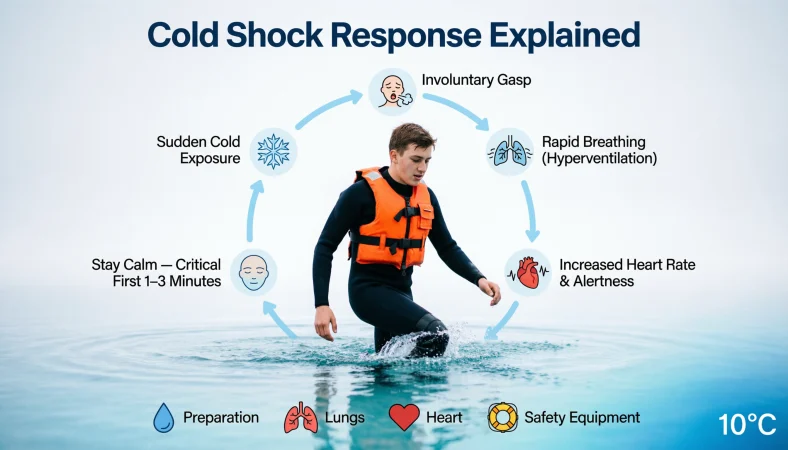
A cold shock response is the body’s rapid reaction when exposed to sudden cold water or a sharp drop in temperature. It can cause an involuntary gasp, faster breathing, increased heart rate, and a strong urge to breathe quickly.
Top alternatives: cold water shock response, cold shock reaction, sudden cold exposure response, cold immersion response, cold stress response
Ever stepped into unexpectedly cold water and instantly thought, “Well, this was a terrible life choice”? That dramatic first reaction has a real biological explanation. The cold shock response is the body’s immediate reaction to sudden cold exposure, particularly when cold water rapidly contacts the skin.
It can trigger an involuntary gasp, rapid breathing, changes in heart rate, and an intense feeling of panic or discomfort. You might encounter the term while reading about swimming, open-water safety, cold plunges, outdoor activities, or workplace exposure to cold environments.
Understanding the phrase matters because recognizing the body’s response can help people take sudden cold exposure seriously rather than treating it as just an uncomfortable moment. Whether you need a simple explanation, study-friendly wording, professional language, or memorable ways to describe it, these ready-to-use lines make the topic easier to understand and share.
Simple Cold Shock Response Explanations:
1. The cold shock response is the body’s immediate reaction to sudden cold exposure.
Example: A student uses this line when writing a simple biology definition.
Meaning: It explains the basic idea in straightforward language.
2. Sudden cold can make you gasp and breathe faster.
Example: Someone explains why jumping into cold water feels so intense.
Meaning: It highlights common immediate breathing changes.
3. Cold water can trigger a rapid physical reaction.
Example: A swimmer describes what happens during unexpected immersion.
Meaning: It emphasizes how quickly the body responds.
4. Your body reacts before your brain gets comfortable with the temperature.
Example: A beginner describes the first moments of a cold plunge.
Meaning: It makes the physiological reaction easier to visualize.
5. A sudden temperature drop can trigger cold shock.
Example: A learner summarizes the concept for study notes.
Meaning: It connects the reaction directly with abrupt cold exposure.
6. Cold shock can make breathing feel difficult to control.
Example: A swimmer explains why the first moments in cold water feel overwhelming.
Meaning: It describes the rapid breathing response.
7. The first response to cold water can be surprisingly intense.
Example: A safety article describes unexpected immersion.
Meaning: It reminds readers that initial cold exposure can feel powerful.
8. Cold shock happens quickly after sudden cold exposure.
Example: A student gives a short classroom explanation.
Meaning: It emphasizes the rapid onset of the response.
9. The body tries to react immediately to sudden cold.
Example: Someone explains the concept to a friend.
Meaning: It presents the response as an automatic physiological reaction.
10. Cold shock is more than simply feeling chilly.
Example: A health educator explains why sudden cold water deserves attention.
Meaning: It distinguishes the response from ordinary cold discomfort.
11. Breathing can change dramatically during sudden cold immersion.
Example: An open-water swimmer discusses the first moments after entering water.
Meaning: It focuses on one important feature of cold shock.
12. Cold exposure can produce an immediate stress response.
Example: A learner summarizes cold-water physiology.
Meaning: It explains why the body reacts so strongly.
Funny Cold Shock Response Lines:
1. My lungs just filed a formal complaint.
Example: A swimmer jokes after unexpectedly entering very cold water.
Meaning: It humorously describes the sudden breathing reaction.
2. That water had absolutely no chill.
Example: Someone posts a playful caption after a cold plunge.
Meaning: It uses a familiar phrase to joke about extreme cold.
3. My body said “absolutely not.”
Example: A person reacts humorously to sudden cold immersion.
Meaning: It captures the body’s automatic resistance to the temperature.
4. One second in, and my breathing left the group chat.
Example: A social post describes an intense first moment in cold water.
Meaning: It jokingly refers to rapid, uncomfortable breathing.
5. Plot twist: the water was colder than my expectations.
Example: Someone shares a humorous cold-water experience.
Meaning: It highlights the surprise of sudden temperature shock.
6. My nervous system understood the assignment a little too well.
Example: A person jokes about an immediate physical reaction.
Meaning: It humorously acknowledges the body’s rapid response.
7. Cold water really said “wake up.”
Example: Someone captions a chilly morning swim.
Meaning: It turns sudden cold exposure into a playful wake-up joke.
8. My gasp arrived before my thoughts did.
Example: A swimmer describes an unexpected plunge.
Meaning: It jokes about how automatic the initial reaction can be.
9. That was less refreshing, more personal attack.
Example: Someone jokes after a particularly cold shower.
Meaning: It exaggerates the discomfort for comic effect.
10. My body hit the emergency reaction button.
Example: A person describes the first seconds of cold exposure.
Meaning: It humorously compares the response to an alarm system.
11. The water won. Immediately.
Example: Someone jokes after losing confidence during a cold plunge.
Meaning: It emphasizes how powerful the initial cold sensation felt.
12. Five seconds of cold and suddenly I respect winter.
Example: Someone jokes after outdoor cold exposure.
Meaning: It exaggerates the experience to make the reaction memorable.
Professional Cold Shock Response Statements:
1. Cold shock is an acute physiological response to sudden cold exposure.
Example: A workplace safety report uses this definition.
Meaning: It describes the response in formal terminology.
2. Sudden cold exposure can produce rapid changes in breathing and cardiovascular activity.
Example: A professional training document explains cold-water risks.
Meaning: It identifies important physiological effects.
3. Cold-water immersion can trigger an immediate respiratory response.
Example: A water-safety instructor explains sudden immersion.
Meaning: It focuses on the rapid breathing reaction.
4. The response can occur before the individual adapts to the water temperature.
Example: A safety presentation explains the first moments of immersion.
Meaning: It emphasizes the sudden nature of the reaction.
5. Cold shock should be considered when assessing cold-water exposure risks.
Example: A safety professional evaluates an open-water activity.
Meaning: It identifies cold shock as a relevant hazard.
6. The severity of the initial response can vary between individuals.
Example: A workplace training document discusses differences in cold tolerance.
Meaning: It acknowledges individual variation.
7. Sudden immersion may provoke involuntary gasping and rapid breathing.
Example: An instructor describes common physiological responses.
Meaning: It identifies key respiratory reactions.
8. Cold shock is distinct from the later effects of prolonged cold exposure.
Example: A physiology lesson compares immediate and later responses.
Meaning: It separates the initial reaction from subsequent cold stress.
9. Risk assessment should account for sudden cold-water exposure.
Example: A boating safety plan considers immersion hazards.
Meaning: It encourages proactive safety planning.
10. Controlled entry into cold water can help reduce the intensity of sudden exposure.
Example: A safety guide discusses entering cold water gradually where appropriate.
Meaning: It focuses on avoiding an abrupt temperature change.
11. Cold-water safety education should explain the initial physiological response.
Example: An instructor prepares a beginner swimming session.
Meaning: It highlights the value of understanding cold shock.
12. Awareness of cold shock can support better preparation for cold-water activities.
Example: A training course includes cold-water risk awareness.
Meaning: It connects knowledge with preparation.
Clever Cold Shock Response Ideas:
1. Cold shock is the body’s instant alarm system for sudden cold.
Example: A teacher uses a memorable analogy during a lesson.
Meaning: It simplifies a complex physiological reaction.
2. The gasp is the body’s dramatic opening scene.
Example: A biology student creates a memorable study note.
Meaning: It makes the initial respiratory response easier to remember.
3. Cold water can turn calm breathing into instant chaos.
Example: A swimmer describes an unexpected plunge.
Meaning: It captures the contrast between normal and rapid breathing.
4. Your body notices the temperature before your comfort does.
Example: Someone explains why cold water feels overwhelming immediately.
Meaning: It describes the speed of the physiological response.
5. Cold shock is the body’s “something changed” notification.
Example: A learner creates a simple analogy for revision.
Meaning: It describes the response as an automatic warning signal.
6. The first seconds matter because the reaction happens fast.
Example: A safety educator explains sudden immersion.
Meaning: It emphasizes the rapid onset of cold shock.
7. Cold water can trigger a reaction before you have time to mentally prepare.
Example: A swimmer discusses unexpected immersion.
Meaning: It highlights how automatic the response can be.
8. The body does not wait for a calendar reminder to react to cold.
Example: A student uses humor in a study presentation.
Meaning: It makes the automatic nature of the response memorable.
9. Sudden cold turns temperature into a full-body event.
Example: A writer describes cold-water immersion.
Meaning: It communicates that cold shock involves more than skin sensation.
10. Cold shock is the opening act before prolonged cold takes over.
Example: A learner compares immediate and later cold responses.
Meaning: It distinguishes the initial reaction from later effects.
11. The surprise factor is part of what makes sudden cold exposure intense.
Example: A coach explains why unexpected immersion feels different from gradual cooling.
Meaning: It connects suddenness with the intensity of the experience.
12. Your first reaction may be automatic, not a sign that you are unprepared mentally.
Example: A beginner worries about gasping during a cold-water session.
Meaning: It normalizes the involuntary nature of the response.
Educational Cold Shock Response Explanations:
1. Cold shock begins when the body encounters sudden cold, especially cold water.
Example: A student summarizes the concept in revision notes.
Meaning: It identifies the main trigger.
2. The response can involve involuntary gasping.
Example: A biology learner lists common features of cold-water exposure.
Meaning: It identifies a characteristic respiratory response.
3. Breathing may become rapid and difficult to regulate.
Example: A safety course explains why unexpected immersion can be dangerous.
Meaning: It describes a key immediate effect.
4. Heart rate can also change during sudden cold exposure.
Example: A physiology student discusses cardiovascular responses.
Meaning: It notes that cold shock affects more than breathing.
5. Cold shock is an immediate response rather than a long-term adaptation.
Example: A teacher contrasts acute and prolonged cold exposure.
Meaning: It clarifies the timing of the reaction.
6. The response is influenced by the suddenness and intensity of cold exposure.
Example: A learner compares gradual cooling with abrupt immersion.
Meaning: It explains why different exposures can feel different.
7. Cold-water exposure can create a strong feeling of discomfort or alarm.
Example: A student describes the subjective experience of cold shock.
Meaning: It connects physiological changes with how the experience feels.
8. Cold shock can interfere with calm breathing during initial immersion.
Example: An instructor discusses open-water swimming risks.
Meaning: It highlights the importance of controlled breathing.
9. The body’s initial response can happen within a very short period.
Example: A science presentation explains why preparation matters.
Meaning: It emphasizes the rapid onset.
10. Cold shock differs from the effects that develop after prolonged cold exposure.
Example: A student compares immediate and later stages of cold exposure.
Meaning: It separates distinct physiological processes.
11. Understanding the response is important for cold-water safety.
Example: A swimmer studies safety guidance before open-water activity.
Meaning: Knowledge can help people prepare appropriately.
12. Cold shock is a normal physiological response to sudden cold stress.
Example: A teacher provides a basic classroom definition.
Meaning: It explains that the reaction is an automatic body process.
Casual Cold Shock Response Lines:
1. Cold water hits different when you are not ready for it.
Example: A friend describes an unexpected swim.
Meaning: It captures the surprise of sudden cold exposure.
2. That first gasp was definitely not planned.
Example: A swimmer talks about entering cold water.
Meaning: It highlights the involuntary breathing reaction.
3. My breathing went from normal to turbo mode.
Example: Someone casually describes a cold plunge.
Meaning: It refers to rapid breathing after sudden exposure.
4. The temperature changed and my body immediately noticed.
Example: A person describes stepping into cold water.
Meaning: It describes the automatic reaction.
5. Cold water really gets your attention fast.
Example: Someone explains why a chilly swim feels intense.
Meaning: It highlights the immediate effect of cold exposure.
6. I was not mentally prepared for that temperature.
Example: A swimmer describes an unexpectedly cold lake.
Meaning: It communicates surprise and discomfort.
7. The first few seconds were definitely the hardest.
Example: Someone reflects on entering cold water.
Meaning: It focuses on the intensity of initial exposure.
8. My lungs had their own opinion about that plunge.
Example: A person jokes about sudden gasping.
Meaning: It humorously describes an involuntary breathing response.
9. That cold came with zero warning.
Example: Someone describes unexpectedly cold water.
Meaning: It emphasizes the suddenness of exposure.
10. My whole body basically pressed pause.
Example: A beginner describes the shock of cold immersion.
Meaning: It conveys an intense immediate reaction.
11. I needed a second to get my breathing under control.
Example: A swimmer describes the first moments after entering cold water.
Meaning: It acknowledges the challenge of rapid breathing.
12. Definitely not the gentle wake-up I ordered.
Example: Someone jokes after a cold morning swim.
Meaning: It humorously describes the intensity of cold exposure.
Dramatic Cold Shock Response Lines:
1. The cold arrived like a plot twist nobody requested.
Example: A writer describes an unexpected plunge.
Meaning: It dramatizes the surprise of sudden cold.
2. One gasp and the entire situation changed.
Example: Someone describes the first seconds of cold immersion.
Meaning: It emphasizes how quickly the experience can shift.
3. My body declared an immediate state of emergency.
Example: A person humorously describes intense cold exposure.
Meaning: It exaggerates the automatic reaction for dramatic effect.
4. The water was cold enough to rewrite the entire plan.
Example: A swimmer describes abandoning an impulsive plunge.
Meaning: It emphasizes how powerful the cold felt.
5. Suddenly, every warm sweater in existence seemed essential.
Example: Someone reflects on an extremely cold outdoor experience.
Meaning: It humorously exaggerates the desire for warmth.
6. My breathing became the main character.
Example: A writer describes rapid breathing after cold immersion.
Meaning: It emphasizes the noticeable respiratory response.
7. The first second felt like a full-body plot twist.
Example: Someone describes unexpected cold water.
Meaning: It highlights the suddenness of the sensation.
8. The temperature showed up with absolutely no mercy.
Example: A person creates a dramatic social caption.
Meaning: It exaggerates the intensity of the cold.
9. My nervous system clearly had notes.
Example: Someone jokes about an immediate physical reaction.
Meaning: It portrays the body as strongly objecting to the temperature.
10. That gasp deserved its own soundtrack.
Example: A swimmer jokes about the dramatic first reaction.
Meaning: It humorously emphasizes the involuntary gasp.
11. Winter suddenly became a personal rival.
Example: Someone jokes after a cold outdoor experience.
Meaning: It turns discomfort into playful drama.
12. The cold won the opening round.
Example: A person describes struggling with the first moments of a cold plunge.
Meaning: It acknowledges the initial intensity of the exposure.
Cute Cold Shock Response Lines:
1. My tiny lungs were not ready for that.
Example: Someone uses a playful caption after cold-water exposure.
Meaning: It gives the breathing reaction a cute personality.
2. Cold water really surprised my whole body.
Example: A beginner describes a chilly swim.
Meaning: It gently explains the immediate reaction.
3. My little gasp had a mind of its own.
Example: Someone jokes about involuntary breathing.
Meaning: It makes the automatic response sound playful.
4. I needed a warm hug after that temperature.
Example: Someone describes recovering from a chilly outdoor experience.
Meaning: It expresses a desire for comfort after cold exposure.
5. My body said, “Can we please go somewhere warm?”
Example: A person creates a cute social caption.
Meaning: It playfully expresses discomfort.
6. That cold was definitely not cuddle-friendly.
Example: Someone jokes after an icy swim.
Meaning: It contrasts cold exposure with cozy comfort.
7. My breathing needed a tiny reset.
Example: A swimmer describes settling down after entering cold water.
Meaning: It gently refers to the initial breathing response.
8. One splash and I became team blanket.
Example: Someone jokes after a cold-water experience.
Meaning: It expresses an immediate preference for warmth.
9. My body wanted sunshine immediately.
Example: A person describes feeling chilled after outdoor exposure.
Meaning: It humorously expresses a desire for warmth.
10. That was a very uninvited wake-up call.
Example: Someone jokes about a cold morning shower.
Meaning: It describes the surprise of sudden cold.
11. My whole body needed a cozy reboot.
Example: Someone describes warming up after cold exposure.
Meaning: It expresses the desire to return to comfort.
12. Cold water and I need some space right now.
Example: A person jokes after an unpleasant plunge.
Meaning: It playfully communicates dislike of the cold.
Safety-Focused Cold Shock Response Statements:
1. Sudden cold-water exposure should be treated as a genuine safety concern.
Example: A water-safety instructor discusses open-water immersion.
Meaning: It emphasizes that cold shock can have serious implications.
2. Avoid treating an unexpected cold-water gasp as something to ignore.
Example: A safety educator explains initial immersion reactions.
Meaning: It encourages awareness of the immediate response.
3. Preparation matters before entering cold water.
Example: A swimmer reviews safety practices before open-water activity.
Meaning: It highlights the value of planning.
4. Sudden immersion can affect breathing immediately.
Example: A boating safety presentation discusses accidental entry into cold water.
Meaning: It identifies rapid breathing as an important risk factor.
5. Staying calm and focusing on breathing can be important after sudden immersion.
Example: A safety course discusses managing the first moments in cold water.
Meaning: It emphasizes controlled breathing during the initial response.
6. Cold-water conditions should be considered before entering open water.
Example: A swimmer checks conditions before a planned activity.
Meaning: It encourages risk awareness.
7. Cold shock can occur even when the water does not look dangerously cold.
Example: A safety instructor explains why appearance can be misleading.
Meaning: It reminds people that water temperature deserves attention.
8. Appropriate equipment and preparation can support safer cold-water activities.
Example: A swimmer prepares for an outdoor session.
Meaning: It encourages practical preparation.
9. Unexpected immersion can be very different from gradual exposure.
Example: A trainer compares entering water suddenly with controlled entry.
Meaning: It highlights the importance of suddenness.
10. People should understand cold-water risks before attempting a cold plunge.
Example: A beginner researches cold-water activity beforehand.
Meaning: It encourages informed participation.
11. Safety planning should include the possibility of accidental immersion.
Example: A boating group prepares an emergency plan.
Meaning: It emphasizes preparation for unexpected events.
12. Cold-water awareness belongs in open-water safety education.
Example: A swimming instructor prepares course material.
Meaning: It identifies cold shock as an important educational topic.
Social Media Friendly Cold Shock Response Captions:
1. Cold water: 1. Me: still processing.
Example: A swimmer posts after an unexpectedly cold plunge.
Meaning: It humorously captures the immediate impact.
2. Apparently, my body has opinions about cold water.
Example: Someone shares a cold-water experience online.
Meaning: It jokes about the body’s automatic reaction.
3. Gasp first, questions later.
Example: A person captions a cold-water photo.
Meaning: It humorously refers to the involuntary initial reaction.
4. Entered for the experience, stayed for the shivering.
Example: Someone posts after a chilly outdoor activity.
Meaning: It jokes about the aftermath of cold exposure.
5. Cold plunge, warm personality pending.
Example: A person shares a playful wellness caption.
Meaning: It humorously contrasts the cold experience with comfort.
6. My breathing took a surprise detour.
Example: Someone posts about the first seconds of cold immersion.
Meaning: It refers to rapid breathing.
7. No chill, literally.
Example: A person posts a photo from a cold-water activity.
Meaning: It uses a familiar expression to emphasize actual cold.
8. Just me negotiating with the temperature.
Example: Someone shares a cold plunge photo.
Meaning: It humorously personifies the struggle with cold.
9. Consider this my annual argument with winter.
Example: Someone posts after outdoor cold exposure.
Meaning: It turns the experience into a playful rivalry.
10. Cold water unlocked a whole new breathing pattern.
Example: A swimmer captions a post about initial immersion.
Meaning: It humorously describes rapid breathing.
11. The gasp was automatic. The decision was questionable.
Example: Someone posts after an impulsive cold plunge.
Meaning: It jokes about the involuntary response and questionable choice.
12. Survived the temperature plot twist.
Example: A person posts after completing a chilly swim.
Meaning: It playfully celebrates getting through the experience.
Confident Cold Shock Response Statements:
1. I know what to expect from sudden cold exposure now.
Example: An experienced swimmer prepares for another cold-water session.
Meaning: It expresses confidence based on familiarity.
2. I understand that the first reaction can be intense.
Example: A swimmer prepares mentally before entering cold water.
Meaning: It shows awareness of the initial physiological response.
3. I do not mistake cold shock for a lack of toughness.
Example: Someone reassures a beginner about an involuntary gasp.
Meaning: It recognizes the response as physiological rather than a character flaw.
4. The first reaction does not define the whole experience.
Example: A person reflects on becoming more comfortable with cold exposure.
Meaning: It separates the initial shock from later adaptation.
5. I focus on staying composed during the initial response.
Example: A swimmer describes preparation for cold-water activity.
Meaning: It emphasizes calmness and controlled breathing.
6. I respect the cold instead of underestimating it.
Example: An outdoor enthusiast discusses preparation.
Meaning: It expresses a responsible attitude toward cold exposure.
7. I prepare for the temperature before I enter the water.
Example: A swimmer checks conditions before a session.
Meaning: It emphasizes proactive preparation.
8. I know sudden cold can trigger an automatic reaction.
Example: Someone explains cold shock to a beginner.
Meaning: It demonstrates physiological awareness.
9. I give my body time to settle after the initial shock.
Example: A person describes a controlled cold-water session.
Meaning: It recognizes that the initial response can take time to settle.
10. I take cold-water safety seriously.
Example: A swimmer discusses responsible preparation.
Meaning: It communicates respect for potential risks.
11. I understand the difference between discomfort and genuine risk.
Example: An experienced outdoor swimmer discusses safety awareness.
Meaning: It shows a balanced approach to cold exposure.
12. Preparation makes the experience more manageable.
Example: Someone reflects on repeated cold-water activities.
Meaning: It highlights the value of planning and awareness.
Emotional Cold Shock Response Descriptions:
1. The first breath can feel surprisingly overwhelming.
Example: A swimmer describes the emotional intensity of sudden immersion.
Meaning: It captures how the physical response can feel emotionally powerful.
2. Sudden cold can create an instant feeling of alarm.
Example: Someone describes an unexpected fall into cold water.
Meaning: It connects the physiological response with emotional distress.
3. The experience can feel frightening when the reaction is unexpected.
Example: A beginner describes a first cold-water immersion.
Meaning: It acknowledges the emotional side of cold shock.
4. The body can react before the mind has processed what happened.
Example: Someone reflects on an unexpected cold-water incident.
Meaning: It describes the automatic nature of the response.
5. That first gasp can make the situation feel much more intense.
Example: A swimmer describes sudden immersion.
Meaning: It explains how a physical reaction can amplify emotional discomfort.
6. Cold shock can turn surprise into immediate anxiety.
Example: Someone discusses an unexpected plunge.
Meaning: It describes the connection between physical sensation and emotional response.
7. The reaction can feel bigger than the temperature itself.
Example: A person reflects on an unexpectedly cold lake.
Meaning: It highlights the intensity of the overall experience.
8. Feeling overwhelmed during sudden cold exposure does not mean you failed.
Example: A beginner worries about struggling during a cold-water session.
Meaning: It normalizes the involuntary response.
9. The first moments can be uncomfortable both physically and emotionally.
Example: Someone describes an accidental cold-water immersion.
Meaning: It acknowledges both dimensions of the experience.
10. A sudden temperature change can create an immediate sense of urgency.
Example: A safety educator describes unexpected immersion.
Meaning: It captures the body’s rapid alarm response.
11. The experience can leave a strong impression because it happens so quickly.
Example: Someone reflects on a first cold plunge.
Meaning: It explains why the memory can feel particularly vivid.
12. Understanding the reaction can make it feel less mysterious.
Example: A beginner learns about cold shock before swimming outdoors.
Meaning: Knowledge can help explain the body’s response.
Practical Cold Shock Response Tips:
1. Learn about cold-water conditions before entering.
Example: A swimmer checks water temperature and weather before an outdoor session.
Meaning: Preparation helps people understand the environment.
2. Avoid treating sudden cold as an ordinary temperature change.
Example: A safety instructor discusses accidental immersion.
Meaning: Sudden exposure can trigger a strong immediate response.
3. Prepare for the possibility of rapid breathing.
Example: A swimmer reviews cold-water safety information beforehand.
Meaning: Awareness can reduce surprise during initial immersion.
4. Enter cold water in a controlled manner when conditions and safety guidance allow.
Example: A swimmer prepares for a supervised cold-water session.
Meaning: Controlled entry can reduce the abruptness of exposure.
5. Know where you can exit the water safely.
Example: An open-water swimmer checks access points before entering.
Meaning: Exit planning supports safer activity.
6. Avoid entering cold water alone when the activity presents meaningful risks.
Example: A swimmer plans an outdoor session with a responsible companion.
Meaning: Having appropriate support can improve safety.
7. Understand your own experience with cold exposure.
Example: A beginner starts learning about cold-water responses gradually.
Meaning: Self-awareness helps inform preparation.
8. Keep appropriate cold-water safety equipment available.
Example: An outdoor group prepares equipment before entering open water.
Meaning: Suitable equipment can support safer participation.
9. Respect sudden changes in water temperature.
Example: A swimmer notices colder-than-expected conditions.
Meaning: Temperature changes can affect the body’s immediate response.
10. Learn the difference between cold shock and later cold exposure effects.
Example: A student studies the stages of cold-water exposure.
Meaning: Understanding timing improves awareness.
11. Follow local safety guidance for the activity and environment.
Example: A swimmer prepares for an unfamiliar open-water location.
Meaning: Local conditions can change the appropriate precautions.
12. If an exposure feels unsafe, prioritize getting to safety rather than proving endurance.
Example: Someone decides to leave an uncomfortable cold-water environment.
Meaning: Safety should take priority over personal challenge.
Clever Study-Friendly Cold Shock Response Lines:
1. Remember: sudden cold can trigger a sudden gasp.
Example: A student creates a quick revision reminder.
Meaning: It connects the trigger with a key response.
2. Cold shock equals sudden cold plus an immediate body reaction.
Example: A learner writes a simple study definition.
Meaning: It summarizes the core concept.
3. Think “cold arrives, breathing reacts.”
Example: A student memorizes the basic respiratory response.
Meaning: It creates an easy mental association.
4. The first response is fast, automatic, and physical.
Example: A learner summarizes cold-water physiology.
Meaning: It highlights three important characteristics.
5. Cold shock comes before prolonged cold stress.
Example: A student compares different stages of exposure.
Meaning: It helps distinguish immediate and later responses.
6. Gasping is one of the body’s quickest reactions to sudden cold.
Example: A learner prepares for a biology exam.
Meaning: It highlights an important feature of the response.
7. Sudden immersion can change breathing before you feel settled.
Example: A student studies open-water safety.
Meaning: It emphasizes how quickly the response begins.
8. Cold shock is about the suddenness, not just the temperature.
Example: A learner compares gradual cooling with sudden immersion.
Meaning: It explains why abrupt exposure matters.
9. The body reacts first, then you have time to adjust.
Example: A student summarizes the sequence of cold exposure.
Meaning: It makes the timing easier to remember.
10. Think of cold shock as the body’s rapid-response phase.
Example: A learner creates a revision card.
Meaning: It frames the concept as an acute stage.
11. Cold exposure can affect breathing, heart rate, and comfort quickly.
Example: A student summarizes key effects for an exam.
Meaning: It groups several major responses together.
12. The easiest memory cue is: sudden cold, sudden reaction.
Example: A learner prepares a final revision note.
Meaning: It gives a simple phrase for remembering the concept.
FAQs:
What does cold shock response mean?
Cold shock response refers to the body’s rapid physiological reaction to sudden cold exposure, especially sudden cold-water immersion. It can involve involuntary gasping, rapid breathing, and changes in cardiovascular activity.
Is cold shock response the same as feeling cold?
No. Feeling cold is a general sensation, while cold shock describes the rapid physiological response that can occur after sudden cold exposure.
Is cold shock response dangerous?
It can be a serious safety concern, particularly during unexpected cold-water immersion, because rapid breathing and other immediate reactions can make the situation harder to manage.
Can cold shock response happen during a cold shower?
Yes. A sudden exposure to cold water can produce a similar immediate physiological response, although the circumstances and risks differ from open-water immersion.
Is cold shock response an emotional reaction?
It is primarily a physiological response, but the sudden physical sensations can also create feelings of alarm, anxiety, or panic.
Can cold shock response happen to experienced swimmers?
Yes. Experience does not eliminate the body’s automatic response to sudden cold exposure.
Is cold shock response used professionally?
Yes. The term can appear in swimming safety, outdoor recreation, occupational safety, physiology, medical education, and cold-water risk discussions.
What should I do if I experience a strong cold response?
Prioritize safety, focus on maintaining controlled breathing where possible, and get out of the cold environment safely. If someone appears seriously unwell after cold exposure, seek appropriate emergency assistance.
Can gradual exposure change the response?
The body’s response can vary depending on the person and circumstances, but gradual exposure and preparation should not be treated as a substitute for appropriate cold-water safety practices.
Is humor appropriate when discussing cold shock response?
Humor can work well for casual captions and educational content, but serious safety information should remain clear and responsible.
Conclusion:
The cold shock response explains why sudden cold can feel like your entire body has just received an unexpected software update. The gasp, rapid breathing, increased alertness, and intense discomfort can happen quickly because the body reacts automatically to abrupt cold exposure. Understanding that reaction can make cold-water experiences less mysterious while also encouraging smarter preparation.
Whether you are studying physiology, creating educational content, preparing for open-water activities, or simply looking for a memorable way to explain the term, the right wording makes a difference. Keep your explanations clear, respect the risks, and never confuse confidence with ignoring safety. Save these lines for your next article, study session, presentation, or social post, and share them with someone who thinks cold water is “refreshing.”